
Motorsports・Sports
From Super Taikyu to the World Stage: The Journey of Young Engineers from an Associates' Racing Team to F1
Honda R&D Challenge (HRDC), a racing team formed by volunteer Honda associates', began competing in selected rounds of the Super Taikyu Series (S-Tai),*1 Japan’s premier domestic endurance racing series, in 2019. The team began competing in the full season in 2022, switching from the previous-generation FK8 CIVIC TYPE R to the current FL5 model*2 for the final round that year.
In 2023, HRDC remained in contention for the series title until the final round. In a remarkable comeback, the team claimed the ST-2 class championship, becoming the first front-wheel-drive (FWD) team to win the title. The ST-2 class is open to four-wheel-drive and front-wheel-drive vehicles with engine displacements between 2,400cc and 3,500cc.
*1 An automobile endurance race in which the team completing the most laps within a specified time wins. Teams compete by balancing speed and durability through strategies involving pit stops and driver changes.
*2 The FK8 was introduced in 2017. Its successor, the FL5, arrived in 2022 with improvements in engine performance, aerodynamics and various other specifications.
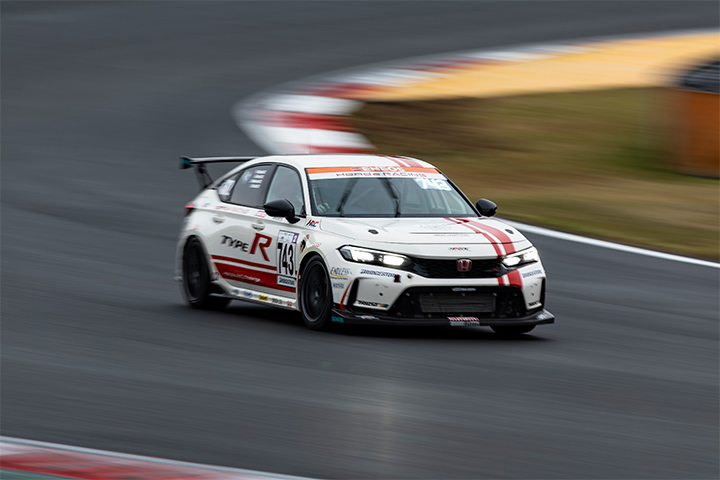 The FL5 CIVIC TYPE R that won the ST-2 class championship in the 2023 Super Taikyu Series
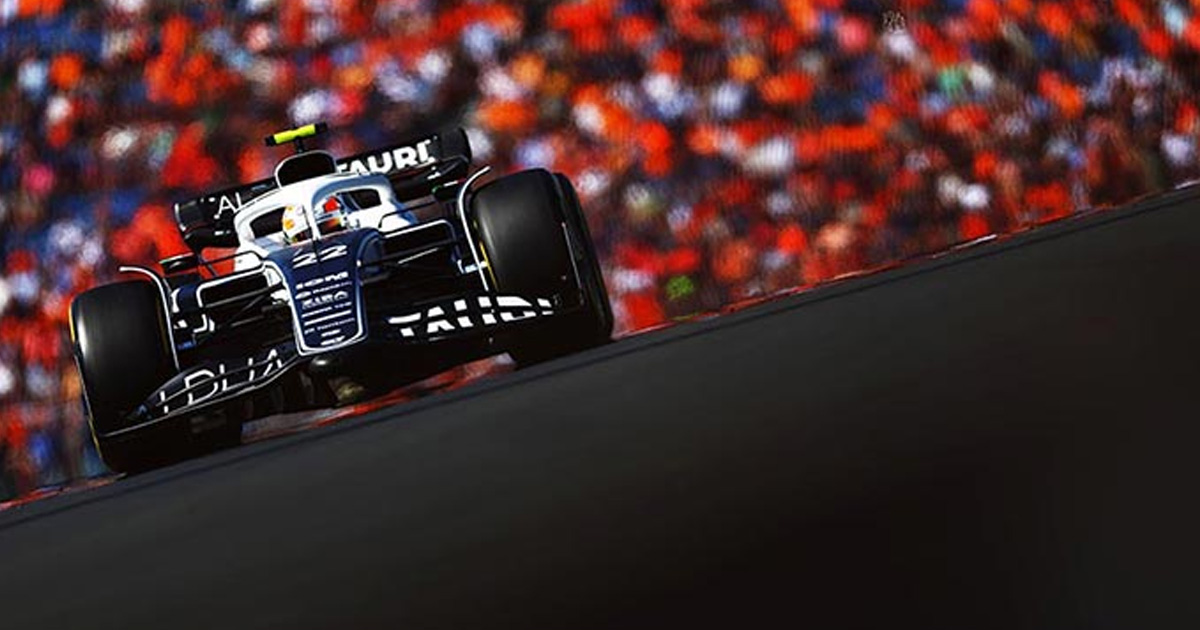
Honda announced its return to F1 for the 2026 season, and Honda Racing Corporation (HRC), which oversees Honda’s motorsports activities, has been developing the F1 power unit (PU) for the new regulations.
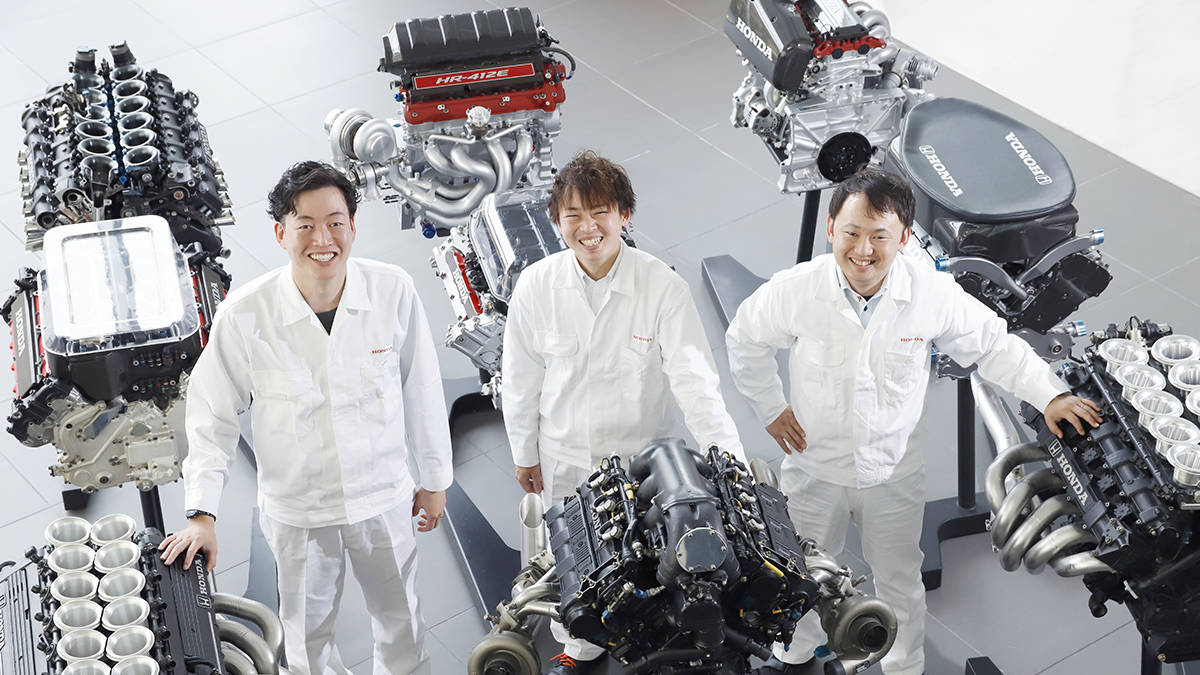
Among the engineers involved in this development are former HRDC members who competed in Super Taikyu. What did they gain from their time with the team, and how are they applying those experiences to their current work? Three young engineers preparing to take on the world of F1 share their stories.
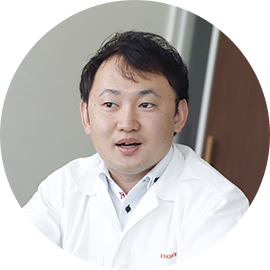
F1 power unit mechanical reliability View More Close Shuhei Okochi
Read More
F1 engine performance development View More Close Kenji Nagao
Read More
F1 MGU-K motor performance development View More Close Kazuya Aihara
Read MoreThe desire to learn is what matters most when joining the team
— What prompted you to join HRDC? Are there any specific qualifications required?
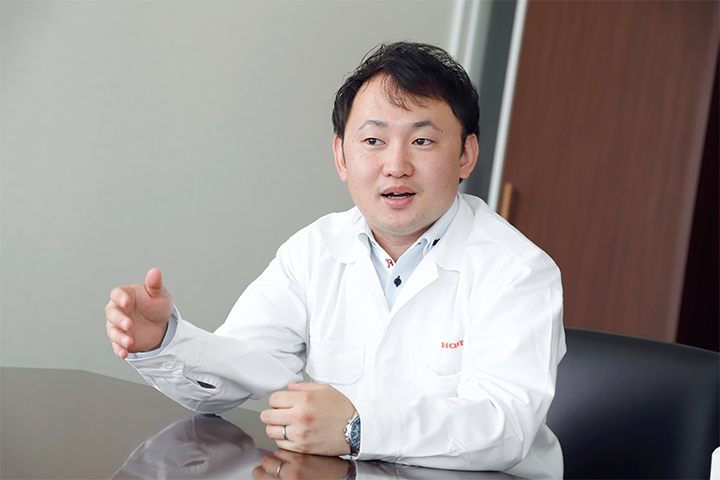 Okochi enjoys spending time with his family and working on vehicles. During extended holidays, he might overhaul the engine of his own car with his children or take the family on a touring trip.
Looking back at the questions I was asked during the interview, I think the team wanted members with a strong sense of purpose. In other words, “What do you want to learn through HRDC?”
— So simply wanting to go racing isn’t enough?
That’s my understanding. HRDC is a diverse team, with members from Honda’s Public Relations Division and even the Large Project Leader (LPL) responsible for developing the CIVIC TYPE R. But it isn’t simply a group of racing enthusiasts getting together to have fun. Everyone shares a sense of purpose, constantly thinking about what they want to achieve through the activity and working toward that goal.
— How did you first hear about HRDC?
I joined in January 2022 after a senior colleague approached me. I already knew the team existed, but when I heard about its A00*4, “Developing engineers who can create value in a way that is uniquely Honda,” it really resonated with me. I thought, “I have to do this!” and decided to join on the spot.
I saw a post on X (formerly Twitter), about a team that had apparently replaced an engine during a 24-hour Super Taikyu race. I remember thinking, “That sounds tough.” Then I discovered it was a Honda team—and HRDC, no less!
One lunchtime, Nagao told me he was joining the team. I thought, “I can’t let him get ahead of me!” and immediately asked him to introduce me.
I learned about HRDC through Honda TV, Honda’s internal associates broadcasting service. The reason I joined Honda in the first place was that I wanted to work in racing.
When I attended a CIVIC TYPE R driving lesson, Hideki Kakinuma, the model’s development leader, was one of the instructors. I told him about my passion for racing, and he mentioned an employee-led personal development activity that offered opportunities to learn at the racetrack.
I realized he was talking about HRDC, which I had seen on Honda TV, and decided to join.
*4 A00 (pronounced “A-zero-zero”) is the guiding concept discussed at the beginning of a Honda project. It defines the world the project aims to create and serves as an unwavering reference point throughout its development.
Discovering new ways to balance work and racing—and winning the Super Taikyu championship
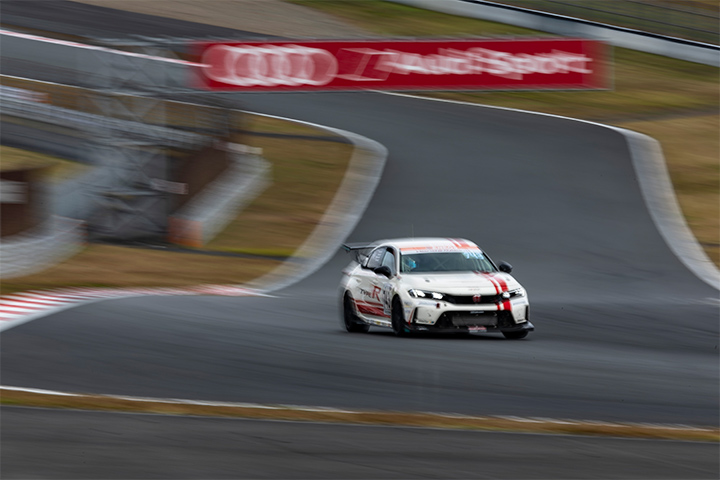 FL5 CIVIC TYPE R
— Were your responsibilities at HRDC related to your regular work?
When I joined, the team didn’t have anyone specifically responsible for engine management. Since Nagao and I specialized in that area in our regular jobs, we agreed that the first priority should be proper maintenance to ensure the engine could deliver its full performance.
Personally, I had actually wanted to learn about vehicle dynamics in racing touring cars—race cars based on production models—including how they accelerate, corner and brake.
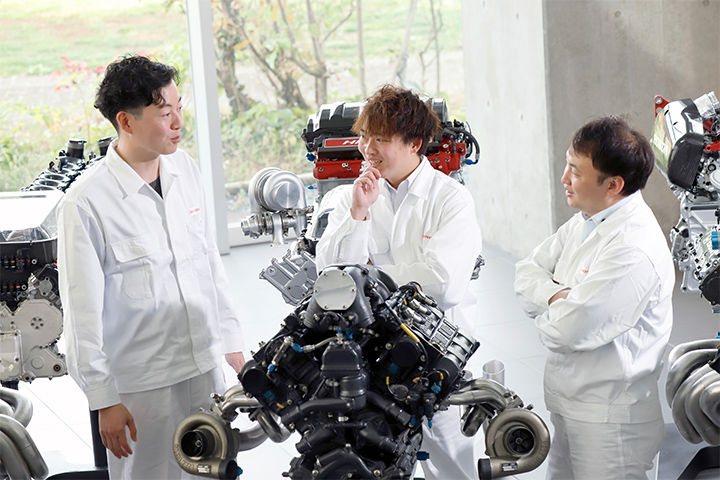 Even during breaks in the interview, the three engineers couldn’t resist talking about engines whenever one was nearby.
My regular work mainly involved engine performance development, including determining specifications and settings related to power output, fuel efficiency and engine functions. I wanted to build on those strengths, so within HRDC I was primarily responsible for engine overhauls, including cleaning, inspection, repair and component replacement, as well as power unit operation.
Aihara: My regular responsibilities were mainly engine starting performance and vehicle drivability, but at HRDC I worked as a tire mechanic.
— That’s a completely different field in your case, Aihara.
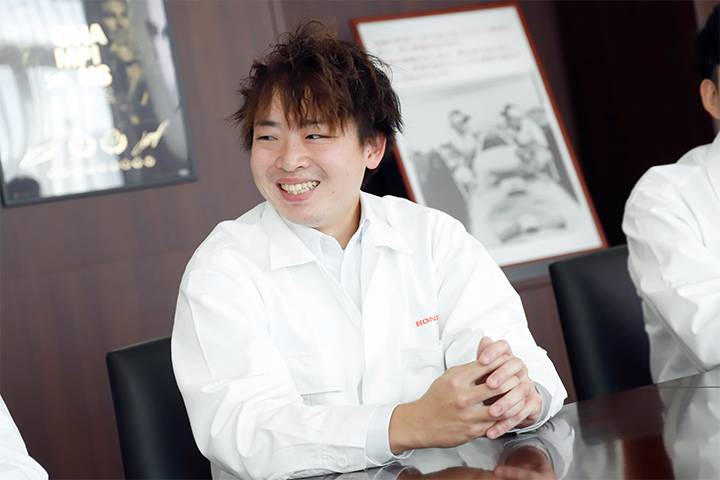 Aihara believes there’s no substitute for experiencing racing firsthand and regularly attends motorsports events, including F1.
A supervisor once asked me whether I was developing engines with the entire vehicle in mind.
When setting up an engine, it’s important to understand how all the different elements of the vehicle behave before making decisions. At the time, I lacked that broader perspective.
I wanted to deepen my understanding of vehicle dynamics and apply it to my work, so I decided to challenge myself in an area outside my usual responsibilities.
One of HRDC’s attractions is its culture of allowing members to take on whatever they want to learn, even if it’s something they’ve never done before.
— It sounds difficult to balance HRDC activities with your regular work and personal life.
A race weekend starts on Thursday, which means taking two consecutive days of paid leave on Thursday and Friday.
That makes it important to share information with colleagues regularly so work can be handed over smoothly.
Family support is also essential to balancing racing with personal life. Fortunately, my family is very understanding, so I’ve been able to enjoy participating. I make a point of expressing my gratitude to them. HRDC has made me much more conscious of these things.
My supervisor told me to plan my schedule well before the season started. He understood that this was a personal development activity and supported my participation.
I think it’s part of Honda’s culture to recognize people who take on challenges.
I believe Honda is a company where people who work hard toward their goals are rewarded.
I agree. Senior members taught me that 80% of racing comes down to preparation, and that preparation begins with our regular work.
At the morning meeting following each race, I report on our activities and share what I’ve learned through the challenge, including experiences that can be applied to our everyday work.
Doing so also helps colleagues understand and appreciate HRDC’s activities. In that sense, winning the championship this season gave me the best possible news to share!
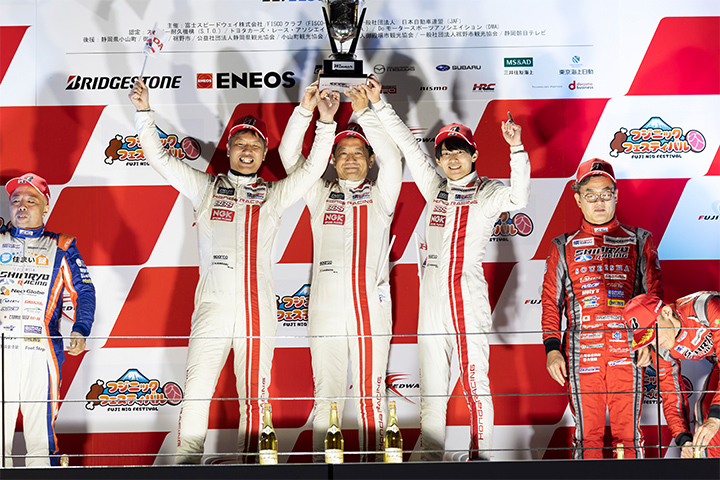 The podium ceremony at the final round at Fuji, where HRDC secured the championship
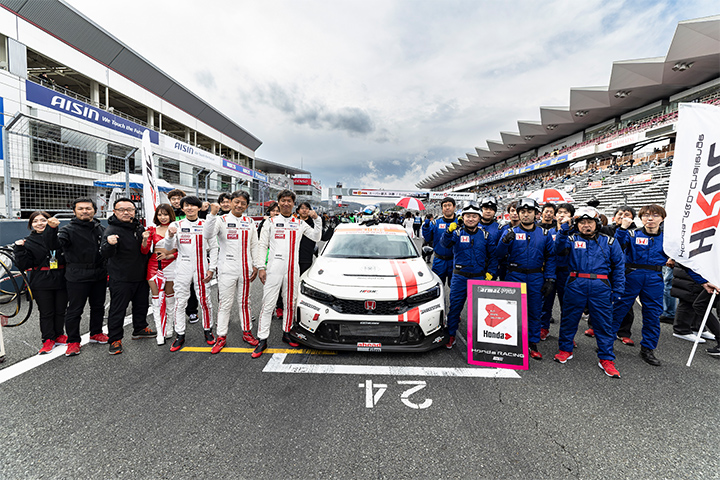 HRDC members at the final round at Fuji
— Winning the series championship must have made all that hard work worthwhile.
My first season in 2022, when we raced the FK8 CIVIC Type R, was also my first experience of racing. It was the team’s first full season, too, and we were struggling just to keep everything running.
To go from that chaotic situation to a point where everyone could contribute their strengths, see how much they had grown and ultimately win the title made the achievement incredibly meaningful.
— Is there one race that stands out in your memory?
Round 4 at Autopolis in Oita in 2022.
The engine we’d brought to the circuit wasn’t working properly. Under full acceleration, it would misfire*5, and that was the beginning of what became a 48-hour endurance event for the mechanics.
Eventually, though, we identified the cause and managed to finish the race without retiring.
It was a moment when I really felt the strength of the team. At the same time, I never wanted to go through anything like that again, so it prompted us to make major changes to how we managed our engines.
*5 A misfire occurs when the air-fuel mixture in one or more cylinders fails to ignite or burn properly. Spark plugs normally provide the electrical spark that ignites the mixture.
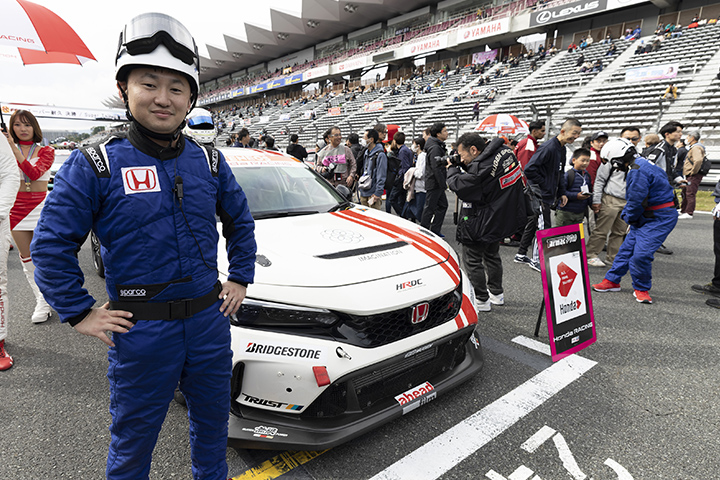
For me, it was Round 2, the Fuji 24 Hours in Shizuoka.
With about three hours remaining, we noticed signs of an impending engine failure. We had a very frank discussion about whether to keep racing or give up.
In the end, we decided to keep going and finish the race. I worked out a driving mode on the spot that would minimize the load on the engine and instructed the drivers accordingly.
When we completed the 24 hours, I was so relieved that I cried more than I did when we won the championship.
HRDC taught me how to think clearly and respond appropriately even when pushed to the limit.
Taking on F1 in 2026: Young engineers build on their Super Taikyu experience
— After such a successful season in Super Taikyu, all three of you were selected to work on the F1 power unit being developed for the new regulations taking effect in 2026.
A dream I’ve had since childhood has come true. I feel as though the biggest challenge of my life has arrived.
I’m responsible for motor performance development for the MGU-K, which converts kinetic energy generated during braking into electrical energy.
I’m delighted to have the opportunity to take on the ultimate challenge in F1. I’m determined to win.
I’m responsible for engine reliability. My job is to ensure that the engine consistently delivers its intended performance without breaking down, and that it can be operated reliably.
When I first heard about my transfer, I was surprised and nervous. I thought, “F1!”
But once I actually joined the department, I found myself surprisingly calm.
The vibration levels and engine speeds are completely different between production cars and F1 cars, but ultimately, what we’re trying to achieve is the same.
I don’t see it as pressure. I just want to do the work I love and do it properly.
When I heard I was being transferred to the F1 department, my reaction was, “Finally!”
I approach my work feeling that everything I’ve done up to this point has been leading toward this opportunity.
There’s pressure, of course, but I think my experience with HRDC is what allows me to approach the challenge with a sense of enjoyment despite that pressure.
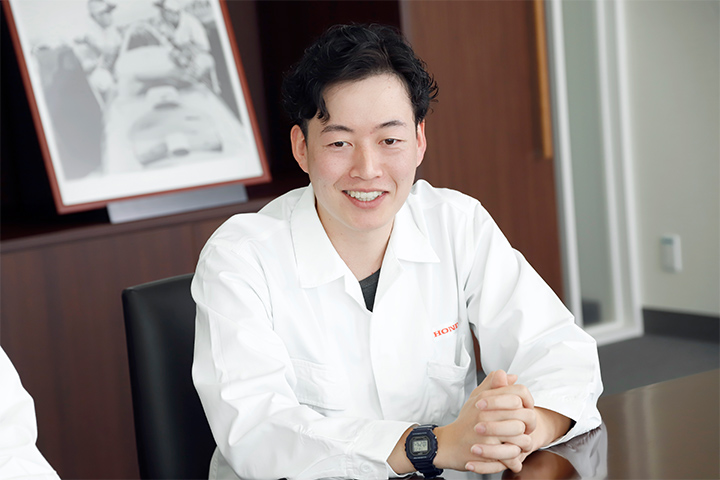 Nagao says his dream is to strengthen connections with people through racing and Honda products, including production vehicles, and to “create as much joy as possible.”
— Working in F1 could be described as one of the ultimate dreams for Honda and HRC associates. Why do you think you were able to achieve it?
Because I never gave up on my dream.
One of my strongest memories of F1 is receiving the news that Honda would withdraw at the end of 2021, just as it was approaching a world championship.
At the time, I was developing V6 engines with the goal of eventually working in F1. When the president’s company-wide message arrived, I was so stunned that I sat there in a daze for about 30 minutes.
People said the engine development department felt like a funeral.
I was in shock for about a week.
But gradually, I began to change my thinking. I told myself, “Honda will definitely return to F1 someday!” and “I’ll make sure I’m ready to be involved when that happens.”
I believe that determination is what ultimately opened the door to F1 for me.
I don’t think there was a single engine engineer at Honda who wasn’t shocked by that announcement.
But I agree that the key to opening the door to F1 is to keep expressing your ambitions without wavering.
— Finally, what are your goals in F1?
I think there’s only one possible answer. I want to win the World Championship with an engine that I’ve helped develop.
I’m going to be part of the F1 world I admired as a child, so I want to inspire children watching F1 today, just as I was inspired back then.
I also want to prove how exciting electric power units can be by winning in F1.
My goal is also to win the World Championship.
But recently, I’ve started thinking more about why I want to achieve that.
One of the great things about motorsports is its ability to strengthen connections between people. I’ve come to believe that the ultimate expression of this is creating a place where people can share the joy of a common experience.
I think the greatest opportunity to share that joy will come when Honda wins the World Championship in F1, the world’s biggest stage.
That’s why Honda will bring together all its strengths and go for the title.
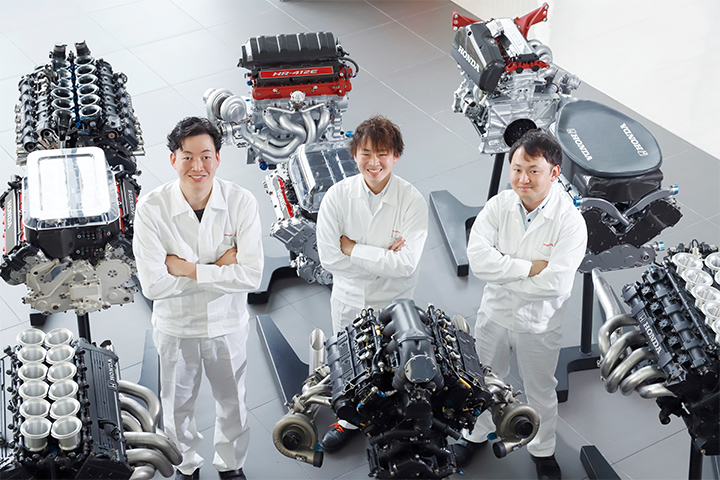
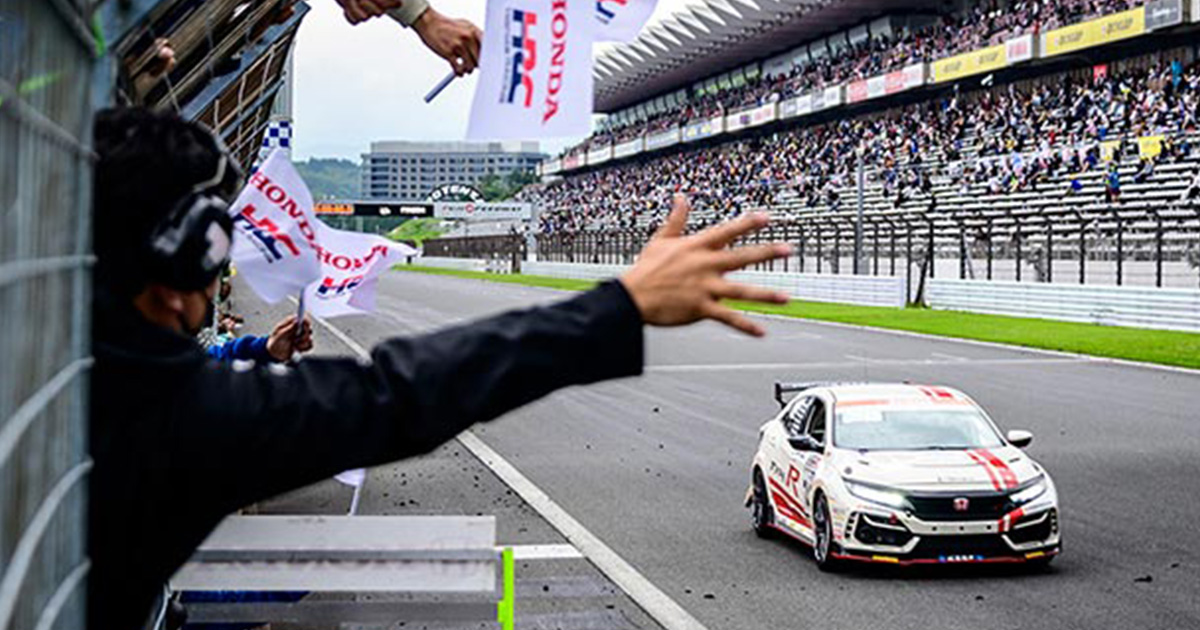




The only requirement is that you’re a Honda associate.If you have the desire to participate, you can apply. There’s an interview with the team’s management before joining, so you need to be clear about your motivation.