
Management
Why Honda Associates Take on the Challenge of Endurance Racing
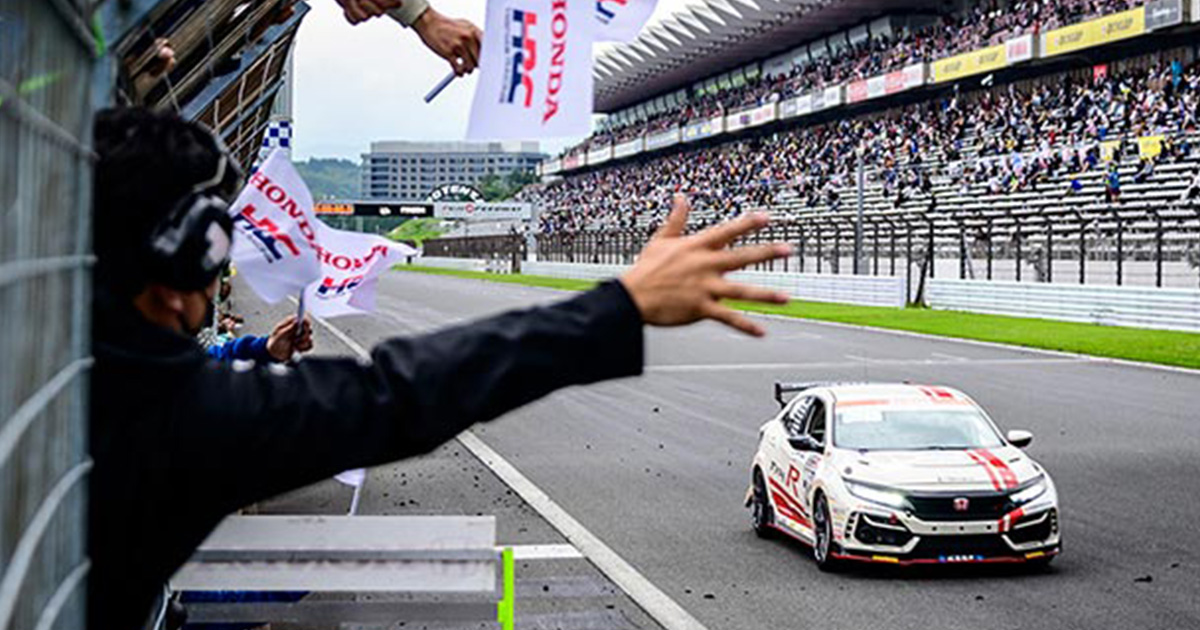
On April 12, Honda announced its plans for the introduction of electric vehicles (EVs), including two sports models that will preserve the joy of driving while embracing electrification. Although the shift toward carbon neutrality has become an unavoidable part of the automotive industry’s future, the joy of driving remains an equally important commitment for Honda.
Even as society changes, Honda remains committed to creating cars that deliver the joy of driving. A visit to the racetrack revealed the passion behind that commitment.
Honda associates’ teams take to the track
The NAPAC Fuji SUPER TEC 24 Hours Race took place at Fuji Speedway in Oyama, Shizuoka Prefecture, on June 4 and 5.
This endurance race challenges teams to complete 24 hours of racing in modified production cars. With professional and amateur teams from a wide range of backgrounds competing together, the event has become something of a festival for automobile enthusiasts.
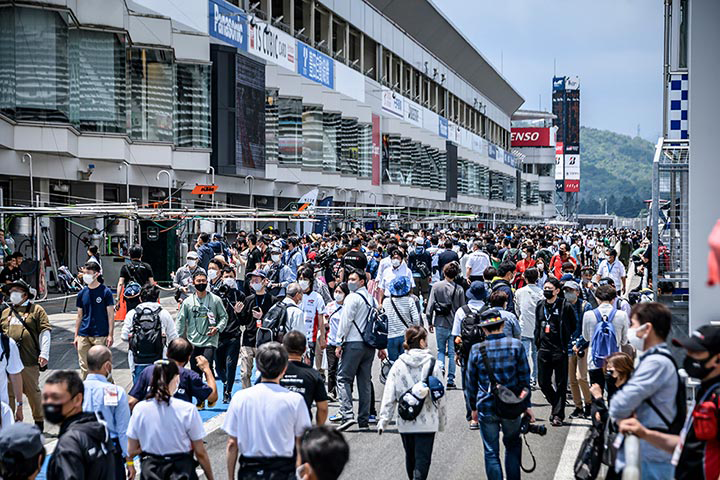 The event features a wide variety of models from Japanese and overseas manufacturers, creating a festival-like atmosphere.
Among the competing cars were several Honda models, including a CIVIC TYPE R, one of Honda’s most recognizable sports models.
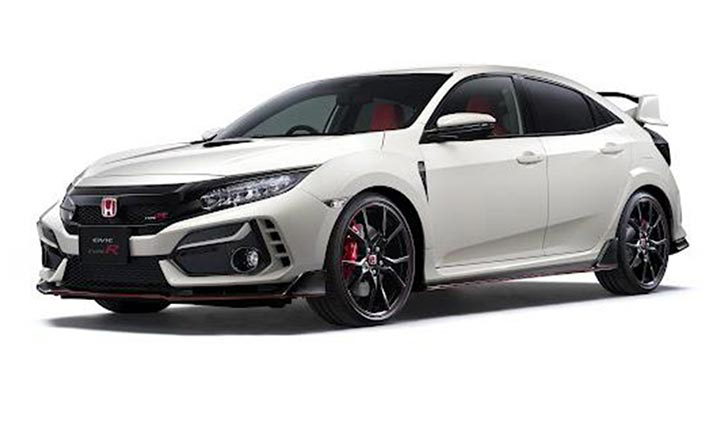
The CIVIC TYPE R carries the TYPE R designation reserved for Honda’s highest-performance sports models. The current generation offers three selectable driving modes: Sport, +R and Comfort.
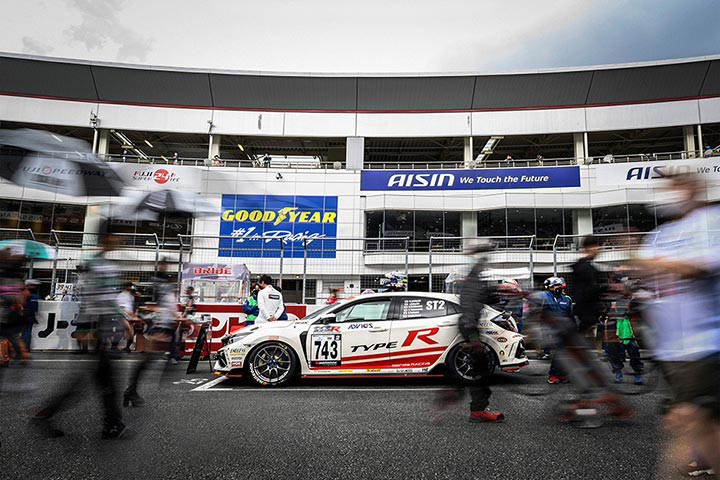 A race car based on the current-generation CIVIC TYPE R
This particular CIVIC TYPE R belongs to a racing team formed by volunteer Honda associates.
The team is called Honda R&D Challenge. Its members work on the car after their regular working hours and on weekends, making it something like an extracurricular club for adults.
But simply taking part in races is not the team’s ultimate goal.
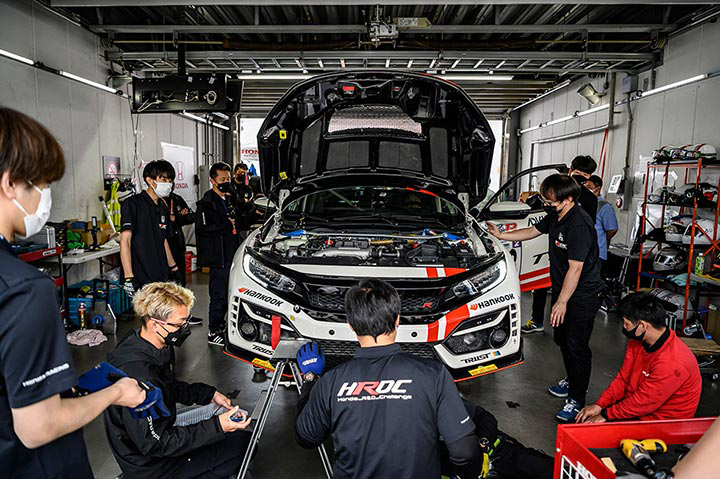 Young Honda R&D Challenge members serving as mechanics make final adjustments to the car.
Why take on such a demanding race?
At 3:00 pm on June 4, the race began.
Honda R&D Challenge’s drivers each spent approximately one to one and a half hours behind the wheel before returning to the pits to hand over to the next driver.
One of those drivers was Hideki Kakinuma, the development leader responsible for both the current CIVIC TYPE R he had just been driving and the next-generation CIVIC TYPE R scheduled for launch later in 2022.
Honda Stories caught up with Kakinuma shortly after he completed his stint.
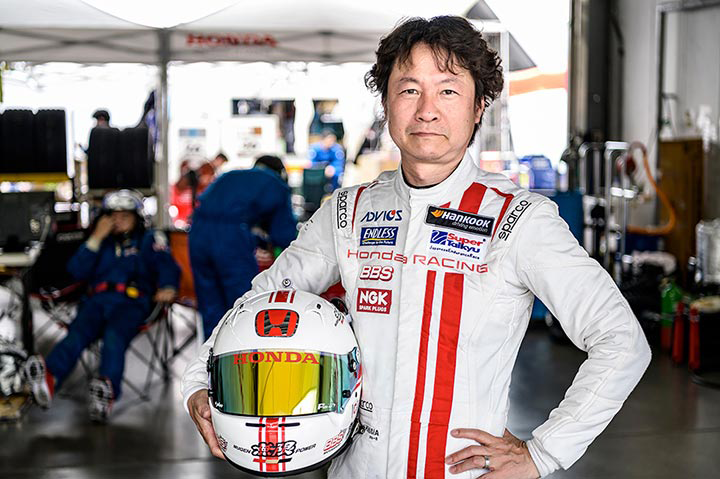 Hideki Kakinuma, one of the team’s drivers
I’m exhausted! But I’ve only just got out of the car, and the adrenaline is still flowing. Let’s talk before it wears off!

You were the development leader for the production CIVIC TYPE R on which this race car is based, weren’t you?
That’s right. In developing the production model, the aim wasn’t simply to make it fast. It was to push its performance as far as possible while maintaining the fundamental qualities and safety expected of a production car.
But once you enter the world of racing, there are always faster cars. There’s no upper limit.
In racing, results are everything. You can’t say something is good enough or make excuses based on your own circumstances. The only option is to keep challenging yourself and improving.
The frustration and setbacks we experience along the way help us grow as engineer.
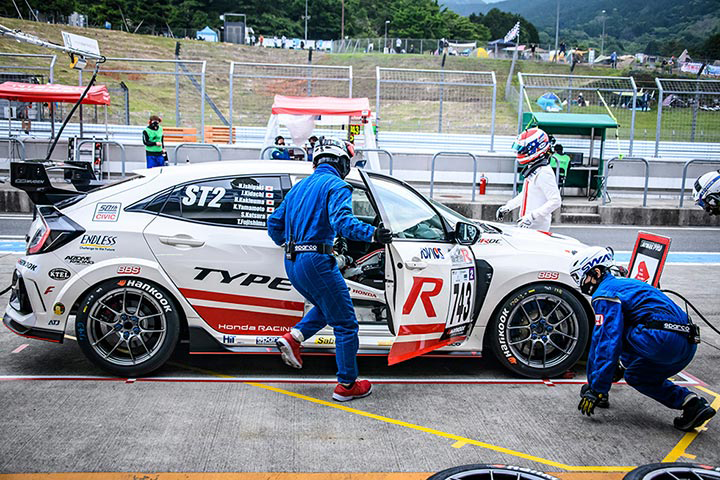 Mechanics quickly refuel the car and change its tires during a driver change.
How do you apply what you learn through racing?
The experience feeds directly into the development of future production cars. That creates important value for customers who love Honda, and it also becomes a valuable asset for the Honda brand.
So that’s why you participate in racing.
There’s another important point. If the members were simply racing because they enjoyed it, as a personal development activity, the race car might become faster, but the technology and mindset they developed wouldn’t necessarily find their way into production cars or product development.
Having someone in my position as a development leader involved in the team helps bridge that gap.
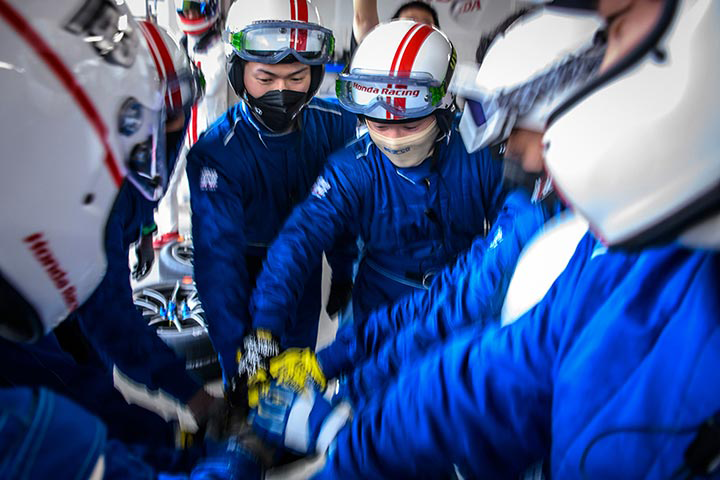 Racing experience shapes future development
You joined Honda in 1991, when the vehicle dynamics department you were assigned to was developing the NSX-R, the model that would become the origin of TYPE R.
The NSX-R was based on the original NSX, introduced in 1990.
The NSX was a truly groundbreaking car. Until then, sports cars had largely been specialized vehicles that only a limited number of people could enjoy.
Honda approached the challenge from a human-centered perspective, making the fundamental appeal of a sports car—the joy of driving—something that anyone could experience with confidence.
That was what the NSX achieved.
Since then, sports cars throughout the industry have evolved not only in terms of speed but also in their ability to deliver enjoyment to a wider range of drivers.
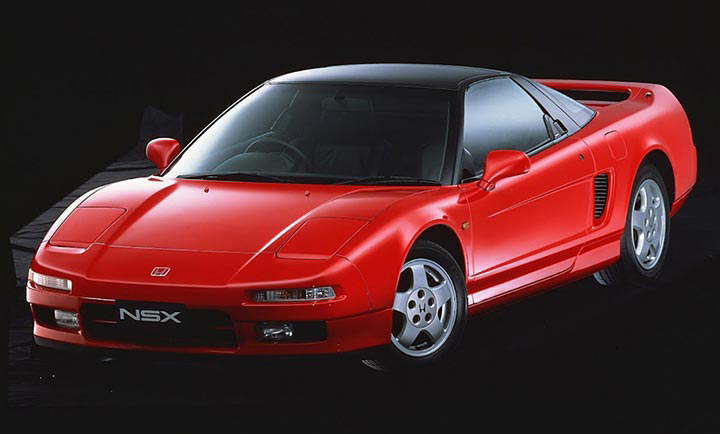
Introduced in 1990, the NSX was a sports car featuring a mid-engine, rear-wheel-drive (MR) layout, departing from the front-engine, front-wheel-drive configuration in which Honda had traditionally specialized.
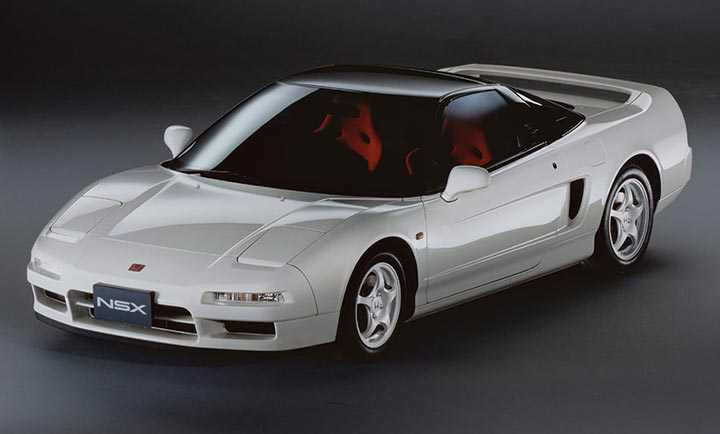
Introduced in 1992, the NSX-R was developed from the original NSX with the concept of a car that could be driven from home to the circuit, enjoyed on the track, and then driven home again.
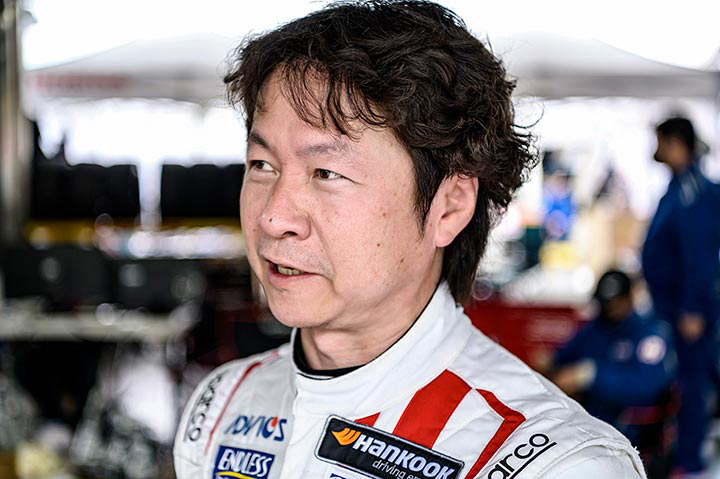 In his racing suit, Kakinuma looks every bit the professional racing driver.
Is TYPE R an extension of that philosophy?
Among the NSX development team, there were engineers who wanted to create a sports car that took speed and driving pleasure even further, without compromise.
They created the NSX-R, and their passion became the foundation of TYPE R.
The new-generation CIVIC TYPE R that our team developed carries exactly the same spirit. Above all, it has to be fast and fun to drive.
Cars bearing the TYPE R badge are indispensable to Honda, both for customers and for the engineers who develop them.
TYPE R began with that powerful conviction among engineers and has continued to evolve ever since.
I believe developing a brand with such a strong heritage is extremely important for nurturing the next generation of engineers.
So that passion is what has shaped Honda’s cars over the years.
It comes down to what makes Honda, Honda.
Everyone working here chose Honda from among many automobile manufacturers.
Each person has ideas about what they want to achieve at Honda, what they want to create, and the dreams they want to deliver to customers around the world.
I believe those aspirations are at the heart of what makes Honda unique If Honda were to lose that identity, there would be little reason for the company to exist.
Honda’s strength lies in being able to turn those aspirations into smiles for customers around the world.
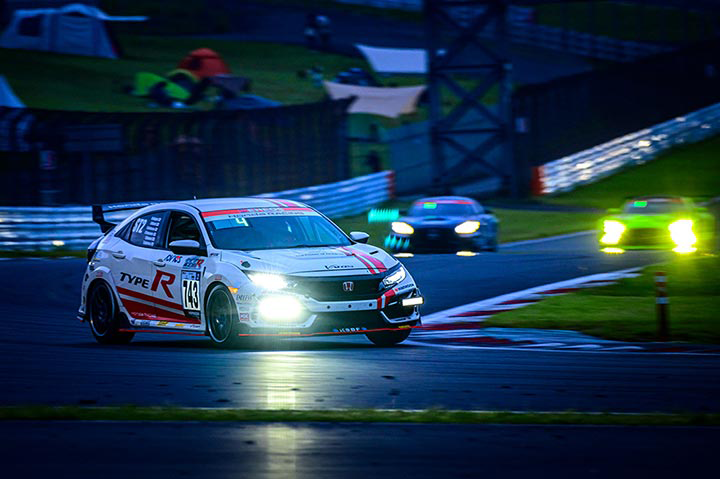 The CIVIC TYPE R racing through the night
Passing on the passion for automobile development
Honda R&D Challenge was established in 2016 with the aim of developing associates.
Initially, its racing activities were conducted as part of regular work. However, changes in business circumstances made it difficult to continue operating in that form, and by 2019 the team was facing the possibility of disbanding.
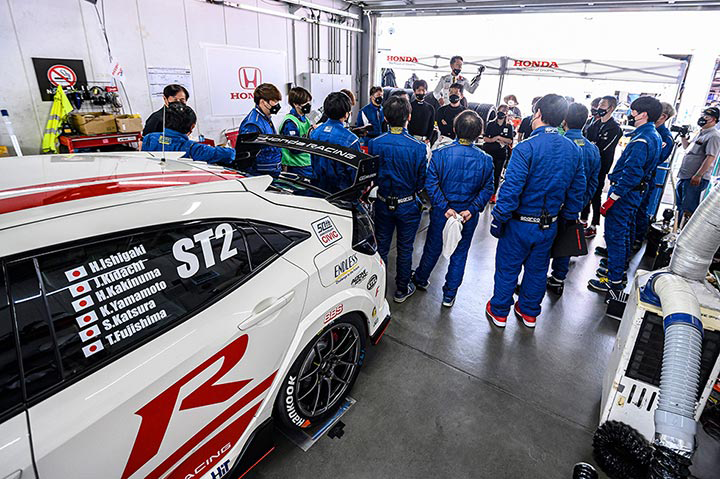 Initially, participation in racing was part of the team’s regular work.
I actually wasn’t involved in Honda R&D Challenge until that point.
Around the end of 2018, the team was building a new race car based on the CIVIC TYPE R I’d helped develop when the possibility of ending the activity came up.
I thought, “If this ends now, everything these people have worked so passionately to build will disappear. I have to get involved and help find a way to keep it going.”
That’s when I decided to join.
How did the team manage to continue?
Racing is expensive. Entering a single event can cost several million yen.
So the members decided to raise the money themselves and began looking for sponsors. Honda agreed to let the team continue as a club activity for personal development.
Raising funds was difficult, though. In 2019 and 2020, we could barely afford to enter one race a year.
Then, last year, Keiji Otsu, President of Honda R&D, approached us and asked, “Could you tell me more about the racing activities you’re involved in?”
The president?
Otsu had previously served as head of the former HRD Sakura*, so he understood very well how important motorsports activities are to Honda.
I’d known him since his time at Sakura. He’s someone with a real willingness to stand up and support people.
* HRD Sakura was Honda’s development center for automobile motorsports activities, including F1 and SUPER GT.
What happened next?
I prepared some materials and went to explain what we were doing.
He said, “Understood. Put together a proposal for next year and bring it to me.”
When I returned with the proposal, he gave us the go-ahead.
Thanks also to the generosity of various sponsors, we managed to compete in four of the six races last year. This year, it looks as though we’ll finally be able to compete in the entire season for the first time.
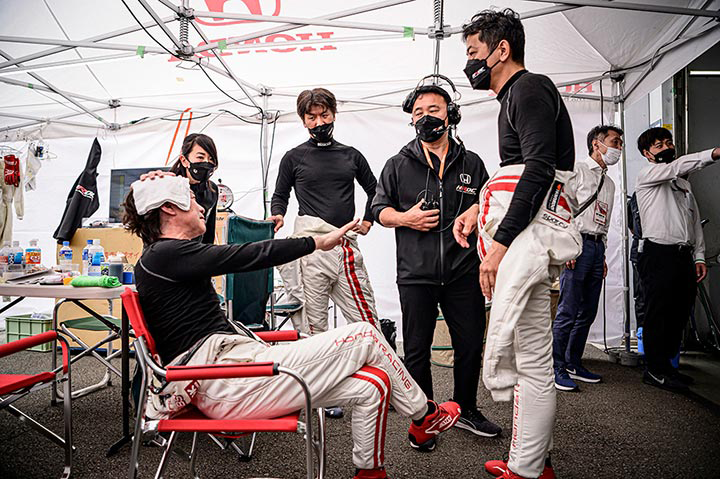 After his stint, an exhausted Kakinuma sits down to rest, but continues exchanging information with the other drivers.
So the president stepped in to help save the team!
The reason Honda supports activities like ours is to develop people. The company is investing in its younger associates.
I often tell the younger members, “Of course, achieving results in racing is an important goal. But the most important thing is that, through this experience, you grow into people who will lead Honda in the future.”
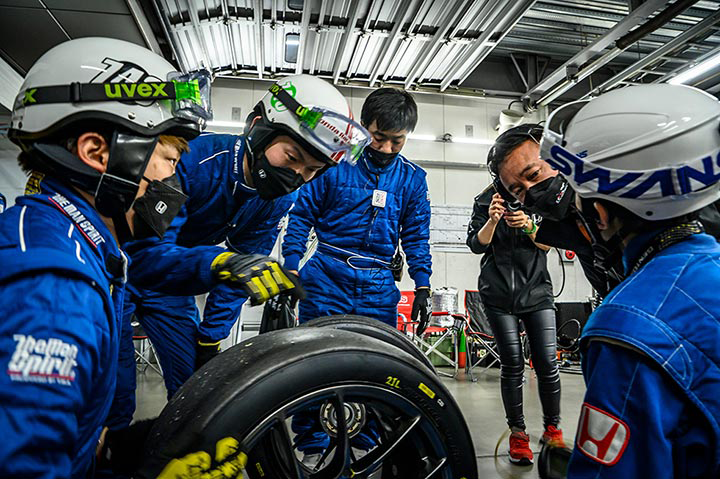 Young team members listen intently as they receive instructions.
By learning from more experienced colleagues at the racetrack, younger associates inherit the passion and philosophy behind Honda’s approach to automobile development.
And Honda R&D Challenge is not the only associates racing team at Honda.
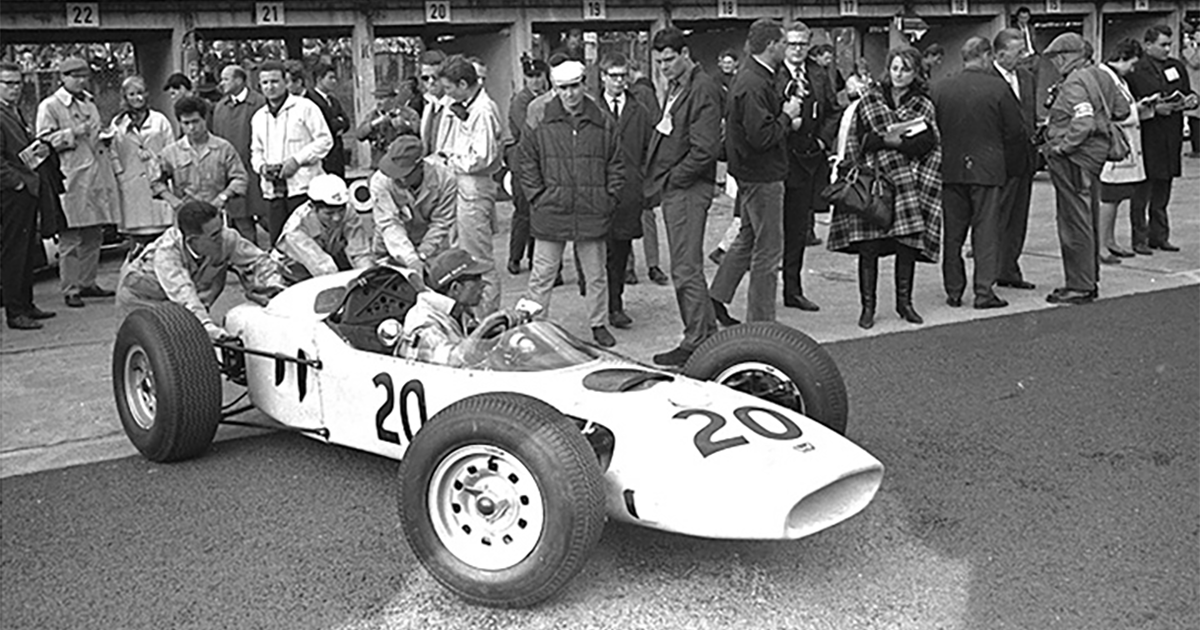
Another is TEAM YAMATO, established in 1965 and boasting a history spanning nearly 60 years.
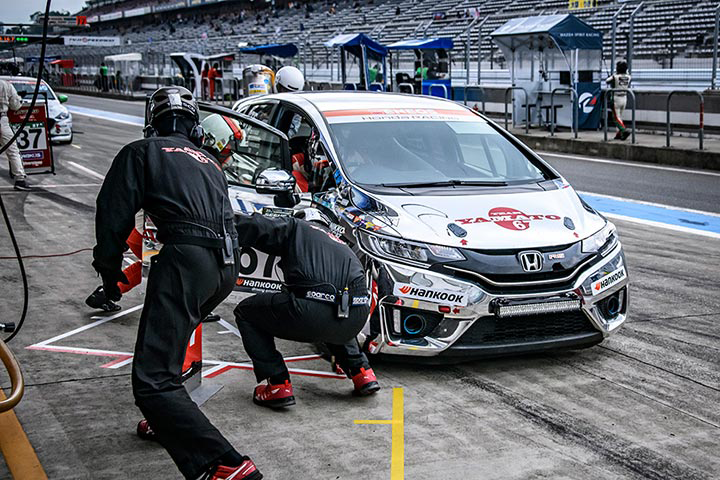 TEAM YAMATO competes in a race car based on the Fit.
TEAM YAMATO has a particularly high proportion of younger members compared with Honda R&D Challenge.
One of them is Ryo Mukumoto, who also serves as the team’s leader.
In 2011, at just 22 years old, Mukumoto was appointed Large Project Leader (LPL) for the S660, becoming the youngest LPL in Honda’s history.
How do younger and mid-career associates view Honda’s spirit and approach to automobile development?
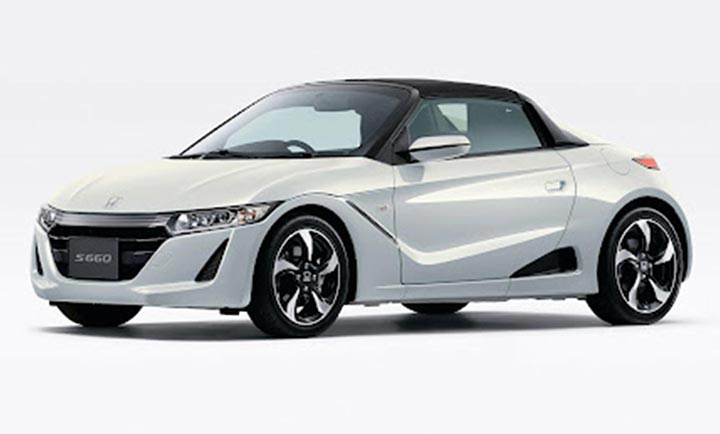
Introduced in 2015, the S660 is a two-seat open-top sports car built to Japan’s kei-car specifications. Its development concept, “Exhilarating Handling Machine,” reflects its agile handling characteristics.
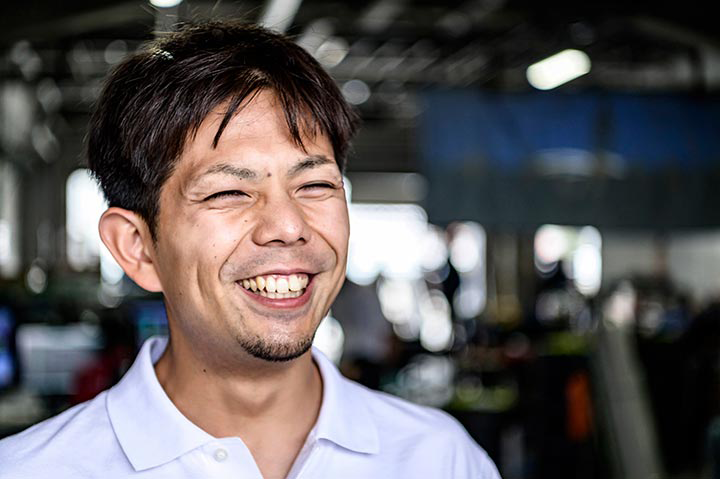 Mukumoto currently works on vehicle package design.
What have you learned through participating in racing?
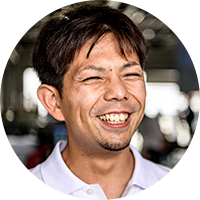
When my proposal for what would become the S660 was selected in an internal competition, there were supervisors and senior colleagues behind the scenes who went all out to support me.
It’s the same with our racing activities. They’re made possible by people who wholeheartedly support motivated younger associates.
For example, at the opening round at Suzuka in March, our car was involved in an accident and was effectively written off. Repairing it was extremely difficult, and it looked as though competing in the 24-hour race would be impossible.
That must have been a serious setback.
Someone from Honda’s General Affairs Division, which supports our club activities, happened to be visiting the race.
They decided on the spot to approve the purchase of a used replacement car, and thanks to that decision, we managed to get ready in time.
Without the support of understanding senior colleagues like that, associates racing teams couldn’t exist.
And I genuinely believe the S660 wouldn’t have made it into production either.
What can younger associates gain from racing?
It helps them grow both personally and professionally.
In our regular jobs, responsibilities are often divided into very specific areas, and the scope of what each person handles can be quite narrow.
But in racing, you have to look at a much broader picture, and you’re entrusted with a wider range of responsibilities.
That also strengthens your sense of accountability.
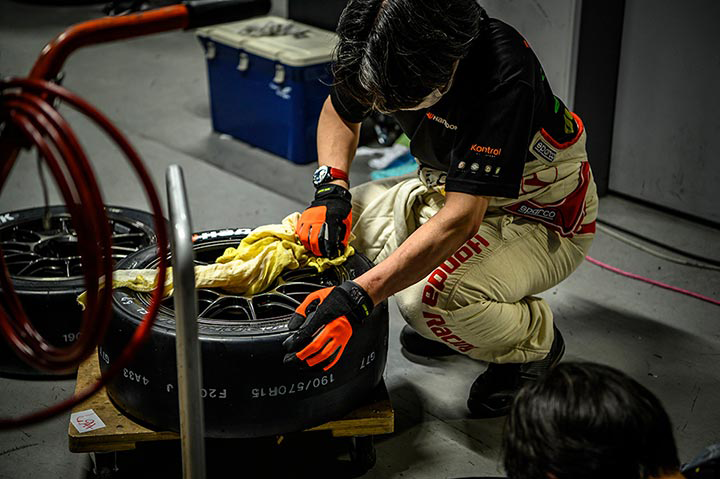 The race continues through the night.
Some of the younger mechanics were working with their hands shaking.
Racing is an unusual environment, and a 24-hour endurance race is even more demanding.
You might rarely experience that kind of pressure in your regular job, but at the circuit, you have to take responsibility for your own actions.
What you do affects not only the race result but also the driver’s safety.
It’s an extremely high-pressure environment, but that’s what makes it such a valuable experience.
It forces you to think about what kind of preparation is needed so your hands won’t shake when it really matters.
“Racing is in Honda’s DNA.”
The racetrack provides an extraordinary environment in which associates must deliver results within timeframes far shorter than those they normally encounter. That experience helps each individual grow.
Although the ultimate objective is to develop better cars, winning also matters. Simply finishing a race and saying it was a good experience isn’t enough.
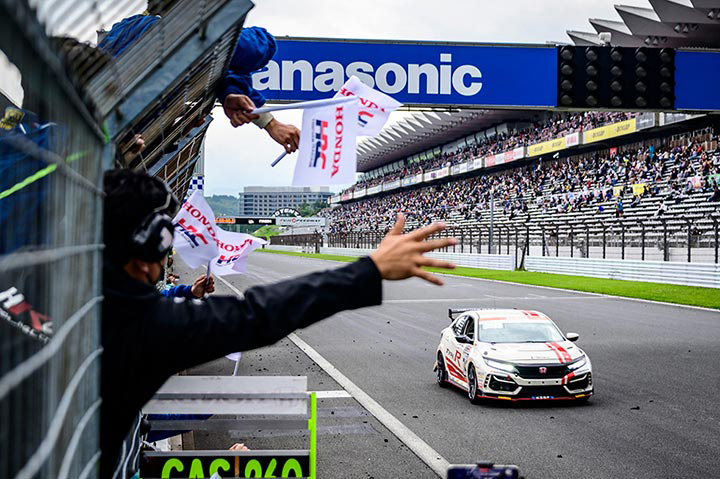 Honda R&D Challenge completes the 24-hour race.
With environmental responsibility now essential even in motorsports, where speed has traditionally been the overriding priority, is Honda’s approach to automobile development changing?
Honda Stories put the question to Kakinuma after he returned to the pits.
Society has reached a point where there’s no time to lose in accelerating toward carbon neutrality. Honda has also committed to moving in that direction.
But does that mean TYPE R will disappear because of carbon neutrality? Absolutely not. It’s simply the means of achieving our goals that will change.
Honda is investing in the technologies needed for the future, and EVs are one part of that.
The current CIVIC TYPE R you developed was the first to feature a Comfort mode, allowing for more relaxed driving in everyday situations.
A Comfort mode would have been unthinkable in the early days of TYPE R. It would have seemed completely contrary to the concept.
TYPE R was originally about pursuing speed and driving pleasure, even at the expense of comfort.
But more than 20 years later, we reconsidered what a sports car should be in the years ahead.
By making full use of advances in technology, we deliberately introduced the new value of a Comfort mode into TYPE R.
I’ve known TYPE R since its very beginning, so that was an incredibly bold decision for me.
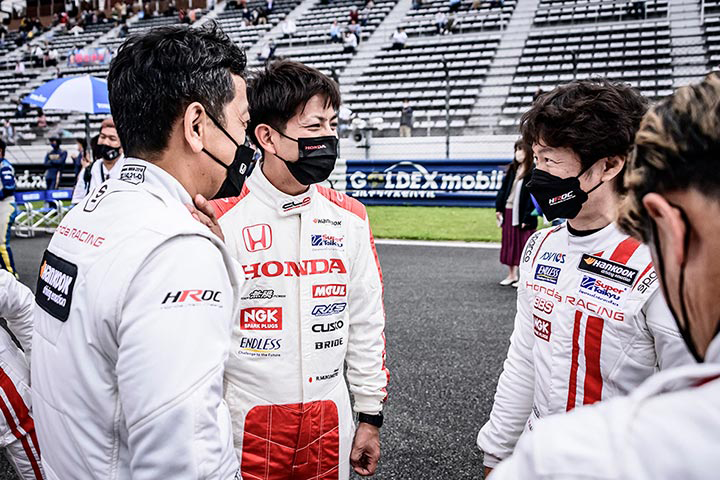 Before the race, Kakinuma and Mukumoto exchange words of encouragement.
How do you think TYPE R will evolve in the future?
The TYPE R badge is indispensable to Honda.
To keep producing TYPE R models, we have to reconcile the performance worthy of that name with carbon neutrality.
With the TYPE R we developed in 2017, we brought together speed, the joy of driving and the fundamental qualities that make a car so satisfying you want to keep driving it forever.
I believe that represented a major turning point for sports cars.
Going forward, carbon neutrality will also have to become an integral part of that combination.
That sounds like a never-ending challenge.
I’m already 53, so I can’t keep doing this forever.
But I have a responsibility to uphold what the Honda brand stands for.
I want younger engineers to see that commitment, understand it and make it part of their own mindset.
That’s how I hope this spirit will be passed on for generations to come.
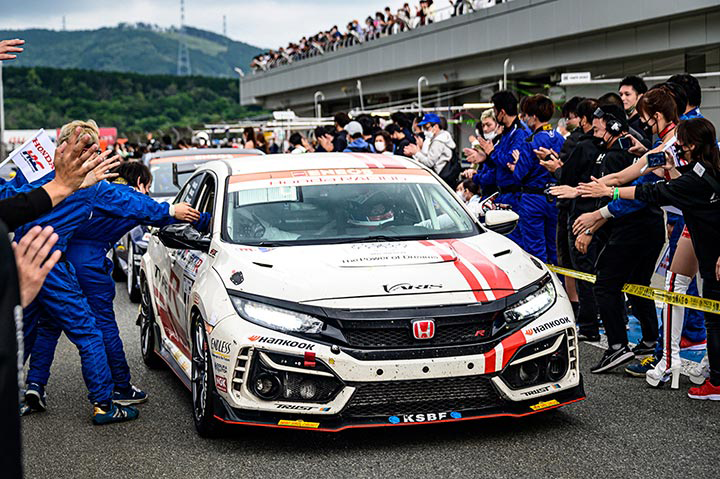 Team members rush toward the car as it returns to pit road.
What people expect from automobiles will continue to change with the times.
Yet Honda still has engineers and associates who devote their evenings after work and their weekends to racing, just as previous generations did.
Their racing activities don’t earn them any money. On the contrary, they have to find sponsors themselves while juggling their regular responsibilities.
And still, they continue to race, driven by a simple desire to build better cars.
Even as environmental performance and carbon neutrality become essential requirements, that passion will surely enable Honda to continue combining environmental responsibility with the joy of driving.
The young mechanics who worked tirelessly throughout this 24-hour endurance race are the ones who will shape the next generation of Honda’s ”FUN”.
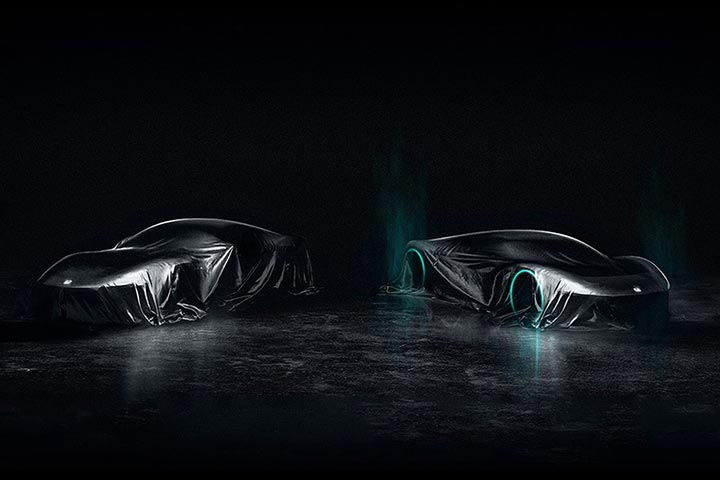 Honda’s upcoming electrified sports models. The anticipation of discovering what they will be like is already building.




You’ve just finished your first stint in the 24-hour race. How are you feeling?