Carbon Neutral on Water
- Progress Report on Verification Test of Electric Propulsion Prototype in Matsue City, Shimane Prefecture -
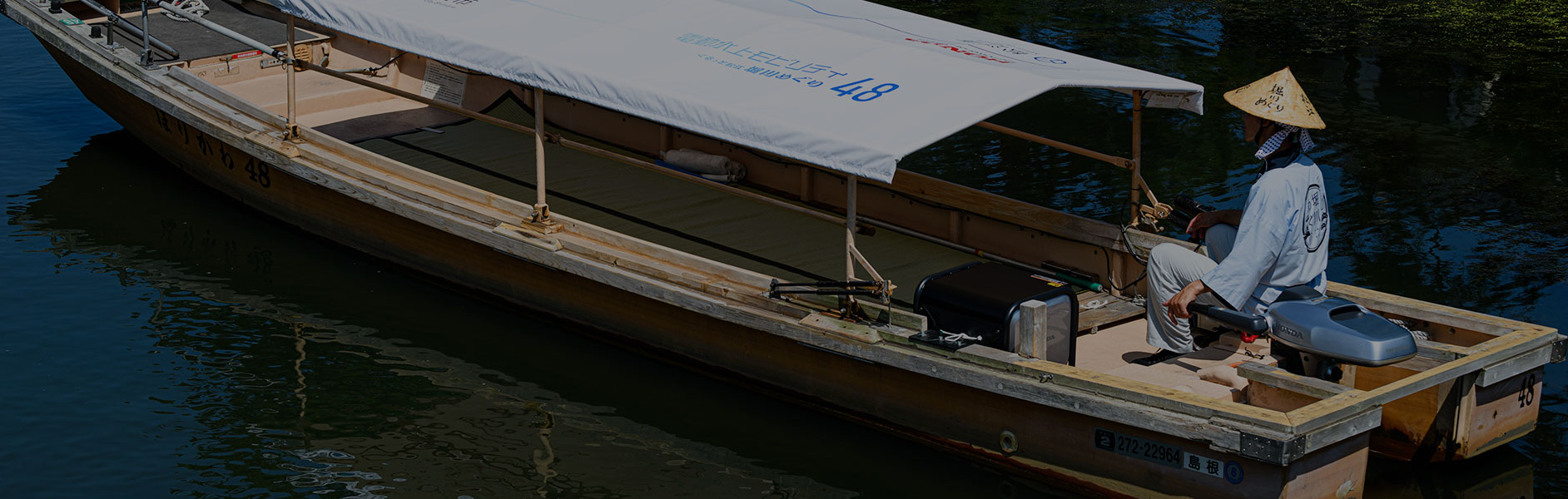
Electric Propulsion Prototype
Once Again Hearing the Birds, the Wind, the Waves
“Watercraft should not pollute the water.” Honda has held this strong belief of its founder Soichiro Honda since it first entered the outboard motor business in the 1960s.
For this reason, Honda avoided the then-mainstream two-stroke outboard motors, which burned oil and gasoline together and emitted oil-containing exhaust gases, and instead developed and sold four-stroke outboard motors, despite the weight and cost disadvantages. Today, four-stroke outboard engines account for approximately 80% of the 900,000 units sold worldwide.
The ultimate realization of Soichiro Honda’s belief is the electric propulsion system. In November 2021, Honda unveiled a concept model of its electric propulsion system.
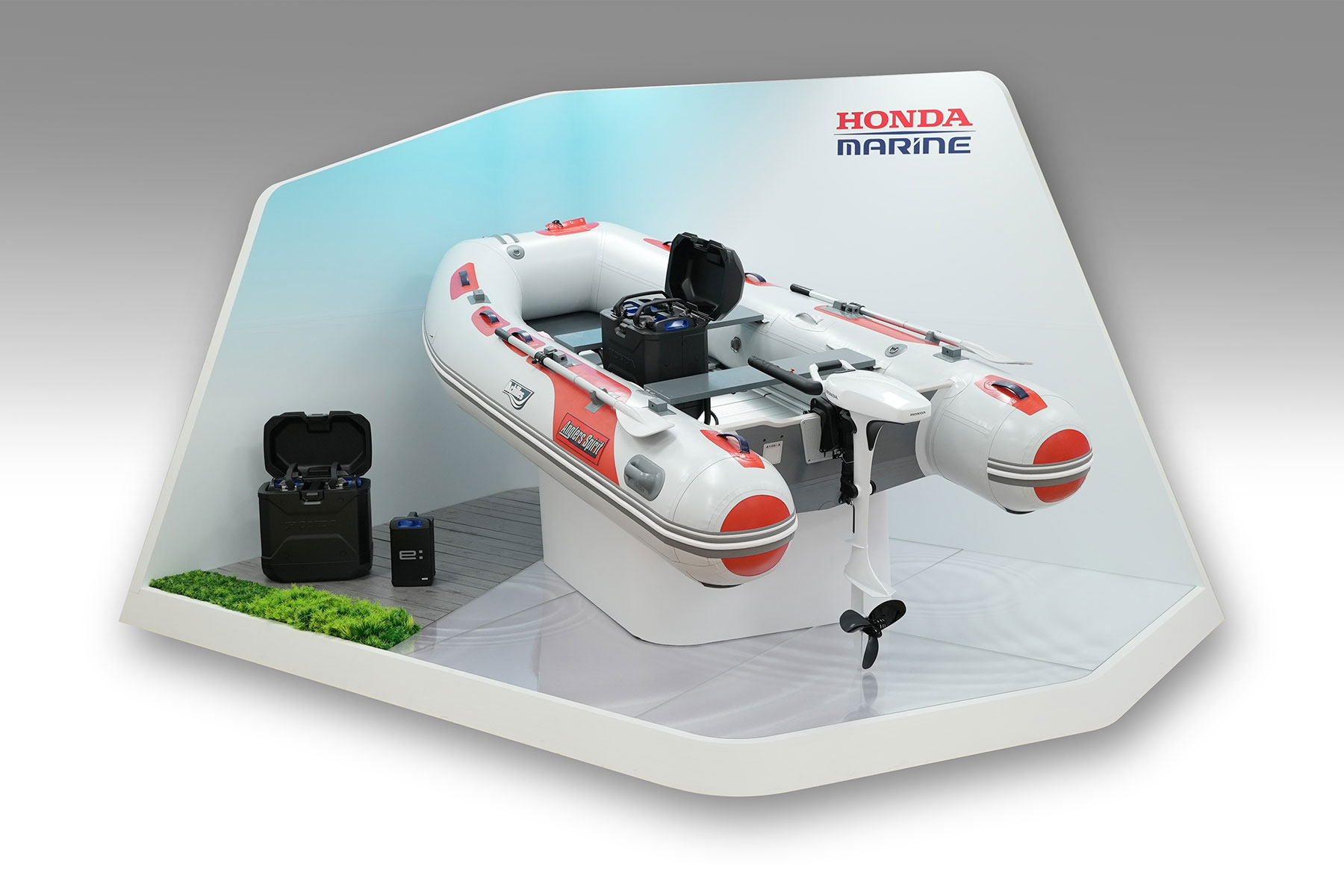
In December 2021, a phone call from Matsue City, Shimane Prefecture, learning of the concept model in the news, initiated a partnership between Honda and Matsue City to work towards the realization of an electric propulsion system verification test.
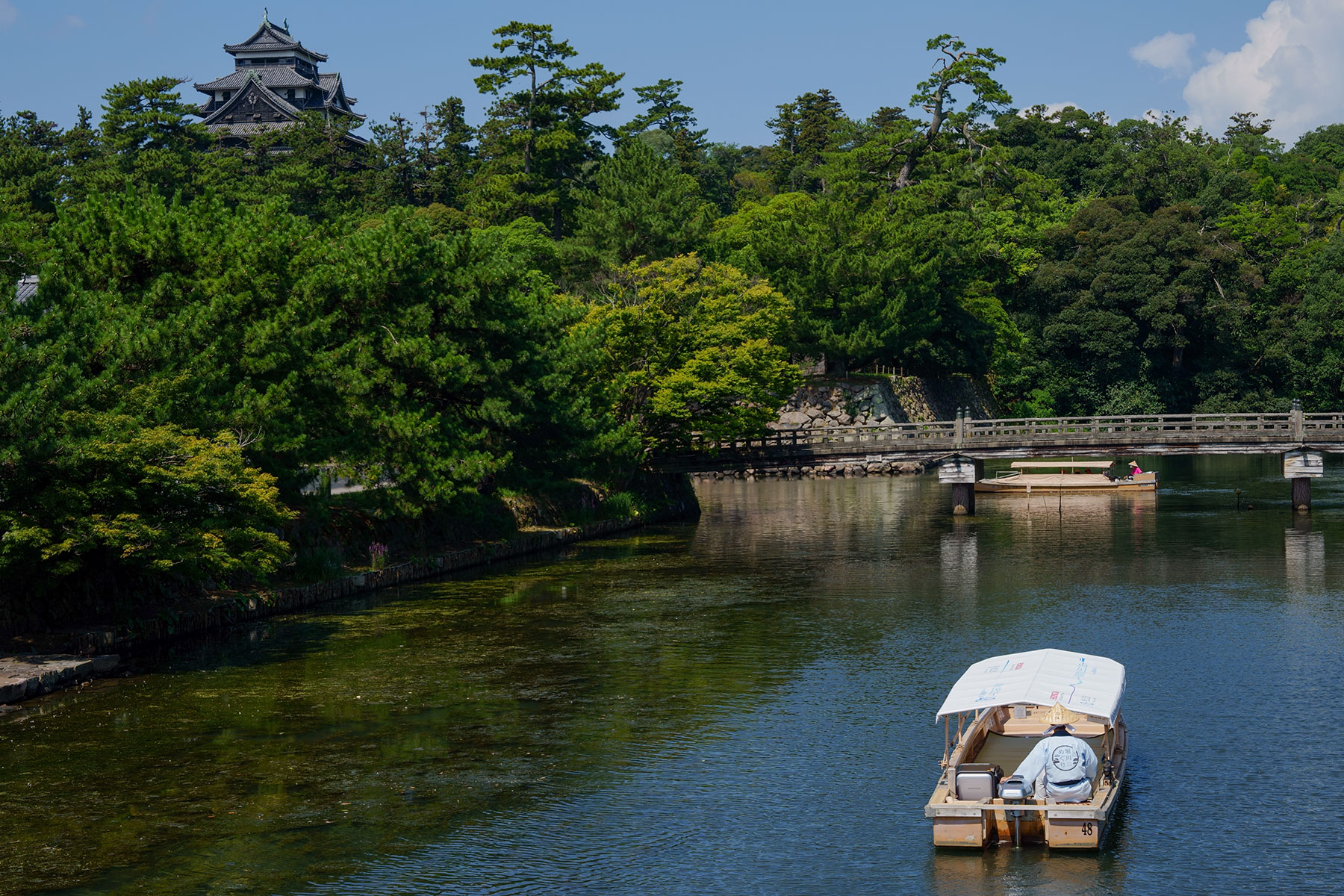
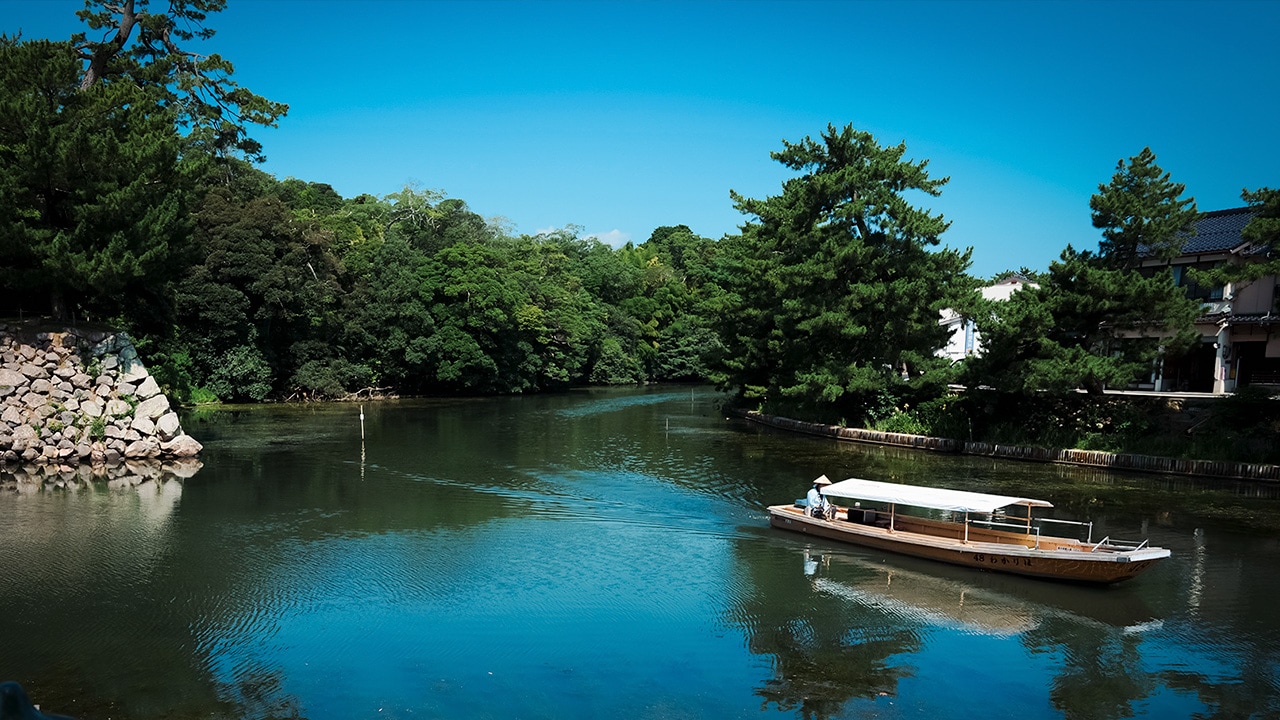
Matsue City’s request was to use electric propulsion systems on the “Gurutto Matsue Horikawa Meguri” (Horikawa Cruise) tourist boat, which operates around Matsue Castle, one of Japan’s five national treasures. In August 2023, approximately two years after the announcement of the concept model, a verification test using Honda’s newly developed electric propulsion system prototype began in Matsue City.
-
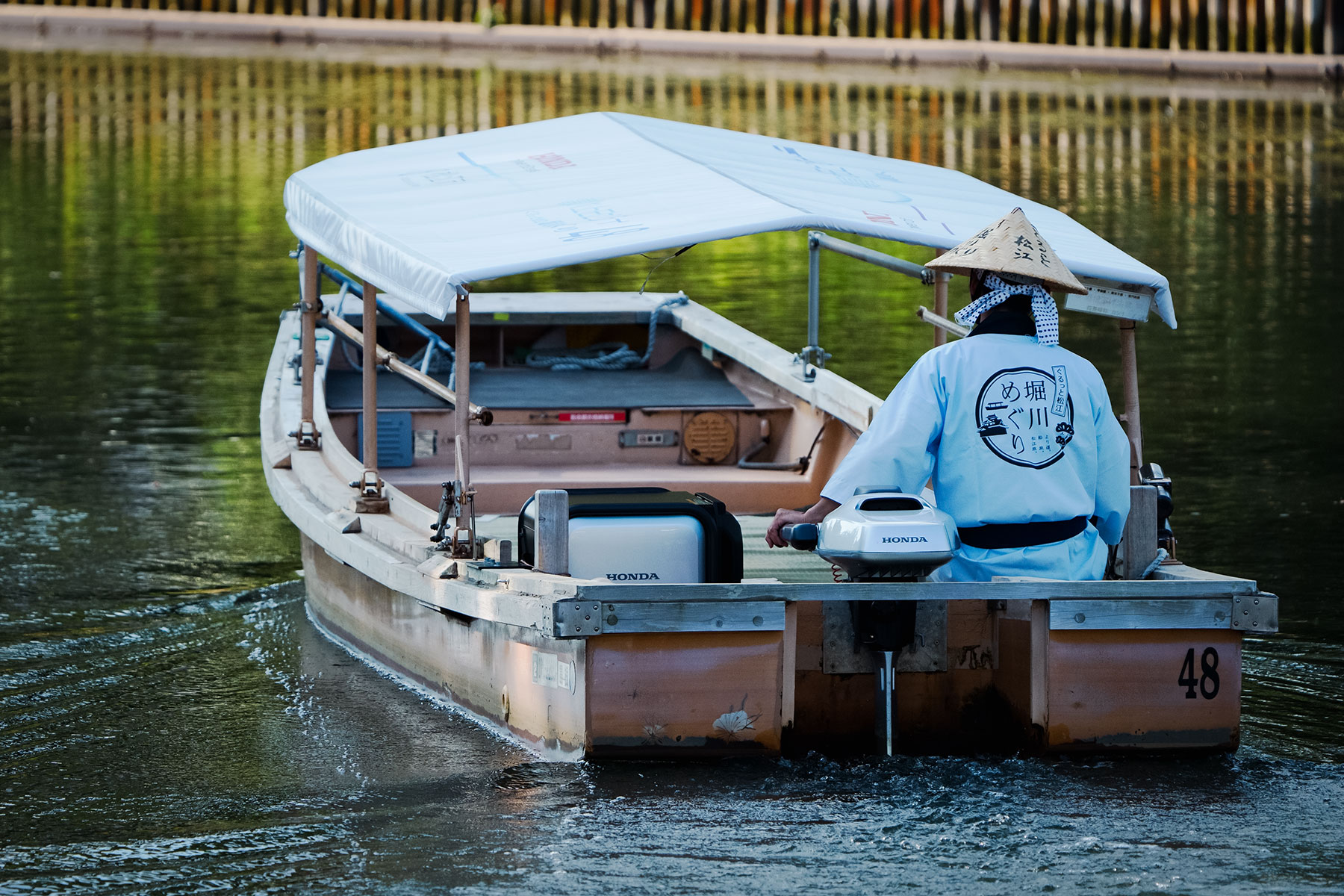
In August 2023, Honda launched a verification test using an electric propulsion system prototype in Matsue City, Shimane Prefecture. -
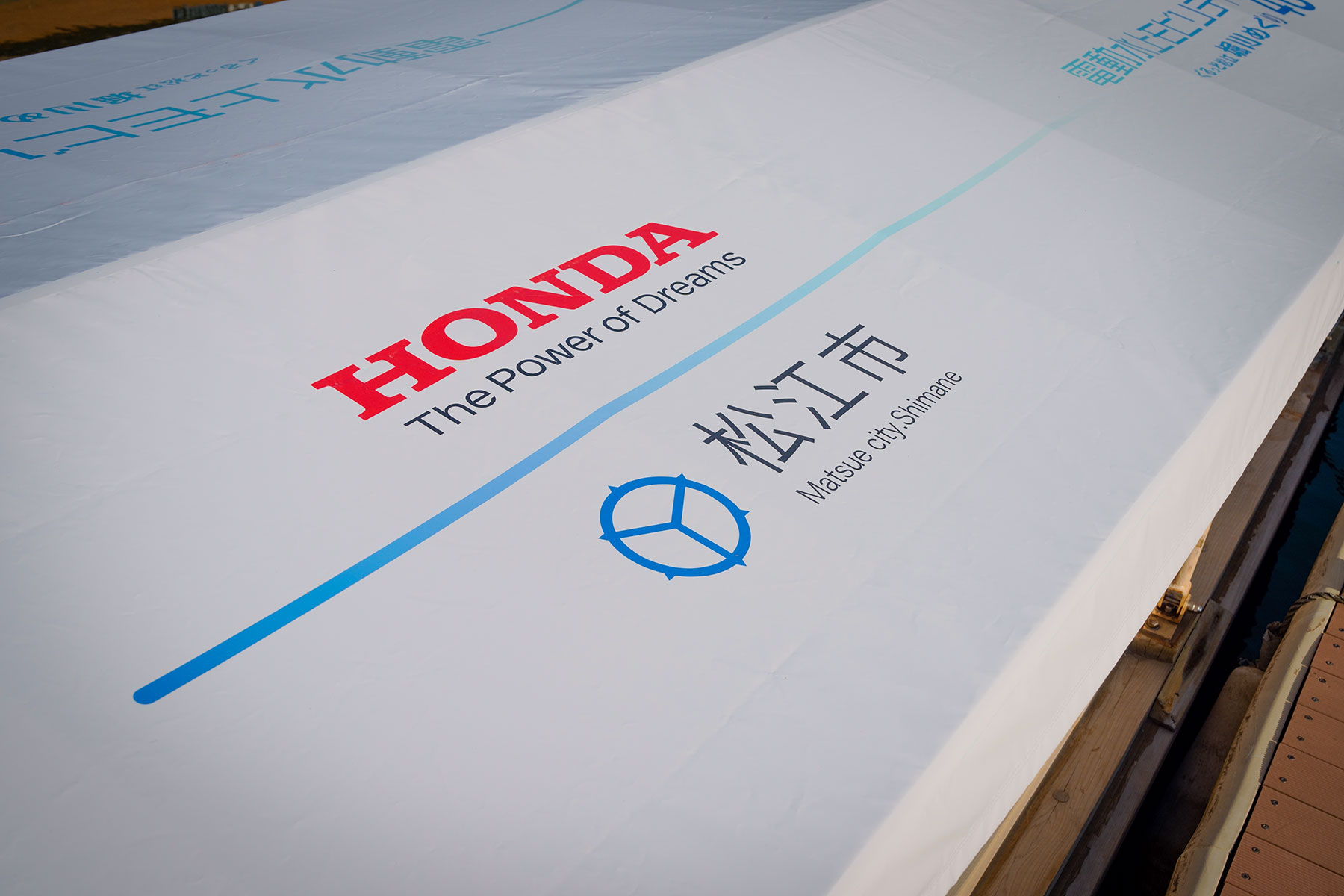
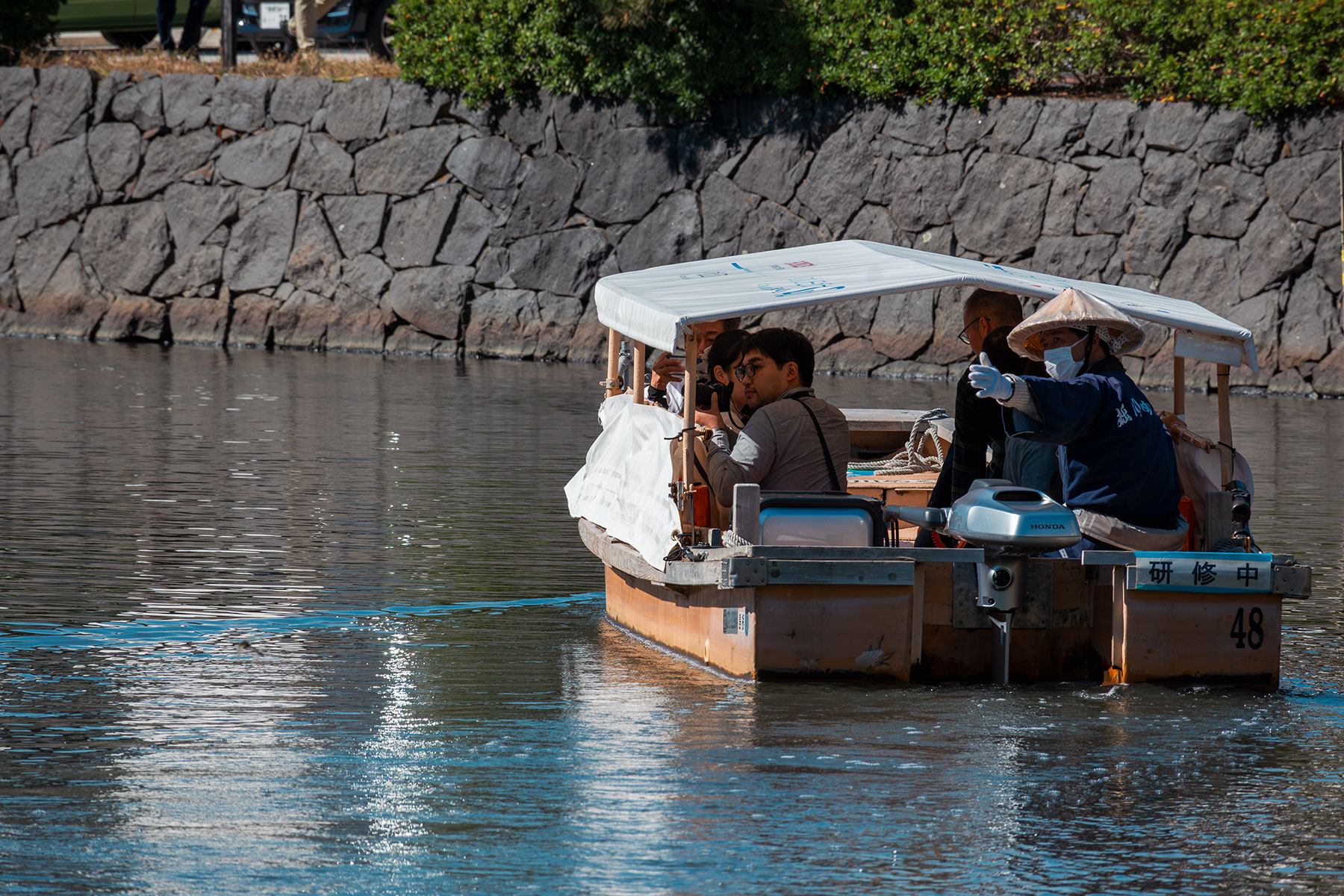
During the verification test, over 300 participants, including Matsue citizens answering a public call from Matsue City officials, boarded the vessel powered by an electric propulsion prototype system. Starting in April 2025, the Horikawa Cruise began regular electric-powered operation, and the number of passengers soon reached over 10,000.
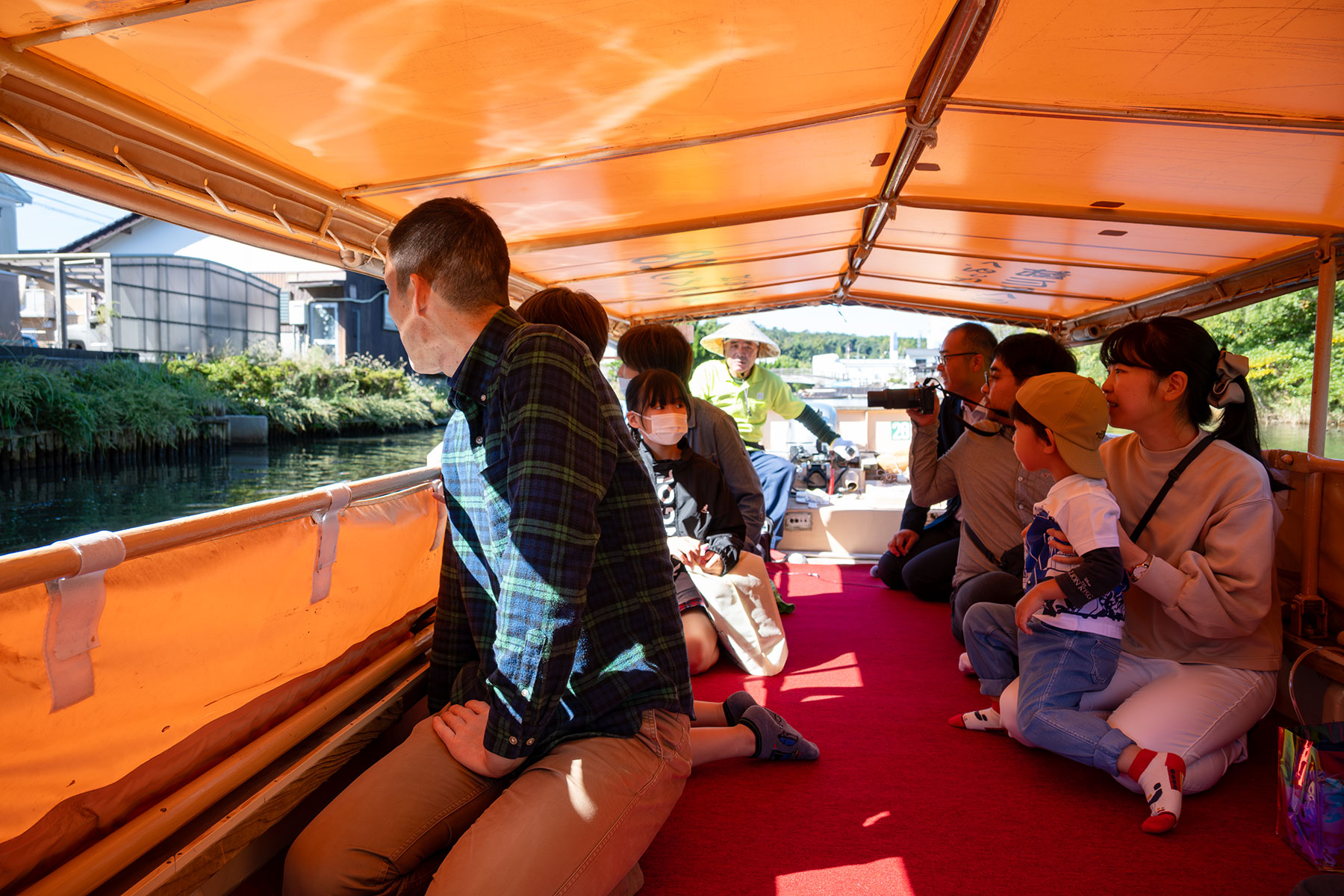
Passengers praised the prototype for its quietness, minimal vibration, and absence of exhaust fumes. In particular, many passengers noted that they could hear the sounds of birds chirping, water flowing, and wind rustling, as well as the tour guide’s voice.
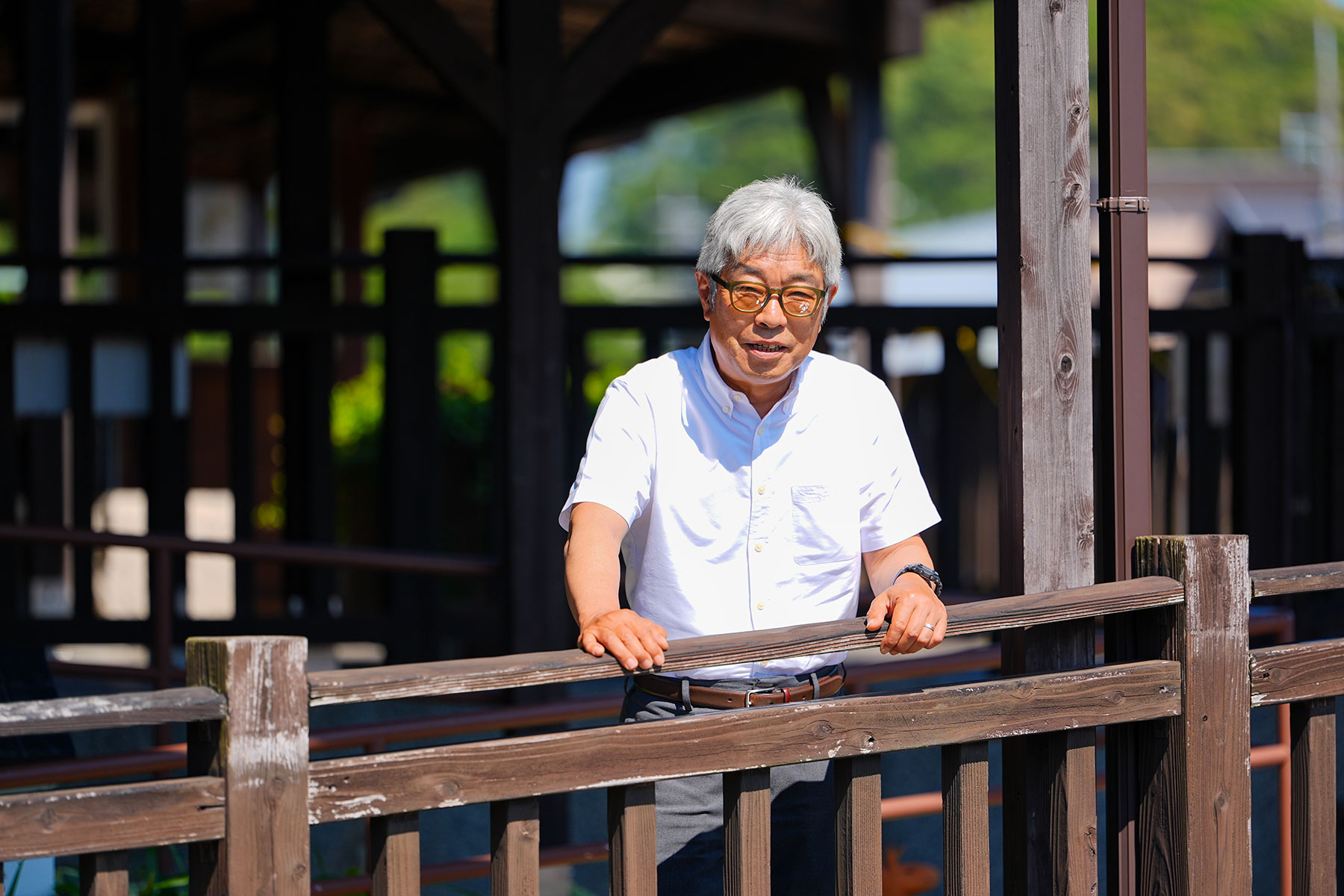
“We were concerned whether the passengers would understand the difference between the electric propulsion system and the Honda engines previously used in the Horikawa Cruise, as both are known for their quiet operation. However, customers clearly noticed the difference,” said Hiroshi Takagi, Executive Director of the Matsue City Tourism Promotion Public Corporation.
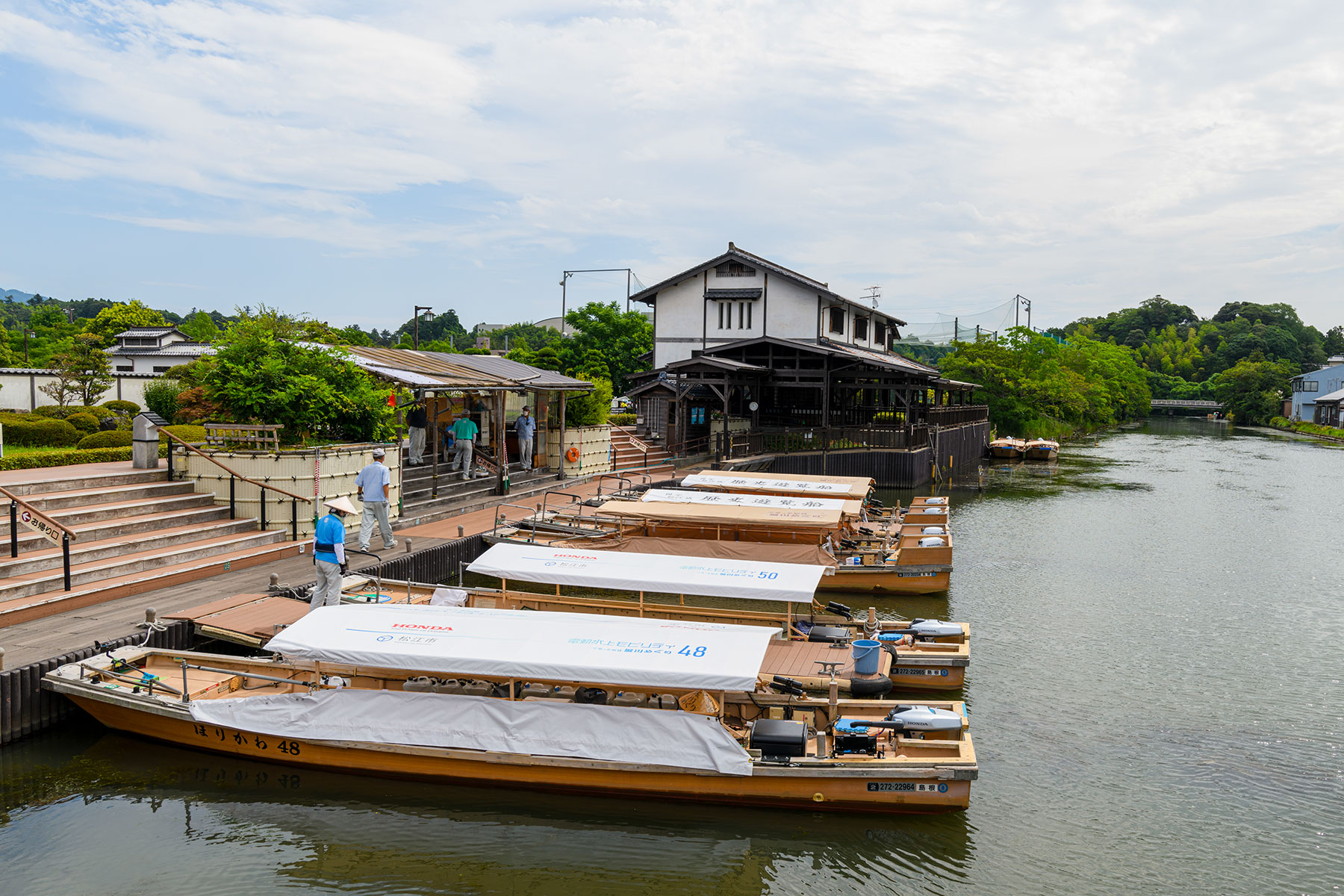
Currently, the electric-powered boat operates upon request. Additionally, one boat powered by the electric propulsion system prototype operates on a regular hourly schedule (departing at the top of the hour). Many people who wish to ride the boat are already aware of the collaboration between Matsue City and Honda through news reports and other media.
All Benefits in Electric Propulsion System Prototype Verification Test
The verification test of the electric propulsion system prototype has already become a significant presence for Matsue City, Shimane Prefecture, because the city, which has declared itself an international cultural tourism city and a zero-carbon city, is beginning to attract attention from other parts of Japan and around the world.
First, Matsue City was selected by the Ministry of the Environment as a decarbonization pioneer region for its efforts to reduce greenhouse gas emissions through the prototype testing of electric propulsion systems. The city also participated in the GEA international Conference organized by the Global Climate Action Summit in October 2024.
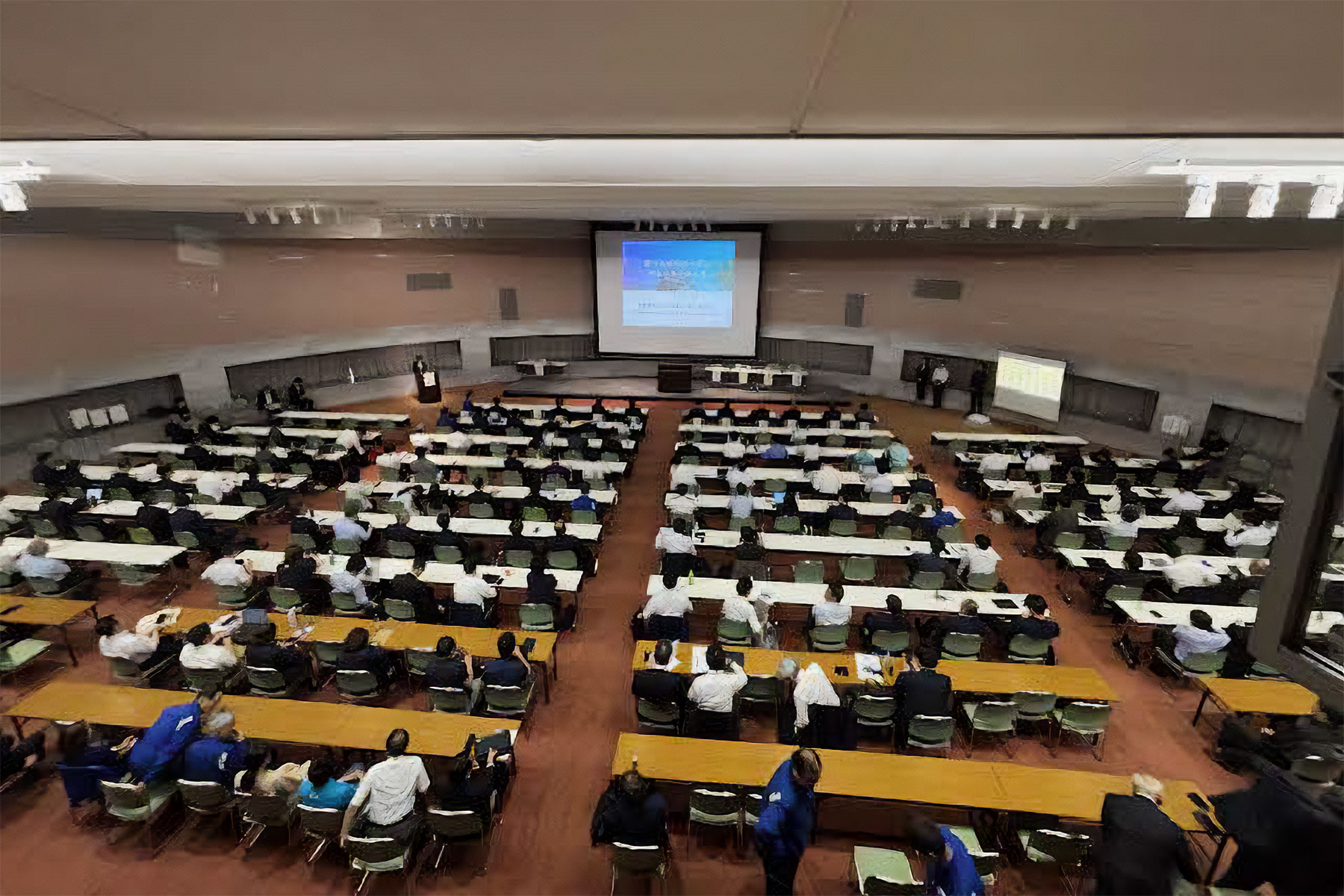
“Matsue City is recognized as a model city for public-private partnership. In June 2025, we hosted the Zero Carbon Summit in Matsue City, where approximately 300 participants, including local government officials and business representatives from across Japan, exchanged ideas. I believe that Matsue City is at the center of this initiative thanks to Honda’s electric propulsion system prototype verification test” (Kimihiko Yomura, Director of the Environmental Energy Division, Matsue City).
Matsue City considers the first year of operation as a period to identify issues. The quiet, vibration-free, and comfortable ride, along with the soundless environment, can be seen as a recreation of the hand-paddled boats used when Matsue Castle was first built 400 years ago.
“Electric propulsion system prototypes offer numerous benefits. However, moving forward, we will focus on improving operational efficiency to showcase this technology globally, as well as constructing new vessels specifically designed for electric propulsion systems. These efforts aim to increase tourist numbers and revitalize inbound tourism, among other initiatives, as Matsue City explores various ideas to achieve its goal of becoming a zero-carbon city.” (Yomura)
Honda's electric propulsion system prototype plays a role in this effort.
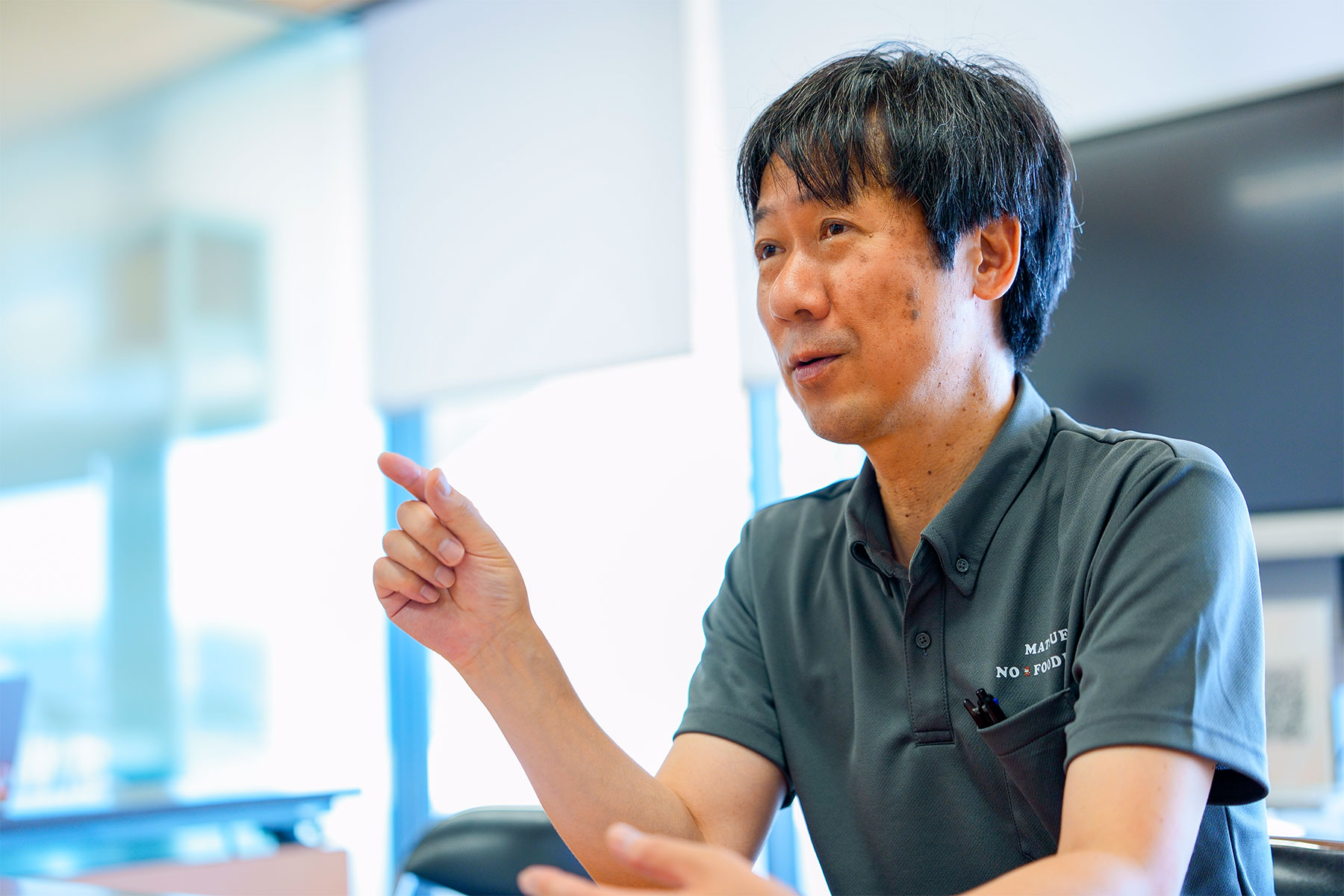
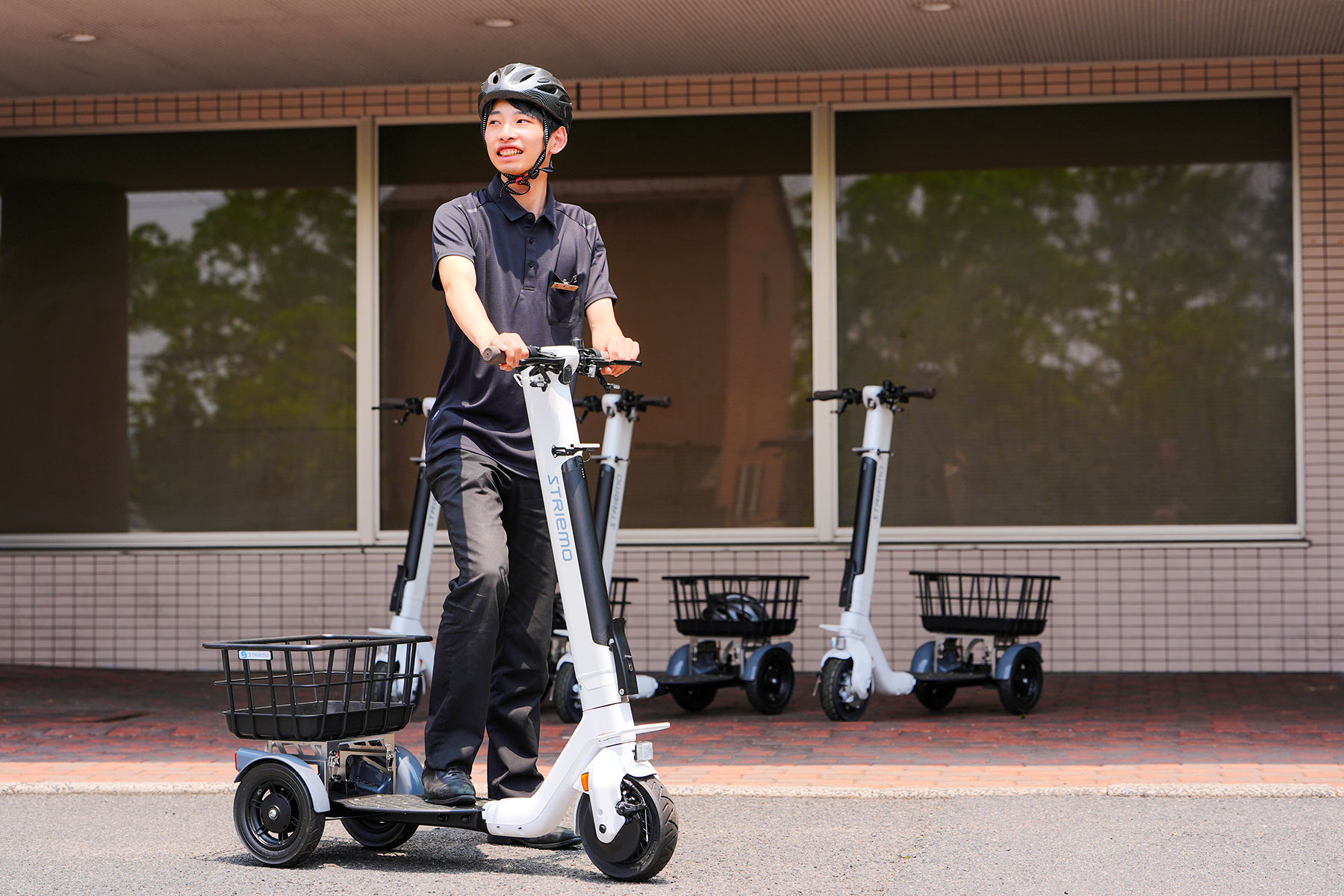
In addition to the electric propulsion system prototype, Striemo, an electric three-wheeled vehicle developed by Striemo, Inc., resulting from Honda’s IGNITION new business creation program, also contributes to Matsue City's vision as a zero-carbon city.
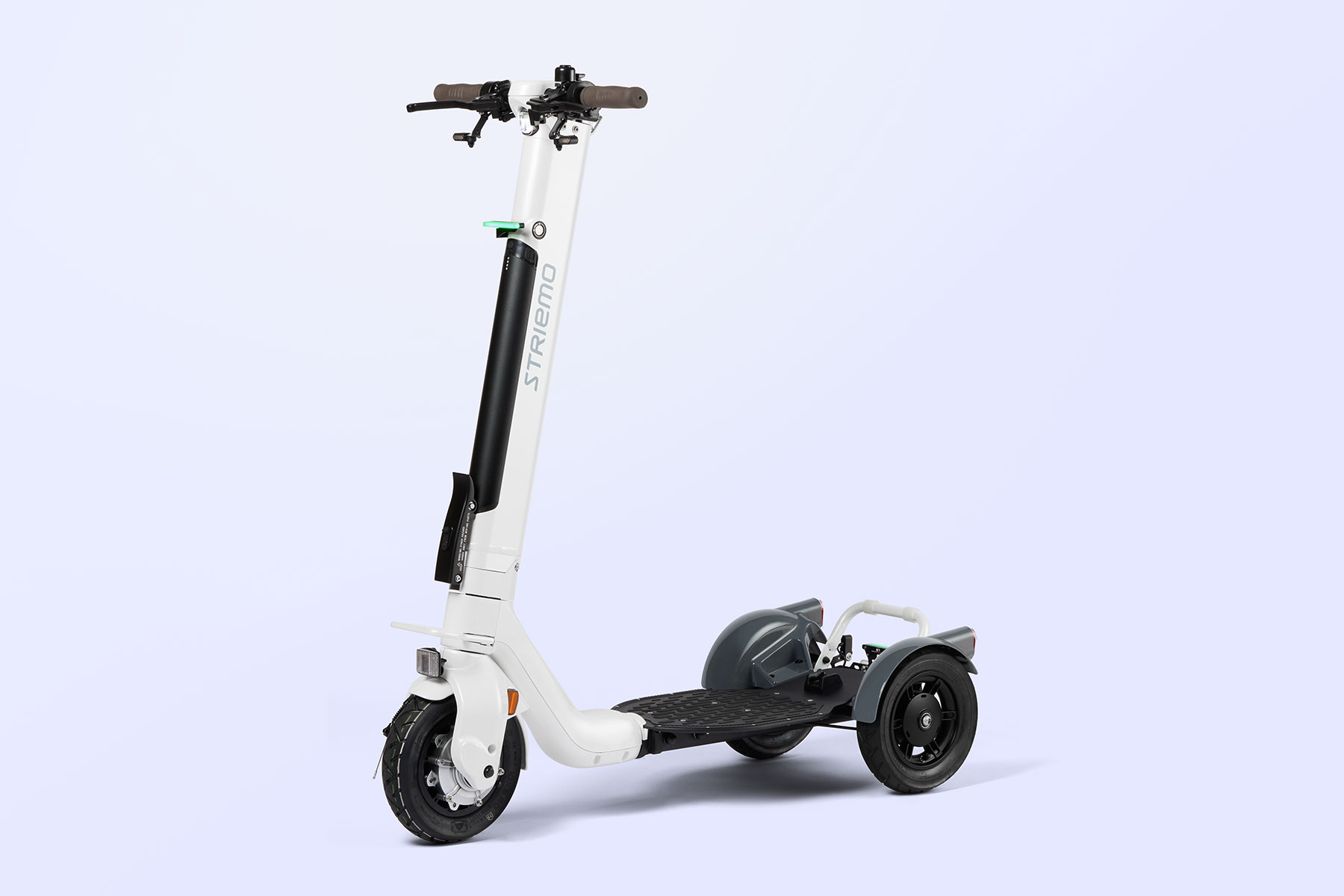
Striemo is a three-wheeled mobility solution that enables standing while riding, utilizing Honda’s balance-assist system developed for motorcycles. According to Tomoya Aoki of Asari Kanko Co., Ltd., which operates the Matsue Urban Hotel Group that adopted Striemo, Matsue City faces the challenge of limited secondary transportation options between tourist destinations due to the lack of sufficient buses and taxis.
-
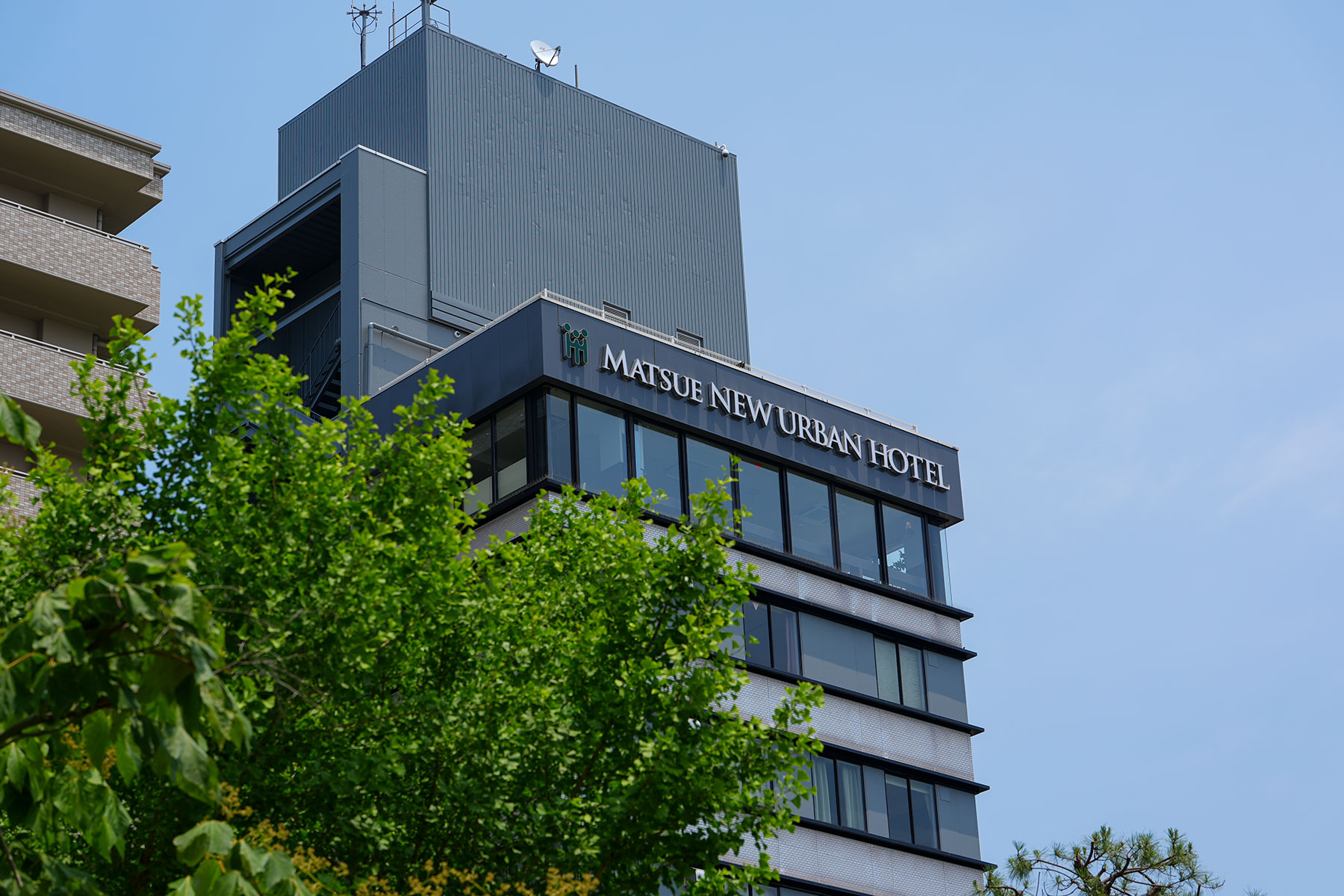
Striemo lined up in front of Matsue New Urban Hotel -
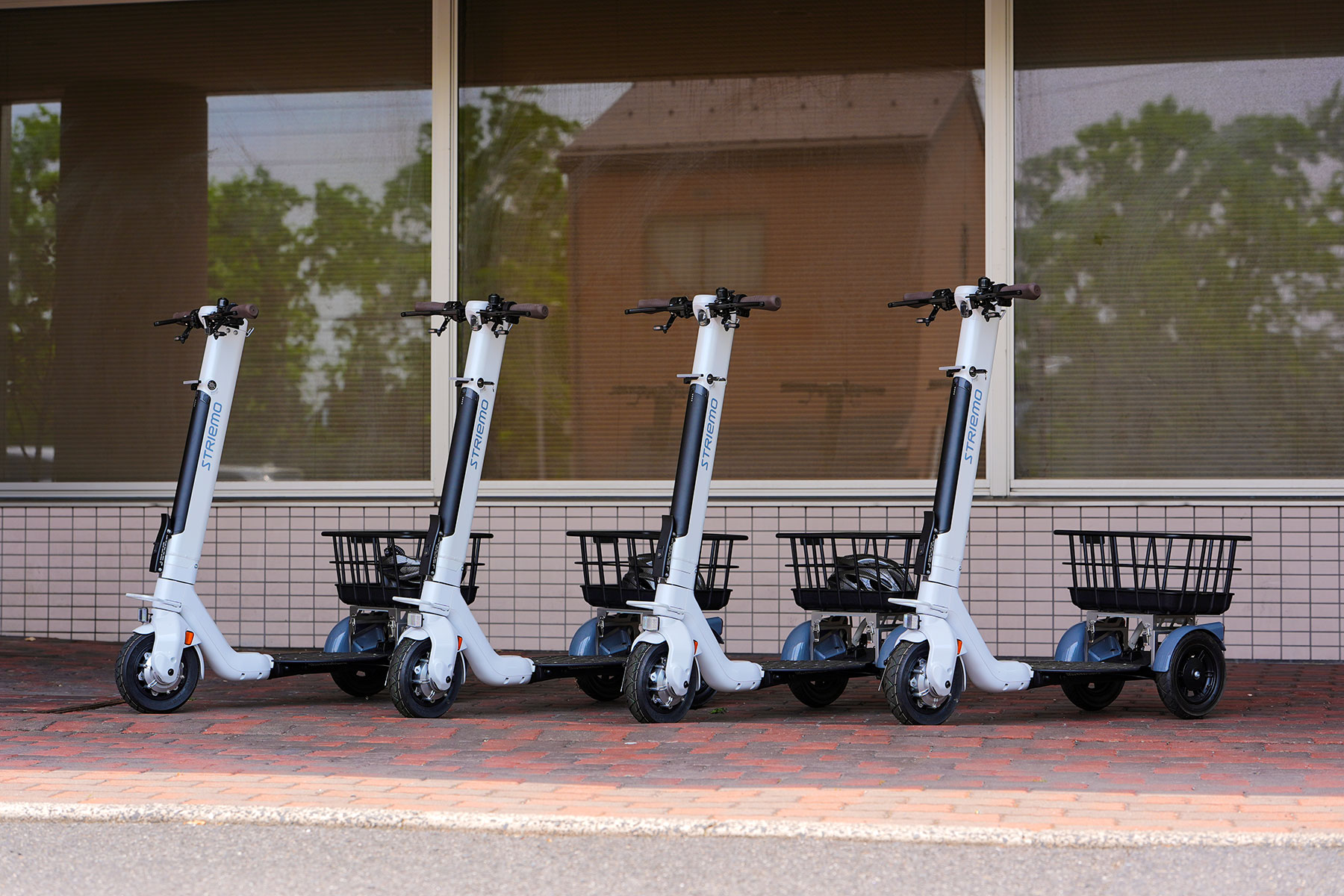
The goal of using Striemo is to effectively address the secondary transportation challenges facing Matsue City.
“We were inspired by the Horikawa Cruise and thought that battery-powered personal mobility would be ideal, which led us to discover Striemo.” (Tomoya Aoki)
Matsue Urban Hotel plans to use Striemo in the future to operate small-scale guided tours.
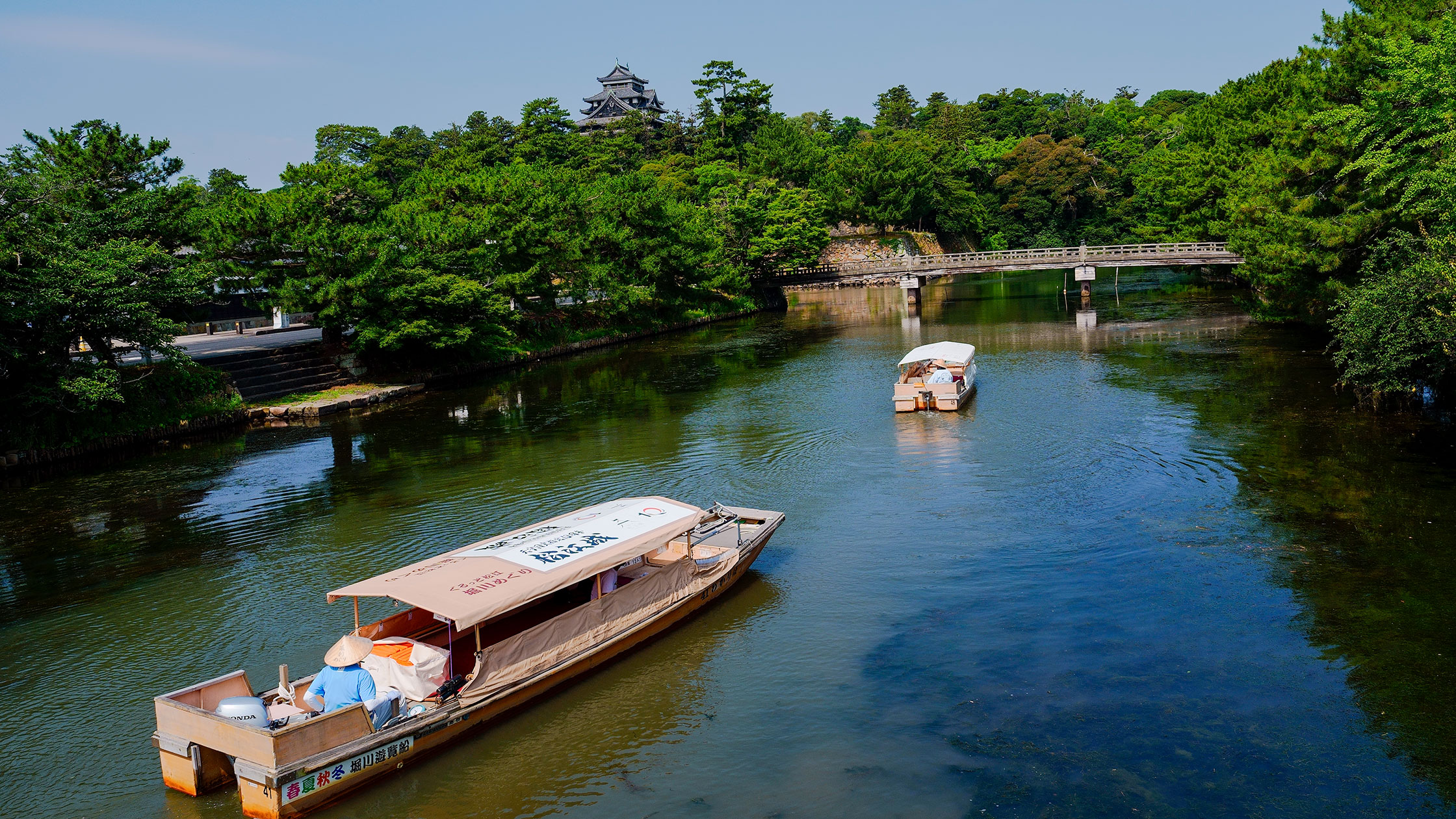
A prototype electric propulsion system glides silently amid the chirping of wild birds. This serene scene supports Matsue City’s Zero Carbon City declaration, and Honda’s commitment to carbon neutrality is silently gaining momentum.