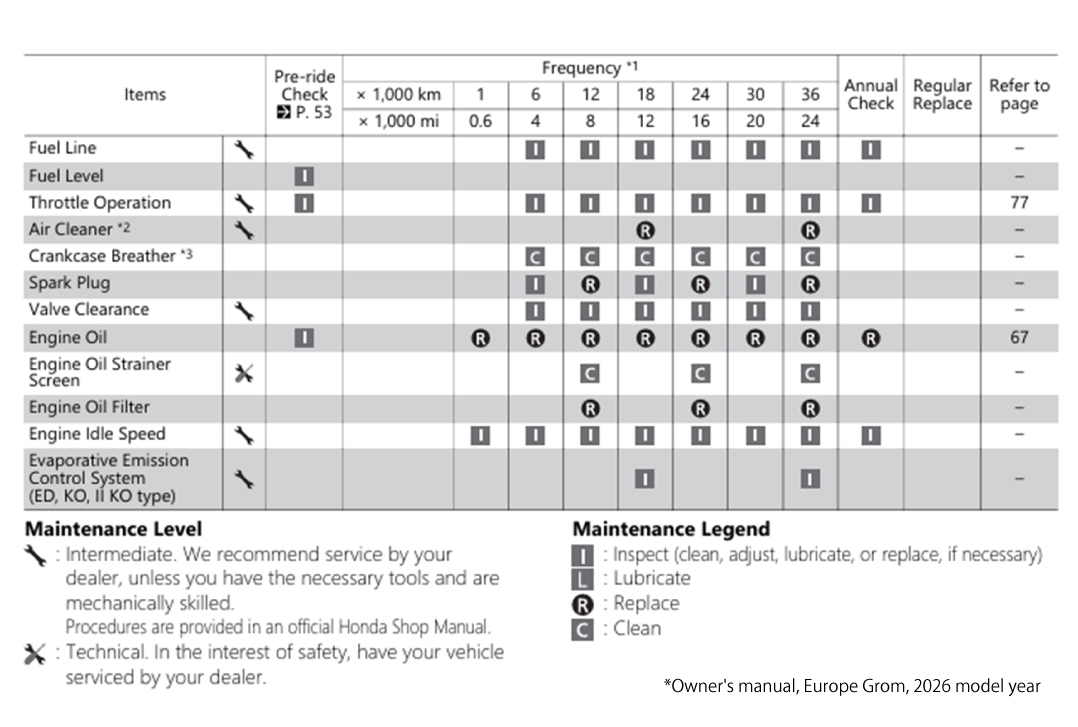


Were you aware that, in addition to the maintenance schedule, your owner’s manual also includes a pre-ride inspection as part of daily checks?

I suppose I kind of know about those... To be honest, it's a bit of a hassle, so I don't
check the bike very often.
My motorcycle is running fine, so do I really need to have it inspected every time?

Pre-ride inspections are extremely important!
In addition to preventing sudden malfunctions, performing a pre-ride inspection is a
good opportunity to reflect on how you ride your motorcycle.
Let’s go over the items on the list.
Index
1.First: Always Perform a Pre-Ride Inspection

In the owner’s manual, it says that it is the user’s responsibility to perform a pre-ride inspection covering the following items.
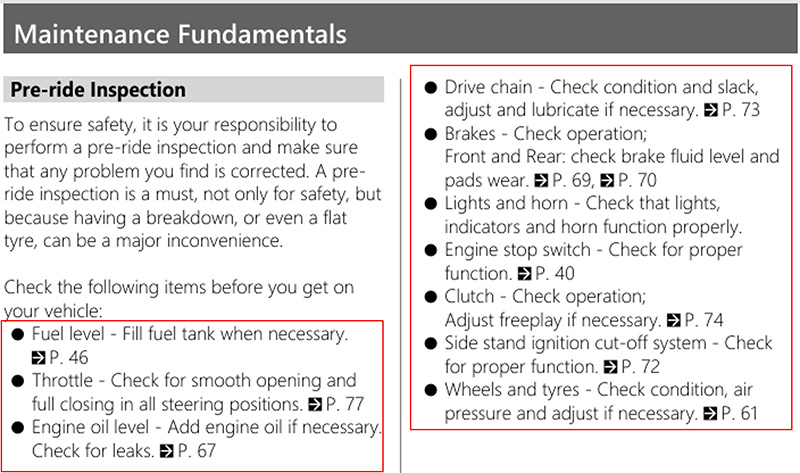

Fuel level, throttle operation, engine oil level, chain... There are quite a few items to check, aren't there? Why are these items required for the pre-ride inspection?

As it says at the beginning of this owner's manual, these pre-ride inspection items are
designed to prioritize the safety of the occupants and those around them.
Performing routine pre-ride inspections helps prevent dangerous malfunctions,
such as sudden engine stalling, brake failure, or the throttle sticking.
2.Pre-Ride Inspection Benefit: An Opportunity to Learn How You Ride Your Motorcycle
Another benefit of performing a pre-ride inspection is that it gives you an opportunity
to reflect on how you ride your motorcycle.
Let’s take a look at the following user example.
During the pre-ride inspection, this user noticed that the headlights were slightly
dimmer and that the starter motor was turning a little more slowly when starting the
engine.
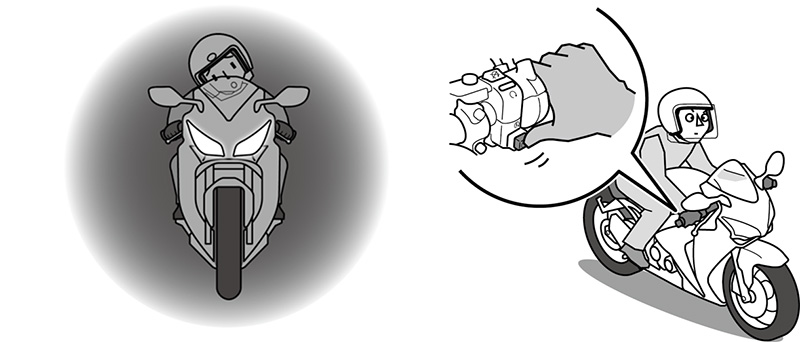
When this user consulted a technician at an authorized Honda dealer, he was told that the
battery voltage was low.
Let’s take a look at the following user example.
The technician also asked if the user often rode in heavy traffic or if they went for
long periods without riding their motorcycle.
It was just as the technician suspected; this user often visited tourist spots that were prone to traffic jams on the way there on their days off, and they didn’t ride their motorcycle very often.
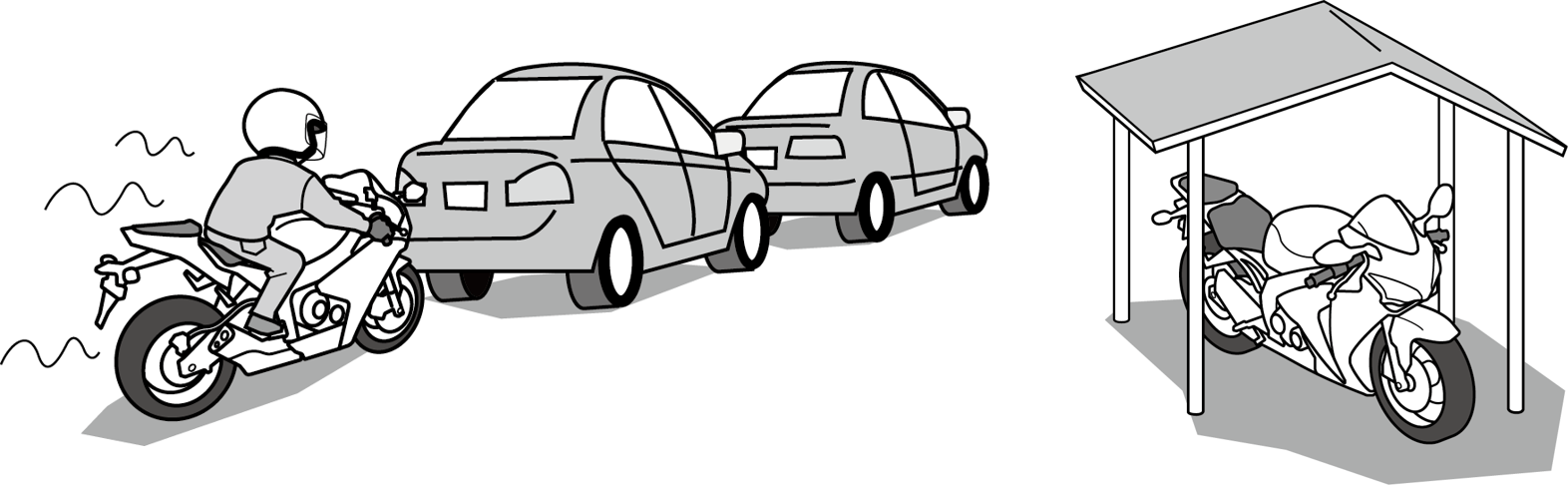

The technician ultimately advised the user to try riding in areas with less traffic and to
ride the motorcycle a little more often.
It seems like the headlights aren't dimming at all anymore as a result.

By noticing something unusual during the pre-ride inspection and consulting a technician, this user was able to reflect on how they ride their motorcycle!
As you can see, there are many cases where riders notice something unusual with their
motorcycle during a pre-ride inspection and are able to fix the problem before it gets
worse.
To use the human body as an analogy, regular maintenance and inspections at a dealer
are
like regular health checkups.
A pre-ride inspection is like a daily health check, like weighing yourself.
Just as people check their own health and reflect on their daily lives, let’s perform
routine inspections on our motorcycles and be mindful of how we ride them!
3.Inspect and Maintain Your Bike Tailored to Your Riding Style
So, how about your motorcycle?
You've mentioned that you ride your motorcycle to work every day, but have you noticed
that, for example:
・That the chain is dirty or rusty?
・That the tire’s grooves are shrinking?
・That your brake pads are worn out?
There's no problem with the brakes, but the chain is dirty and seems to have
stretched... Also, it looks like the tires are pretty worn down...

If you ride a motorcycle to work, you'll probably ride it every day, regardless of the
weather.
This is a situation where the chain lube could have been washed away by rain, or where
the brakes have been used frequently.
Just because your bike is running smoothly, it doesn’t mean everything is okay; be sure
to perform your pre-ride inspection every single time.
If anything feels off, check the OM maintenance page or consult a technician at an
authorized Honda dealer.
Here are some other riding circumstances, and corresponding maintenance items, that are
worth noting.
|
Other Potential Riding Styles |
Areas to Watch |
|---|---|
Frequent driving on rough roads (bumpy roads, gravel roads, snow-covered roads, unpaved roads, etc.) |
・Suspension, chains, and other undercarriage components
|
Frequent driving on steep roads in mountainous areas |
・Suspension, chains, and other undercarriage components
|
Always riding with a passenger/lots of luggage on the rack |
・Wear of rear tires
|
Following the maintenance schedule in the owner's manual and performing pre-ride inspections are the bare minimum steps you should take to care for your motorcycle.
Furthermore, the key to enjoying long-term, comfortable riding is to assess the condition and usage history of your motorcycle through regular inspections and perform maintenance based on those findings.
To ensure you perform the proper maintenance based on how you ride your motorcycle and its condition, please consult a technician at an authorized Honda dealer if you have any questions.
Looks like my owner's manual has a maintenance schedule specifying maintenance intervals based on the motorcycle's mileage.
Guess the next maintenance service is 6,000 km away...
I just had it serviced a little while ago, and even though I ride my motorcycle to work every day, I guess it’ll be a while before I need another service.