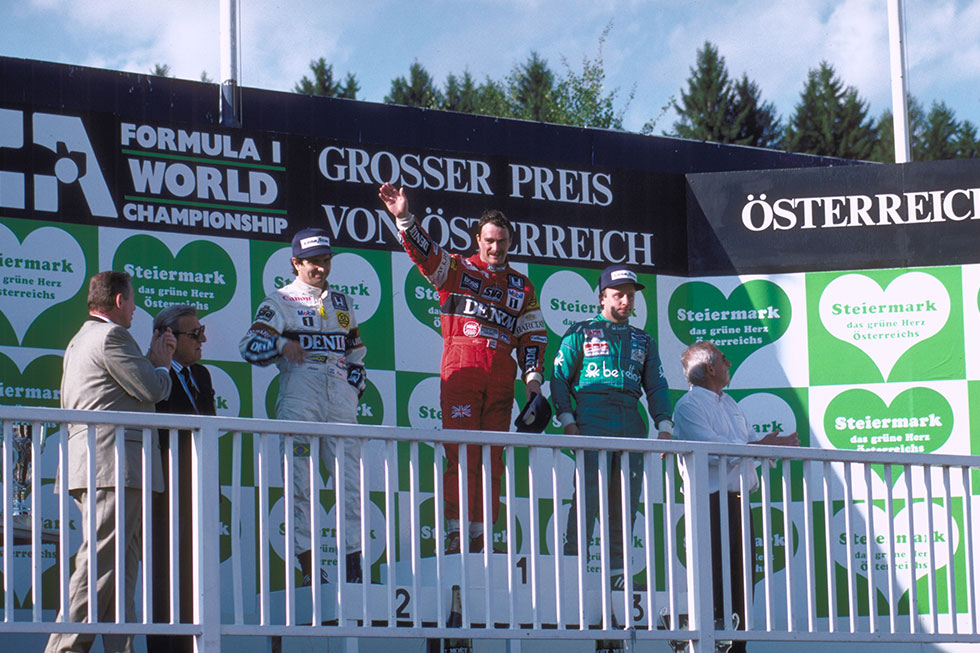
Victorious 100th F1 Race for Mansell and Honda
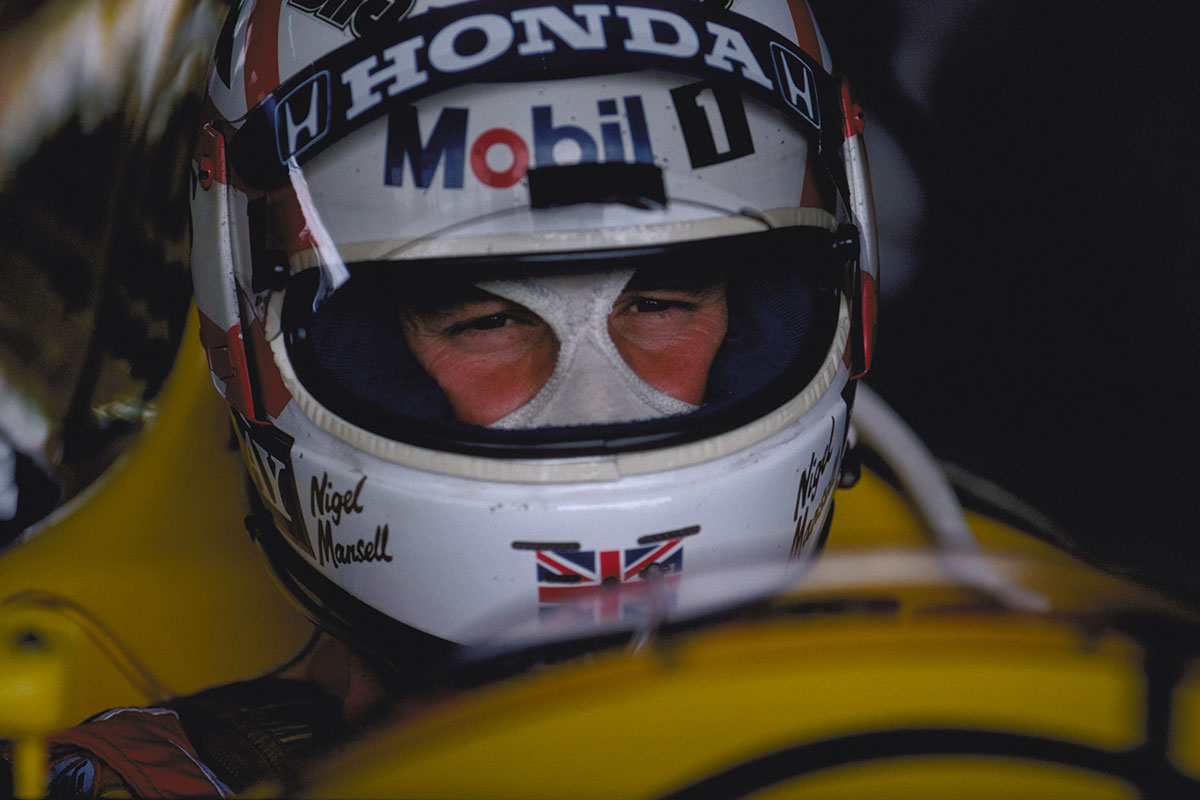
Multiple crashes lead to two restarts
The first time an F1 Grand Prix was held at the picturesque Spielberg circuit, surrounded by forests on the outskirts of Zeltweg, Austria, was 1970. The circuit, now known as the 4.3 km Red Bull Ring, was originally an ultra-high-speed 6 km course called the Estoril Ring. Nigel Mansell made his F1 debut at this Grand Prix in 1980 driving a Lotus Ford.
The hilly main straight was extremely narrow at the time, with almost no safety zones. Due to rain during Saturday’s qualifying, grid positions were determined based on Friday qualifying times, resulting in a slightly different lineup at the front of the grid, increasing the danger level.
The 52-lap race was chaotic, with three starts. The first start saw Martin Brundle (Zakspeed) on 17th grid lose control while accelerating uphill on the infamous bump, crashing into the outer guardrail and causing a pile-up behind him, leading to a red flag.
The race was restarted 40 minutes later. Surprisingly, Mansell (Williams Honda) from the second grid line had a clutch issue and appeared to jump the start, only to lose power moments later. The blocked cars behind him had to squeeze through the gap between Mansell’s car and the pit wall, causing major chaos and an accident involving 12 cars, resulting in another red flag. Stalled cars at the front of the narrow track left no escape route for the cars behind, making collisions inevitable. Fortunately, Mansell’s car was undamaged, and he was able to restart from the front row.
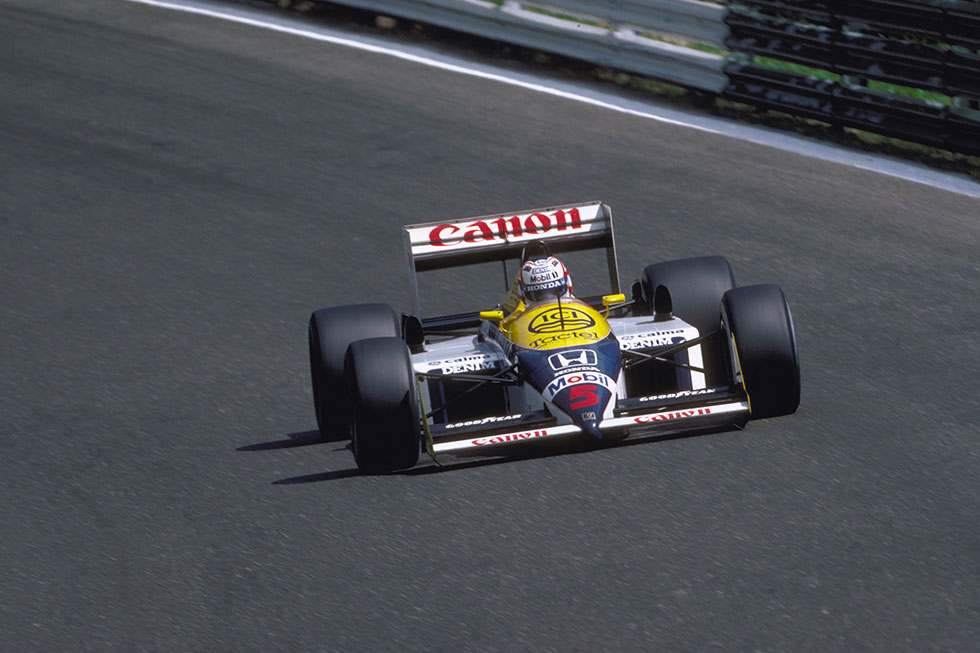
Taking the lead despite clutch issues
The race was finally underway on the third attempt. Nelson Piquet (Williams Honda) started from pole position and led, while Mansell, cautious with his clutch, fell back to fourth place after being overtaken by two cars. Alain Prost (McLaren TAG), who was competing for the top ranking, started from the pits due to repairs, and Ayrton Senna (Lotus Honda) fell back after a poor start. The race turned into a two-car battle between the Williams cars.
Piquet led until Lap 20, but relinquished his position to Mansell, who had been closing in. Honda had informed Piquet before the race that the Honda V6 turbo has never completed a race on this circuit, and that he should not push the engine too hard and make sure to finish the race. Piquet commented post-race that he had followed their instructions and not pushed too hard.
Mansell led from Lap 21 to 52, the race’s end. He successfully completed his tire change, and by the finish, the gap to second-place Piquet had widened to 55 seconds. Mansell’s fastest lap of 1 minute 28.318 seconds, averaging 242.207 km/h, was an astonishing speed at the time. Despite the turbo engines having their maximum pressure reduced to 4.0 bar due to the adoption of pop-off valves, their speed was dominating.
Tragedy before the podium
This race marked Mansell’s 100th F1 Grand Prix start and Honda’s 100th race since its debut at the 1964 German GP, making it a historic victory for both.
It was a race filled with joy for Mansell. However, after the finish, as he was riding on a truck slowly heading toward the podium, responding to the cheers, he suddenly stood up and hit his head on the bridge girder. Mansell, who had been the cause of a red flag, and in apparent pain from knocking his head, smiled wryly as he celebrated the victory on the podium.