Awakening as a Top Driver
Consecutive wins follow first victory
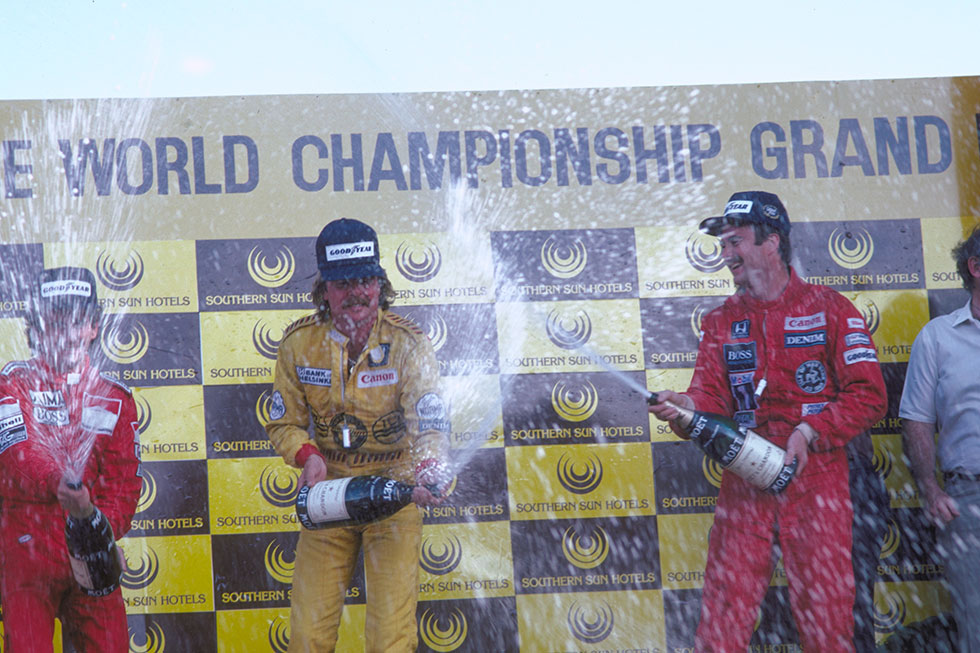
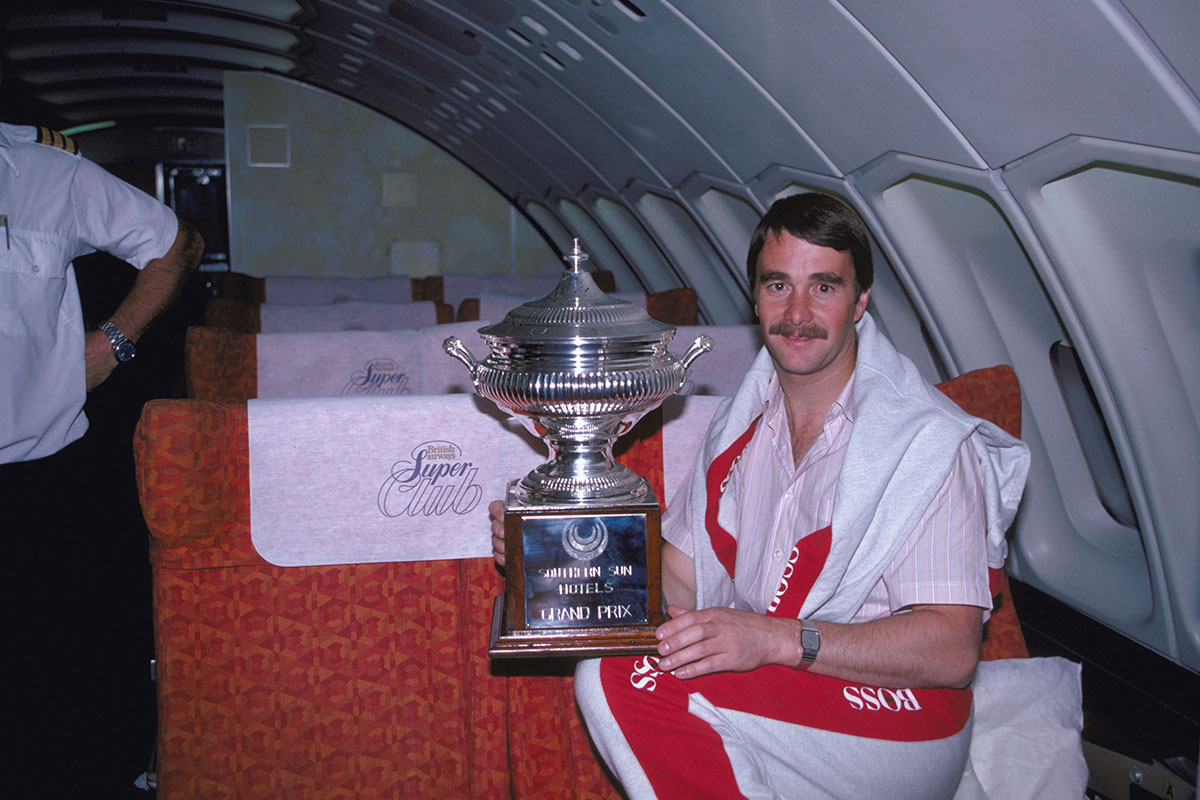
After five years of frustration without a single victory since his debut, Nigel Mansell seemed to have been unleashed by his first win. Following his maiden victory at the European Grand Prix, he secured his second win just two weeks later in Johannesburg, South Africa. He commented that he had not only gained confidence, but also gained an understanding of the race as a whole and the strategies needed to win.
Honda engineers had implemented measures in advance to adapt to the high altitude of the Kyalami Grand Prix Circuit, which sits at an elevation of 1,520 meters. Mansell secured pole position in qualifying as expected, his second in his career. Nelson Piquet (Brabham BMW) and Keke Rosberg (Williams Honda) were close behind, by a mere 0.14 seconds. At the time, F1 turbo engines were generating an impressive 1,500 horsepower in qualifying spec, and at the South African GP, and Brabham-BMW set a top speed of 341 km/h, while Williams Honda was 334 km/h, overwhelming the rest of the field. Turbo boost was reduced for the race, keeping the 220-liter fuel limit in mind. Race day was hit by extreme heat, and tire changes during the race were expected.
Stability in a chaotic race
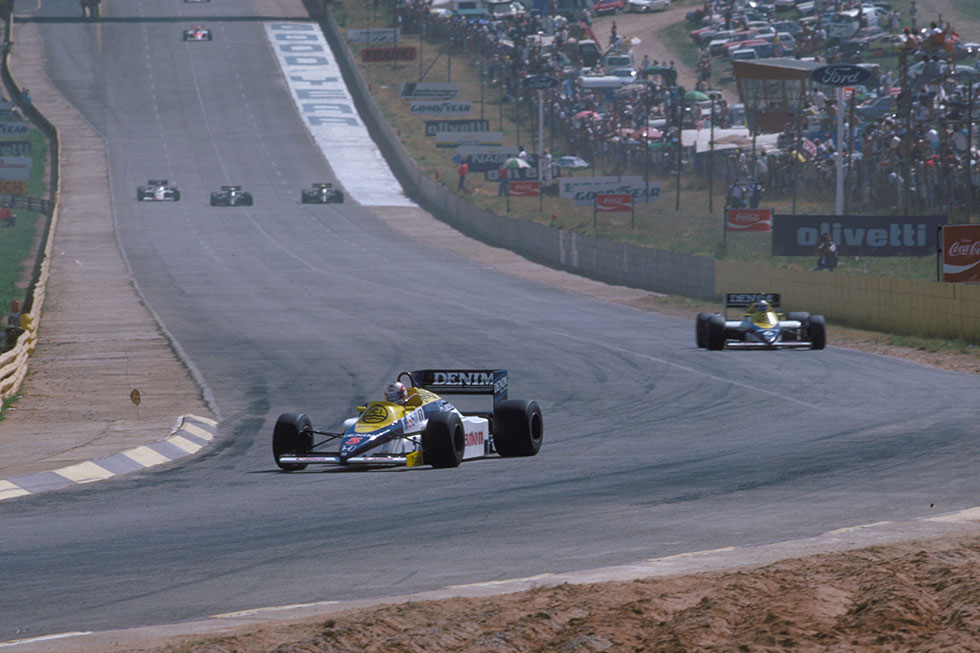
Starting from pole, Mansell was off to a perfect start and maintained the lead. Piquet settled into second place. However, Rosberg, starting from third on the grid, made an error shifting gears, and fell behind the two Lotus Renault cars (Elio de Angelis and Ayrton Senna) down to fifth place. However, this is where Rosberg’s charge began. By Lap 5, he had overtaken three cars to move up to second, forming a Williams Honda 1-2, and kept up his pace to close in on Mansell. This was possible due to Rosberg’s selection of a different compound to Mansell’s, although both were using Goodyear tires. While Mansell opted for the relatively harder B compound on all four wheels, Rosberg chose the softer C compound for the right front tire. This aggressive driving was also a testament to the pride of the team’s ace driver.
On the long straight entering Lap 8, Mansell relinquished his position to Rosberg, who was rapidly closing in from behind. However, Rosberg’s lead lasted only one lap. As the two Williams cars were about to enter Lap 9, the 15th place car’s engine failed at the end of the straight, spilling oil onto the track. Rosberg, who had been following closely behind, lost control and spun into the sand trap on the outside of Turn 1. Fortunately, he avoided a crash and the engine was still running, allowing him to return to the race. However, this caused Rosberg to lose places significantly. As a result, Mansell regained the lead without a fight, while Rosberg dropped to fifth. With only 10 laps remaining in the 75-lap distance, the race was a grueling battle involving just 11 cars.
Honda F1’s first 1-2 finish
After Rosberg fell back, Mansell focused on conserving tires, reducing boost and driving for fuel efficiency. Behind him, the two McLaren TAG cars driven by Alain Prost and Niki Lauda gradually closed in. The McLaren team, which had prioritized race pace over qualifying in their setup, was a force to be reckoned with.
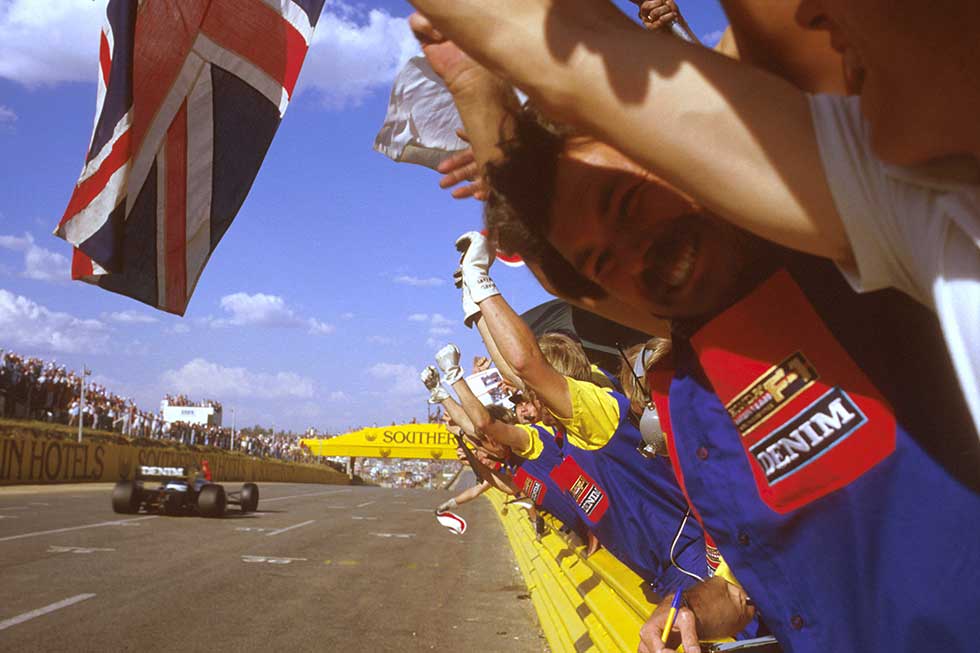
On Lap 35, Prost pitted for tires, losing 33 seconds, and on Lap 38, Mansell, who was in the lead, also pitted, losing 38 seconds. The gap between the two cars narrowed significantly, and by the end of Lap 59, was just 1.1 seconds. During this time, Rosberg, who was making a fierce charge, regained positions by changing tires on laps 27 and 48. Lauda, who had been running in second place, dropped out on Lap 37 due to a turbo issue. With 16 laps remaining, Prost’s pace suddenly dropped. His engine began making unusual noises, indicating misfires. On Lap 71, with five laps remaining, Rosberg caught Prost and moved up into second place, restoring the Williams Honda 1-2. Rosberg’s pursuit was relentless, and as Mansell took his second consecutive victory, Rosberg was just 8 seconds behind. Prost managed to hold on to third place, but was lapped by the top two cars in the closing stages.
For Honda, this was its first 1-2 finish in Formula 1. For the Williams team, it was their first since the 1981 Brazilian Grand Prix, four years prior.
In the final race of the season, the Australian Grand Prix, Mansell started from second on the grid with his sights set on victory. However, he collided with pole-sitter Senna at the first turn, and despite being confident of a third consecutive win, retired. Rosberg took the win, and Williams Honda’s Constructors’ Championship ranking rose to third, behind McLaren and Ferrari. Rosberg, meanwhile, decided to move to McLaren the next year following Niki Lauda’s retirement from F1, with Brazilian driver Piquet, the 1981/83 champion, already announced as his replacement at Williams.