Pollution
Initiatives to Prevent Environmental Pollution
In accordance with the Honda Environment Statement, Honda will comply with all laws, regulations, and ordinances related to air pollution, water pollution, soil pollution, and other hazardous substances, and will strive to prevent environmental pollution and control the emission of pollutants and contaminants.
Air Pollution
Honda recognizes that efforts for preservation of clean air have been a critical issue since the 1960s when the pollution problem became serious. The Company, therefore, has been working to protect the clean air through the development of technologies that reduce the gases emitted from its products.
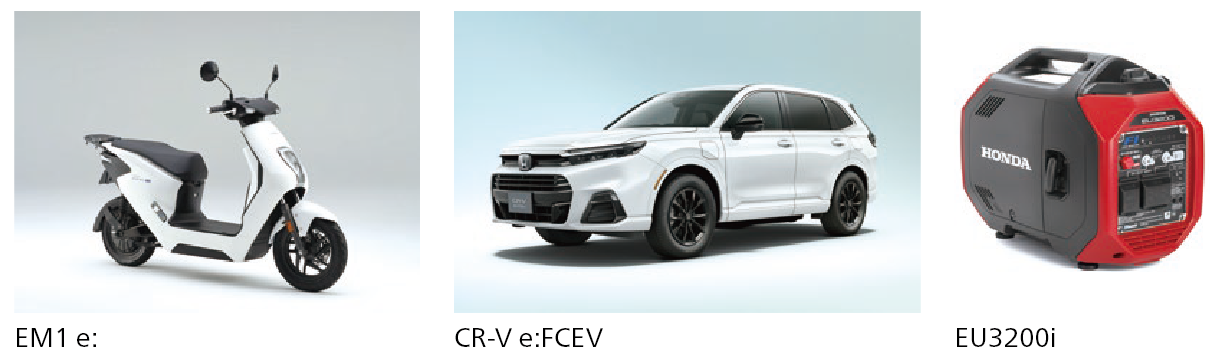
In product areas, Honda has reduced exhaust emissions from motorcycles by switching the engines of all its motorcycles on the market to four strokes, with the Honda Programmed Fuel Injection (PGM-FI) system being applied to more than 91% of models sold worldwide for better combustion efficiency.
With regard to automobiles, the Accord Plug-in Hybrid has become the first in the world to certify to SULEV*1 20 of California’s LEV*2 III emissions regulations, deemed to be the toughest in the world. In addition, Honda has introduced technologies to reduce emissions in advance of other advanced emission regulations, such as Euro 6 in Europe and Stage 6 of Particulate Matter (PM) emissions in China.
As for power products, Honda has cleared compliance with United States Environmental Protection Agency Phase 3 regulations, the most stringent in the world, through engine enhancement technology without using a catalyst.
In the area of corporate activities, Honda is working to reduce the emissions of Volatile Organic Compounds (VOCs), which are solvent components in paint and thinner used in the paint processes and cause photochemical oxidants.
In the production of automobiles , Honda is globally implementing the shortprocess, high-functionality coating technology “Honda Smart Ecological Paint”*3,starting from the Saitama Factory Automobile Plant.
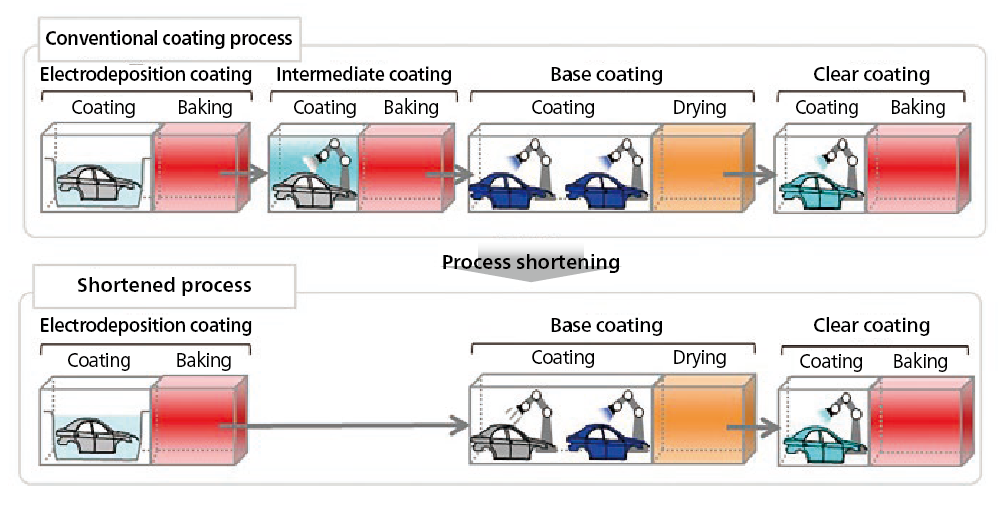
To reduce the use of organic solvents, which are a source of VOCs, the reduction of the amount used is being promoted by using water-based coating materials and shortening the coating process.
In addition, Honda employs a combustion exhaust system (RTO: Regenerative Thermal Oxidizer) to burn and deodorize the VOCs contained in the exhaust air before releasing it into the atmosphere.
- Super Ultra Low Emission Vehicle
- Low Emission Vehicle
- A technology that eliminates a middle coating process from the commonly used 4-coat/3-bake auto body painting process, thereby realizing a 3-coat/2-bake waterbased painting process
Water Pollution
Honda selects areas where it can operate in harmony with the surrounding water resources and conducts its corporate activities in accordance with the environmental assessment laws and regulations of each country.
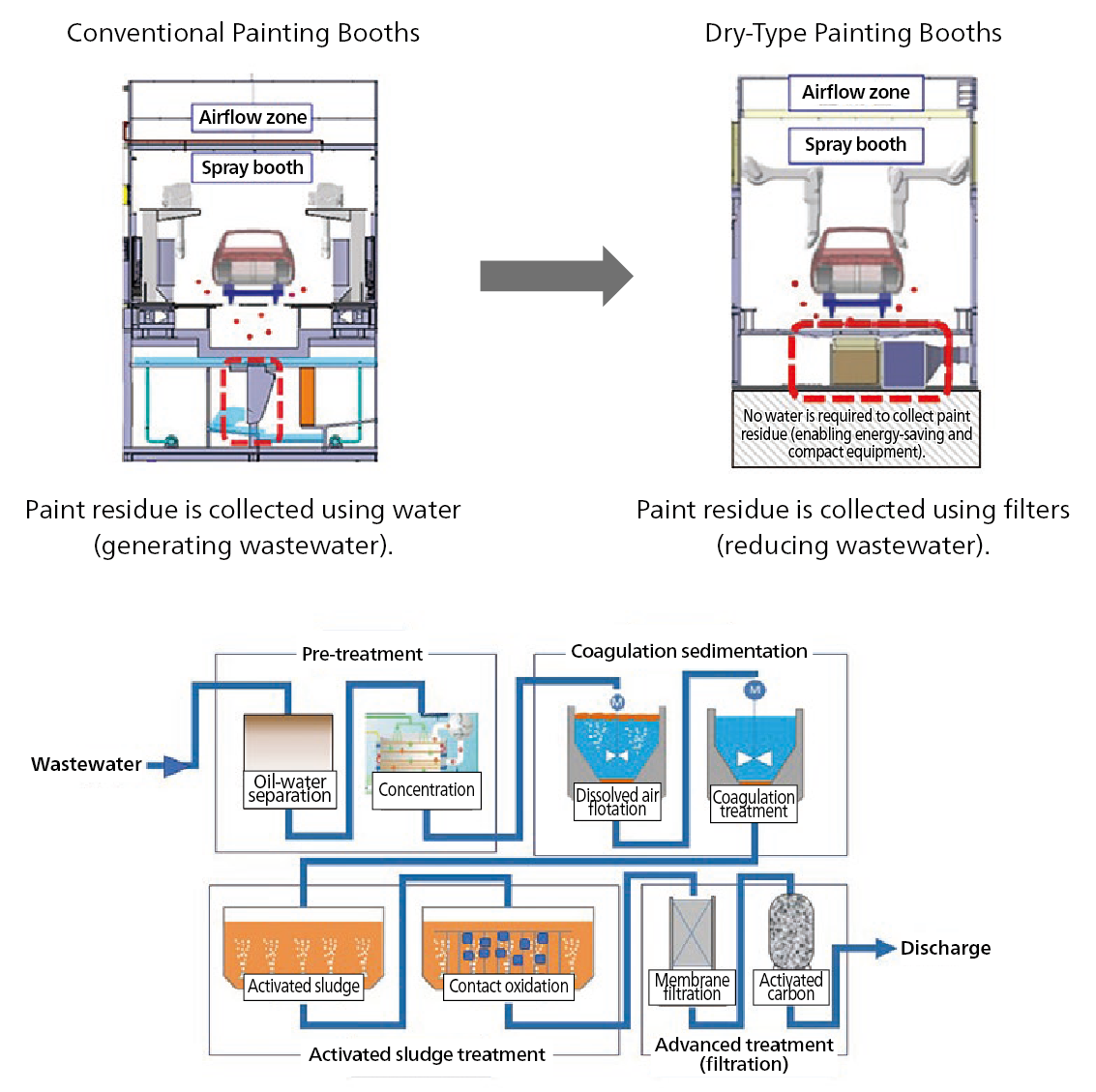
Honda treats wastewater and discharges treated water in accordance with applicable laws and regulations of each country and region-specific rules, etc., and works to manage and provide information on wastewater, which includes thorough quality control and the disclosure of water quality test findings.
To reduce the environmental burden, Honda is promoting the recycling of wastewater for reuse and the reduction of wastewater volume by using dry booths in the painting process.
Soil Pollution
Honda properly conducts soil management in accordance with the relevant laws and regulations of each country. When necessary, Honda also conducts soil contamination surveys and remediation measures.
Harmful Substances
Honda works to ensure the appropriate management and reduction of the chemical substances contained in automotive components from the product design and development stages in order to reduce those materials that impact the environment.
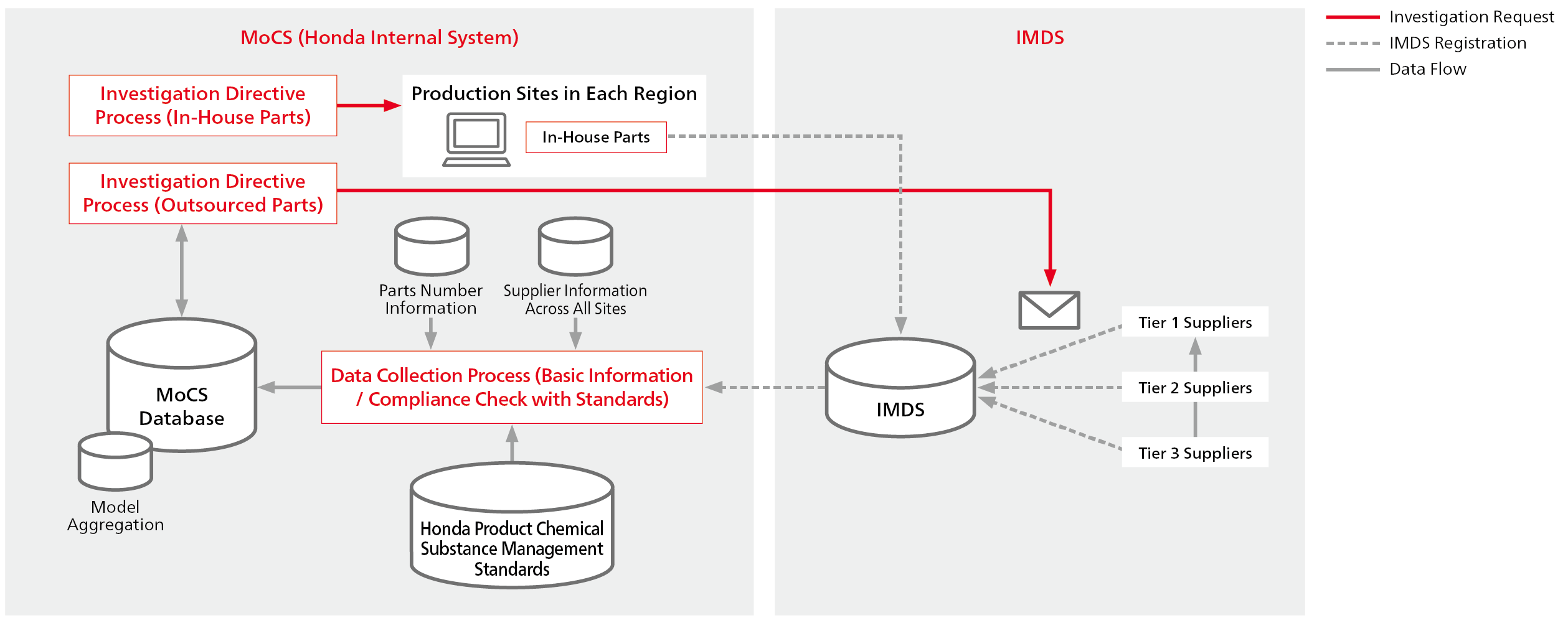
Laws and regulations have been introduced in each country to ensure the appropriate management of chemical substances and the reduction of harmful substances contained in automotive components. These legislations are based on the goal set by the United Nations in 2002 of minimizing the impact of chemical substances on people and the environment by 2020. The International Material Data System (IMDS), a mechanism for collecting information throughout the supply chain on the materials and chemical substances contained in components making up a vehicle, was developed in response to this trend largely by the German Association of the Automotive Industry. Honda is also tabulating and managing chemical substances via its independently developed global management system, called the Management System of Chemical Substances(MoCS), which collects information based on IMDS. Honda promotes the management of chemical substances via MoCS to comply with the Regulation concerning the Registration, Evaluation, Authorisation and Restriction of Chemicals (REACH) and other regulations on the use of substances of concern in each country. In addition, Honda is moving ahead with the reduction of four types of heavy metals (lead, mercury, hexavalent chromium and cadmium), in accordance with the European Directive on End-of-Life Vehicles (ELV Directive).