The Beginnings of Honda's Generators and the History of Their Design
Supplying Electricity to People Who Need It
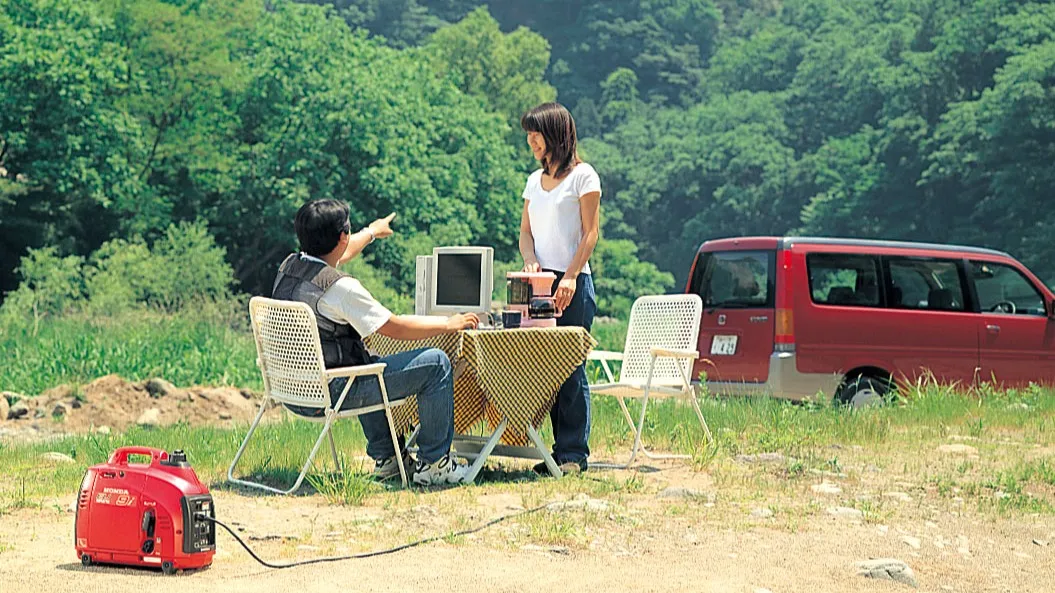
―The development of Honda's generators traces back to 1962. Masaru Ibuka, co-founder of Sony and a close friend of Soichiro Honda, was looking for a portable power source for what was, at that time, the world's smallest and lightest micro-television. He wanted a portable power source that would enable long-term viewing in locations without power outlets, like outdoors. Honda thought "we can manage this," and decided to begin work on development.
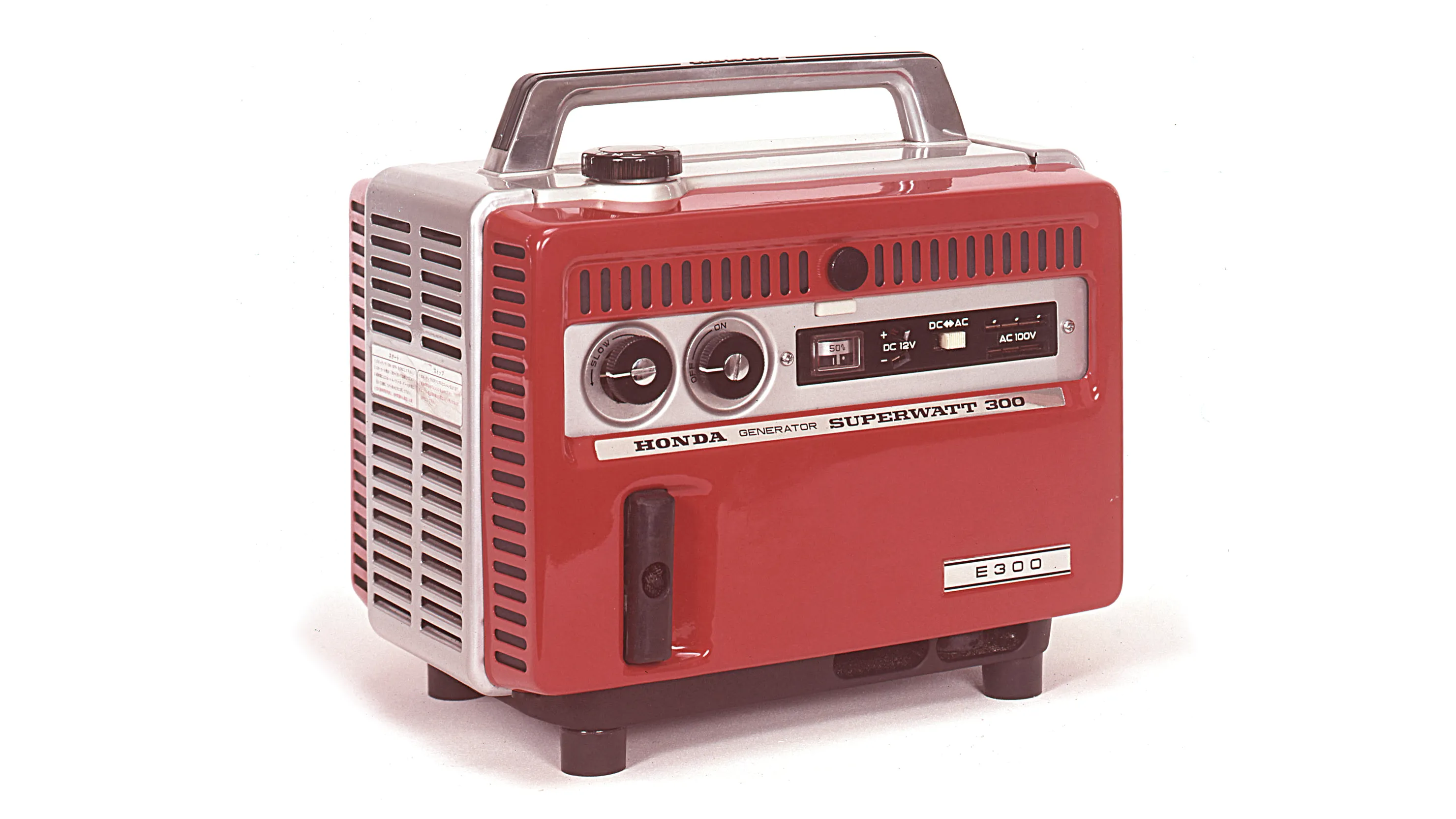
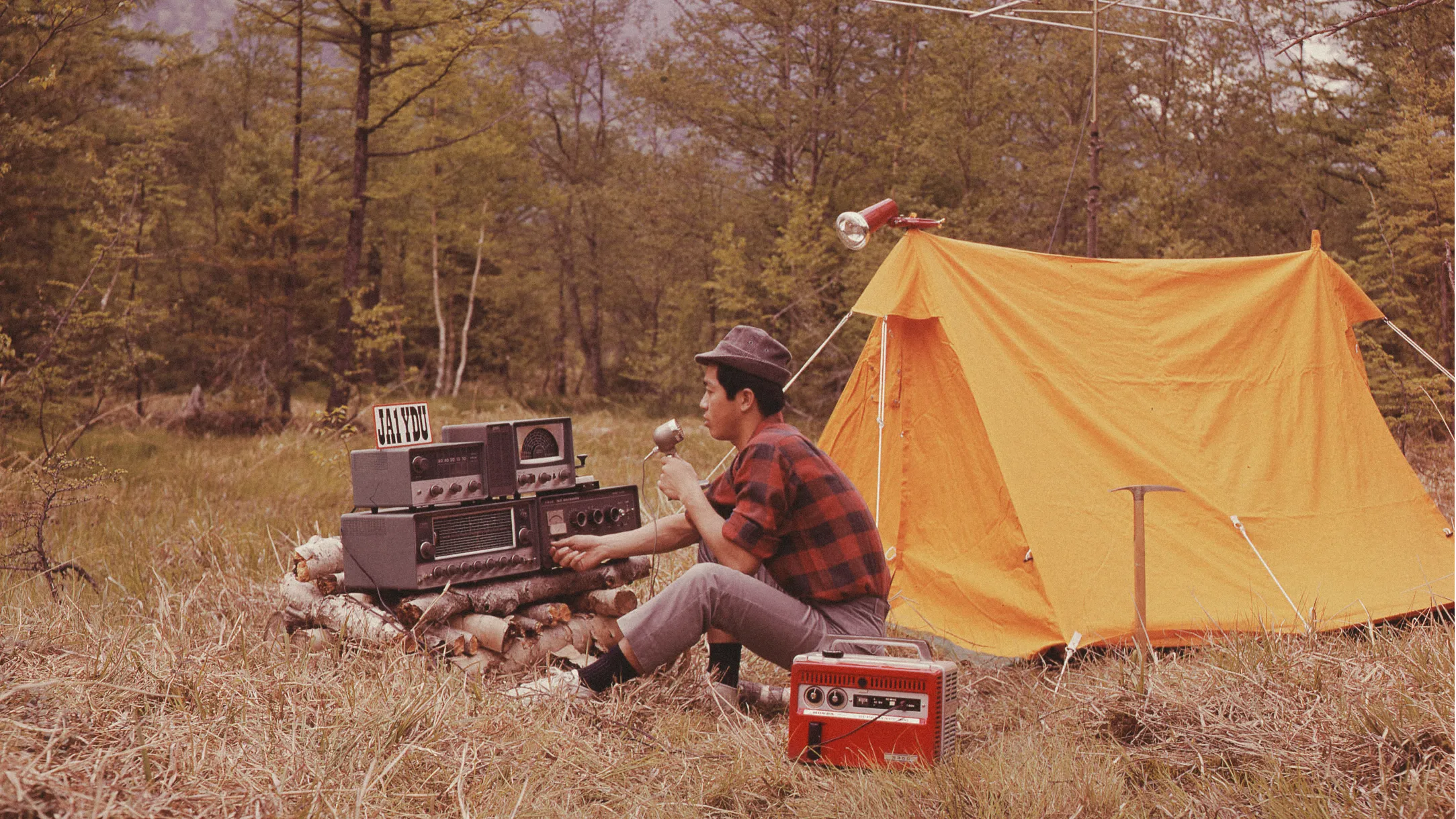
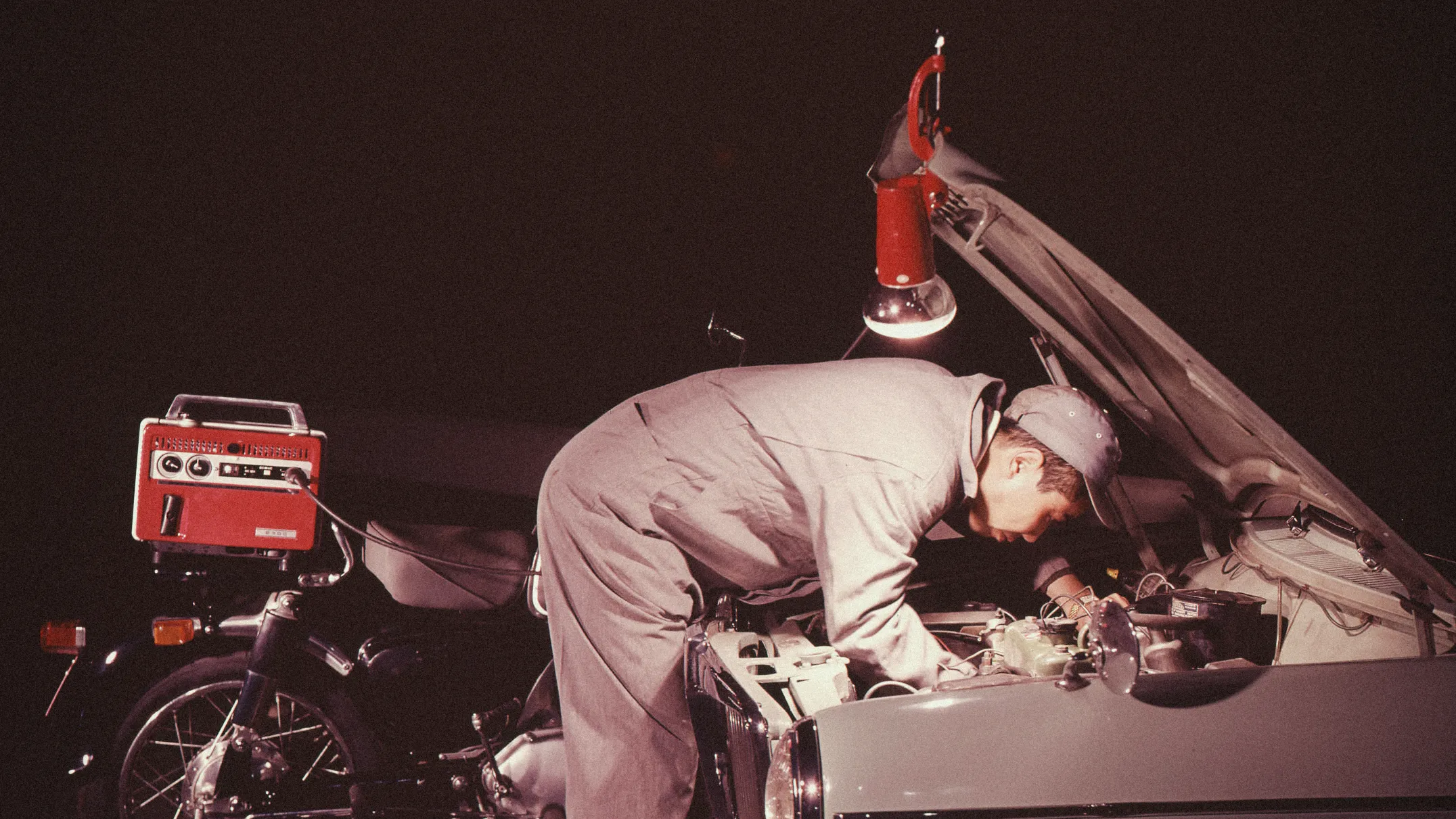
―The requirements for the project were more challenging than for conventional generators. Because the generator would be used for a micro-television, it needed to be compact, lightweight, quiet, easy to use, and with styling that fit well with home appliances. The designers created "power you could carry." Starting with this project, Honda began accruing knowledge about how to make engines even more compact, technologies for creating more soundproofed generator bodies, and the like. They established the design philosophy of Honda generators: supplying electricity to people who need it.
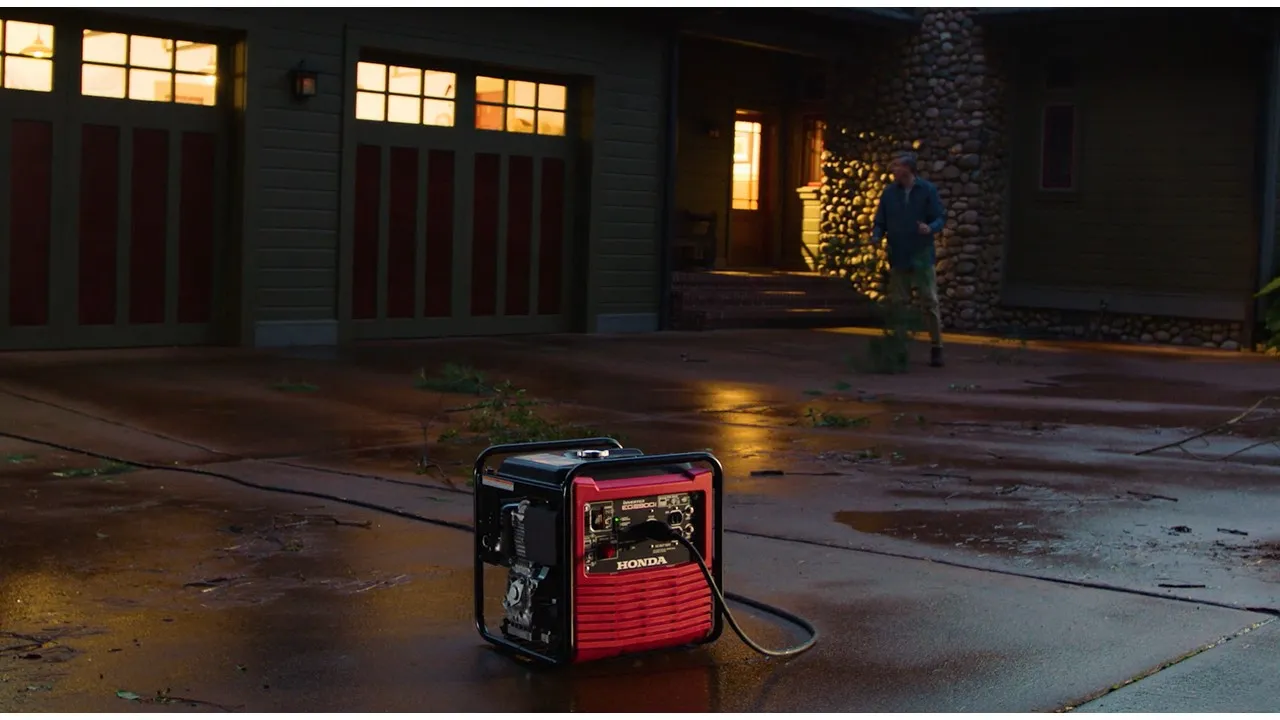
Honda's generators have continued to light up the lives of people around the world, supporting business and daily life in areas without developed power infrastructure and in disaster-struck areas.
From an Area He Was Uninterested In to His Life's Work
―Engineer Michihiro Iida has been a part of a great deal of Honda's generator development history. His generator development career spans over half his life, but when he joined Honda, he says, he wasn't particularly interested in power products like generators.
Iida
Originally, I wanted to work in mechatronics development. Generators don't move, so there were times when I really had to work hard to keep myself motivated (laughs). But at some point, I realized that our generators were supporting the lives of customers around the world.

Iida
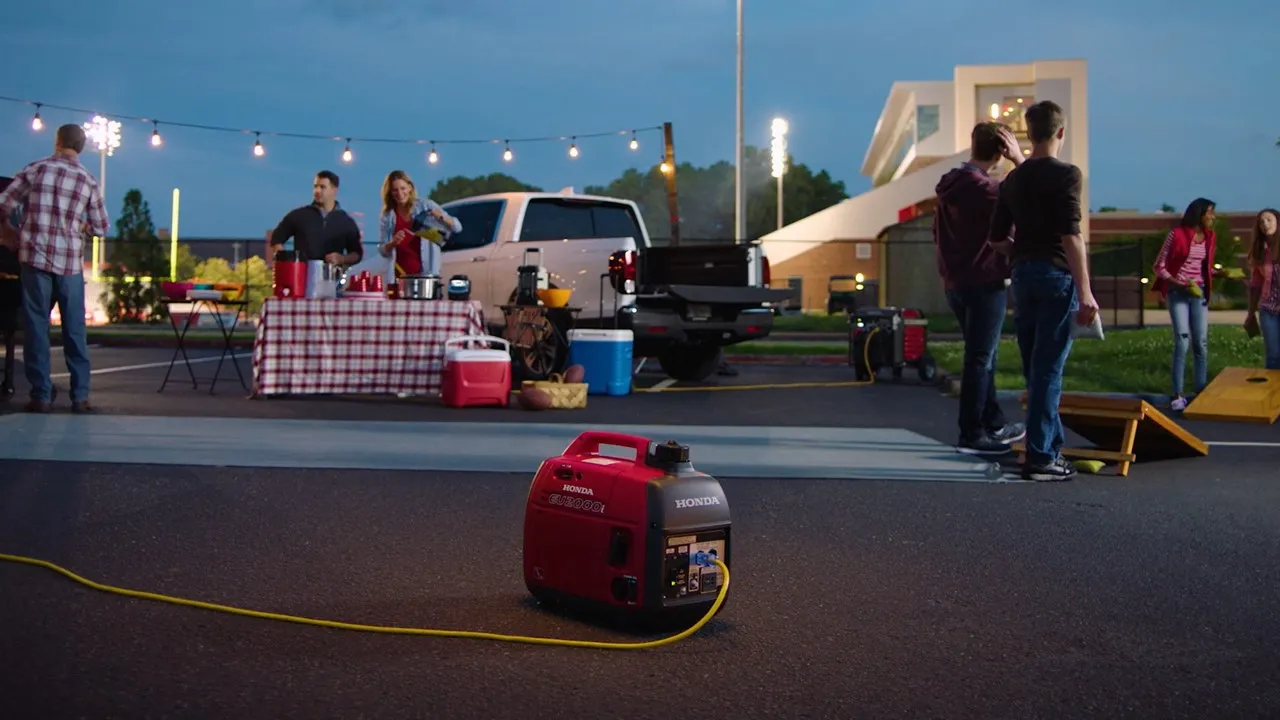
At the time, it was common in American homes to have a generator. In Japan, generators were usually used for business purposes, such as at street vendor stalls or construction sites, but in the U.S. they were a part of people's everyday lives. That's because, since the country's pioneer days, there was a spirit of being responsible for protecting your own way of life. I realized that generators were invaluable tools for protecting people's lifelines.
The Honda Generator Design Philosophy of Thinking Deeply about Safety and Ease of Use
The EX300, which put smiles on the faces of street vendors,
and the EU9i, designed with eye toward safety
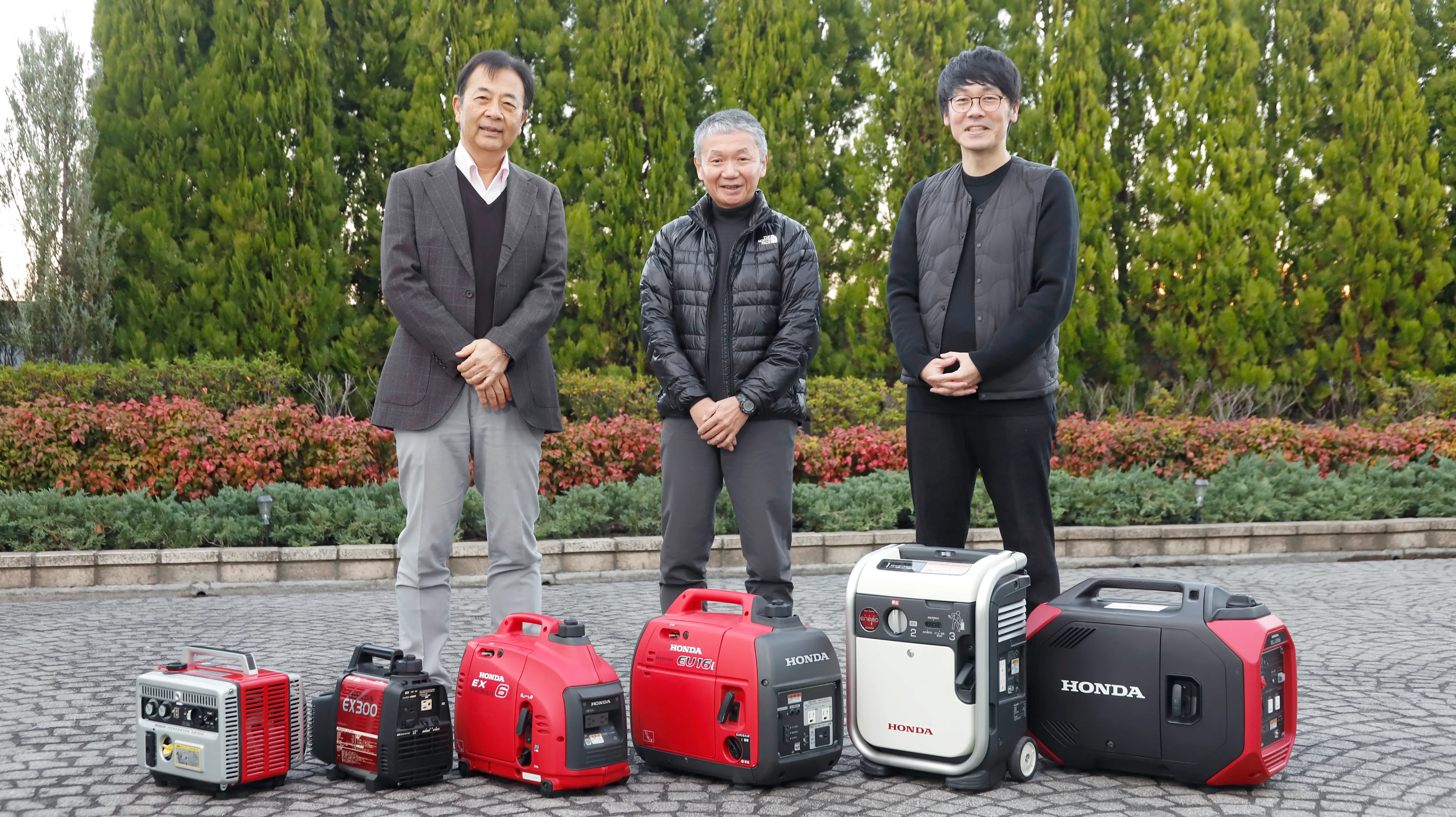
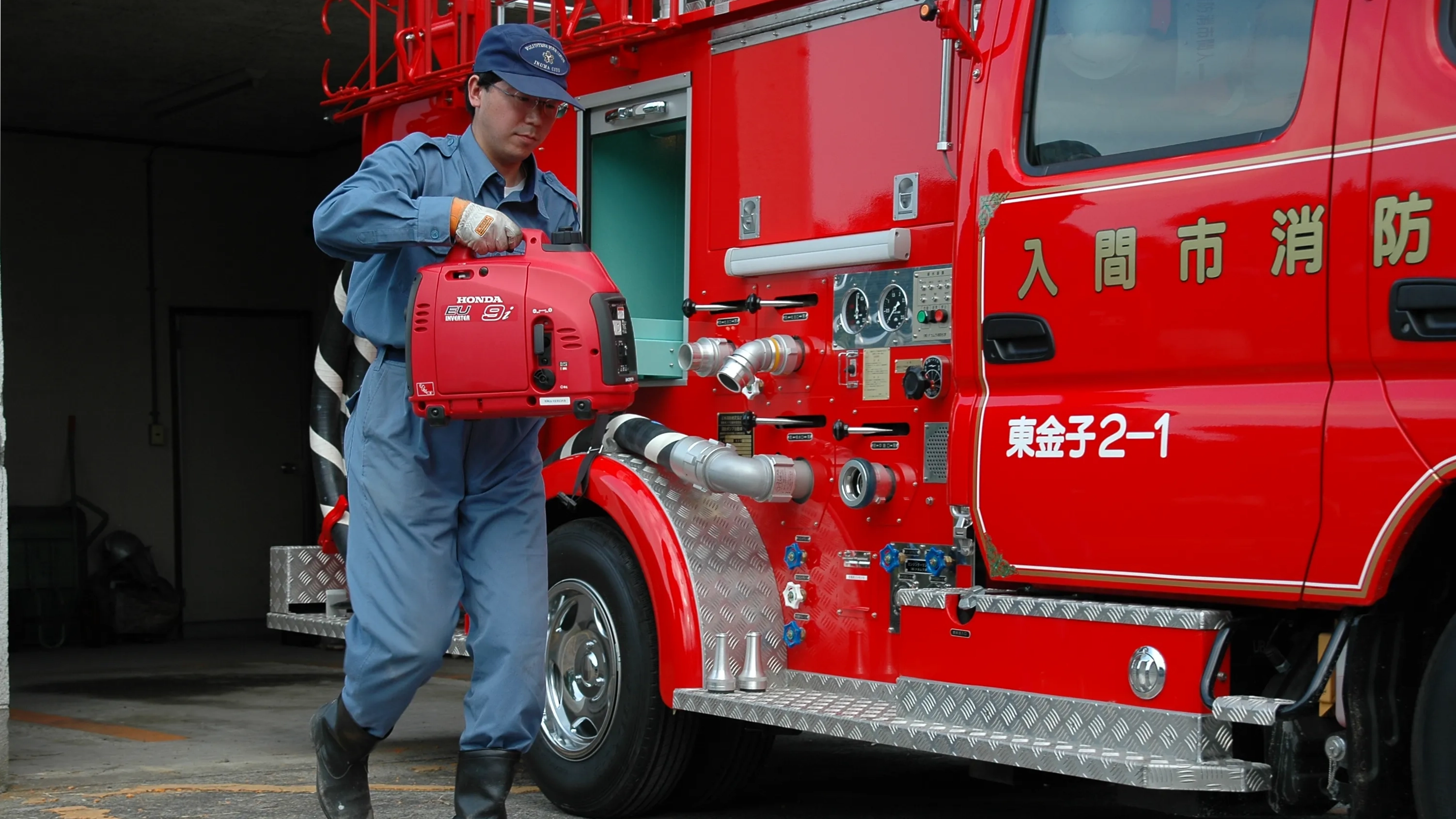
―Generators had previously been large and heavy, but the world of generators changed in 1987 with the release of the EX300, an ultra-compact portable generator, and then the EU9i, an inverter generator with an electronic governor*. The EX300 had a smart design and was exceptionally quiet, overturning the conventional wisdom that generators are heavy and loud.
* A regulating device that keeps the engine running at a consistent rpm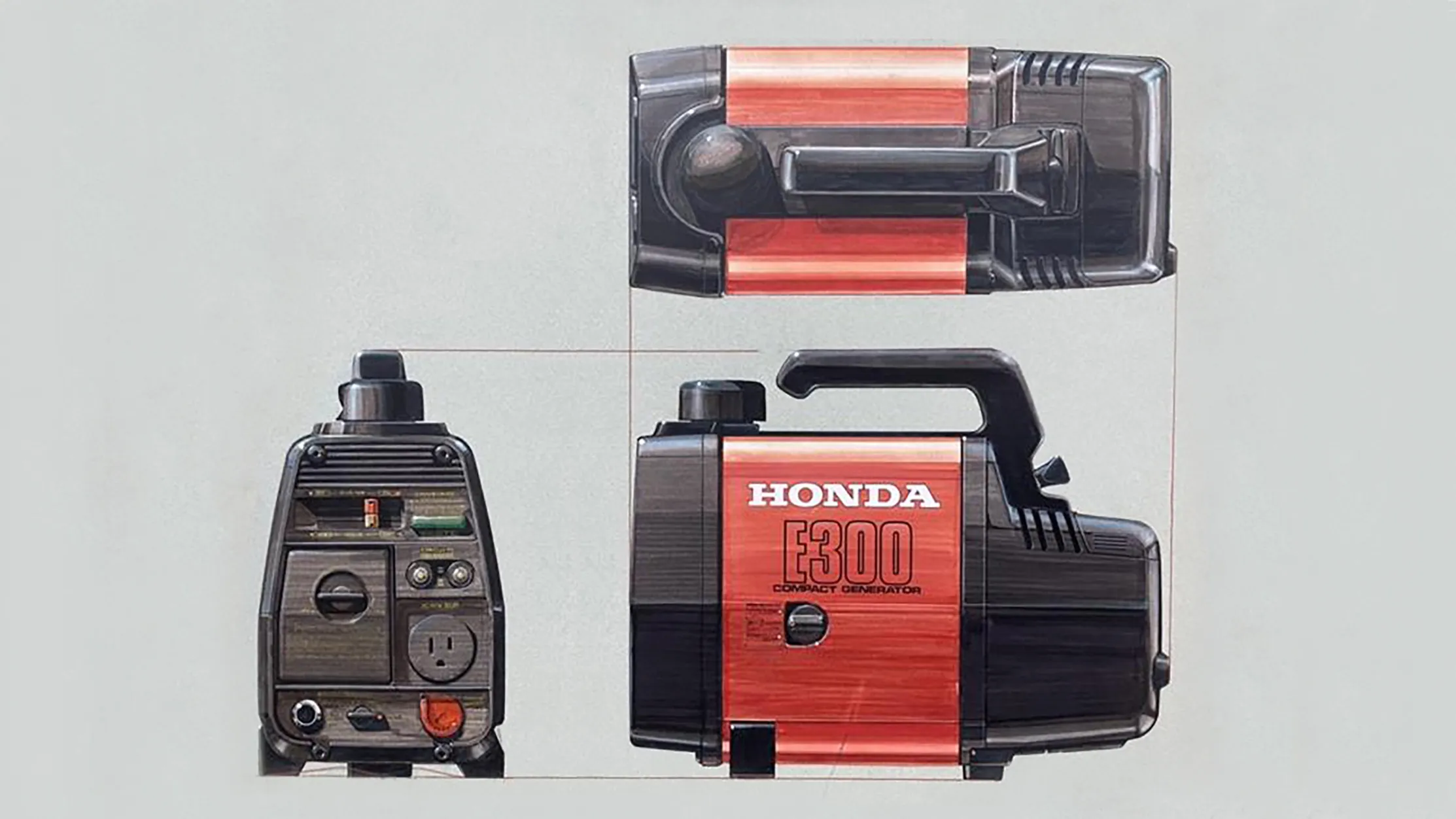
Iida
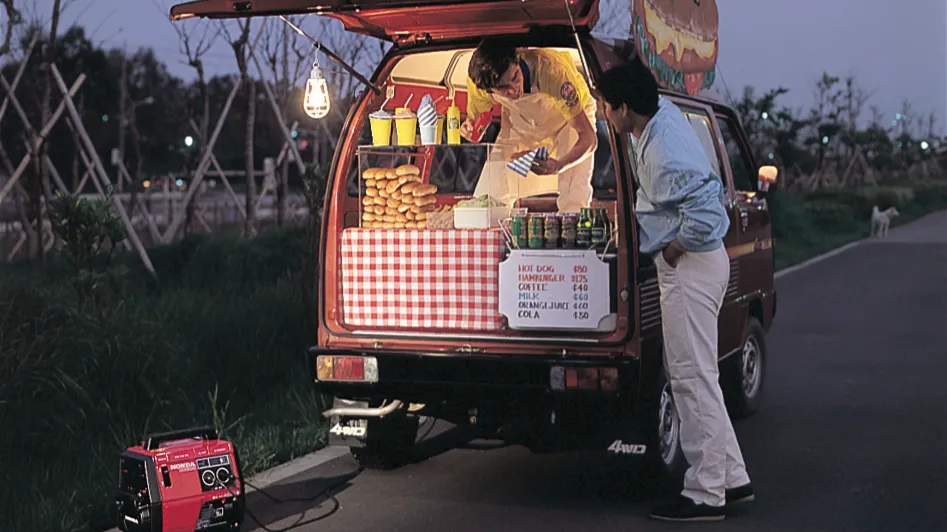
Street vendors loved what we achieved by making our generators more compact and lightweight. For street stalls, the use of lighting has a huge impact on sales, so generators are vital pieces of equipment. The EX300 was a work tool that could be carried and set up by both men and women and was easy to handle. I'm happy that we're able to contribute to people's lives through our products, which supply people with electricity. I think that's what makes generator development interesting.
Maeda
Through our research, I realized that generators were enriching the lives of all kinds of people around the globe. That led me to want to create generators that were even easier to use and that had more polished designs, and to supply these generators worldwide.

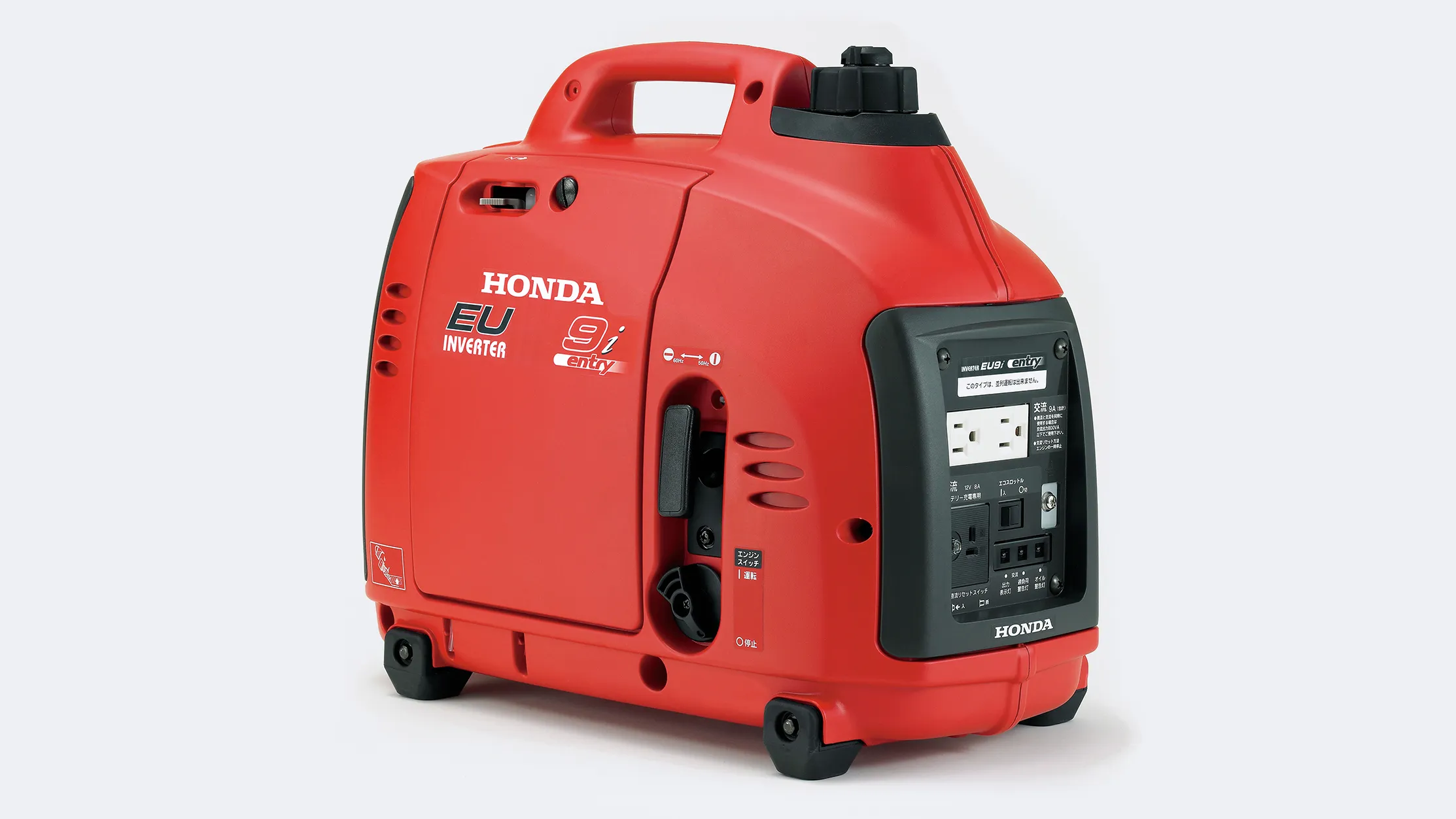
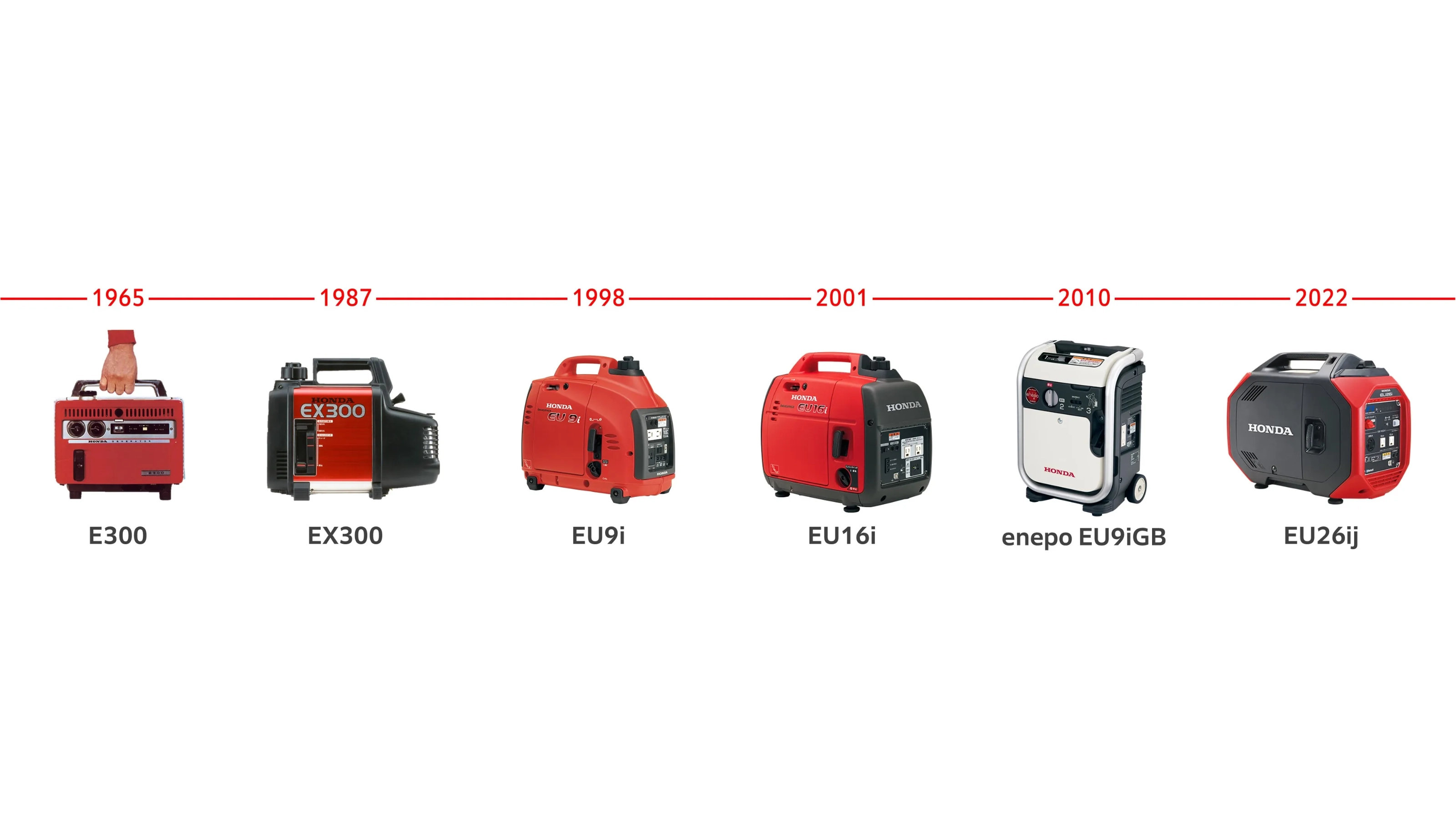
―In 1998, Honda launched the EU9i. This generator used inverter technology* and was even more compact and lightweight. The EU9i uses a dedicated high-speed multi-polar alternator, making the generator's power generation system roughly 70% lighter than conventional systems and the entire ultra-compact, lightweight generator roughly 50% lighter than other generators.
Iida
In addition to the full-fledged use of inverter technology, the use of plastic for the entire exterior also began with the EU9i. In previous generators, the steel frame was exposed, but the EU9i was completely surrounded by a plastic cover. This significantly increased the amount of design freedom, and was passed on to future models. In that sense, the EU9i was a major turning point for Honda generators, both in terms of technology and design.
Iida
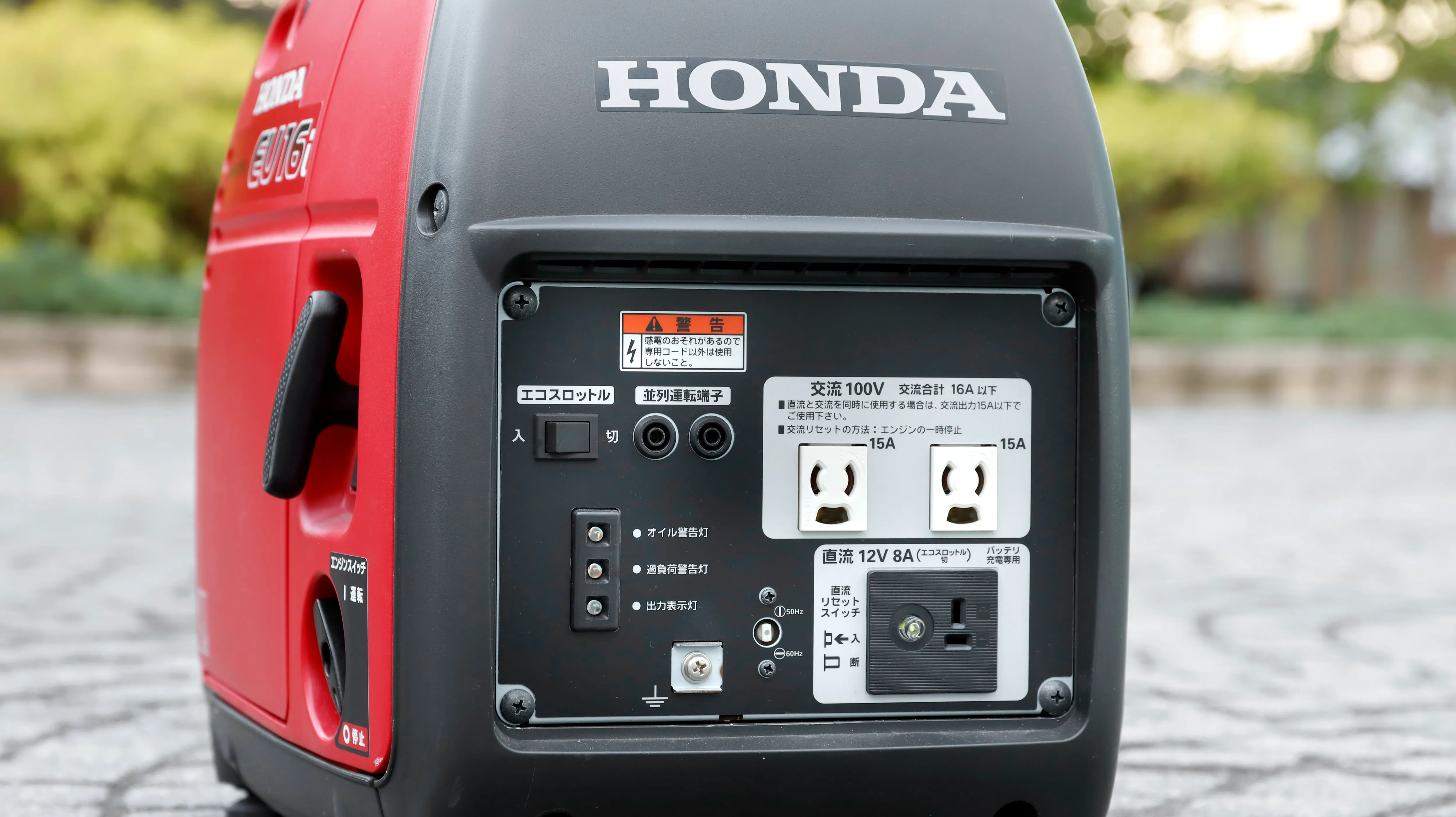
The EU16i was also ambitious from a design standpoint. Functionally speaking, the EU16i only requires its red portion. The black portion is essentially decorative. But because of the black portion, the red portion looks smaller. The black also visually tightens up the appearance of the red portion.
Output demand is rising with the times, which means some increase in size is inevitable, but one of the roles of design is to make the generator look more compact.
The enepo blends into everyday life
but demonstrates its true value in times of disaster
―Honda generators are designed to be convenient, and at the same time they embody the engineers' vision of being safe and easy to use in any situation. Joji Maeda was responsible for the design of the enepo (EU9iGB) generator, which is powered by home-use butane gas canisters. He has also dedicated himself to design that protects users' day-to-day life needs.
Maeda
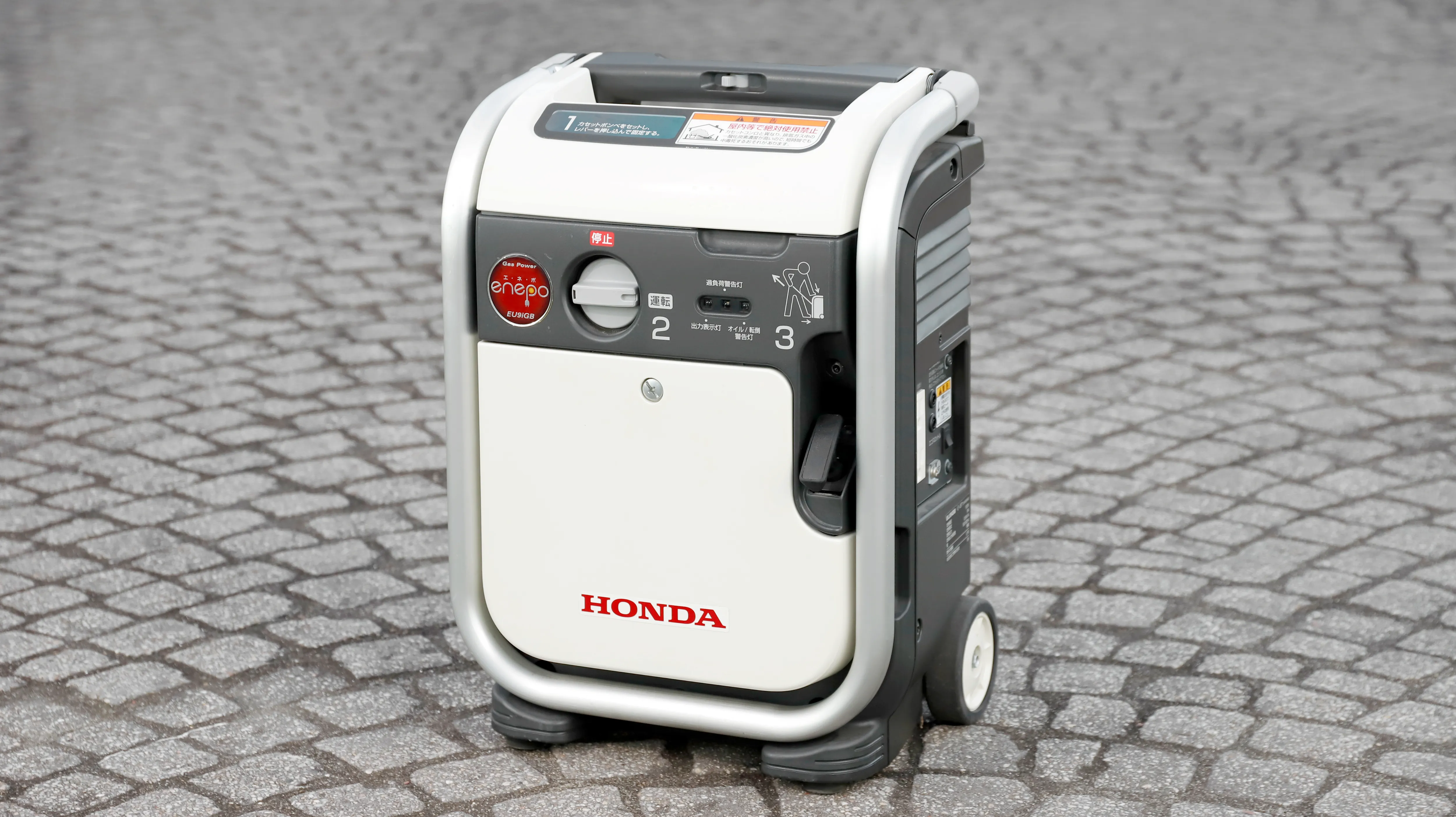
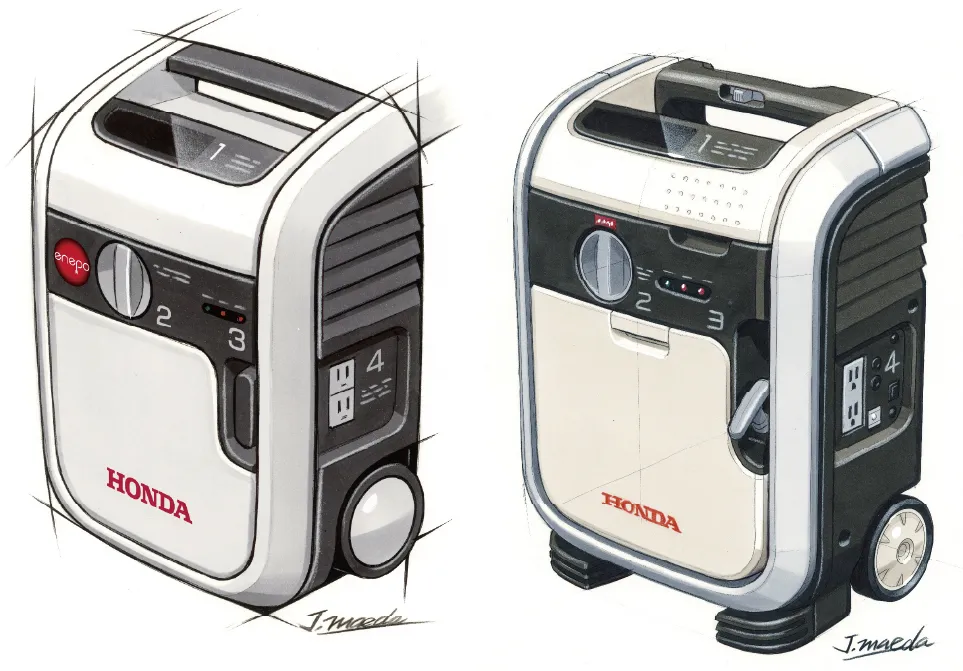
Our designs start with the concept of how we can make our generators easy to use and how we can make them blend into everyday living spaces. The design concept of the enepo was "smart and slim." We went with a slim, vertical shape, without projecting elements, so that it could be easily put away in home storage spaces when not in use.
Maeda
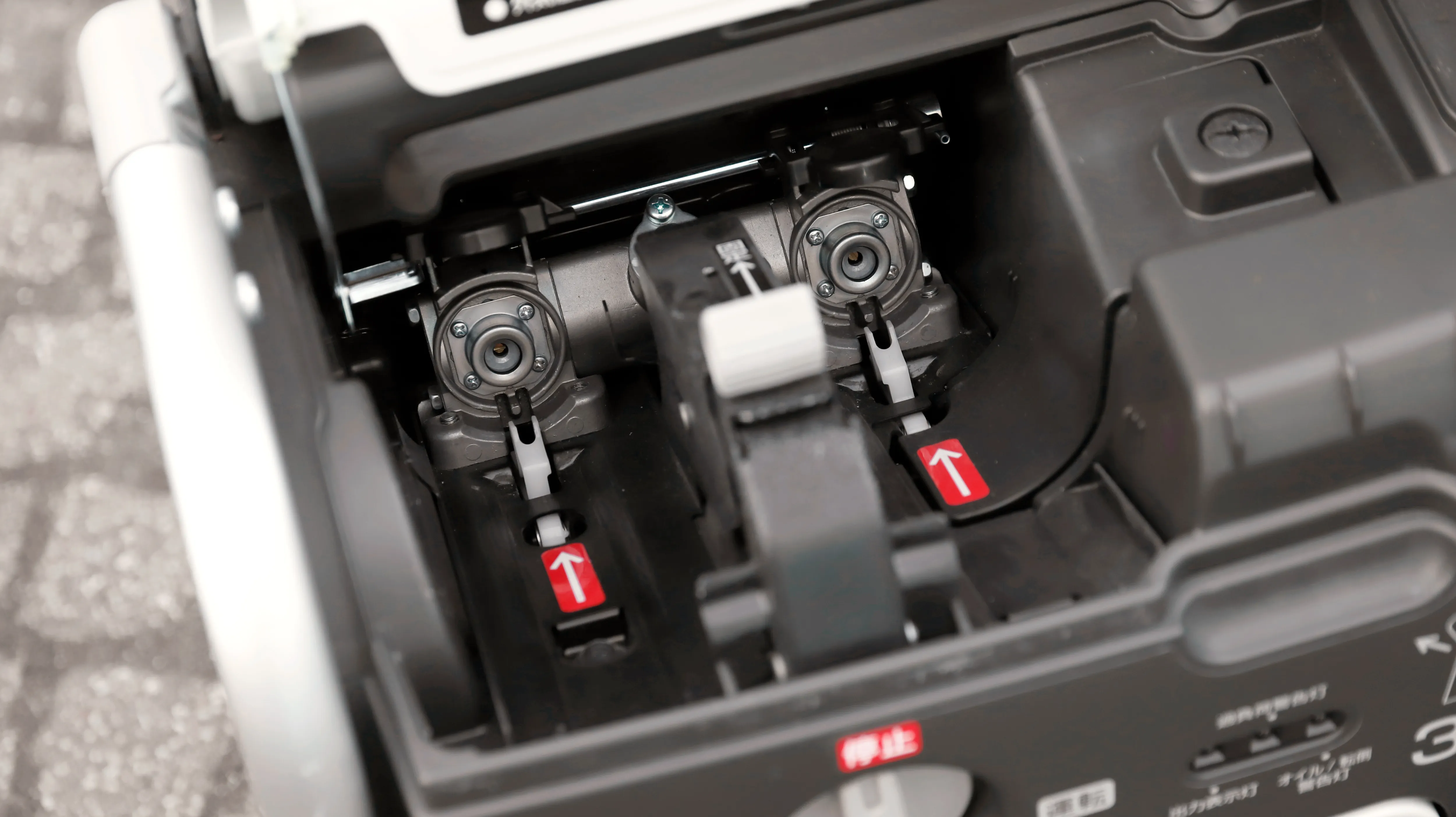
The biggest feature of the enepo is that it's powered by butane gas canisters. That makes it easier to use than a gasoline generator. The butane gas canisters can be found easily in convenience stores, supermarkets, and the like, and stored for long periods of time. These advantages really lowered the barriers posed by previous generators and made it easier to purchase a generator for emergency use.
Iida
Until the launch of the enepo, the main demand for generators in Japan was from professionals. Before the Great East Japan Earthquake, in particular, it was rare for people to have a generator for home use in preparation for possible disasters. We thought about how we could bring generators, which are exceptionally convenient products, to people. One problem that we realized we needed to overcome was what to do about gasoline, which is both hard to purchase and hard to store. That's why we decided to make a generator fueled by butane gas canisters, which are easy to purchase from places like convenience stores, undergo little fuel degradation, and are exceptionally easy to store.
Maeda
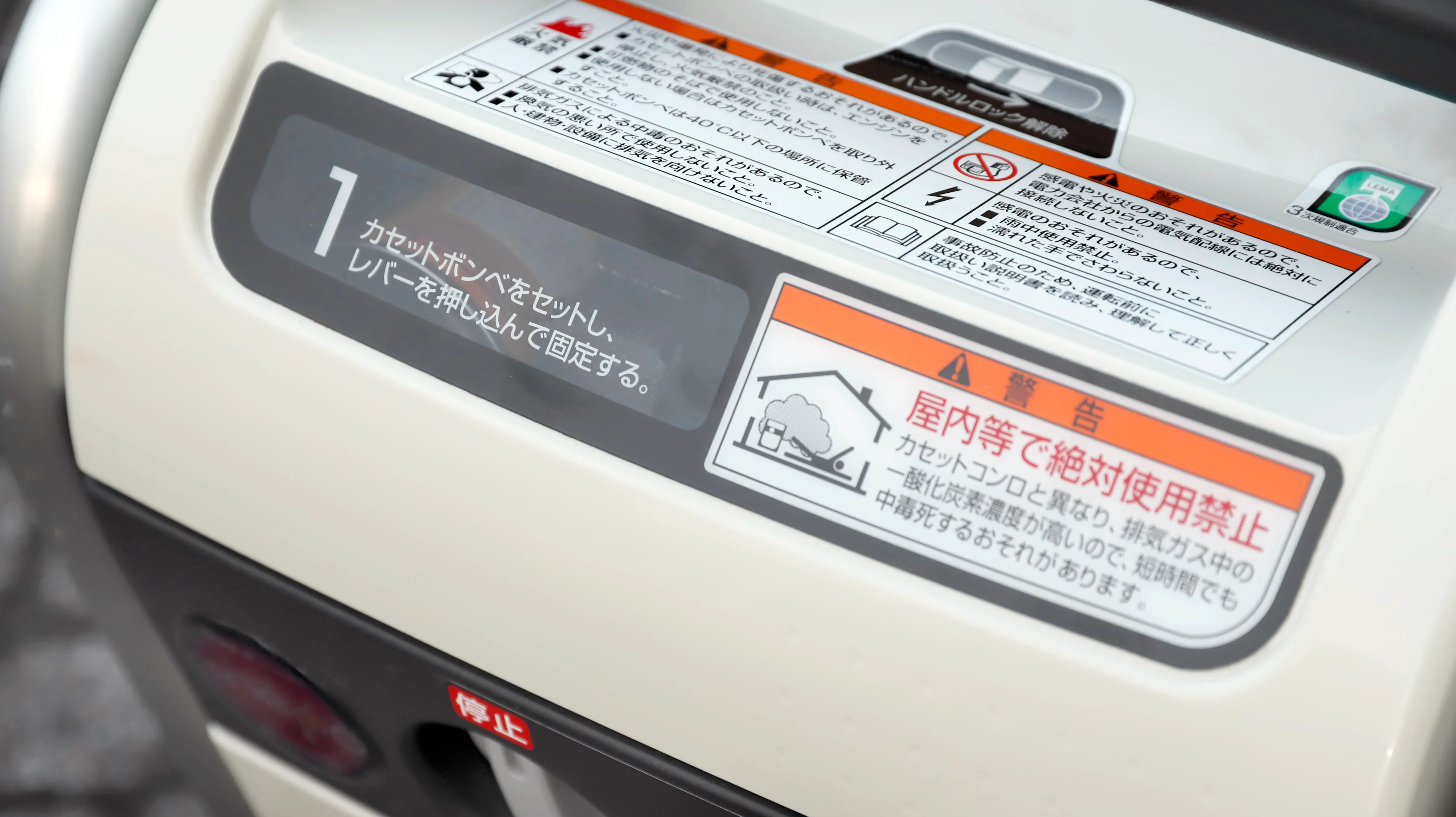
Honda wasn't the first company to develop a butane gas canister-powered generator. However, the existing products were all very industrial-looking devices that would fit in when used at construction sites. We knew that people wouldn't buy generators with this kind of unpolished, industrial look or operating methods to put in their homes in preparation for emergencies. That's why we used this as our starting point to deliberate designs that would fit in when used in homes.
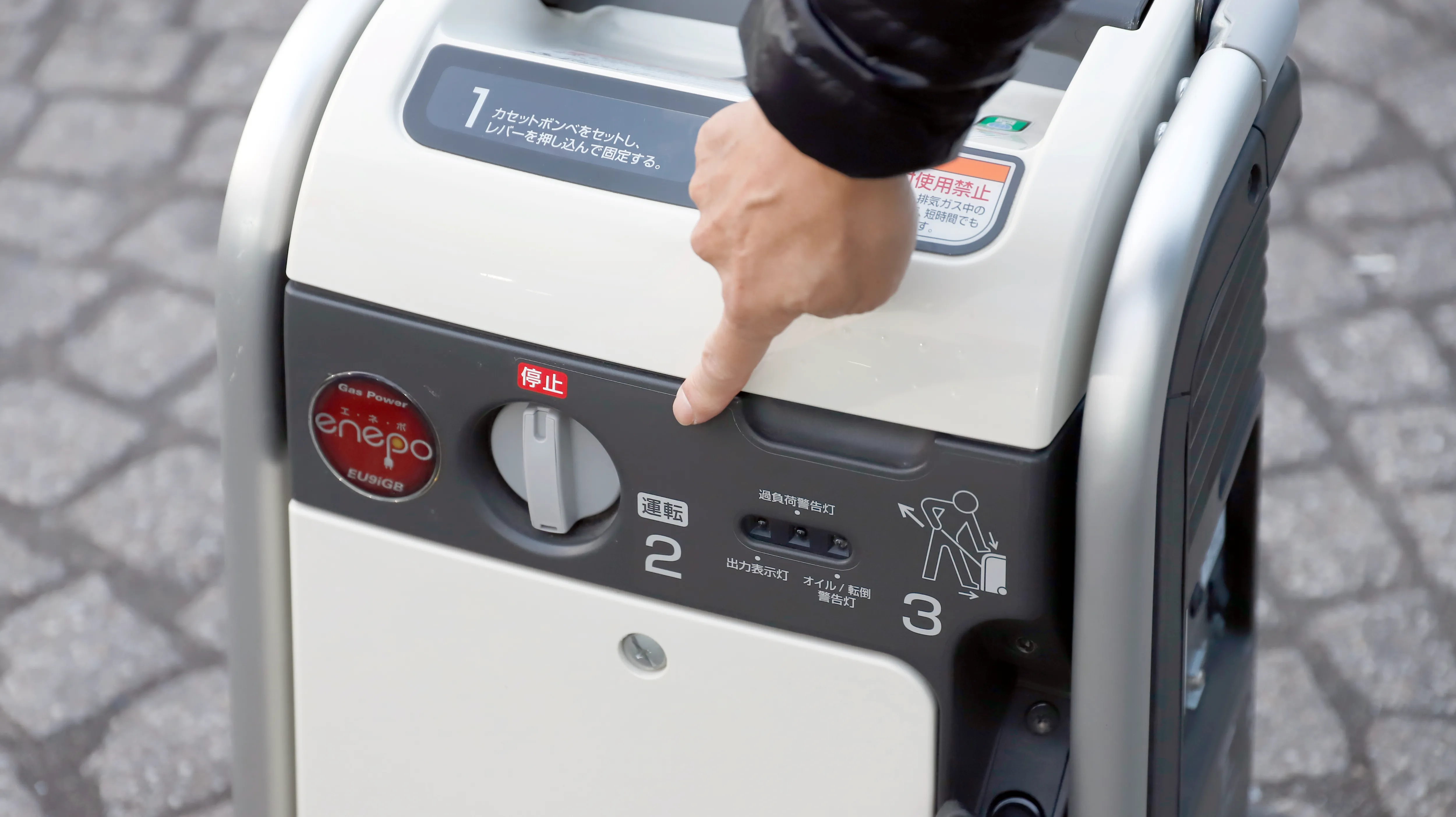
―The enepo has a fold-up handle and large wheels, so it can be pulled along like a wheeled suitcase with just one hand. One of the key points in its development was making it handy for home use, such as being easily transportable even by women and elderly users.
―The generator proved its worth the following year, when the Great East Japan Earthquake struck. Immediately after the earthquake, Honda sent roughly 1,000 enepo units to disaster-struck regions. The enepo generators were of tremendous use, because while gas stations were closed, the generators were powered by butane gas canisters which could be easily found in stores such as convenience stores. Mr. Maeda recalls how moved he was to hear that these generators, which were designed to be used easily and safely by anyone, helped out many people.
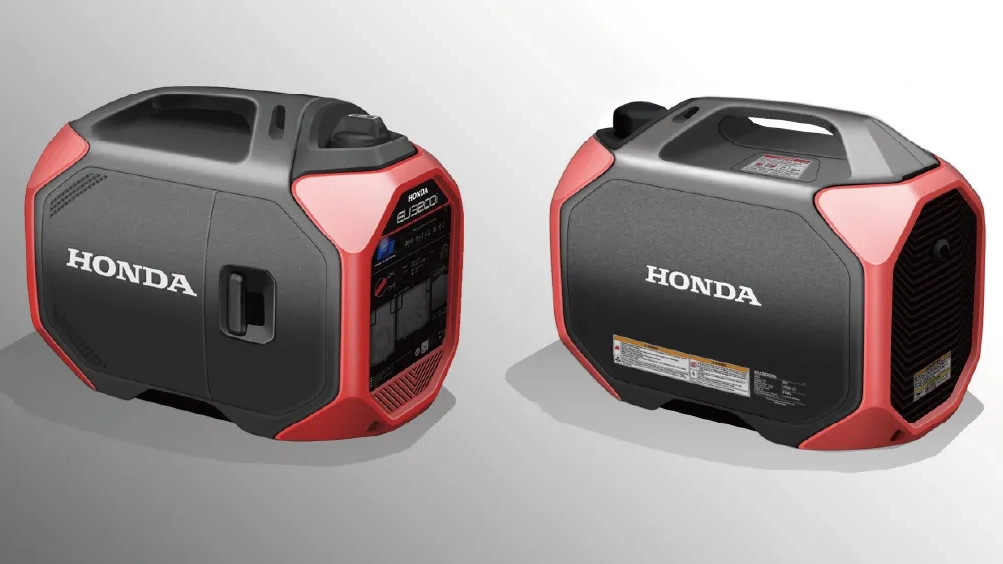
The portable, high-output EU26iJ generator,
the fruit of precise, millimeter-level adjustments
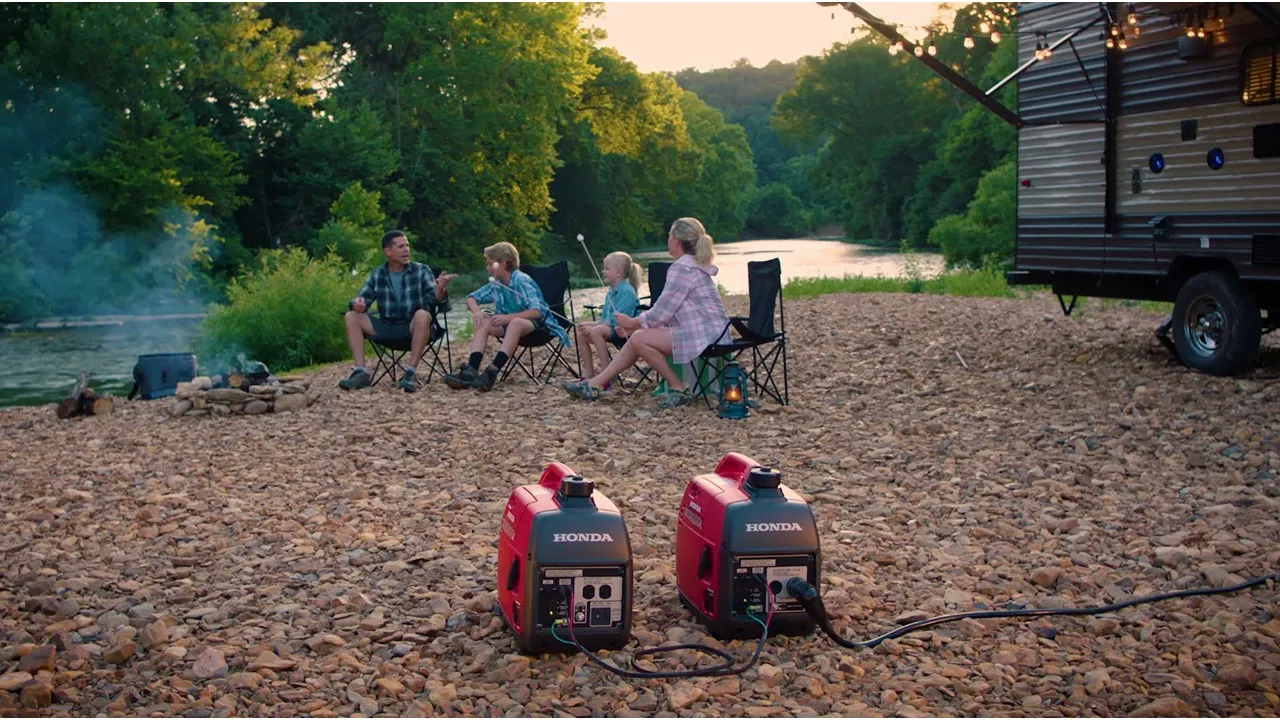
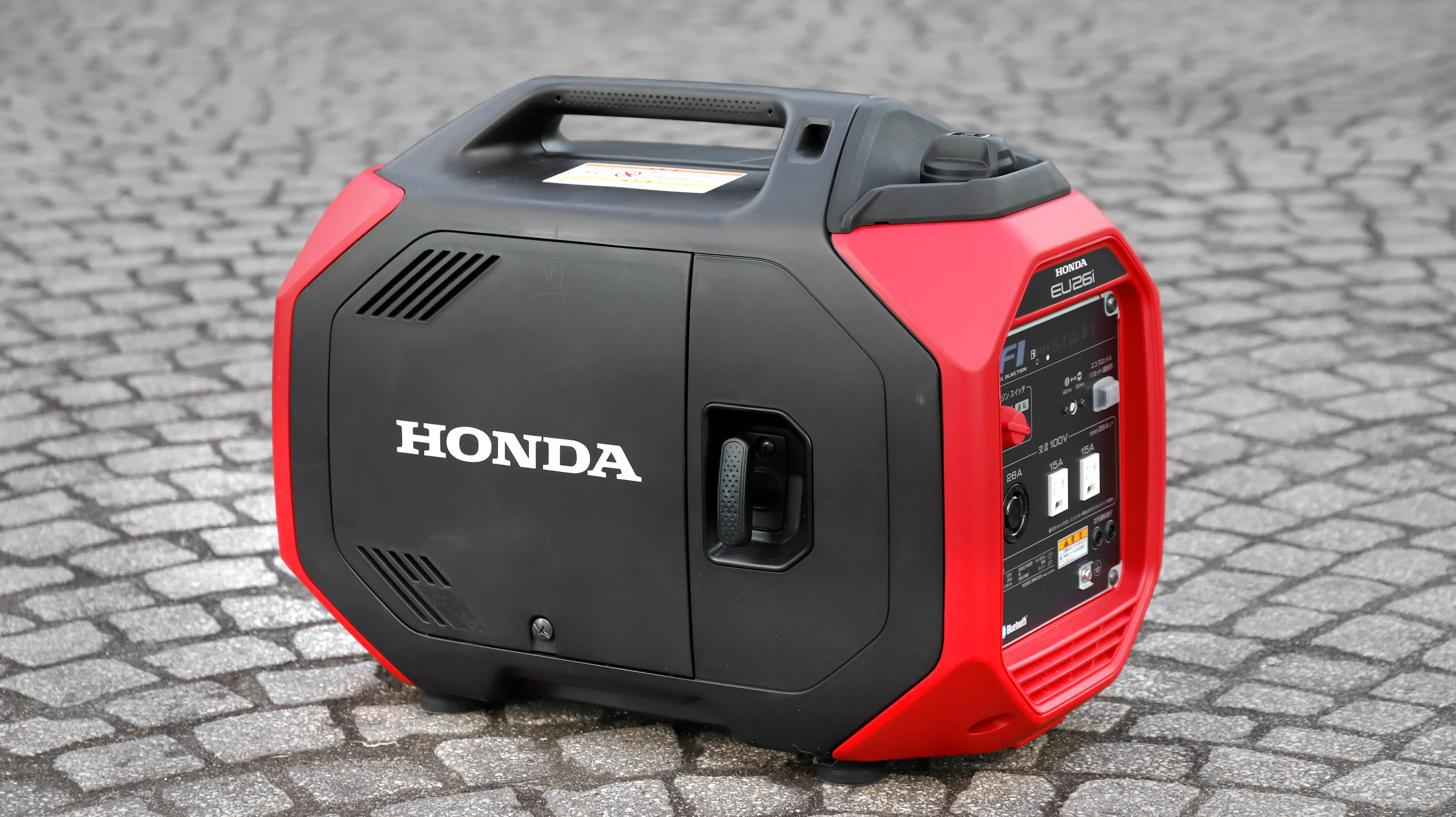
―Designer So Nakaura, impressed by the enepo, made up his mind to join Honda. A generator that holds a special place in his heart is the EU26iJ, a handy generator released in 2022 which he helped design. The EU26iJ has a high output of 2.6 kVA while being highly portable, with a dry weight* of 26.5 kg. Thanks to the convenience offered by its remote control capabilities and its polished design, it has earned recognition around the world and won the Red Dot Design Award. Mr. Nakaura aimed to create a design that worked for all users and environments, from leisure use to professional worksites.
* The weight (mass) of the generator excluding fuel, oil, and other liquids
Nakaura
With the EU26iJ, we aimed for a high quality and functional-looking design, so we built a concept model during our preliminary deliberations. It has a simple design, with all the corners removed, and the styling was very well received. However, a lot of coordination with the engineering team was required when designing during the mass production development process. When trying to transform the concept model into a mass production model, a lot of different problems became evident, such as increases in the number of parts, weight, and cost. In terms of design, we wanted the mass production design to keep as much of that original design appeal as possible, but maintaining functionality and cost places certain engineering limits. I sat down face-to-face with the engineers many times, and through our discussions, we were able to maintain the original styling concept while refining the design, based on the parts layout. We simplified the complex structure and improved it, producing an even more convenient form.

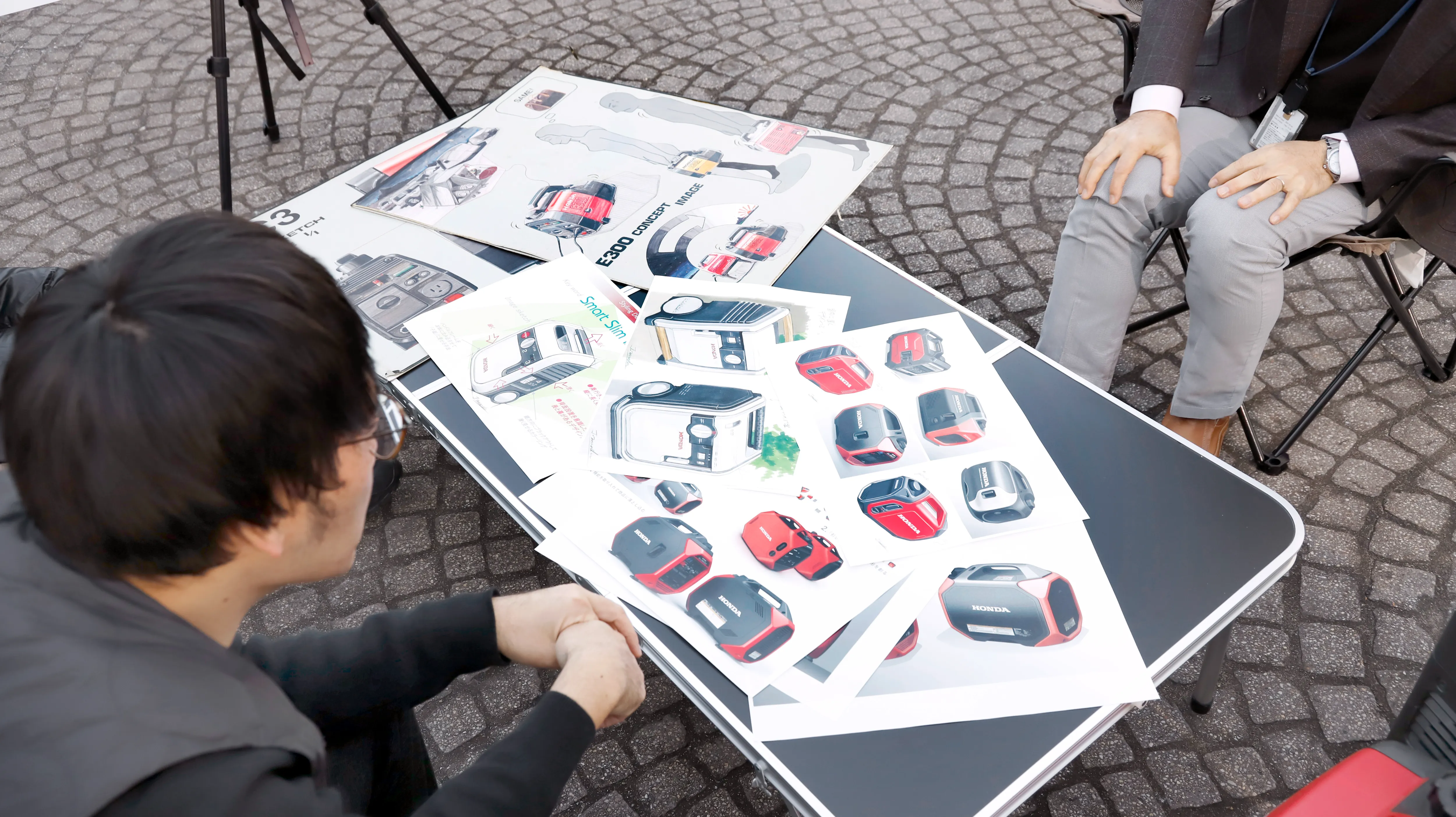
―The collaboration between engineering and design produced a highly refined generator in the EU26iJ. Honda's human-centric philosophy is reflected in every detail.
Nakaura
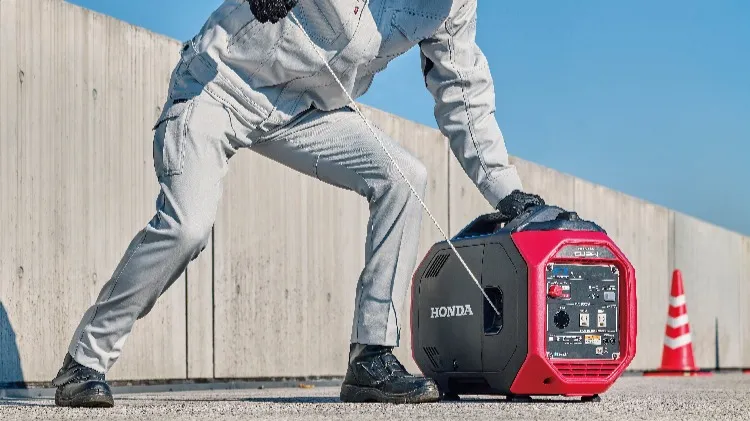
Honda's generators have always been designed to be easy to carry, and special attention has been paid to the design of parts that come in physical contact with users. The EU26iJ reflects this design philosophy, and we made countless millimeter-level adjustments to the shapes of the generator's sides and the radiuses of its curves. Thorough attention was also paid to how easy it is to carry. We placed new under-grips on the bottom of the generator for users who unload it from vehicles on their own. We also distributed the weight and made it easy to hold firmly, so users can feel comfortable carrying it by themselves.
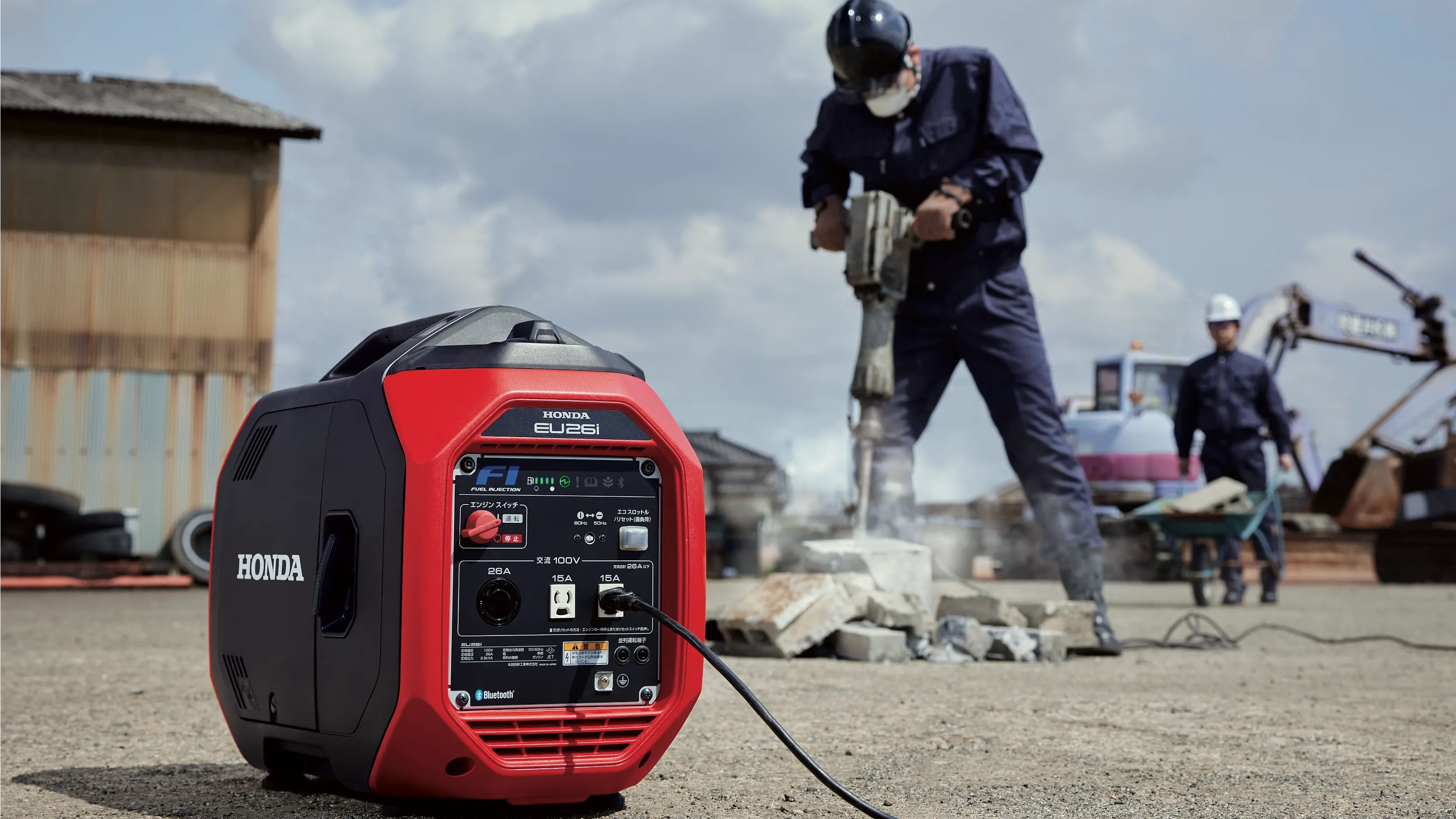
Nakaura
We focused on the quality of our design, such as switching to a cut-out Honda logo from the EU26iJ. For a power product, reliability is an extremely important value. Having an elegant exterior design and functional beauty are vital for giving customers an immediate sense of the generator's reliability and quality.
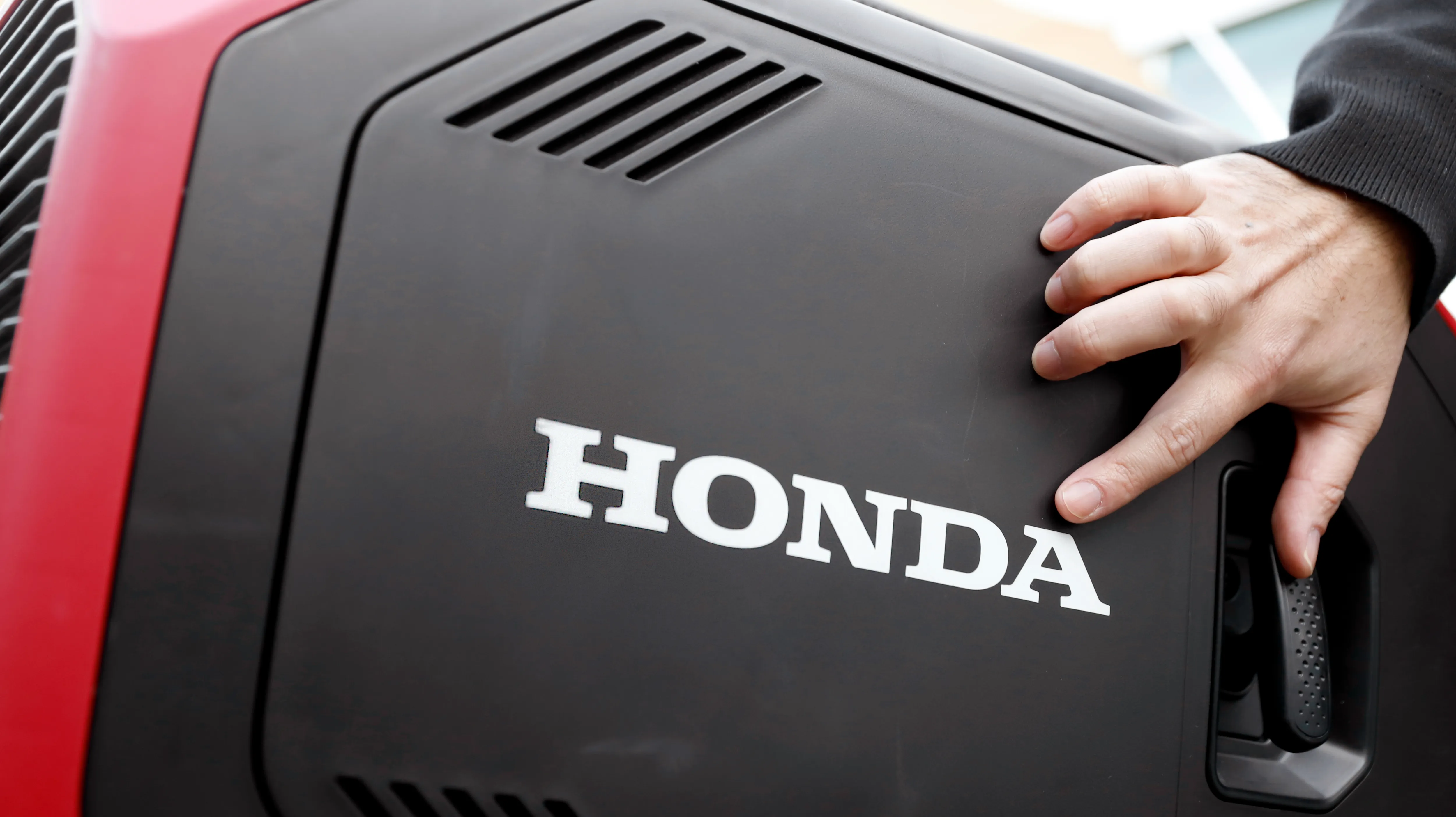
Iida
Handy and portable generators like the EU26iJ are filled with the spirit that has been part of Honda through its history. The maximum output of the EX900, released in 1985, was in the 1 kW range. The EU9i, launched in 1998, had the same output but weighed only half as much. What's more, it had a parallel operation function that allowed two of these generators to be linked together. This was a dramatic improvement in usability. And then the EU16i, launched in 2001, doubled the output.
Iida
Power needs are growing over time. If we're able to keep our generators the same size and weight but increase their output, then we'll create even more happy customers. Our convenient and portable generators, which can be carried with a single hand, are the embodiment of our history of compact, lightweight, higher output evolution, and the culmination of this evolution is the EU26iJ.
The Joy of Usefulness, Carried On by All of Honda's Power Products
A Human-Centric Design Philosophy That Drives the Evolution of Generators
―For 60 years, Honda's generators have been designed with a thorough dedication to being compact, lightweight, quiet, and easy to use. This evolution has overturned the conventional image generators have of being heavy and loud. Instead, generators that are easy for anyone to use have become a well-established part of people's lives. The three designers and engineers we interviewed all think about people's lifestyles and wish to create products that are closely aligned with them. They are all focused on how their generators can support customers' lives. This is all underpinned by the Honda Power Products philosophy of "The Joy of Usefulness."
Iida
One of Honda's key values in the mobility field is the "Joy of Driving." However, in the power product field, product development is carried out with the value of the "Joy of Usefulness."
Iida
The history of Honda Power Products began in 1946, when founder Soichiro Honda used a compact engine for a wireless radio from the former Imperial Army as an auxiliary engine for a bicycle. After the war, he saw women and elderly people with bad backs doing hard work out in the fields, so he developed and launched the F150 tiller. The product lineup kept growing. If you look back on the history of Honda's power products, there is a through line of the "Joy of Usefulness." We can help people out, both in their work and in their daily life, through our products. I now recognize how much value we provide—enough value for me to dedicate over half my life to it. I find this a very personally rewarding field.
――Honda generators light up the darkness in emergencies, make street stalls even more likely, and provide people around the world with the peace of mind that comes with access to electrical power. These are the fruits of engineers and designers pooling their wisdom, led by a consistent human-centric design philosophy, and thinking about users every step of the way, from making millimeter-level adjustments to verifying the safety of each and every switch.
Profiles
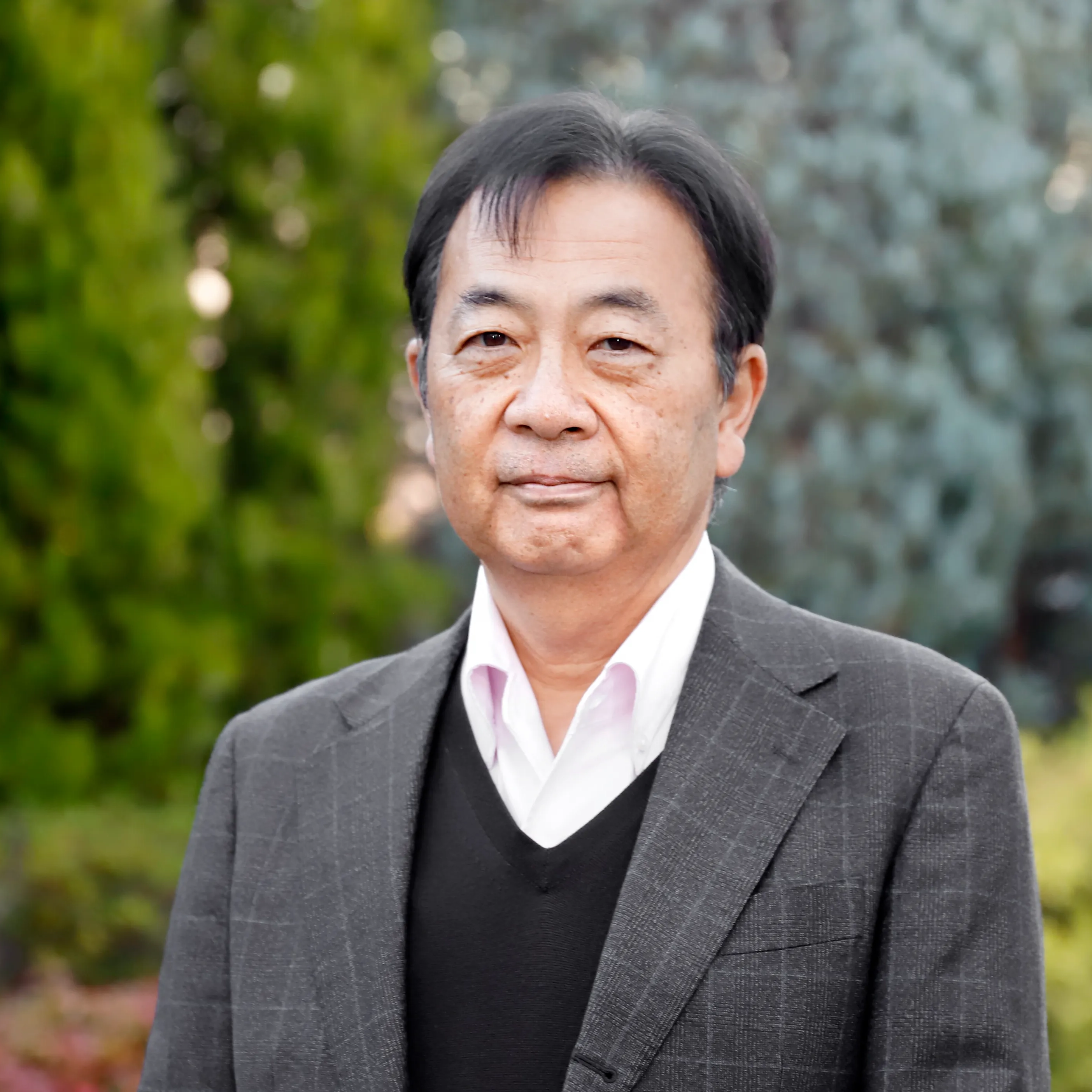
Michihiro Iida
Motorcycle & Power Products
Engineer
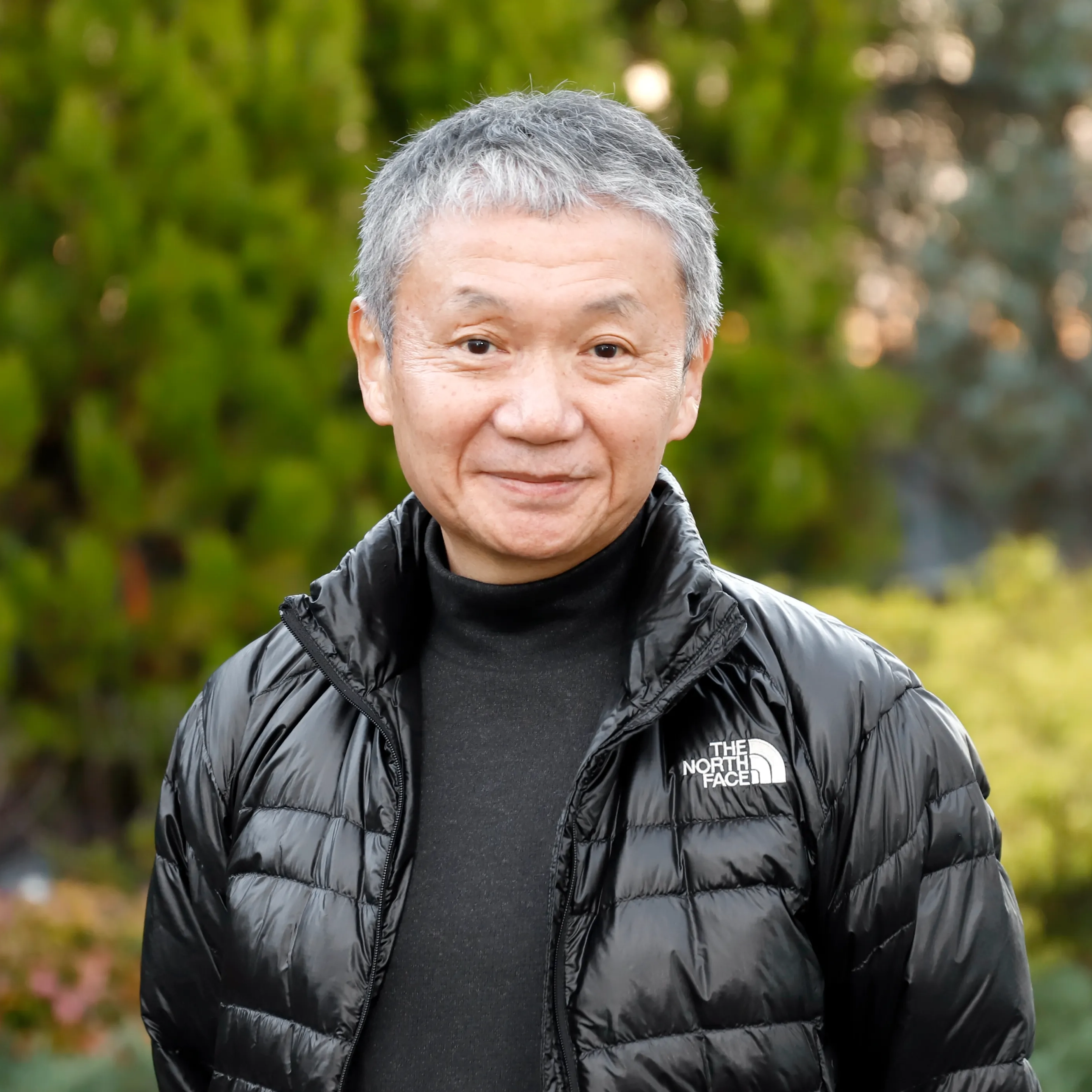
Joji Maeda
Motorcycle & Power Products
Product Designer
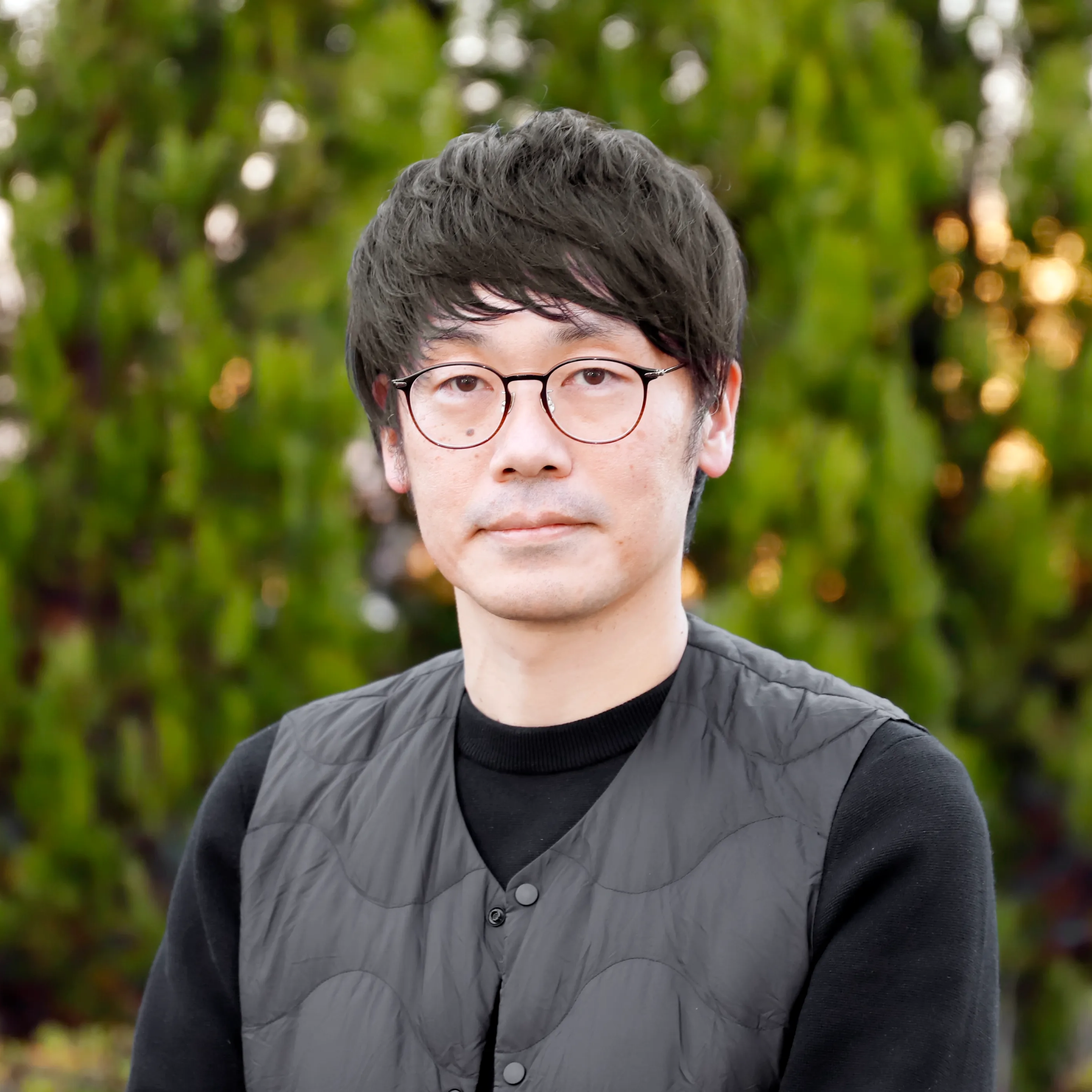
So Nakaura
Motorcycle & Power Products
Product Designer