Hybrid eVTOL
electric Vertical Take-Off and Landing aircraft
Honda’s vision is to bring the sky closer to everyday life — not as a special mode of transportation, but as a natural choice for mobility.
We aim to make intercity travel freer, more comfortable, and accessible to more people.
To help realize this future, Honda is advancing research and development of its Hybrid eVTOL.
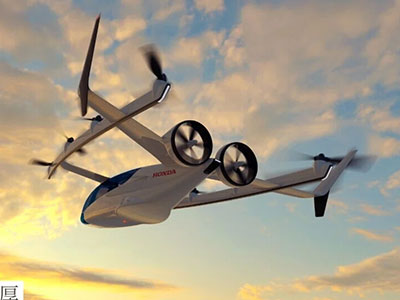
The Honda Hybrid eVTOL is a next-generation air mobility concept that combines electrification technologies with Honda’s independently developed gas turbine hybrid system. Through this approach, Honda aims to achieve a high-level balance of range, operational efficiency, and cabin comfort.
UPDATE
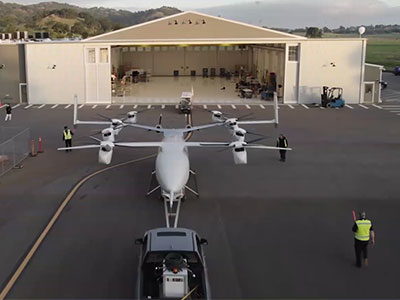
- Honda eVTOL Reaches a Key Milestone - First Full-Scale Flight Completed — On April 1, a flight test was conducted in San Luis Obispo, California, where a full-scale technology demonstrator.
- Medium「The Milestone Honda eVTOL Is Aiming For」 — This article introduces the value Honda aims to deliver through its Hybrid eVTOL, the background behind its research and development, and the reasons for choosing a hybrid system, told through the words of its developers.
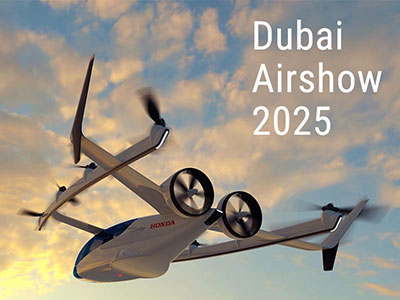
- Exhibited at Dubai Airshow 2025 — Honda showcased its cabin mockup, subscale model, and gas turbine hybrid system, presenting its vision for next-generation air mobility.
Key Targets and Configuration
-
Target Maximum Range
400 kmIncluding IFR reserve assumption
-
Passenger Capacity
4 or more passengersDesigned to be operated by one onboard pilot
-
Target Use Cases
Intercity passenger transportComplementing business jet and helicopter use cases
-
Airframe Configuration under Validation
Lift + CruiseCombining vertical takeoff and landing with fixed-wing cruise
-
Target Power System
Gas Turbine HybridGas turbine power generation × electric motors
-
Development Phase
Technology validation in progressProduction configuration to be matured through future development
Core Technologies
-
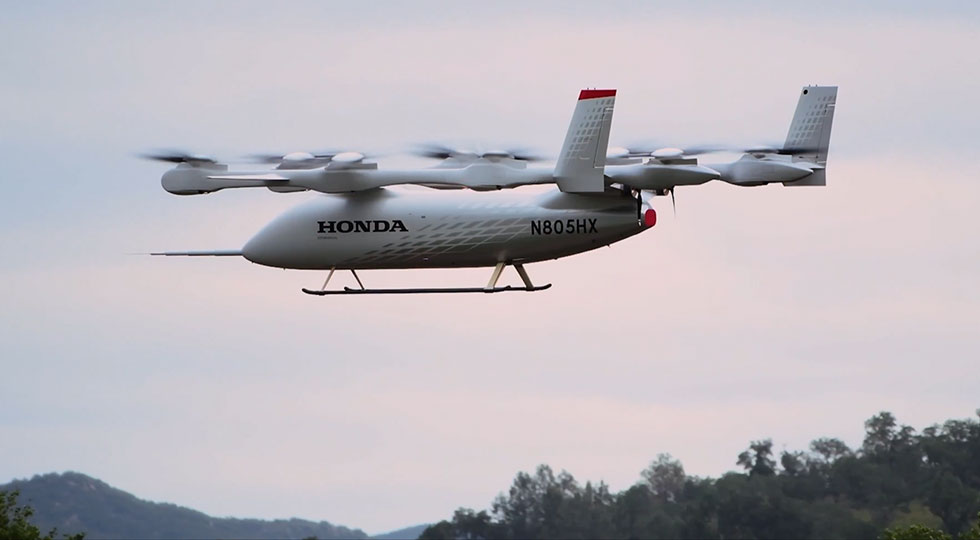
01 — AIRFRAME Lift + Cruise Airframe Design A Lift + Cruise airframe configuration separates the rotors used for vertical takeoff and landing from those used for cruise flight, while generating lift from fixed wings during cruise.
This design enables Honda to verify the foundational technologies required for eVTOL aircraft in a step-by-step manner. -
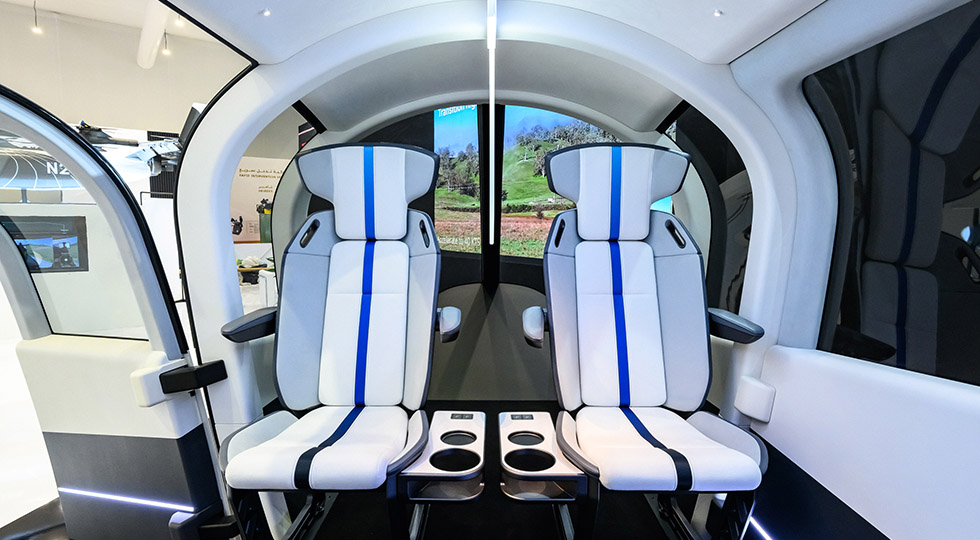
02 — CABIN Cabin Design A cabin space designed to offer spaciousness comparable to HondaJet.
By applying noise reduction and sound insulation technologies cultivated through automobile development, Honda aims to create a quiet and comfortable in-flight environment. -
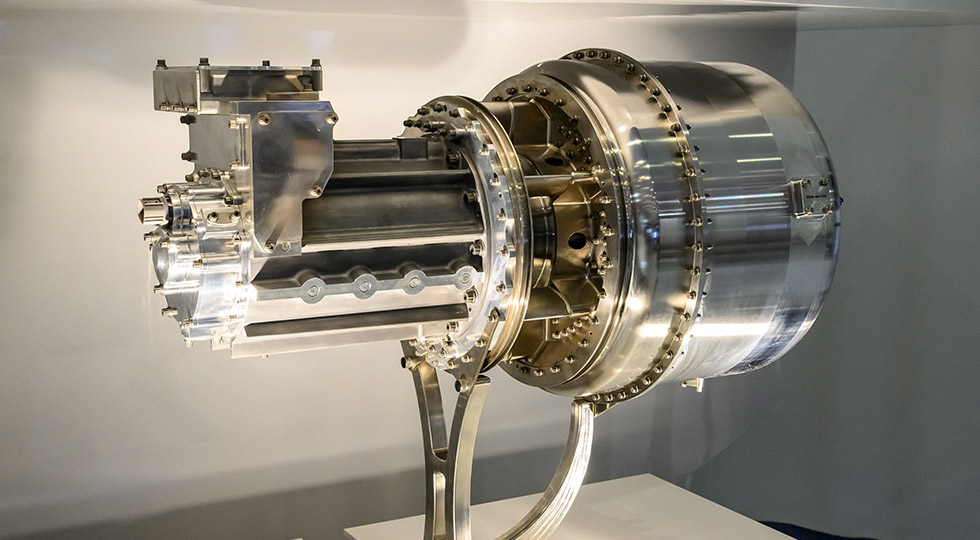
03 — POWER UNIT Gas Turbine Hybrid System The gas turbine hybrid system converts rotational energy generated by the gas turbine into electrical power, which is then used to drive propellers through electric motors.
This is Honda’s unique approach to achieving both high output and extended range. -
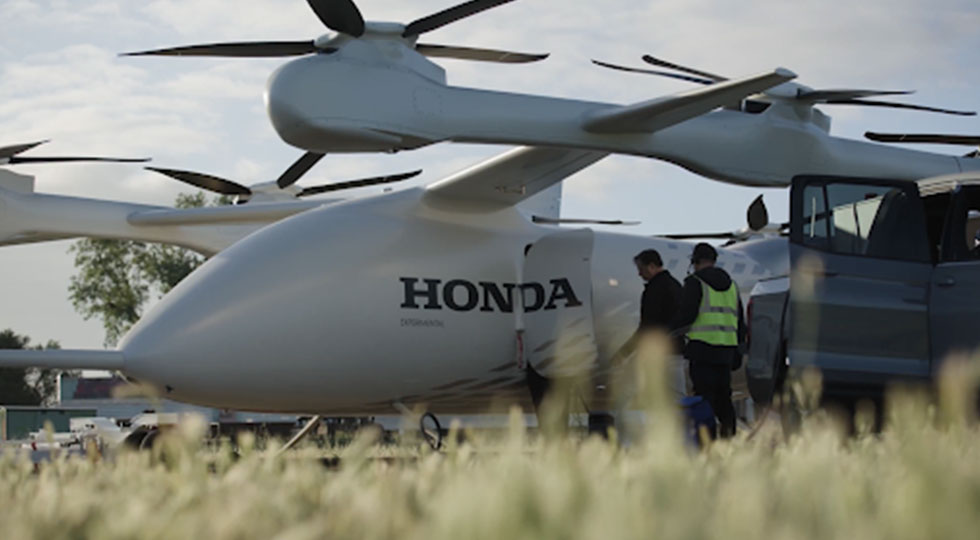
04 — CERTIFICATION Development Toward FAA Type Certification Honda is advancing flight testing and system validation primarily in the United States, with the aim of obtaining FAA type certification in the 2030s.
Through this phased development process, Honda is verifying the safety and reliability required for real-world implementation.