Development of a Next-Generation Fuel Cell System Enabling Versatile Applications
To bring hydrogen energy to more areas of society, Honda took on the challenge of developing a next-generation fuel cell (GEN3) module that can be deployed across diverse applications, including commercial vehicles and stationary power generators.
By combining proprietary technologies such as large-format cells, high-performance electrodes, and narrow-pitch flow channels, Honda achieved world-class power generation efficiency and durability exceeding 30,000 hours. By downsizing auxiliary components and optimizing the package, the team also achieved packaging flexibility without compromising conventional vehicle layouts.
In addition, measures such as adopting stainless-steel bipolar plates improved cost competitiveness, creating a product that could replace diesel engines with clean energy at a comparable or lower cost.
Through the wider adoption of GEN3, Honda will help expand the use of hydrogen energy and contribute to a more sustainable society.
- BACKSTORY
- Interview
Turning "World's Best*1" into Technology the World Can Use.
─ Behind the Development of Honda's Next-Generation GEN3*2 Fuel Cell System ─
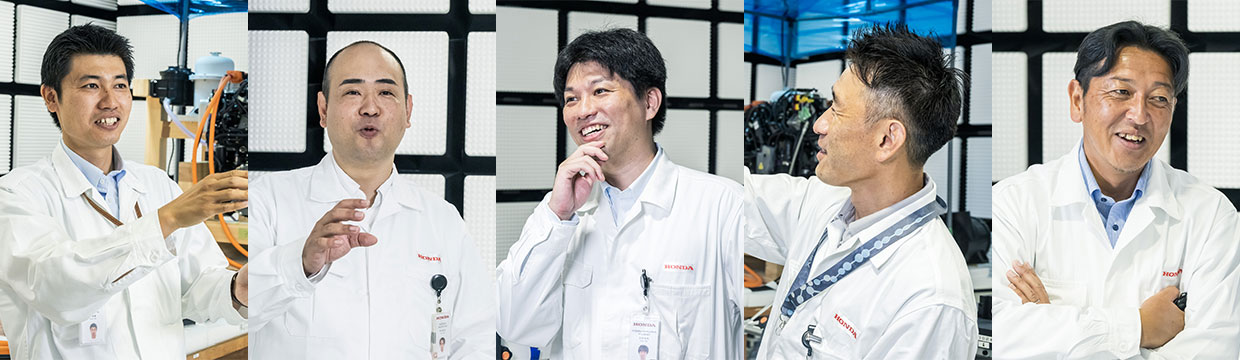
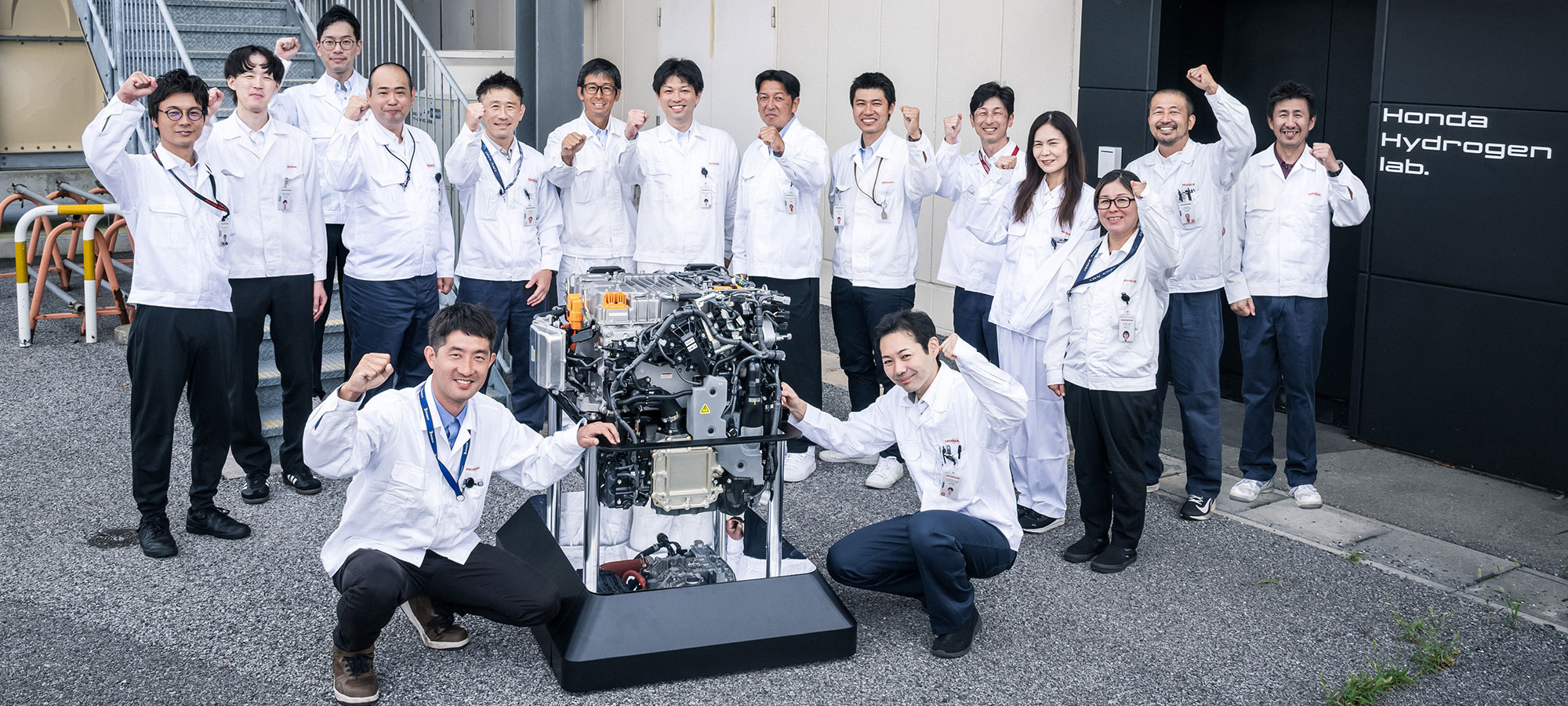
Interview participants: Yuji Matsumoto / Yusai Yoshimura / Yoshio Ohtani / Akihiro Noda / Suguru Ohmori
- *1 Based on Honda R&D Co., Ltd. research.
- *2 The next-generation model succeeding the system installed in the fuel cell electric vehicle CR-V e: FCEV.
High efficiency, high power density, long life, and low cost - achieving all the performance attributes required of a fuel cell, all at a high level.
Honda's third-generation fuel cell system, GEN3, began with precisely that ambitious goal.
But performance was not the only thing that changed through this development.
Until then, Honda built its fuel cell expertise around systems designed for vehicles Honda developed itself.
With GEN3, the goal was to extend that technology to commercial vehicles, stationary power generators, and other applications - and turn it into a "product" that customers outside Honda would choose.
What would customers need? How would the system be used? How could it be mass-produced?
Rather than waiting until every answer was known before beginning development, the team went out to understand where the system would be used, identified the requirements that mattered, and brought design and production engineering together from the very beginning to create the answers.
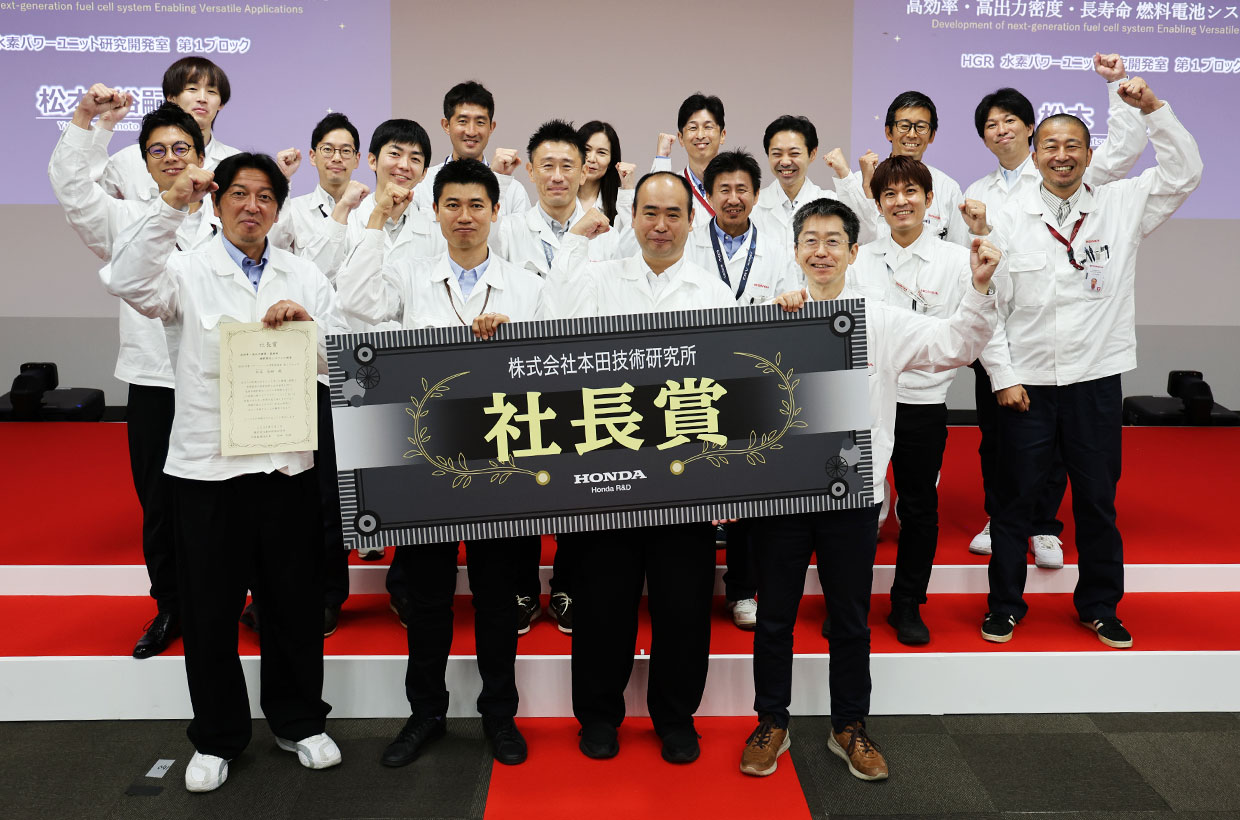
The GEN3 development team - Yuji Matsumoto, Yusai Yoshimura, Yoshio Ohtani, Akihiro Noda, and Suguru Ohmori - received the President's Award.
Looking back on their challenge reveals a team that changed not only the fuel cell itself, but the very way development was carried out.
Three "World's Bests," All at Once.
─ A Goal Beyond Incremental Improvement
Honda has continued to advance fuel cell technology over many years.
From the FCX and FCX CLARITY to the CLARITY FUEL CELL and CR-V e: FCEV, Honda steadily built expertise in areas such as higher output, compactness, low-temperature start-up, and durability through passenger-vehicle applications.
Beyond that, GEN3 was developed with large commercial vehicles such as heavy-duty trucks in mind, as well as stationary power generators including data centers.
To expand fuel cell use beyond passenger vehicles and into a much broader range of applications, the team needed a new level of competitiveness.
The team's target was to create "the world's most efficient, the world's smallest, and the world's lowest-cost" system.
And because commercial applications would operate for long periods, high durability was also essential.
Improving one performance attribute can affect another. A high-performance stack alone is not enough.
It has to be combined with components and controls, then fully utilized as one integrated system.
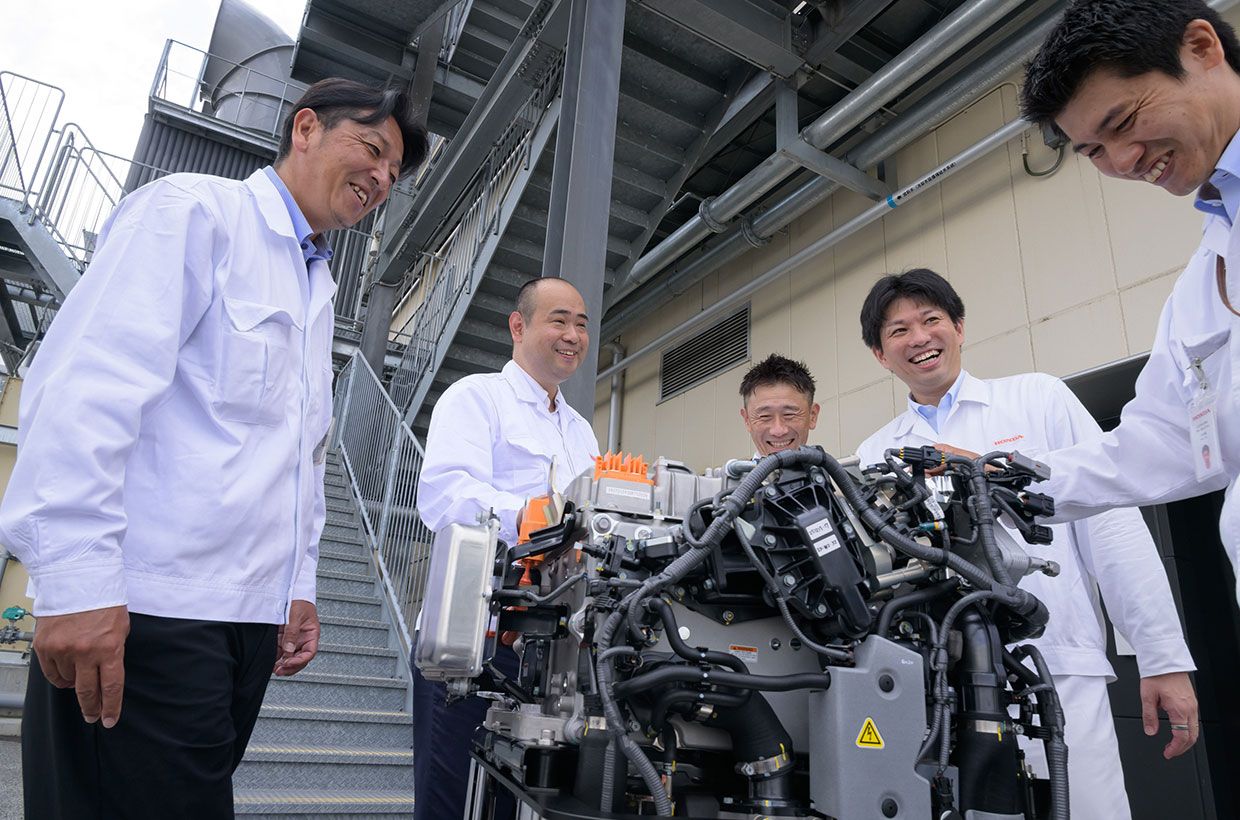
"Even if you have a good stack, can you really make full use of it once it is integrated into the system? We had to balance all of the different performance requirements and ultimately make the whole thing work as a product. That was the real challenge."
That is how the team remembers it. Then came another surprise: the development schedule. A program that would normally have progressed over several years had to be brought forward significantly. For the team, the speed of development became an even greater source of pressure than the performance targets themselves.
"There was no way we could make it in time by working the way we always had."
Rather than simply working faster, the team chose to change the development process itself.
Performance and Production, Together from the Start.
─ Integrated Development to Eliminate Rework
The clearest example was an integrated approach that brought research and design together with production engineering.
Ordinarily, research and design would first define the specifications, after which production engineering teams and suppliers would work out the mass-production process.
GEN3 reversed that order.
Production engineering members joined from the earliest stages, working together on dimensions, layout, materials, and manufacturing methods.
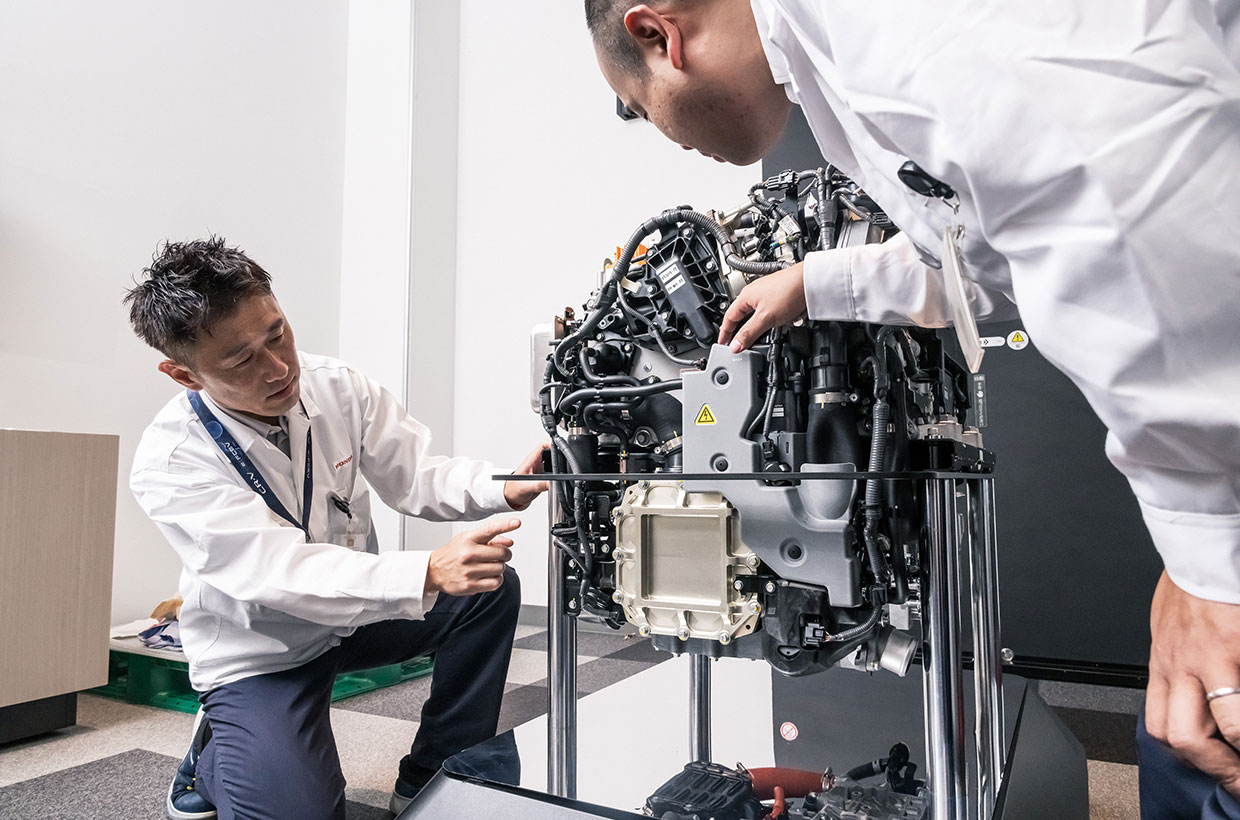
"Instead of deciding most of the specifications and then handing them over to production engineering, we worked together from the start to decide the dimensions and layout. We moved forward with the specifications only after confirming, 'Yes, this can be mass-produced.'"
The goal was to eliminate rework.
If the team pushed performance to the limit only to discover later that the design could not be mass-produced, it would have to start over. With a short development schedule, there was no room to repeat that cycle.
One particularly significant challenge was changing the structure to improve the fuel cell membrane's durability.
In previous development programs, membrane degradation could emerge during long-duration durability testing, requiring time to analyze the cause and develop countermeasures.
GEN3 took a different approach.
Instead of waiting for a problem to occur and then addressing it, the team built the technology in from the outset to a level where membrane durability would no longer be a constant concern.
Change the materials. Change the structure. Change the way it is made.
With changes of that scale, different opinions naturally emerged between design and production.
The change in the membrane electrode assembly manufacturing process, in particular, was significant enough that the production floor could not readily accept it. The first step was to go directly to the head of the production department and make the case.
"That won't work," came the response. The team pushed back: "It can work." After going back and forth, they finally reached one conclusion: "Let's try it first."
The team did not try to avoid those differences of opinion.
"I wanted people to challenge each other's ideas openly. If we are all aiming for the same goal, then having each person think seriously from their own standpoint will ultimately lead to a better result."
One side wanted to push performance higher; the other wanted to make sure the product could be built reliably.
Rather than asking either side to compromise, the team searched for an answer that would make both performance and manufacturability work.
That is why the production engineering project leader joined the same project and pursued the same objectives.
The relationship was described as "a team that had been through everything together."
Then, early in development, durability testing - the area of greatest concern - produced results that greatly exceeded the 30,000-hour target, reaching several times that level.
Matsumoto remembers that moment clearly.
"I thought, 'We've got it.'"
A problem the team had faced for years had become a technology they no longer had to keep worrying about.
It was the moment they became convinced that GEN3 had moved beyond a simple extension of what came before.
Turning Real-World Experience into Product Requirements.
─ Starting with, "What Is a Truck Actually Like?"
Alongside the technical advances, GEN3 presented another major challenge.
The customer was not Honda.
In passenger-vehicle development, the process ends with a finished vehicle.
Product requirements can be flowed down from that vehicle to the fuel cell system, auxiliary components, stack, and individual parts.
GEN3 had no such starting point.
Heavy-duty trucks, stationary power generators, and potentially many other future applications all have different operating conditions and different requirements.
The team recalls that it first had to understand what kind of product people would actually want to use.
Until then, Honda had been the OEM issuing requirements to suppliers.
With GEN3, Honda itself would become the supplier of the fuel cell system.
And customers were not going to hand over a complete set of finished requirements.
The team had to identify those requirements for itself.
They studied industry standards and gathered information from prospective customers.
Within Honda, they also sought expertise from businesses such as Marine and Power Products, which had experience offering engines as standalone products.
Even then, documents alone could not provide all the answers.
So the team obtained a heavy-duty truck.
"We really had to start by asking ourselves, 'What is a truck actually like?'"
They brought a heavy-duty truck in the 10-ton class to Honda's proving ground and drove it themselves.
They examined its size, noise and vibration, the airflow hitting the fuel cell system while driving, and the effects of low-temperature environments.
If the data they needed did not exist, they measured it themselves.
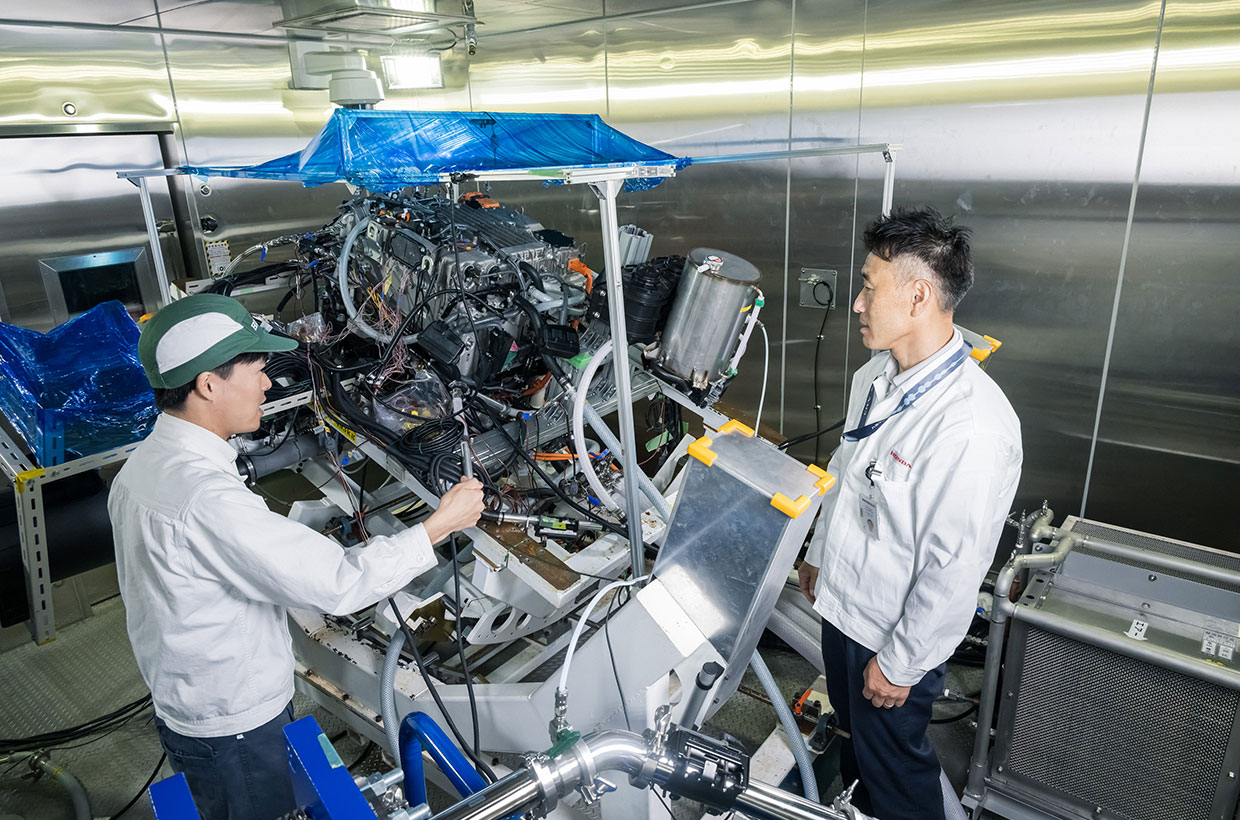
"You cannot understand it just by extending what you know from passenger vehicles. We had to drive the truck ourselves, experience how it was different, and translate that into product requirements."
Safety also had to be verified because the system handles hydrogen.
The team built equipment that simulated the actual installation environment in a truck and verified that hydrogen detection would function correctly.
If there were no finished vehicle, they would create the environment in which the system would be used.
See the actual hardware. Understand the real conditions. Then determine the needed specifications.
For GEN3, that accumulation of real-world learning became the product requirements themselves.
Because external customers would use the system, usability became another critical consideration.
In Honda vehicle development, the vehicle side and the fuel cell side can be tuned closely together to make complex controls work.
External customers, however, cannot be expected to do the same.
"We had to think about how to simplify the complex controls that we had previously tuned within Honda. I had never thought this deeply before about making a product that would be easy for customers to use."
Performance was not the only thing that changed with GEN3.
The technology had to evolve from something Honda itself could use into something that a wide range of customers could use easily.
The developers' perspective itself expanded beyond Honda.
Turning Great Technology into Value People Can Use.
─ Delivering It All the Way to Society
Because GEN3 was developed while the team was still identifying customer requirements, new requirements kept emerging during development.
Each time, the team revisited specifications, changed designs, and repeated evaluations.
At first glance, that may seem like the opposite of a stable development process.
But we anticipated it from the beginning.
In a conventional development program, it is easier to manage schedules and resources by defining requirements up front and completing the product within that scope.
GEN3 deliberately left room for change.
As long as time allowed, the team incorporated new requirements to increase the product's value.
The priority wasn't simply to prove the technology worked, but to turn it into a product customers would choose.
What sustained that constantly evolving development process was a team that could share issues immediately.
When an issue emerged, they analyzed the cause, developed a countermeasure, built a prototype, and tested again.
Stack, devices, controls, production, evaluation - rather than keeping problems within their own areas, members worked across the entire system to find solutions.
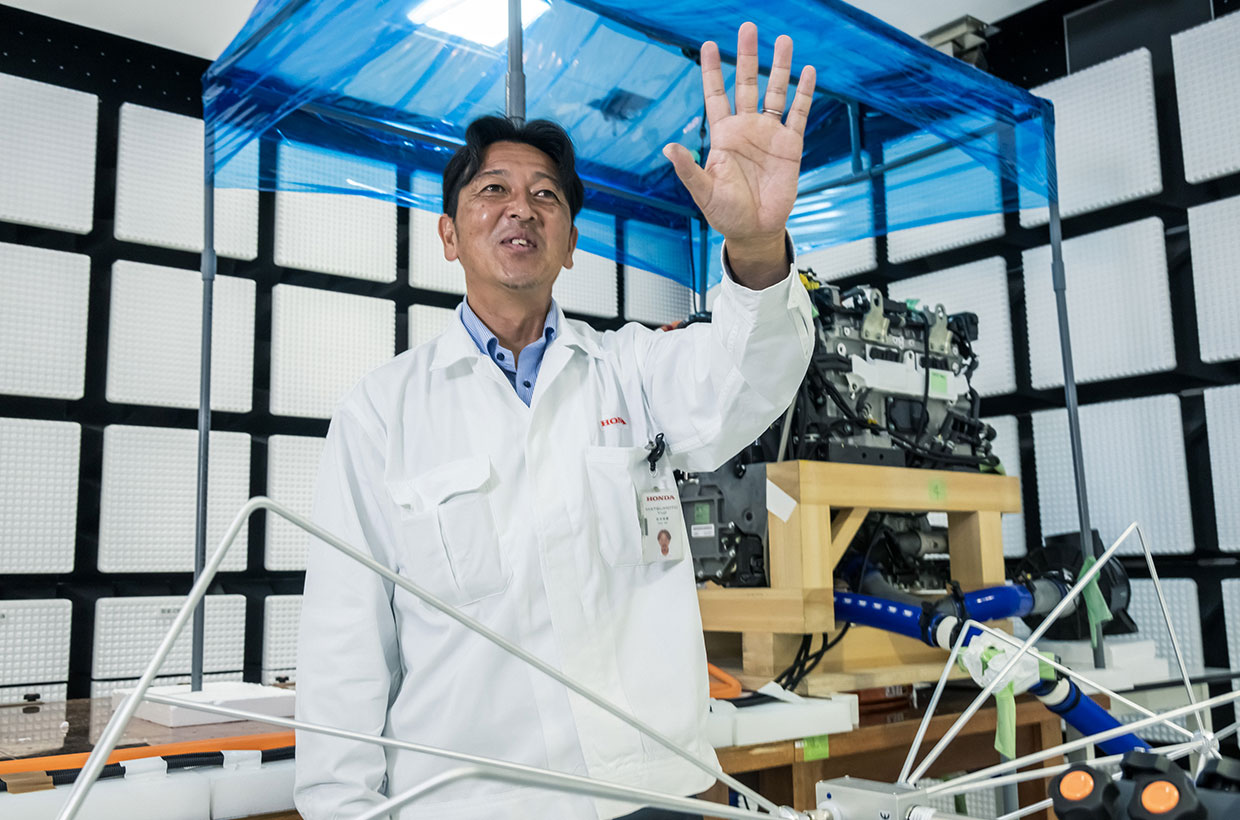
"Whenever something came up, cause analysis started immediately. We would work out a countermeasure, build the part, and move straight into the next test. The speed of the team's response was remarkable."
Looking back, it was a team where people could easily consult one another and share information openly.
That atmosphere did not happen by accident.
Matsumoto had made one decision about how he wanted to lead the team.
"You build better products when you develop them in a good atmosphere."
Tough decisions were made when necessary. At the same time, the team protected an environment in which talented members could speak candidly and make full use of their abilities.
No single person's achievement was enough.
Even if the stack were complete, it would not become a product unless the system could generate power stably. Even after individual components passed evaluation, if an issue emerged during final system verification, everyone came back together to address it.
They described that period as "running flat out the entire time."
Only when every verification item had been cleared did the achievement finally feel real.
"I thought, 'We finally had something real.'"
Receiving the President's Award marked one moment when the challenge was recognized as an achievement.
But completing GEN3 also changed how the engineers thought about their role.
Previously, they had seen their job as creating good technology, with the business and sales teams responsible for expanding it afterward.
Now they saw it differently.
"I've come to think that an engineer's job is also to stay involved all the way through bringing the technology into society."
Good technology alone does not reach society.
Engineers need to understand what the people who will use it actually need, make it easy to use, communicate its value in their own words, and stay involved until customers begin using it.
Ohmori says he wants to go further in identifying "the performance customers truly want."
Noda is looking ahead to maintainability, especially because these systems will be used for long periods.
Yoshimura also wants to avoid drawing a line at "this is where our job ends," and instead think about the system all the way through to the user side.
Ohtani hopes fuel cells will spread to buses and other familiar forms of mobility, becoming a more visible part of everyday life.
Beyond that, Matsumoto envisions a future in which fuel cells support not only mobility but society's energy needs as well.
Electricity generated from solar and wind power could be stored as hydrogen and converted back into electricity by fuel cells when needed.
"Ultimately, I hope fuel cells can become one of the technologies supporting society's energy infrastructure. I would like them to be all around us, used as a matter of course whenever they are needed."
GEN3 was created in pursuit of the world's best.
But the challenge does not end with performance.
Turn the technology we created into value that people will use.
Even after receiving the President's Award, the team is already looking beyond it - toward the future of society.