Williams and Honda
Honda had returned to F1™, while Williams was seeking to reach new heights.
The five years they spent together laid the foundation for Honda’s first F1 title and the golden era that followed.
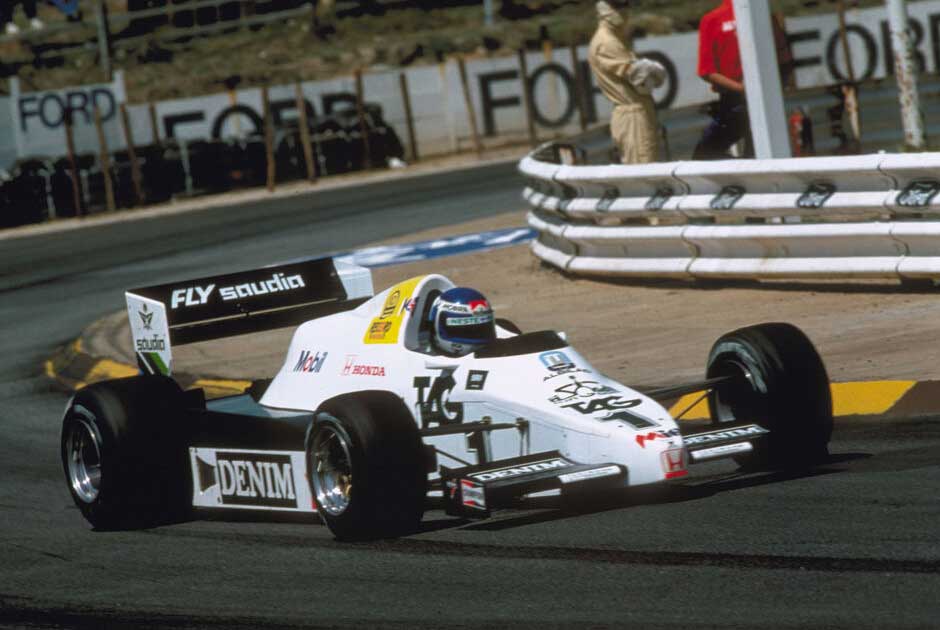
After returning to Formula 1® in 1983 with Spirit, a test team developed from Spirit’s Formula 2 program, Honda decided to join forces with Williams in pursuit of competition at a higher level.
The decision was driven by Nobuhiko Kawamoto, one of the key figures behind Honda’s second F1 era. Having planned the project from Honda’s Formula 2 beginnings, Kawamoto was deeply involved in the program from the outset. At the time Vice President of Honda R&D, he was a passionate racing enthusiast who had served not only as an engineer but also as a mechanic during Honda’s first F1 campaign. Looking back, Kawamoto explained why Williams was the ideal partner:
“To win in racing, there are four essential elements: a great commander, great soldiers, strategy and tactics, and a new weapon. Frank Williams was the commander we needed.”
Williams was also one of the leading teams in the sport. With reigning World Champion Keke Rosberg and a highly respected engineering group led by Patrick Head, the team possessed both proven results and technical expertise. Those strengths helped convince Honda that Williams was the right partner for its next step.
For Williams, however, the partnership represented a calculated gamble. Honda had been absent from F1 for many years, and neither its capabilities nor its commitment could yet be fully measured. At the same time, adapting to the turbo era had become increasingly urgent. Although Williams had already won two Constructors’ Championships, the team was only entering its sixth season in F1. Becoming a works team, gaining influence over engine development, and receiving exclusive factory engines at no cost were compelling advantages.
With their ambitions aligned, Honda and Williams announced the formalization of their partnership in August 1983.
Difficult beginning, and first victory in Dallas
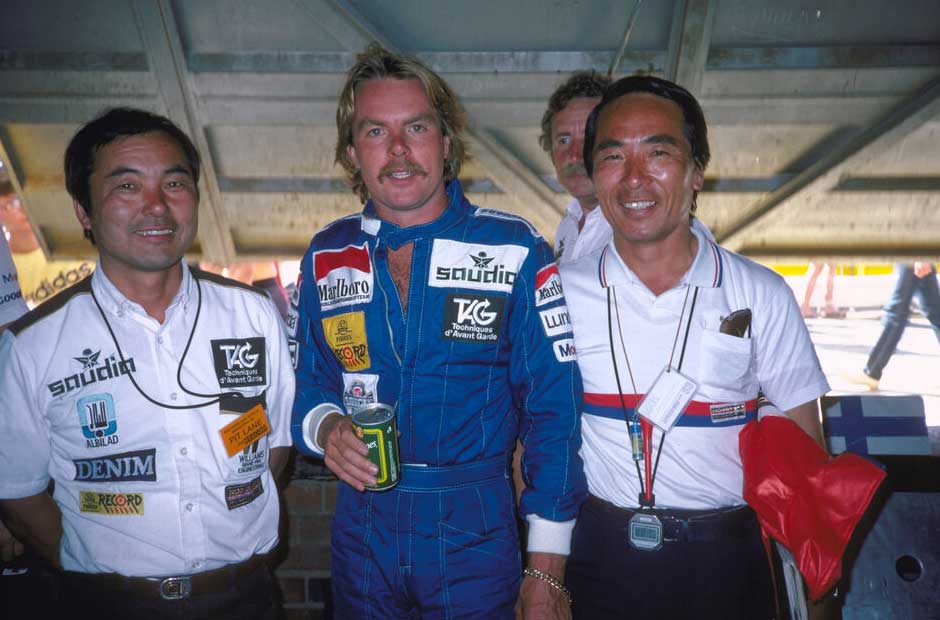
Williams Honda made its debut at the final round of the 1983 season, the South African Grand Prix. The car was powered by the RA163E, an evolved version of the engine used by Spirit, with improved reliability. In the team’s first race, Rosberg finished fifth, delivering a respectable result in what was essentially a test appearance.
The RA163E was based on Honda’s Formula 2 engine, adapted for turbocharged F1 competition. It was also the first F1 engine to employ an electronically controlled fuel-injection system. This was one of Kawamoto’s “new weapons.” Honda would use the technology to help lead the turbo era, pioneering an innovation that would eventually become standard throughout the sport.
Expectations were high entering the 1984 season, but Honda soon encountered major challenges. The company had limited experience with turbochargers and the thermal issues they created, while F1 had introduced a new fuel-capacity limit for the season.
Turbocharger failures and heat-related reliability problems became recurring issues, leading to numerous retirements. Honda’s engine consumed large amounts of fuel for cooling purposes, resulting in poor overall fuel efficiency. With fuel capacity restricted to 220 liters, the Honda power unit often struggled to realize its full potential.
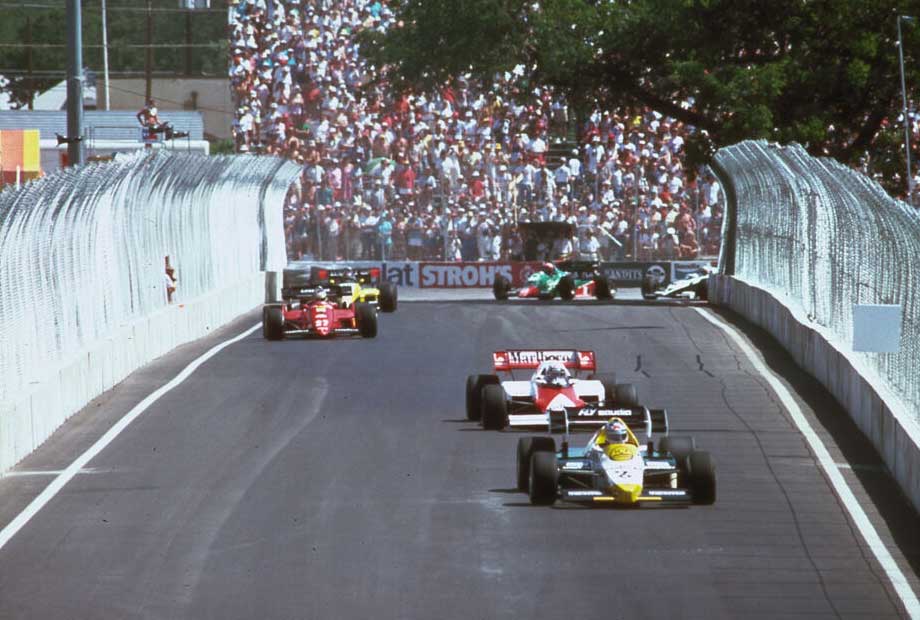
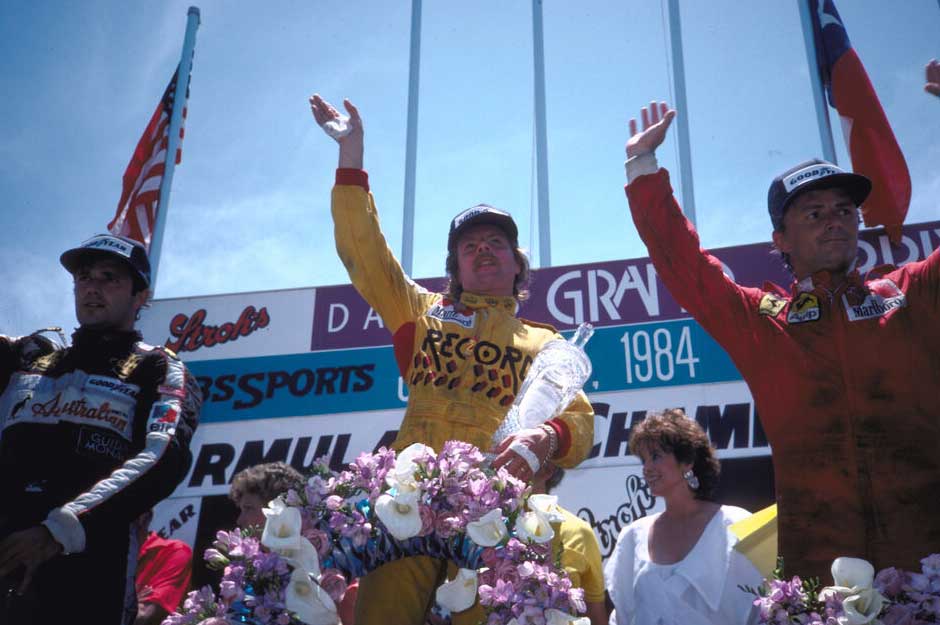
Despite the difficulties, Rosberg delivered Williams Honda’s first victory at the Dallas Grand Prix, Round 9 of the season. In a brutal race run under extreme summer heat, he produced a typically aggressive drive to give Honda its first win of the second F1 era.
Yet the season also revealed the limitations of the RA164E, an evolution of the RA163E. Honda came to realize that solving its fundamental problems would require an entirely new engine. Recognizing that necessity may have been one of the most important lessons of the team’s first full season.
Patrick Head, Williams’ Technical Director, later reflected on the early Honda engines:
“We knew from the beginning that it would be a very difficult challenge. The engine had an extremely low compression ratio, very long exhaust pipes, and high boost pressure. Off boost, it felt like there was no power at all. Then when the boost arrived, the power came in with a huge surge. It made designing a car with predictable handling extremely difficult.”
Breakthrough delivered by the RA165E
Beyond the challenges of turbocharged performance, the RA164E suffered from severe thermal problems. Its large-bore design caused abnormal combustion at high engine speeds, resulting in piston and cylinder failures.
Honda’s solution was radical. Engineers developed a new small-bore, long-stroke engine and began an intensive testing program. After European tests, the final evaluation took place at Suzuka Circuit. Nigel Mansell, who drove the new engine, was highly impressed, and Honda approved it for competition.
The result was the RA165E.
In addition to its new bore-and-stroke philosophy, the engine featured redesigned components for greater reliability, a new cooling system, and a sophisticated monitoring system capable of sensing engine operating conditions. This system became the precursor to the telemetry technology that would emerge as another key “new weapon” in the following years.
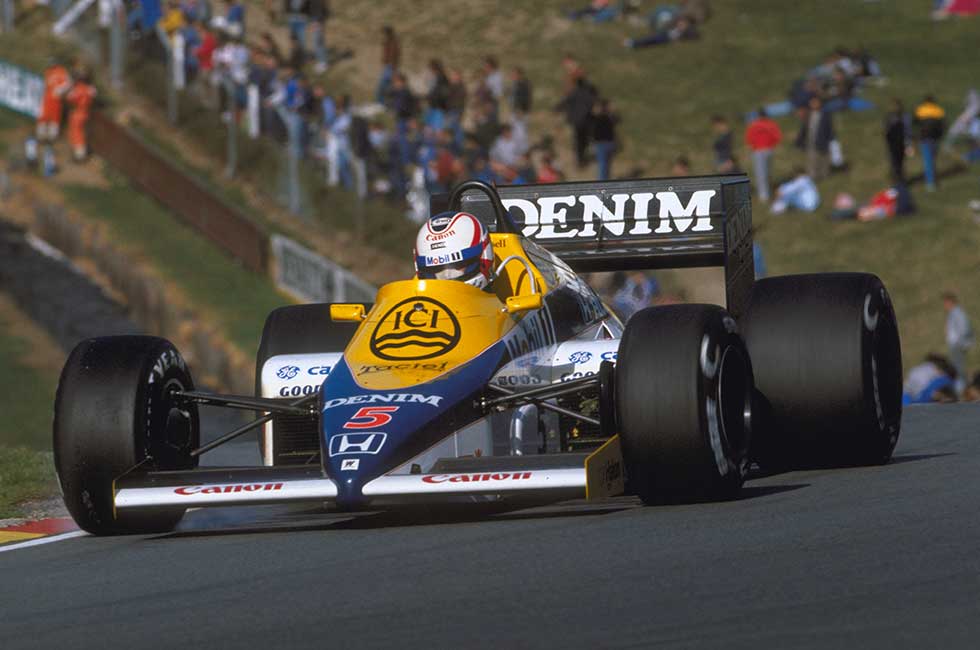
Developed and produced at remarkable speed, the RA165E made its race debut at the 1985 Canadian Grand Prix, where it finished fourth. One race later, at the Detroit Grand Prix, it delivered Honda’s second victory of the second F1 era.
Several early retirements followed as initial issues were resolved, but by the end of the season the engine’s true potential became clear. Mansell secured his first F1 victory at the European Grand Prix, while Rosberg won the following two races. Three consecutive victories to close the season demonstrated the competitiveness of the RA165E and offered a glimpse of the success that lay ahead.
Achieving the long-awaited first title
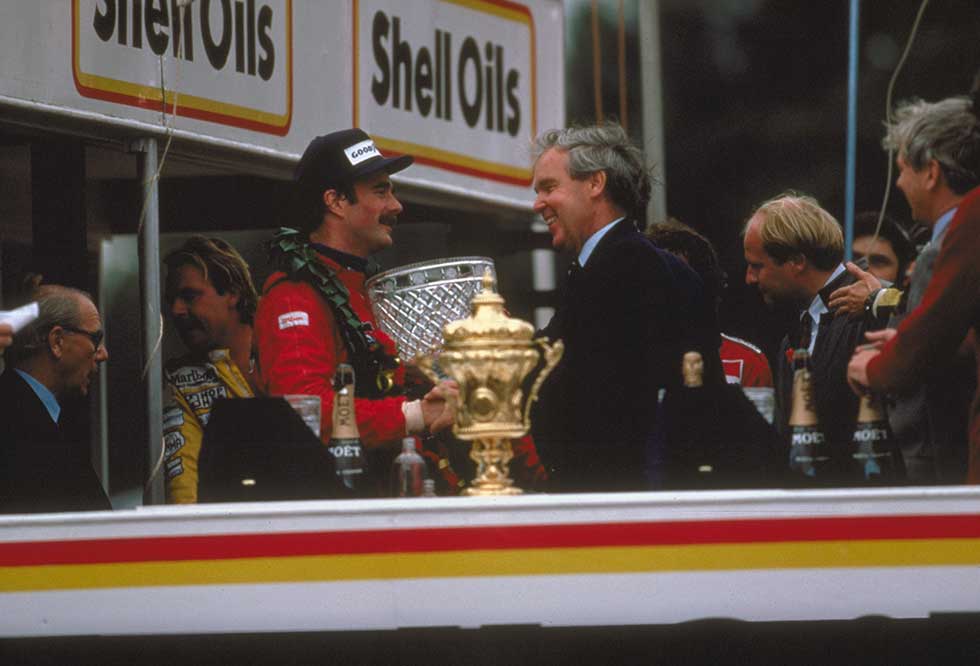
For 1986, Williams strengthened its lineup by signing Nelson Piquet, immediately becoming one of the favorites for both championships.
Just before the season began, however, the team suffered a major shock. On returning from testing at Paul Ricard, team founder Frank Williams was seriously injured in a road accident.
Rather than weakening the team, the crisis strengthened its unity and determination. Piquet won on his Williams debut in the season opener, and Williams Honda quickly established itself as the benchmark of the field.
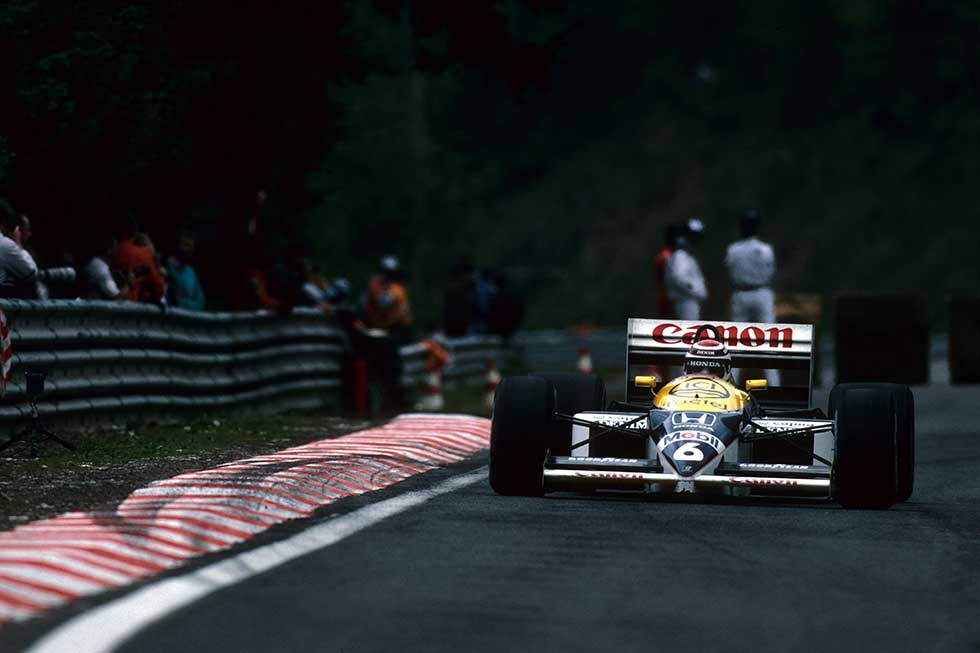
Honda further enhanced its competitiveness with the RA166E, which featured a fully developed telemetry system evolved from the earlier sensing technology. When Mansell claimed his second F1 victory at the Belgian Grand Prix, a season-long battle between him and Piquet began to take shape.
As the two teammates shared victories, the Drivers’ Championship became increasingly intense. The Constructors’ Championship, however, was decided well before the final round. At the Portuguese Grand Prix, Round 14, Williams Honda secured the title.
Just three seasons after returning to F1, Honda had achieved its long-awaited goal. Honda power had reached the top of the world.
The Drivers’ Championship would prove far more dramatic.
Mansell entered the final race as championship leader with five victories and needed only a third-place finish to secure the title. Late in the race, he was running comfortably in third and appeared destined to become champion. Then, on Lap 64, disaster struck. At maximum speed on the back straight, Mansell’s left-rear tire suddenly exploded.
Although he brilliantly controlled the car and avoided a serious accident, his race was over. Alain Prost went on to win the race and snatch the championship in one of F1’s most dramatic reversals. Williams Honda’s dream of a double title slipped away in extraordinary circumstances.
Final season at the pinnacle
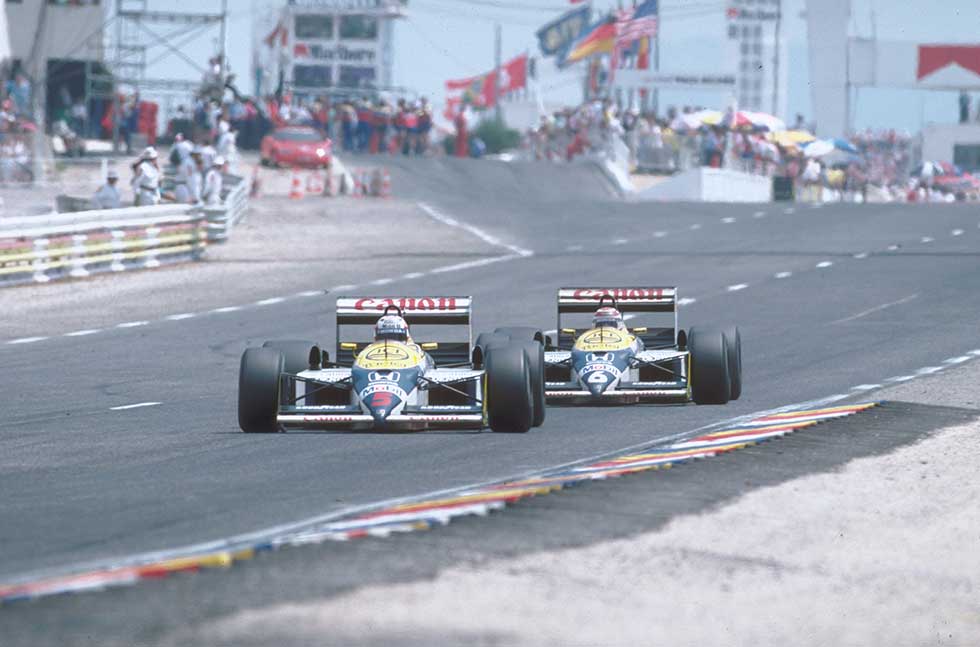
In 1987, Williams introduced the FW11B, a significantly improved evolution of the previous year’s championship-winning FW11.
The new car featured enhanced aerodynamics and active suspension technology capable of controlling ride height, making it even more competitive. Honda’s RA167E was developed to comply with new restrictions introduced to curb turbocharged performance, including a maximum boost pressure of 4.0 bar.
Honda responded with new intake-efficiency technology that effectively offset the regulatory restrictions, producing power levels that remained among the highest in F1.
The result was domination.
Williams Honda won nine races and controlled the season. Yet Piquet announced his departure during the season.
At the same time, negotiations between Honda and Williams regarding a future partnership failed to reach agreement. Honda ultimately decided against extending the relationship and chose instead to supply engines to McLaren beginning in 1988.
A partnership that had reached the pinnacle of F1 came to an end after just four seasons.
The Drivers’ Championship remained undecided until late in the year. Although Mansell won six races to Piquet’s three, Piquet’s consistency—including seven second-place finishes—allowed him to maintain a points advantage.
Then, during qualifying for the Japanese Grand Prix, Mansell suffered a massive accident in the Esses and was injured. Forced to miss the final two races, he watched as Piquet secured the championship.
Williams Honda finally achieved the championship double that had slipped away the previous year. The team claimed a second consecutive Constructors’ Championship and completed one of the most remarkable rises in F1 history, scoring 23 victories in four seasons and securing its place among the sport’s great partnerships.
Together, Williams and Honda overcame the challenges of Honda’s early return to Formula 1®, climbed to the summit of the sport, and then followed separate paths. Both would go on to enjoy further success.
Honda joined forces with McLaren and captured four consecutive Constructors’ Championships. Williams, meanwhile, would emerge as one of the dominant teams of the next era.
Reflecting on the partnership years later, Frank Williams offered a simple assessment of Honda:
“Honda made many mistakes in the beginning, but learned a great deal from them. And once they learned, they never made the same mistake twice.”