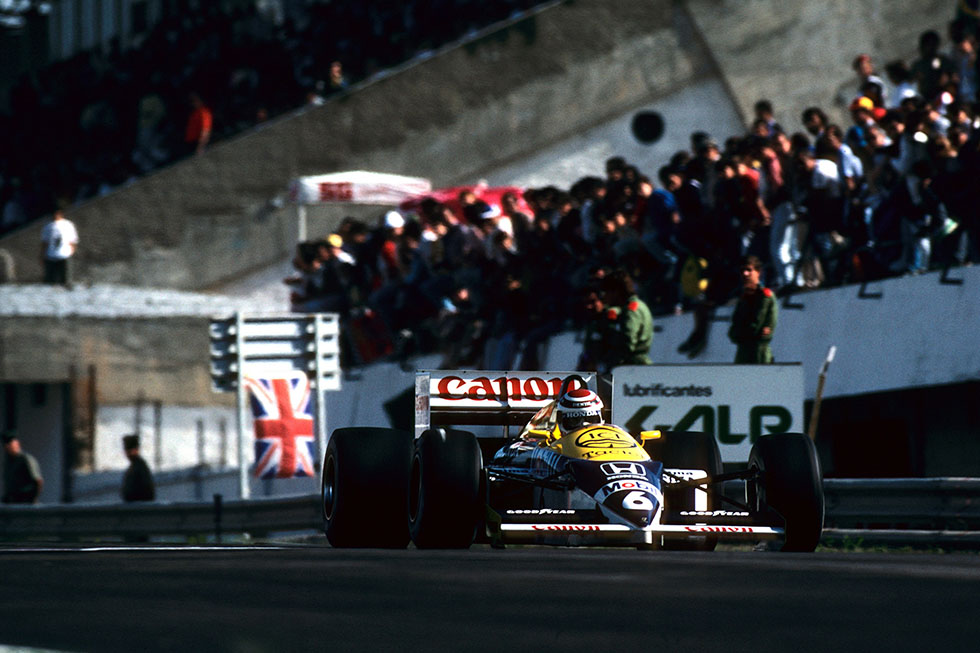
1986 Portuguese Grand Prix
Long-Awaited First Title, 22 Years in the Making
Round 14 of the 1986 season took Formula One® to the Estoril Circuit in Portugal. With 16 races on the calendar, the championship had entered its closing stages. Located in the resort town of Estoril, around 30 km west of Lisbon, the 4.350 km circuit was relatively short but featured a wide variety of corners and a single long straight. Combined with the region’s mild climate, it was frequently used for pre-season testing. During races, however, overtaking was notoriously difficult, making qualifying position especially important.
For 1986, F1 regulations mandated the exclusive use of 1.5-liter turbocharged engines, intensifying the battle for power. Honda further refined the newly designed RA165E, which had claimed four victories the previous year, and introduced the RA166E, the first F1 engine to incorporate a telemetry system. Improved fuel efficiency turned the year’s even stricter fuel allocation limits into a competitive advantage, allowing Honda to excel not only in outright power but across every aspect of performance. Powered by the RA166E, the Williams Honda FW11 proved overwhelmingly competitive. From the opening races, Nelson Piquet and Nigel Mansell engaged in an intense battle for victories. After Round 13 in Italy, Mansell led the Drivers’ Championship with 61 points, followed by Piquet on 56, Alain Prost on 53, and Ayrton Senna on 48. In the Constructors’ Championship, Williams Honda had opened up a commanding lead with 117 points, well ahead of McLaren TAG’s 75. At the time, points were awarded only to the top six finishers, with 9 points for a win, 6 for second, 4 for third, 3 for fourth, 2 for fifth, and 1 for sixth. Only each driver’s best 11 results from the 16-race season counted toward the Drivers’ Championship.
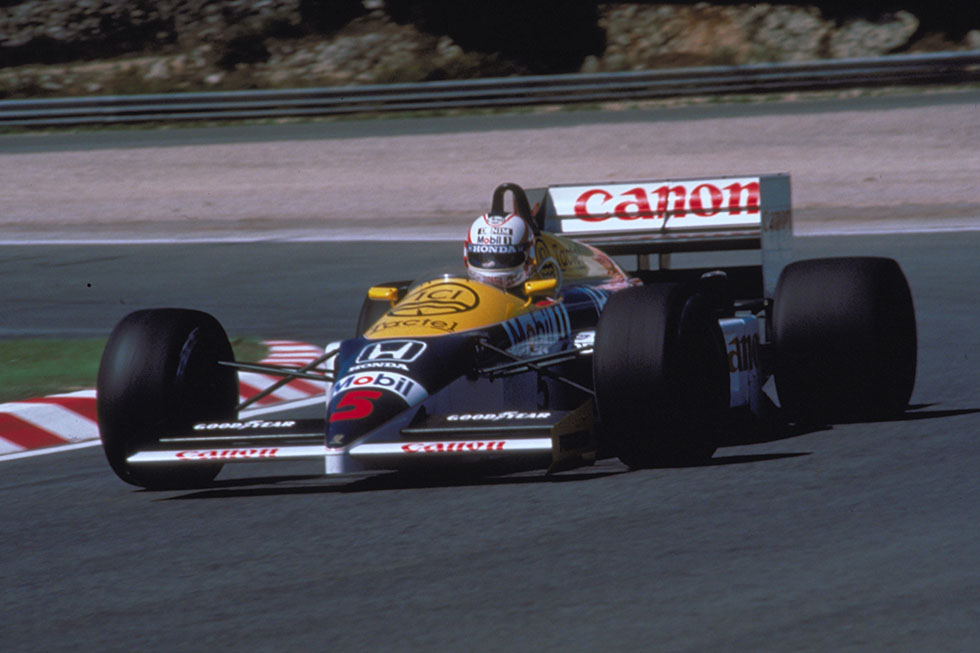
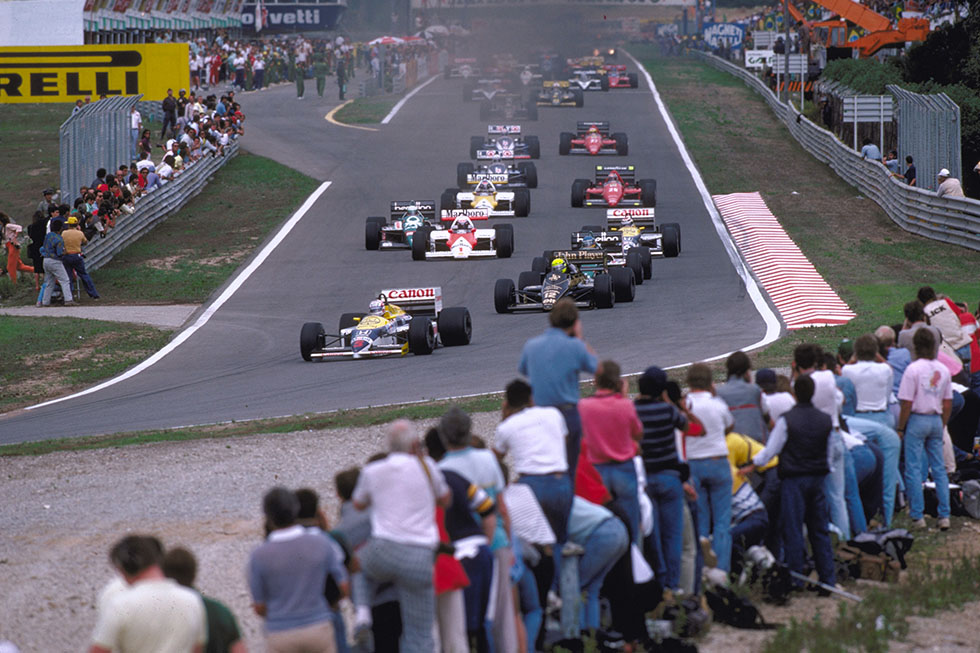
The 70-lap race on September 21 saw Mansell make a superb start from second on the grid to seize the lead immediately. He went on to dominate the race, securing his fifth victory of the season. After completing his planned tire stop on Lap 34, he continued to control the race, keeping Senna, who was running second, around eight seconds behind. By the checkered flag, his winning margin had grown to more than 18 seconds. The victory significantly strengthened Mansell’s bid for the Drivers’ Championship.
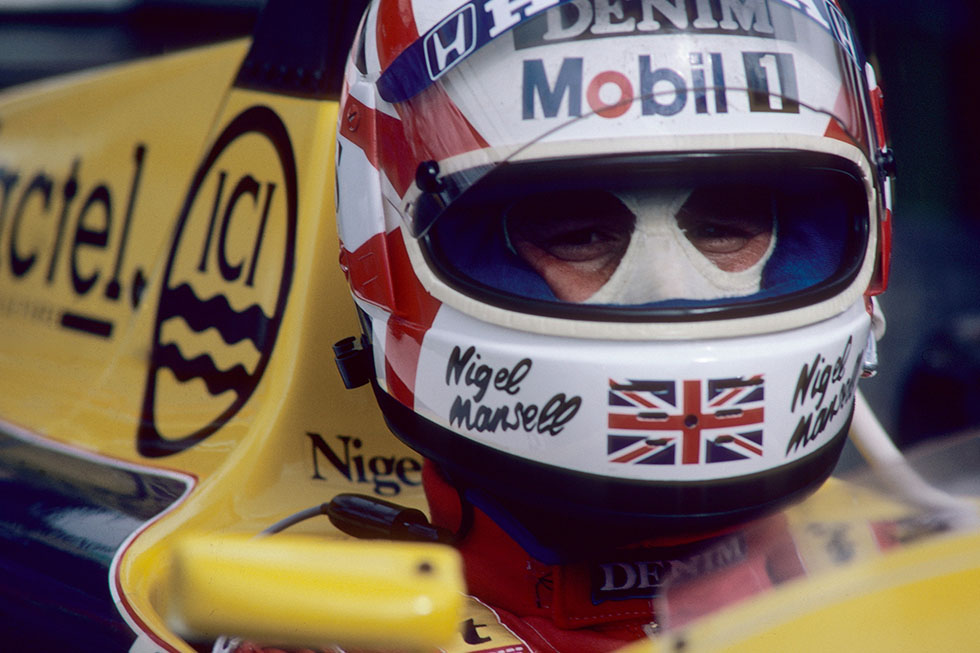
Piquet, who had joined the team that season as its lead driver and was also considered a leading title contender, endured a frustrating weekend. During qualifying, his undertray came loose while on a flying lap, leaving him only sixth on the grid. Despite the setback, the superior pace of the Williams Honda allowed him to climb to third by Lap 8. Ahead of him, however, was polesitter Senna. Skillfully responding to every move from behind, Senna denied Piquet any opportunity to pass. Their battle for second continued even after the mid-race pit stops. At one stage, Piquet followed so closely that his brakes overheated, forcing him to back off to cool them before mounting another challenge. Then, on Lap 64, a problem with the rear brakes caused Piquet to spin on his own, allowing Prost through into third.
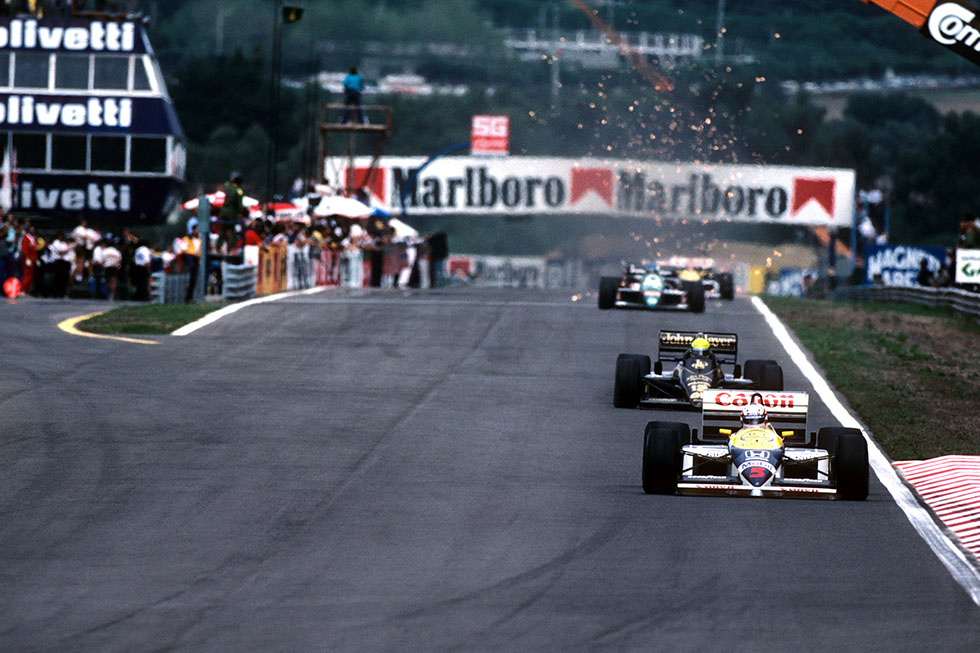
Meanwhile, although running around 16 seconds behind race leader Mansell, Senna appeared set to secure second place until the final lap, when he ran out of fuel and coasted to a halt at the side of the circuit. His prolonged battle with Piquet had consumed more fuel than anticipated. Prost and Piquet were therefore promoted to second and third respectively. Although Williams Honda narrowly missed a one-two finish, both drivers still stood on the podium.
Following Round 14, Williams Honda increased its Constructors’ Championship tally to 130 points, opening an unassailable 49-point advantage over second-placed McLaren TAG, which had 81 points. With only two races remaining, the deficit could no longer be overcome, securing the Constructors’ Championship for Williams Honda. It was Honda’s long-awaited first F1 title, achieved 22 years after making its F1 debut in 1964.
The Drivers’ Championship also appeared destined to go to either Mansell or Piquet as the season headed to the Australian Grand Prix. Instead, the championship produced one of Formula One®’s most dramatic conclusions. Mansell suffered a sudden tire failure late in the race and retired, while Piquet was forced into an unscheduled pit stop for fresh tires. Prost capitalized on their misfortune to claim victory and secure a remarkable comeback, successfully defending his title. Williams Honda’s quest for a championship double would have to wait until the following season.