1984 Dallas Grand Prix
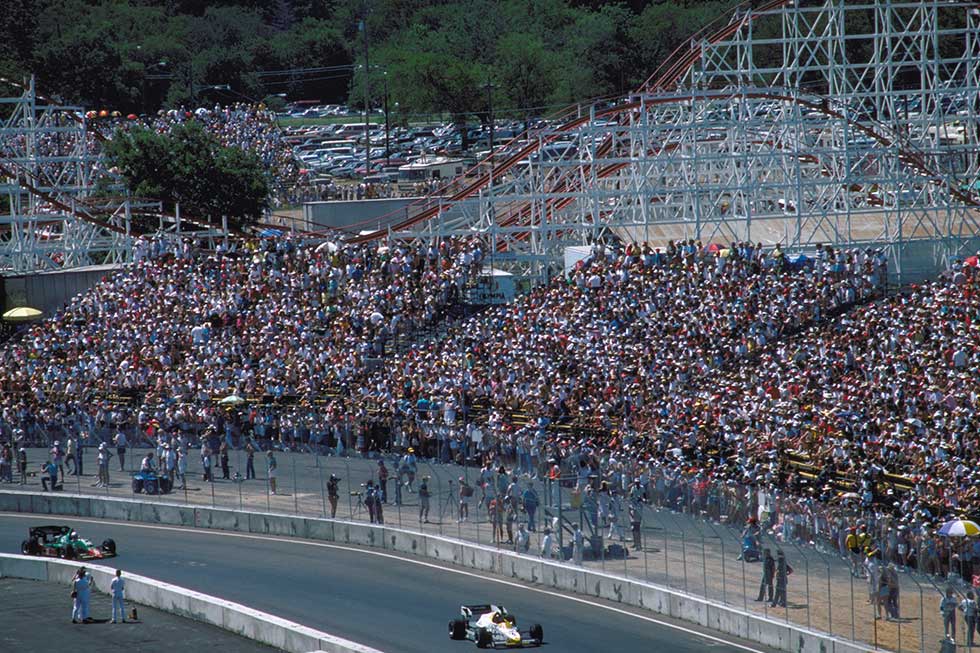
Honda’s second Formula 1® era began in 1983. Fifteen years had passed since its first F1 campaign from 1964 to 1968, and the sport had entered an era increasingly defined by high-powered 1.5-liter turbocharged engines. Having returned to international single-seater racing through the European Formula 2 Championship in 1980, Honda began testing in F1 midway through 1983 using a modified Spirit Formula 2 chassis. For 1984, Honda entered into a partnership with Williams, supplying engines to a team that had already established itself among F1’s elite by winning consecutive Constructors’ Championships in 1980 and 1981.
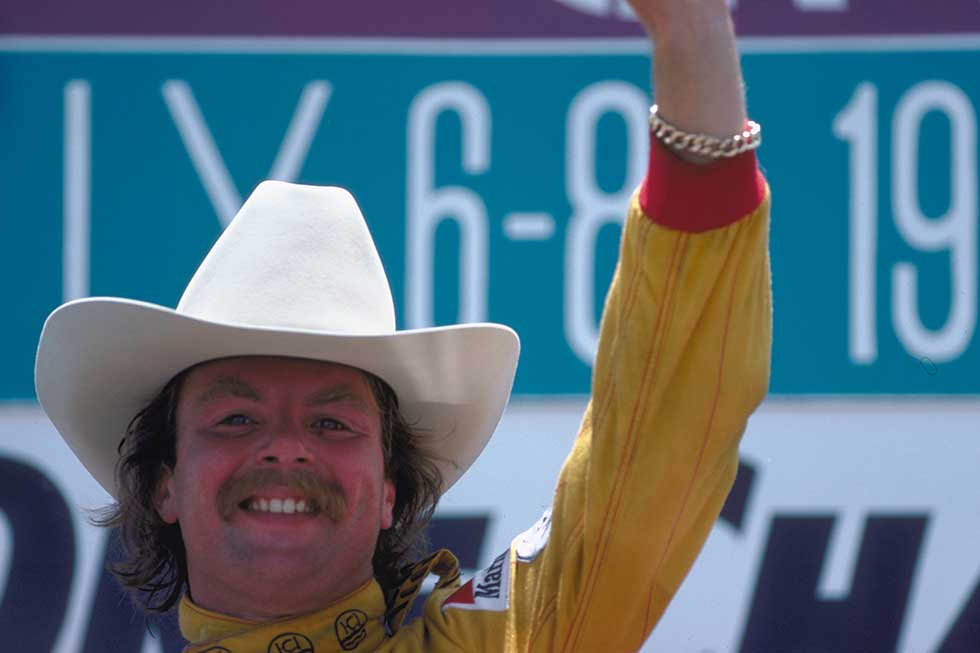
Williams Honda’s first victory came at a temporary street circuit in Dallas, Texas, where 1982 World Champion Keke Rosberg drove the Williams FW09 Honda to victory.
The race remains one of the most unusual Grands Prix in F1 history. It was not only the first victory of Honda’s second F1 era, but also a race held under conditions so difficult that questions were raised about whether it should have gone ahead at all. The circuit’s deteriorating surface caused numerous retirements, and Rosberg’s victory was widely credited to a combination of extraordinary skill, determination, and bravery. The Dallas Grand Prix appeared on the F1 calendar only once, making Rosberg and Williams Honda the sole winners of the event.
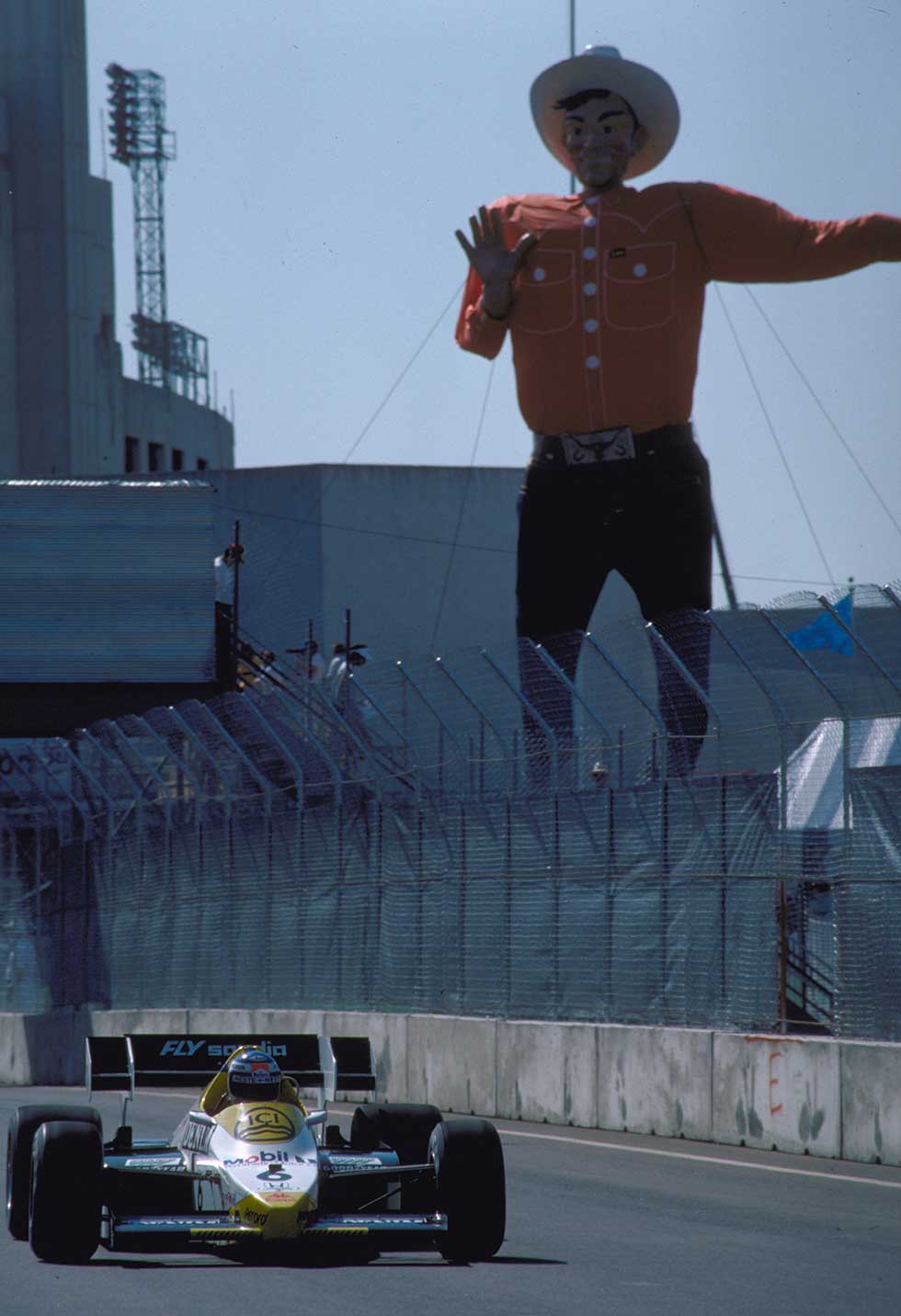
Round 9 of the 1984 season formed part of a North American triple-header consisting of Canada, Detroit, and Dallas. The 3.901-kilometer temporary circuit was built within Dallas’s Fair Park and was completed only shortly before race weekend. Surrounded by concrete walls and fencing, the circuit was modeled after the successful Long Beach street race in California, which had hosted F1 during the previous decade before switching to CART competition in 1984. Dallas was effectively added to replace Long Beach on the F1 calendar.
Almost immediately, drivers voiced concerns. The track surface was severely bumpy and uneven, runoff areas were limited, and the cars behaved unpredictably over the rough pavement. Emergency repairs were carried out, but the immense power of the turbocharged F1 cars only accelerated the surface deterioration. With every session, the circuit became more challenging and potentially more dangerous.
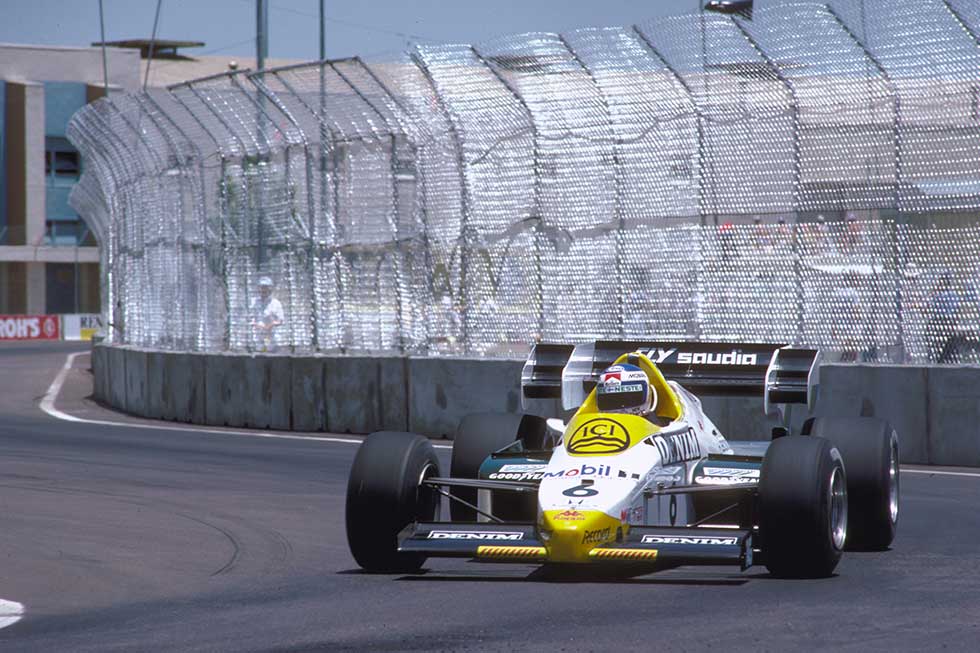
On July 8, 1984, temperatures in Dallas climbed relentlessly, reaching 38°C. The track surface had already been damaged further by a Can-Am race held the previous day. Organizers attempted temporary repairs by filling holes with cement, completing the work only 90 minutes before the scheduled 11:00 am start. The traditional 30-minute warm-up session, still held on race mornings at the time, was first delayed and then ultimately canceled. Officials also announced that the race distance would be reduced from 77 laps to 68.
Twenty-six F1 cars lined up on the grid. Rosberg qualified eighth, while teammate Jacques Laffite started from 25th.
Chaos unfolded almost immediately. Spins and off-track excursions occurred from the opening lap, and by Lap 15, seven cars had already retired. The two Lotus drivers, who had started from the front row, initially maintained their positions, but Rosberg steadily fought his way forward and soon emerged in third place.
As attrition began to affect the race leaders, Rosberg moved into second. Nigel Mansell, leading in the Lotus, attempted to pull away, but a mistake onLlap 27 cost him valuable time and allowed Rosberg to close the gap. On Lap 36, Mansell brushed the wall, and Rosberg seized the opportunity, drawing alongside and taking the lead.
Mansell immediately attempted to fight back, launching an aggressive counterattack. Rosberg responded by raising a fist in frustration at what he considered an overly dangerous move. Mansell’s challenge ultimately faded, and he dropped out of contention for victory.
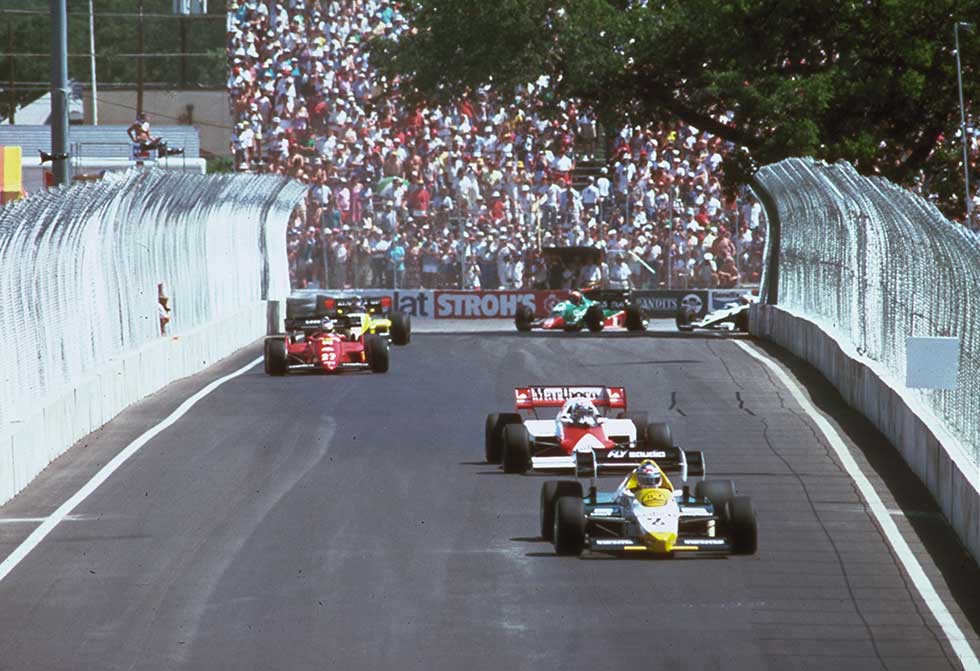
As the race entered its final stages, the battle for the lead became a duel between Rosberg and McLaren’s Alain Prost. Prost overtook Rosberg on Lap 49 and gradually began to extend his advantage. Victory appeared certain for the Frenchman until Lap 57, when the normally flawless Prost struck the wall. The impact punctured his right-front tire and brought his race to an abrupt end.
Rosberg inherited the lead once again and maintained a comfortable advantage over the remaining runners. After two hours of racing, the checkered flag was flown at the end of Lap 67—one lap shorter than the already reduced race distance.
Rosberg crossed the line to secure Williams Honda’s long-awaited first victory.
It had been a race of attrition. Only eight of the 26 starters were classified as finishers. Thirteen retirements were officially attributed to “hit wall.”
For Williams Honda, the victory came in only the tenth race of the partnership. Rosberg had already scored a podium finish with second place in the season-opening Brazilian Grand Prix, but subsequent races had produced a mixture of fourth-place finishes and retirements. In Dallas, everything finally came together.
The team’s second car also delivered a strong result. Starting 25th on the grid, Jacques Laffite fought through the chaos to finish fourth, giving Williams Honda its first double points finish.
While the dramatic victory earned widespread praise for both Rosberg and Williams Honda, the event also sparked serious debate about circuit safety standards and race organization. The win came while the partnership was still in the early stages of its development, and much of the credit belonged to Rosberg’s remarkable performance under exceptionally difficult conditions.
As Williams Honda continued its rise toward becoming Formula 1®’s dominant force, Dallas marked an important first step on that journey.