Round 10: Belgian Grand Prix Preview
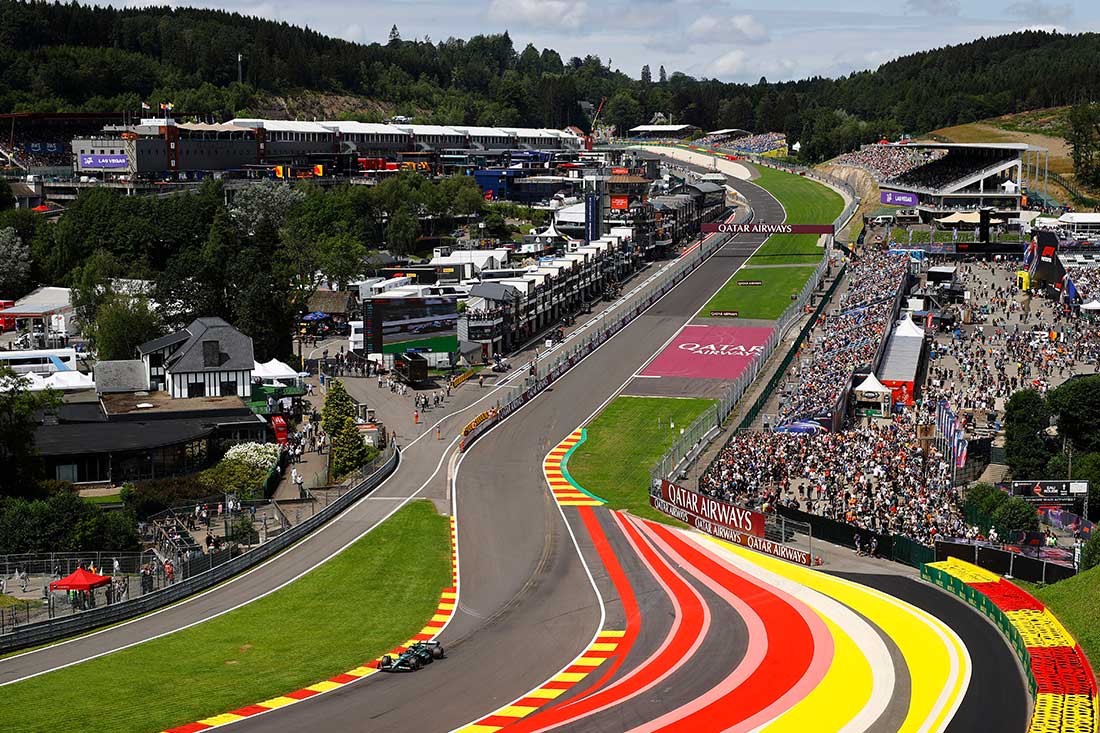
Spa-Francorchamps: One of F1’s toughest circuits
The Belgian Grand Prix was traditionally the opening race after the summer break, but under a new agreement signed in 2023, it has moved to a July slot. The event is contracted to remain on the calendar through 2031, although it will operate on a rotation basis and will not be held in 2028 or 2030.
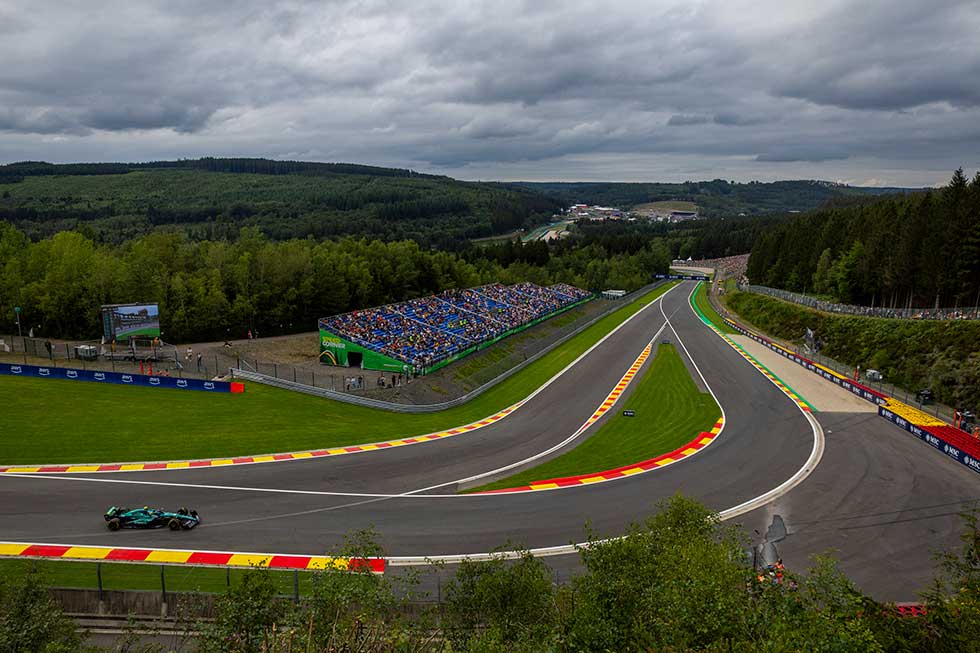
Spa-Francorchamps is regarded as one of F1’s classic “old-school” circuits, alongside Suzuka Circuit, and remains a favorite among drivers and fans alike. Its combination of sweeping corners, dramatic elevation changes and demanding layout makes it one of the most technically challenging circuits on the calendar, rewarding both driver skill and machine performance while producing some of the sport’s most spectacular racing.
Another defining characteristic is the circuit’s famously unpredictable “Spa weather.” Localized showers and rapidly changing conditions often affect only part of the track, regularly introducing an extra layer of uncertainty to both qualifying and the race.
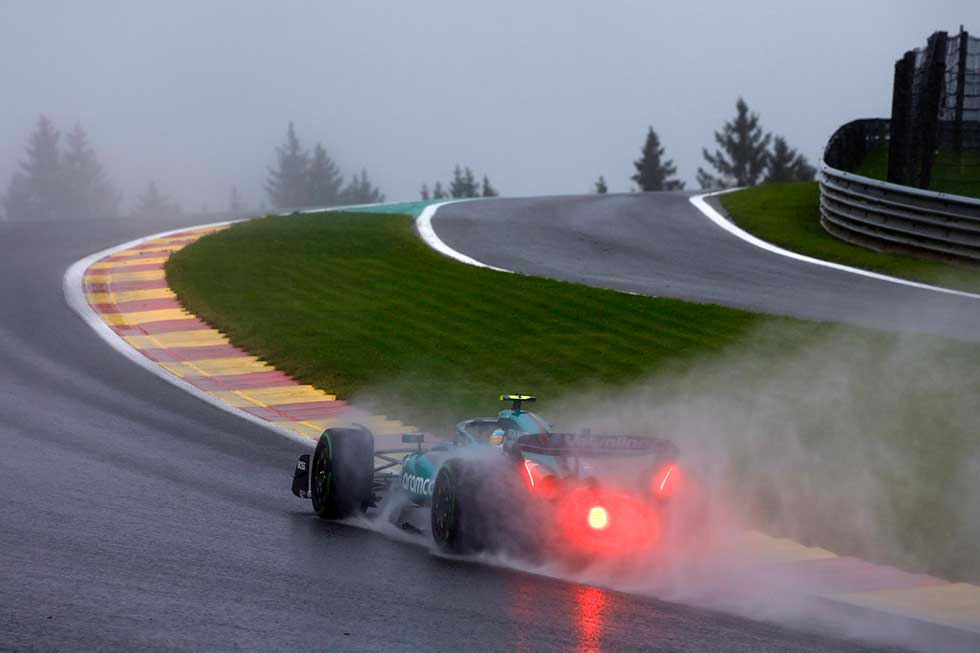
Eau Rouge: The ultimate test of commitment
The circuit’s signature section is Eau Rouge. Drivers plunge into the steep uphill right-hander before immediately tackling Raidillon, where the car crests the hill through a sweeping left. Managing the car’s balance through this sequence demands absolute precision and commitment, making it one of F1’s greatest tests of driver skill and bravery—and one of the sport’s most spectacular sights for fans.
Beyond Raidillon lies the gently climbing Kemmel Straight, where high-speed overtaking battles are a hallmark of the Belgian Grand Prix. Under the 2026 regulations, energy management and the strategic use of Overtake Mode add another dimension to these battles. Because the straight is exceptionally long, completing an overtake too early can leave a driver vulnerable to an immediate counterattack. Choosing exactly when to make a move is therefore a key part of the challenge.
At the end of the Kemmel Straight is Les Combes, a tight right-hander at the highest point of the circuit and the race’s primary overtaking opportunity. From there, the track flows through Malmedy before descending into a series of medium- and high-speed corners, culminating in Blanchimont, one of the fastest corners on the Grand Prix circuit. Taken at full throttle, Blanchimont demands complete confidence from both driver and machine. The lap concludes with the Bus Stop Chicane, where the speed carried from Blanchimont frequently creates overtaking opportunities, while drivers who push too hard can easily run wide.
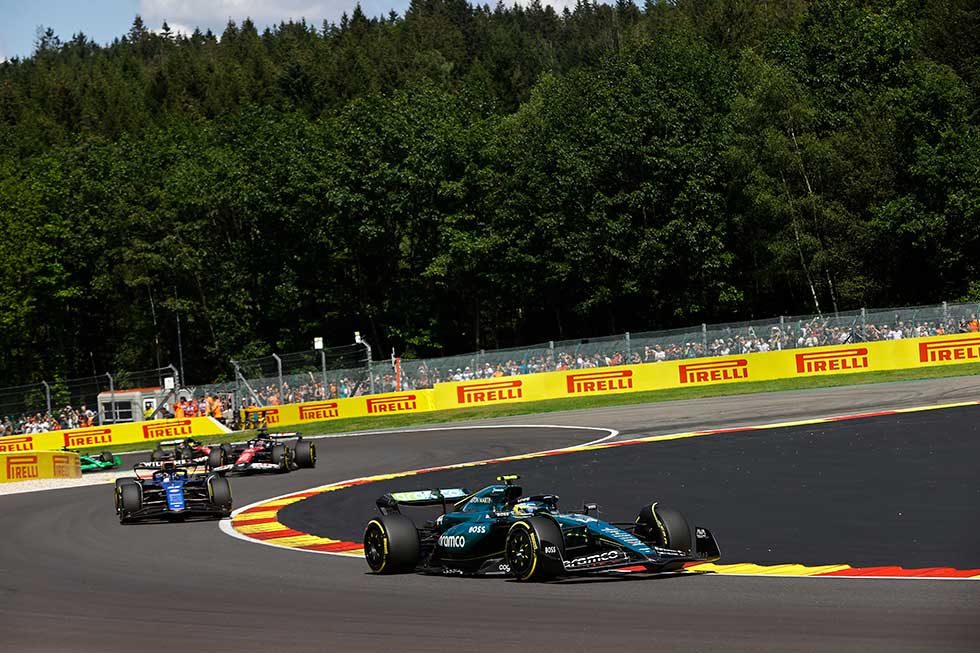
Energy management takes center stage at F1’s longest circuit
Another defining feature of Spa-Francorchamps is its lap length of more than 7 km, the longest on the F1 calendar.
Despite its length, the circuit’s high-speed nature means qualifying lap times are typically only around 10 to 15 seconds longer than at most other venues. In reality, however, the extended lap distance has a significant influence on both qualifying and race strategy.
Energy management is one of the biggest challenges. With so many full-throttle sections, teams must carefully manage electrical energy throughout the lap. There are only two heavy braking zones, limiting energy recovery under braking. During the race, regenerative braking alone is unlikely to generate enough electrical energy, and even with partial regeneration strategies, energy shortages are expected. How teams and drivers compensate for that limitation will be one of the key technical storylines of the weekend.
Qualifying presents its own challenges. The long lap makes tire warm-up and cool-down more time-consuming, reducing the number of flying laps that can realistically be completed. Any mistake on a flying lap can leave insufficient time for another attempt, placing additional pressure on the drivers.
During the race, a Virtual Safety Car or Safety Car period has an even greater impact than at most circuits. The dramatically slower pace makes tire temperature management particularly difficult. Conversely, pitting under a VSC or Safety Car can produce a much greater time-saving than at many other venues. Whether a driver can take advantage depends largely on where they happen to be on the circuit when the neutralization begins—a matter of pure luck.
The circuit’s length also magnifies the consequences of mechanical problems or damage. Any driver forced to limp back to the pits loses considerable time. Contact is most common at the end of the Kemmel Straight and through Les Combes, and damage to aerodynamic components can significantly compromise performance through the fast downhill section that follows.
Combined with its localized weather patterns and dramatic topography, Spa-Francorchamps offers a unique blend of difficulty, unpredictability and excitement unlike any other circuit on the F1 calendar.
Gathering data ahead of the Hungarian Grand Prix upgrades
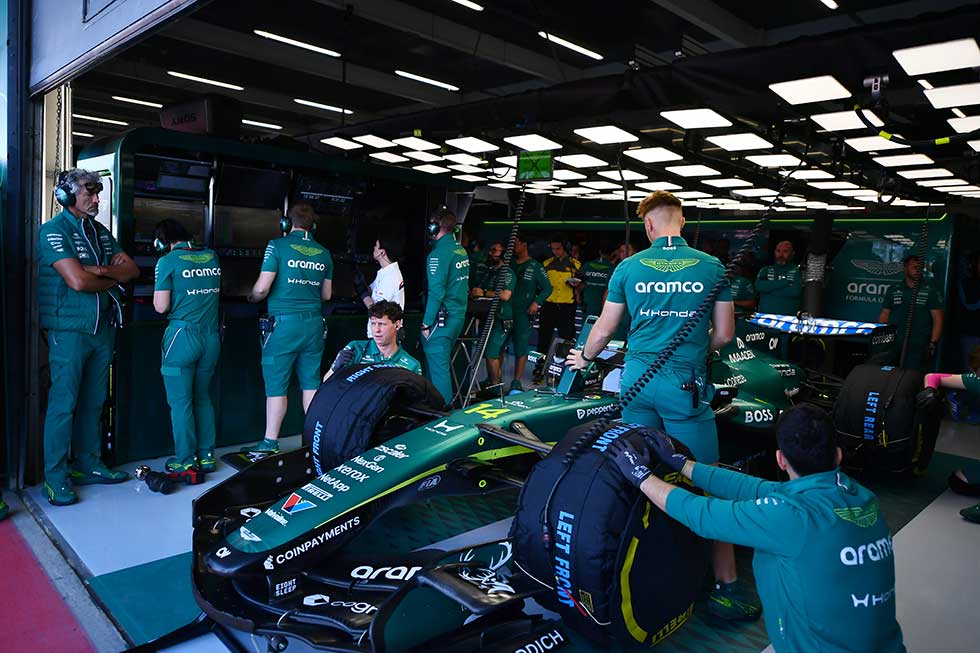
Aston Martin Aramco Formula One™ Team (AMAF1) Team Principal Adrian Newey has confirmed that the team’s upgraded chassis package will make its debut at Round 11, the Hungarian Grand Prix.
Honda is also continuing development of a new specification of its Power Unit using the ADUO (Additional Development Upgrade Opportunities) framework, with its introduction planned for Round 13, the Dutch Grand Prix, following the summer break. Together, these developments are expected to improve the team’s competitiveness.
As a result, Round 10 in Belgium will effectively serve as the final race before those upgrades arrive, with the focus on gathering data and refining operational preparations. While another challenging weekend is anticipated, the team’s outlook has brightened considerably, providing a welcome boost to morale.
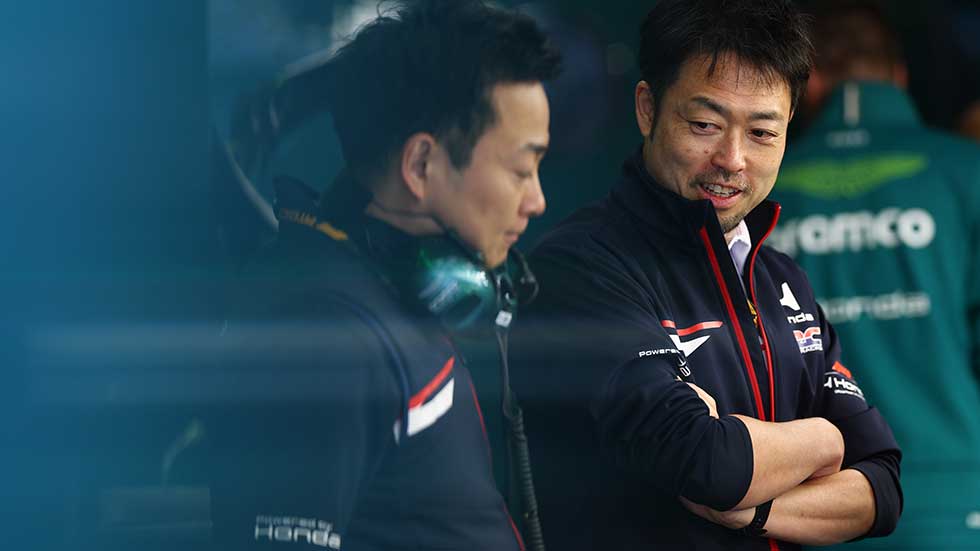
Shintaro Orihara, Trackside General Manager and Chief Engineer
“Spa is home to the longest track on the 2026 calendar, and it’s also one of the most popular amongst drivers and fans. It’s a technical circuit for the drivers, with complex corner sections. The combination of long straights and high-speed corners makes it a very challenging circuit for the engineers too, both to predict throttle application and looking at energy deployment over the course of the lap.
“It will be a test for manufacturers in terms of energy management so we need to consider how we will deploy MGU-K power on the long straights. The harvesting here is quite limited, even considering the circuit length. This puts more emphasis on getting the deployment plan right. The straights are also a demand on the power unit in general – not only for performance but also for reliability.
“We have two more races before we introduce the new engine. It’s important to keep learning with this current spec, so we can take those energy deployment findings into future races – like Monza, where we also have the long straights.
“An added unknown is the changeable weather conditions at the circuit. At Silverstone it remained dry, so Spa could be the first time where we have proper wet conditions in a session. In terms of the weather, anything can happen here.”