Australian Grand PrixRace Preview
Circuit Overview
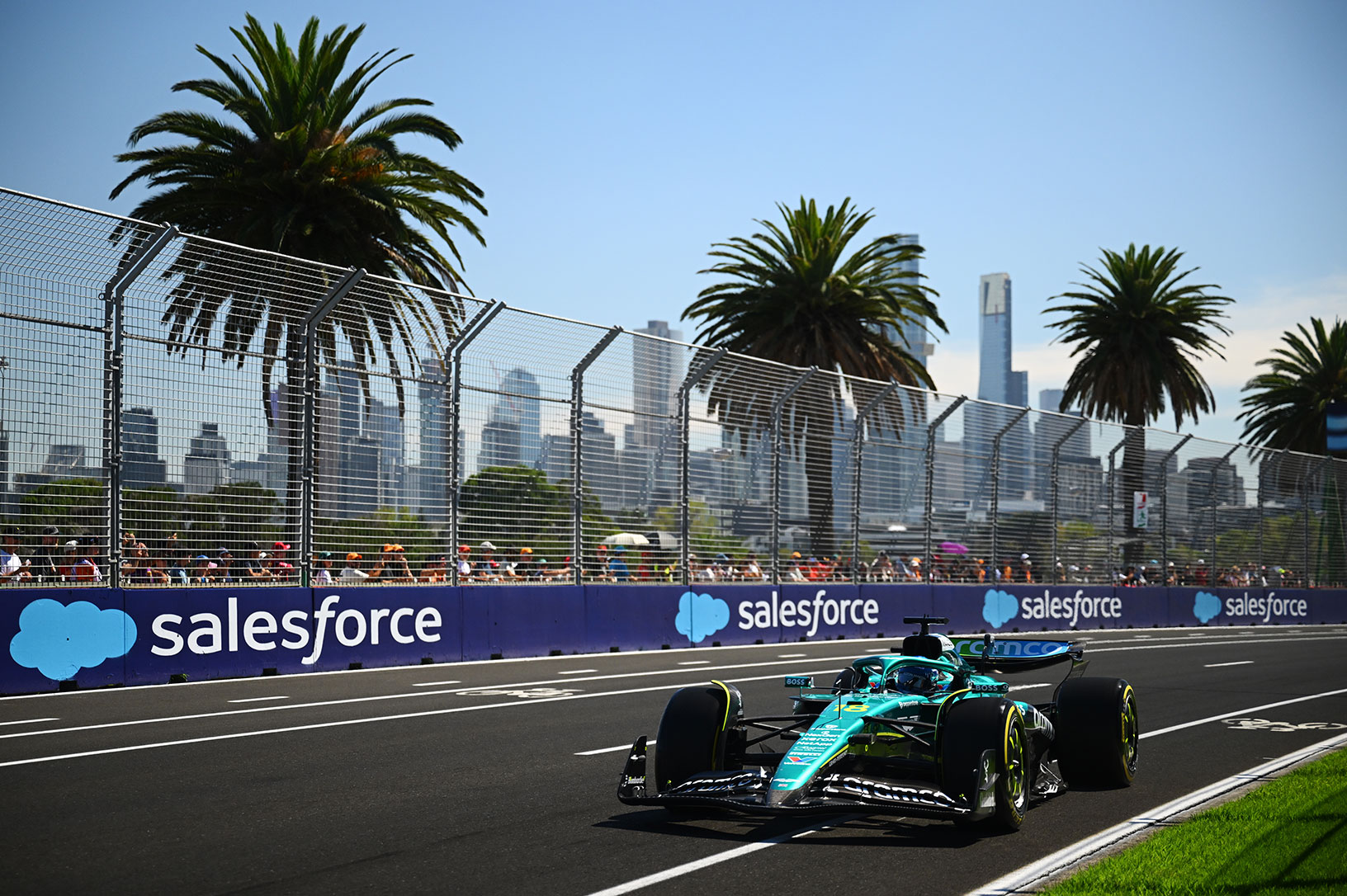
Located in Albert Park, a large public park on the outskirts of Melbourne in the state of Victoria, the Australian Grand Prix takes place on a temporary street circuit that winds around the park’s central lake.
The layout features a sequence of short straights and medium- to low-speed corners, placing particular emphasis on braking stability and strong acceleration on corner exit. The circuit is relatively narrow, making overtaking difficult. Elevation changes are minimal, resulting in a largely flat track.
Because the roads are normally open to public traffic, the surface is typically dusty and dirty at the beginning of the race weekend. As sessions progress, the racing line improves significantly as rubber builds up.
From its debut at Albert Park in 1996 until 2019, the circuit measured 5.303 km per lap. When the race returned in 2022 following the COVID-19 pandemic, several modifications were made—including changes to the right-left chicane in Sector 2 and a widening of the pit lane. The lap distance was shortened to 5.278 km, and lap times suddenly dropped by around five seconds.
Circuit construction begins roughly two months before the Grand Prix each year, and within weeks after the event the area returns to its usual role as a public park. The surrounding facilities include a rowing course, large swimming pools, a stadium, and a golf course, making Albert Park a major recreational area for local residents.
During the Grand Prix weekend, the area around the circuit hosts the F1 Melbourne Fan Festival. With hometown driver Oscar Piastri competing in Formula One, fan interest has surged. In 2025, more than 460,000 spectators attended across the race weekend.
History
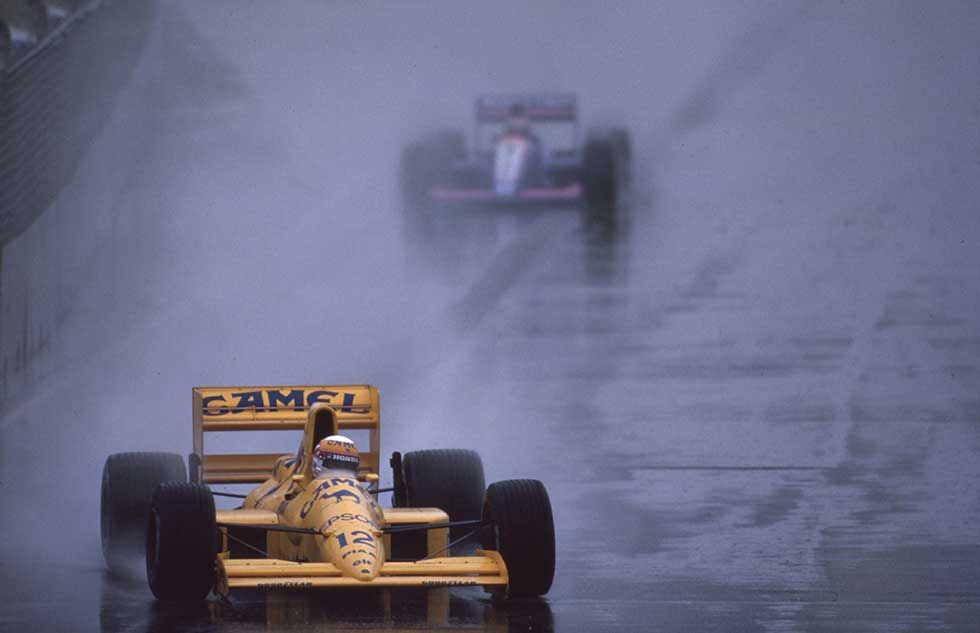
The Australian Grand Prix first appeared on the Formula One World Championship calendar in 1985, becoming the first F1 race held in the Oceania region. The inaugural event was staged as the season finale on the Adelaide street circuit in Adelaide. In 1989, during a rain-affected race, Satoru Nakajima recorded the fastest lap while driving for Team Lotus and finished fourth. The 1991 race became one of the shortest in F1 history when torrential rain forced an early stop. The race distance was reduced to 52.920 km, and only half points were awarded.
Beginning in 1996, the Australian Grand Prix moved from Adelaide to Albert Park in Melbourne and became the season-opening round. The 2026 event marks the 29th race held in Melbourne, and 23 of the previous 28 races there have opened the F1 season. The 2020 race was also scheduled to open the season on March 15 but was dramatically cancelled on Friday morning after a team member tested positive for COVID-19, marking an unprecedented moment in Formula One history.
What to Watch
The 2026 season introduces major new technical regulations, bringing significant changes to both the power unit and the chassis.
Honda returns under a new partnership with Aston Martin Aramco Formula One Team, while new manufacturers such as Audi and Cadillac enter Formula One.
Although the driver line-up has not changed dramatically, the arrival of new teams and entirely new cars signals the beginning of a new era for the sport. The Australian Grand Prix will reveal the first glimpse of the competitive order, providing an early indication of each team’s performance level and potential for the season ahead.
March marks early autumn in the Southern Hemisphere, and the relaxed atmosphere of Australia contrasts with the intense pressure that always accompanies the season opener.
Course information
[Australian Grand Prix – Melbourne (Albert Park)]
Lap length: 5.278 km (since 2022)
[Fastest Pole Position Lap]
1’min 15.096s — 253.020 km/h
Lando Norris
McLaren — 2025
[Fastest Lap]
1 min 19.813s — 238.066 km/h
Charles Leclerc
Scuderia Ferrari — 2024
[Fastest Lap with Honda Engine/PU]
1 min 20.235s — 236.814 km/h
Sergio Pérez
Red Bull Racing Honda RBPT — 2023