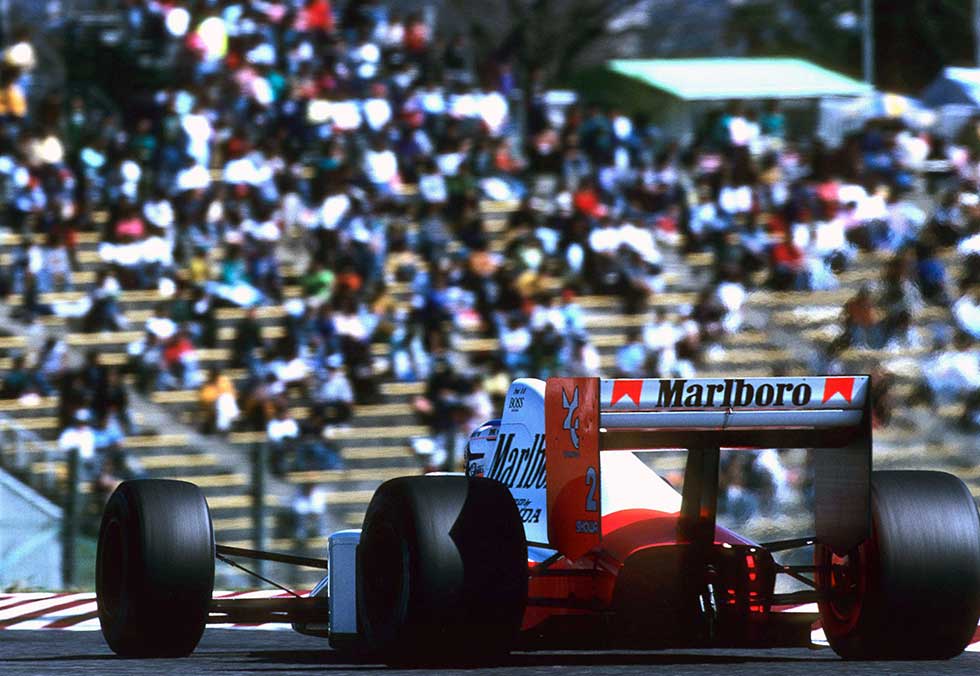
Alain Prost
Known as “The Professor” for his meticulous strategy and exceptional race management,
Alain Prost was one of Formula One®’s greatest thinkers behind the wheel.
His partnership with Honda elevated his talents even further,
playing a pivotal role in the golden era of McLaren Honda.
This is the story of a driver who mastered the science of winning.
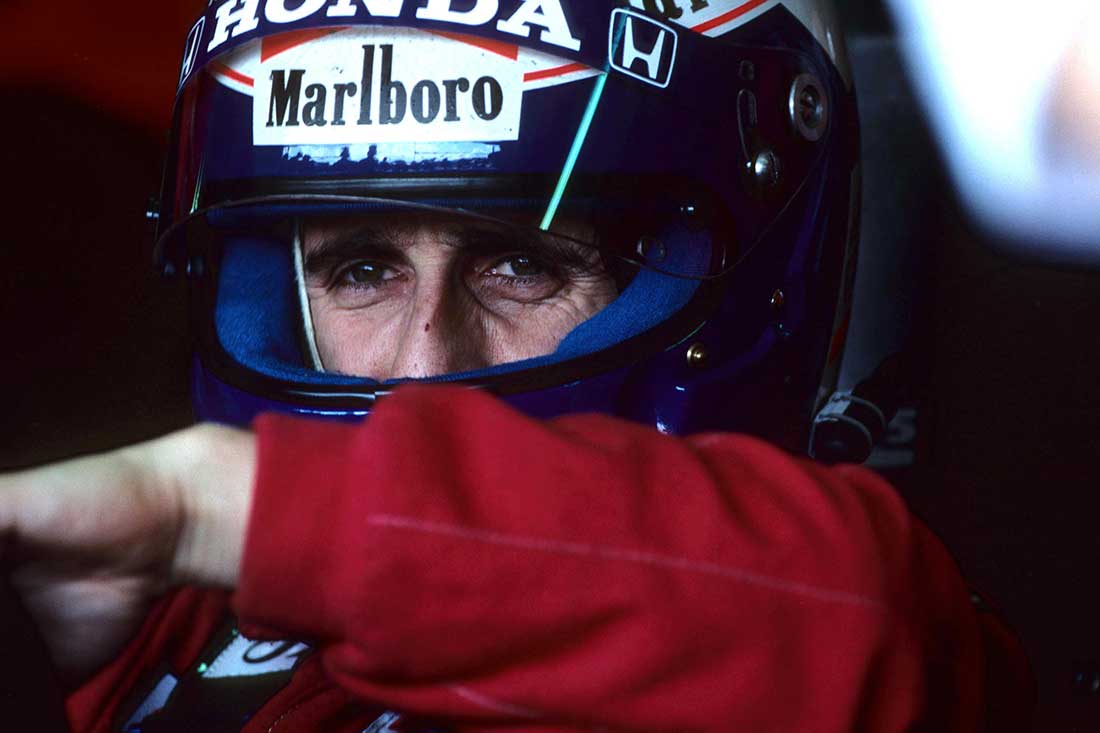
Alain Prost, together with Ayrton Senna, defined F1 throughout the 1980s. Yet the two drivers achieved success in almost completely opposite ways. While Senna captivated fans with breathtaking overtaking moves and qualifying laps driven beyond the limit, Prost excelled at designing an entire race, identifying the shortest path to victory and executing it with remarkable precision. It was this highly intelligent approach that earned him the nickname “The Professor.”
Prost’s greatest strength was not outright speed, but his ability to control it. He avoided unnecessary tire wear, managed fuel consumption with exceptional precision, and preserved both the car and its performance deep into the race. Only when victory was truly at stake would he raise his pace, delivering results with remarkable efficiency.
The turning point in Prost’s philosophy came in 1984. After losing the World Championship to his McLaren teammate Niki Lauda by the narrowest of margins, Prost realized that relentlessly pursuing victories alone was not the surest route to a title. From then on, he shifted his focus toward consistently scoring points whenever victory was out of reach. The change paid immediate dividends, as he captured his first World Championship in 1985, proving the effectiveness of his new approach. Although his style could sometimes appear understated compared with his rivals, over the course of an entire season it proved to be one of the most effective ways to accumulate championship points.
Prost’s talents extended well beyond driving. He possessed an exceptional ability to analyze every aspect of a car’s behavior and translate his observations into precise technical feedback for the engineers. His contributions to vehicle development were widely regarded as among the best in F1, and this ability to combine the roles of driver and development engineer was a major reason he remained at the front of the field for so many years.
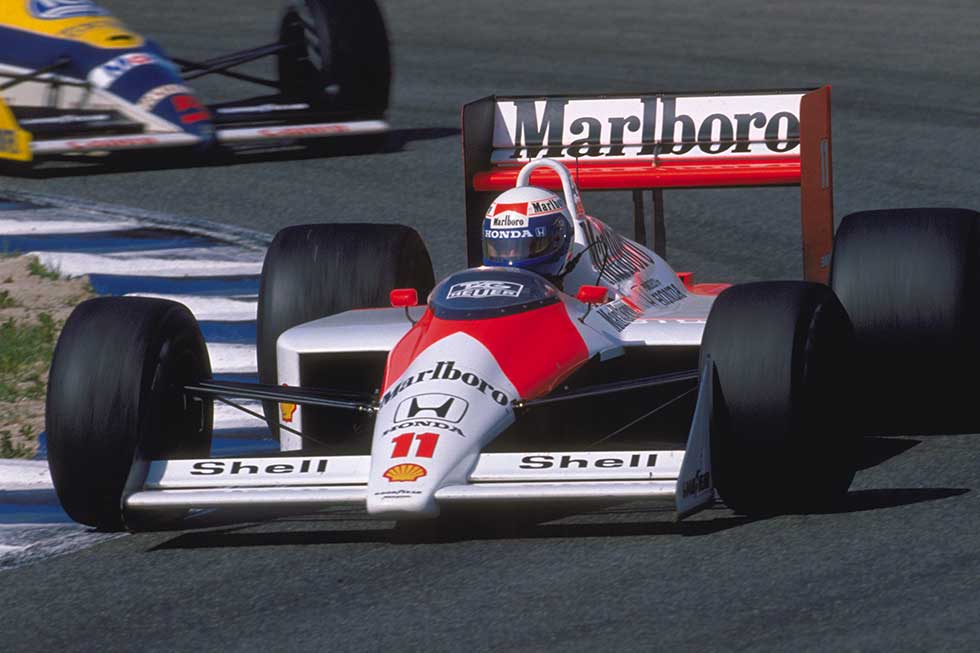
In 1988, Prost’s career took a defining turn.
That season, Honda began supplying engines to McLaren. The Honda V6 turbo engine that had powered Williams Honda to dominant success the previous year was installed in the McLaren MP4/4. Combined with Steve Nichols’ outstanding chassis design, the Honda RA168E created one of the greatest F1 cars of all time. The MP4/4 won 15 of the season’s 16 Grands Prix, a record that still stands among the sport’s greatest achievements.
Prost held the Honda engine in exceptionally high regard. Beyond its outstanding power output, he particularly valued its drivability, reliability and fuel efficiency—all characteristics perfectly suited to his race management philosophy. For a driver who built races around tire conservation, fuel management and strategic execution, Honda’s dependable and highly controllable power unit became a formidable weapon.
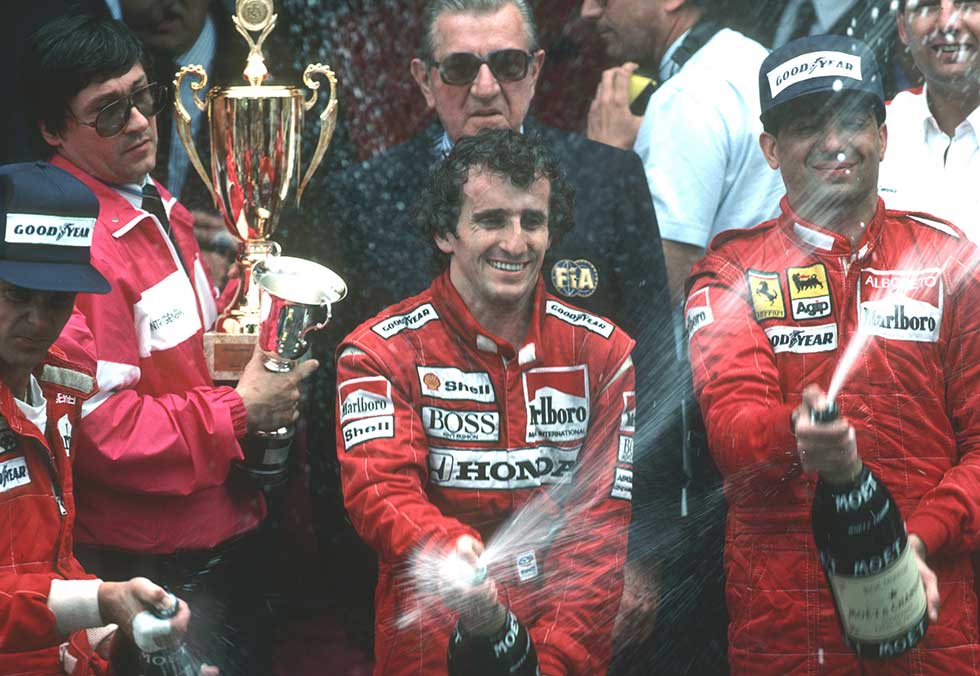
Yet that same combination also brought Prost his greatest challenge: In 1988, Ayrton Senna joined McLaren.
Senna demonstrated extraordinary speed in qualifying, while Prost relied on consistency over race distance to accumulate points. In fact, Prost scored more total championship points than Senna over the course of the season. However, under the championship’s “best results” scoring system, only each driver’s best 11 finishes counted toward the title, allowing Senna to secure his first World Championship.
It was during this period that subtle changes began to emerge in Prost’s relationship with both the team and Honda.
Honda’s engineers supplied identical engine specifications to both drivers throughout the season. Senna, however, actively built close personal relationships with Honda’s engineers, developing a particularly strong bond with the Japanese technical staff. Prost’s approach was different. He communicated with engineers in a logical, analytical manner, and his technical feedback was highly respected. While the engineers greatly valued his input, the personal connection never became as close as the one Senna developed.
Honda never intended to favor either driver, but Prost increasingly came to believe that both the team and Honda were leaning toward Senna. Those feelings intensified throughout 1989, pushing tensions within McLaren toward breaking point.
The deterioration began at the San Marino Grand Prix, where disagreement over a pre-race agreement concerning the opening lap severely damaged the relationship between the two drivers. The conflict ultimately culminated in their infamous collision at the Japanese Grand Prix, one of the defining moments in F1 history.
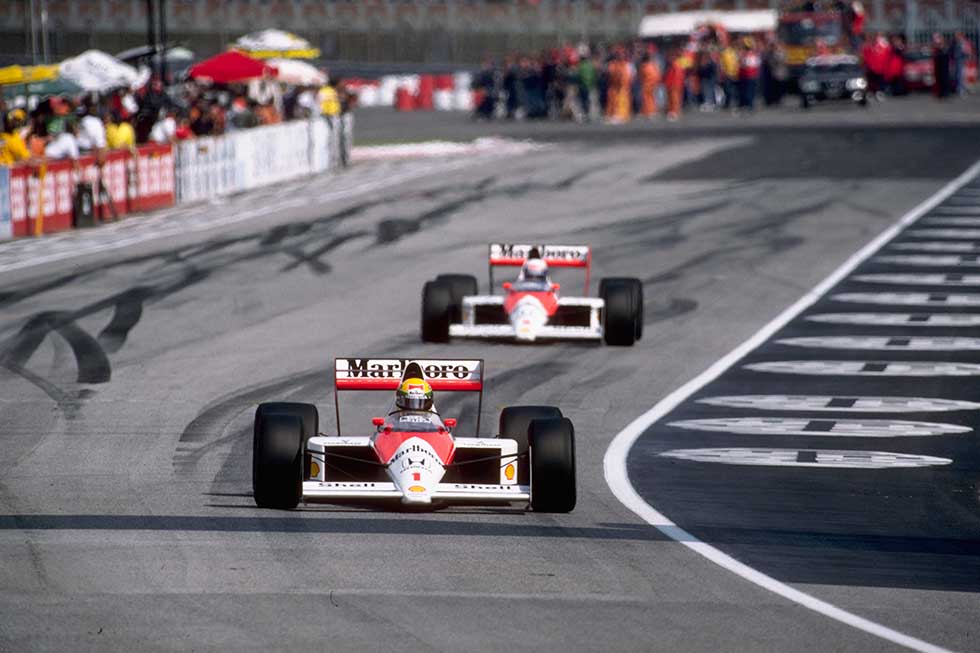
In later years, Prost repeatedly spoke of his admiration for Honda’s engines, describing them as outstanding. At the same time, he also acknowledged that Honda shared an exceptionally close relationship with Senna, suggesting that despite his respect for the technology, the human side of the partnership proved far more complicated.
Even so, Prost’s two seasons with Honda remain among the finest of his career. The combination of Honda’s exceptional power unit and Prost’s meticulous race management demonstrated that success in F1 requires far more than outright speed alone.
Rather than winning through a willingness to exceed the limit, Prost won by possessing the intelligence to understand exactly where that limit lay. And no engine allowed him to maximize that intelligence more effectively than Honda’s.
Together, McLaren Honda’s 1988 and 1989 campaigns showcased Honda’s engineering excellence in two very different ways—through Senna’s breathtaking speed and Prost’s strategic mastery. Together, they produced one of the greatest partnerships in Formula One® history and created a golden era that continues to be celebrated today.