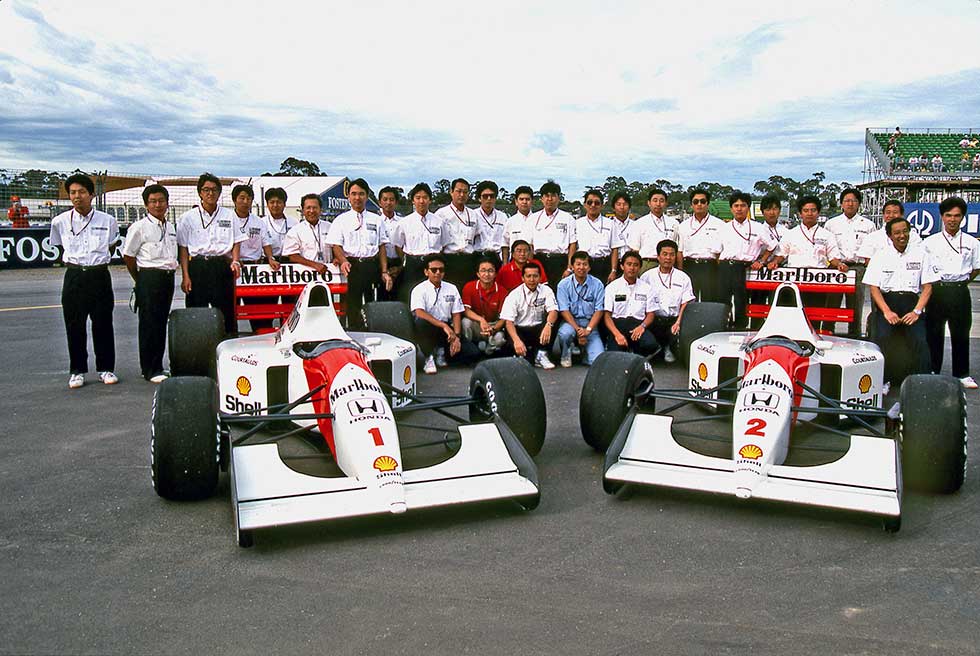
Honda and McLaren
Honda and McLaren forged one of the most legendary partnerships in F1™ history.
Driven by a shared commitment to integrated development, they achieved countless victories and world titles.
Their remarkable legacy continues to shine brightly in the history of Formula One®.
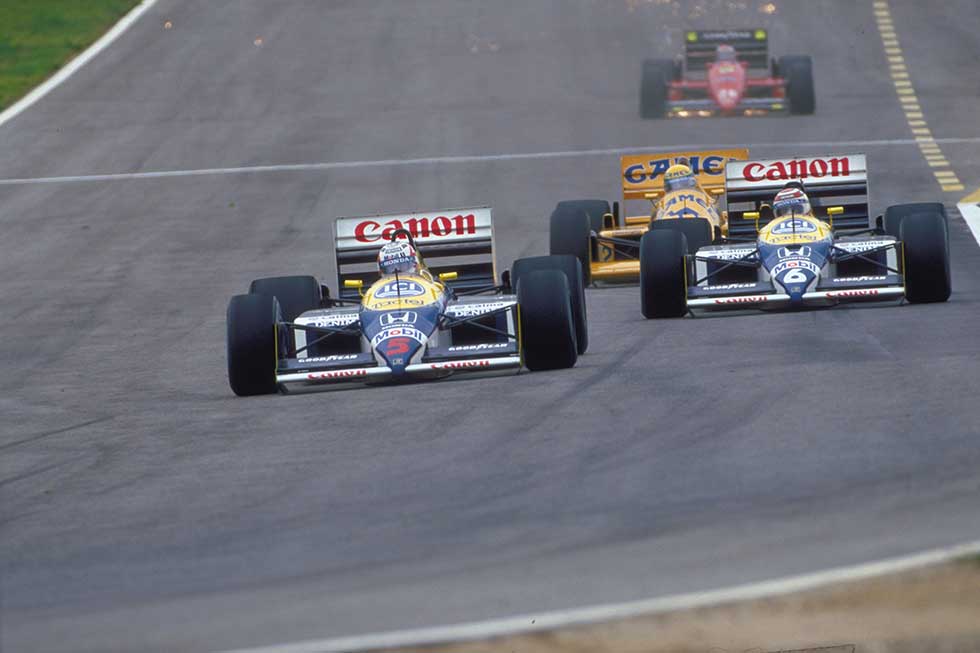
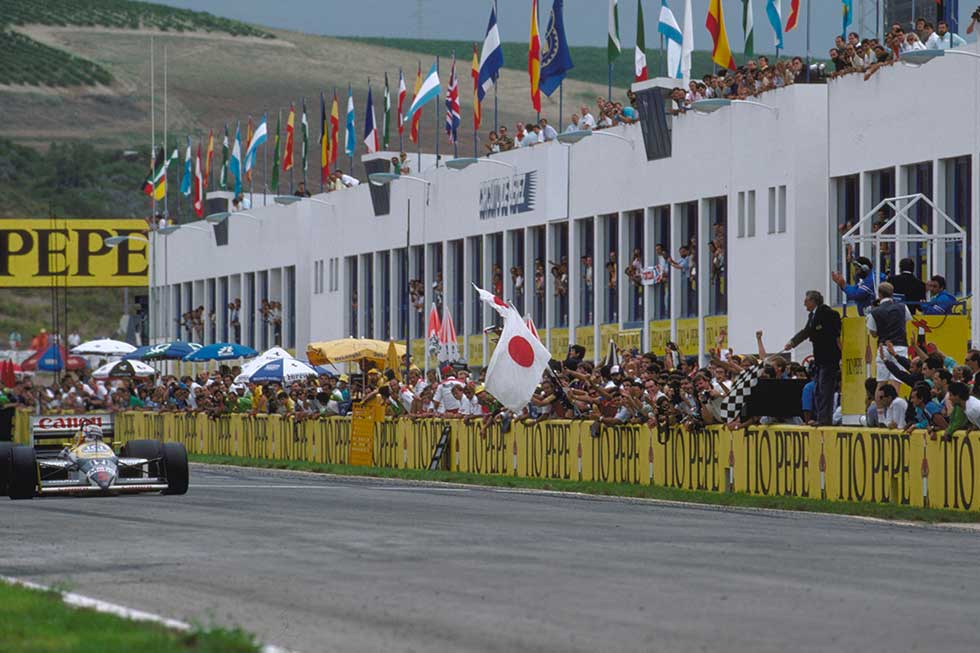
Honda’s second era in F1 reached its first major milestone in 1986, when it secured its maiden Constructors’ Championship together with Williams. The following year, the partnership captured both the Drivers’ and Constructors’ Championships, establishing Honda and Williams as the dominant force in F1.
Led by Team Principal Frank Williams and Technical Director Patrick Head, Williams was widely regarded as one of the sport’s premier constructors, producing some of the finest chassis in Formula One®. Combined with Honda’s continuously evolving V6 turbo engine, the Williams Honda package achieved overwhelming performance and left its rivals behind.
Yet as success continued to grow, differences in philosophy about the future gradually emerged.
Honda had come to believe that engine performance alone would no longer be enough to keep winning. The company saw integrated development between the engine and chassis as the key to the next generation of F1. Williams, however, had complete confidence in its own chassis expertise and wanted Honda simply to supply the most competitive engine possible, with no involvement in chassis development. This difference in outlook gradually became more apparent during 1987, even as the partnership celebrated its championship double.
Around the same time, an increasing number of teams began pursuing Honda power. Among them, the most determined was McLaren Team Principal Ron Dennis.
McLaren had won the Constructors’ Championship in both 1984 and 1985, but by 1986 development of its TAG Porsche turbo engine had stalled, leaving the team at a competitive disadvantage against rivals powered by Honda and Renault. Dennis believed that securing Honda engines was essential if McLaren was to return to the top of F1, and began serious negotiations around 1986.
Dennis invited Honda executives to McLaren’s factory in Woking, England, where he demonstrated the team’s production facilities, quality-control systems and engineering processes. Although McLaren was an F1 team, its meticulous manufacturing philosophy closely resembled that of a world-class industrial manufacturer, strongly resonating with Honda’s own approach to engineering and quality.
He also proposed a philosophy that perfectly matched Honda’s own vision for the future: the engine should not simply be a supplied component, but should instead be designed together with the chassis from the very beginning. This concept of genuine collaboration between engine manufacturer and constructor represented exactly the direction Honda wanted F1 to take, and became a decisive factor in choosing McLaren as its next partner.
Alain Prost, already a two-time World Champion with McLaren, was also a strong advocate for securing Honda engines. Holding Honda’s performance and reliability in the highest regard, Prost publicly described it as “the best engine in the world” and is said to have actively supported Dennis during the negotiations.
In 1987, Honda F1 General Manager Yoshitoshi Sakurai made a bold decision.
Beginning in 1988, Honda would switch its works partnership to McLaren. At the same time, Ayrton Senna, who had been driving Honda-powered Lotus machinery, would join McLaren to create what Sakurai believed would become the strongest team in the world. The deep mutual trust that had developed between Sakurai and Dennis also played an important role in making the partnership possible.
The vision proved its worth immediately in 1988.
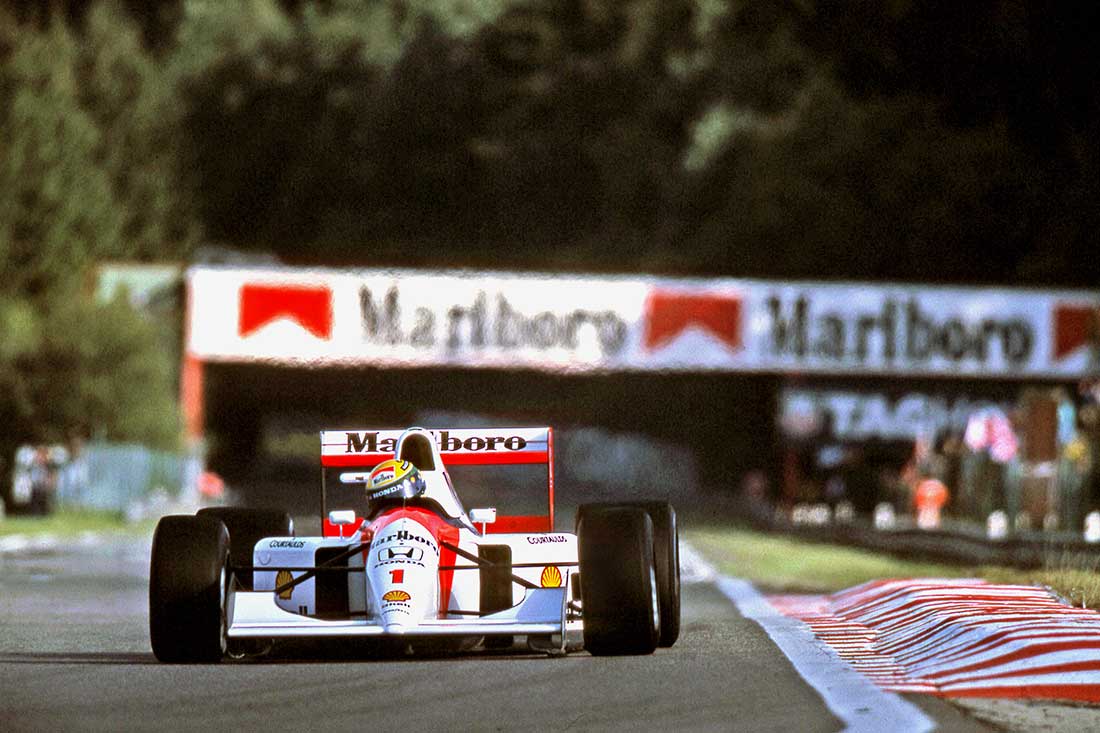
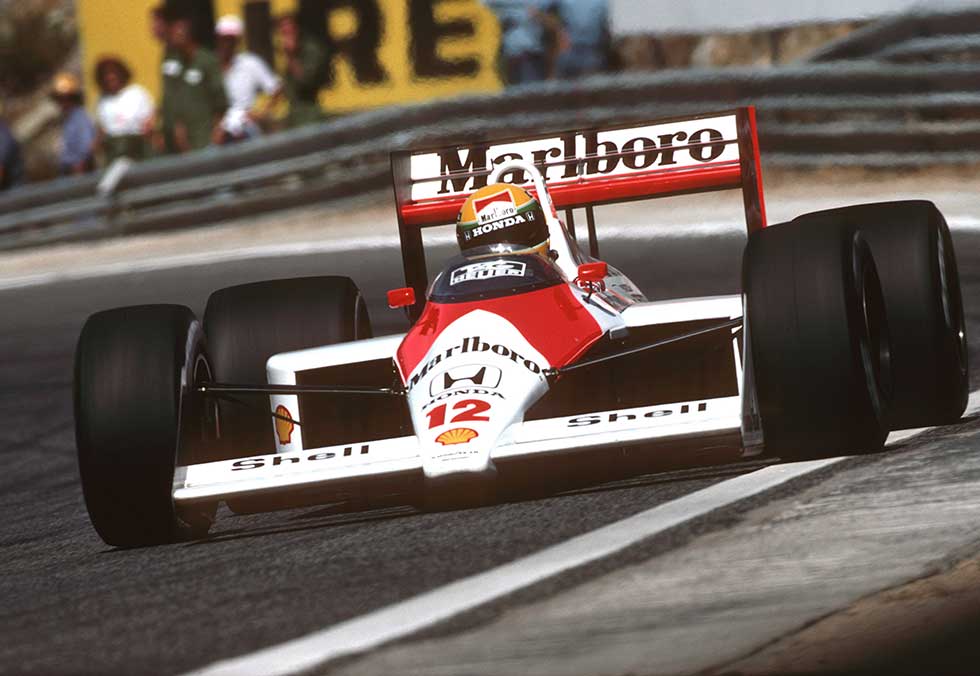
Installed in the McLaren MP4/4, the Honda RA168E represented the ultimate evolution of the turbo era. It combined exceptional peak power with outstanding fuel efficiency, throttle response and reliability, enabling drivers to push flat out to the finish despite the strict fuel allocation limits. Paired with Steve Nichols’ revolutionary low-slung MP4/4 chassis and driven by two of the greatest drivers in F1 history—Senna and Prost—the combination became virtually unbeatable.
The results were extraordinary: 15 victories from 16 Grands Prix, one of the greatest seasons in F1 history. Senna claimed eight victories and secured his first World Championship, while Honda and McLaren captured both world titles in the very first year of their partnership, ushering in a new golden era.
In 1989, F1 entered a new era as turbocharged engines gave way to 3.5-liter naturally aspirated power.
Honda responded with the V10 RA109E and remained highly competitive under the new regulations. Yet the team’s greatest rival that year was not another constructor—it was the rivalry between its own two drivers.
From the opening rounds, relations between Senna and Prost deteriorated rapidly. The differing in understanding of their gentlemen’s agreement made before the San Marino Grand Prix—not to attack each other immediately after the start—marked the beginning of an irreparable split.
The conflict reached its climax at Round 15, the Japanese Grand Prix.
While battling for victory, the two collided at the chicane. Prost retired immediately, while Senna restarted and crossed the finish line first, only to be disqualified for cutting the chicane. The decision handed Prost his third World Championship.
Throughout the season, Honda and McLaren maintained complete equality between the two drivers, offering neither preferential treatment. Even so, the intense rivalry between two of the greatest drivers in F1 history proved impossible to contain. Before the season had even concluded, Prost decided to leave McLaren.
Despite the internal conflict, McLaren Honda remained dominant, winning 10 Grands Prix and successfully defending the Constructors’ Championship.
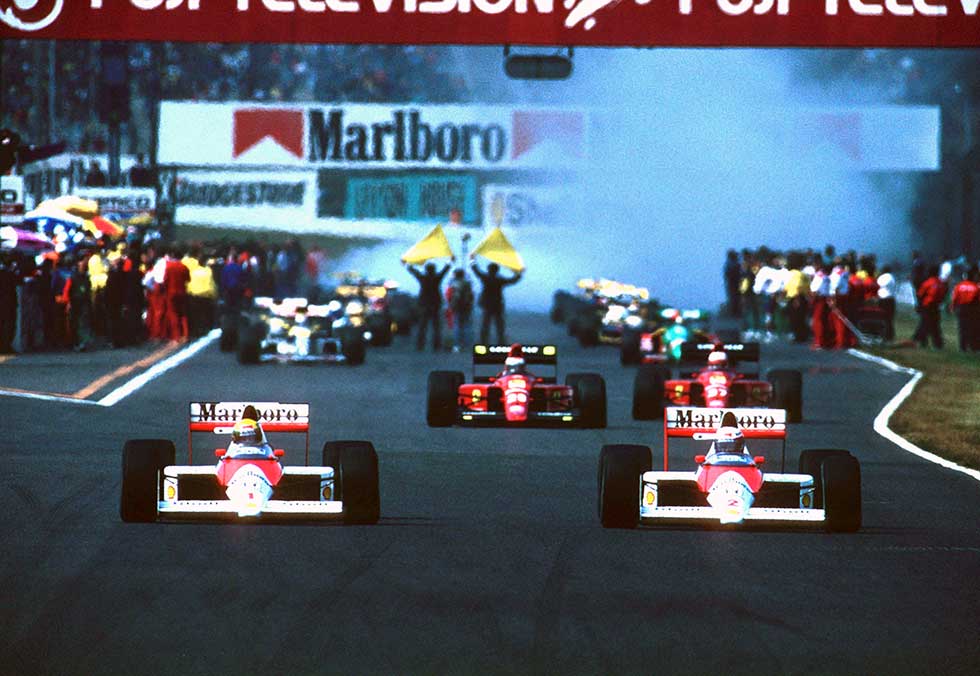
In 1990, Gerhard Berger replaced Prost at McLaren. Honda introduced the RA100E, incorporating improved combustion efficiency to deliver even greater performance.
Berger consistently scored valuable points and played a key role in securing another Constructors’ Championship. Senna’s greatest rival, meanwhile, was now Prost, who had moved to Ferrari.
Their championship battle once again came down to Suzuka.
The decisive moment arrived at the first corner immediately after the start, where Senna and Prost collided and both retired. The result secured Senna’s second World Championship while Honda successfully defended the Constructors’ title.
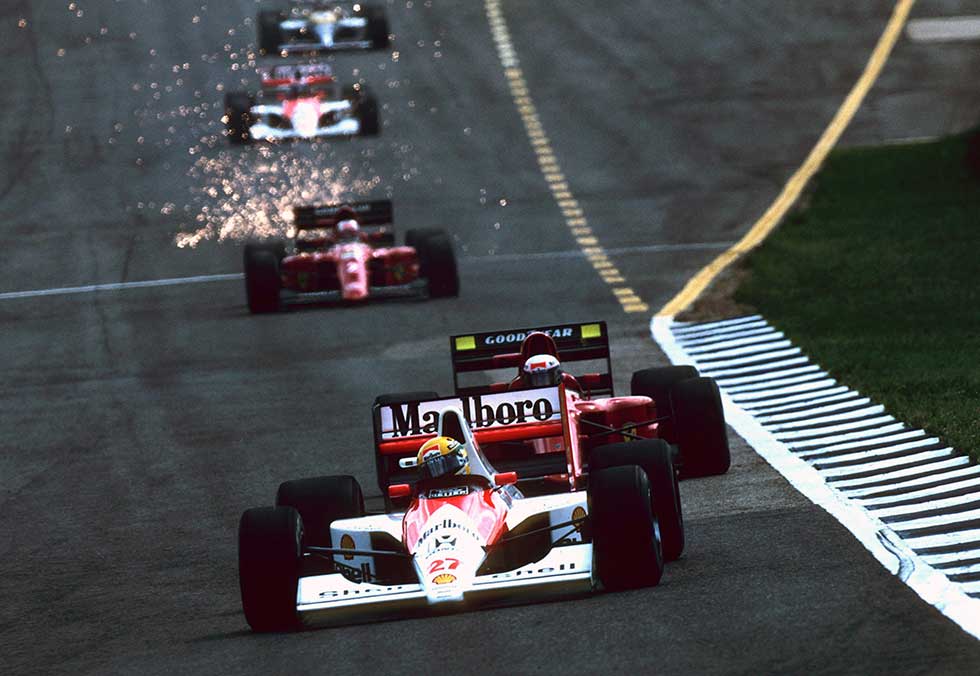
For 1991, Honda introduced the new V12-powered RA121E.
The V12 layout had long been described by Honda founder Soichiro Honda as “the most beautiful engine,” and developing one had been a long-held ambition for Honda’s engineers. Its exhilarating high-revving sound captivated fans and remains one of the defining engines of Honda’s F1 history.
By this stage, however, F1 was entering another technological era.
Williams rapidly advanced electronic technologies, most notably active suspension, establishing a significant advantage in overall chassis performance. The sport was evolving beyond a point where engine performance alone could determine victory.
Even so, McLaren Honda remained at the front. Senna opened the season with four consecutive victories and led the championship throughout much of the year. Although the second half of the season became increasingly difficult, Senna won seven Grands Prix and secured his third World Championship. Honda, meanwhile, contributed to its sixth consecutive Constructors’ Championship—a remarkable achievement.
The golden era came to an end in 1992.
Williams perfected active suspension and sophisticated electronic control systems, fundamentally changing the competitive landscape of F1. Honda responded with the RA122E/B, featuring a lower overall engine height and a more compact intake and exhaust layout to further improve chassis performance. Despite these efforts, the overall performance gap could not be overcome.
Although McLaren Honda claimed five victories during the season, neither world title could be retained. Midway through the year, Honda announced that it would conclude its second F1 program at the end of the season.
Thus came the end of five remarkable years with McLaren.
Both McLaren and Senna deeply regretted Honda’s decision, but they understood the reasons behind it, and the trust between the partners remained unwavering.
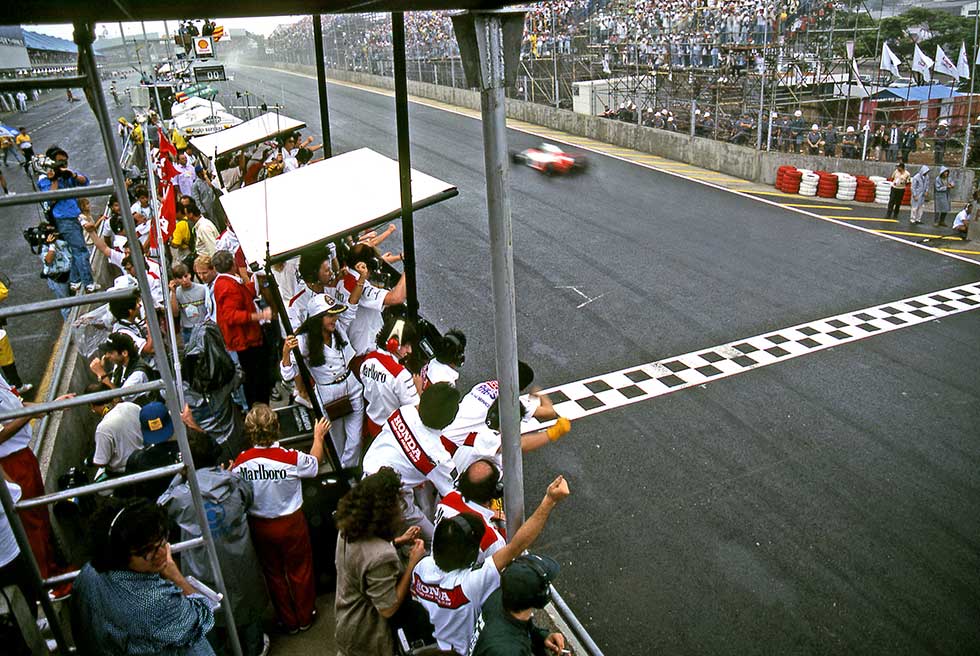
In Honda’s final Grand Prix of its second F1 era—the Australian Grand Prix—Gerhard Berger delivered a magnificent victory. It was a fitting conclusion, providing the perfect final chapter to one of the greatest periods in Honda’s F1 history.
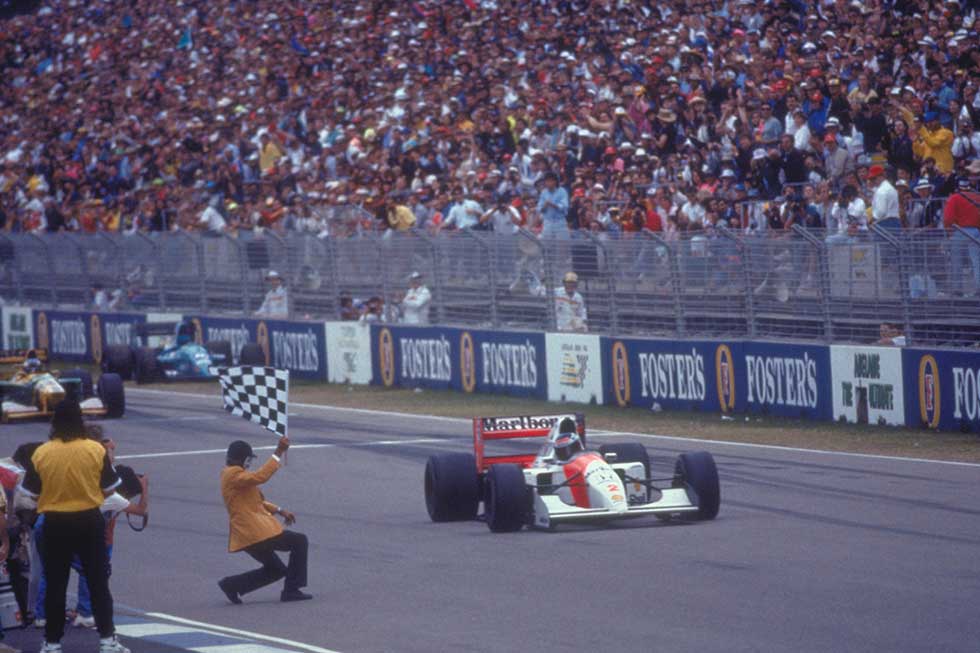
Across five seasons from 1988 to 1992, Honda and McLaren recorded 44 Grand Prix victories, won four consecutive Drivers’ Championships and four consecutive Constructors’ Championships. Their partnership demonstrated what could be achieved when an engine manufacturer and constructor developed their technologies together in pursuit of a common goal. Together, they built one of the strongest teams F1 has ever seen, creating a golden era that continues to occupy a special place in F1™ history.