In an era defined by the so-called “Four Kings” of F1™
— Ayrton Senna, Alain Prost, Nelson Piquet, and Nigel Mansell —
Riccardo Patrese brought a quieter but distinctive presence to the sport.
He made his F1 debut in 1977 as a raw and aggressive young driver,
but over time developed into an intelligent, resilient competitor.
Across 17 years in F1, he survived and adapted through the ground-effect era,
the turbo era, and the period of rapid electronic development.
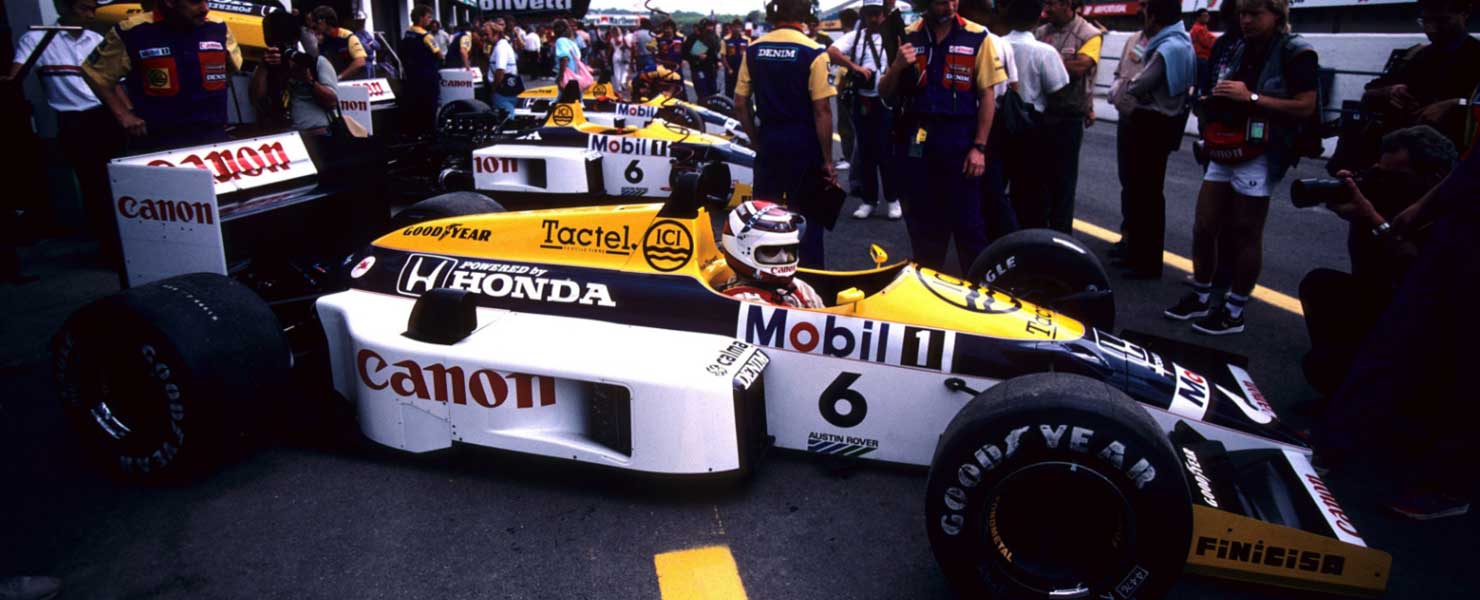
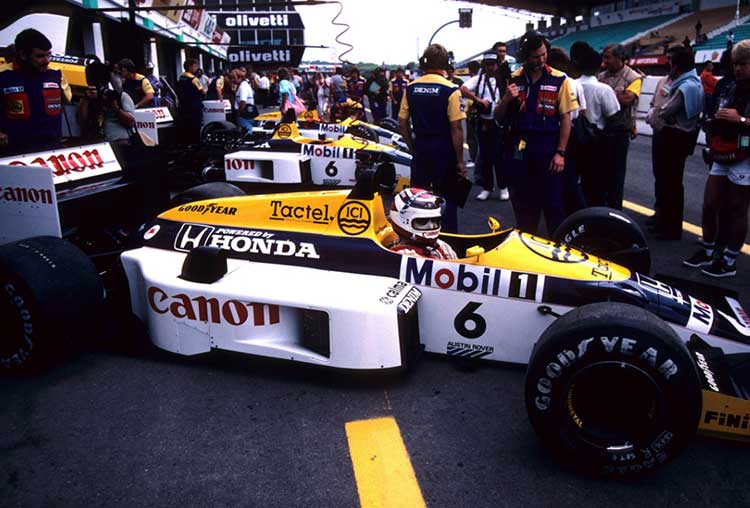
Within that long career, Patrese also had one brief opportunity to drive a Honda-powered F1 car.
After Mansell suffered injuries in a crash during qualifying for the 1987 Japanese Grand Prix,
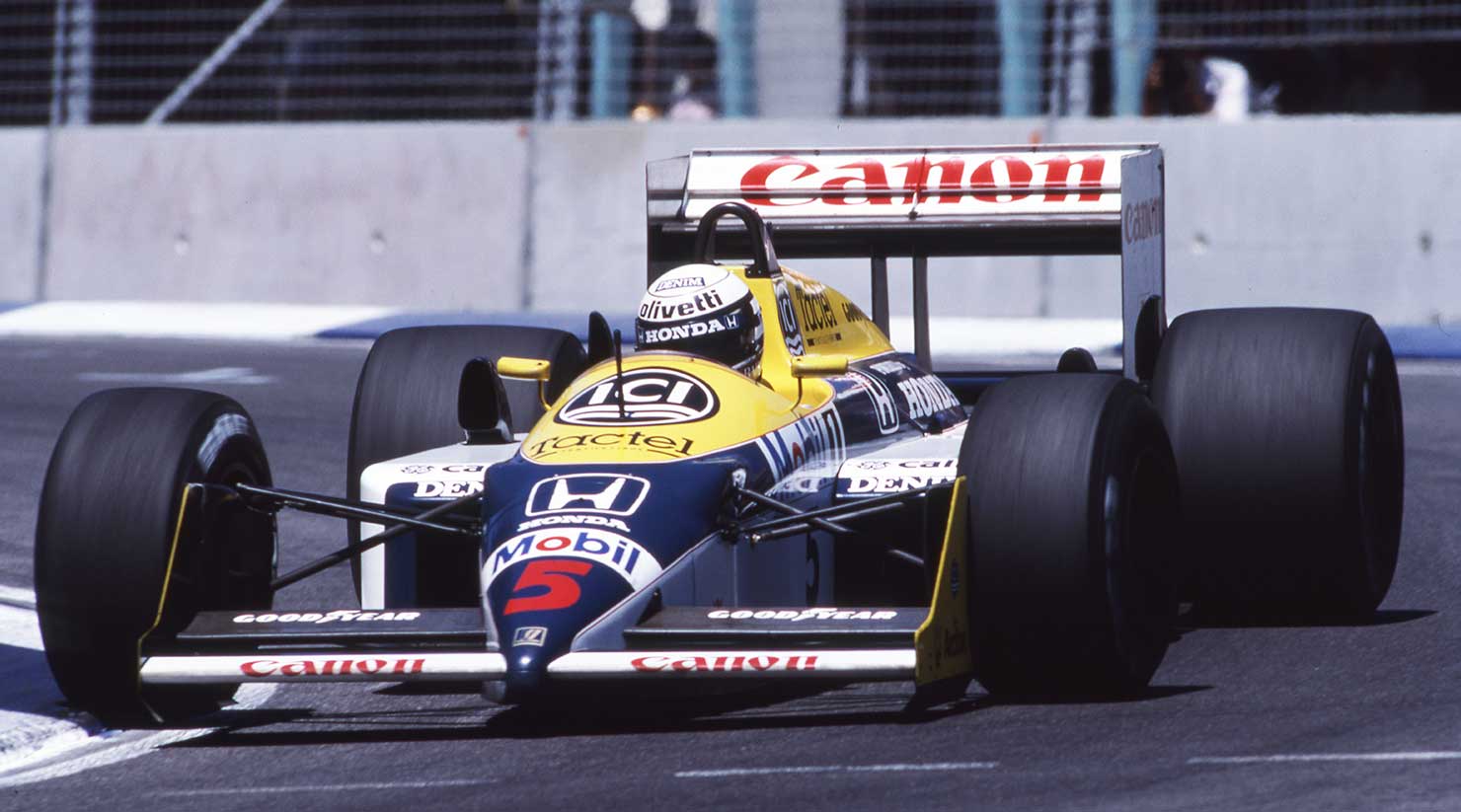
Patrese was called up as his replacement for the season-ending Australian Grand Prix,
having already agreed to join Williams the following year.
In a chaotic race, he survived until the closing stages before mechanical trouble stopped the car.
Even so, he was classified ninth, showing the persistence that had long defined his career.
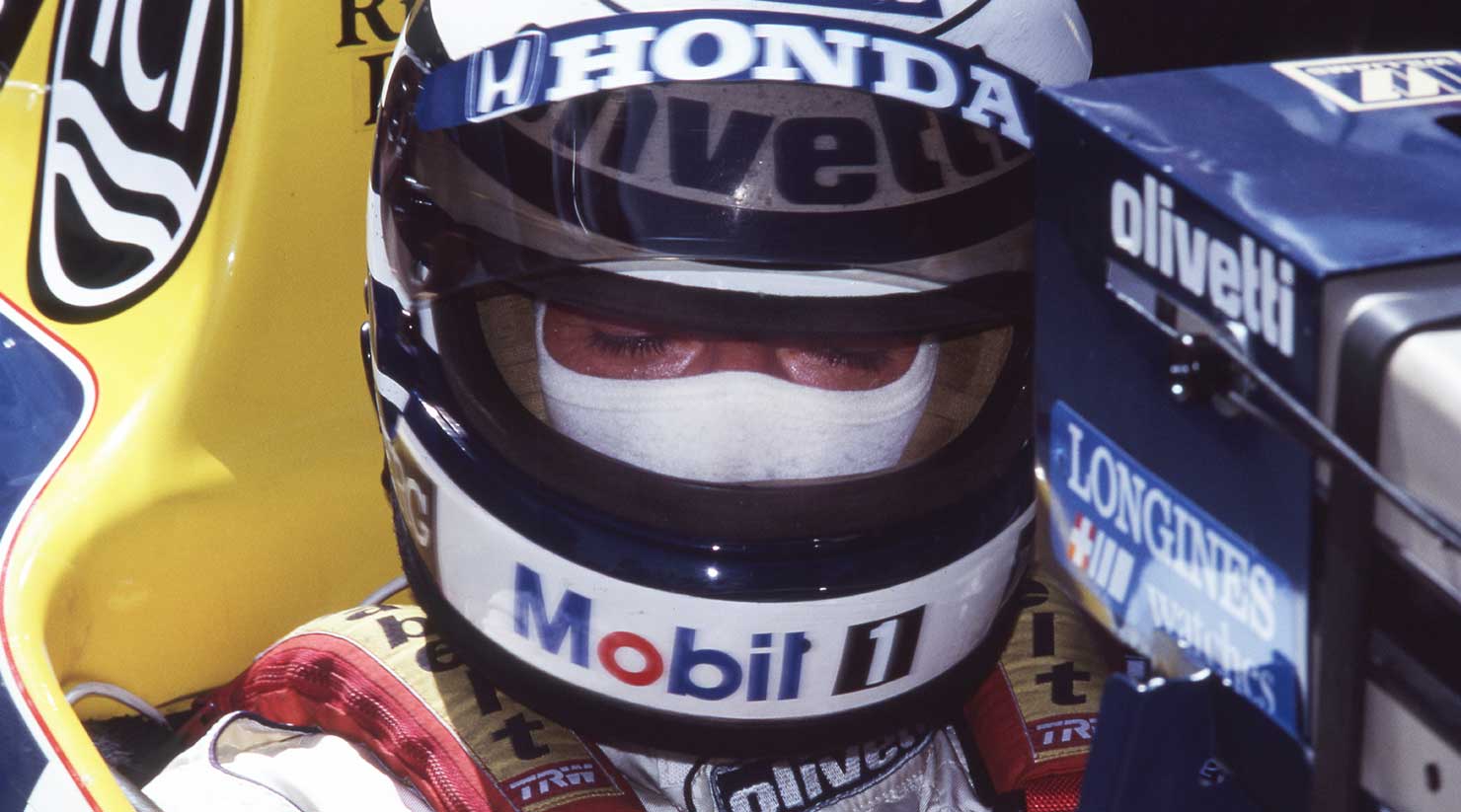
Profile
- Name
- Riccardo Gabriele Patrese
- Team
- Canon Williams Honda Team(1987)
- Nationality
- Italy
- Birth date
- April 17, 1954
Career highlights
- 1976
- Italian Formula 3 Champion / European Formula 3 Champion
- 1977
- 4th, European Formula 2 Championship / 19th, FIA Formula One World Championship (Shadow-Ford)
- 1978
- 12th, FIA Formula One World Championship (Arrows-Ford)
- 1979
- 19th, FIA Formula One World Championship (Arrows-Ford)
- 1980
- 9th, FIA Formula One World Championship (Arrows-Ford)
- 1981
- 11th, FIA Formula One World Championship (Arrows-Ford)
- 1982
- 10th, FIA Formula One World Championship (Brabham-BMW, Brabham-Ford)
- 1983
- 9th, FIA Formula One World Championship (Brabham-BMW)
- 1984
- 13th, FIA Formula One World Championship (Alfa Romeo)
- 1985
- NC, FIA Formula One World Championship (Alfa Romeo)
- 1986
- 17th, FIA Formula One World Championship (Brabham-BMW)
- 1987
- 13th, FIA Formula One World Championship (Brabham-BMW, Williams-Honda)
- 1988
- 11th, FIA Formula One World Championship (Williams-Judd)
- 1989
- 3rd, FIA Formula One World Championship (Williams-Renault)
- 1990
- 7th, FIA Formula One World Championship (Williams-Renault)
- 1991
- 3rd, FIA Formula One World Championship (Williams-Renault)
- 1992
- Runner-up, FIA Formula One World Championship (Williams-Renault)
- 1993
- 5th, FIA Formula One World Championship (Benetton-Ford)
Career
Born in Italy in 1954, Riccardo Patrese began karting at the age of eight and became World Karting Champion in 1974. He moved into car racing in 1975, winning three races in the Formula Italia Championship and finishing second in the standings. In 1976, he contested both the Italian Formula 3 Championship and the European Formula 3 Championship, winning four races in each and taking both titles.
In 1977, Patrese stepped up to the European Formula Two Championship. Although he did not win a race, he recorded three second-place finishes and two third-place finishes to take fourth in the standings, opening the path to F1. His main focus remained F2, but when Shadow needed a replacement driver mid-season, Patrese was called up and made his F1 debut at the Monaco Grand Prix. He entered nine races that year and scored his first point with sixth place at the season-ending Japanese Grand Prix. Patrese also raced in Japan’s All-Japan F2000 Championship that year, winning the final round at Suzuka.
In 1978, Patrese became a regular driver for Arrows. He was young, fast, and aggressive, and although he occasionally showed strong pace, the team lacked the strength to fight consistently at the front. The seasons remained difficult, but during four years with Arrows through 1981, Patrese gained valuable experience and matured as a driver. At the opening race of 1981, he claimed his first pole position. Although he retired from the race, he finished third at the following round and later ran second, showing clear signs of progress. Recognizing his speed, Bernie Ecclestone recruited him to Brabham, and Patrese became a full-time Brabham driver in 1982.
At the 1982 Monaco Grand Prix, a race of extraordinary attrition, Patrese claimed his first F1 victory. He stood on the podium three times that season, including Monaco, and finished 10th in the championship, ahead of Brabham’s lead driver Nelson Piquet. In 1983, the first half of the season brought a series of retirements and few results, but his form improved later in the year. At the season-ending South African Grand Prix, he secured his second career victory.
Patrese moved to Alfa Romeo in 1984, but results declined. During two seasons with the team, points were rare, and in 1985 he endured a difficult year without scoring.
In 1986, Patrese returned to Brabham and drove the BT55, an ambitious design by Gordon Murray. The unconventional car suffered frequent teething problems and brought many retirements. In 1987, Brabham switched to the more conventional BT56, but results still failed to improve. Patrese decided to move on and agreed to join Williams for the following season.
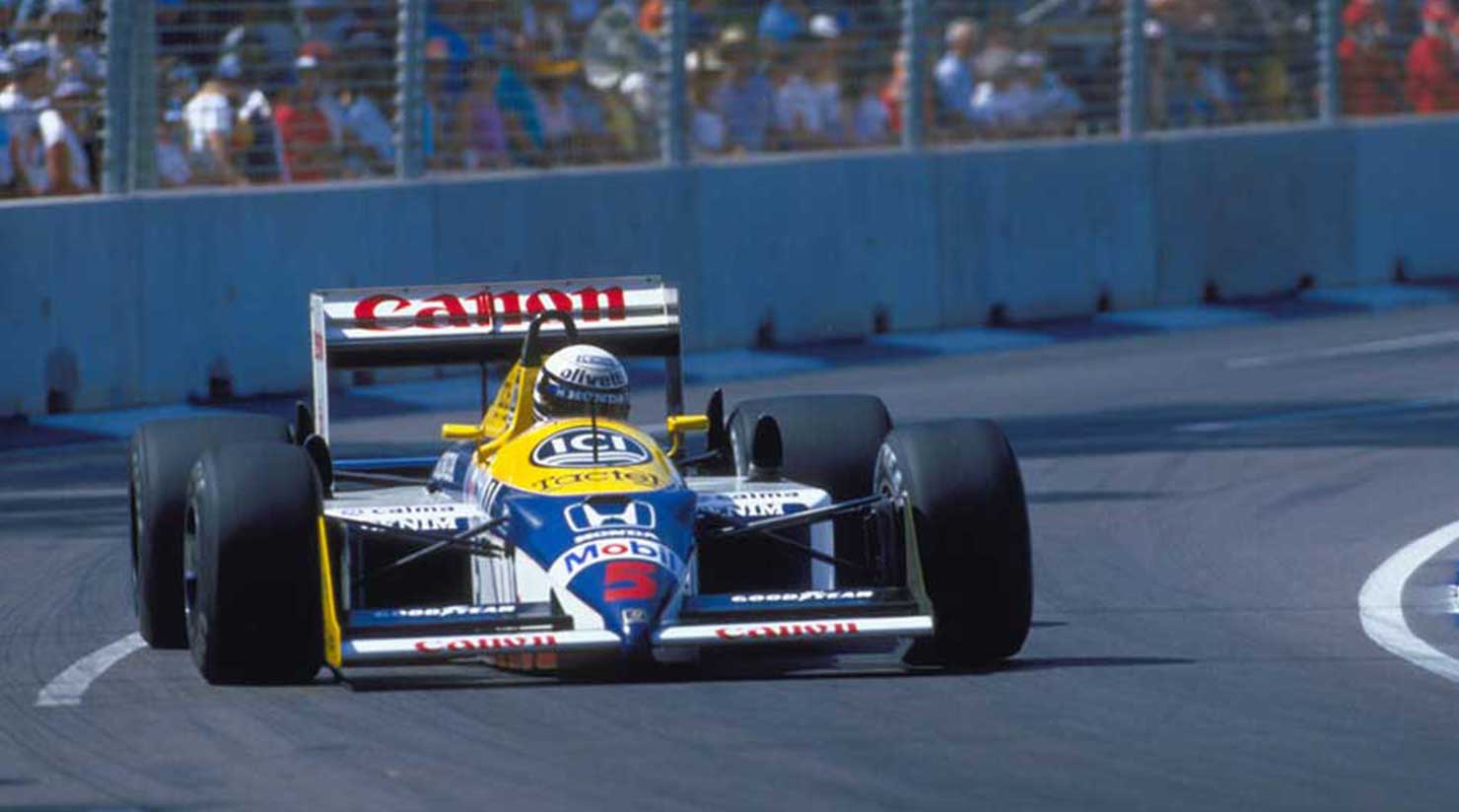
At the time, Williams was using a highly developed Honda engine and showed overwhelming speed. Nigel Mansell, one of the central figures in the title battle, suffered a major crash during qualifying for the Japanese Grand Prix and was forced to miss the final round, ending his championship challenge. For the season-ending Australian Grand Prix, Williams selected Patrese as Mansell’s replacement ahead of his full-time arrival the following year. Since Williams had already decided to switch from Honda power to naturally aspirated Judd engines in 1988, this would be Patrese’s only race with a Honda engine. The race became a survival contest, with only nine cars classified from 26 starters. Patrese encountered trouble late in the race but was still classified ninth, six laps down.
In 1988, Patrese’s first full season with Williams was hampered by a lack of power, but the team recovered from 1989 after adopting Renault engines. Although Williams could not match the dominant McLaren Honda, it established itself as the next strongest team, and Patrese took six podium finishes to place third in the championship.
In 1990, Patrese won the San Marino Grand Prix, his first victory in seven years. The gap between wins was a record at the time and remains one of the longest in F1 history. However, he did not return to the podium after that victory and finished seventh in the championship.
In 1991, Mansell returned to Williams as Patrese’s teammate. Williams was entering a period of rapid technical development, introducing new electronic systems in pursuit of performance. The team introduced an automatic transmission in 1991 and followed with technologies such as traction control and active suspension in 1992. Although early problems appeared, Williams gradually established a clear advantage. Patrese’s results improved with the team’s rise. In 1991, he claimed four pole positions, won twice, and finished third in the championship. In 1992, he won once at the Japanese Grand Prix and reached the podium nine times, consistently scoring points on his way to a career-best second place in the standings.
In 1993, Patrese moved to Benetton. He took two podium finishes, but lacked the momentum he had shown at Williams and ended the year fifth in the championship. Although he hoped to continue racing in F1, the season ultimately marked the end of his 17-year Formula 1® career.
Records
Profile
- Name
- Riccardo Gabriele Patrese
- Birth date
- April 17, 1954
- Birthplace
- Padua, Italy
Race Wins

-
Total
0
-
Honda
0
Pole Positions

-
Total
0
-
Honda
0
Races ※1

-
Total
0
-
Honda
0
Podiums

-
Total
0
-
Honda
0
Retirements ※2

-
Total
0
-
Honda
0
Laps Raced ※3

-
Total
0
-
Honda
0
Laps Led ※3

-
Total
0
-
Honda
0
- *1 Races: includes disqualifications
- *2 Retired: does not include classified finishes and disqualifications *Laps completed in disqualified races are excluded.
Formula 1.com and other sources