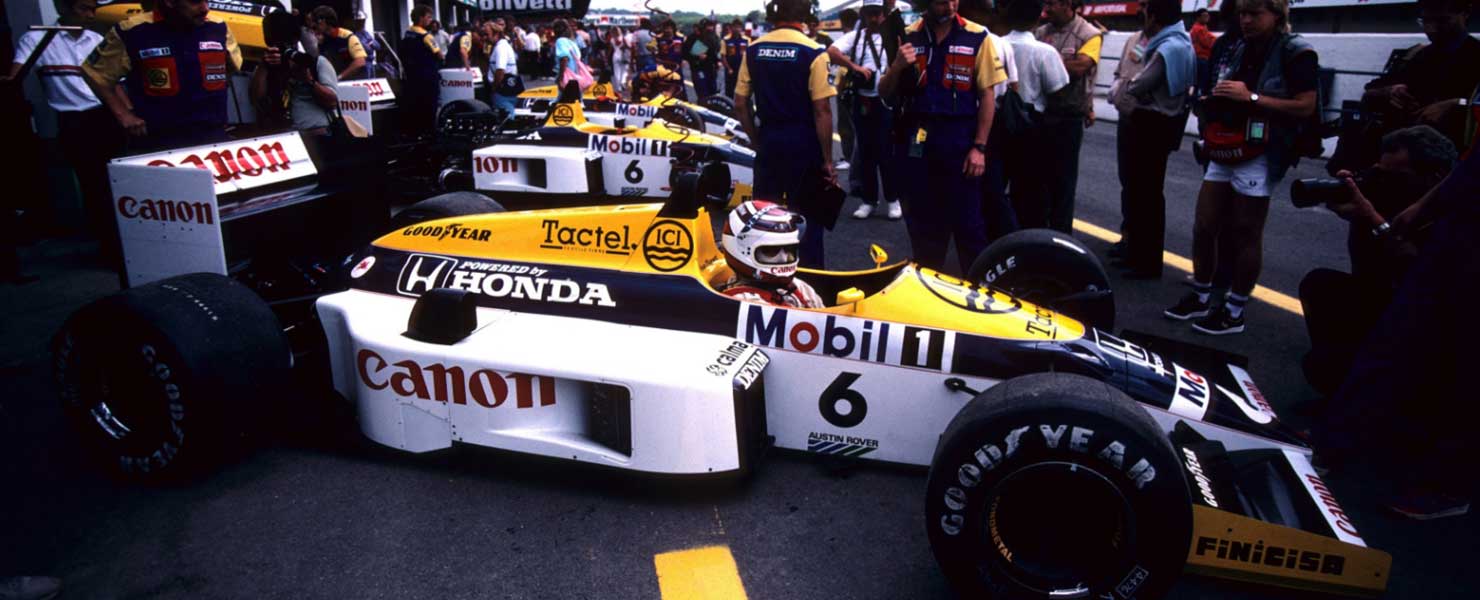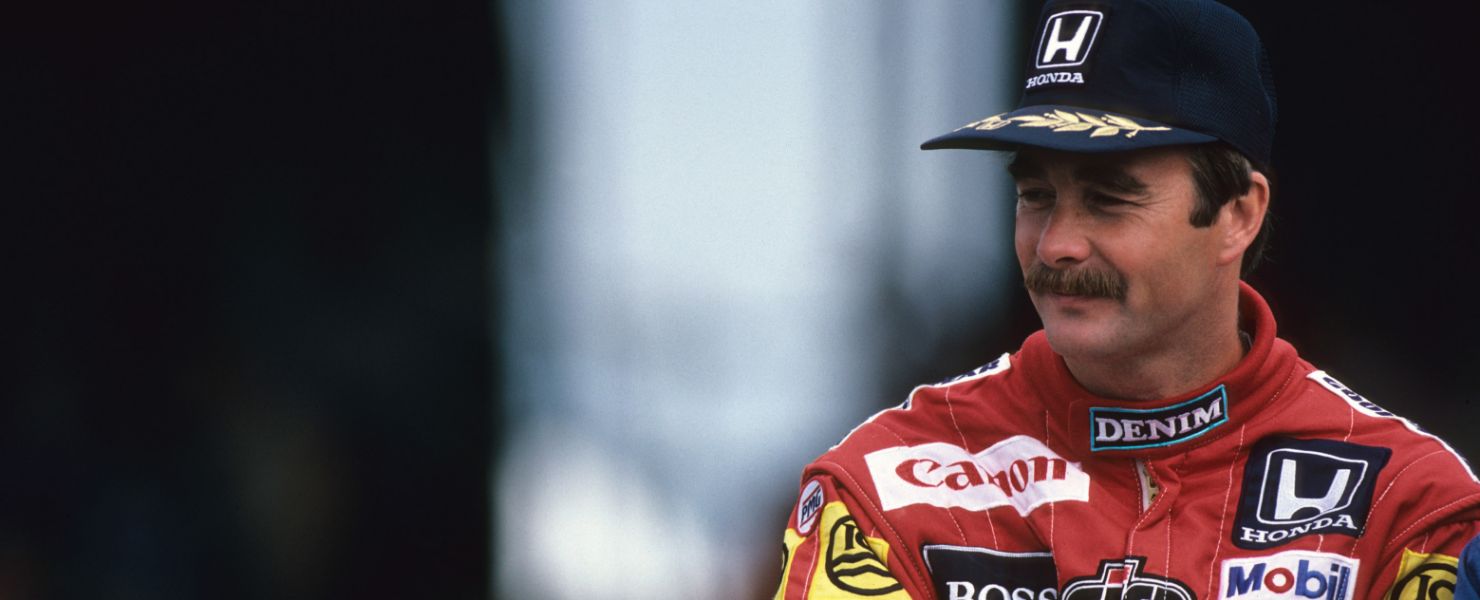
Passionate and fiercely determined,
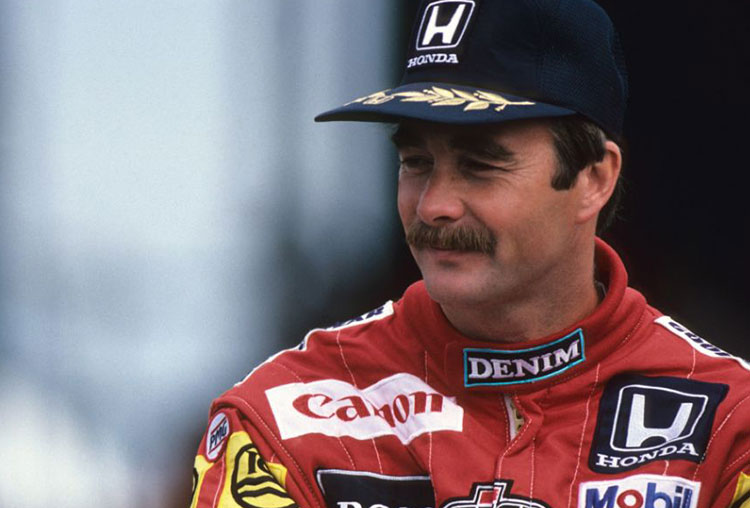
Nigel Mansell was one of the most compelling drivers of the 1980s and 1990s.
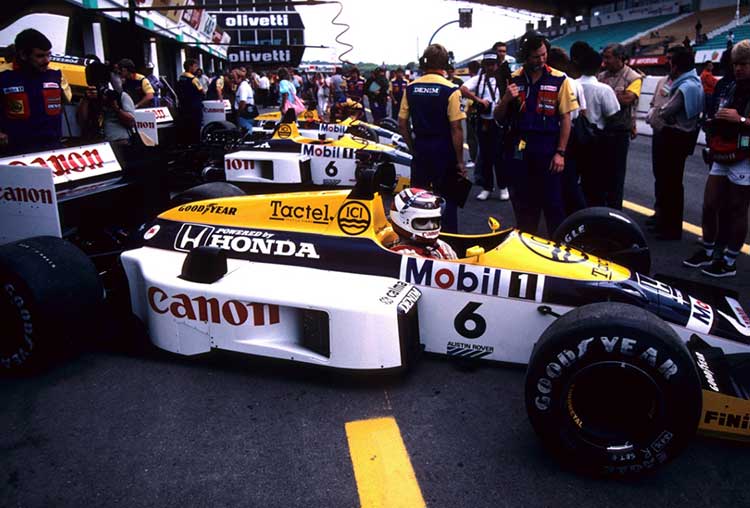
After joining Williams in 1985, powered by Honda engines,
Mansell’s speed and aggressive driving style came fully into focus,
establishing him as one of the leading drivers of his generation.
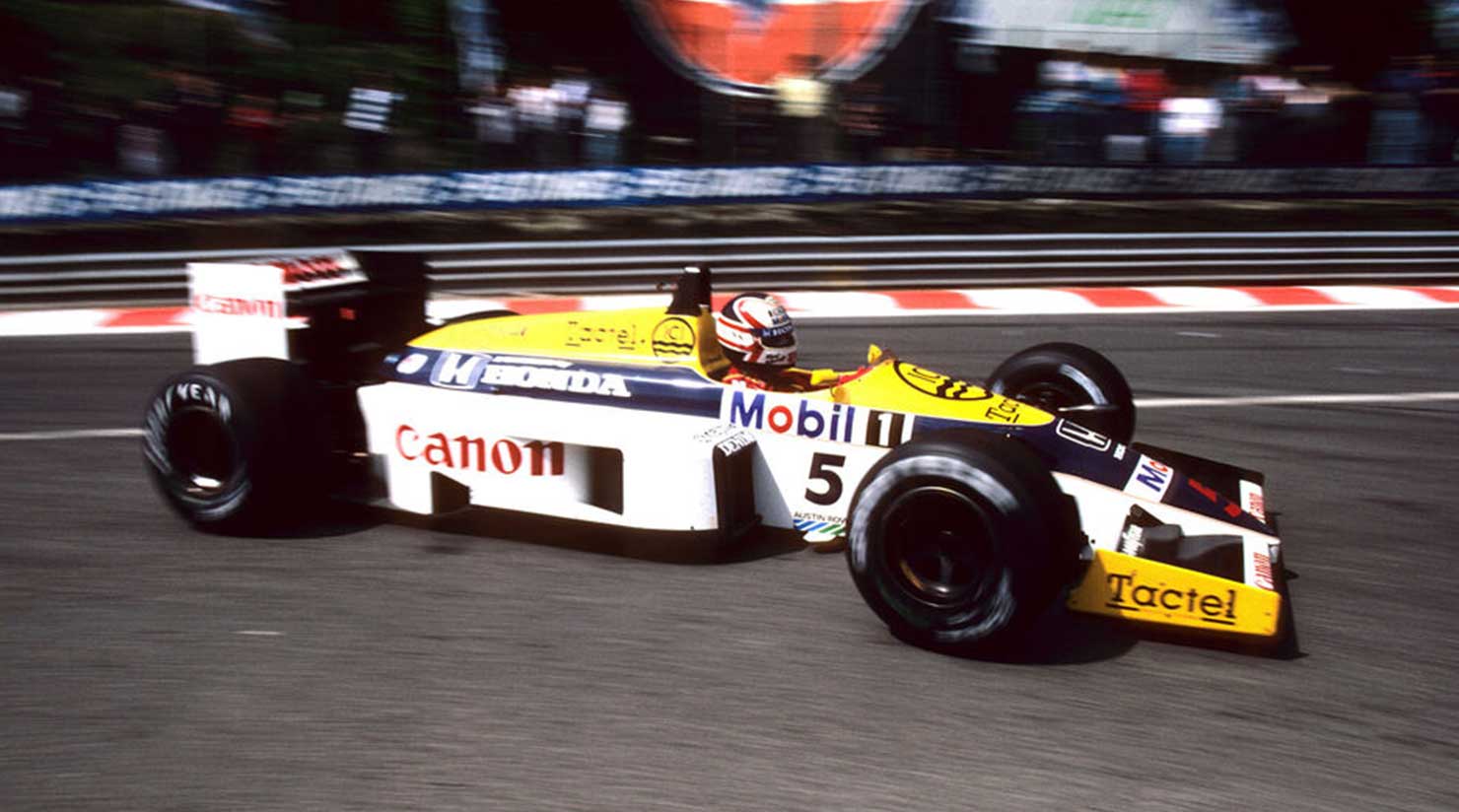
Mansell made a major contribution to Williams Honda winning back-to-back Constructors’ Championships in 1986 and 1987.
As one of the key figures in the rise of Honda’s second F1™ era,
he was a central contender in the championship battle year after year. Yet the title repeatedly slipped from his grasp,
earning him a reputation at times as the “uncrowned king.”
Through sheer determination, Mansell achieved his long-awaited World Championship in 1992.
The following year, he added another remarkable achievement by winning the CART series in the United States.
His trademark “Red 5” remains a lasting symbol of his spectacular speed and indomitable fighting spirit.
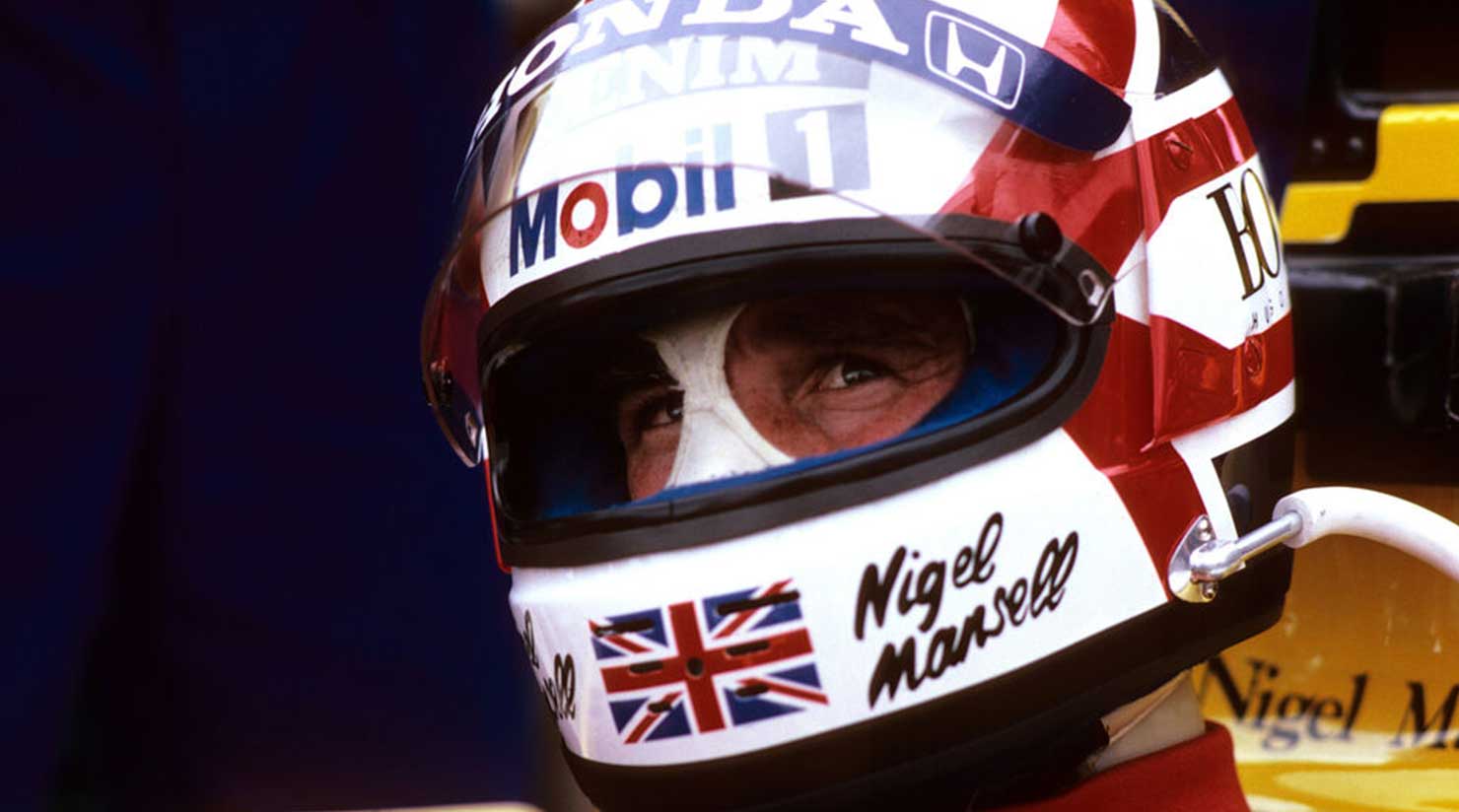
Profile
- Name
- Nigel Mansell
- Team
- Williams Grand Prix Engineering(1985-1987)
- Nationality
- United Kingdom
- Birth date
- August 8, 1953
Career
Born in the United Kingdom in 1953, Nigel Mansell followed an unusual path from engineer to racing driver. He began karting at the age of 10 and entered formula racing in 1976 while still a university student. After graduating, he worked as an aerospace engineer while continuing to race. In 1977, he won the British Formula Ford 1600 Championship, then moved into Formula 3 and Formula 2 in 1978 and 1979. Serious injuries from crashes and financial difficulties made this a difficult period in his career.
In 1980, Mansell’s prospects began to improve. He was selected as a Formula One test driver for Lotus and joined Ralt Honda in Formula 2. Highly regarded by Lotus founder Colin Chapman, Mansell made his F1 debut at the Austrian Grand Prix. Although he entered three races that year and failed to finish, Chapman recognized his aggressive driving style and promoted him to a full-time race seat for the following season.
That same year, Mansell also drove the Ralt Honda, which used a Honda Formula 2 engine developed as part of Honda’s preparations for a future F1 return. He joined the program from the sixth round at Silverstone and finished second in the final round at Hockenheim.
Mansell became a full-time Lotus F1 driver in 1981 and remained with the team through 1984, but the period was often frustrating. In 1981, he scored his first points with a third-place finish at the Belgian Grand Prix, but strong results were rare thereafter. He finished third again at the Brazilian Grand Prix in 1982, but his momentum faded. When Chapman, one of his strongest supporters, died at the end of the year, Mansell’s future became uncertain.
Relations with new team leader Peter Warr were poor, and Mansell entered a difficult period. He finished third at the 1983 European Grand Prix and added two more third-place results in 1984, at the French and Dutch Grands Prix. However, frequent retirements limited his progress, and 10th in the 1984 standings remained his best championship result with Lotus. After Warr secured the signing of rising star Ayrton Senna, Mansell left the team.
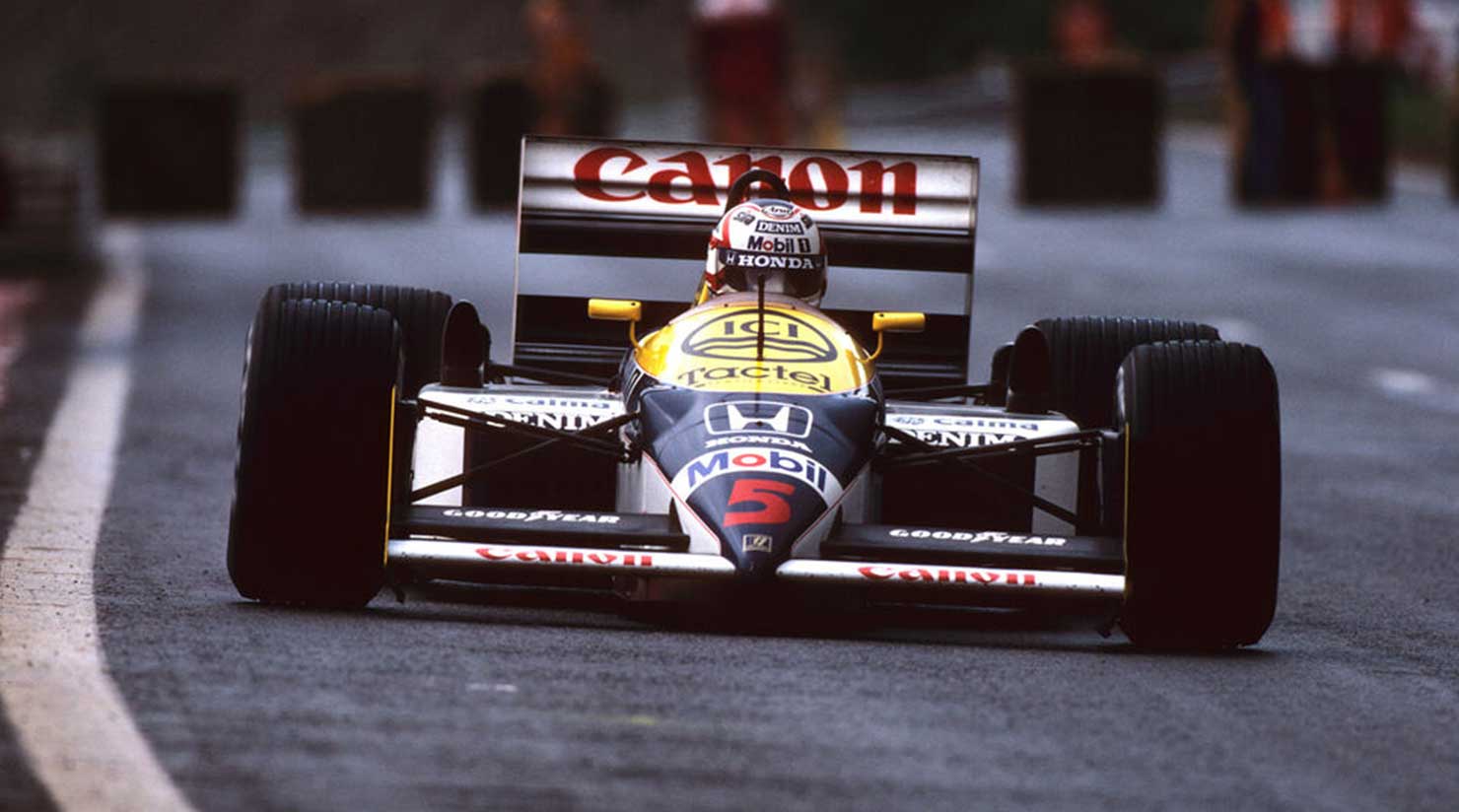
In 1985, Frank Williams, who valued Mansell’s driving, invited him to join Williams. Mansell painted his race number red, creating the famous “Red 5.” Williams had been competing with Honda engines since the previous season. In the early years of Honda’s second F1 era, the company was taking on the challenge of producing a high-power turbo engine, but reliability and performance issues remained. Williams also struggled with early problems on its new chassis, though the team had taken its first Honda-powered victory in 1984 and entered 1985 aiming for a major step forward.
Mansell scored points three times in the opening five races, but his performances lacked consistency. The turning point was the introduction of Honda’s new RA165E engine from the fifth round. Mansell began racing with the new engine from the sixth round. Early on, he continued to suffer from reliability issues and tire wear, but improvements to the suspension late in the season raised the car’s competitiveness. Mansell claimed his long-awaited first F1 victory at the European Grand Prix at Brands Hatch. He followed it with another win at the South African Grand Prix, before teammate Keke Rosberg won the final round in Australia. Williams Honda ended the season with three consecutive victories.
In 1986, Williams Honda carried that late-season momentum into the new year and showed strong pace from the opening races. Former World Champion Nelson Piquet joined as Mansell’s teammate. With team principal Frank Williams absent after a serious road accident shortly before the season began, attention focused on the rivalry between two drivers with sharply contrasting personalities and styles.
Mansell won five races and became a central figure in the championship battle. Arriving at the final round in Australia, he led Alain Prost by six points and appeared well placed to claim the title. Then, while running third late in the race, disaster struck. Mansell suffered a left-rear tire failure and was forced to retire. Prost won the race and took the championship. Although Mansell’s five victories and second place in the standings marked his best season to date, it was a deeply painful outcome. Williams Honda, however, secured its long-awaited Constructors’ Championship.
Williams Honda remained a dominant force in 1987, and the battle between Mansell and Piquet intensified. Mansell often controlled races with his aggressive pace, but unfortunate retirements cost him valuable points. In the second half of the season, Piquet’s consistency allowed him to build a championship advantage.
Mansell arrived at the Japanese Grand Prix 12 points behind, still hoping to overturn the deficit. During qualifying, however, he crashed heavily in the Esses. The injuries forced him to miss both the Japanese Grand Prix and the final round in Australia, ending his title hopes once again. Piquet secured his third World Championship, while Williams Honda won a second consecutive Constructors’ Championship. It was a landmark season for Honda, which contributed to its first championship double.
In 1988, Williams lost Honda power and Riccardo Patrese replaced Piquet. Mansell became the team’s clear number one driver, but the car’s competitiveness declined sharply. Reliability problems with the active suspension system further compromised results. He qualified second at the opening round in Brazil but retired from the race, and retirements continued throughout the season. His second-place finishes at the British and Spanish Grands Prix were the only races he completed that year.
Mansell moved to Ferrari in 1989. He won his first race with the team at the Brazilian Grand Prix, but retirements followed. From the French Grand Prix onward, he regained form and scored consecutive podium finishes. At the Hungarian Grand Prix, he charged from 12th on the grid to take his second victory of the season. In a year dominated by McLaren Honda, Mansell finished fourth in the championship.
In 1990, Alain Prost, his former title rival, joined Ferrari as Mansell’s teammate. As the season progressed, Prost became the team’s main championship contender, while Mansell struggled. After retiring from the British Grand Prix, Mansell suddenly announced his intention to retire. Later in the season, after Jean Alesi’s future move to Ferrari was announced, Mansell reversed his retirement decision and declared that he would return to Williams. He ended his second Ferrari season with one victory and fifth place in the standings.
In 1991, Williams introduced the FW14 designed by Adrian Newey, and the team’s competitiveness improved dramatically. Returning to Williams, Mansell suffered several early retirements before finishing second at Monaco and taking his first victory of the season at the French Grand Prix. He then won the British and German Grands Prix to complete a run of three consecutive victories. Further wins in Italy and Spain kept his championship hopes alive, but retirement at the Japanese Grand Prix ended his title challenge. His third major attempt to secure the World Championship had fallen short.
In 1992, Williams’ refined FW14B was in outstanding form from the start of the season. Mansell dominated, winning the opening five races and later taking three consecutive victories from the French Grand Prix to the German Grand Prix. At the Hungarian Grand Prix, he finished second and finally secured the World Championship. His emotional tears on the podium after achieving his long-awaited title were widely praised by fans.
Just two races later, at the Italian Grand Prix, Mansell announced his second retirement. He explained that the decision was linked to disagreements with the team over his contract for the following season. Team principal Frank Williams urged him to reconsider during the press conference, but Mansell continued with his announcement. When he later revealed that he would move to the American CART series, many British fans reacted angrily, with reports of protests outside the Williams factory.
In 1993, Mansell joined Newman Haas Racing in CART and made an immediate impact. At the opening round in Surfers Paradise, he took pole position and victory on his debut. Across the 16-race season, he claimed seven pole positions and five victories, winning the championship and earning Rookie of the Year honors.
Mansell remained in CART in 1994, but results declined as rival teams improved, and he announced his departure from the team at the end of the season. That same year, he also made a limited return to F1. After Ayrton Senna’s fatal accident, Bernie Ecclestone reportedly persuaded Mansell to return as part of efforts to restore attention and stability to the sport. Mansell entered four races for Williams and won the final round, the Australian Grand Prix, demonstrating that his speed remained intact.
In 1995, Mansell signed with McLaren, but cockpit fit issues forced him to miss the opening two races. He competed in the San Marino and Spanish Grands Prix, but results were poor, and he left the team soon afterward. He explored a further F1 return for 1996, but no agreement was reached, effectively bringing his Formula 1® career to an end.
After retiring, Mansell continued to make occasional racing appearances in various categories and demonstration events. In 2010, he entered the 24 Hours of Le Mans with his sons, but the race ended early after a crash shortly after the start.
Records
Profile
- Name
- Nigel Ernest James Mansell
- Birth date
- August 08, 1953
- Birthplace
- UK / England
- Weight
- 80kg
- Height
- 180cm
Race Wins

-
Total
0
-
Honda
0
Pole Positions

-
Total
0
-
Honda
0
Races ※1

-
Total
0
-
Honda
0
Podiums

-
Total
0
-
Honda
0
Retirements ※2

-
Total
0
-
Honda
0
Laps Raced ※3

-
Total
0
-
Honda
0
Laps Led ※3

-
Total
0
-
Honda
0
- *1 Disqualifications included. *2 Disqualifications not included. *3 Disqualified lap not included.
Formula 1.com and other sources