
Born as the son of Graham Hill—the legendary driver who remains
the only person to have won all three of motorsport’s most prestigious races: the F1 Monaco Grand Prix,
the Indianapolis 500 and the 24 Hours of Le Mans—Damon Hill went on to become an F1 World Champion in his own right.
His path to the top, however, was far from conventional.
Despite coming from one of motorsport’s most famous families,
Hill was a late bloomer, making his F1 debut at the unusually late age of 31.
Although he fulfilled his ambition of becoming F1 World Champion with Williams in 1996,
he was released by the team the following year.
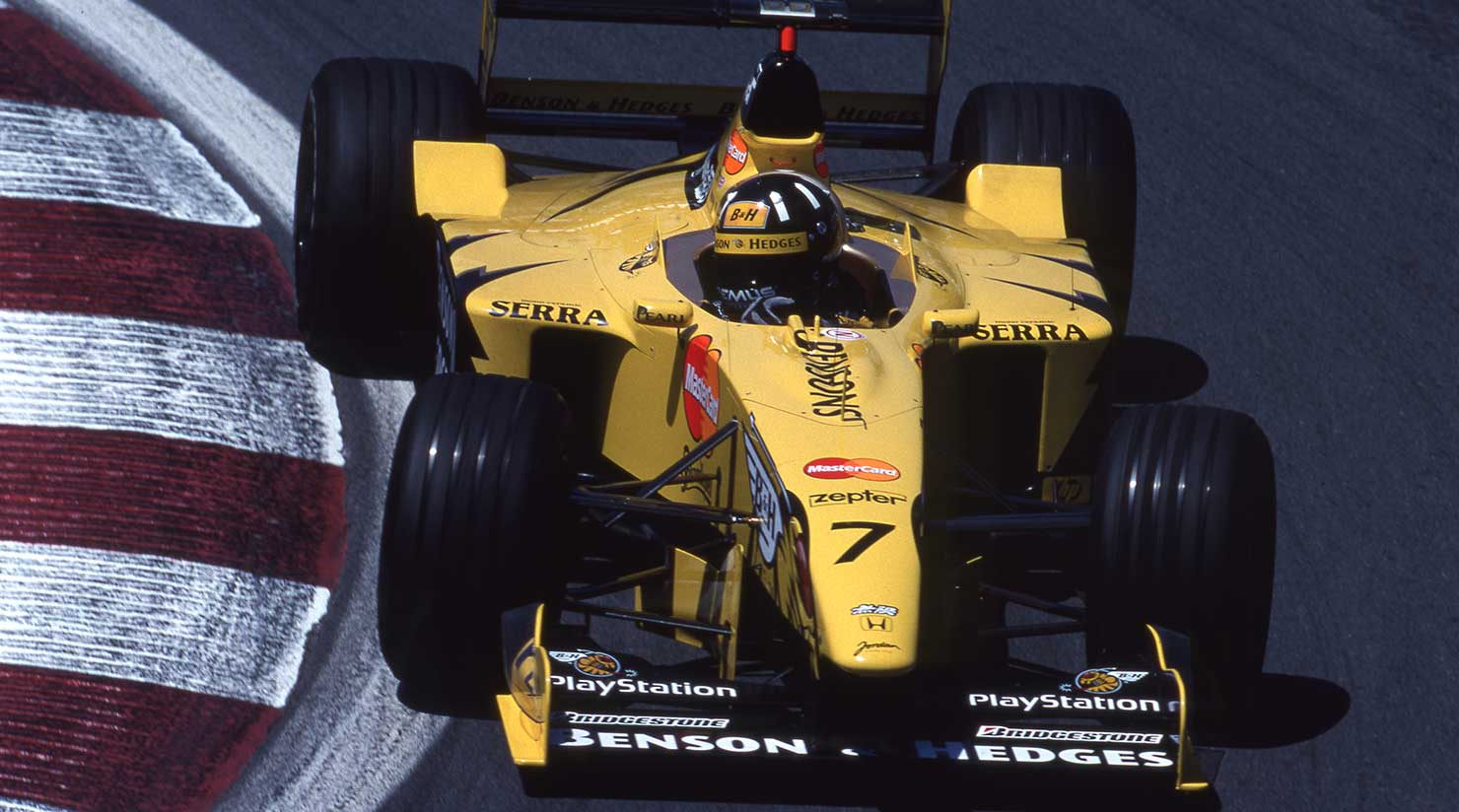
In 1998, Hill joined Jordan Grand Prix, powered by Mugen Honda engines.
That season he delivered the team’s first F1 victory and Mugen Honda’s second Formula One® win.
Hill completed his final F1 season with Jordan Mugen Honda in 1999 before retiring from racing.
Over an eight-year F1 career that began in 1992,
Hill earned a reputation as a calm,
intelligent driver who reached the pinnacle of the sport through determination and perseverance.
Profile
- Name
- Damon Hill(Damon Graham Devereux Hill)
- Team
- Benson & Hedges Jordan Mugen Honda(1998-1999)
- Nationality
- United Kingdom
- Birth date
- September 17, 1960
Career highlights
- 1988
- 3rd, British Formula 3 Championship
- 1991
- 7th, International Formula 3000 Championship
- 1992
- NC, FIA Formula One World Championship (Brabham Judd)
- 1993
- 3rd, FIA Formula One World Championship (Williams Renault)
- 1994
- 2nd, FIA Formula One World Championship (Williams Renault)
- 1995
- 2nd, FIA Formula One World Championship (Williams Renault)
- 1996
- Champion, FIA Formula One World Championship (Williams Renault)
- 1997
- 12th, FIA Formula One World Championship (Arrows Yamaha)
- 1998
- 6th, FIA Formula One World Championship (Jordan Mugen Honda)
- 1999
- 12th, FIA Formula One World Championship (Jordan Mugen Honda)
Career
Damon Hill was born in 1960 as the son of Graham Hill, the only driver to have won two F1 World Championships as well as all three of motorsport’s most prestigious races—the Monaco Grand Prix, the Indianapolis 500 and the 24 Hours of Le Mans.
As a boy, however, Hill had little interest in motor racing and was said to be far more interested in music.
In 1975, Hill entered a motorcycle trials competition, marking his first participation in motorsport. That same year, his father was killed in a plane crash. Burdened with substantial debts, the Hill family saw their comfortable lifestyle disappear almost overnight. Even so, Hill decided to continue racing motorcycles, balancing his racing ambitions with part-time jobs.
Hill did not begin competing on four wheels until he was 23 years old, making a full-time switch from motorcycles to cars in 1985 when he entered Formula Ford 1600. He stepped up to the British Formula 3 Championship in 1986 and, after taking two victories in 1988, finished third in the standings. Late that season he made his International Formula 3000 debut and continued in the series through 1991.
A move to Middlebridge Racing in 1990 proved to be the turning point on his road to F1. When Middlebridge acquired the Brabham F1 team, Hill was appointed as Brabham’s test and reserve driver.
The following year, he also became a test driver for Williams, then one of Formula One’s leading teams, bringing his F1 debut within reach.
Hill made his Formula One debut at the 1992 Spanish Grand Prix after securing a race seat with Brabham from Round 4 of the season. The team’s struggles meant he repeatedly failed to qualify, finally reaching his first Grand Prix start at the British Grand Prix, Round 9. Brabham’s fortunes did not improve, however, and the Hungarian Grand Prix, Hill’s second race start, proved to be the team’s final F1 race.
In 1993, after Williams lost both of its regular drivers, Hill was promoted from test driver to a full-time race seat. Alongside World Champion Alain Prost, he quickly proved he could compete on equal terms. Hill claimed his maiden F1 victory at the Hungarian Grand Prix before winning the Belgian and Italian Grands Prix to make it three consecutive victories. Although he ultimately finished third in the championship, the season established him as one of F1’s leading drivers.
Williams suffered a devastating blow in 1994 when Ayrton Senna, who had joined the team as Hill’s teammate, was killed in an accident at the San Marino Grand Prix. Hill unexpectedly found himself leading the team and became a genuine championship contender, battling the emerging Michael Schumacher for the title. He fought Schumacher again in 1995, but Schumacher secured back-to-back championships while Hill finished runner-up in both seasons.
In 1996, Jacques Villeneuve joined Williams, creating a much-discussed pairing of two second-generation drivers. Williams remained the team to beat, and the championship battle became an internal contest between Hill and Villeneuve. Hill won the opening three races and had taken six victories by the French Grand Prix, Round 9, before Villeneuve mounted a strong challenge in the second half of the season. The championship was decided at the final round in Japan, where Villeneuve retired with mechanical trouble and Hill secured his long-awaited Drivers’ Championship. Remarkably, however, Williams had already announced before the Italian Grand Prix, Round 14, that Hill would not remain with the team for 1997. The reasons for the decision have never been fully explained and remain one of Formula One’s enduring mysteries.
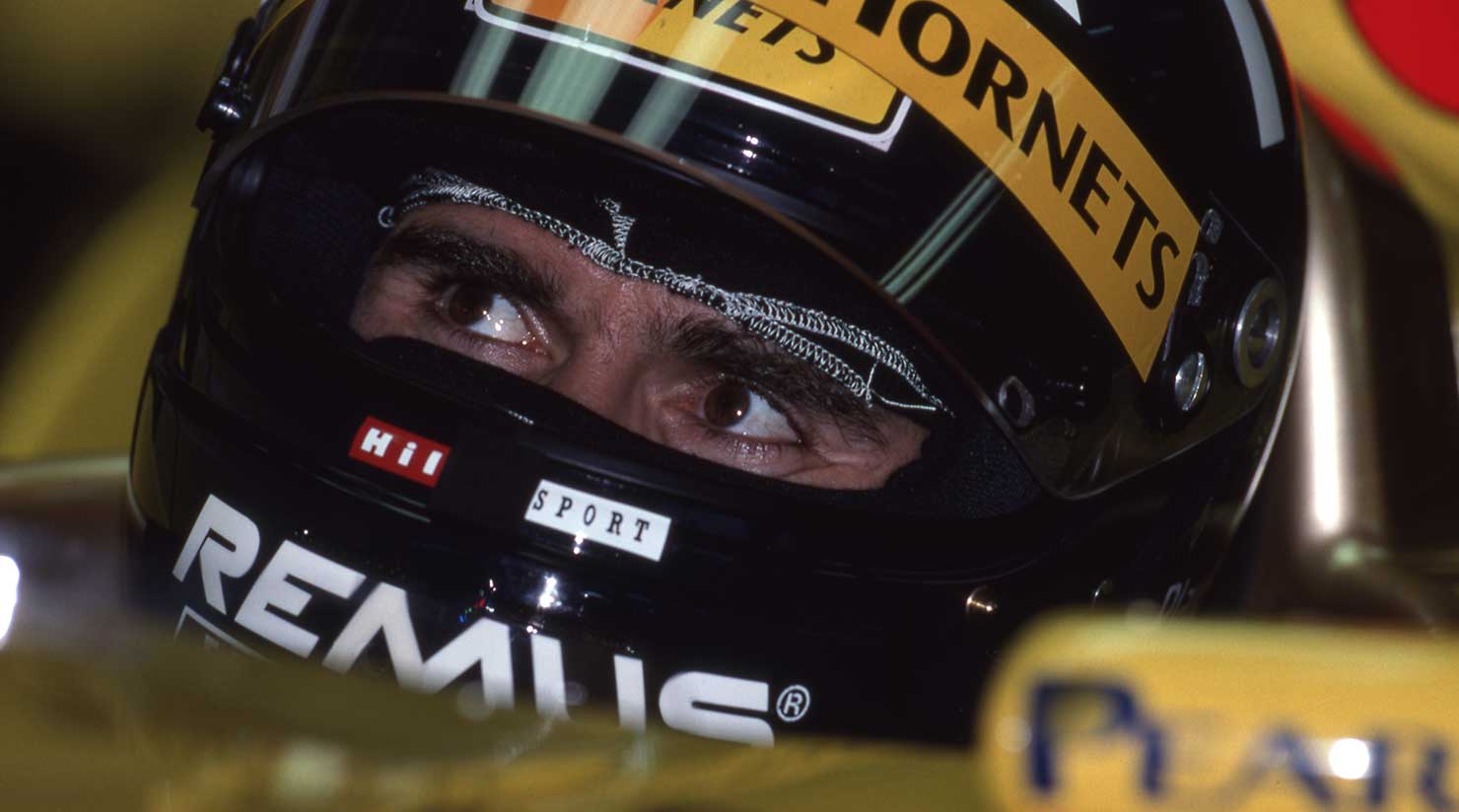
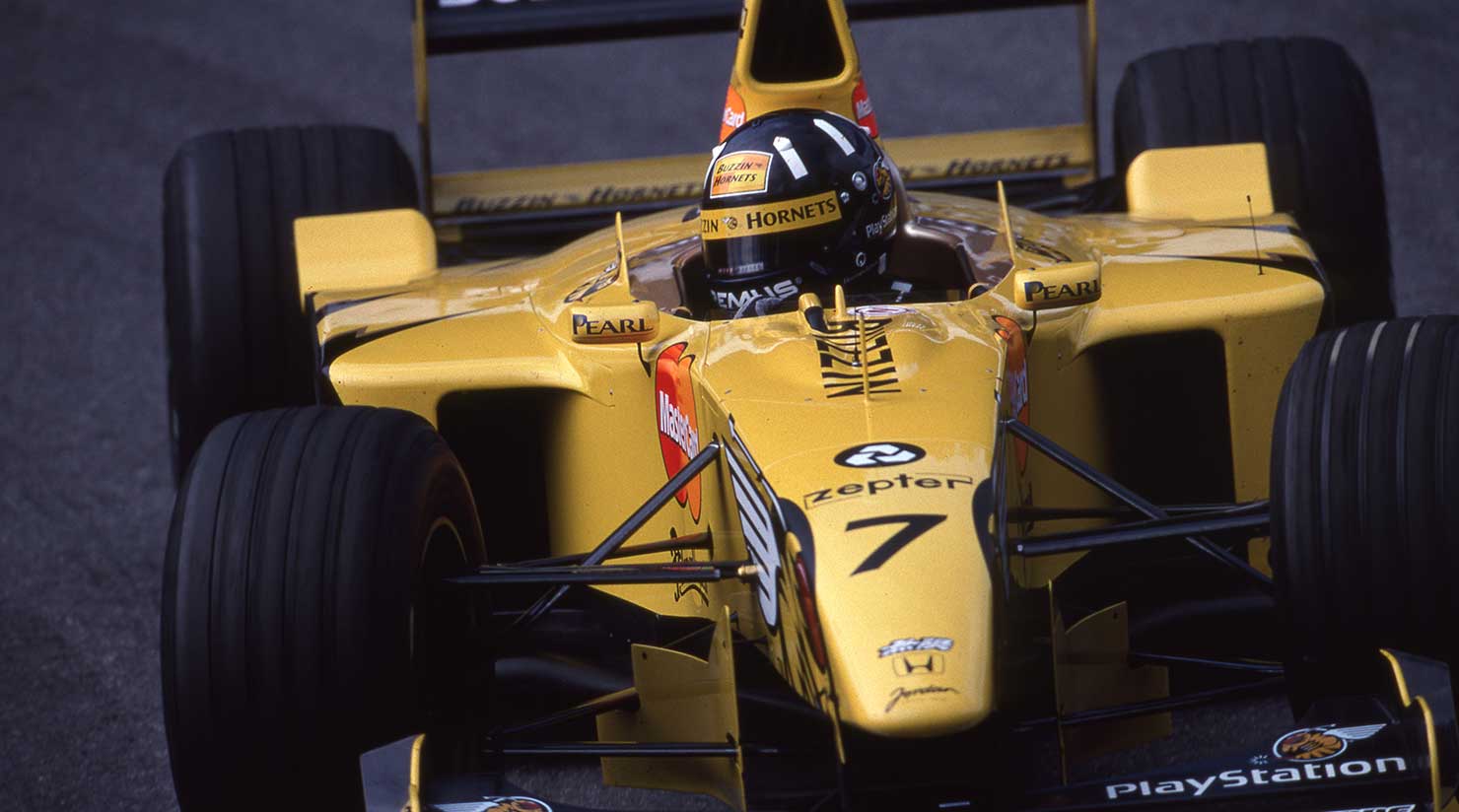
Hill joined Arrows in 1997, but the team was unable to provide a car capable of matching the reigning World Champion’s ambitions. In 1998 he moved to Jordan, which had begun using Mugen Honda engines that season in its sixth year of F1 competition. After a difficult first half of the year, Jordan made significant progress, and Hill delivered victory at the Belgian Grand Prix, the team’s first in F1. He also finished fourth at the season-ending Japanese Grand Prix, ending the year sixth in the Drivers’ standings as Jordan rose to fourth in the Constructors’ Championship.
In 1999, after a disappointing season, Hill announced during the year that he would retire. His final race came at the Japanese Grand Prix, where he damaged the nose of his car after running off the circuit before eventually retiring.
Since retiring from racing, Hill has remained closely involved in F1, working as a television commentator and serving in senior roles with British motorsport organizations while continuing to make regular appearances in the F1 paddock.
Videos
Records
Profile
- Name
- Damon Graham Devereux Hill
- Birth date
- September 17, 1960
- Birthplace
- Hampstead, London, United Kingdom
- Weight
- 76.5kg
- Height
- 182cm
Race Wins

-
Total
0
-
Honda*
0
Pole Positions

-
Total
0
-
Honda*
0
Races ※1

-
Total
0
-
Honda*
0
Podiums

-
Total
0
-
Honda*
0
Retirements ※2

-
Total
0
-
Honda*
0
Laps Raced ※3

-
Total
0
-
Honda*
0
Laps Led ※3

-
Total
0
-
Honda*
0
- *Mugen Honda
- *1 Races: includes disqualifications
- *2 Retired: does not include classified finishes and disqualifications *Laps completed in disqualified races are excluded.
Formula 1.com and other sources