Circuit info


- Circuit Length
- 5.281 km
- First Grand Prix
- 2009
- Number of Laps
- 58
- Race Distance
- 306.183km
Location
- Address
- Yas Leisure Dr, Yas Island, Abu Dhabi, UAE
- Google Maps
History of the Circuit
In the late 2000s, several Middle Eastern countries began using motorsport as part of their national branding strategies. The Abu Dhabi government in the United Arab Emirates (UAE) pursued an ambitious bid to host F1™ as the centerpiece of the large-scale Yas Island development project. Combining the circuit with luxury hotels, shopping destinations, and entertainment facilities, Abu Dhabi successfully staged its first Grand Prix in 2009, becoming the second Middle Eastern nation to host an F1 race after Bahrain.
The event joined the FIA Formula One World Championship™ calendar as the season finale in 2009 and has continued to host the final round of the championship since 2014. The current hosting agreement runs through 2030, and it is widely reported that the contract includes a provision guaranteeing its status as the season-ending race.
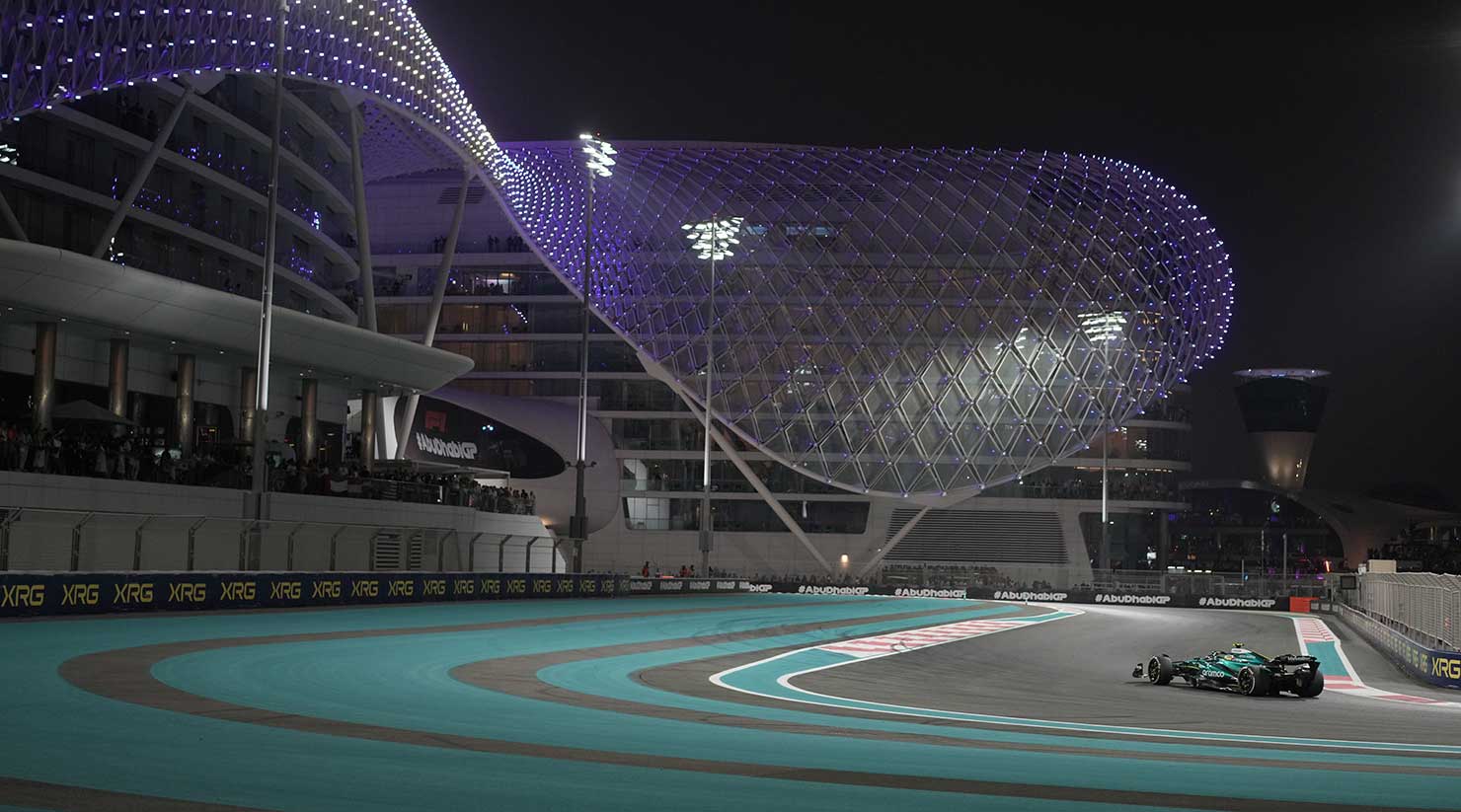
The circuit was designed by renowned German architect and circuit designer Hermann Tilke as part of the wider Yas Island development. Its flat marina-side setting and distinctive layout, which passes beneath the iconic hotel complex, create one of the most recognizable backdrops in motorsport.
The Abu Dhabi Grand Prix is famous for its twilight schedule, with the race starting in daylight at 5:00 pm before transitioning into a night race under floodlights. This unique atmosphere has become a defining feature of the event and provides a fitting stage for the conclusion of each F1 season.
Circuit characteristics
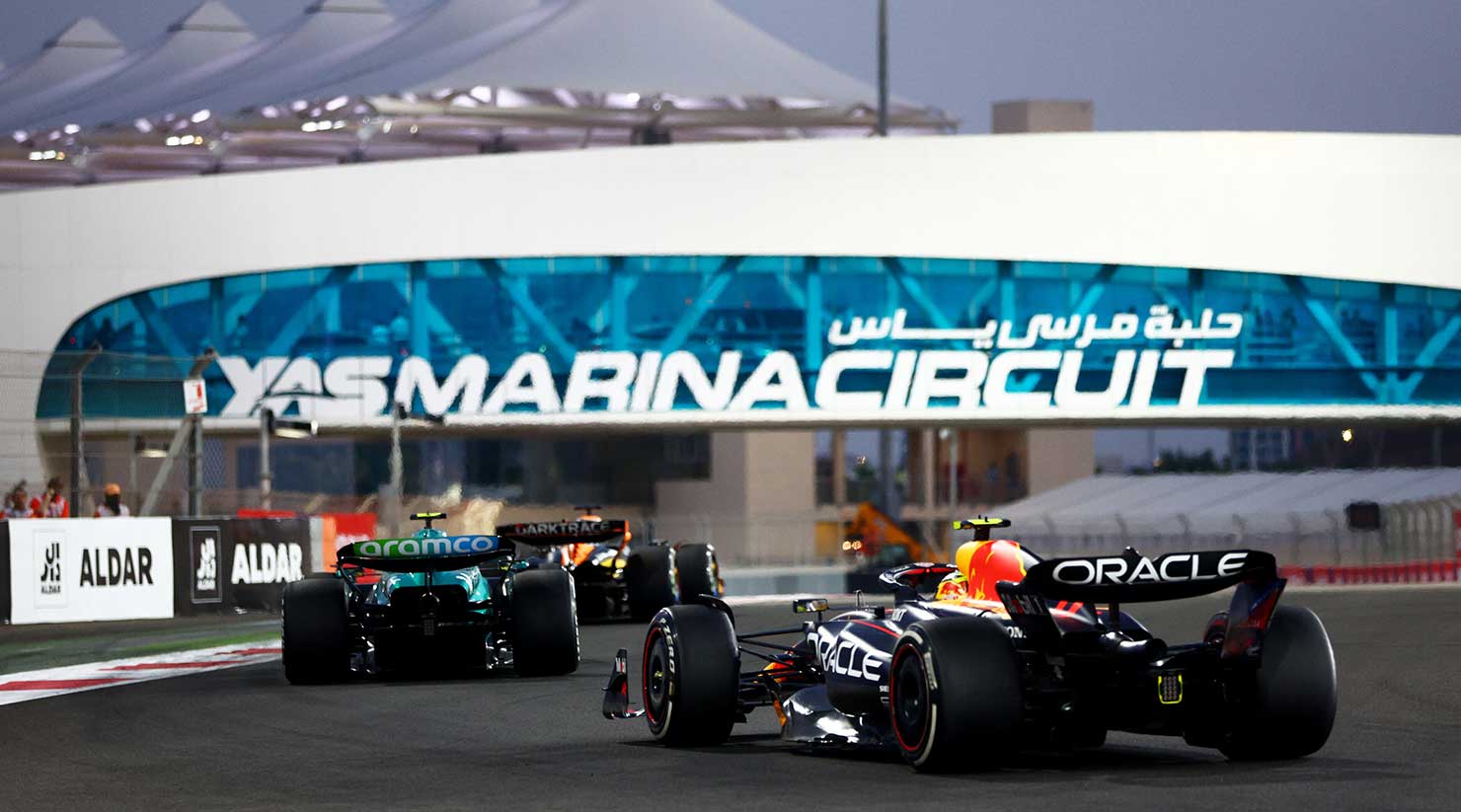
Like many modern circuits designed by Tilke, Yas Marina Circuit follows a stop-and-go layout. Two long straights followed by heavy-braking corners provide the circuit’s primary overtaking opportunities and are among its defining characteristics.
Originally, the circuit featured several medium-speed corners and gained a reputation for being difficult to overtake on. Ahead of the 2021 event, however, significant modifications were made, including the simplification of the hairpin section, removal of a chicane, and widening of several corner radii. These changes increased average speeds and created more overtaking opportunities.
As a result of the redesign, the circuit length was reduced from 5.554 km to 5.281 km, while the number of corners decreased from 21 to 16.
The lap begins with Turn 1, a 90-degree left-hander at the end of the main straight and one of the circuit’s principal overtaking zones. Drivers then accelerate through a fast section before approaching the Turn 5 hairpin. The 1.2 km back straight that follows is among the longest on the calendar, and with the removal of the former chicane, both the straight itself and the braking zone into Turn 6 have become the circuit’s most significant overtaking opportunities.
Sector 3 features the circuit’s most distinctive section around the Yas Marina hotel complex. F1 cars pass beneath the illuminated structure in one of the sport’s most unique architectural settings before accelerating through the final corners and returning to the main straight.
Memorable battles
As the traditional season finale, the Abu Dhabi Grand Prix has been the setting for numerous championship-deciding battles.
In 2010, the Drivers’ Championship fight between Fernando Alonso (Ferrari), Mark Webber and Sebastian Vettel (Red Bull), and Lewis Hamilton (McLaren) came down to the final race. Vettel entered the weekend third in the standings but produced a dominant pole-to-flag victory to secure the championship and become the youngest World Champion in F1 history at the time.
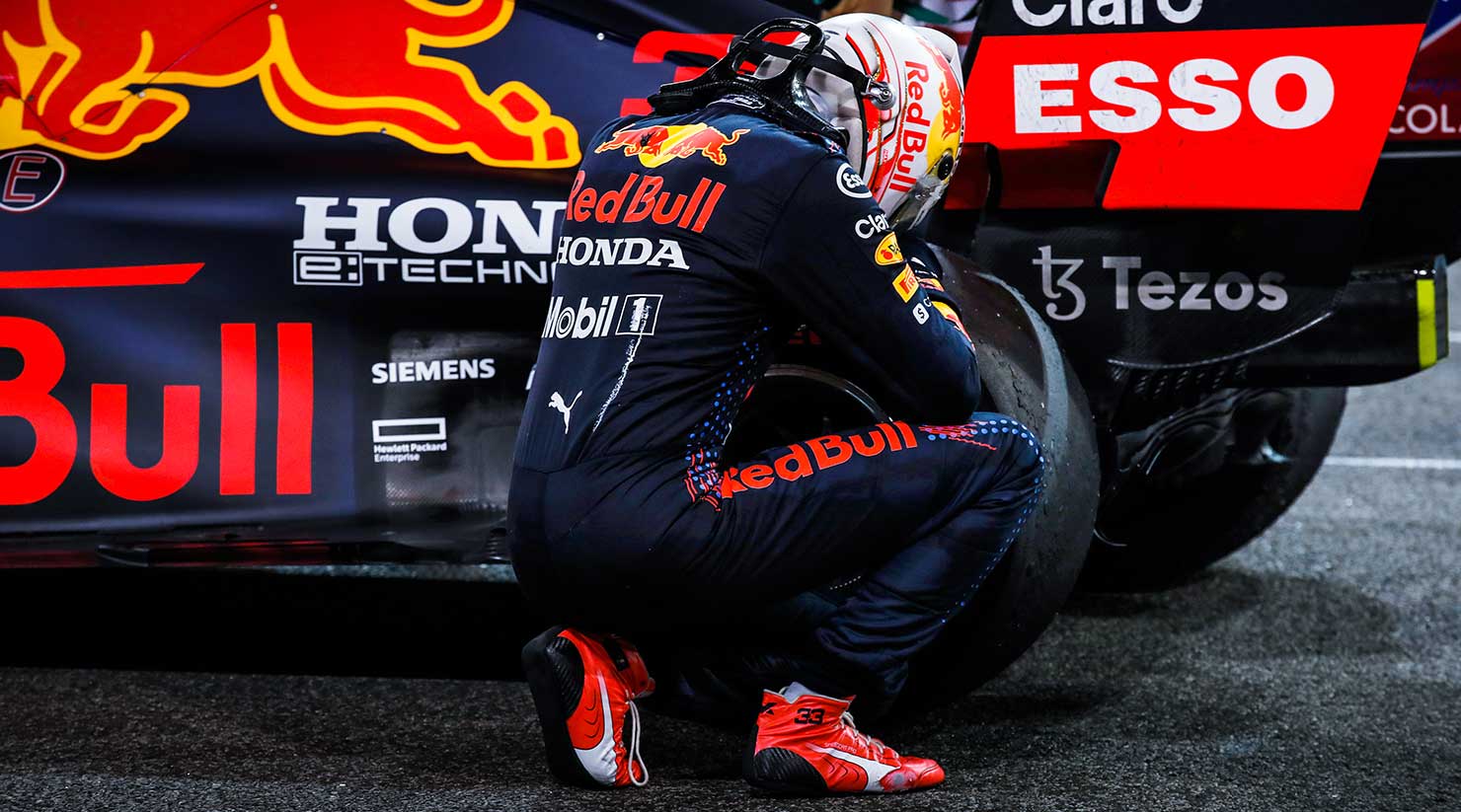
In 2021, one of the closest championship battles in the history of the F1 championship reached its dramatic conclusion in Abu Dhabi. Red Bull Honda’s Max Verstappen and Mercedes driver Lewis Hamilton arrived at the final race level on points.
Verstappen started from pole position but lost the lead to Hamilton at the start, and Hamilton controlled much of the race. With victory seemingly assured, a late-race incident brought out the Safety Car. Verstappen seized the opportunity to pit for fresh tires and, following the restart on the final lap, overtook Hamilton to claim victory and secure his first World Championship.
Honda had already announced that 2021 would be its final season of F1 involvement at the time, making the championship victory a fitting conclusion to Honda’s fourth era in the sport. Although the race generated extensive debate regarding Safety Car procedures, it remains one of the most memorable moments in Verstappen’s career and the starting point of his four-championship-winning run that would establish him as one of the dominant figures of modern F1.
- Fastest pole position lap
- 1 min 22.109s
Max Verstappen (Red Bull, 2021)
- Fastest Honda qualifying lap
- 1 min 22.109s
Max Verstappen (Red Bull, 2021, Pole Position)
- Fastest race lap
- 1 min 25.637s
Kevin Magnussen (Haas, 2024)
- Fastest Honda race lap
- 1 min 26.103s
Max Verstappen (Red Bull, 2021, Fastest Lap)
* Data based on the 5.281 km circuit configuration.
Honda Records
Explore Honda’s history of challenges and achievements across iconic circuits,
backed by race performance data.