Circuit info
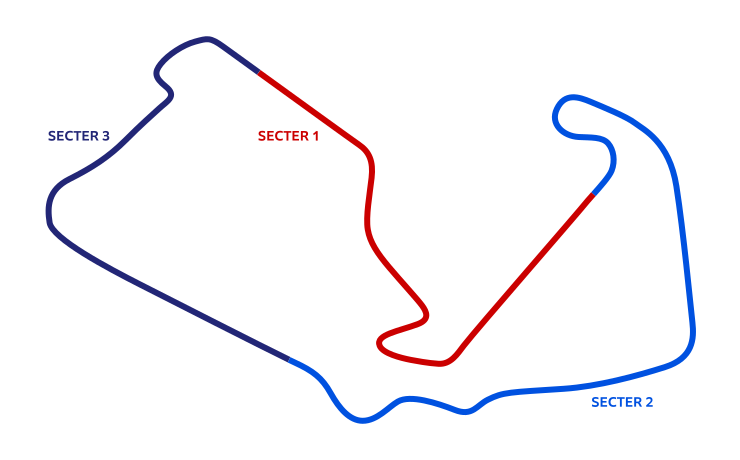

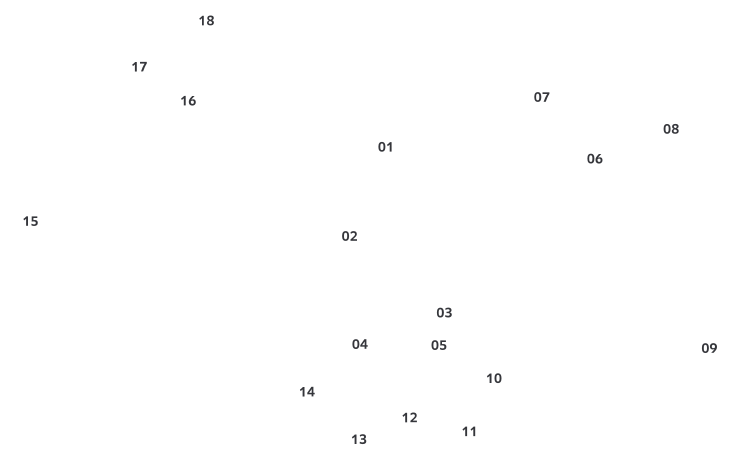
- Circuit Length
- 5.891 km
- First Grand Prix
- 1950
- Number of Laps
- 52
- Race Distance
- 306.198km
Location
- Address
- Silverstone Circuit, Towcester, Northamptonshire, NN12 8TN, United Kingdom
- Google Maps
History of the Circuit
Silverstone Circuit, host of the British Grand Prix, is widely regarded as one of the spiritual homes of Formula One, known for its history, tradition, and many memorable battles.
Silverstone originally began life as a Royal Air Force airfield during World War II. After the war, a circuit was created using the former runways and perimeter roads, and in 1950 it hosted the inaugural round of the first-ever Formula One World Championship: the British Grand Prix.
The British Grand Prix is one of the few events to have been held every year since 1950. Over the years, the race moved between Silverstone, Aintree, and Brands Hatch before becoming permanently established at Silverstone from 1987 onward.
Early Silverstone was characterized by its wide airfield-derived layout and extremely high speeds. Corners such as Woodcote, Copse, and Stowe became famous as high-speed turns, and for many years the circuit was known as a “circuit of courage.” At the same time, safety concerns also increased, leading to the addition of a chicane at the ultra-fast Woodcote section in 1975. This marked a symbolic step in Silverstone’s transition from a simple high-speed layout to a modern Grand Prix circuit built to evolving safety standards.
In 1991, Silverstone underwent major redevelopment. To improve safety, reduce top speeds, and enhance spectator visibility, the circuit was transformed from a pure high-speed track into a modern medium- and high-speed technical circuit. The Maggotts-Becketts-Chapel sequence became a flowing high-speed S section, while the final sector was redesigned into an infield section incorporating Bridge, Priory, Brooklands, and Luffield. In 1994, Abbey Corner was modified into a chicane configuration as part of continued efforts to reduce speeds and improve safety in response to the increasing performance of Formula One cars.
Another major redevelopment followed in 2010 with the introduction of the Arena section, extending the lap length by approximately 750 m to its current 5.891 km. The new section introduced a slower technical sequence designed in part to create more overtaking opportunities. Some drivers expressed concern that the circuit’s traditional high-speed character was being diluted, but the modern blend of fast and slow sections has since become established as part of Silverstone’s identity.
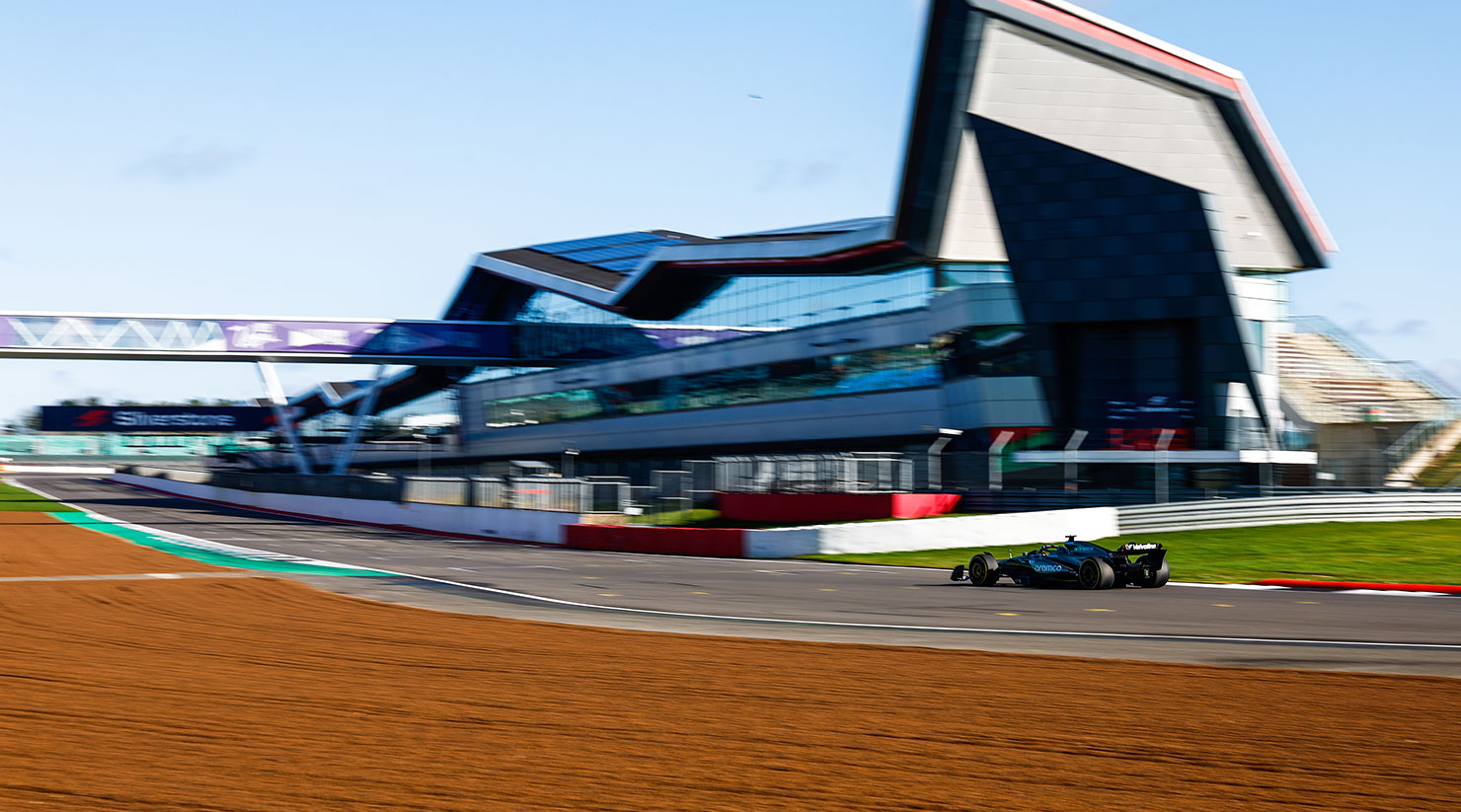
Circuit characteristics
Although Silverstone is no longer considered the ultra-high-speed circuit it once was, its defining features remain its long straights and high-speed corners. Copse and Stowe continue to test driver commitment while also highlighting the aerodynamic and power performance of the cars.
The redesigned Maggotts-Becketts-Chapel complex is widely regarded as one of the premier high-speed direction-change sections in modern Formula One. The stadium section also provides excellent spectator visibility, making it one of the circuit’s most popular viewing areas.
Aerodynamic performance is especially important at Silverstone, where speed and stability through both the straights and high-speed corners are key to achieving competitive lap times. At the same time, stability through chicanes and slower corners is also required, making downforce balance particularly challenging.
The circuit is also known for high tire degradation caused by sustained high-speed cornering loads. As Silverstone is predominantly clockwise, the left-front tire and rear tires are placed under particularly heavy stress, making tire management and race strategy important factors throughout the race weekend.
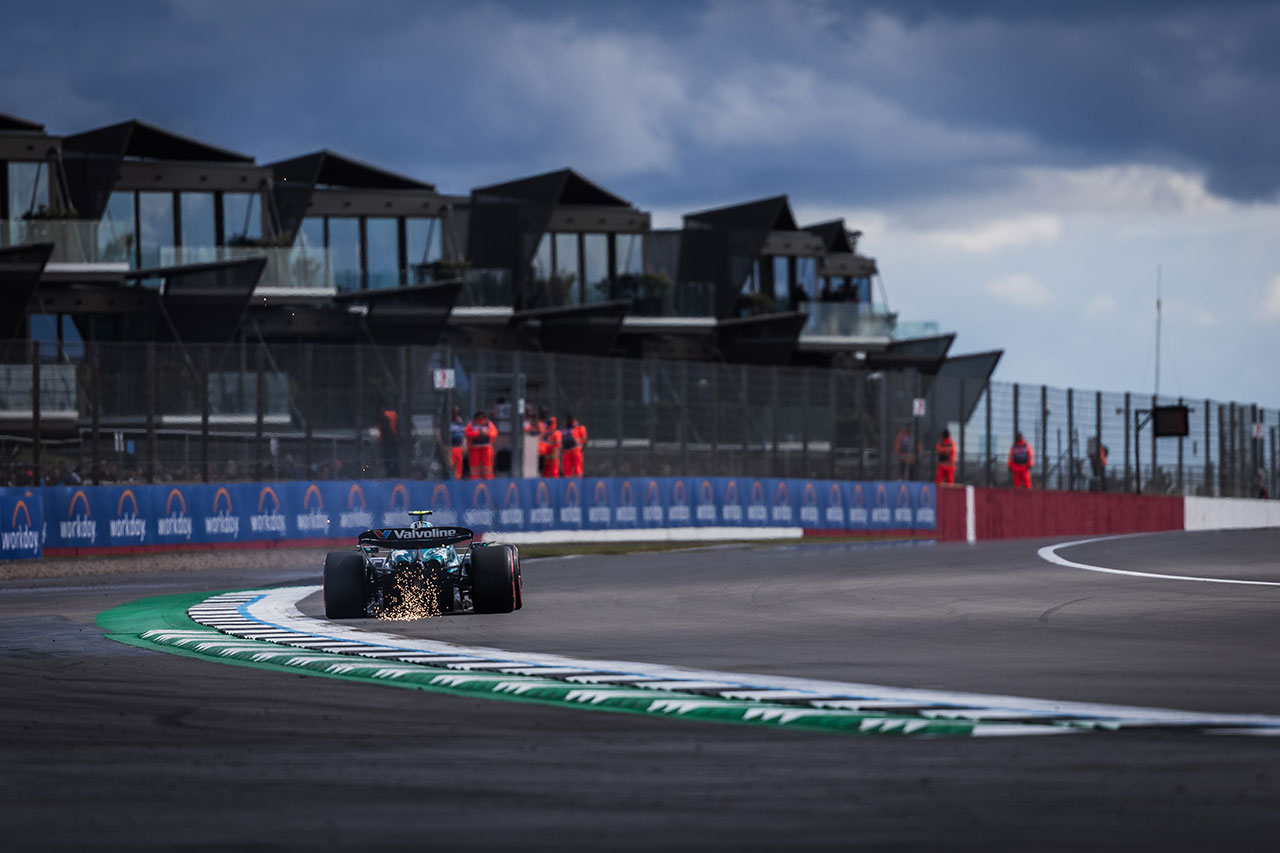
Maggots - Becketts
Memorable battles
During the 1980s, Silverstone became synonymous with high-speed Formula One racing, producing many iconic moments during the turbo era.
In 1987, the Honda V6 turbo RA167E dominated the championship with overwhelming power, and the British Grand Prix became one of the defining races of that season. Williams Honda had established itself as the benchmark from the opening rounds, with teammates Nelson Piquet and Nigel Mansell engaged in an intense battle for supremacy.
At Silverstone, Piquet claimed pole position, but Mansell mounted a dramatic late-race charge to take the lead in the closing stages, securing a Williams Honda one-two finish.
Honda also supplied engines to Lotus that season, with drivers Ayrton Senna and Satoru Nakajima. Senna qualified third and finished third in the race. Nakajima started from 12th on the grid but delivered a strong and consistent drive, gaining positions throughout the race. With several leading cars encountering trouble late on, he ultimately took the checkered flag in fourth place.
As a result, the 1987 British Grand Prix became a historic race in which Honda-powered cars finished first through fourth.
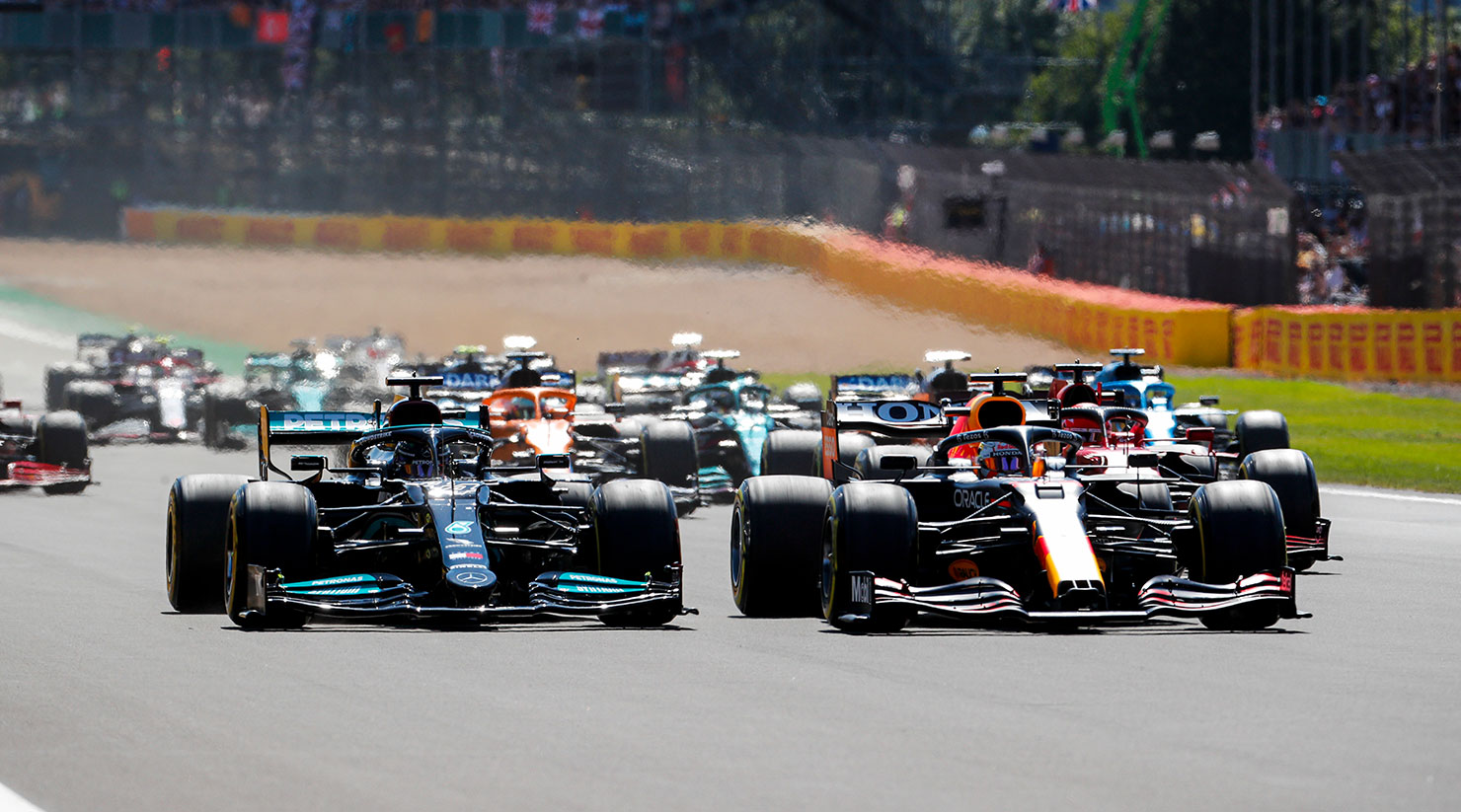
The 2021 British Grand Prix became another defining Silverstone race, symbolizing the intense championship battle between Max Verstappen (Red Bull Honda) and Lewis Hamilton (Mercedes).
Verstappen arrived at Round 10 leading the championship after winning five races earlier in the season. Starting from pole position, he maintained the lead at the start, but on the opening lap he collided with Hamilton at Copse Corner while defending the position. Verstappen’s car crashed heavily into the barriers, forcing him to retire immediately.
Hamilton went on to win the race. In a season that ultimately saw Verstappen secure the World Championship, the collision at Silverstone left a lasting impression as one of the most intense moments of the title fight.
- Fastest pole position lap
- 1 min 24.303s
Lewis Hamilton (Mercedes), 2020
- Fastest Honda qualifying lap
- 1 min 24.892s
Max Verstappen (Red Bull), 2025 — Pole position
- Fastest race lap
- 1 min 27.097s
Max Verstappen (Red Bull), 2020
- Fastest Honda race lap
- 1 min 27.097s
Max Verstappen (Red Bull), 2020 — Fastest lap
* Data based on the current 5.891 km circuit layout.
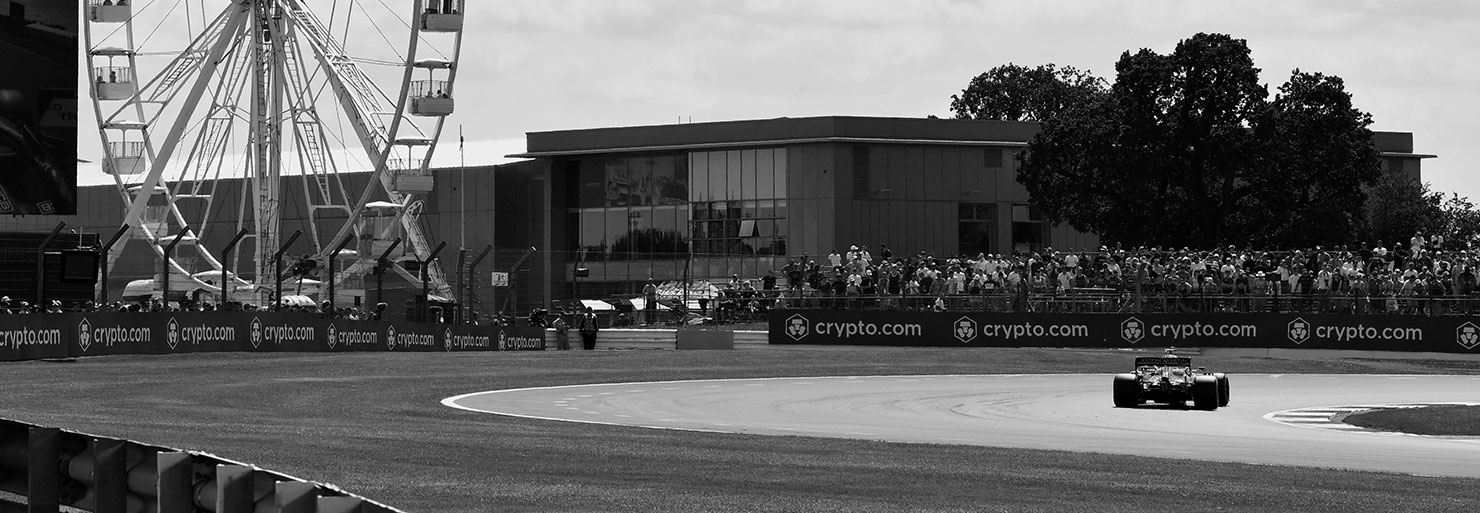
Honda Records
Explore Honda’s history of challenges and achievements across iconic circuits,
backed by race performance data.