Circuit info
- Circuit Length
- 4.326 km
- First Grand Prix
- 1970
- Number of Laps
- 71
- Race Distance
- 307.018km
Location
- Address
- Red Bull Ring Str. 1, Spielberg 8724, Austria
- Google Maps
History of the Circuit
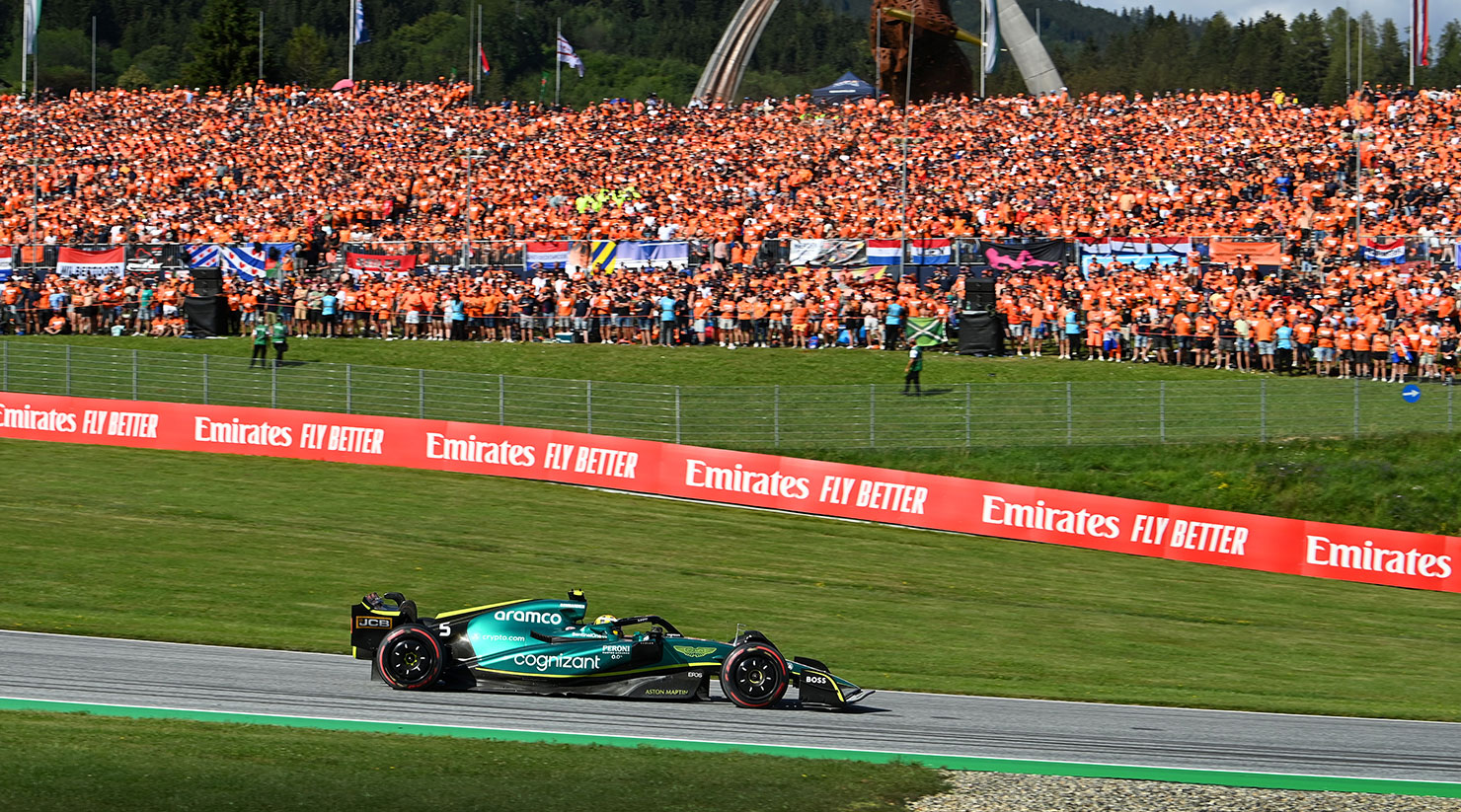
The roots of the Red Bull Ring, host of the Austrian Grand Prix, trace back to the Österreichring, which opened in 1969. The Formula One World Championship was first held there in 1971. The circuit became known as an ultra-high-speed track where cars raced through forested surroundings, with Formula One cars of the era reaching top speeds close to 300 km/h.
At the same time, the narrow track width and insufficient safety features, including limited guardrails, contributed to a number of major accidents. As a result, Formula One stopped racing there after the 1987 event.
Several years later, in the mid-1990s, the circuit underwent major redevelopment led by renowned circuit designer Hermann Tilke. Renamed the A1-Ring, the track was shortened and redesigned with more stop-and-go corners to encourage overtaking, returning to the Formula One calendar in 1997.
Formula One continued at the A1-Ring until 2003 before another hiatus followed. Later, Red Bull founder and Austrian businessman Dietrich Mateschitz purchased the circuit and carried out extensive redevelopment of both the track and facilities. Renamed the Red Bull Ring, it returned to the Formula One World Championship calendar in 2014.
Circuit characteristics
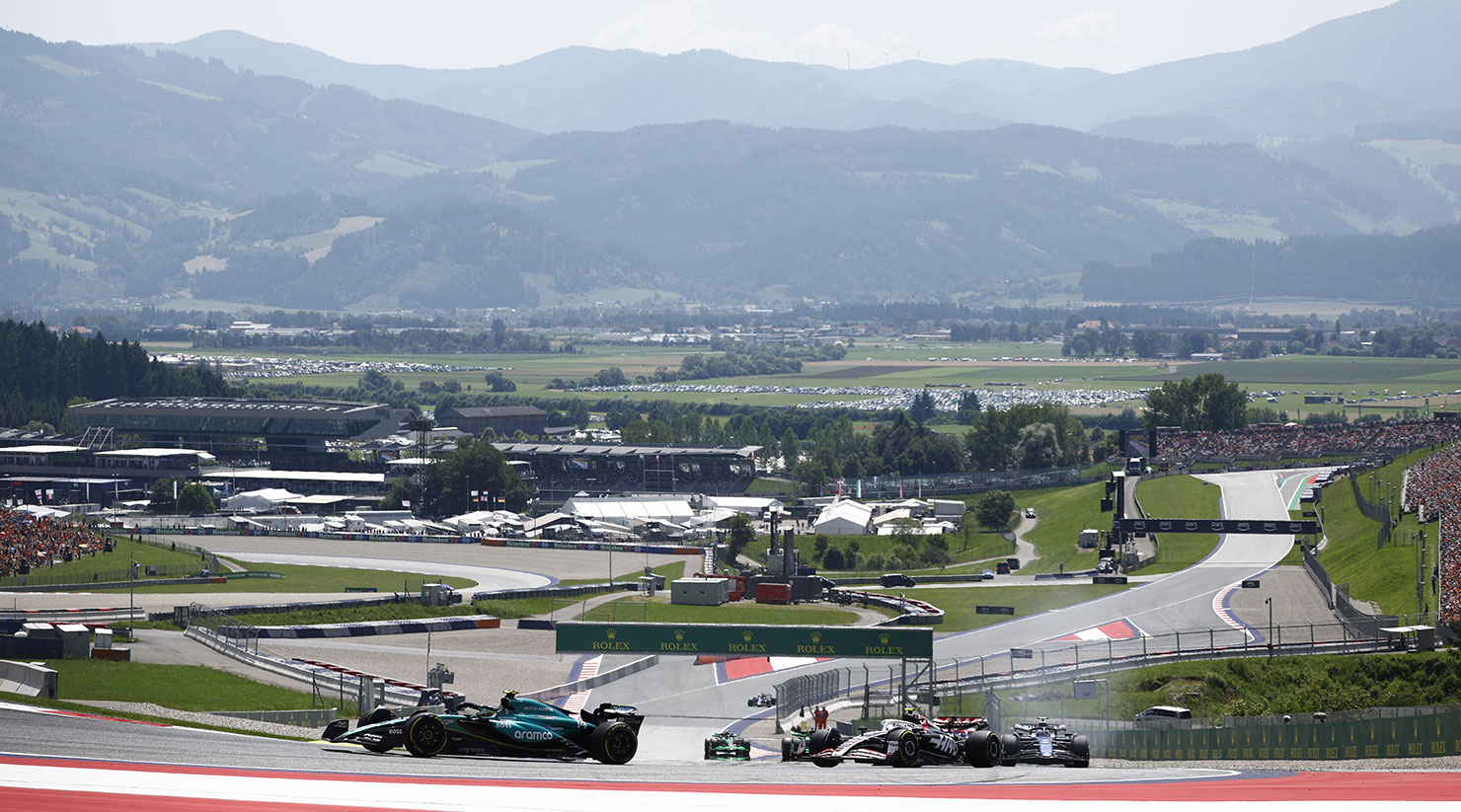
The Red Bull Ring is set in scenic surroundings, bordered by the Alps and open grasslands, and is widely regarded as one of the most picturesque circuits on the Formula One calendar.
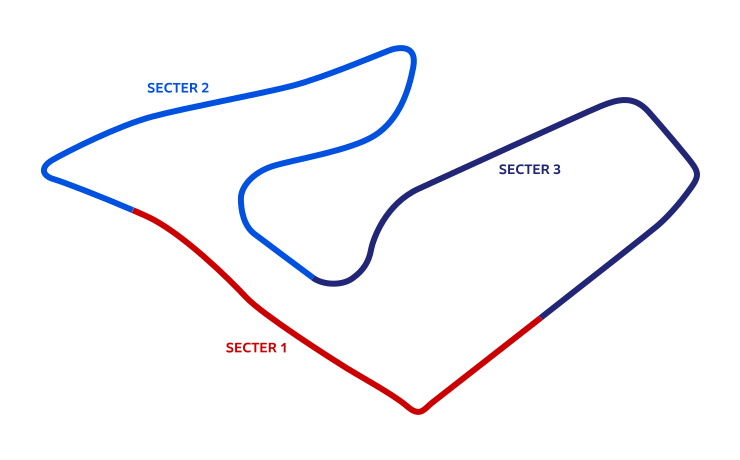
At 4.326 km, it is one of the shortest circuits used in Formula One, featuring only 10 corners, with lap times typically around 1 min 05s. Built into a forested hillside, the circuit sits at an altitude of approximately 700 m and features elevation changes of around 65 m throughout the lap.
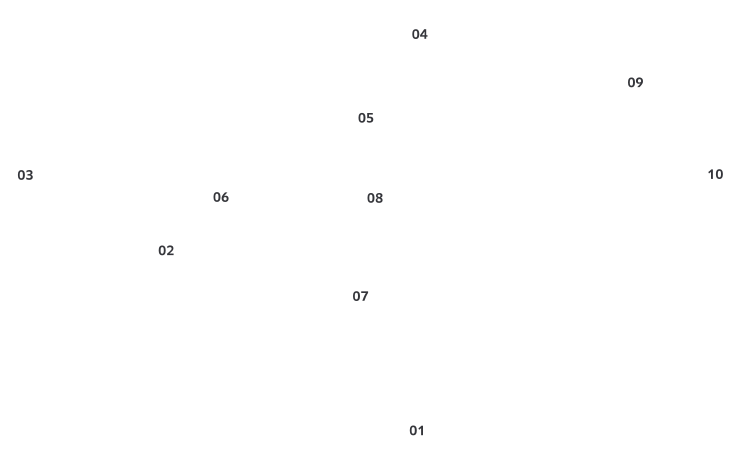
Turn 1 is a near right-angle right-hander, and because the run from the start line is relatively short, incidents and congestion are common immediately after the start. During the lap, a clean exit is also important to maximize speed on the uphill section that follows.
Partway up the hill is the gentle left-hand Turn 2, before the circuit reaches its highest point at Turn 3. This is the most common overtaking point at the Red Bull Ring. Drivers brake heavily from high speed into the tight right-hander, where the uphill approach limits visibility and makes car control under braking particularly difficult. Because exit speed from Turn 3 strongly influences the downhill section that follows, the corner often plays a decisive role in the outcome of battles during the race.
From Turn 3 onward, the circuit descends downhill. The sweeping right-hand Turn 4 is also a frequent overtaking point. From there, the downhill section continues through to Turn 10, forming a rhythmic high-speed sequence where overtaking is more difficult. However, maintaining momentum through this section is essential for setting up overtaking opportunities into Turn 1.
The final corner, Turn 10, is particularly well known for repeated track limits violations. The corner also features relatively aggressive curbing, which can cause significant damage if drivers run over it. The issue has been controversial in the past, and modifications continue to be made almost every year.
Memorable battles
Max Verstappen’s victory for Red Bull Honda at the 2019 Austrian Grand Prix is remembered as a turning point that signaled the beginning of the Verstappen era, while also delivering Honda’s long-awaited first victory of its fourth Formula One era and paving the way for the success that followed.
Honda had begun competing at the front of the field through its partnership with Red Bull Racing that season. At the previous round in France, Honda introduced the RA619H Spec 3, delivering a significant step in performance. By the second race after its introduction, at the Austrian Grand Prix, the RA619H demonstrated its full potential, allowing Honda to compete directly with Mercedes and Ferrari in terms of power.
Starting from second on the grid, Verstappen was expected to challenge for victory, but a poor start dropped him to seventh place. Both the large contingent of Dutch fans filling the circuit and members of the Red Bull Honda team reacted with surprise. At a circuit where overtaking at high speed is difficult, losing positions at the start appeared potentially decisive.
However, Verstappen launched a remarkable recovery drive. Early in the race he climbed back to fifth place, and after the pit-stop phase he was running fourth. In the closing laps, he completed a series of overtakes to move into second place before closing rapidly on race leader Charles Leclerc (Ferrari).
As Verstappen steadily reduced the gap, Honda switched to a high-power deployment mode to support the final attack. With three laps remaining, on Lap 69 at Turn 3, Verstappen completed the decisive overtake for the lead. He maintained the position to the finish, securing victory and triggering celebrations throughout Red Bull and Honda.
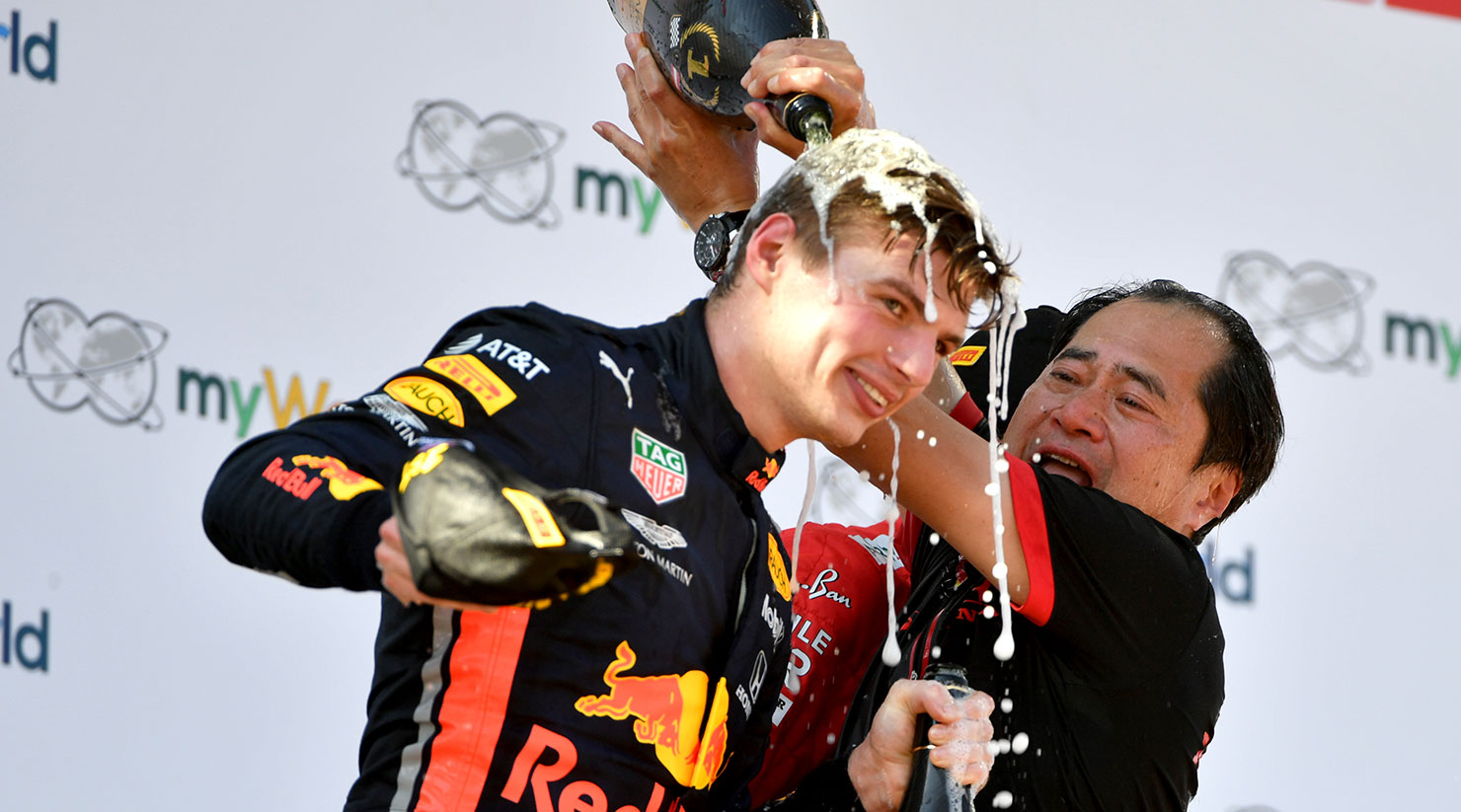
Two scenes from the podium became especially memorable for Honda: Verstappen pointing to the Honda logo on his racing suit in celebration, and Honda F1 Technical Director Toyoharu Tanabe joining him on the podium.
- Fastest pole position lap
- 1 min 03.971s
Lando Norris (McLaren), 2025
- Fastest Honda qualifying lap
- 1 min 04.926s
Liam Lawson (Racing Bulls), 2025
- Fastest race lap
- 1 min 07.924s
Oscar Piastri (McLaren), 2025
- Fastest Honda race lap
- 1 min 09.764s
Jacques Villeneuve (BAR), 2003
* Data based on the current 4.326 km circuit layout.
Honda Records
Explore Honda’s history of challenges and achievements across iconic circuits,
backed by race performance data.