Circuit info
- Circuit Length
- 4.927 km
- First Grand Prix
- 2008
- Number of Laps
- 62
- Race Distance
- 305.337km
Location
- Address
- Marina Bay, Singapore
- Google Maps
History of the Circuit
The origins of the Singapore Grand Prix date back to 1961, when Formula Libre races were held at the Thomson Road Circuit. The event was known as the Malaysian Grand Prix from 1962 to 1965, but following Singapore’s independence in 1965, it reverted to the Singapore Grand Prix in 1966 and continued until 1973.
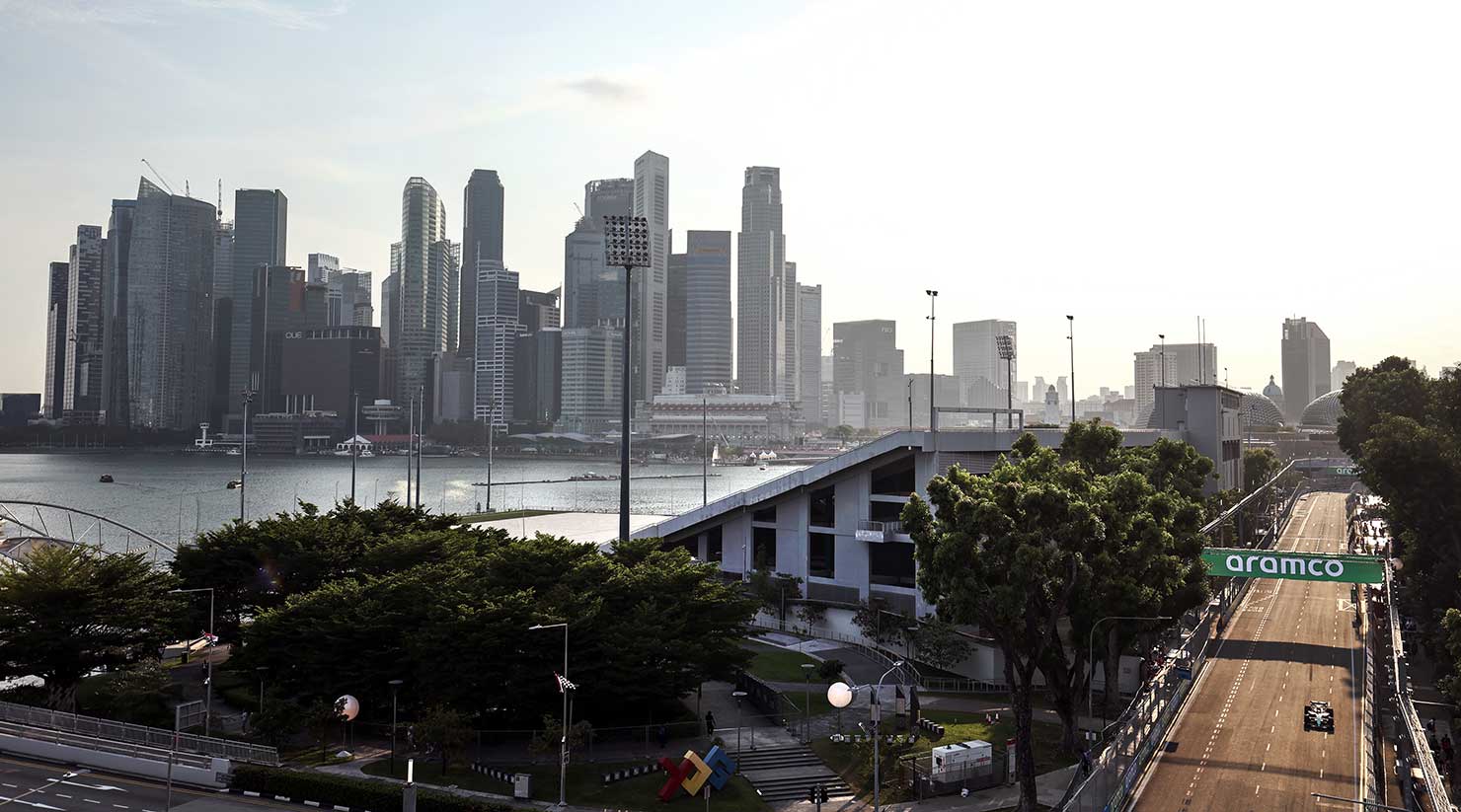
In the 2000s, the Singapore government began pursuing a round of the FIA Formula One World Championship™ and announced in 2007 that Formula 1 would arrive the following year. The Marina Bay Street Circuit, a temporary street course constructed around Singapore’s downtown waterfront district, debuted in 2008 as the venue for Formula 1’s first-ever night race.
Designed in part to attract international tourism, the event quickly became a major economic and promotional success. The combination of Formula 1’s first night race and Singapore’s iconic cityscape created one of the sport’s most distinctive spectacles.
Circuit characteristics
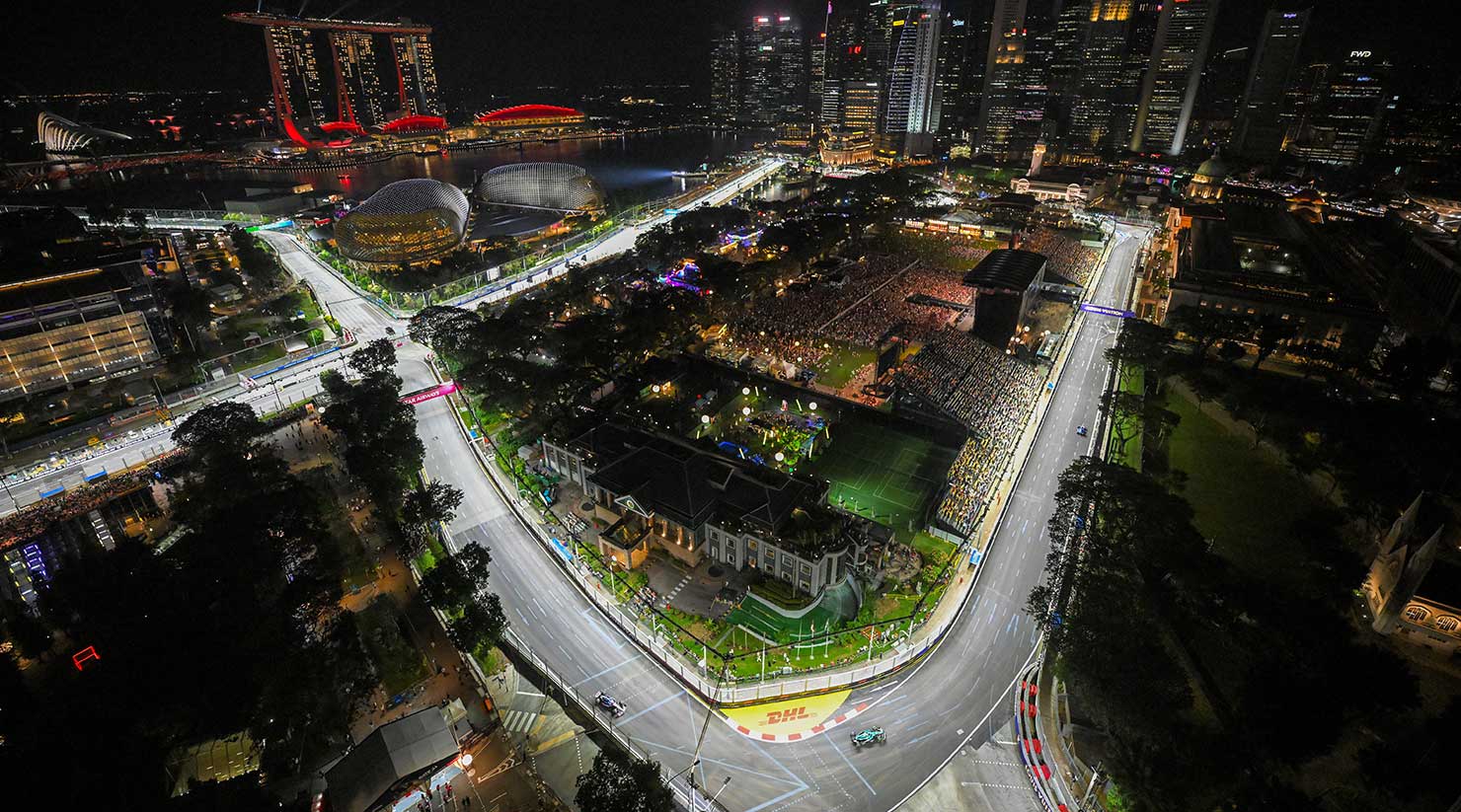
Constructed around the Marina Bay waterfront district, the circuit features numerous long acceleration zones and differs significantly from the tight, low-speed characteristics commonly associated with street circuits such as Monaco.
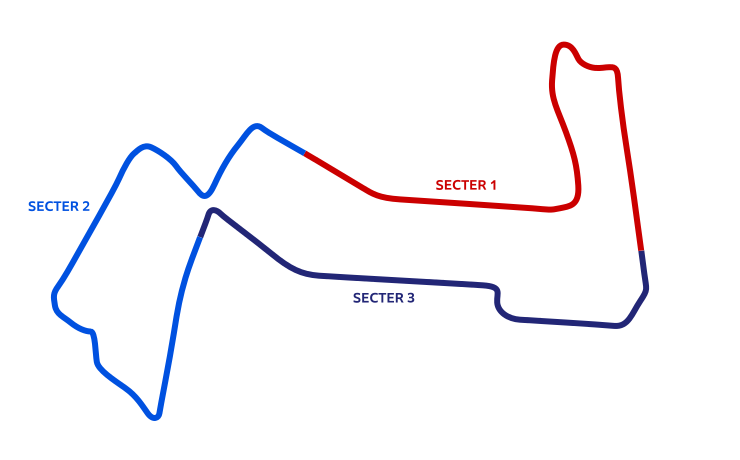
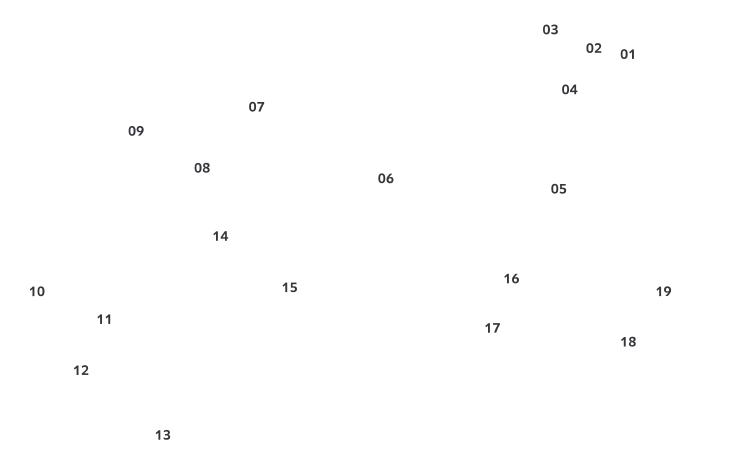
After the start-finish straight, Turns 1 and 2 form a tight chicane-like sequence before leading immediately into the 180-degree Turn 3 hairpin. Drivers then accelerate toward the medium-speed Turn 5 before reaching one of the fastest sections of the circuit, which culminates in the left-hand Turn 7. This corner provides the circuit’s primary overtaking opportunity.
Turns 8 and 9 are 90-degree intersections typical of a city street circuit, while Turn 10, known as the Singapore Sling, was originally a challenging chicane. Following a circuit revision in 2013, it was transformed into a single left-hand corner. Turn 13 is a tight hairpin known as the Merlion Hairpin.
Sector 3 underwent significant redevelopment ahead of the 2023 event. Previously, Turns 16 through 19 formed a slow and highly technical sequence, but this section was replaced by a straight. As a result, the number of corners was reduced from 23 to 19, creating a faster layout that remains in use today.
The Singapore Grand Prix is widely regarded as one of the most physically demanding races of the season. In addition to the challenges inherent to a street circuit—narrow track widths, close walls, and relatively low grip levels—drivers must contend with extreme heat and humidity. Even though the race takes place at night, temperatures typically remain around 30°C, while humidity often exceeds 80 percent. Combined with a race duration approaching two hours, these conditions place enormous physical demands on the drivers.
Memorable battles
The inaugural Singapore Grand Prix in 2008 produced one of the most controversial moments in Formula 1 history. Fernando Alonso claimed victory for Renault after a Safety Car period triggered by his teammate’s deliberate crash, which strategically benefited Alonso’s race.
The incident became known as “Crashgate” and evolved into one of the sport’s biggest scandals. Renault ultimately admitted that the crash had been orchestrated by team management. Managing Director Flavio Briatore and Technical Director Pat Symonds subsequently left the team, while the FIA imposed severe sanctions, including a lifetime ban for Briatore, which was later overturned, and a five-year suspension for Symonds.
The controversy continued years later, with Felipe Massa arguing that the events of the race contributed to his loss of the 2008 World Championship and pursuing legal action seeking compensation and recognition.
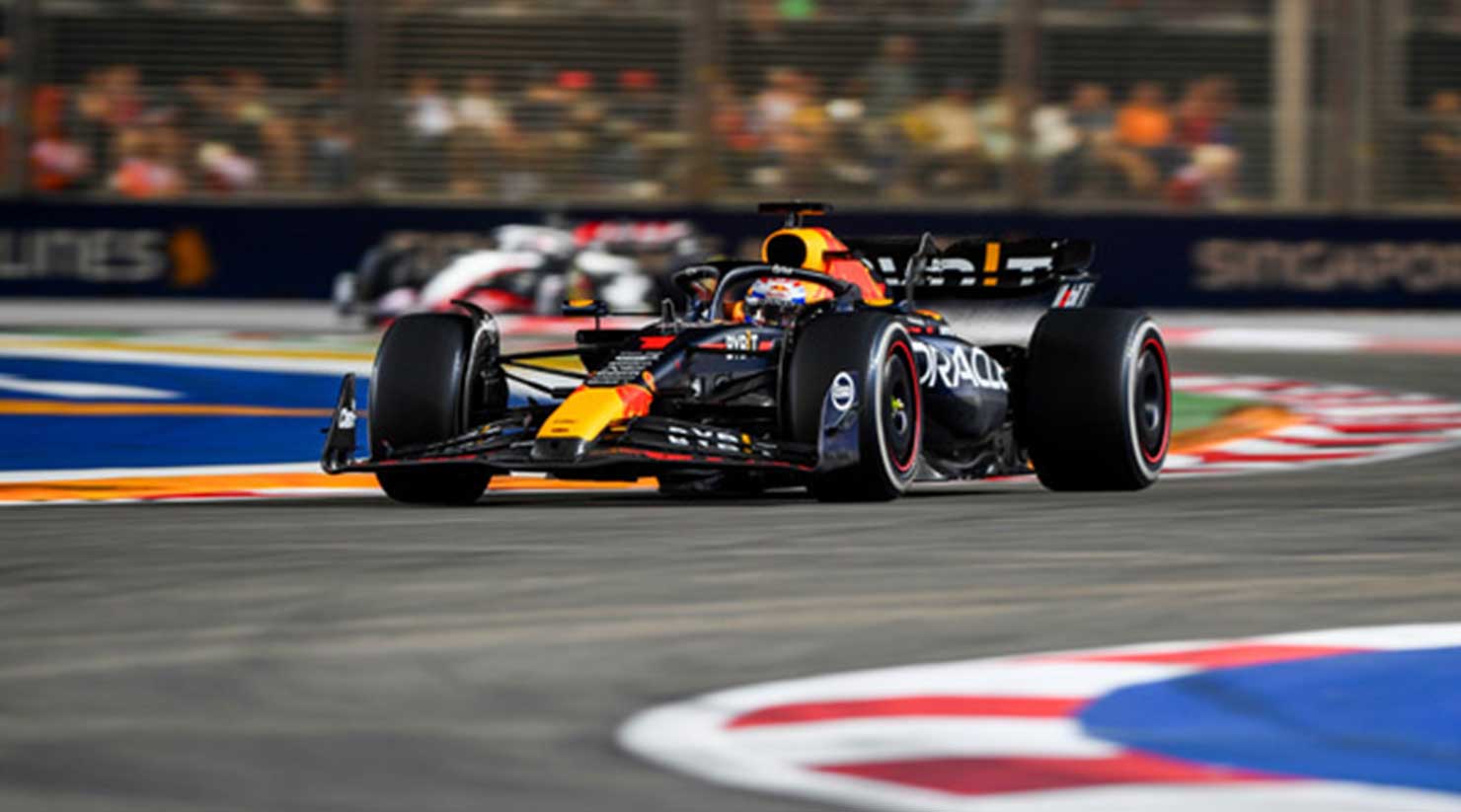
Another significant chapter in the circuit’s history came in 2023. Red Bull Honda RBPT entered the Singapore Grand Prix having dominated the season and ultimately won 21 of 22 races. Singapore was the sole event they failed to win.
The circuit’s bumpy surface and lack of high-speed corners exposed weaknesses in a car designed to excel in fast, flowing conditions. Red Bull and Max Verstappen struggled throughout both qualifying and the race, ending remarkable winning streaks of 15 consecutive victories for the team and 10 consecutive victories for Verstappen.
However, Singapore proved to be only a temporary setback. Red Bull Honda RBPT returned to dominant form immediately afterward, ultimately completing one of the most successful seasons in Formula 1® history with 21 victories from 22 Grands Prix and 19 wins for Verstappen alone.
- Fastest pole position lap
- 1 min 29.158s
George Russell (Mercedes, 2025)
- Fastest Honda qualifying lap
- 1 min 29.340s
Max Verstappen (Red Bull Honda RBPT, 2025)
- Fastest race lap
- 1 min 33.808s
Lewis Hamilton (Ferrari, 2025)
- Fastest Honda race lap
- 1 min 35.641s
Liam Lawson (Racing Bulls Honda RBPT, 2025)
* Data based on the 4.927 km circuit configuration.
Honda Records
Explore Honda’s history of challenges and achievements across iconic circuits,
backed by race performance data.