Circuit info

- Circuit Length
- 6.201 km
- First Grand Prix
- 2023
- Number of Laps
- 50
- Race Distance
- 309.958km
Location
- Address
- 260 E Harmon Ave, Las Vegas, Nevada 89119, USA
- Google Maps
History of the Circuit
Las Vegas first hosted a round of the FIA Formula One World Championship™ in 1981 under the name Caesars Palace Grand Prix. A temporary circuit was constructed in the parking lot of Caesars Palace Hotel, and the event served as the season finale in both 1981 and 1982. However, the flat and uninspiring layout struggled to attract spectators, and after just two editions the race disappeared from the F1 calendar.
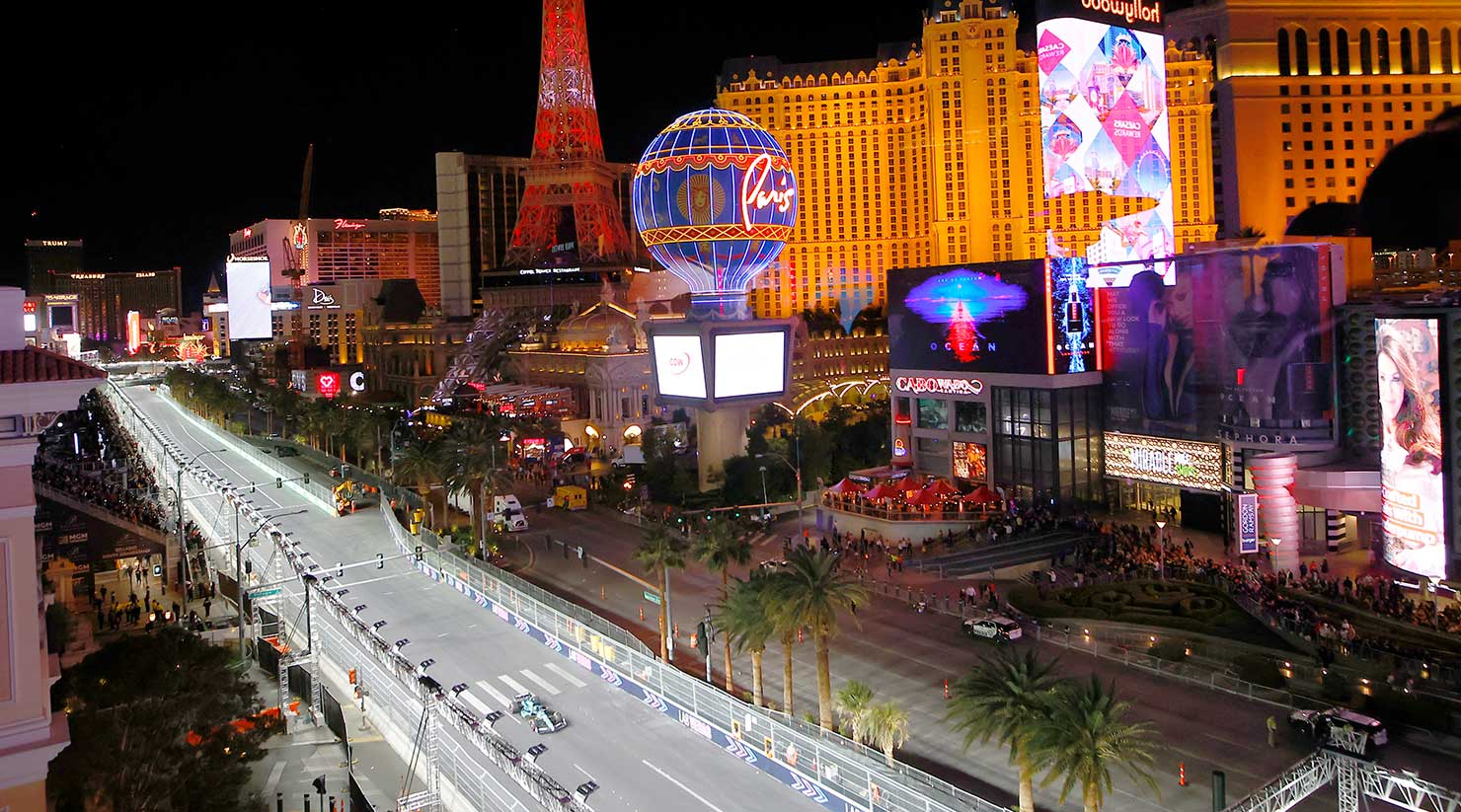
Around 40 years later, Formula 1 returned to Las Vegas in a dramatically different form. Centered on the world-famous Las Vegas Strip, a long street circuit was created through the heart of the city’s entertainment district, requiring the closure of roads surrounding casinos, theaters, and major hotels. The new Las Vegas Grand Prix made its debut in 2023 as one of the most ambitious events in modern F1.
One of its most significant aspects is that Formula One Management (FOM), the commercial rights holder of F1, became the promoter and organizer of the event. FOM invested directly in purchasing land and constructing permanent facilities, a departure from the traditional model in which local promoters host races under license. The project is widely regarded as a glimpse into a possible future business model for Formula 1.
The event also highlighted the growing importance of the United States market. Following the United States Grand Prix and the Miami Grand Prix, Las Vegas became the third F1 race in the country. The addition reflected both Formula 1’s rapidly growing popularity in the United States and the interests of manufacturers and teams seeking greater exposure in the American market.
Held on Saturday night under the lights, the Las Vegas Grand Prix features an unusual schedule. Originally contracted for five years, the agreement has since been extended through 2037.
Circuit characteristics
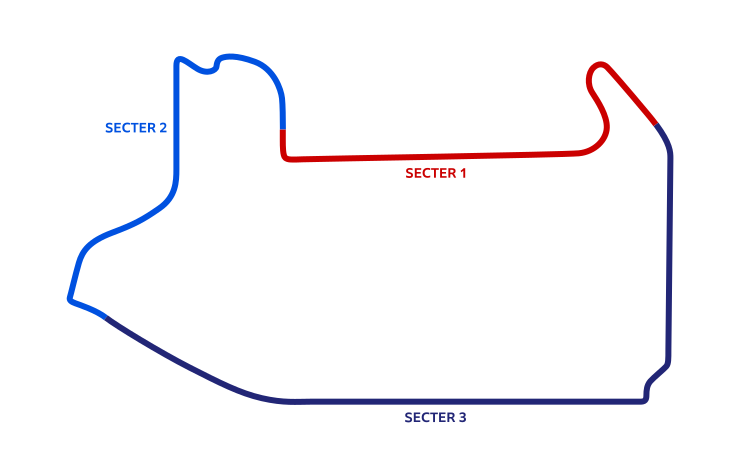
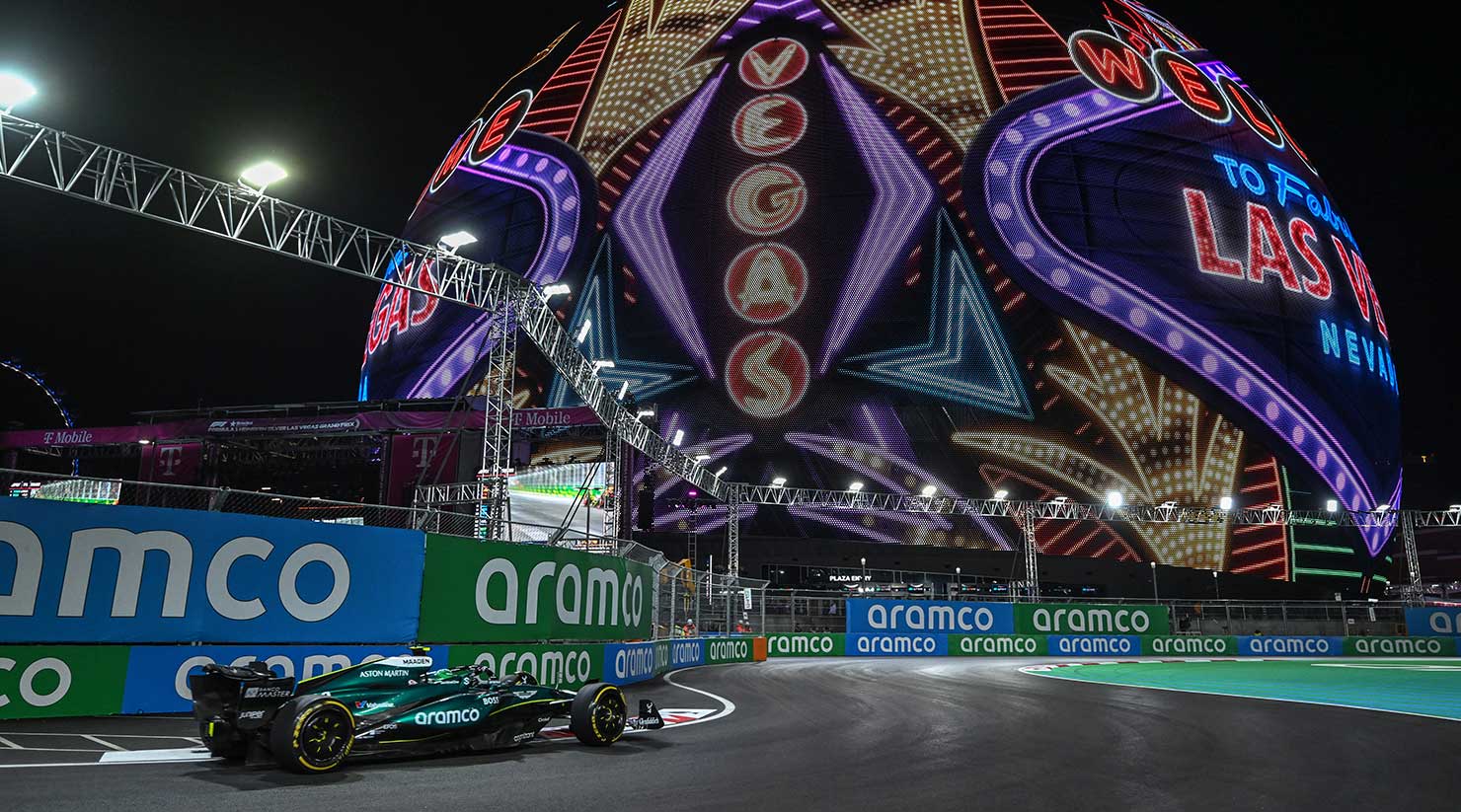
Constructed around the iconic Las Vegas Strip, the circuit is a 6.201 km street course featuring 17 corners and a 1.9 km flat-out straight. The layout combines high-speed sections with technical street-circuit elements, creating one of the most distinctive venues on the calendar.
The permanent paddock complex was built on land acquired by FOM and is regarded as one of the most modern facilities in F1.
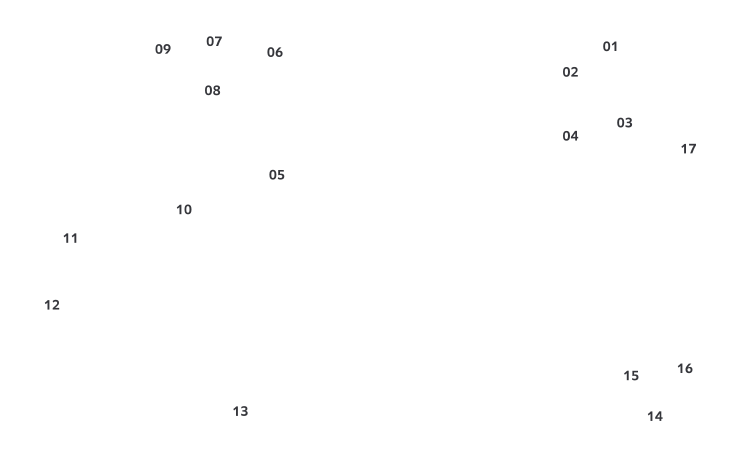
Turn 1, located shortly after the start-finish line, is a tight hairpin and an immediate overtaking opportunity. Turns 2 through 4 pass through the permanent paddock section, where drivers accelerate through a sequence of fast corners.
Upon entering the city streets, the circuit transitions into a straight leading to Turn 5, a right-angle corner that serves as another overtaking point. The course then loops around the Sphere, the giant spherical entertainment venue that has become one of the visual landmarks of the event. This section features a series of low- and medium-speed corners connected by a chicane.
Exiting Turn 12, drivers enter the circuit’s defining feature: the 1.9 km full-throttle section along the Las Vegas Strip. Lined with famous hotels and illuminated landmarks, this stretch allows cars to exceed 350 km/h while racing through the heart of the city, creating one of the most spectacular sights in modern Formula 1.
At the end of the straight, drivers brake heavily for Turn 14 before negotiating the flowing Turns 15 and 16 and returning to the main straight.
Although the circuit features a very high percentage of full-throttle zones, it also includes numerous slow-speed street-circuit corners, making setup compromises difficult. The nighttime conditions add another challenge, as low ambient temperatures and the long straights can make it difficult to keep tires and brakes within their optimal operating windows.
Memorable battles
Since returning in 2023, the Las Vegas Grand Prix has quickly established itself as one of the most unique events on the F1 calendar. The 2026 edition marks the fourth running of the race in its modern form.
The inaugural 2023 event was immediately memorable when a loose manhole cover in the street section caused significant damage to a car during the opening minutes of Free Practice 1. Inspecting and securing every manhole cover around the circuit delayed the schedule by more than two hours, forcing Free Practice 2 to begin late at night. Due to security concerns, spectators were unable to attend the session, creating one of the most unusual incidents in recent F1 history.
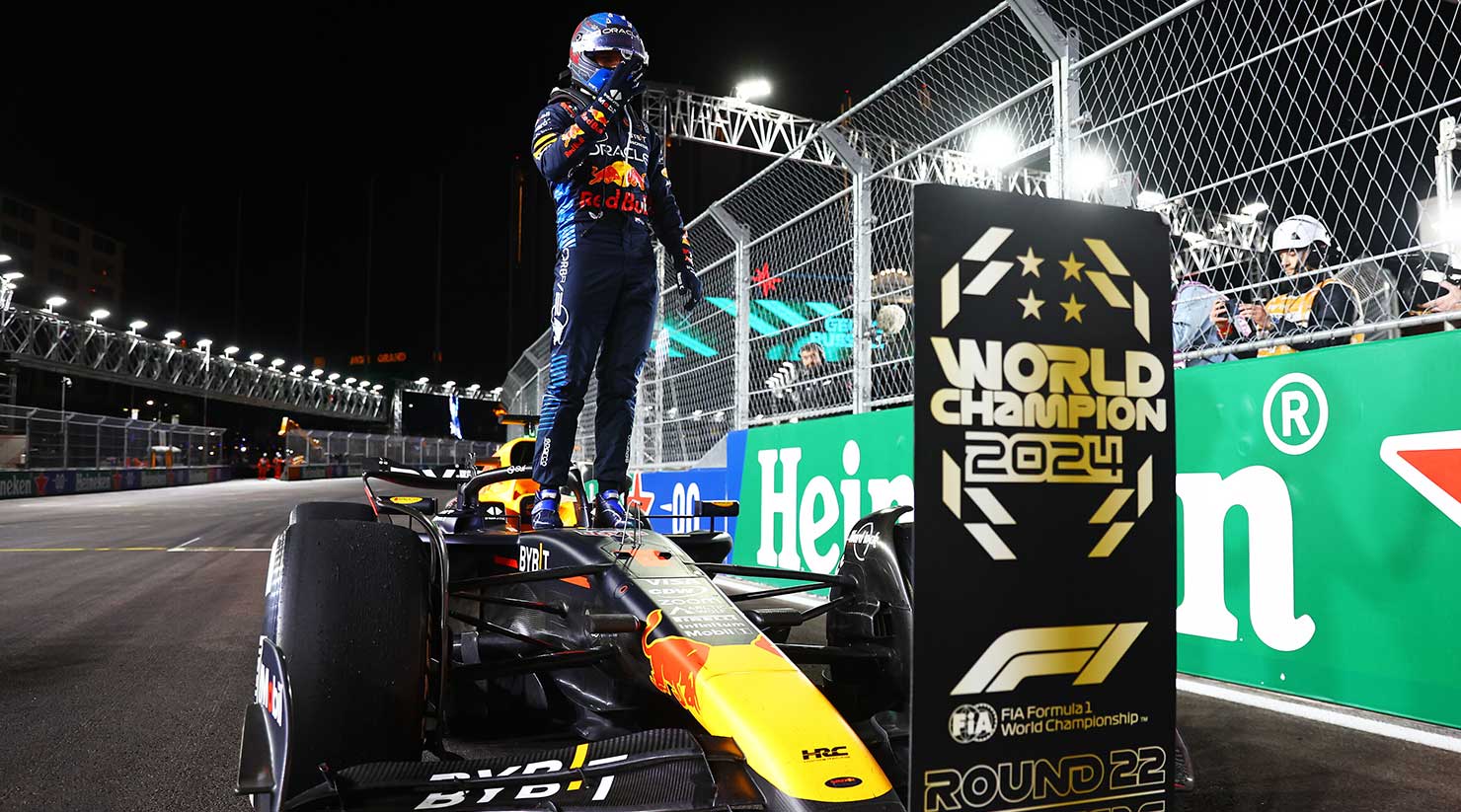
With its emphasis on straight-line speed, the circuit places considerable importance on power unit performance. Max Verstappen, driving for Red Bull with Honda power unit technology support, claimed victories in 2023 and 2025. Although he did not win in 2024, that race proved decisive in securing another Drivers’ Championship title.
The combination of intense high-speed racing and the unique atmosphere of a nighttime street race through one of the world’s most famous entertainment districts has made Las Vegas a standout event. Attention now turns to how the circuit will challenge teams and drivers under the regulations introduced in 2026.
- Fastest pole position lap
- 1 min 32.312s
George Russell (Mercedes, 2024)
- Fastest Honda qualifying lap
- 1 min 32.797s
Max Verstappen (Red Bull, 2024)
- Fastest race lap
- 1 min 33.365s
Max Verstappen (Red Bull, 2025)
- Fastest Honda race lap
- 1 min 33.365s
Max Verstappen (Red Bull, 2025, Fastest Lap)
* Data based on the 6.201 km circuit configuration.
Honda Records
Explore Honda’s history of challenges and achievements across iconic circuits,
backed by race performance data.