Circuit info
- Circuit Length
- 6.174 km
- First Grand Prix
- 2021
- Number of Laps
- 50
- Race Distance
- 308.45 km
Location
- Address
- طريق الكورنيش،، الشاطئ،, Jeddah 23512 SaudiArabia
- Google Maps
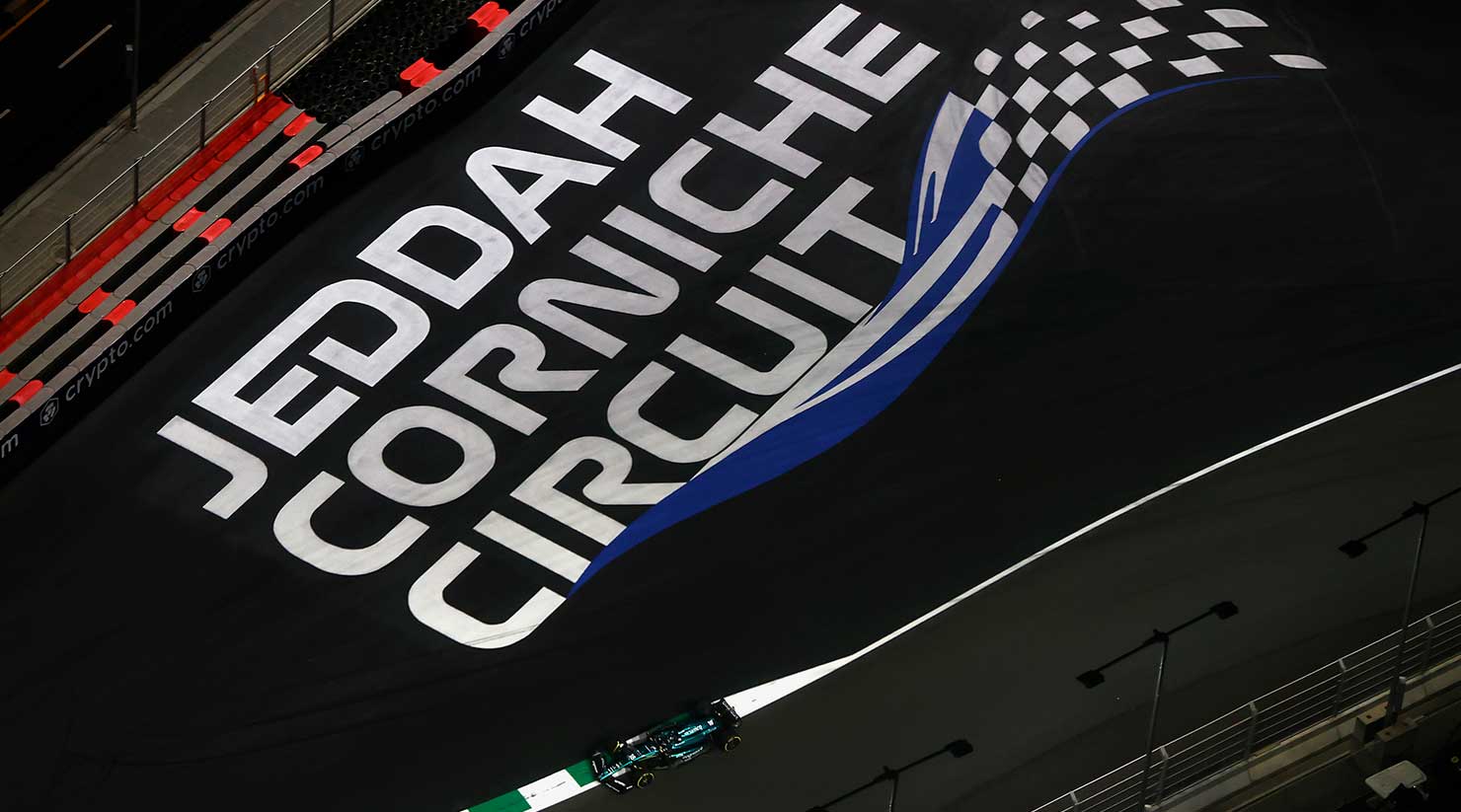
History of the Circuit
From the late 2010s, Saudi Arabia began attracting a succession of major international motorsports events, including Formula E and the Dakar Rally, with the ultimate goal of hosting the FIA Formula One World Championship™. Under the Saudi government’s Vision 2030 economic and social reform program, the expansion of sports, entertainment and tourism is one of the key priorities, with motorsports events and an F1 Grand Prix forming part of this initiative.
On November 5, 2020, F1 officially announced that the Saudi Arabian Grand Prix would be held from 2021. The venue selected was Jeddah, a port city on the Red Sea in western Saudi Arabia. Along the city’s coastal Corniche district, a circuit unlike almost anything previously seen in F1 began to take shape.
F1 initially studied satellite imagery of Jeddah and its surrounding areas and developed several potential layouts. After extensive simulation work, a delegation visited Saudi Arabia in January 2020. During the site survey, Ross Brawn and other F1 representatives focused their attention on the Corniche district, approximately 12 km north of central Jeddah.
The long, narrow area facing the Red Sea contained parking areas, open land, lagoons and coastal roads. Most importantly, unlike existing street circuits, it offered sufficient space to incorporate long, high-speed corners.
Rather than the conventional stop-and-go character of a street circuit, the concept was to create a street course with fast, flowing sections. Tilke Engineers (Tilke GmbH), led by Hermann Tilke, joined the design process and worked with F1’s motorsports division to develop the layout. Simulations of the resulting concept indicated an average speed of 252 km/h, which was expected to be second only to Monza among F1 circuits at the time. Jeddah’s identity as the “world’s fastest street circuit” was therefore established from the design stage.
The greatest challenge was the construction schedule. Building an F1-standard circuit from scratch would normally require several years, but Jeddah did not have that amount of time. The project effectively required an entirely new facility to be completed in approximately 12 months. In that short period, the track surface had to be constructed, barriers installed to FIA safety standards, and the pit building, paddock, race control, marshal posts and grandstands built. A huge lighting system was also required for the night race.
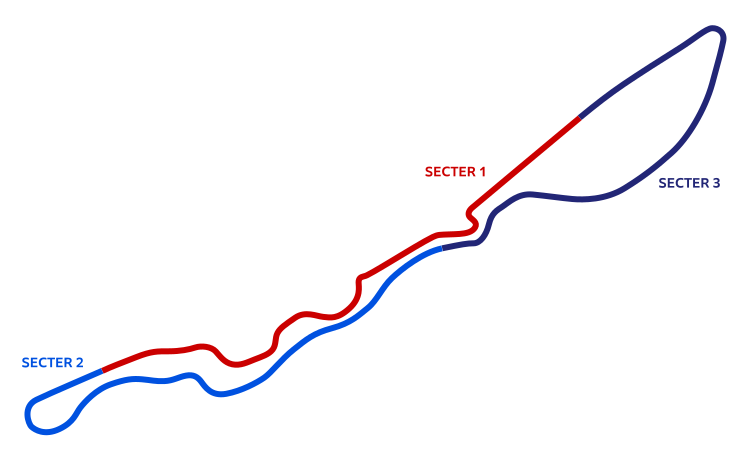
Following an extraordinarily short construction period, the Jeddah Corniche Circuit was completed. As planned, the new circuit measured 6.174 km and featured 27 corners, with average speeds exceeding 250 km/h despite being a street course. It overturned the conventional image of street circuits such as Monaco and Singapore as narrow, low-speed venues, creating a unique presence on the F1 calendar where cars could race between walls at speeds approaching 300 km/h.
F1 first raced at Jeddah in 2021, and numerous modifications have since been made to the circuit. These have focused particularly on safety and driver visibility, with changes to corner profiles and the positioning and shape of walls and barriers. The event did not take place in 2026 due to the worsening situation in the Middle East, but Jeddah continues to evolve without compromising its original concept.
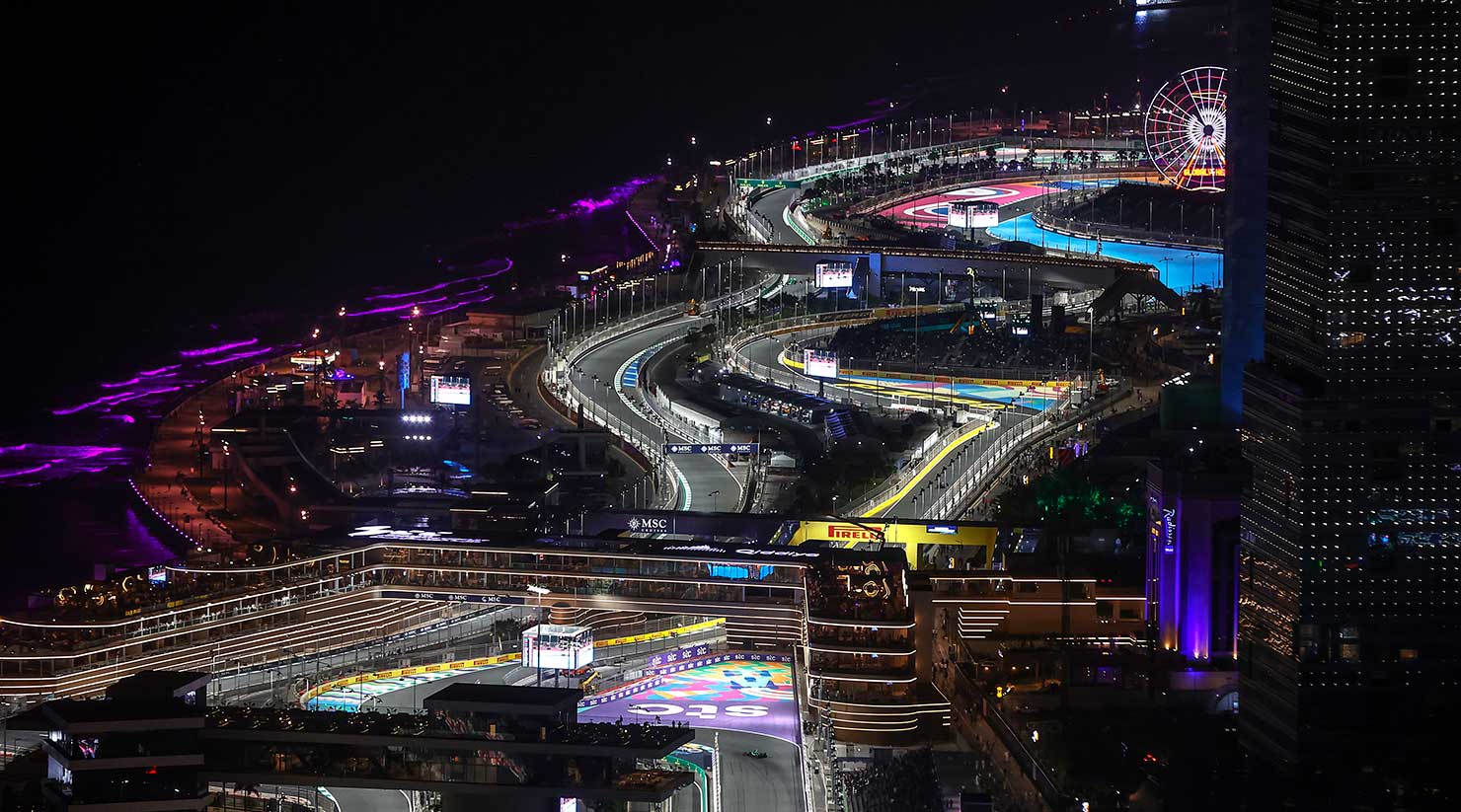
Circuit characteristics
The Jeddah Corniche Circuit, home of the Saudi Arabian GP, is a vast 6.174 km street circuit featuring 27 corners. Most are medium- to high-speed corners, and their continuous nature makes Jeddah an exceptionally fast circuit despite its street-course layout. Sometimes described as “Monza with walls,” its defining challenge is the unforgiving proximity of the walls and barriers typical of a street circuit, leaving virtually no margin for error.
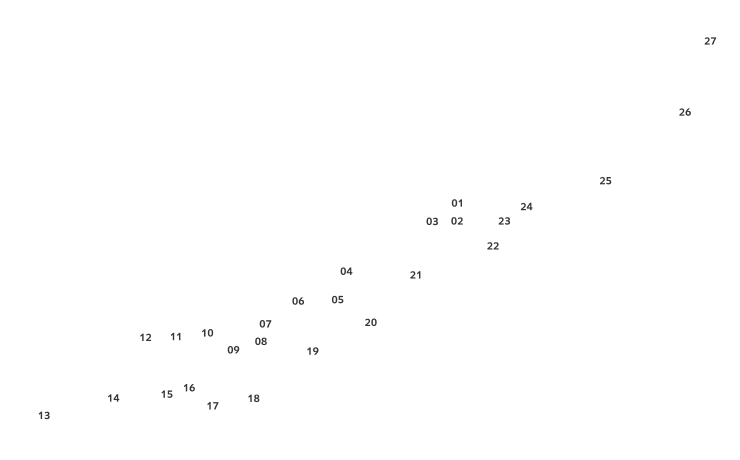
The first corners after the main straight, Turns 1 and 2, form one of the few low-speed sections at Jeddah. Turn 1 is a left-hander immediately followed by the right-hand Turn 2, meaning that a car taking the inside line into Turn 1 is not necessarily in the stronger position for Turn 2. Turn 2 is the slowest corner on the circuit, with speeds dropping to around 80 km/h.
Careful throttle control is required on the exit of Turn 2, after which the circuit begins to display its distinctive character. Beyond Turn 3, a rapid succession of changes of direction begins from Turn 4. Although the circuit map shows numerous individual corners, many are taken at high speed, making rhythm crucial through this section. Many of these corners are also blind, with drivers unable to see the exits, adding to Jeddah’s unique difficulty. The resulting visibility concerns led to modifications by 2023 at locations including Turns 8, 10, 14 and 20, where fences and walls were repositioned to improve sightlines.
After a succession of high-speed changes of direction comes Turn 13, one of Jeddah’s signature corners. It is a long, banked left-hander with a gradient of approximately 12%. Another high-speed section follows, making it important to maintain speed through Turn 13 and achieve a strong exit.
Turns 14 and 15 are taken at high speed before another rapid change of direction through Turns 16 and 17. Beyond Turn 17 begins a long flat-out section. Turns 18, 19, 20 and 21 demonstrate Jeddah’s unusual character, effectively forming a single flat-out section for an F1 car. Because it is not actually a straight, however, drivers must make subtle steering inputs at extremely high speed, changing direction slightly from side to side while racing between the walls.
Turns 22 and 23 are another particularly important section. Originally an extremely fast S-bend, safety concerns led to modifications in 2023, including repositioning the fence at Turn 23 and adding a beveled curb, with the aim of reducing speeds by approximately 50 km/h.
After Turns 22 and 23, the cars accelerate into another flat-out section. They continue to build speed through Turns 24, 25 and 26 along the coastline, reaching the highest speeds of the lap.
At the end of this long high-speed section is Turn 27, the final left-hander and one of the most important overtaking opportunities at Jeddah.
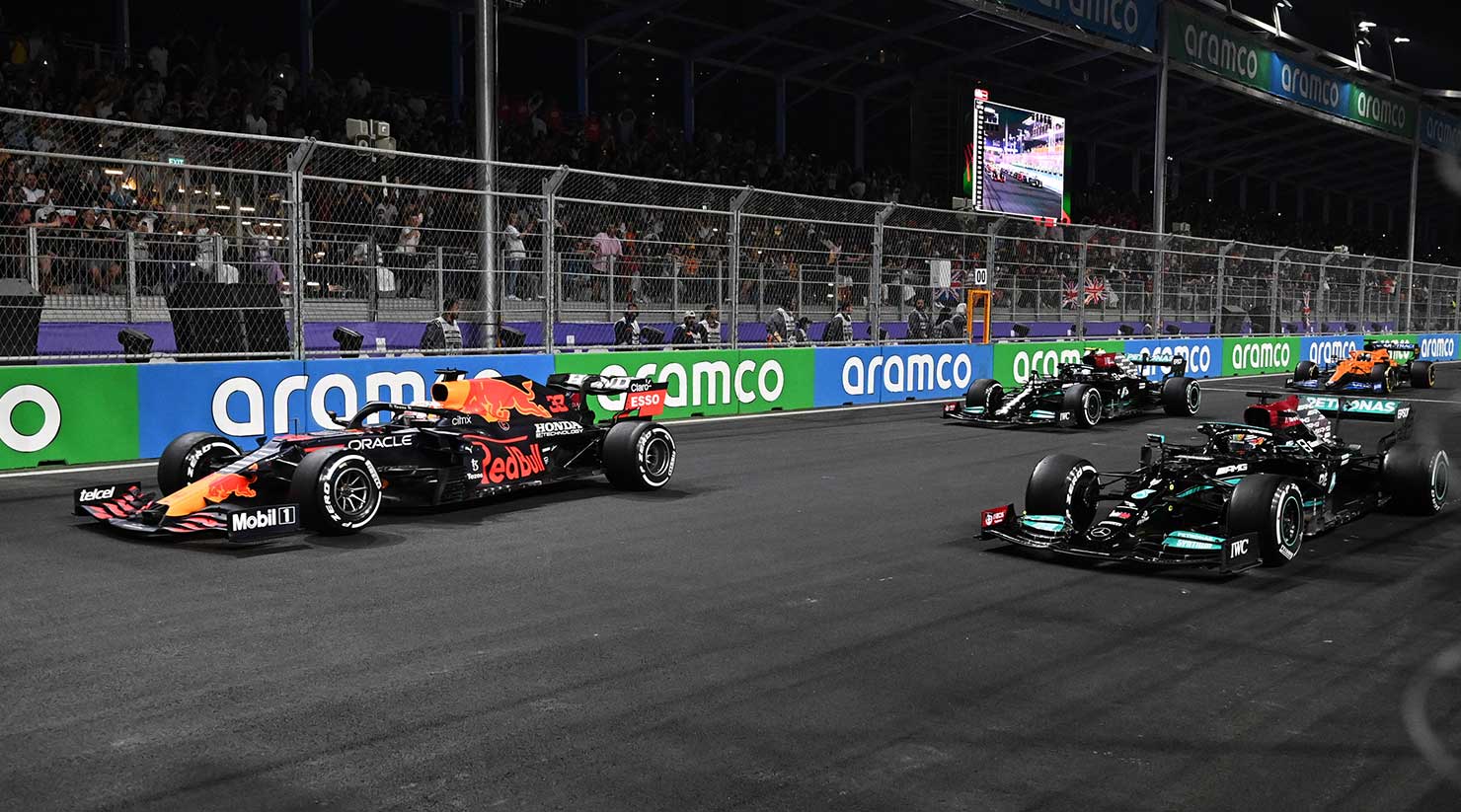
Memorable battles
Although the Jeddah Corniche Circuit only joined the F1 calendar in 2021, it has already produced several memorable races. Its distinctive and unusual ultra-high-speed street layout has provided the setting for considerable drama.
The inaugural Saudi Arabian GP was held at the Jeddah Corniche Circuit in December 2021, during the final stages of one of the most intense championship battles in recent F1 history.
With two races remaining, Max Verstappen of Red Bull Honda held a narrow points advantage over Mercedes driver Lewis Hamilton.
In an extraordinarily tense qualifying session, Verstappen produced a stunning final attempt but hit the wall at the last corner, losing what could have been a remarkable pole lap and leaving Hamilton to claim pole position. The race itself proved even more chaotic.
Amid incidents that brought out the Safety Car, red flags and standing restarts, Hamilton and Verstappen battled fiercely on numerous occasions. At one point, Verstappen was instructed to give back the lead after being judged to have retained the position by going off track. In an extraordinary incident, Hamilton then made contact with the rear of Verstappen’s car as Verstappen slowed.
Hamilton ultimately took victory, leaving the two drivers level on points heading into the season-ending Abu Dhabi GP. It was a remarkable race in which a newly completed circuit immediately became the stage for one of the most memorable championship battles in F1 history.
Following extensive circuit modifications, Sergio Pérez of Red Bull Honda took victory in 2023. Verstappen suffered a driveshaft problem in qualifying and started 15th, but charged through the field to finish second, giving Red Bull Honda a dominant 1-2 finish. Red Bull Honda again demonstrated overwhelming pace in 2024, recording a second consecutive 1-2 finish at Jeddah.
- Fastest Pole Position Time
- 1 min 27.294s
Max Verstappen (Red Bull / 2025)
- Fastest Honda Qualifying Time
- 1 min 27.294s
Max Verstappen (Red Bull / 2025 / Pole Position)
- Fastest Race Lap
- 1 min 30.734s
Lewis Hamilton (Mercedes / 2021)
- Fastest Honda Race Lap
- 1 min 31.488s
Max Verstappen (Red Bull / 2021)
*Data based on the 6.174 km circuit layout.
Honda Records
Explore Honda’s history of challenges and achievements across iconic circuits,
backed by race performance data.