Circuit info

- Circuit Length
- 5.338 km
- First Grand Prix
- 2005
- Number of Laps
- 58
- Race Distance
- 309.396 km
Location
- Address
- Akfırat, Göçbeyli Bv No:1, 34959 Tuzla/Istanbul, Turkey
- Google Maps
History of the Circuit
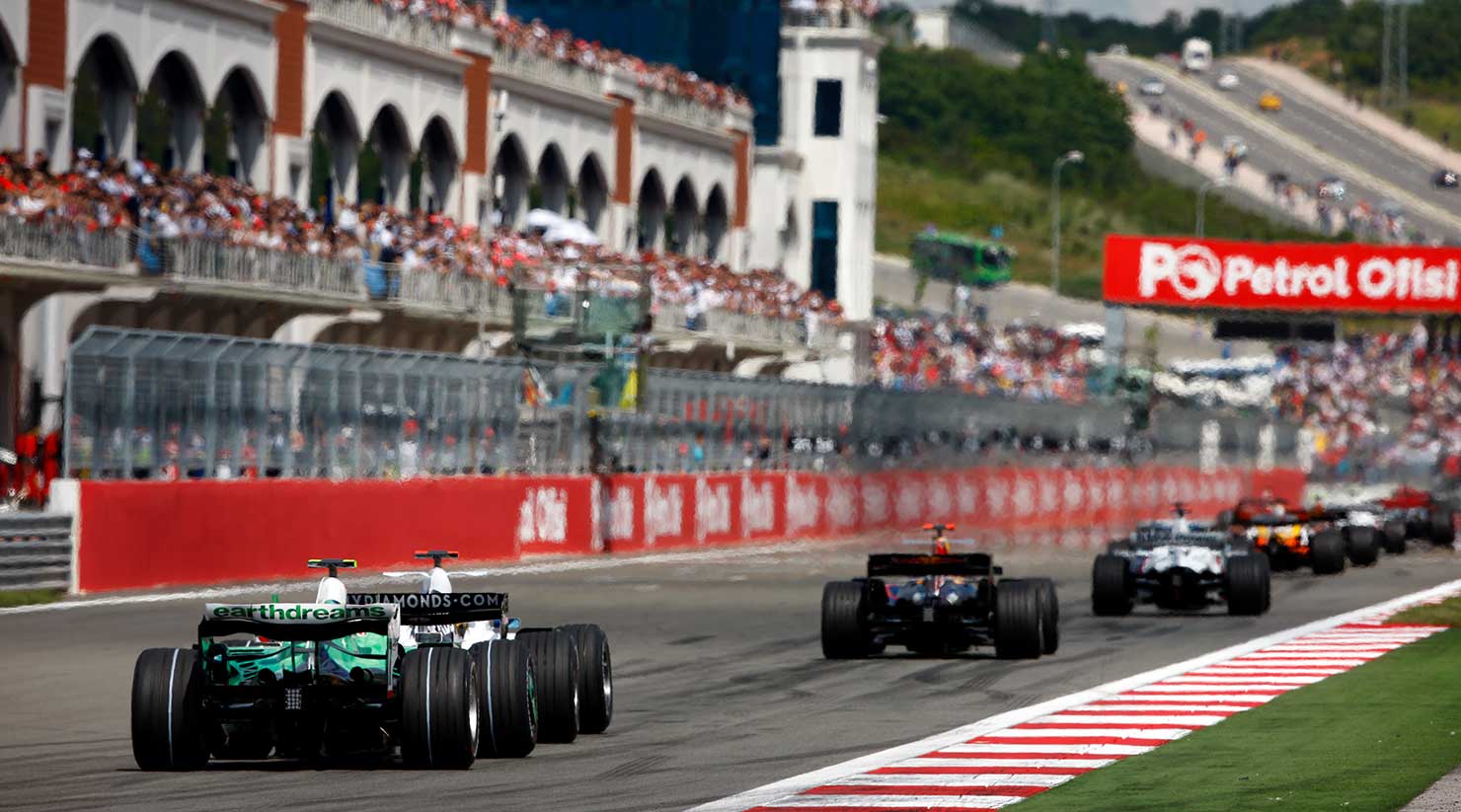
In the early 2000s, Bernie Ecclestone, then the commercial head of F1™, pursued a strategy of expanding the championship around the world, adding new host countries in Asia and the Middle East as well as Türkiye. In 2003, construction began on a modern circuit designed by Hermann Tilke in the Tuzla/Akfirat district on the Asian side of Istanbul. Completed in 2005 and named Istanbul Park, the circuit hosted its first F1 Turkish GP in August that year, shortly after its completion.
Making full use of the undulating terrain, the circuit featured the balanced variety of corners associated with modern circuit design and earned particular acclaim for its distinctive high-speed sections. Among the numerous modern circuits designed by Tilke during the same period, Istanbul Park was especially highly regarded. This was because, rather than relying simply on the stop-and-go layout often associated with modern circuits, it offered the flowing continuity of an old-school circuit, demanding rhythmic and challenging driving.
The Turkish Grand Prix was held at Istanbul Park for seven consecutive years from 2005 to 2011, but difficulties with spectator numbers and profitability ultimately brought its initial run to an end. In 2020, when the global COVID-19 pandemic made it impossible to hold Grands Prix at a number of scheduled circuits, Istanbul Park was selected as an alternative venue and the Turkish GP returned after a nine-year absence. The race was held again in 2021, but once the global disruption subsided and F1 returned to a more conventional schedule, the Turkish GP was absent from the 2023 calendar.
In April 2026, F1 announced that the Turkish GP would return for five years from 2027, officially confirming the return of the event to Istanbul Park.
Circuit characteristics
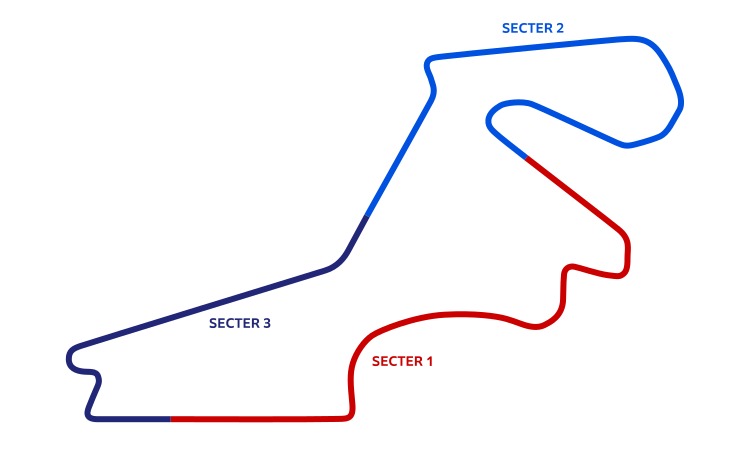
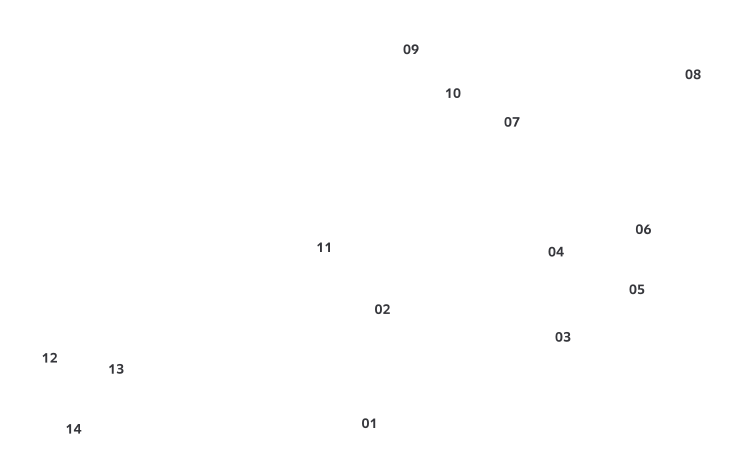
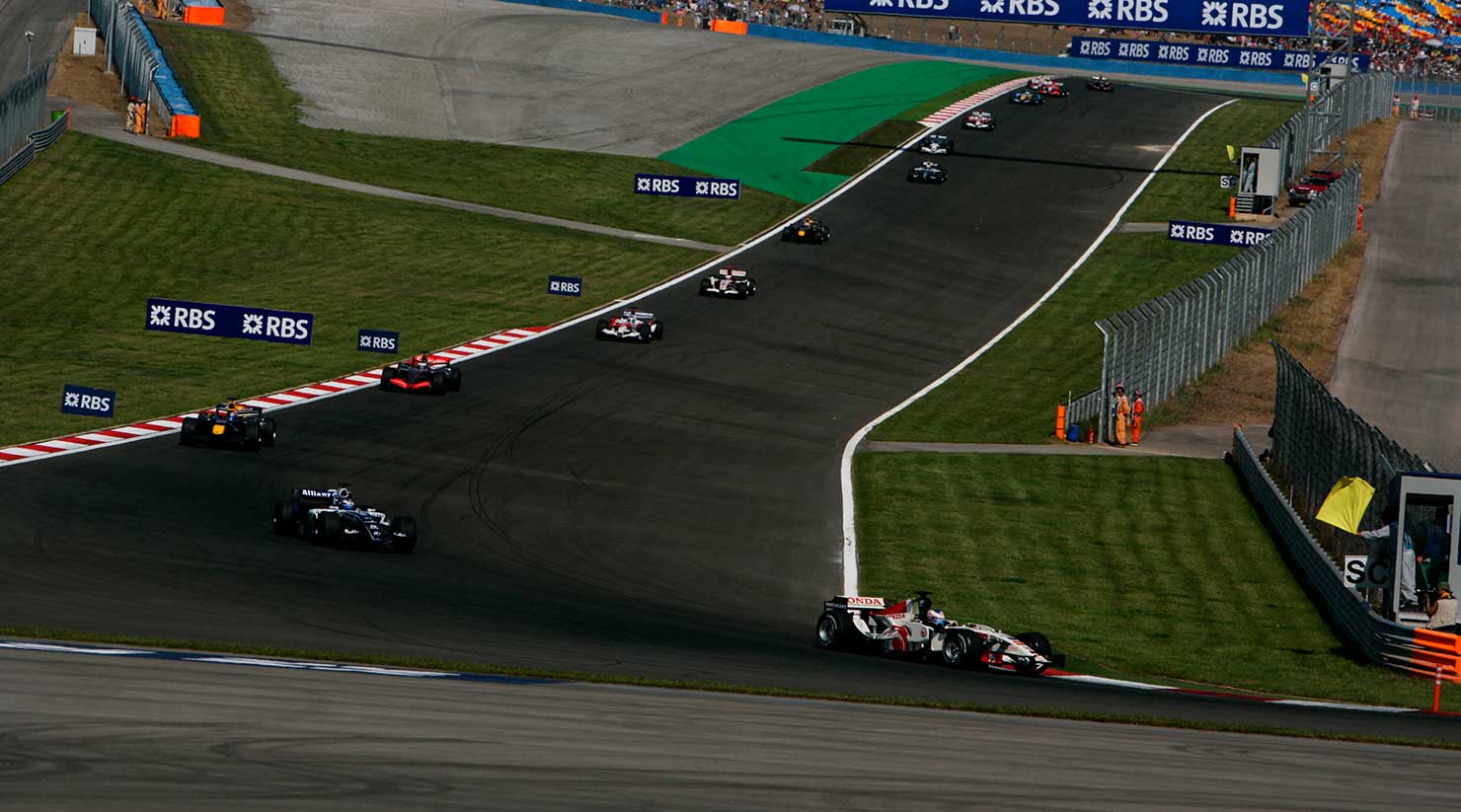
The first half of the circuit is a highly undulating and technical section. Immediately after the start, the track drops steeply toward a sharp left-hander. Braking while descending is particularly difficult, while the wide track allows drivers to choose different lines and also creates an overtaking opportunity. Turn 2 is a long, gentle, high-speed right-hander. Speed through the corner depends heavily on acceleration out of Turn 1, further increasing the importance of the opening corner.
Turns 3 through 6 form a technical complex requiring rhythmic driving. After the medium-speed Turn 7 comes Turn 8, the circuit’s defining feature. This long, high-speed left-hander has four apexes and subjects the driver to sustained and severe lateral G-forces. The prolonged high-speed cornering also places extremely heavy loads on the car and tires, while drivers can experience forces of up to 5G.
Turns 9 and 10 form a high-speed chicane where a smooth line is essential to maximize speed through the long, fast section that follows. The back straight incorporates the high-speed Turn 11, with the approach to the tight Turn 12 providing the circuit’s main overtaking opportunity. Turns 13 and 14 form a technical complex where rhythmic and efficient driving is essential to maximize speed onto the main straight.
With its distinctive elevation changes and wide variety of corners, Istanbul Park is a highly regarded circuit that tests both driver skill and the overall performance of the car.
Memorable battles
With its demanding layout, Istanbul Park has produced numerous memorable battles and dramatic races since the Turkish GP was first held in 2005. In the inaugural race, McLaren’s Kimi Räikkönen, who was second in the championship standings, took victory ahead of championship leader Fernando Alonso of Renault. Ferrari was strong the following year, with Felipe Massa claiming the first victory of his career, but one of the highlights was the battle between second-placed Alonso and the rapidly closing Michael Schumacher. Alonso held on by a narrow margin to finish second at the Turkish GP for the second consecutive year.
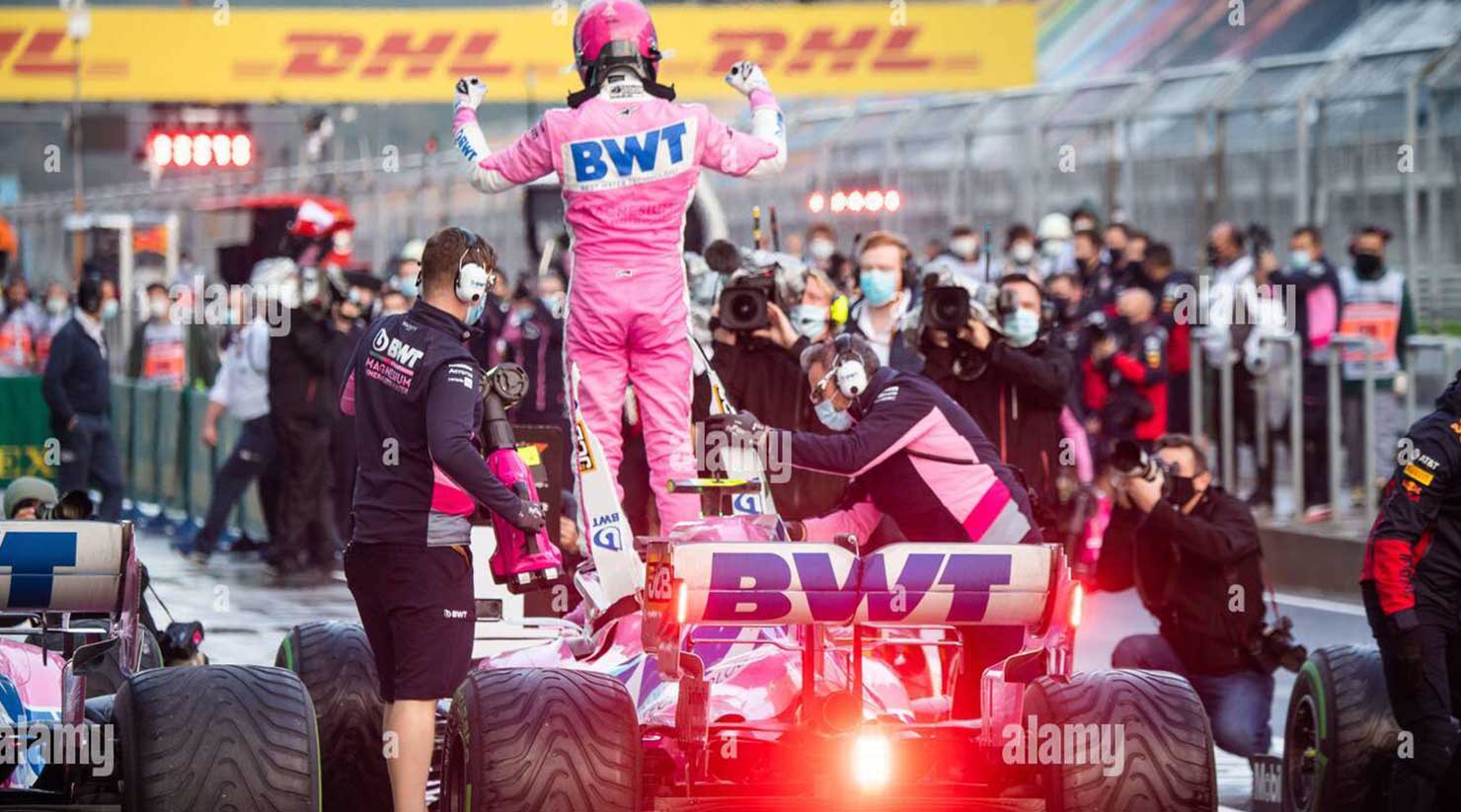
The Turkish GP returned to the calendar in 2020 as part of the revised schedule during the COVID-19 pandemic, and the race produced a dramatic weekend. Istanbul Park had been resurfaced ahead of its first race in many years, but the new surface had yet to bed in and proved far more slippery than expected. Qualifying then took place in wet conditions, adding to the difficulty.
Amid the chaotic conditions, Lance Stroll of Racing Point, the predecessor of Aston Martin, set the fastest qualifying time to claim the first pole position of his career. The race was also held in wet conditions, although Stroll ultimately finished ninth. His teammate Sergio Pérez, however, finished second to take a podium, making it a particularly memorable race for Racing Point. The team was renamed Aston Martin the following year and continues under that name today.
- Fastest Pole Position Time
- 1 min 22.998s
Valtteri Bottas (Mercedes / 2021)2021 Pole Position*: 1 min 22.868s (Lewis Hamilton / Mercedes)
- Fastest Honda Qualifying Time
- 1 min 23.196s
Max Verstappen (Red Bull / 2021)
- Fastest Race Lap
- 1 min 24.770s
Juan Pablo Montoya (McLaren / 2005)
- Fastest Honda Race Lap
- 1 min 25.790s
Jenson Button (BAR / 2005)
*Data based on the 5.338 km circuit layout (5.340 km in 2005 only).
Honda Records
Explore Honda’s history of challenges and achievements across iconic circuits,
backed by race performance data.