Circuit info
- Circuit Length
- 5.513 km
- First Grand Prix
- 2012
- Number of Laps
- 56
- Race Distance
- 308.405km
Location
- Address
- Miami Gardens, Florida 33056, USA
- Google Maps
History of the Circuit
The history of the United States Grand Prix dates back to 1958, when a sports car race held at Riverside International Raceway in California carried the United States Grand Prix name. The following year, in 1959, the FIA Formula One World Championship™ held its first official United States Grand Prix at Sebring International Raceway in Florida.
The event moved to Riverside in 1960 before finding a long-term home at Watkins Glen International in New York, where it was held continuously from 1961 to 1980. In subsequent years, Formula 1 visited a variety of American venues, including Long Beach, Caesars Palace, Detroit, and Dallas, although these events were not run under the United States Grand Prix title.
The United States Grand Prix returned in 1989 on the streets of Phoenix, Arizona, but remained on the calendar for only three seasons before disappearing once again. At the time, CART racing enjoyed greater popularity in the United States, limiting Formula 1’s growth in the market.
Nevertheless, bringing Formula 1 to one of the world’s largest automotive markets remained a priority. In 2000, the United States Grand Prix returned at Indianapolis Motor Speedway, the home of the Indianapolis 500 and one of the most famous venues in American motorsport. More than 200,000 spectators attended the inaugural event. However, the circuit layout, which incorporated portions of the oval, proved challenging for Formula 1 machinery. In 2005, safety concerns involving Michelin tires led to one of the most controversial races in Formula 1 history, with Michelin-equipped teams withdrawing after the formation lap. The resulting fallout created tensions between the FIA and event organizers, and the Indianapolis race was discontinued after 2007.
Determined to establish a long-term presence in the United States, Formula One Management chairman Bernie Ecclestone backed the construction of a purpose-built facility near Austin, Texas. Construction began in 2010, and the venue—named Circuit of The Americas (COTA)—hosted its first FIA Formula One World Championship United States Grand Prix in November 2012.
Designed by renowned circuit architect Hermann Tilke, COTA incorporates elements inspired by some of the world’s most famous racetracks and has become one of the defining examples of a modern Formula 1 venue.
Today, the United States hosts three Formula 1 events: the United States Grand Prix, the Miami Grand Prix, and the Las Vegas Grand Prix. In 2025, it was announced that the United States Grand Prix at COTA would remain on the calendar through 2034.
Circuit characteristics
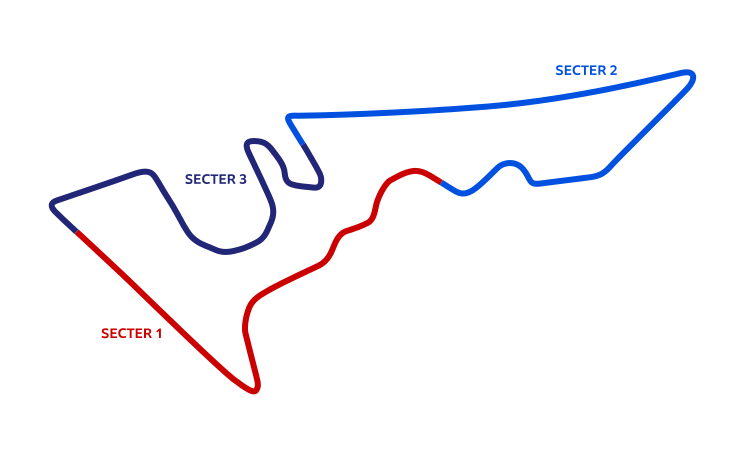
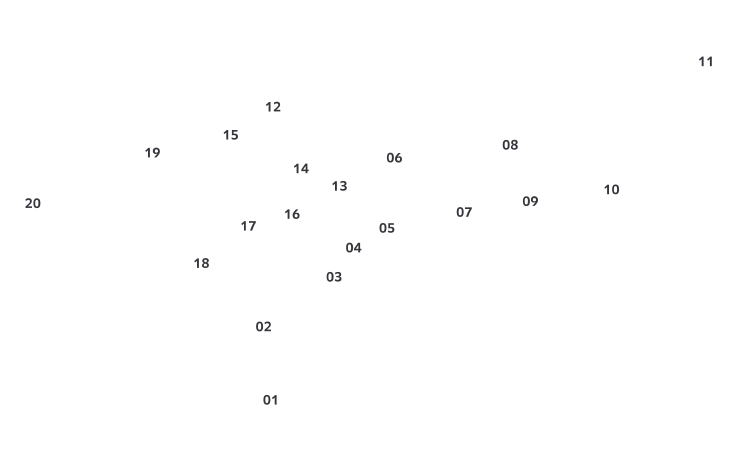
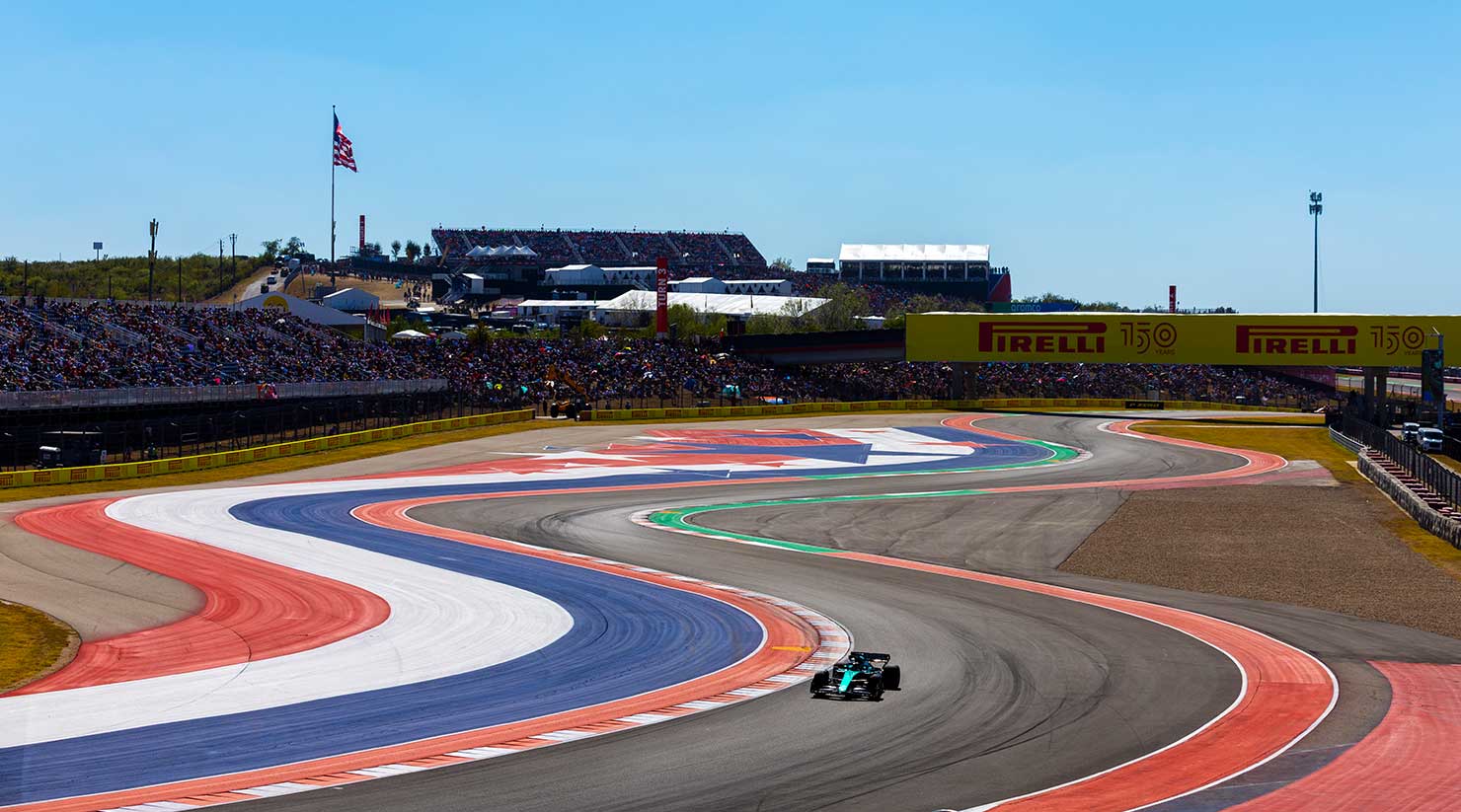
One of COTA’s defining characteristics is its dramatic elevation change of approximately 40 meters, combined with a mix of high-speed corners and multiple overtaking opportunities. The 5.5 km circuit features 20 corners and incorporates design elements inspired by iconic sections from racetracks around the world.
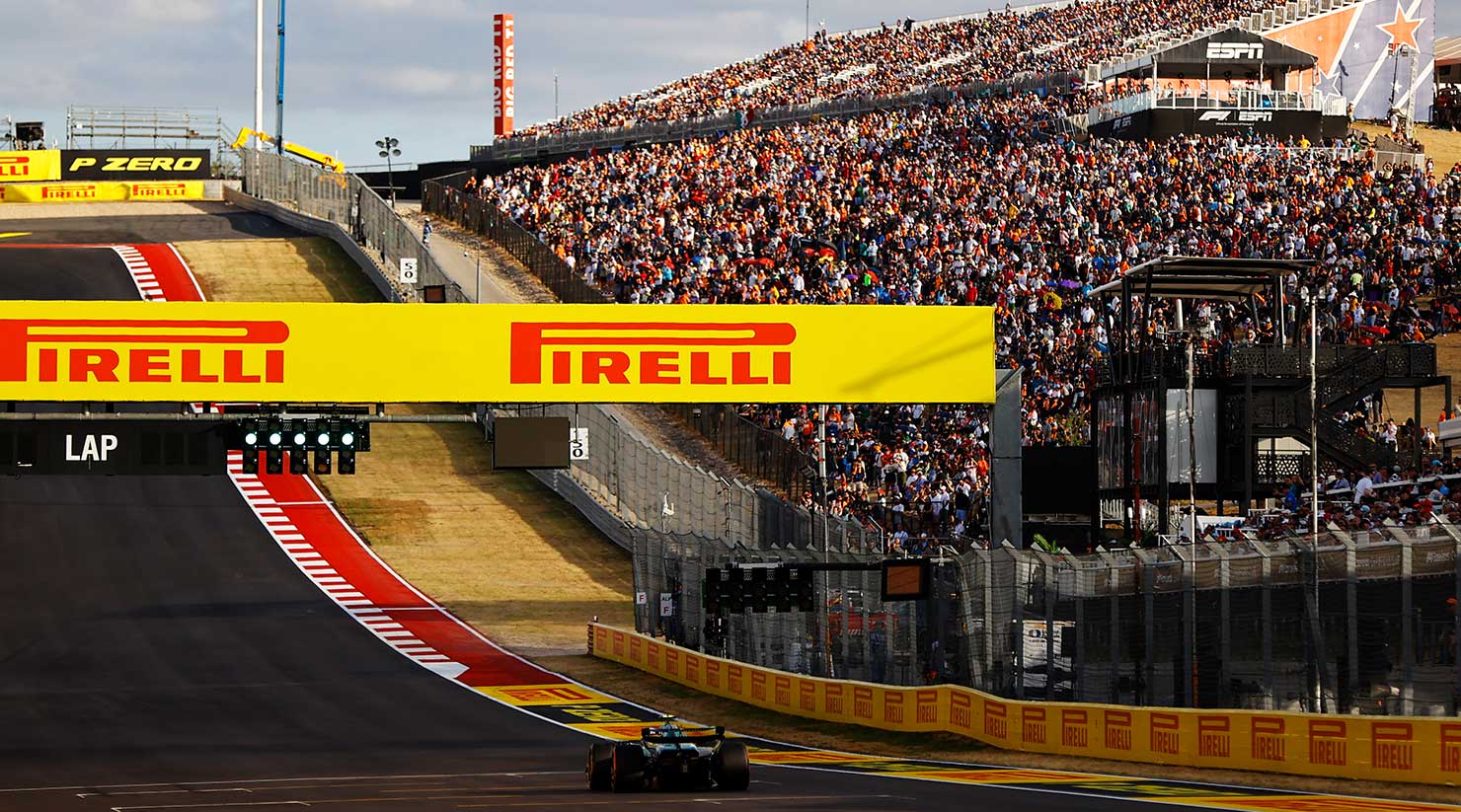
At the end of the start-finish straight, drivers climb steeply uphill toward Turn 1, known as Big Red, one of the circuit’s signature features. The blind, uphill 90-degree left-hander sits at the crest of the hill, and its wide entry often creates dramatic battles and congestion on the opening lap.
Beyond Big Red, Turns 2 through 9 form a flowing sequence of high-speed esses. This section combines characteristics reminiscent of Interlagos’ Senna S and Silverstone’s Maggots-Becketts-Chapel complex, making it one of the circuit’s highlights.
Turn 11 is a heavy-braking hairpin that rewards late braking and wheel-to-wheel racing. It leads onto the approximately 1 km back straight, where top speeds are reached before drivers brake heavily for Turn 12, the circuit’s most significant overtaking opportunity.
Turns 13 to 15 form a technical complex inspired by Hockenheim’s former stadium section, while Turns 16 through 18 feature a long, sweeping right-hander similar in character to Istanbul Park’s famous Turn 8, allowing drivers to carry high speed while maintaining full throttle.
The combination of varying corner types and changing demands makes COTA one of the most highly regarded circuits on the Formula 1 calendar, testing both car performance and driver skill.
Memorable battles
With multiple overtaking opportunities and races often influenced by tire strategy, COTA has produced many closely fought contests.
Among the most memorable was the 2018 United States Grand Prix, when Kimi Räikkönen claimed victory after a 113-race winless streak. It proved to be the final Formula 1 victory of his career and remains one of the circuit’s most celebrated races.
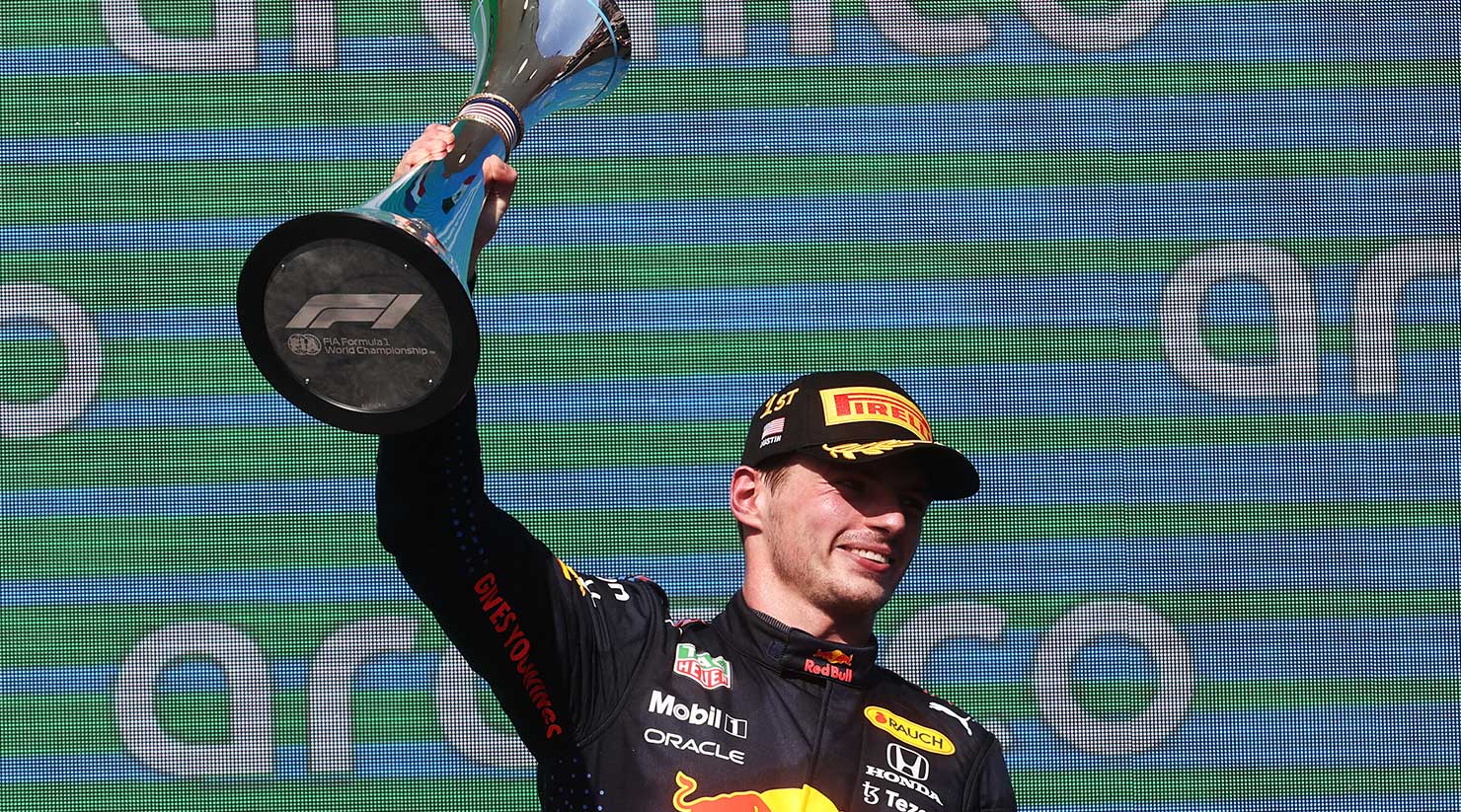
Another classic came in 2021, when Red Bull Honda’s Max Verstappen and Mercedes driver Lewis Hamilton continued their intense championship battle.
Verstappen arrived at Round 17 of the FIA Formula One World Championship™ leading the standings and secured pole position. However, Hamilton took the lead at the start. Red Bull responded with an aggressive undercut strategy during the pit-stop cycle, allowing Verstappen to regain track position.
In the closing stages, Hamilton relentlessly reduced the gap, and the pair began the final lap separated by less than one second. Their battle continued all the way to the checkered flag, with Verstappen holding on to secure victory.
The race is widely regarded as one of the pivotal moments of the 2021 championship campaign and an essential chapter in Verstappen’s journey to his first World Championship title.
- Fastest pole position lap
- 1 min 32.029s
Valtteri Bottas (Mercedes, 2019)
- Fastest Honda qualifying lap
- 1 min 32.096s
Max Verstappen (Red Bull Honda, 2019)
- Fastest race lap
- 1 min 36.169s
Charles Leclerc (Ferrari, 2019)
- Fastest Honda race lap
- 1 min 37.991s
Max Verstappen (Red Bull Honda RBPT, 2025)
* Data based on the 5.513 km circuit configuration.
Honda Records
Explore Honda’s history of challenges and achievements across iconic circuits,
backed by race performance data.