Circuit info

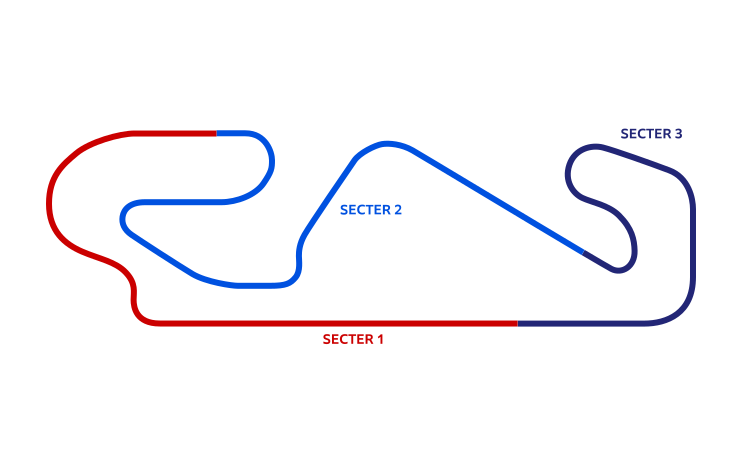

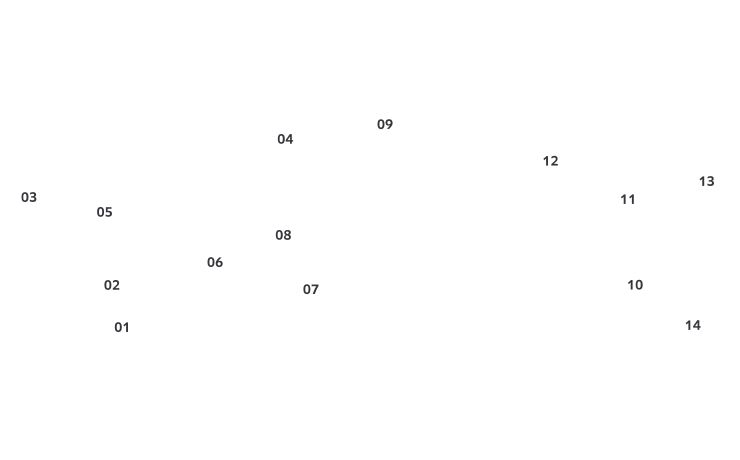
- Circuit Length
- 4.657 km
- First Grand Prix
- 1991
- Number of Laps
- 66
- Race Distance
- 307.236km
Location
- Address
- Mas La Moreneta s/n, Montmeló, Barcelona 08160, Spain
- Google Maps
History of the Circuit
The history of the Spanish Grand Prix dates back to the 1920s, when races were held intermittently in Spain. As part of the Formula One World Championship, the event was first held in 1951 at the Pedralbes street circuit, returning there again in 1954.
Following the major accident at Le Mans in 1955, concerns over the safety of public-road racing increased significantly, and the Spanish Grand Prix was not held again until 1966. It returned in 1967 as a non-championship event, and from 1968 to 1975 alternated between the Jarama Circuit near Madrid and the Montjuïc street circuit in Barcelona.
In 1975, a major accident occurred at Montjuïc when the rear wing of a competing car detached and flew into the spectator area, causing multiple casualties. The race at Montjuïc was discontinued after that event. From 1976 to 1981, the Spanish Grand Prix was held at Jarama, although the 1980 race was excluded from the World Championship, before disappearing from the calendar once again.
In 1986, the Spanish Grand Prix returned at the newly built Circuito de Jerez in Andalusia. However, the circuit had been designed primarily with motorcycle racing in mind and was considered difficult for overtaking in Formula One.
In 1991, the event moved to the newly constructed Circuit de Catalunya near Barcelona, where it became established as the long-term home of the Spanish Grand Prix. In 2026, however, that chapter reached a turning point.
Although Catalunya held a Grand Prix contract through 2026, the newly developed Madring circuit in Madrid — combining public roads and permanent sections — secured a 10-year agreement to host the “Spanish Grand Prix” beginning in 2026. Following discussions, the 2026 race at Catalunya was renamed the Barcelona-Catalunya Grand Prix, bringing to a close a 35-year run as the Spanish Grand Prix venue from 1991 to 2025.
From 2027 onward, the Barcelona-Catalunya Grand Prix is scheduled to continue through 2032 on an alternating basis with the Belgian Grand Prix at Spa-Francorchamps.
Circuit characteristics
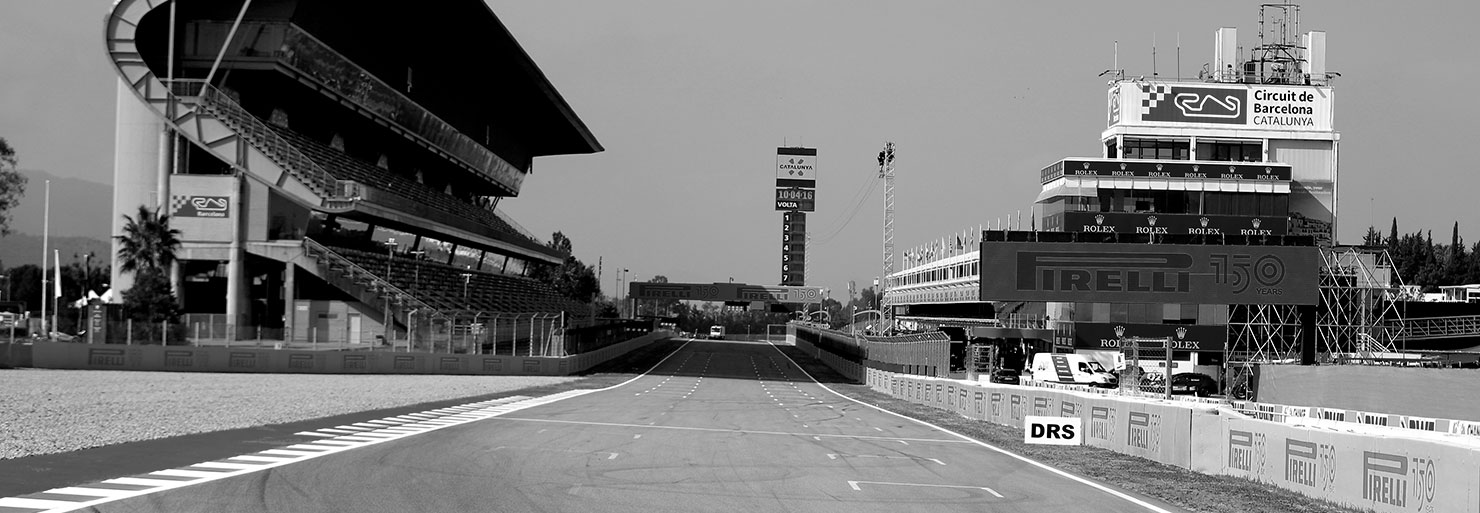
Circuit de Catalunya features one of the most balanced layouts on the Formula One calendar and has long been regarded as an ideal circuit for evaluating car performance. For many years, it was also widely used for winter testing.
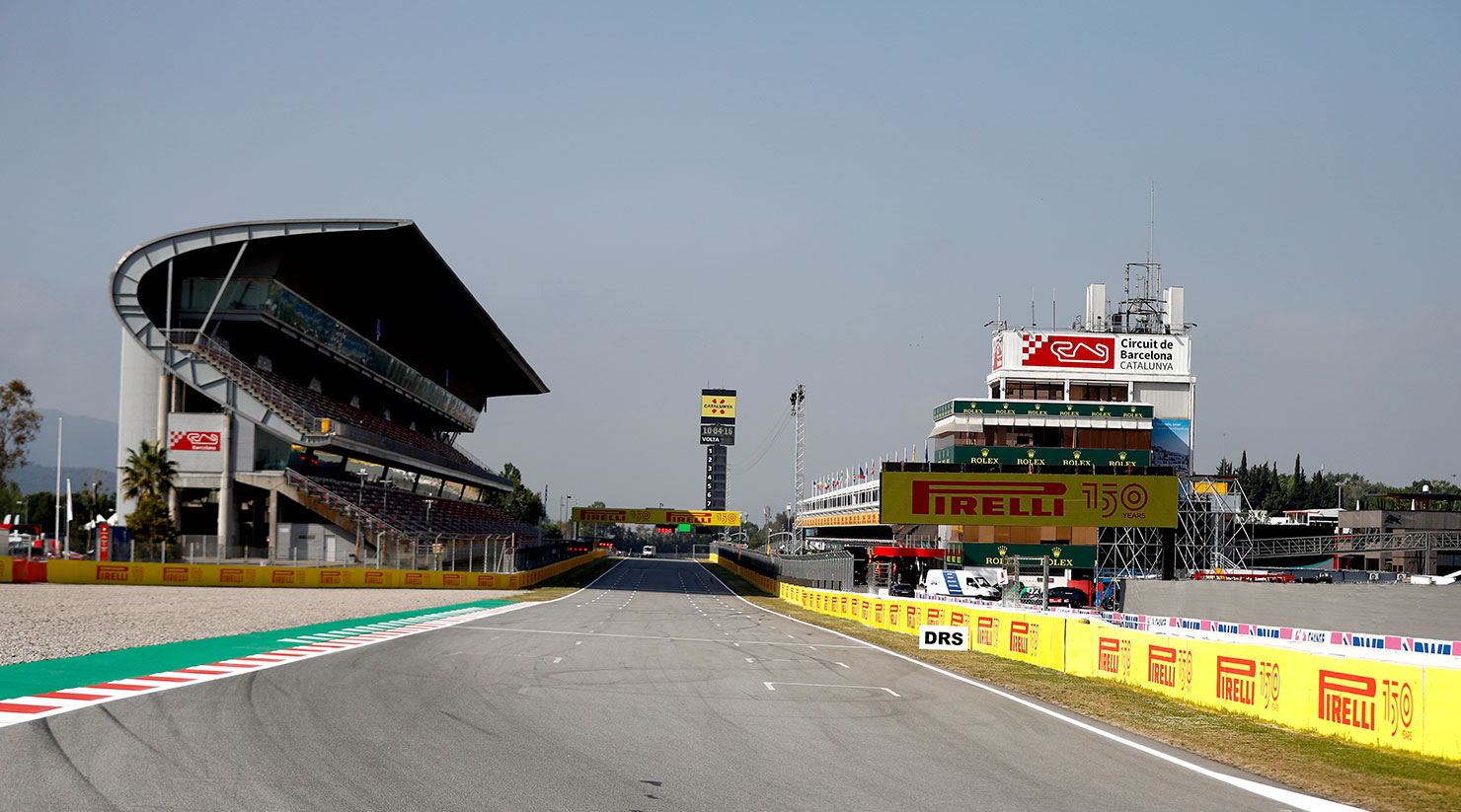
The circuit is highly regarded by drivers because it tests both driving ability and setup performance. After the more than 1 km downhill main straight comes Turn 3, a long high-speed corner often used as a benchmark for aerodynamic performance. The circuit then continues through the long-radius Repsol Corner and the hairpin-style Seat Corner before entering a medium-speed technical section.
In 2007, a chicane was added before the final corner in the third sector in an effort to reduce speeds. However, the chicane was removed in 2023 to promote overtaking, restoring the previous layout.
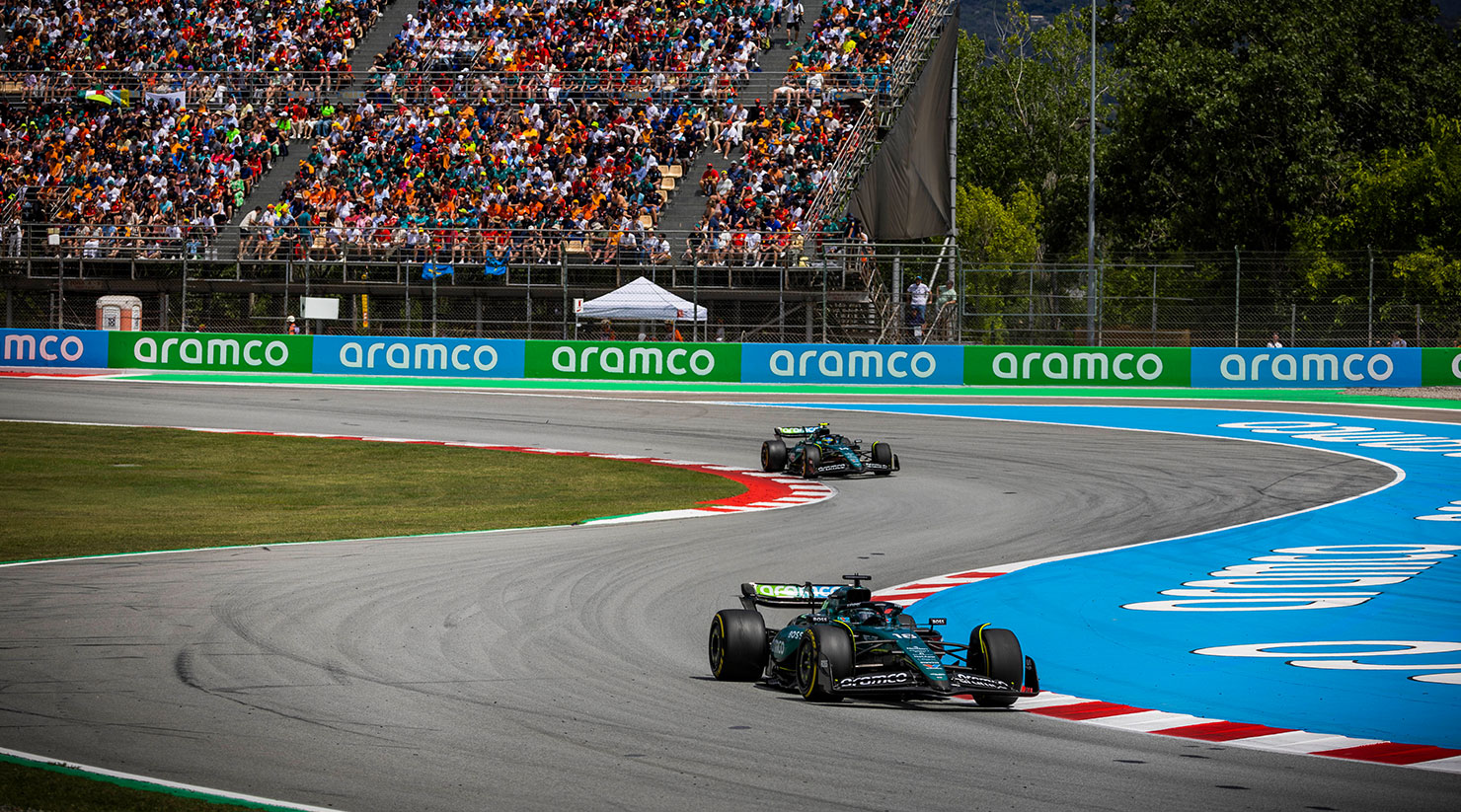
Circuit de Catalunya is also known as one of the most demanding tracks for tires. Front tire wear is particularly severe, especially on the left-front tire, due to the number of long right-hand corners. Tire management is therefore a major factor throughout the race weekend.
The circuit is also heavily affected by wind conditions because of its proximity to the sea. Frequently changing wind direction can significantly influence car stability, braking performance, and cornering speed, creating additional challenges for drivers.
Memorable battles
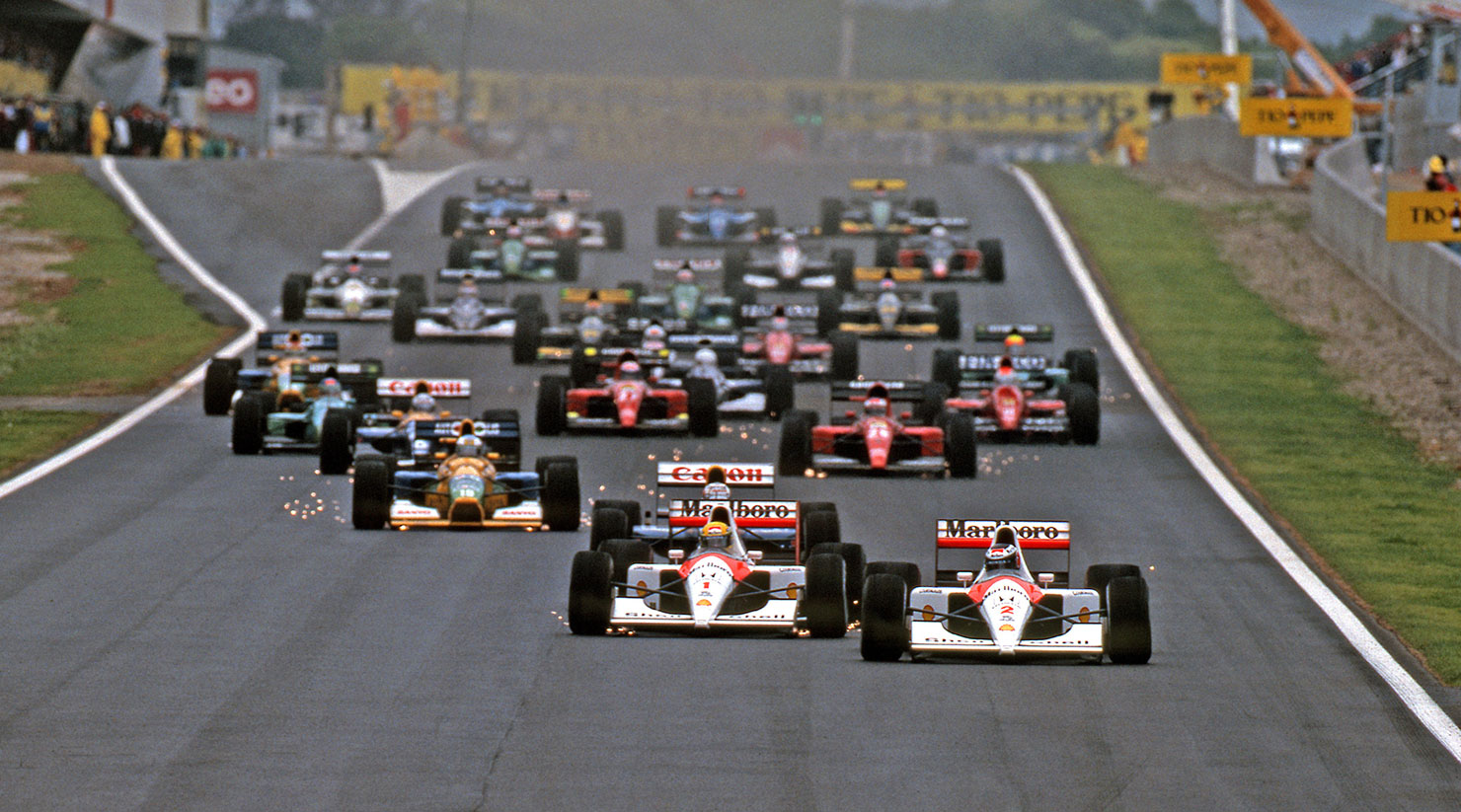
The inaugural Formula One race at Circuit de Catalunya in 1991 produced one of the sport’s most memorable battles.
Heading into the closing stages of the 16-round season, Ayrton Senna of McLaren Honda arrived at Round 14, the Spanish Grand Prix, leading the championship and targeting another title. However, engine issues during qualifying left Senna third on the grid. Pole position went to his McLaren Honda teammate Gerhard Berger, while Nigel Mansell of Williams lined up second.
Rain before the start created wet conditions for the race. Senna made a strong launch and moved into second place, giving McLaren Honda a one-two formation in the early laps.
Soon afterward, Senna and Mansell began an intense battle behind race leader Berger. On Lap 5, Mansell drew alongside Senna on the main straight, with the two cars running side-by-side at extremely high speed toward Turn 1 in one of the defining moments of Formula One racing. Mansell ultimately prevailed in the battle, later overtaking Berger and going on to win the race.
Senna, meanwhile, suffered an unusually uncharacteristic spin and finished fifth. Although he eventually secured back-to-back World Championships that season, the battle with the rapidly improving Mansell remains remembered as one of Formula One’s classic duels.
Victory at Catalunya was long considered proof of complete driver and car performance because of the circuit’s balanced demands.
In 2016, Max Verstappen secured his first Formula One victory at the Spanish Grand Prix, becoming the youngest winner in Formula One history at the time. After the two dominant Mercedes cars collided and retired, Verstappen — newly promoted from Toro Rosso to Red Bull Racing — delivered a calm and error-free drive to claim victory.
It marked the beginning of what would later become Verstappen’s rise to Formula One success, achieved at the age of 18 years and 228 days, and also represented the first Formula One victory by a Dutch driver.
- Fastest pole position lap
- 1 min 11.383s
Lando Norris (McLaren), 2024
- Fastest Honda qualifying lap
- 1 min 11.403s
Max Verstappen (Red Bull), 2024
- Fastest race lap
- 1 min 15.743s
Oscar Piastri (McLaren), 2025
- Fastest Honda race lap
- 1 min 16.330s
Max Verstappen (Red Bull), 2023 — Fastest lap
* Data based on the current 4.657 km circuit layout.
Honda Records
Explore Honda’s history of challenges and achievements across iconic circuits,
backed by race performance data.