Circuit info


- Circuit Length
- 6.003 km
- First Grand Prix
- 2016
- Number of Laps
- 51
- Race Distance
- 306.049km
Location
- Address
- 93 Zarifa Aliyeva St, Baku, Azerbaijan
- Google Maps
History of the Circuit
The Republic of Azerbaijan is located at the crossroads of Eastern Europe and Western Asia, bordered by the Caspian Sea to the east and sharing borders with Russia, Georgia, Armenia, and Iran. Once one of the constituent republics of the Soviet Union, Azerbaijan gained independence in 1991. Its capital, Baku, is a historic port city on the Caspian Sea, renowned for its striking architecture and rich history, as well as its long-standing importance as a major oil-producing center.
During the 2010s, Azerbaijan experienced rapid economic growth fueled by oil and natural gas revenues. As part of a government-led national branding strategy, the country began pursuing an F1™ race. Azerbaijan’s ambitions aligned with Formula One’s expansion into emerging markets, and a hosting agreement was signed in 2014.
In 2016, Baku hosted its first Formula One race under the title of the European Grand Prix. The decision to use the European Grand Prix name was driven by Azerbaijan’s desire to attract international attention while reinforcing its image as part of the European community. From 2017 onward, the event has been known as the Azerbaijan Grand Prix, with the current agreement extending through 2030.
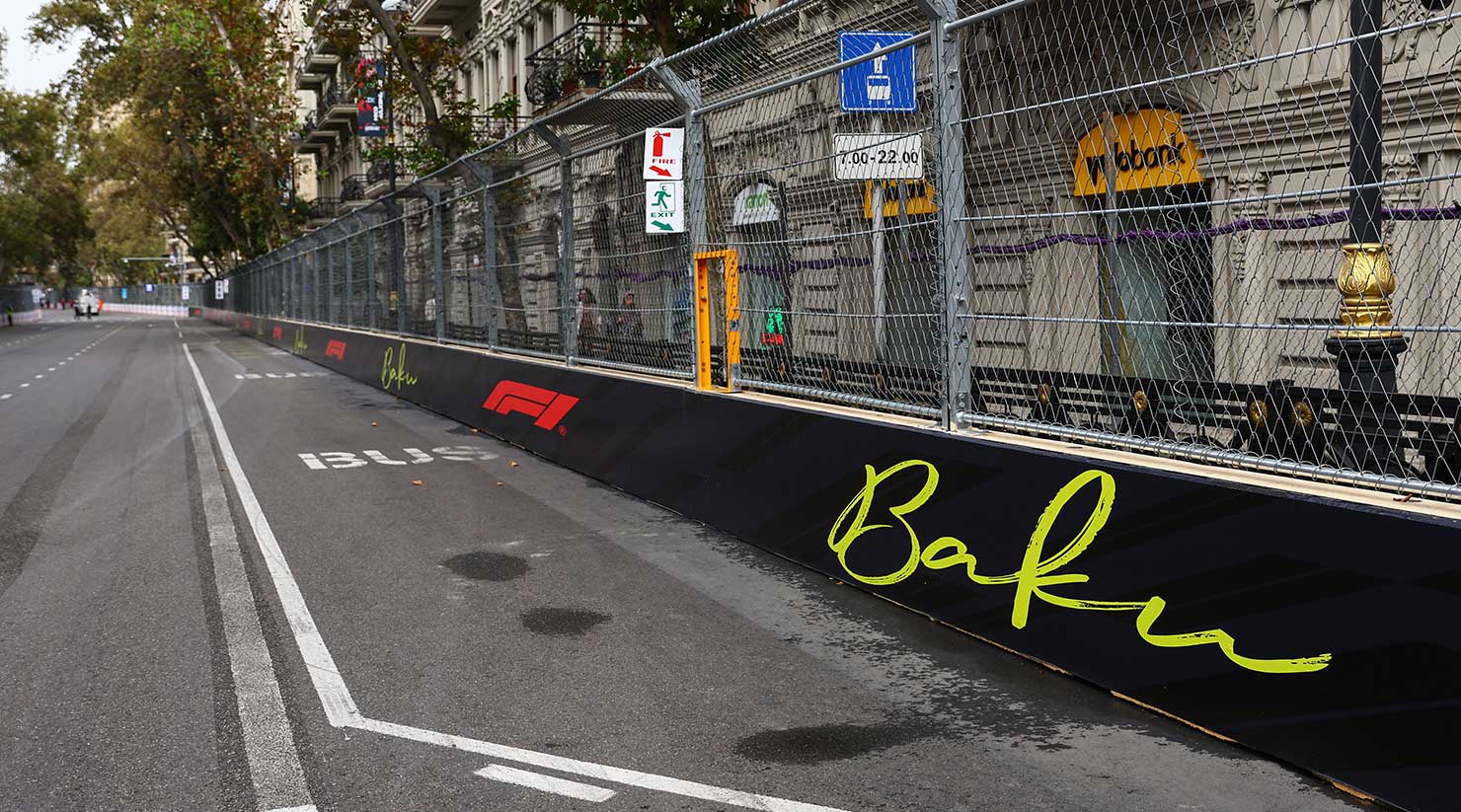
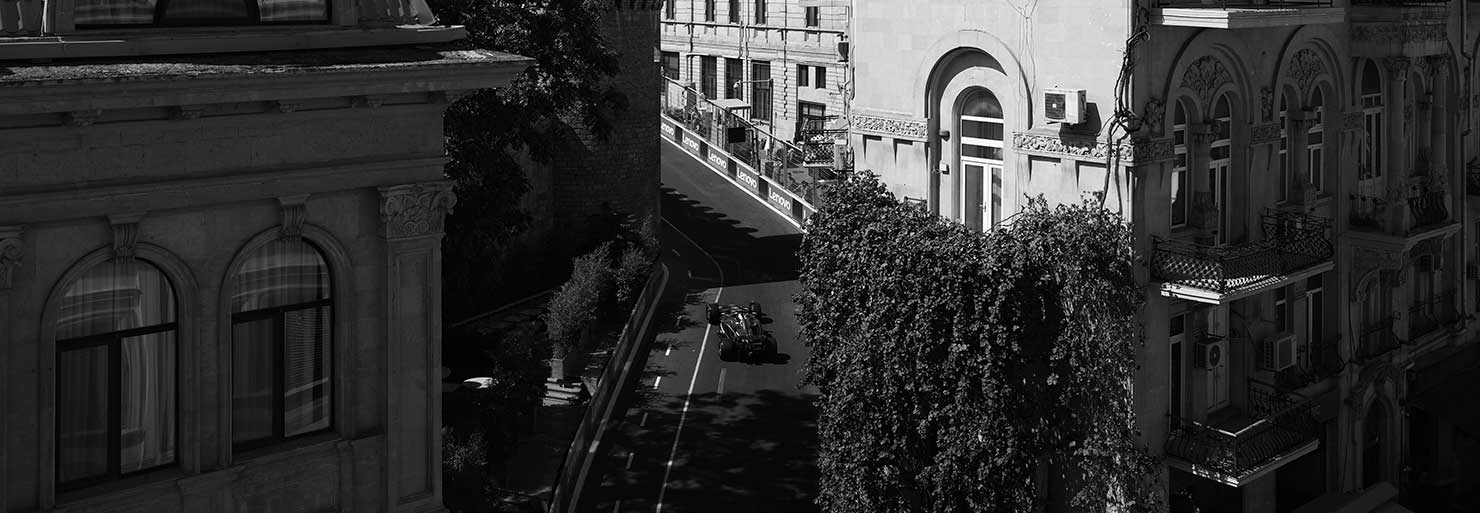
The circuit, constructed entirely on public roads in central Baku, measures approximately 6 km in length and was designed by renowned circuit architect Hermann Tilke. Conceived as “the fastest street circuit in the world,” it combines long straights with unforgiving barriers. The old city section, where temporary asphalt is laid over historic cobblestones, highlights the unique contrast between Baku’s ancient architecture and the circuit’s exceptionally narrow streets.
In 2026, the Grand Prix was originally scheduled to take place on Sunday, September 27. However, because that date coincides with Azerbaijan’s Remembrance Day for fallen soldiers, the event schedule was moved forward by one day, with the race taking place on Saturday, September 26.
Circuit characteristics
Baku is widely regarded as one of the most unusual venues on the F1 calendar. The city’s name is often associated with the Persian phrase meaning “city of winds,” and Baku remains known today as the “City of Winds.” Located alongside the Caspian Sea, the circuit is frequently affected by strong and unpredictable gusts.
Although it is a street circuit, Baku is unusually long at approximately 6 km and features a straight exceeding 2 km in length. The combination of the modern city center and the historic old town gives the circuit two very different personalities. Like many street circuits, run-off areas are limited and concrete barriers sit close to the racing line, leaving no room for mistakes. Because the track consists of public roads rather than a purpose-built track, the surface is uneven, grip levels are relatively low, and conditions vary significantly around the lap.
Sector 1 is a classic street-circuit section, featuring long straights linked by a series of 90-degree corners. Turns 1 through 3 are heavy-braking zones where overtaking opportunities are plentiful and incidents are common.
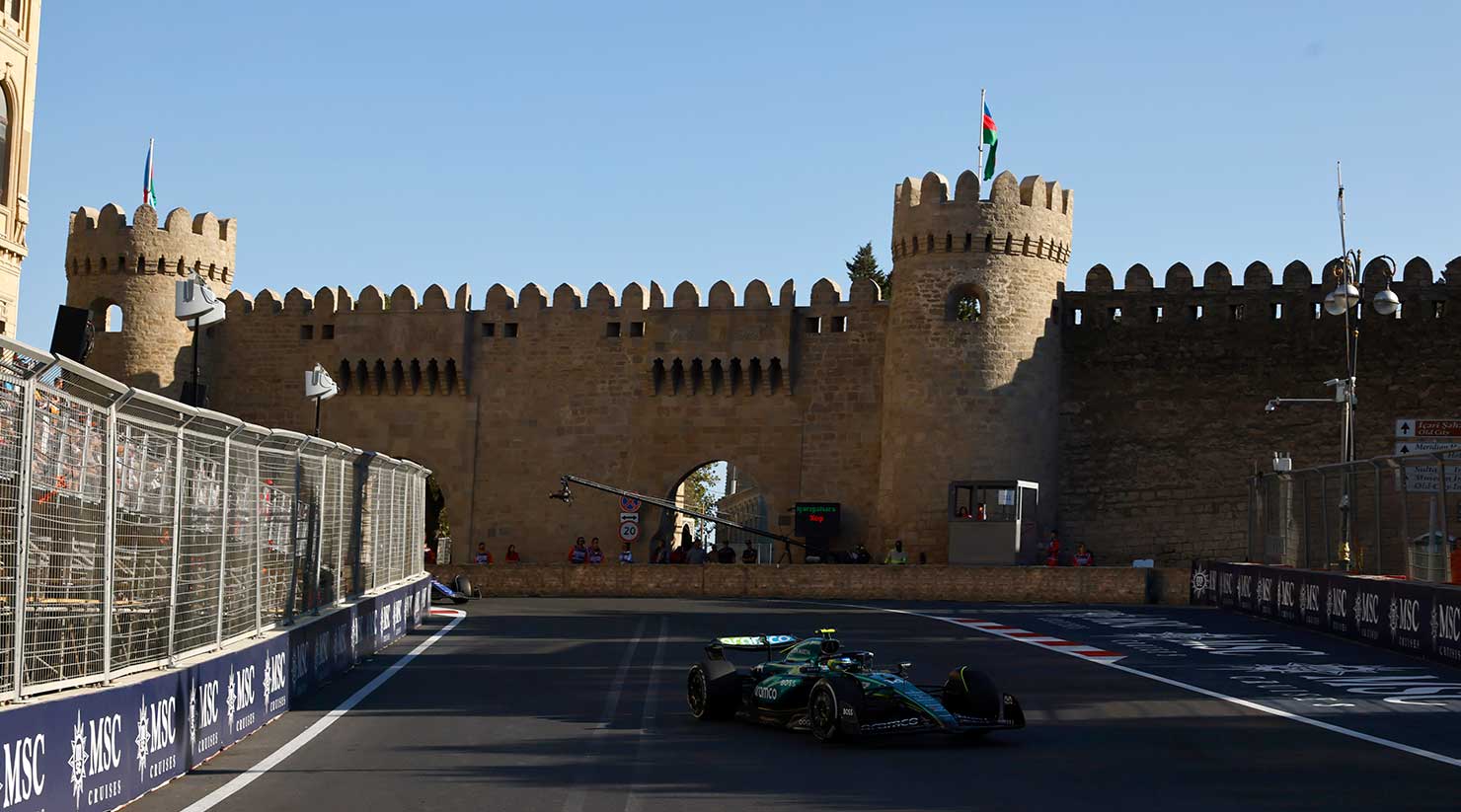
The section beginning at Turn 7 and entering the old town is Baku’s defining feature. The circuit runs alongside the UNESCO World Heritage-listed city walls, creating one of the most distinctive backdrops in motorsport. Turn 8, in particular, is famous for its width of just 7.6 meters, making it one of the narrowest corners used in F1. Precision is essential, as even the slightest mistake can end a driver’s race. The narrow confines continue through the slalom section until Turn 11, before the track opens up again through Turn 12. Drivers then accelerate toward Turn 15, where the downhill approach and rapidly increasing speed have frequently resulted in contact with the barriers.
Sector 3 follows the seaside boulevard and is dominated by high-speed acceleration toward the main straight. Despite being a street circuit, top speeds exceeding 330 km/h have been recorded along this section.
Because Baku combines ultra-fast straights with low-grip, slow-speed corners, finding the ideal setup is notoriously difficult. Brakes are placed under heavy stress throughout the lap, and brake-related issues often emerge during the latter stages of races.
The circuit is also famous for producing incidents, Safety Car deployments, and red-flag interruptions. As a result, Baku has earned a reputation as one of the most unpredictable venues on the F1 calendar.
Memorable battles
Despite its unpredictability, Baku has suited Honda-powered cars particularly well and became one of Red Bull Honda’s strongest circuits.
In 2021, during an intense FIA Formula One World Championship™ title battle, Max Verstappen started third on the grid for Round 6 and took control of the race early. By Lap 46, he had built a comfortable lead and appeared certain to win before his left-rear tire failed at high speed, sending him into the barriers. Following the red-flag stoppage, title rival Lewis Hamilton locked up and ran straight on at Turn 1 during the restart. This opened the door for Verstappen’s teammate Sergio Pérez to claim victory.
Verstappen returned in 2022 to gain redemption with a commanding victory. In 2023, Baku hosted the first Sprint weekend under the revised Sprint format. Sergio Pérez won both the 17-lap Sprint on Saturday and the 51-lap Grand Prix on Sunday, reinforcing his reputation as one of Formula 1’s strongest street-circuit specialists and earning widespread praise as the “King of Baku.”
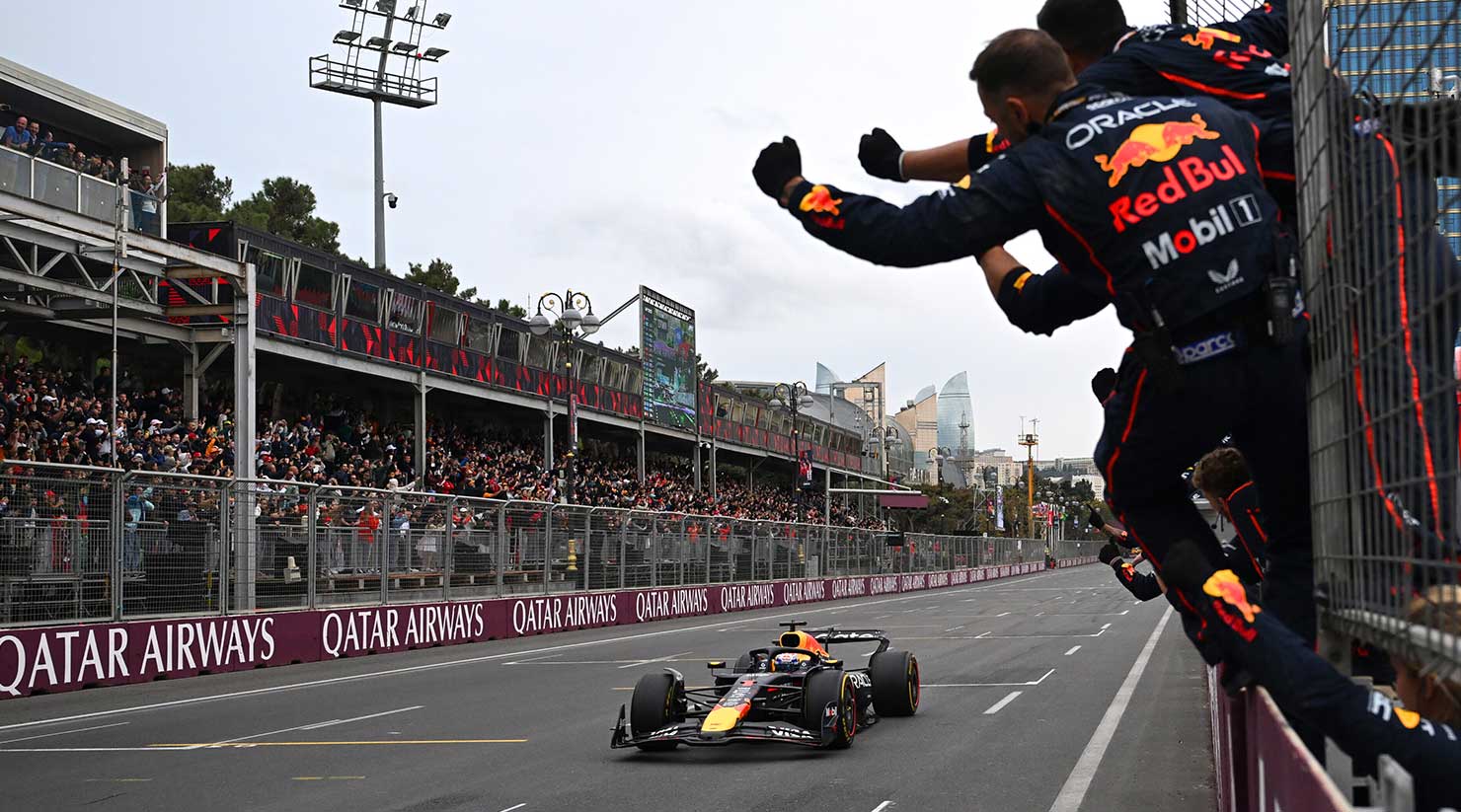
At the 2025 Azerbaijan Grand Prix, Round 17 of the season, Verstappen delivered a dominant lights-to-flag victory from pole position. The win was his fourth of the year and kept alive his pursuit of a fifth consecutive Drivers’ Championship, once again demonstrating his exceptional pace around the streets of Baku.
Honda celebrated victory during its final season with Red Bull Honda in 2021 and continued its technical partnership with Red Bull thereafter. Across a five-year span, Red Bull achieved four victories in Baku, underlining the competitiveness and effectiveness of Honda power units at this demanding circuit.
- Fastest pole position lap
- 1 min 40.203s
Charles Leclerc (Ferrari, 2023)
- Fastest Honda qualifying lap
- 1 min 40.391s
Max Verstappen (Red Bull, 2023)
- Fastest race lap
- 1 min 43.009s
Charles Leclerc (Ferrari, 2019)
- Fastest Honda race lap
- 1 min 43.388s
Max Verstappen (Red Bull, 2025, Fastest Lap)
* Statistics based on the 6.003 km circuit layout.
Honda Records
Explore Honda’s history of challenges and achievements across iconic circuits,
backed by race performance data.