Circuit info

- Circuit Length
- 5.412 km
- First Grand Prix
- 2004
- Number of Laps
- 57
- Race Distance
- 308.238 km
Location
- Address
- Gate 255, Gulf of Bahrain Avenue Umm Jidar, Sakhir، 1062 Bahrain
- Google Maps
History of the Circuit
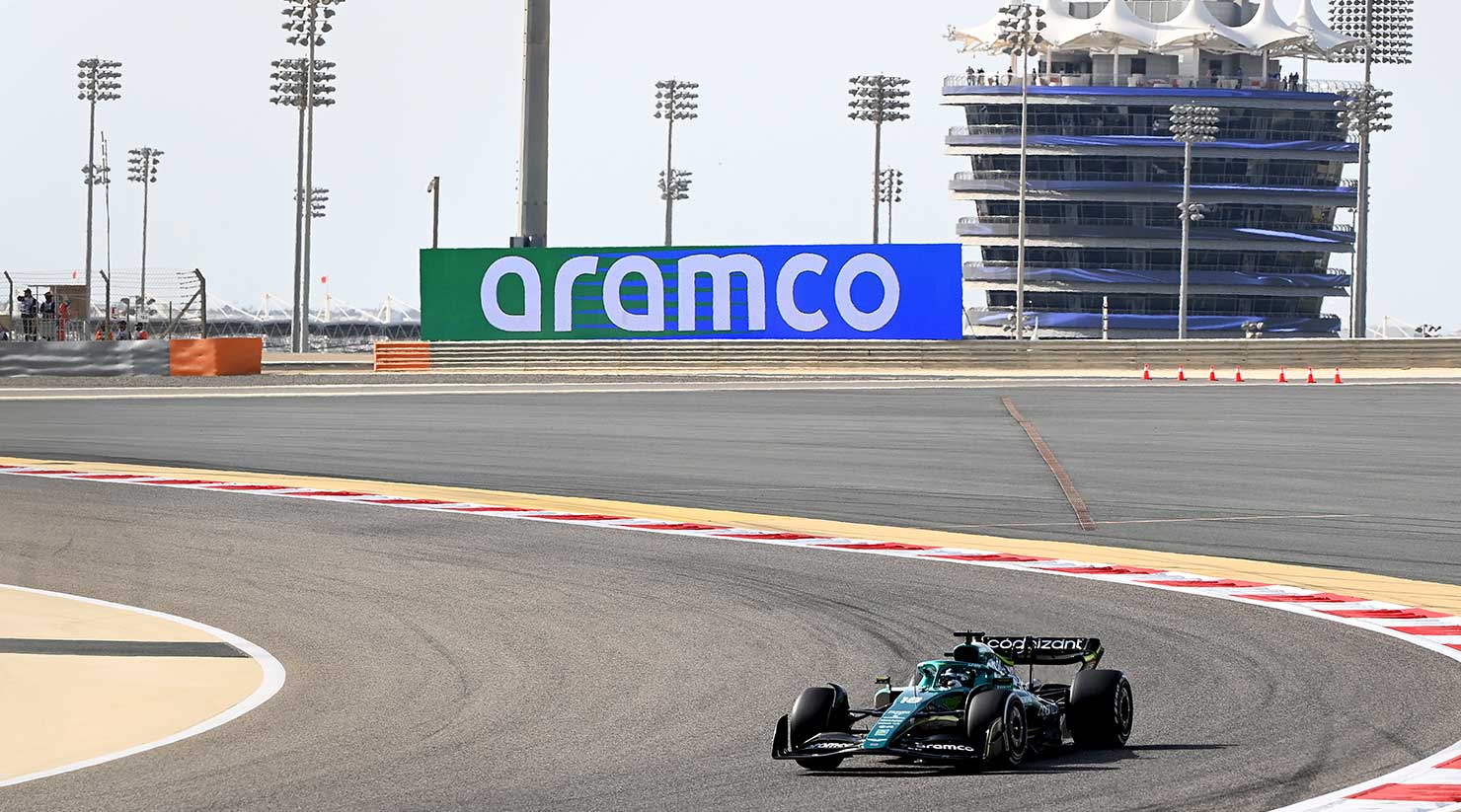
In the early 2000s, F1™ set its sights on the Middle East as part of its drive for global expansion. Today, Grands Prix are held in four countries across the region, but Bahrain was the pioneer.
In October 2002, construction began on the Bahrain International Circuit in the desert of Sakhir, southwest of the capital Manama, based on a design by Hermann Tilke. Construction was originally expected to take two years, but following a request from F1 for an earlier completion, the enormous desert facility was finished in March 2004, in less than 18 months. Just 18 days later, on April 4, the inaugural Bahrain Grand Prix was held, marking a historic day as the first FIA Formula One World Championship™ race in the Middle East.
There had been major concerns about holding an F1 race in the desert. Along with the heat, the biggest potential problem was sand. Strong winds could carry sand onto the circuit, affecting track grip as well as engines and cooling systems. Teams and engine manufacturers therefore obtained samples of local sand in advance and developed appropriate countermeasures. In the event, the desert race took place without major problems, demonstrating that F1 Grands Prix elsewhere in the Middle East were also feasible. The success of the Bahrain GP, the starting point for F1 in the Middle East, paved the way for subsequent events in Abu Dhabi, Qatar and Saudi Arabia.
Following its inaugural race, the Bahrain GP steadily established itself on the F1 calendar.
In 2011, however, large-scale anti-government protests took place in Bahrain amid the wave of unrest known as the Arab Spring. The Bahrain GP had originally been scheduled as the season opener in March, but the deteriorating domestic situation made it difficult to hold the event. The FIA subsequently decided provisionally to postpone the race until October, but concerns over security, opposition from the teams and scheduling issues ultimately resulted in the cancellation of the 2011 event.
The Bahrain GP returned in 2012, although debate surrounding the event continued, highlighting some of the challenges associated with holding F1 races in the Middle East.
In 2014, marking the 10th anniversary of its first F1 race, the Bahrain GP underwent a major transformation that created the character of the event seen today. An extensive lighting system incorporating 495 lighting poles was installed to enable night racing. The Bahrain International Circuit took on an entirely new appearance, creating the now-iconic sight of the illuminated circuit emerging from the darkness of the desert. Turn 1 was also named the Michael Schumacher Corner in honor of the inaugural Bahrain GP winner and to commemorate the 10th anniversary.
In 2020, the revised schedule during the COVID-19 pandemic saw two F1 Grands Prix held at the Bahrain International Circuit. The second of the back-to-back events was named the Sakhir GP and used an ultra-fast short layout of approximately 3.5 km, transforming the venue into a circuit completely different from its conventional configuration.
In 2022, F1 announced an agreement extending the Bahrain GP through 2036. The long-term extension reflected Bahrain’s importance to F1, with the circuit hosting not only the Grand Prix but also annual pre-season testing.
In 2026, the Bahrain GP, originally scheduled as Round 4 of the season, was postponed due to the worsening situation in the Middle East. It was subsequently decided that the Bahrain GP would be held at Malaysia’s Sepang International Circuit in October. The unusual arrangement represented a compromise between Bahrain’s strong desire to retain its Grand Prix and F1’s recognition of the importance of its Middle Eastern hosts. Attention is now focused on what impact this new approach to hosting a Grand Prix may have on F1 in the future.
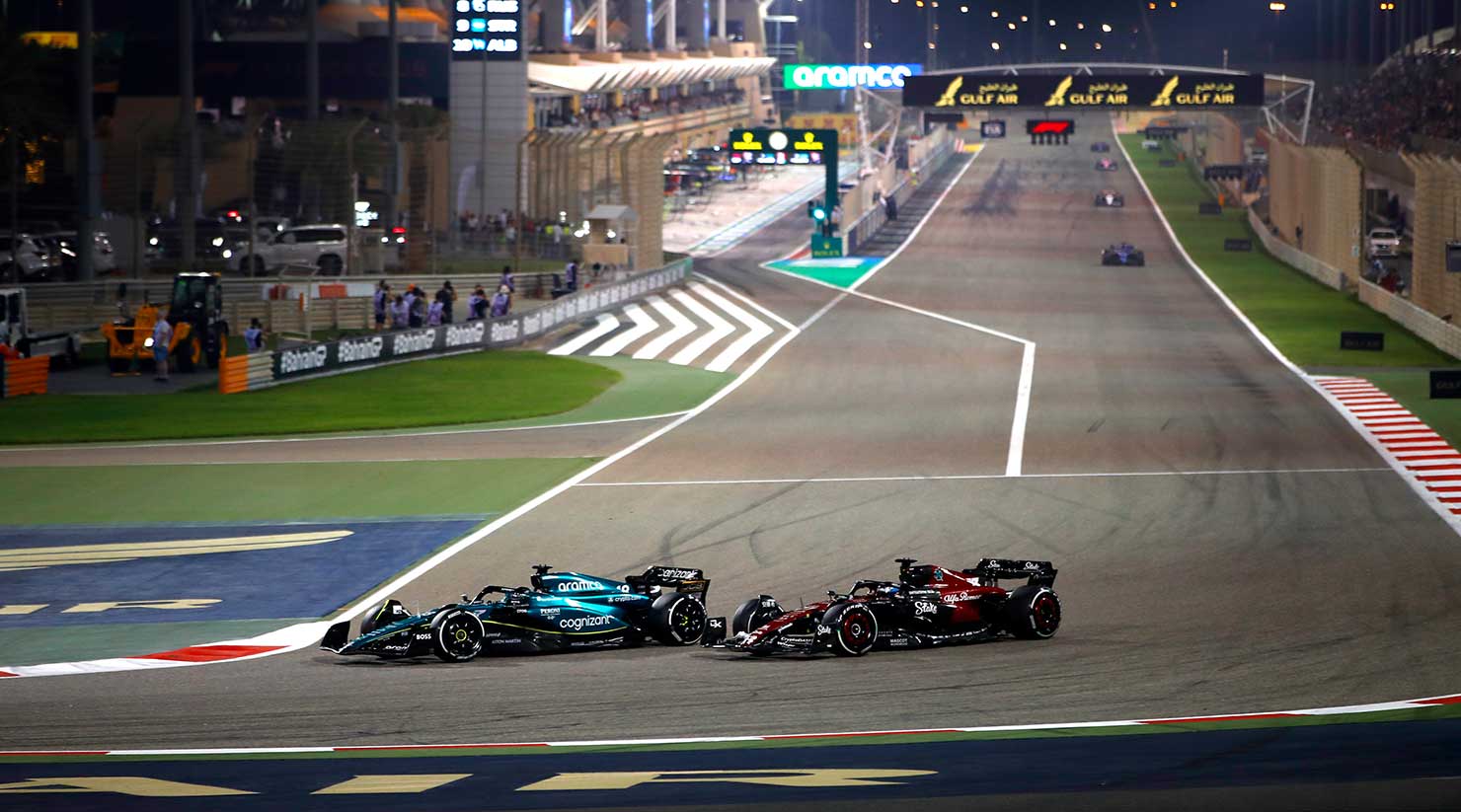
Circuit characteristics
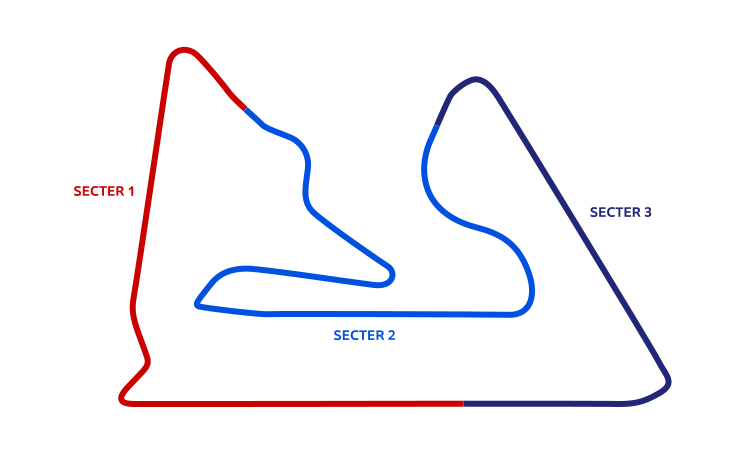
As its regular use for pre-season testing suggests, the Bahrain International Circuit is a course that puts the fundamental performance of an F1 car to the test. The 5.412 km circuit features 15 corners and four straights linked primarily by low-speed corners, creating a stop-and-go layout. Although the overall elevation change is only around 17 m, the maximum uphill gradient is 3.6% and the maximum downhill gradient is 5.6%, making the circuit feel more undulating from behind the wheel than it appears.
The combination of long straights and slow corners is immediately apparent from the layout.
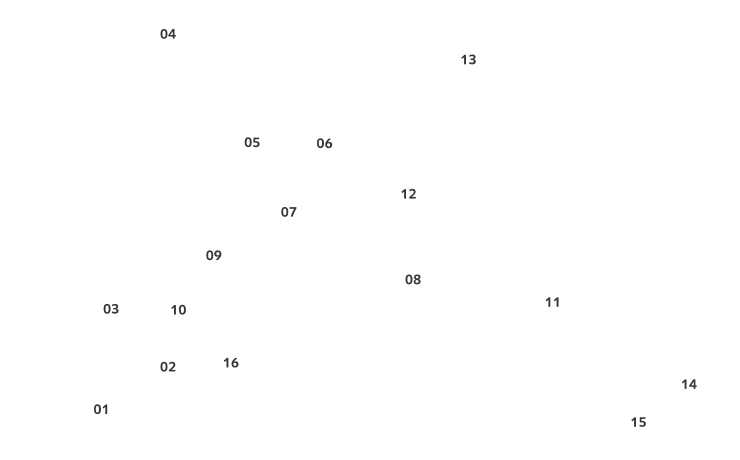
After running flat out along the approximately 1 km main straight, the cars arrive at Turn 1, one of Bahrain’s signature corners. In 2014, it was named the Michael Schumacher Corner in honor of the winner of the inaugural Bahrain GP. It is a classic low-speed right-hander requiring heavy braking at the end of the long straight and provides the circuit’s main overtaking opportunity.
After slowing dramatically and turning right through Turn 1, the cars immediately change direction into Turn 2 before accelerating through Turn 3 toward the next long straight.
At the end of the long straight beyond Turn 3, heavy braking is again required for Turn 4. Along with Turn 1, this is one of the circuit’s main overtaking opportunities.
Beyond Turn 4, the character of the circuit changes. After the earlier combination of straights and tight corners, Turns 5, 6 and 7 form a faster section requiring rhythmic changes of direction. Once through this high-speed sequence, the cars must again slow sharply for Turn 8.
Next comes the distinctive Turn 9–10 sequence, one of the most challenging parts of the Bahrain International Circuit. Drivers accelerate toward Turn 9 and, while still turning left, must begin braking for Turn 10 with steering input still applied. This makes the section particularly difficult, while the exit is also crucial for maximizing speed along the following straight.
After accelerating out of Turn 10 and along the straight, Turn 11 begins a faster sequence of corners with a very different character. Turns 11 through 13 form one of Bahrain’s more flowing sections and present a difficult challenge in terms of car setup.
Beyond Turn 13, the cars accelerate along another long straight toward the final sector.
Turns 14 and 15 sweep right and lead back onto the main straight. Braking and traction on the exit are crucial, and drivers must prioritize acceleration through this sector to create an overtaking opportunity into Turn 1.
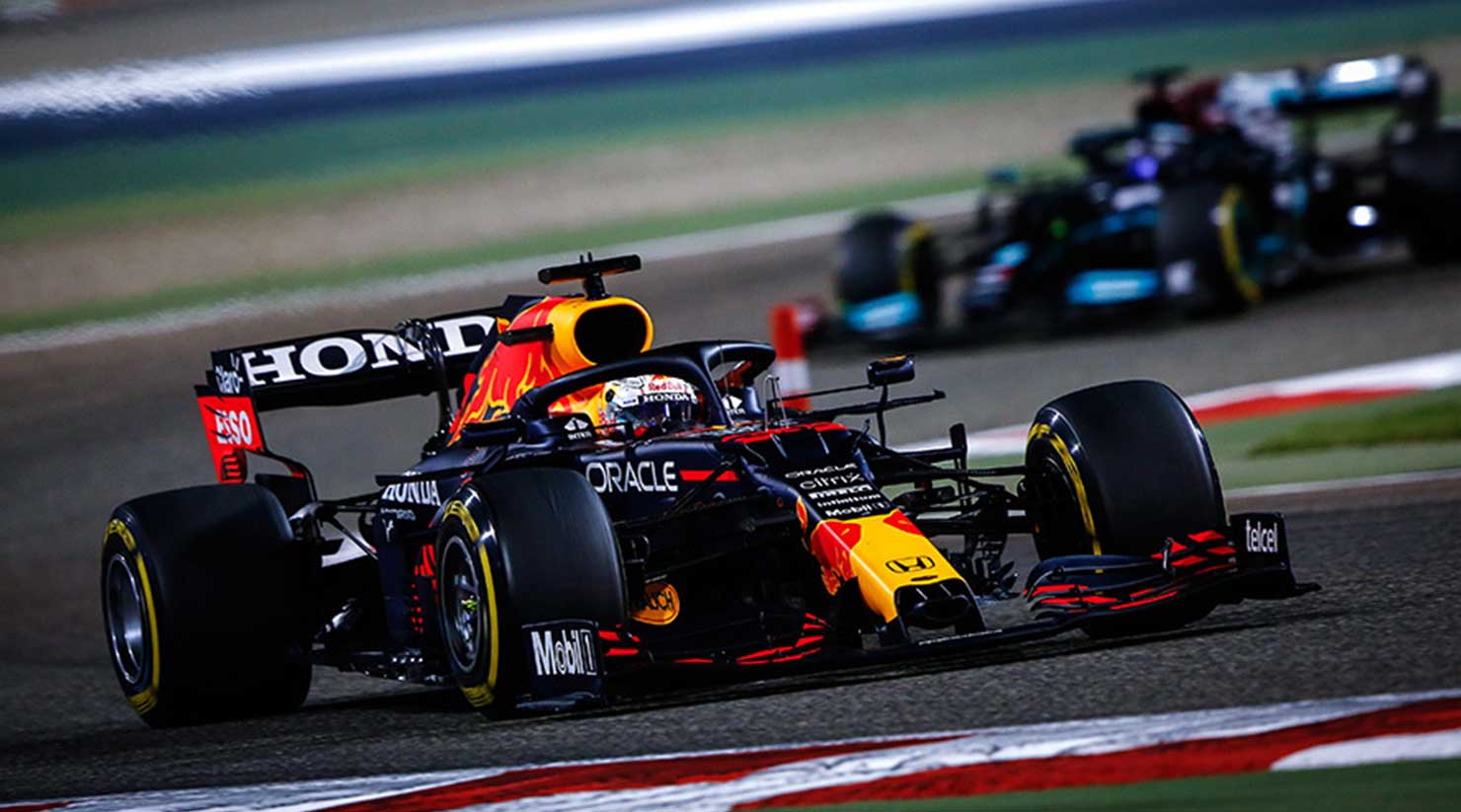
Memorable battles
The Bahrain GP has frequently been held early in the season, making it an important race for revealing the competitive order among the teams and setting the tone for the championship battle.
The 2006 Bahrain GP, which opened the season, produced a memorable battle symbolizing a changing of the guard. Young Fernando Alonso had claimed his first World Championship the previous year, ending the title-winning streak of the dominant Michael Schumacher, and the two went head-to-head from the very first race of the new season.
Schumacher took pole position, while Alonso qualified fourth. At the start, Alonso quickly moved up to second. Pit strategy ultimately decided the race, with Alonso using the overcut to take the lead. The pair then battled intensely in the closing stages, with Alonso holding on to win by just 1.246 seconds. Alonso would ultimately prevail over Schumacher after a season-long battle to claim his second consecutive title, with the opening race providing an early indication of the contest to come. Honda also competed as a factory team that year and went on to finish fourth in the Constructors’ Championship. At the season opener, Jenson Button demonstrated the team’s competitiveness by qualifying third and finishing fourth.
The 2021 Bahrain GP also produced a fierce battle from the opening race between the dominant champion Lewis Hamilton and Max Verstappen, who was pursuing his first title, setting the tone for the season ahead. Verstappen of Red Bull Honda started from pole position and led the early stages before Hamilton used an undercut strategy to take the lead.
Verstappen mounted an intense attack in the closing stages and passed Hamilton to regain first place. However, he had gone off track while making the move and was required to give the position back. Hamilton then resisted Verstappen’s attacks to take victory in the season opener. Although Verstappen missed out on the win, the race demonstrated that Red Bull Honda and Verstappen were capable of fighting the reigning champion on equal terms and proved to be a fitting preview of the season ahead.
- Fastest Pole Position Time
- 1 min 27.264s
Lewis Hamilton (Mercedes / 2020)
- Fastest Honda Qualifying Time
- 1 min 27.678s
Max Verstappen (Red Bull / 2020)
- Fastest Race Lap
- 1 min 31.447s
Pedro de la Rosa (McLaren / 2005)
- Fastest Honda Race Lap
- 1 min 32.014s
Max Verstappen (Red Bull / 2020 / Fastest Lap)
*Data based on the 5.412 km circuit layout.
Honda Records
Explore Honda’s history of challenges and achievements across iconic circuits,
backed by race performance data.