Circuit info


- Circuit Length
- 4.309 km
- First Grand Prix
- 1973
- Number of Laps
- 71
- Race Distance
- 305.879km
Location
- Address
- Av. Sen. Teotônio Vilela 261, Jardim Malia I, Sao Paulo, SP 04801-000, Brazil
- Google Maps
History of the Circuit
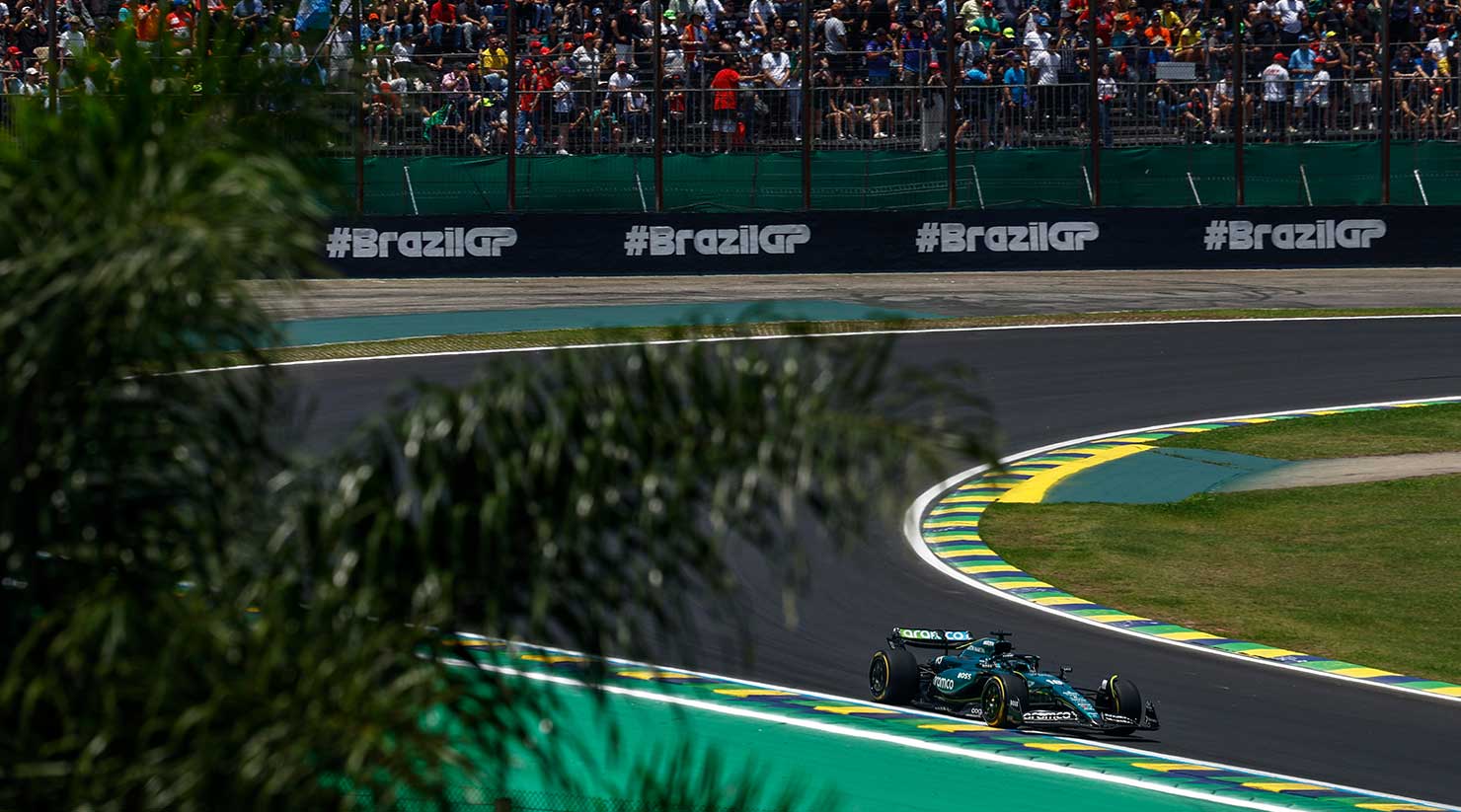
The history of the Brazilian Grand Prix began in 1972, when a non-championship Formula 1 race was held at Interlagos. The following year, the event joined the FIA Formula One World Championship™, and Brazilian hero Emerson Fittipaldi claimed victory, helping establish the circuit as a favorite among local fans.
The Grand Prix alternated between Interlagos and the Jacarepaguá circuit near Rio de Janeiro until 1977, before eventually returning permanently to a renovated Interlagos in 1990. The Brazilian Grand Prix became famous for its passionate atmosphere, with grandstands filled with Brazilian flags and fans celebrating with samba throughout the race weekend.
Much of this enthusiasm stems from Brazil’s rich Formula 1 heritage. During the eras of Fittipaldi, Nelson Piquet, and Ayrton Senna—all World Champions—the sport reached extraordinary levels of popularity in the country. That passion continues today as a tribute to these legendary drivers.
Another Brazilian legend, José Carlos Pace, a native of Sao Paulo who claimed his only Formula 1 victory at the 1975 Brazilian Grand Prix, is also honored at the venue. Following his death in an aircraft accident, the circuit’s official name was changed to Autodromo Jose Carlos Pace.
In 2021, the event was officially renamed the Sao Paulo Grand Prix after the city government became a key supporter of the race as part of a contract extension agreement signed in 2020.
Circuit characteristics
Located on the outskirts of Sao Paulo, Interlagos underwent a major redevelopment before returning to the Formula 1 calendar in 1990. The original 8 km layout was shortened to approximately 4.3 km while retaining the circuit’s dramatic elevation changes and incorporating a mix of high-speed and technical sections across 15 corners.
One of the circuit’s most distinctive features is its uphill start-finish straight. The opening sequence of Turns 1 and 2, known as the Senna S, was created during the redesign process with input from Ayrton Senna himself. The braking zone at Turn 1, approached at the end of the long uphill straight, provides the circuit’s primary overtaking opportunity.
From the Senna S through the fast Turn 3, the track descends downhill before entering the Reta Oposta back straight. The braking zones for Turns 4 and 5 offer additional overtaking opportunities.
The circuit then climbs uphill through the fast Turns 6 and 7 before entering a technical middle sector featuring a sequence of medium- and low-speed corners. Turn 10 is a slow hairpin-like corner known as Bico de Pato (“Duck Bill”). After the left-hand Turn 12, Juncão, drivers enter one of Interlagos’ defining sections: a steep uphill full-throttle run through Turns 13, 14, and 15 all the way back to the start-finish line.
Interlagos is renowned for having one of the longest periods of full-throttle running on the Formula 1 calendar.
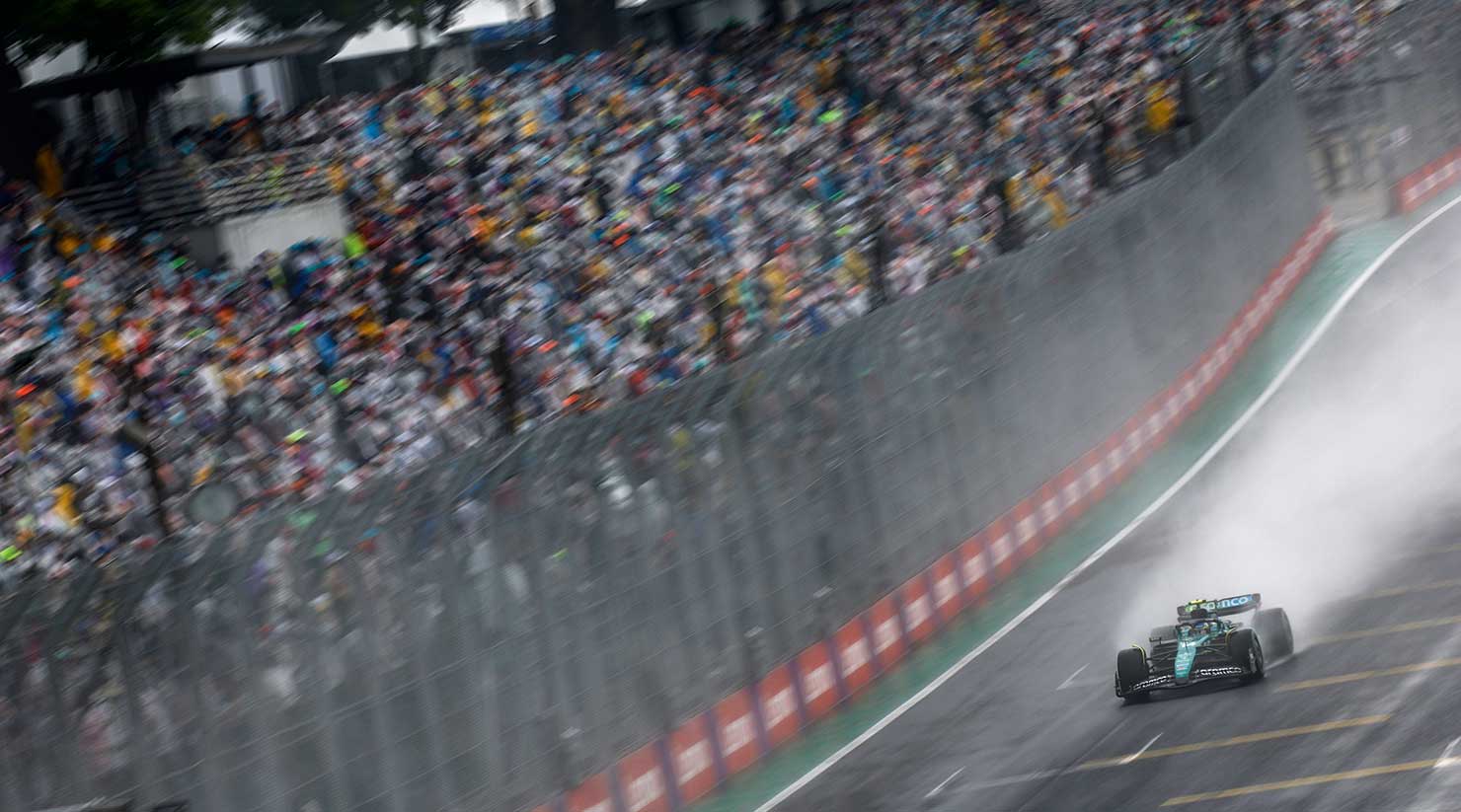
The circuit sits approximately 800 meters above sea level and is also known for its unpredictable weather. Sudden rain showers frequently affect races, often creating dramatic and unpredictable conditions.
Memorable battles
One of the most memorable races in the circuit’s history came in 1991, when Ayrton Senna achieved his long-awaited home victory for McLaren Honda.
Despite often displaying dominant pace at Interlagos, misfortune had repeatedly denied Senna victory in front of his home crowd. While leading comfortably late in the race, he suffered a gearbox problem that left him unable to shift out of sixth gear. Many believed victory had slipped away once again. Instead, Senna produced one of the most heroic drives in Formula 1 history, nursing the car to the finish and finally securing his first Brazilian Grand Prix victory.
After the race, Senna was so physically exhausted that he could barely climb out of the cockpit, creating one of the most iconic images in the history of Formula 1.
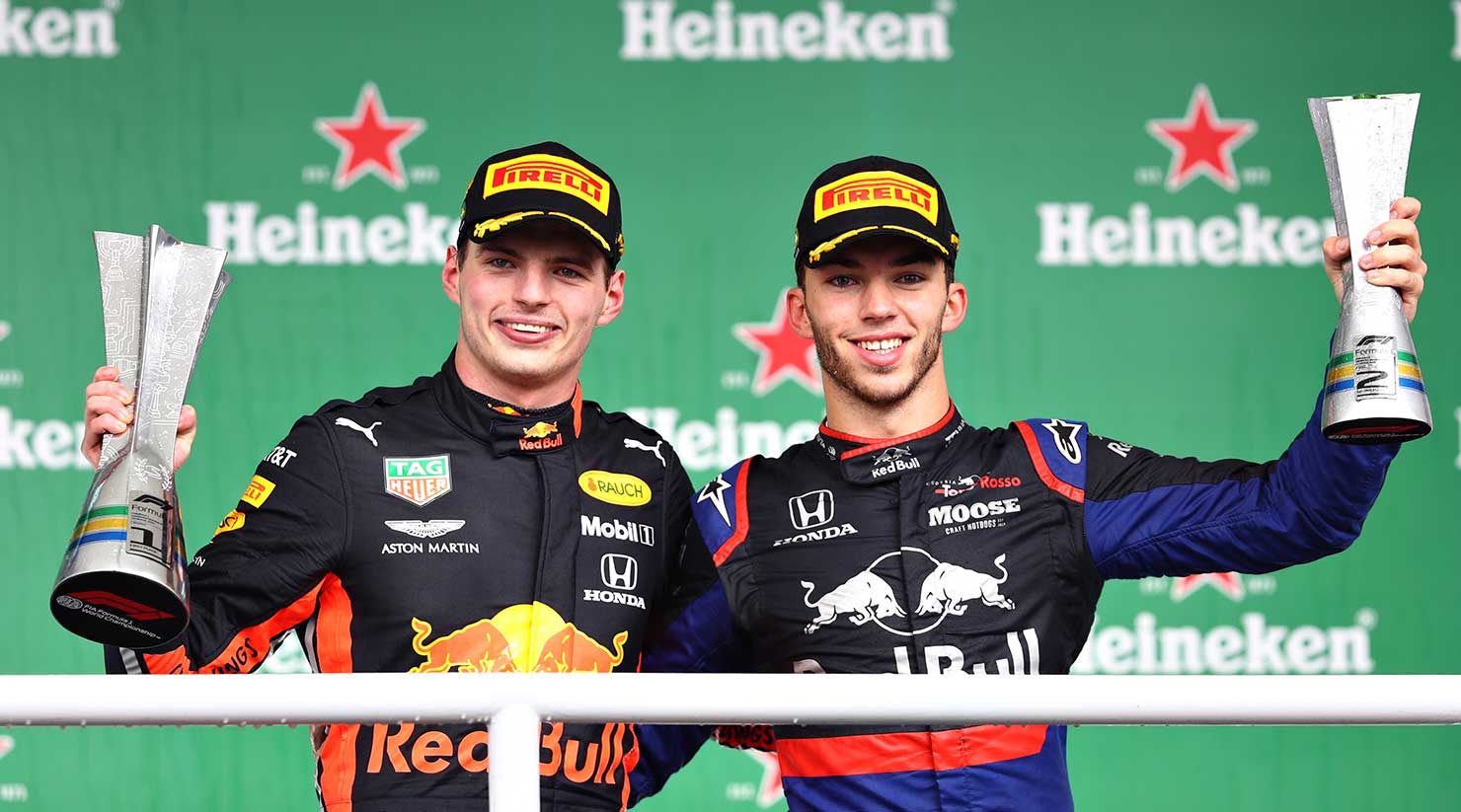
Another unforgettable race came in 2019, when wet and chaotic conditions produced a spectacular result for Honda-powered teams. Max Verstappen delivered a dominant victory for Red Bull Honda, while Pierre Gasly finished second for Toro Rosso Honda, completing a remarkable 1–2 finish for Honda-powered cars. At one stage, Alexander Albon was running second, putting Honda-powered machinery in positions one, two, and three.
In the closing laps, Gasly became involved in a fierce battle for second place with Mercedes driver Lewis Hamilton. Along Interlagos’ famous uphill full-throttle section, the pair raced side by side to the finish line. Most expected Hamilton to complete the pass, but Gasly held his ground and secured second place.
For Honda, the significance of the result went beyond the podium positions. It demonstrated that its power unit performance could match Mercedes in a straight-line battle, making it one of the defining moments of Honda’s modern Formula 1® era.
- Fastest pole position lap
- 1 min 07.281s
Lewis Hamilton (Mercedes, 2018)
- Fastest Honda qualifying lap
- 1 min 07.508s
Max Verstappen (Red Bull Honda, 2019, Pole Position)
- Fastest race lap
- 1 min 10.540s
Valtteri Bottas (Mercedes, 2018)
- Fastest Honda race lap
- 1 min 10.862s
Max Verstappen (Red Bull Honda, 2019)
* Data based on the 4.309 km circuit configuration.
Honda Records
Explore Honda’s history of challenges and achievements across iconic circuits,
backed by race performance data.