Circuit info


- Circuit Length
- 4.304 km
- First Grand Prix
- 1963
- Number of Laps
- 71
- Race Distance
- 305.354km
Location
- Address
- Viad. Río de la Piedad S/N, Iztacalco, Mexico City, CDMX 08400, Mexico
- Google Maps
History of the Circuit
The Mexico City Grand Prix has been held at Autodromo Hermanos Rodríguez, located near Mexico City, during three distinct periods: from 1963 to 1970, from 1986 to 1992, and from 2015 to the present day. In 1962, the circuit—then known as Magdalena Mixhuca—hosted a non-championship Formula 1® race. During practice, local hero Ricardo Rodríguez was tragically killed in an accident. His brother Pedro Rodríguez also became one of Mexico’s most successful racing drivers before later losing his life in competition. In tribute to the two brothers, the circuit was renamed Autodromo Hermanos Rodríguez, meaning “Rodríguez Brothers Circuit.”
The venue joined the FIA Formula One World Championship™ calendar in 1963 and became the site of Honda’s first-ever F1 victory just two years later in 1965. By the late 1960s, however, safety concerns emerged as increasingly large crowds overwhelmed the circuit’s facilities. Following the 1970 event, the Mexican Grand Prix disappeared from the F1 calendar.
After extensive renovations, the race returned in 1986. However, continued concerns regarding aging infrastructure and facilities eventually led to its removal from the championship after 1992.
A major redevelopment transformed the circuit before its return in 2015. Designed by Hermann Tilke, the revised layout introduced the distinctive stadium section through the former Foro Sol baseball stadium. Supported extensively by the Mexican government, the project gave the circuit a completely new identity and secured its return to the championship.
In 2019, shortly before the existing agreement expired, the Mexican government announced the withdrawal of financial support, placing the future of the event in doubt. However, efforts led by Mexican driver Sergio Pérez, his sponsors, private investors, and the Mexico City government ensured the race’s continuation. As a result, the event has officially been known as the Mexico City Grand Prix since 2021, following the cancellation of the 2020 race due to the COVID-19 pandemic.
Circuit characteristics
The defining characteristic of Autodromo Hermanos Rodríguez is its altitude. Situated more than 2,200 meters above sea level, the circuit experiences air density levels of approximately 75 percent of those found at sea level. This thin air affects every aspect of performance, including power unit operation, aerodynamics, and cooling.
From an aerodynamic perspective, both downforce and drag are significantly reduced. As a result, teams can run larger wings while still achieving exceptionally high top speeds. For the power unit, the thin air requires the turbocharger to work harder to maintain performance, making efficiency and turbo performance particularly important. Cooling presents perhaps the greatest challenge, as radiators, intercoolers, oil coolers, and modern battery systems all operate under increased thermal stress.
The main straight exceeds one kilometer in length, with approximately 800 meters separating pole position from the first braking zone. This creates one of the most dramatic acceleration battles on the calendar. Top speeds regularly exceed 360 km/h, placing the circuit alongside Monza among Formula 1’s fastest venues.
Turn 1, a near right-angle corner, is the circuit’s primary overtaking opportunity and requires heavy braking. Turns 1 through 3 form a flowing S-shaped sequence before another straight leads to the chicane-like Turns 4 and 5 and the hairpin at Turn 6.
Turns 7 through 11 comprise the famous high-speed Esses, a signature section dating back to the 1980s. Compared with Suzuka’s S Curves, the corners are more open and allow drivers to maintain higher speeds through the rapid direction changes.
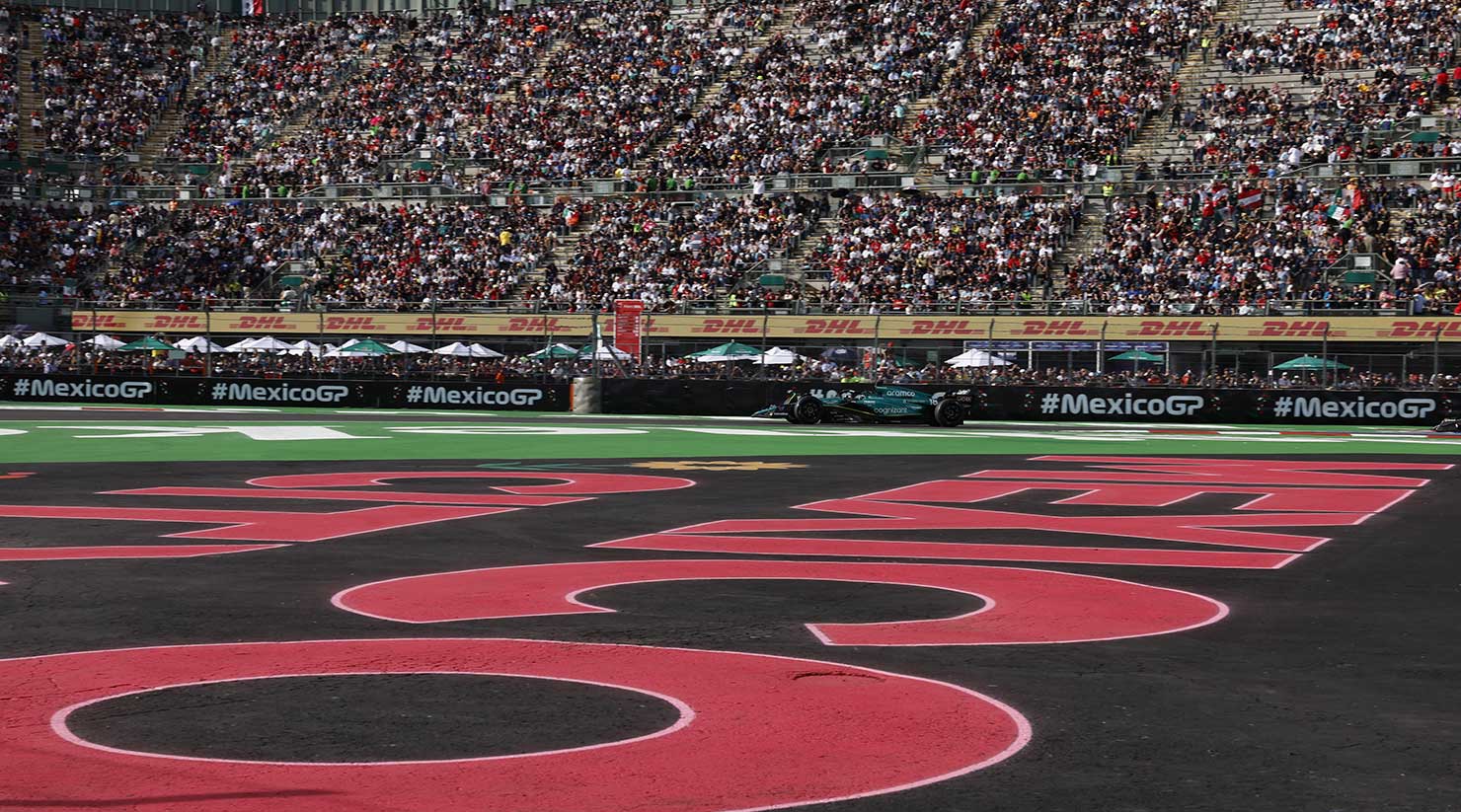
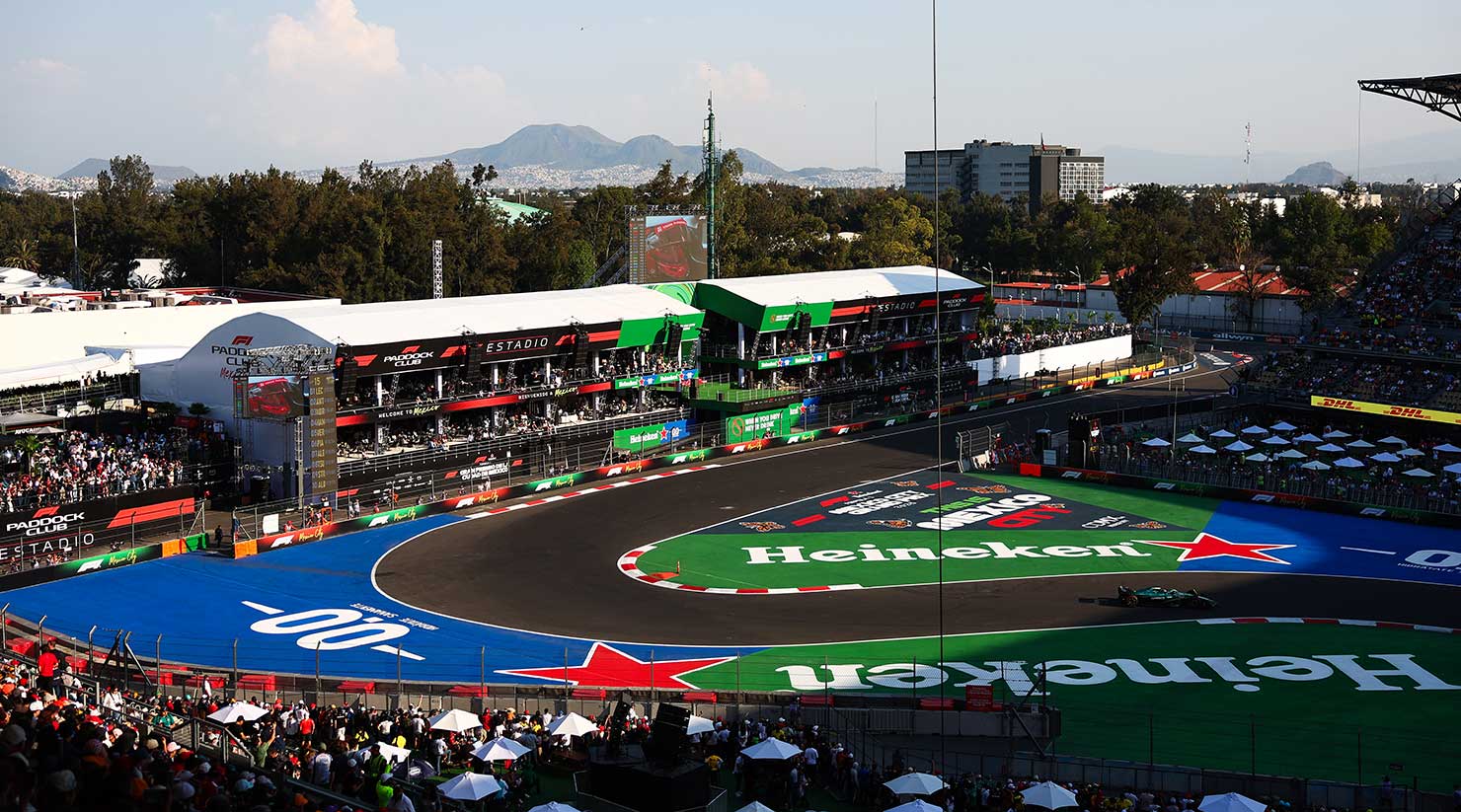
After the sweeping Turn 12 right-hander, the circuit enters the stadium section. Built within the former Foro Sol baseball stadium, this area is now the defining feature of the modern circuit. The grandstands surround the track, creating a unique atmosphere as the noise of the crowd echoes around the stadium. Exiting the complex sequence of corners, drivers reach the final corner, Peraltada.
The original Peraltada was a high-speed banked corner, but safety considerations led to significant changes during the 2015 redevelopment. Although only the latter portion of the original corner remains, it still retains much of its high-speed character and plays an important role in determining straight-line speed.
While the circuit measures only around 4.3 km in length, its high altitude and long straights create a unique combination of challenges that make it one of the most distinctive venues on the F1 calendar.
Memorable battles
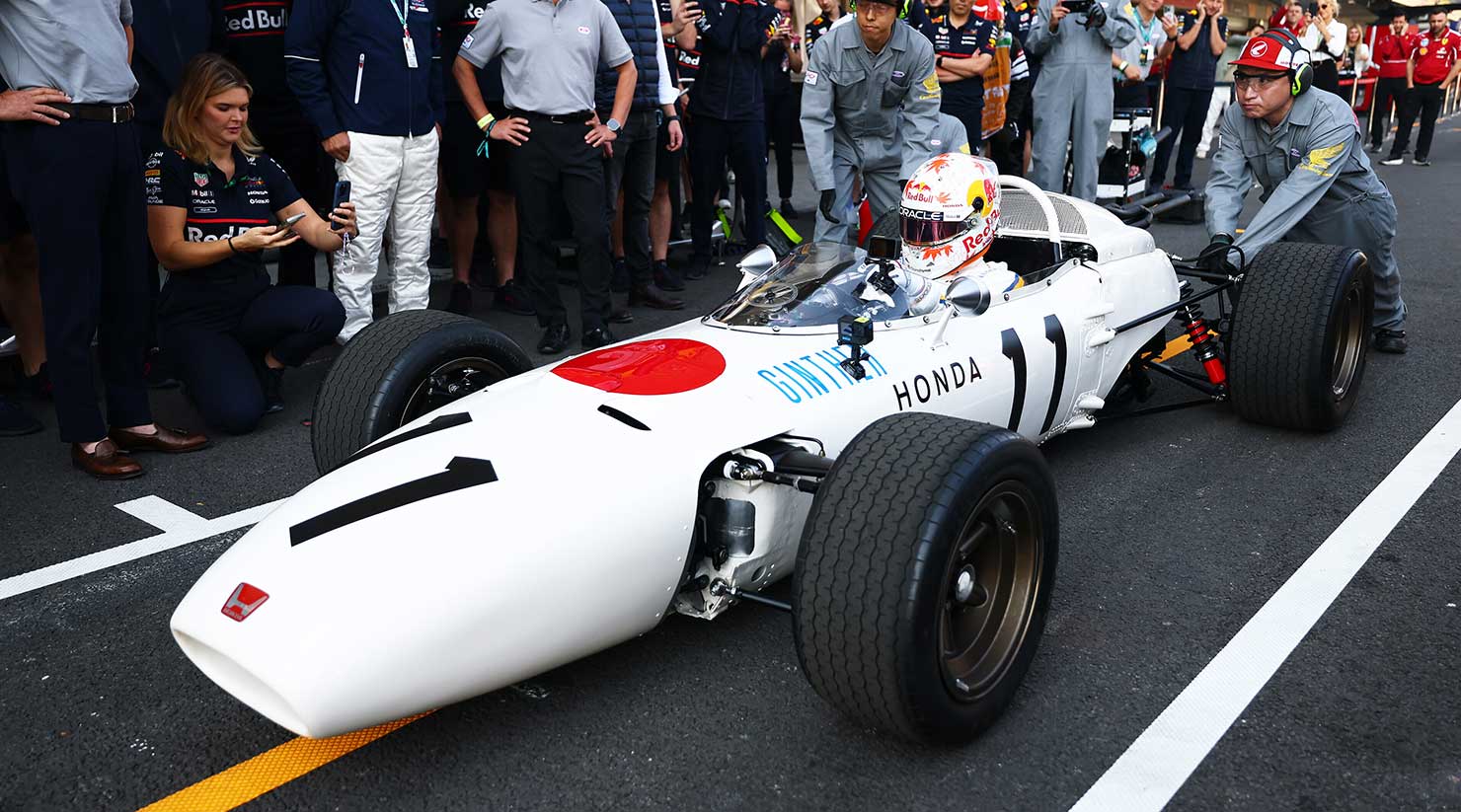
The 1965 Mexican Grand Prix occupies a special place in Honda history as the site of the company’s first F1 victory. Driving the RA272, Richie Ginther started from third on the grid, seized the lead at the start, and controlled the race from start to finish. Honda’s altitude-optimized engine delivered a decisive advantage, allowing Ginther to take the checkered flag and secure a landmark victory.
The achievement came less than 15 months after Honda’s F1 debut and in only its eleventh World Championship race. At a time when Formula 1 was still regarded largely as a European institution, a victory by a Japanese manufacturer and driver team marked a significant milestone in the sport’s history.
Another memorable race came in 2021 during the intense championship battle between Max Verstappen and Lewis Hamilton. Starting third on the grid for Red Bull Honda, Verstappen launched brilliantly at the start, carrying greater speed than both Mercedes drivers along the long run to Turn 1. Braking around the outside, he passed both cars and emerged in the lead.
From there, Verstappen controlled the race and secured a crucial second consecutive victory, strengthening his position in the championship fight. His teammate, local hero Sergio Pérez, finished third, and the sight of both Red Bull Honda drivers on the podium sparked an extraordinary celebration from the passionate Mexican crowd. The atmosphere remains one of the defining images of the 2021 season.
- Fastest pole position lap
- 1 min 14.759s
Daniel Ricciardo (Red Bull, 2018)
- Fastest Honda qualifying lap
- 1 min 14.758s
Max Verstappen (Red Bull, 2019)* Not eligible as the pole position record due to a three-place grid penalty.
- Fastest race lap
- 1 min 17.774s
Valtteri Bottas (Mercedes, 2021)
- Fastest Honda race lap
- 1 min 18.999s
Max Verstappen (Red Bull, 2021)
* Data based on the 4.304 km circuit configuration.
Honda Records
Explore Honda’s history of challenges and achievements across iconic circuits,
backed by race performance data.