First F1 Era Activities a Unifying Force for Honda
 © HRC
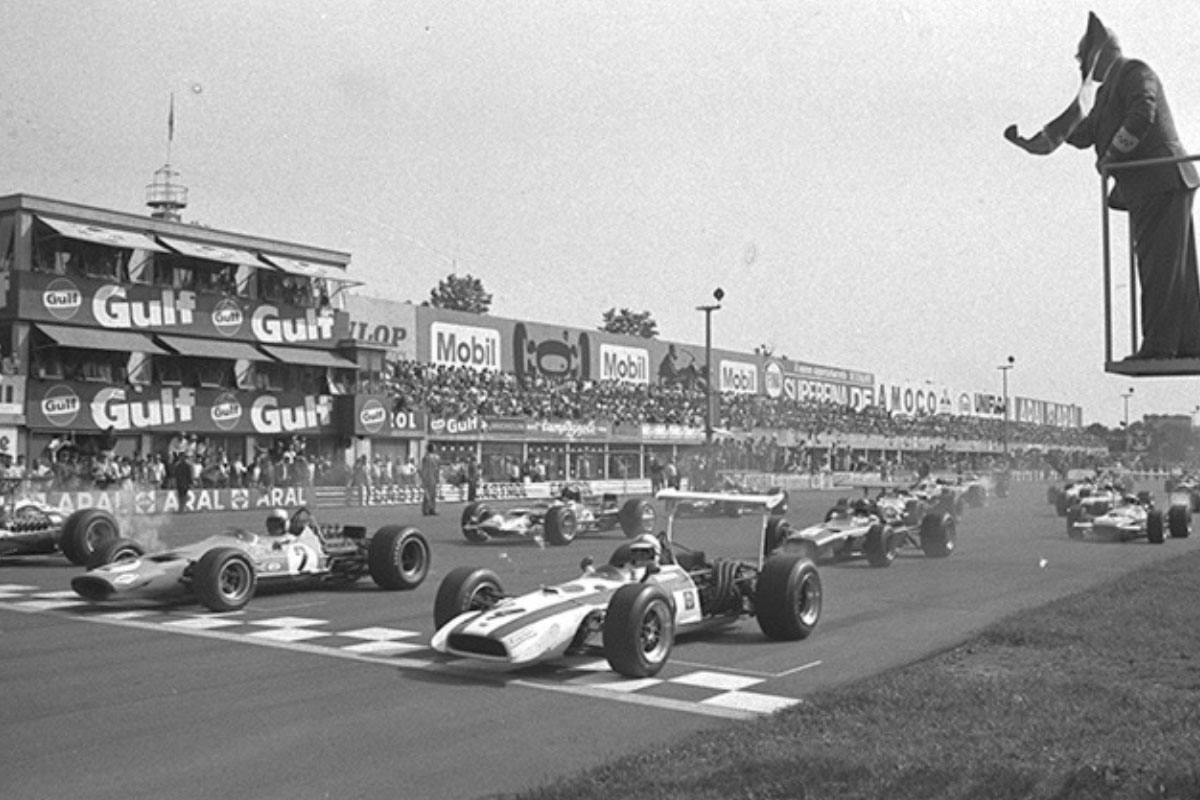
© HRCIn 1961, Soichiro Honda’s visit to Europe to see F1 racing for himself shocked the European motorsports world, even though Honda had not even begun automobile production. That same year, Honda won its first World Grand Prix championship in both the 125cc and 250cc classes, a remarkable achievement just three years after the its entry into motorcycle racing. Honda had invested 500 million yen, equivalent to 12.5% of its net profits, into its racing budget and through tremendous technical prowess achieved victory on the world stage. European teams were forced to brace themselves, knowing that if Honda were to enter Formula One with its technical capabilities and financial resources, it would immediately pose a real threat.
More than a decade since its inception in 1950, the Formula One World Championship had ten teams, all European, participating in 1961. Of these, only two were automobile manufacturers, Ferrari and Porsche, while the other teams, such as Lotus, Cooper, and BRM, were racing car constructors. None of the teams were major automakers. Ferrari, founded in 1947, and Porsche, which began automobile production in 1948, were small manufacturers producing luxury sports cars in small quantities. Honda, founded in 1948 at around the same time as these companies, grew to become the world’s largest motorcycle manufacturer, and was also a large company in terms of scale.
Ferrari, Porsche, and other racing car constructors, however, were rooted in Europe’s technical culture of automobile invention, which had a dominant history of over 200 years since the steam-powered automobile. Compared to Japan, which had only begun automobile production in the 1930s, Europe possessed a far deeper history and technical culture. From the perspective of these European teams, Honda was a newcomer. However, Honda proved that even as a rookie, it could defeat established teams through passion and technology, as demonstrated by its victories in motorcycle Grand Prix racing. Honda’s first F1 era followed in the footsteps of the path it paved in motorcycle racing to world championship victory in automobile racing.
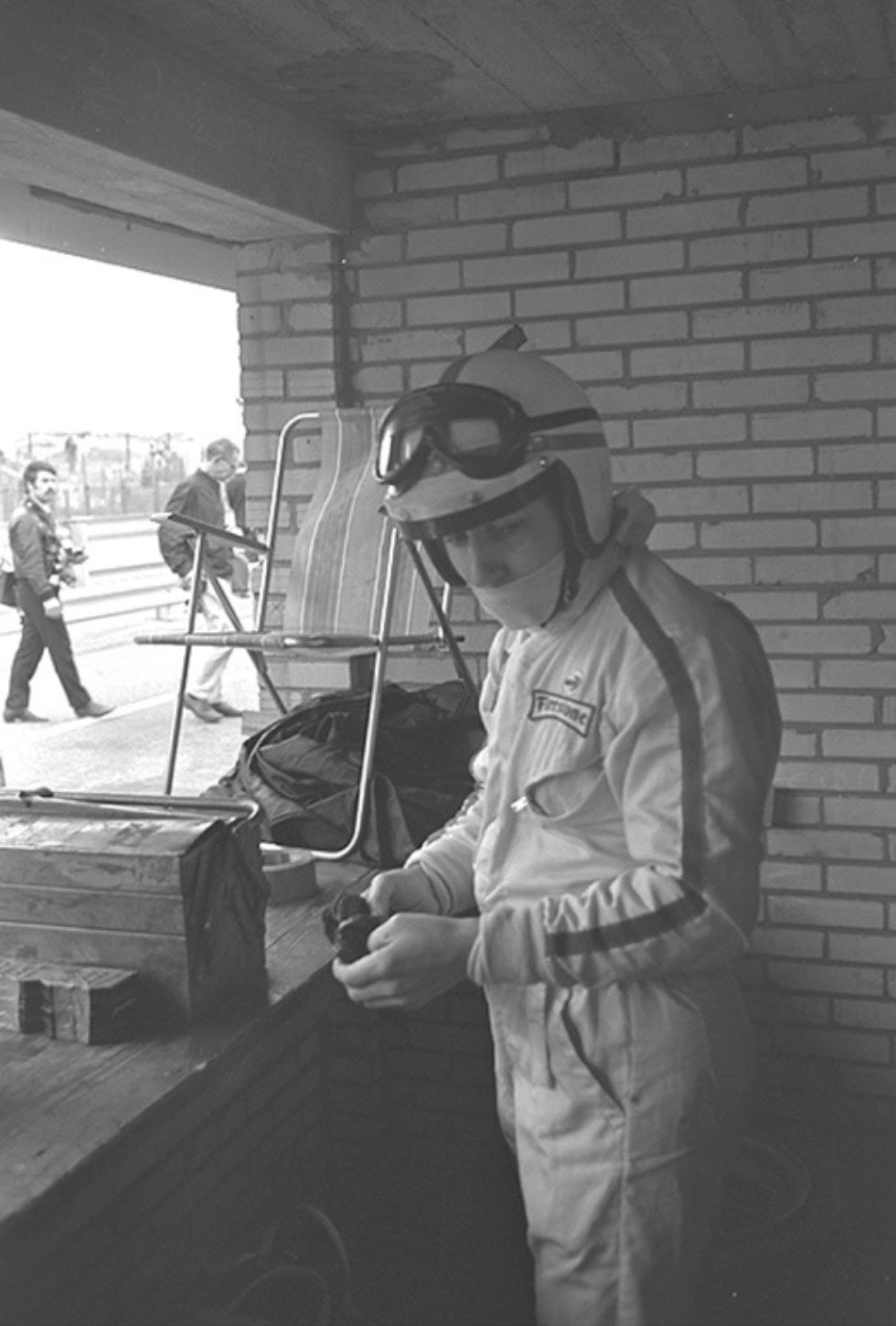
This is corroborated by the memoirs of John Surtees, the only person in history to have won both the motorcycle and the F1 championships. Surtees explicitly stated that if Honda were to challenge F1, European teams would lose, so he moved to the manufacturer team Ferrari as a last resort. His analysis and judgment were unique, having witnessed Honda’s astonishing performance on the motorcycle Grand Prix circuit. And it was this same Surtees who, during the latter half of Honda's first F1 era, approached Honda to join as a driver.
 © HRC
© HRCJohn Surtees, seven-time motorcycle Grand Prix world champion, and 1964 Formula One champion. He drove for Honda F1 since 1967.
Win or lose, Honda’s pride was unwavering
Soichiro Honda's motivation was simple: since Honda had become an automaker, it should compete in F1. His mindset was pragmatic: “If we try, we can win. If we do not try, we cannot win.” However, the challenges Honda had to overcome were the barriers of information communication and logistics, rather than technical issues. In the 1960s, an F1 season consisted of around 10 races, most of which were held in Europea, with only South Africa, the United States, and Mexico being the exceptions. F1 teams based in Europe did not have to struggle with communication and logistics, but Honda in Japan was not so fortunate.
At that time, even the latest jet passenger planes took two days to fly from Japan to Europe. Logistics were also a challenge, as shipping by sea took too long, forcing Honda to use expensive air cargo services. Emergency parts had to be carried by hand on commercial flights. The time spent on logistics inevitably cut into development time. Communication was also problematic. Communication between the pits and Japan relied on noisy international phone calls, telegrams, and telexes. In an era without fax machines or the internet, accurate and smooth information transfer was almost impossible.
Honda’s engineers on the ground overcame these significant disadvantages through individual initiative. Ultimately, Honda sent an executive-level representative to London, UK, established a joint venture factory to handle chassis development and manufacturing, and established a team management system where engines were developed in Japan and transported to London. This rationality and initiative were consistently executed during Honda’s first F1 era, from 1964 to 1968. However, the reason why Honda’s bold and daring activities are still beloved by racing fans in Japan and around the world is because they were driven by a human-centered sportsmanship. Avoiding superficial showmanship, Honda threw itself into racing activities with unwavering dedication, yet maintained an open-minded respect for F1 and its people. This attitude was the hallmark of Soichiro Honda and the company, earning such respect that rival teams sought technical advice from the team from Japan.
 © HRC
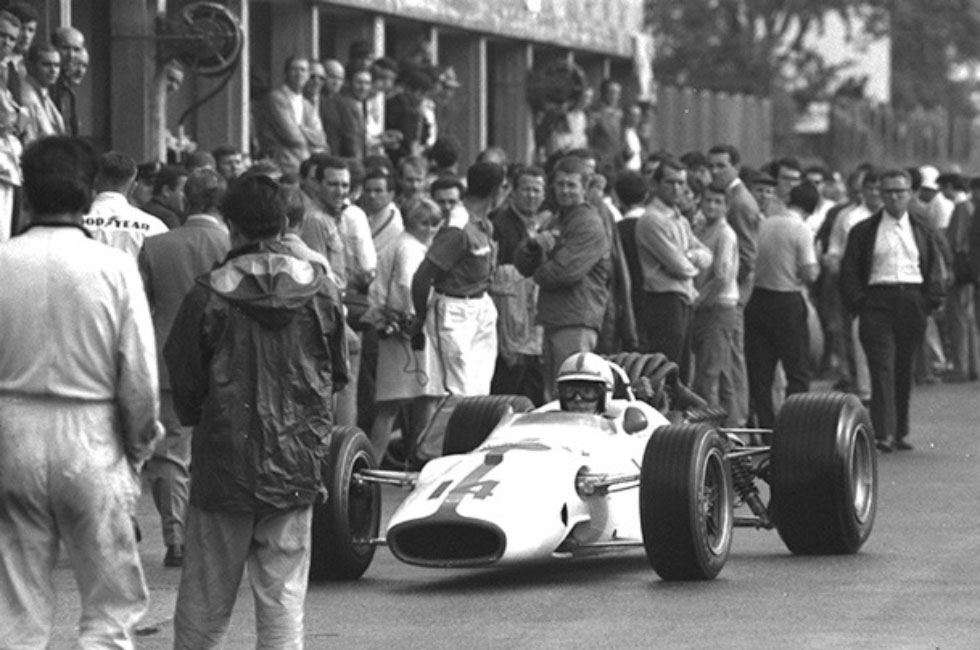
© HRCThe “Hondola” RA300 was made through chassis development cooperation with British Lola Cars since 1967
Soichiro Honda was a boss who insisted, “Win, take first place. Second place is just the best-performing loser.” However, this was not a simple win-at-all-costs mentality. In a world of competition where luck and whims can sway the outcome, and where passion and effort alone are not enough, Soichiro always pursued victory as a way to uphold the humanity and morality that must never be lost. By working tirelessly for victory, covered in sweat and oil, Honda”s pride was unwavering regardless of winning or losing. This is why Soichiro demanded victory so vehemently, yet never blamed those who lost. He had the capacity to stand in the shoes of those who failed to win, and understand their feelings more deeply than anyone else.
Maybe the most appealing aspect of Honda’s F1 team was its transparency, going so far as to share technical debates within Honda with the fans. Soichiro, a genius craftsman and engineer, was a true connoisseur of racing. He believed that winning with standard-specification engines and chassis could not bring the true joy of racing. This refined sensibility became the source of Honda’s charm, but when it came to overly ambitious technical ideas like jet fighter-level specifications or an unprecedented naturally aspirated racing engine, the team boldly challenged him. These debates were communicated to race fans. Honda did not hide anything, as this would disappoint the fans.
The debate between Soichiro, who insisted on winning with Honda’s unique technology, and the team, who argued that technology developed through winning could become Honda’s unique technology, became a technical debate that captivated racing fans worldwide. This transcended the value of winning or losing, giving birth to the true charm of the motorsports team. This is why racing fans were drawn to Honda.
From its racing activities in the 1960s, Honda became a mobility manufacturer that no longer needed a reason to challenge the World Grand Prix. BY its existence alone, Honda earned the myth, legend, and tradition to challenge the World Grand Prix, recognized by motorsports fans all over the world.
This, Honda’s racing spirit philosophy, is what motorsports fans and Honda call “Honda DNA”.
 © HRC
© HRC