The Solitary 1.5L V12 Project
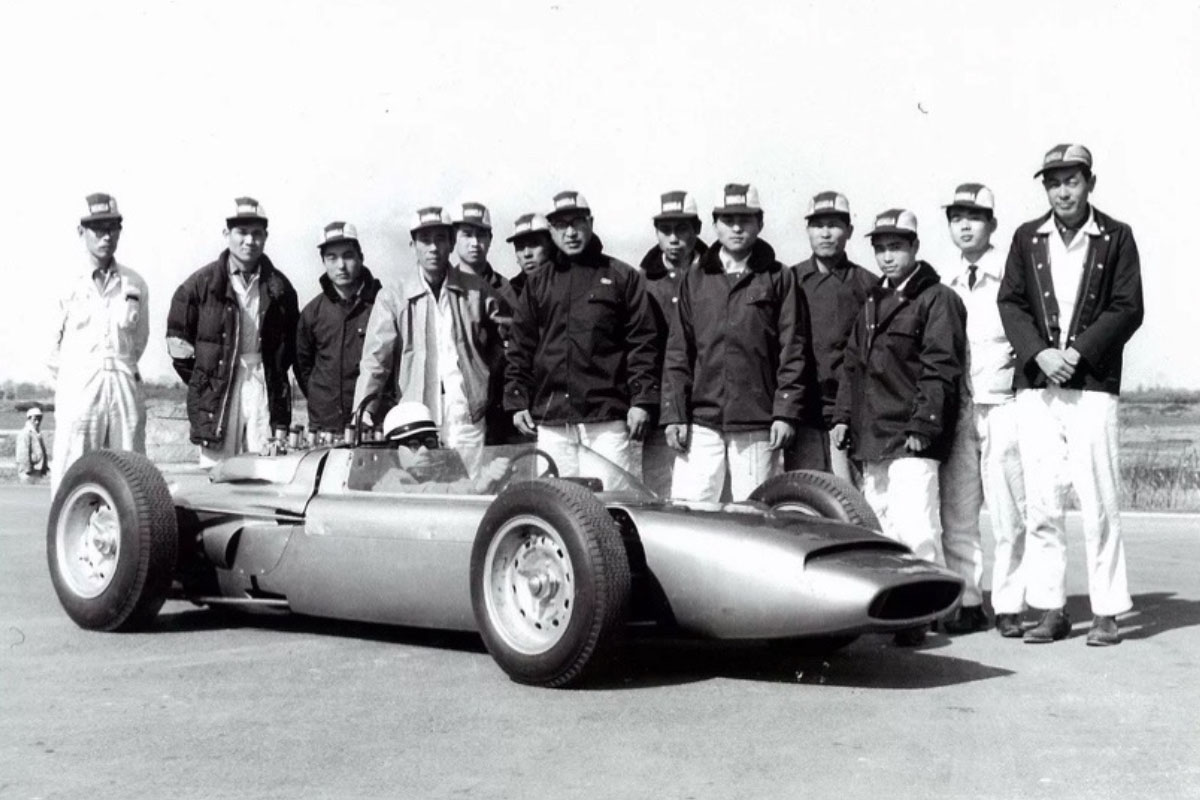 © Honda(Motosport.com)
According to Honda's history book, “Lessons to Hand Down,” Honda’s F1 project was first revealed within the company in May 1962.
Soichiro had visited the Italian Grand Prix on October 10, 1961. This sparked rumors across Europe’s racing circles that Honda was preparing to take on the challenge of Formula 1 Grand Prix racing. Through its astonishing dominance in motorcycle grand prix racing, Honda had become a prominent racing team in the European motorsports scene. Honda’s F1 challenge began in 1964, only three years from Soichiro seeing an F1 race, to the start of the company’s F1 challenge. Similarly with motorcycle racing, it had taken only four years since Soichiro first visited a grand prix to entering the Isle of Man TT races in 1959.
As Honda was the first Japanese company to challenge the F1 World Championship, there were no predecessors to learn from. Honda had no choice but to conduct its own research and negotiations, which inevitably took time. In addition, this challenge was a massive undertaking that could determine the company’s future, needing careful and steady execution.
This business decision required rationality and courage, to avoid recklessness while being confident to win. Or, being persistent until victory is achieved. Honda’s founders, Soichiro Honda and Takeo Fujisawa, who propelled the company to rapid growth as a global enterprise, undoubtedly possessed these qualities and more.
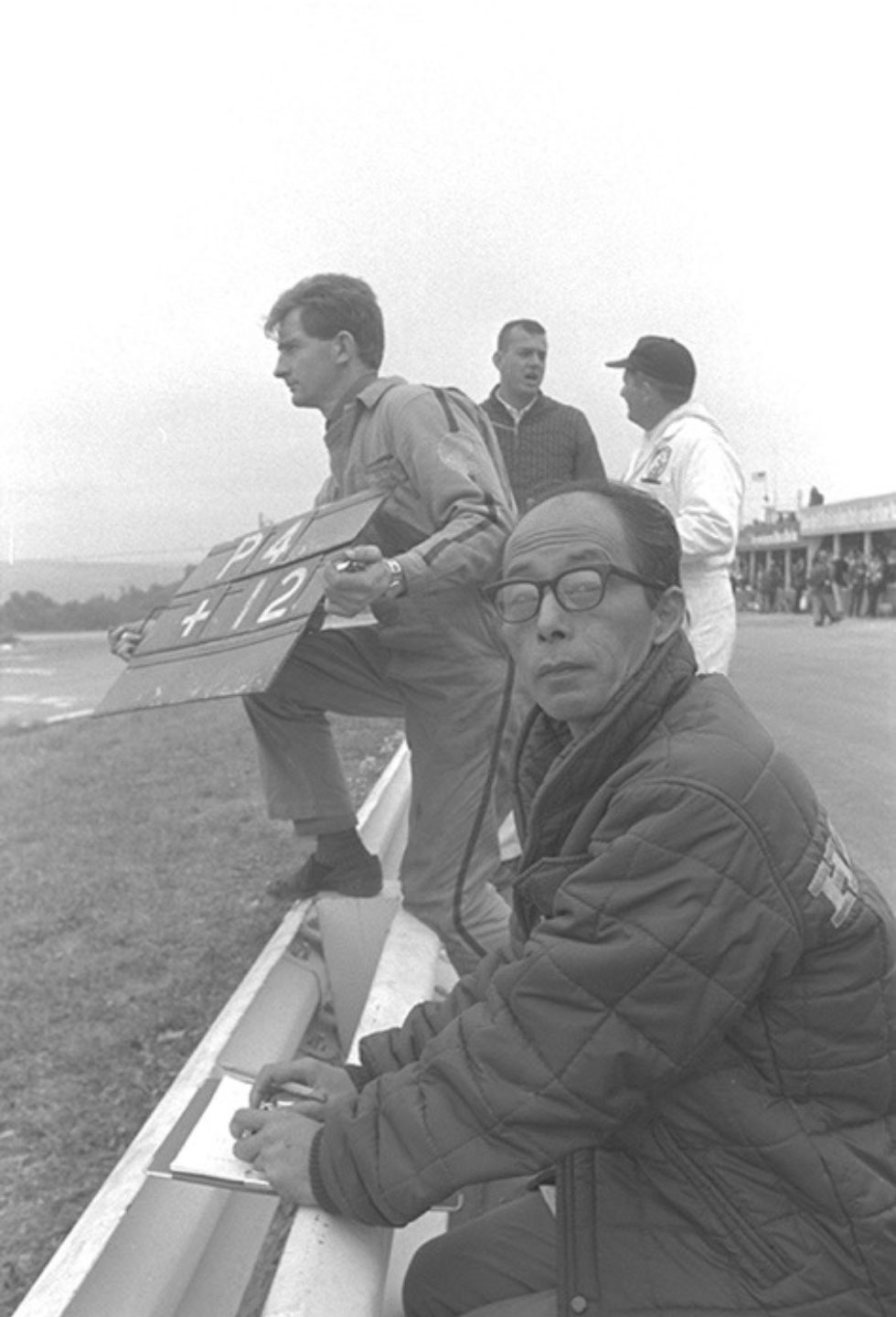
According to Yoshio Nakamura, leader of Honda’s automobile development at the time, technical development for Honda’s first F1 era began in January 1963. Nakamura was an engineer who had worked on jet engine development for military aircraft during World War II. After the war, he wanted to be involved in F1 racing, and joined Honda after working at several automobile manufacturers. He laid the foundation for Honda’s automobile development, served as the F1 team manager, became a board member for Honda’s automobiles, and after retiring, was elected president of the International Federation of Automotive Engineering Societies (FISITA). He was also an essayist known for his elegant writing style and wrote many notable works on Honda and Formula 1. According to his writings, Honda’s automobile design team at the time consisted of around 20 members, who were responsible for developing two production vehicles, multiple prototypes, and Formula 1 activities. The team consisted of six engine specialists, three transmission specialists, five chassis specialists, and seven body design specialists, with component manufacturing and assembly handled by specialized departments.
 © HRC
© HRCYoshio Nakamura, Honda F1 project manager
Sudden change of plans: supplier to factory team
Soichiro and Nakamura first discussed engine design, concluding that a V12 layout was the symbol of high performance engines. At the time there were no V12 engines in F1 due to the 1.5-liter engine regulations, but Honda was eager to take on the challenge. Additionally, Soichiro had the ambition to do something completely stunning. The strategy was set to supply the newly developed Honda V12 engine to a suitable F1 constructor and participate in F1 activities as an engine supplier. The decision was based on available human resources: a small team of automobile designers could not handle the development of an F1 chassis, which was a completely new challenge.
In the 1963 season, 15 teams participated, with a total of around 50 drivers competing throughout the year. The major teams participating as constructors, building their own engines and chassis, were Ferrari, British Racing Motors (BRM), and Automobili Turismo e Sport (ATS), with BRM and Climax as the leading engine suppliers, whose V8 engines were supplied to powerful teams such as Lotus, Cooper, and Brabham. The 1.5-liter engine regulation was the smallest displacement regulation in the history of F1, and even Ferrari hesitated to develop a 12-cylinder engine, so V6 engines were the norm. Honda, however, had absolute confidence in its multi-cylinder engine technology, as it had accumulated technology to win world championships in motorcycle GP racing with clock-like precision DOHC engines, such as 50cc inline 2-cylinder and 250cc inline 6-cylinder engines. Honda had also been conducting prototype research on mass production V4 engines for five years, so it was able to complete the RA270E, a 1.5-liter V12 DOHC engine for F1, with ease. During indoor testing, the RA270E developed over 220 horsepower, beating rival manufacturers by 40 horsepower. Based on Soichiro’s idea to mount the engine transversely, a unique transmission was also designed by Honda. This too utilized technology cultivated in motorcycle racing.
 © Honda
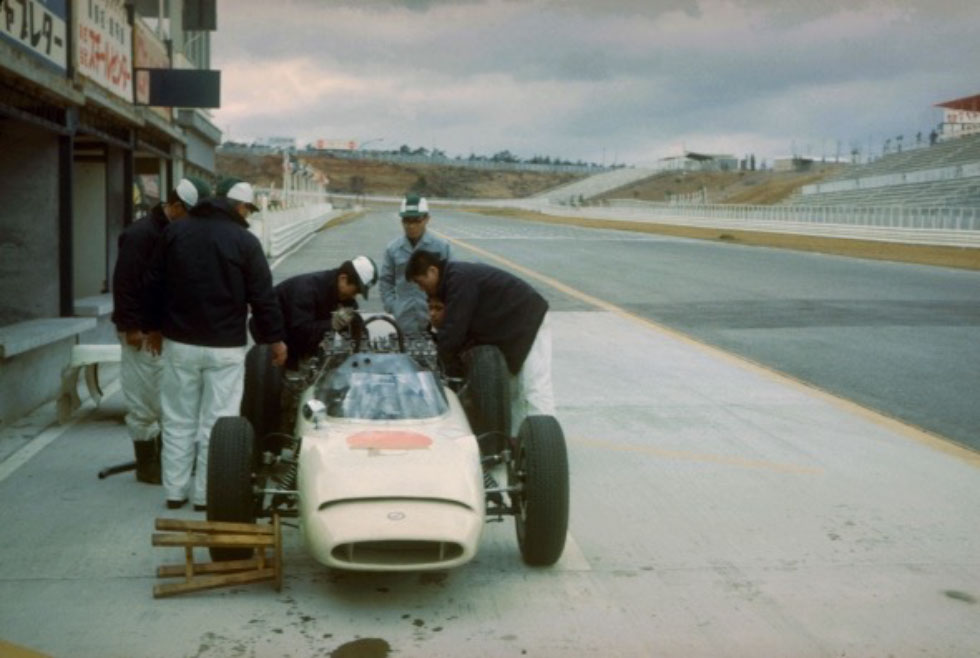
The RA270 was tested at the Arakawa test course, and then at Suzuka Circuit
Track tests were conducted with a Honda-developed prototype chassis, the RA270, based on an previous-generation Cooper T53 Climax 2.5-liter F1 car, which Honda owned. Once Honda was confident in developing its first F1 engine, the RA270E, it began negotiations with the F1 governing body Fédération Internationale de l'Automobile (FIA) to participate, and sent Nakamura to Europe to find a team to supply engines to. It is well known that Nakamura, who negotiated with the FIA at that time, decided on the ivory white livery with the Japanese flag. At that time, F1 cars were painted in national colors, with British green, French blue, Italian red, German silver, and other colors representing each country.
Nakamura returned to Japan with the Brabham team as a potential customer for Honda’s V12 engines, along with Colin Chapman, founder of Team Lotus. Chapman, who’s team would go on to win the 1963 Constructors’ Championship, was passionate about securing Honda as an engine supplier. Chapman gave Honda favorable conditions, including up-and-coming champion driver Jim Clark at the wheel of the Lotus Honda. Honda accepted Chapman’s offer and promised to supply engines exclusively to Brabham. Chapman broke the arrangement at the last minute, leaving Honda without a team that would use its engines. With only three months to the start of the season, it seemed that all was lost.
Upon hearing these developments, Soichiro refused to give up, instead instructing the manufacture of a complete F1 car, and declaring the continuation of the F1 project.
“We have no experience, but we have the technology. Money is not an issue. Let’s make the world’s best F1 car, no matter how much is costs.”
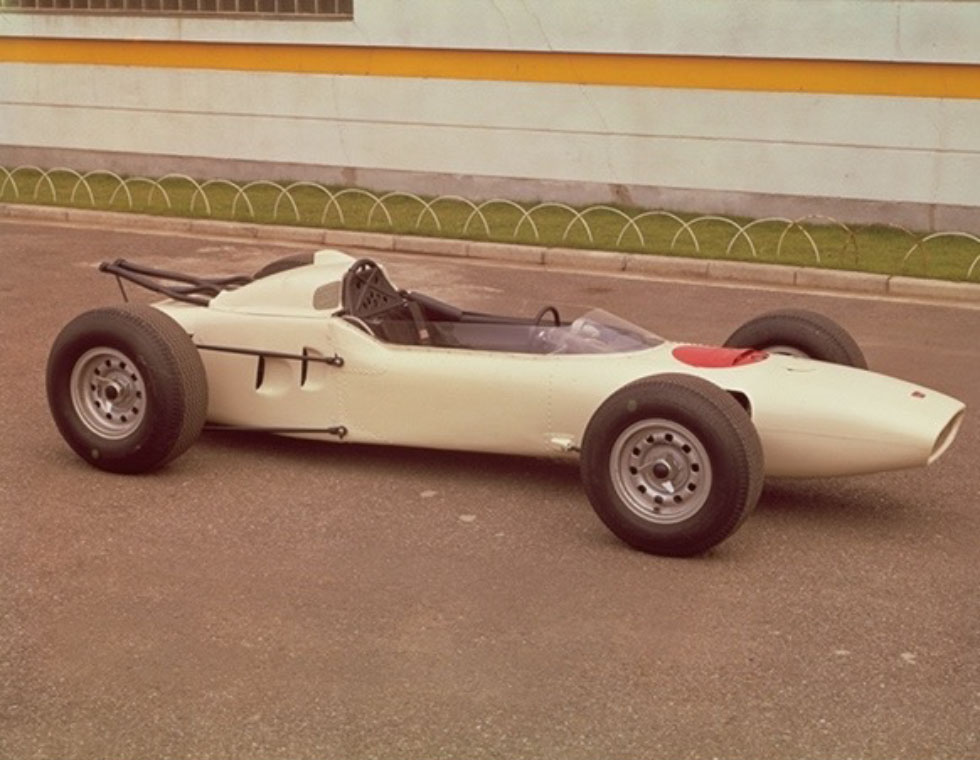
Thus, Honda’s full-scale F1 participation was decided, and research and development of the car promptly began. Although the car was not complete in time for the Monaco GP in May as planned, the new RA271 debuted at the German GP in August. Honda had moved at an astonishing pace from planning to racing, especially considering it was completely new to F1 car design. This was the relentless charge of Japan’s first F1 constructor.
From here, the story of Honda’s vibrant challenge in F1 began, captivating fans of all ages in the 1960s. In time, Honda and its F1 fans would come to refer to this four-year adventure as Honda’s first F1 Era.
 © Honda
Honda RA271 developed to race in the 1964 F1 season