CB Stories
The Last Air-Cooled Inline-Four from Honda — A Traditional Road Sport
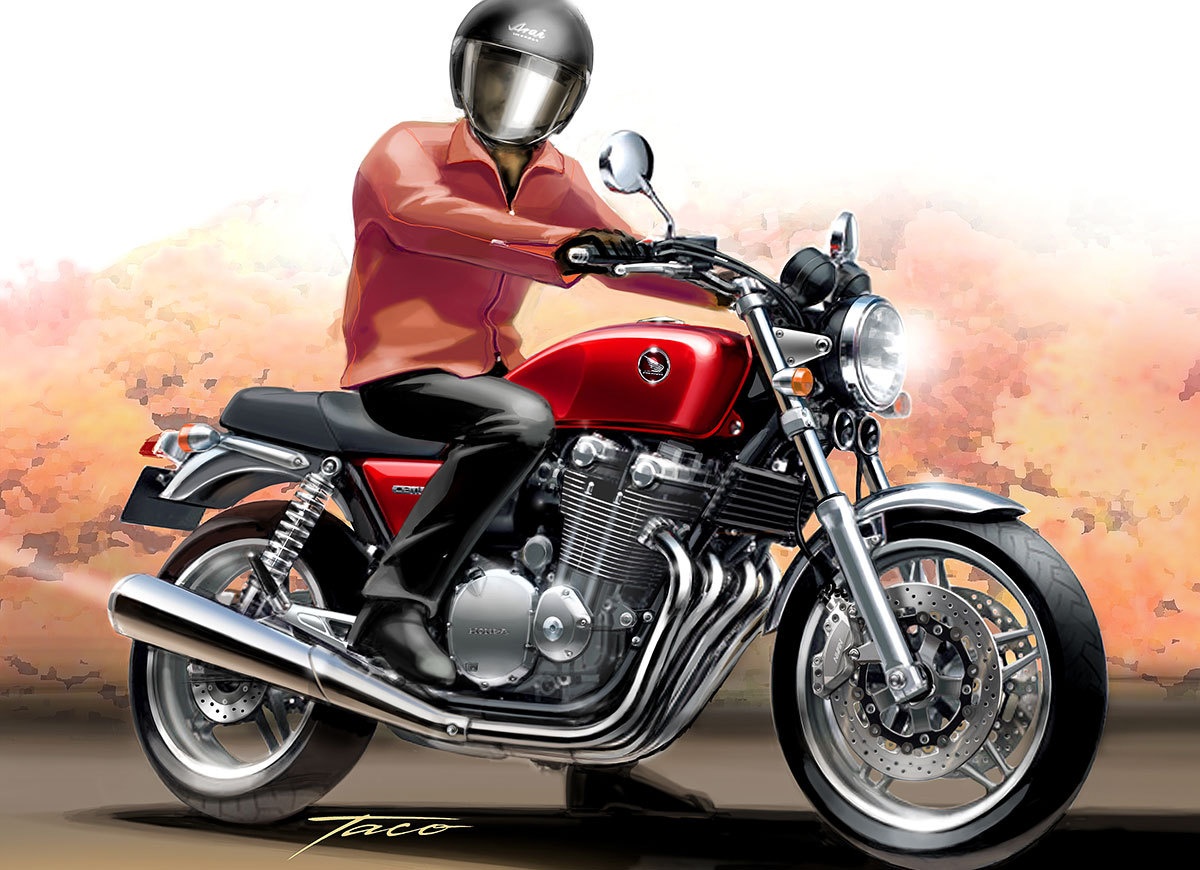
Fusion of tradition and innovation
Born as a model that embodies both the heritage of the CB series spanning over 50 years, and the continuous evolution of road sports motorcycles in response to the demands of each era, the CB1100 represents the fusion of tradition and innovation.
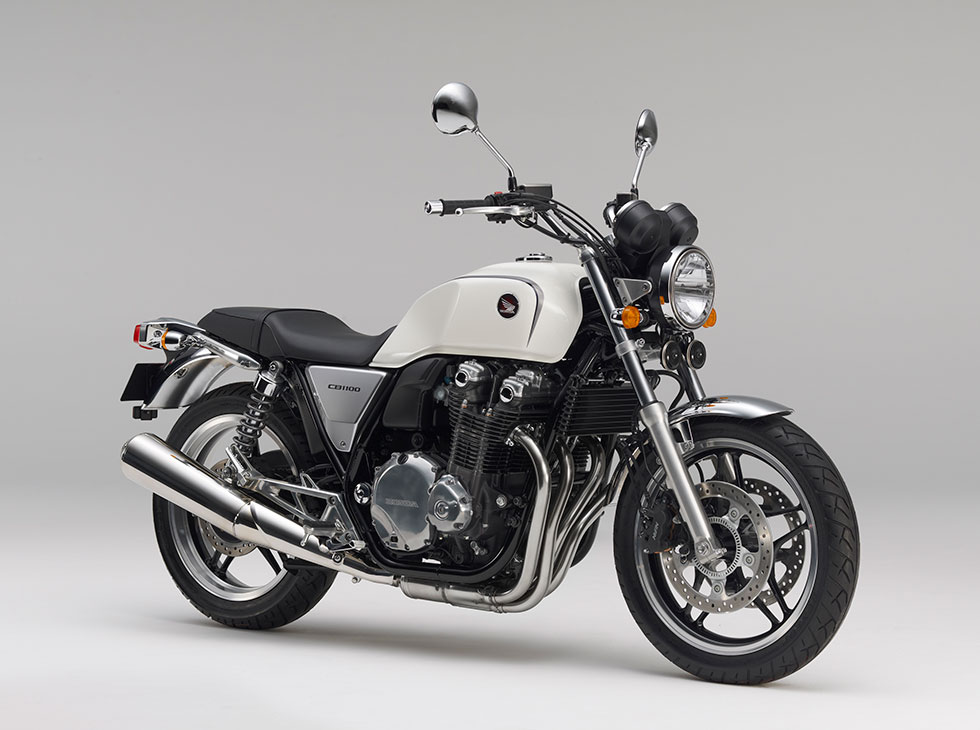
March 2010 CB1100 <TypeⅠ> ABS (High-Handlebar Type)
The development of the CB1100 was driven by the diversifying preferences of motorcycle customers in Japan. At the time, Honda’s large-displacement road sports lineup consisted mainly of the CB1300 series and the CBR series of supersports models. However, many experienced and returning riders began expressing a desire for a lighter, more compact, and easier-to-handle motorcycle.
In response, Honda created the CB1100F Concept, which was exhibited as a prototype at the 40th Tokyo Motor Show in 2007, both as a market study and as a design exploration.
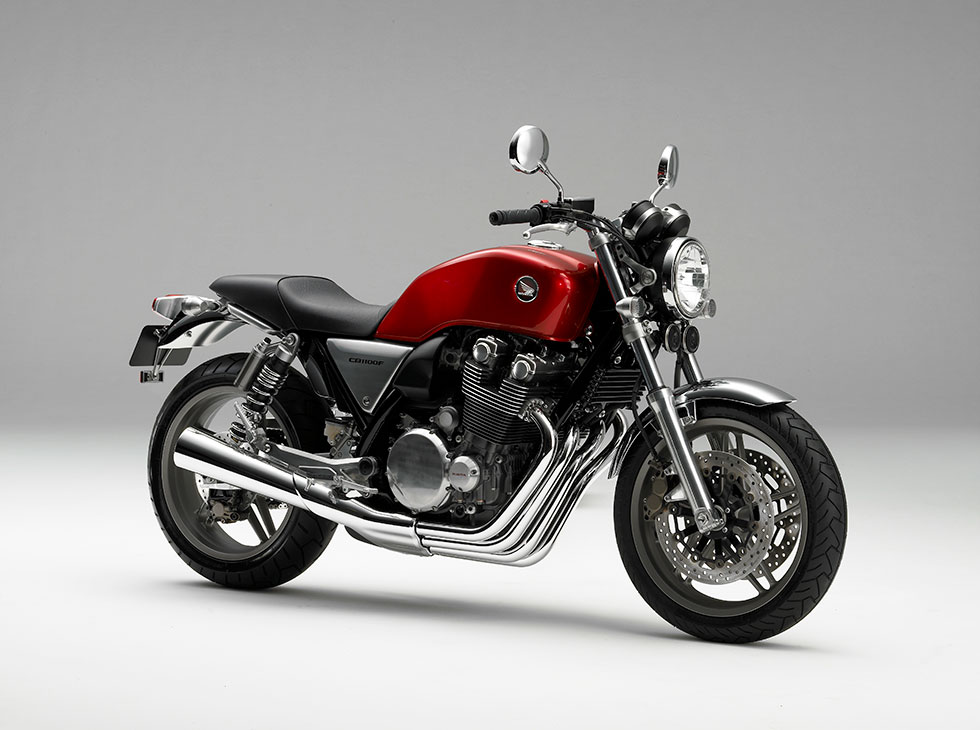
CB1100F Concept, exhibited as a prototype at the 40th Tokyo Motor Show in 2007
The CB1100F concept featured a compact body comparable to a 750cc motorcycle, powered by an 1,140cc air-cooled inline-four engine. The concept immediately drew strong public attention, with numerous requests for its commercialization.
Encouraged by this response, the development team began working toward mass production. Two years later, at the 41st Tokyo Motor Show in 2009, Honda exhibited the CB1100 as a production-ready model, answering the expectations of many enthusiasts.
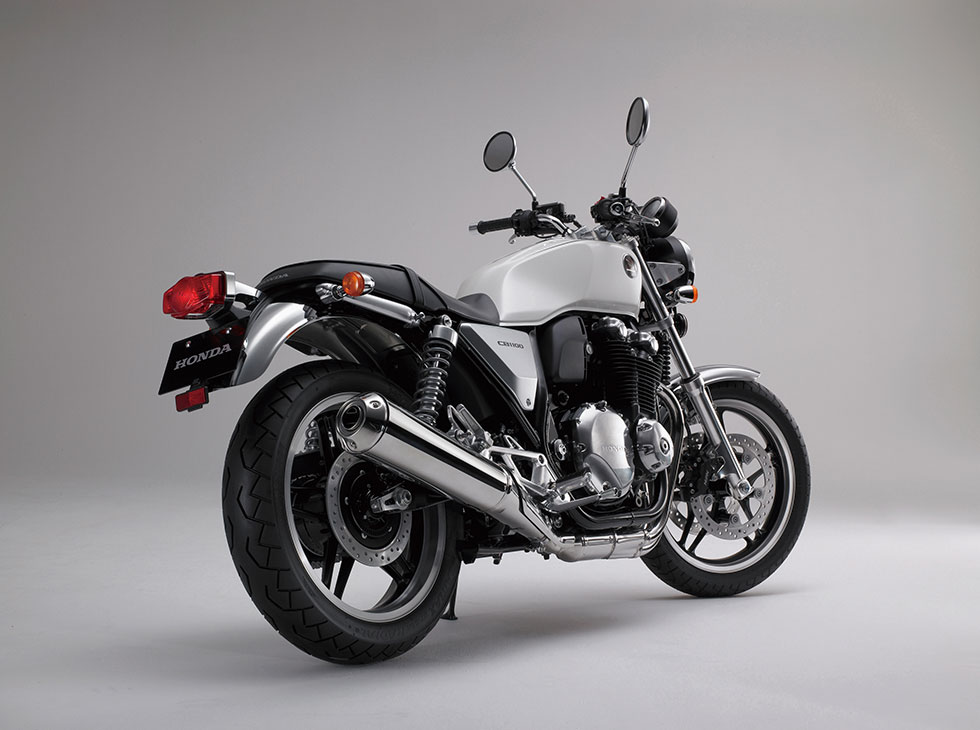
Production-ready CB1100, exhibited at the 41st Tokyo Motor Show in 2009
Development concept defined by the team
Through extensive research into user preferences—both at motor shows and at various events—the development team arrived at a clear concept for a new-generation CB:
“An emotional air-cooled inline-four naked model that fulfills the ownership satisfaction of mature riders.”
To realize this concept, three development priorities were defined:
- 1. The joy of ownership – a dignified, timeless appearance that reflects the essence of motorcycling.
- 2. A distinctive engine character – the unique feel and response of an air-cooled inline-four.
- 3. Effortless handling – a chassis that allows riders to enjoy control without tension.
These ideas were embodied respectively in:
- - the timeless exterior design,
- - the newly developed air-cooled inline-four DOHC engine, and
- - the compact steel double-cradle frame
The result was an emotional motorcycle that delivered genuine ownership satisfaction.
Design that expresses the joy of ownership
In the design field, the team sought to attract a new generation of CB enthusiasts while preserving the series’ 50-year tradition and evolutionary spirit.
Design work considered not only the appearance while riding but also the beauty of the motorcycle at rest. The aim was to achieve a dignified and serene presence that stands out even amid natural scenery.
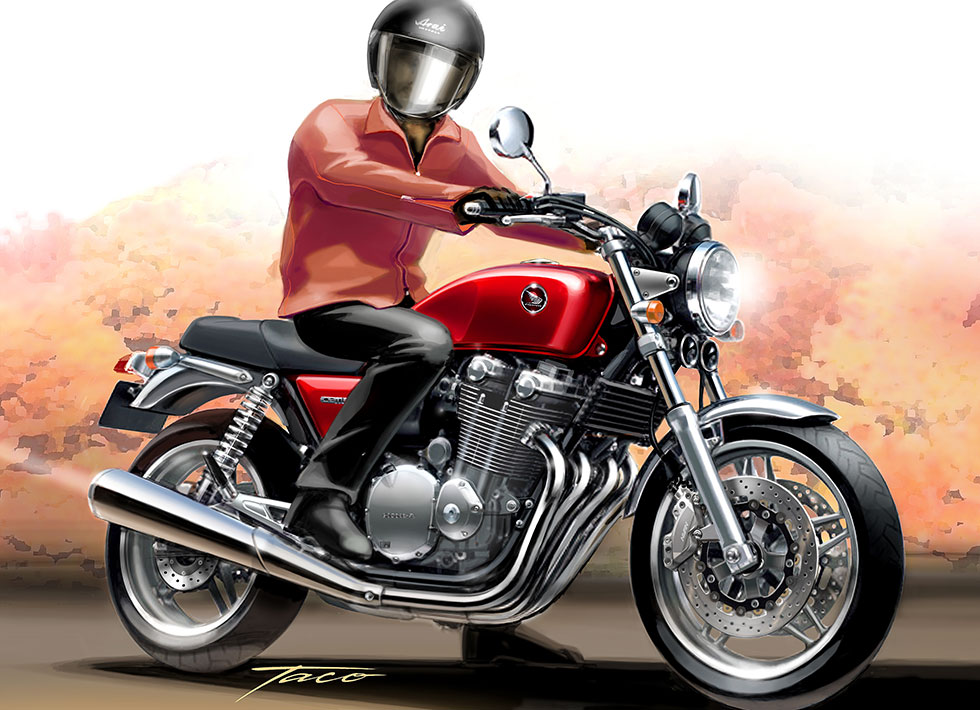
CB1100 sketch
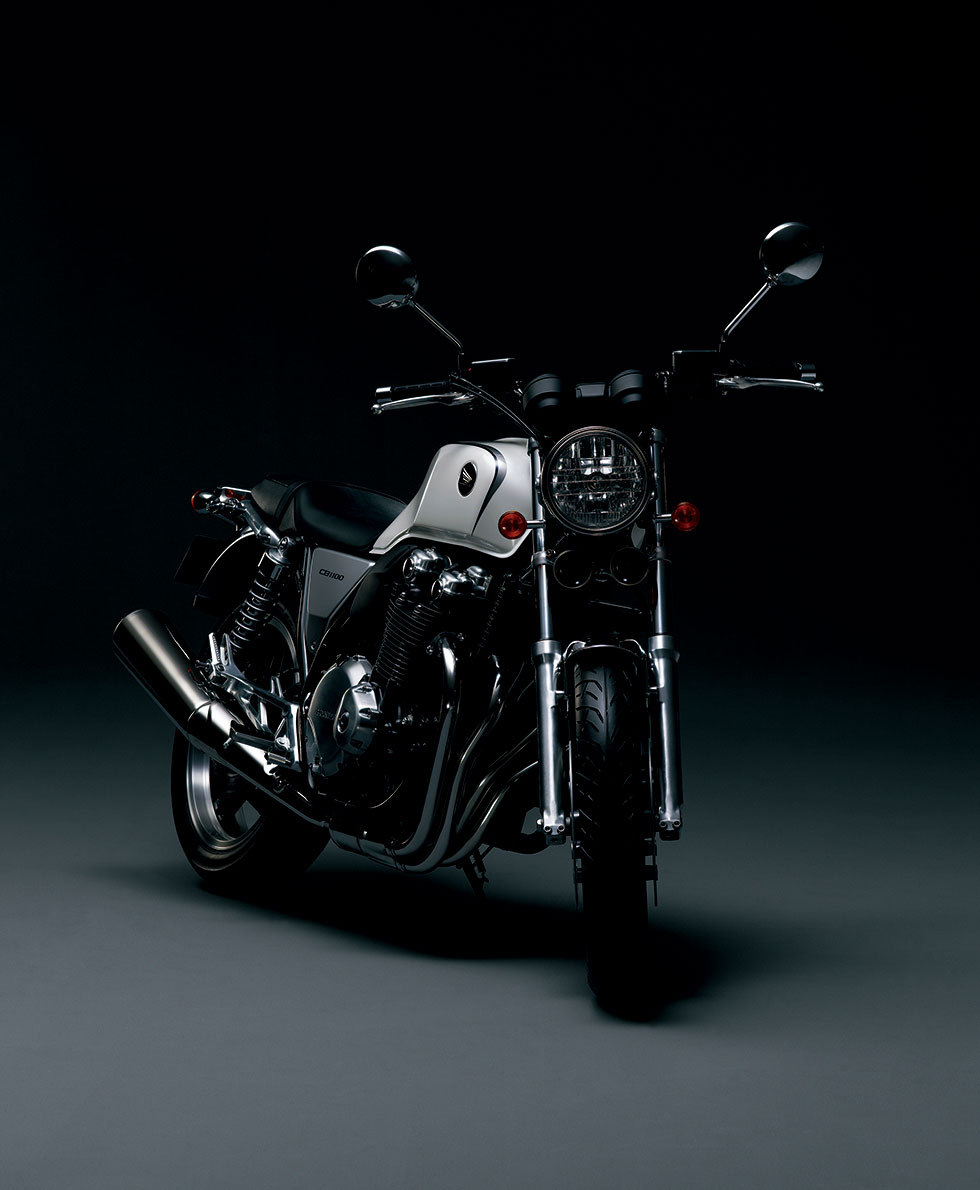
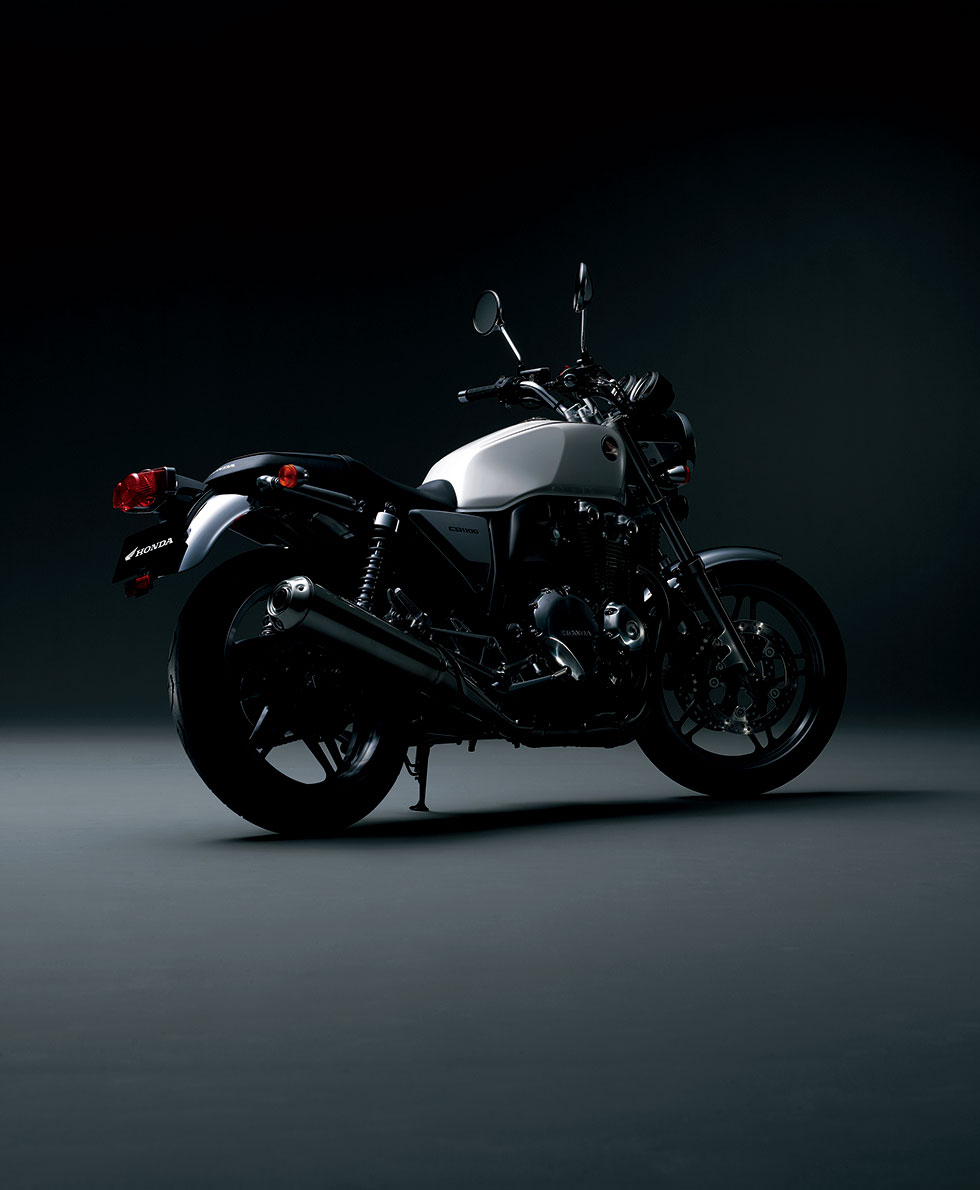
CB1100 exterior design expresses a dignified and composed presence
Air cooling for a distinctive engine character
Rather than pursuing peak output or maximum torque, the CB1100’s engine was designed to offer a broad, relaxed riding feel—a key reason Honda chose to retain air cooling. To meet increasingly stringent emission standards, a newly developed 1,140cc air-cooled inline-four DOHC four-valve engine was engineered exclusively for the CB1100, incorporating advanced combustion and cooling technologies.
Special attention was paid to the beauty of the engine’s appearance. Extremely thin 2 mm cooling fins and deep, sculpted surfaces were made possible by low-pressure die-casting, resulting in a finely detailed and elegant engine form.
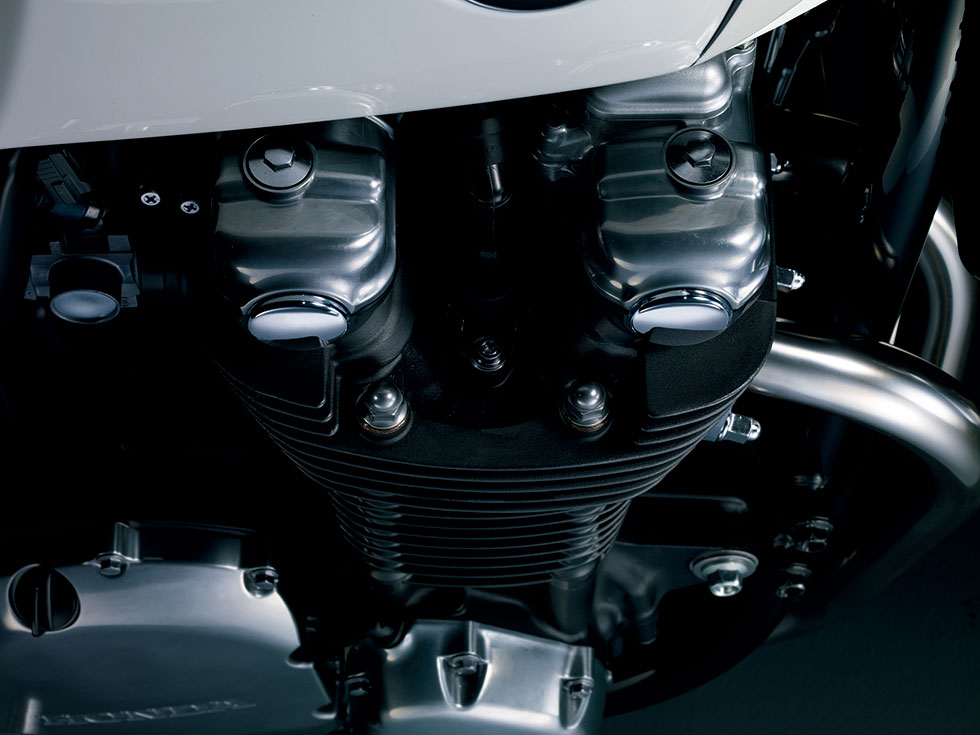
Engine seen from above the fuel tank
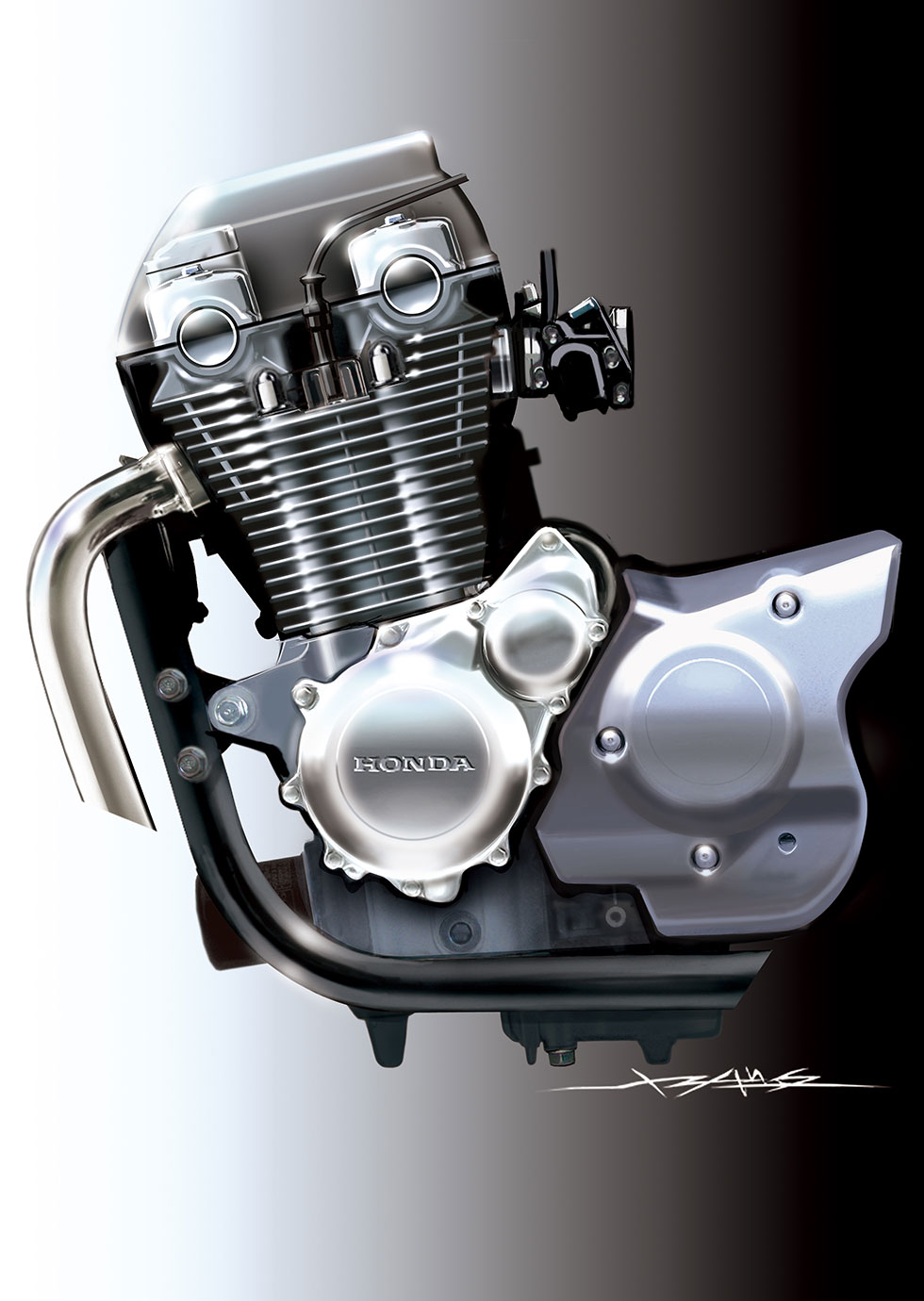
CB1100 engine sketch
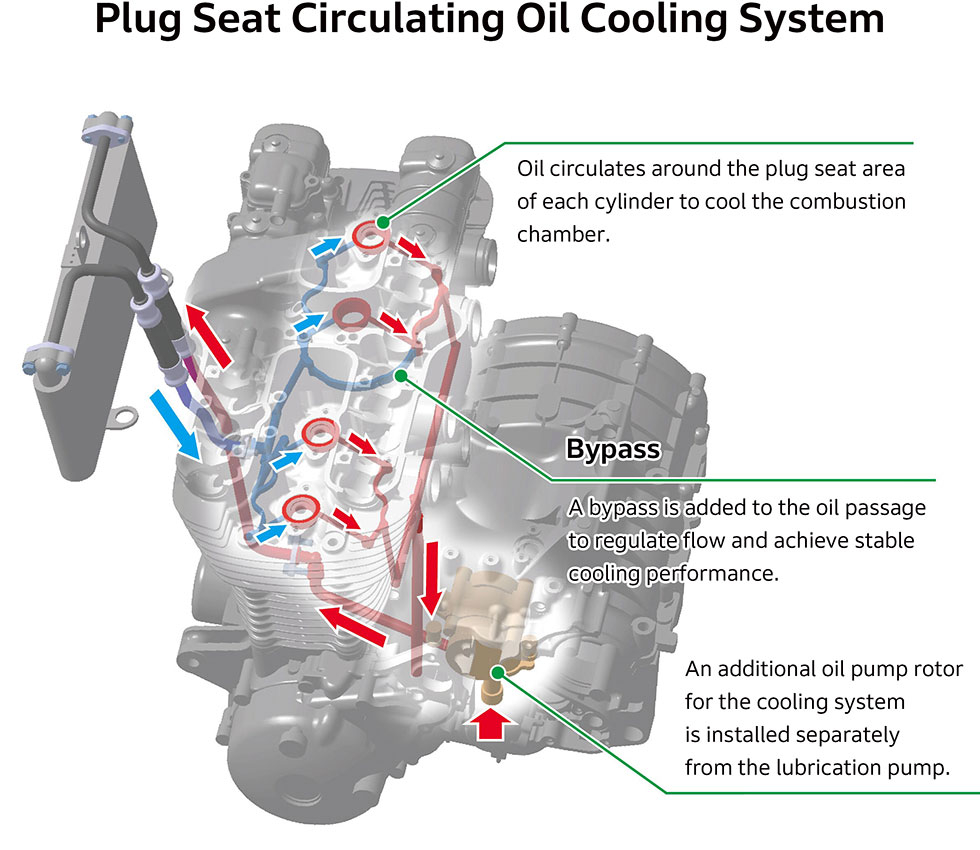
For improved emission performance, oil passages were routed around the exhaust ports and spark plug seats, areas most prone to high temperatures, to stabilize combustion. An oil cooler further enhanced the overall cooling performance.
Lightweight and compact Chassis design
Body size
The overall dimensions were designed to be comparable to a 750cc motorcycle, matching the physique of Japanese riders.
Frame
A traditional steel double-cradle frame was adopted, emphasizing the mechanical beauty of the air-cooled engine.
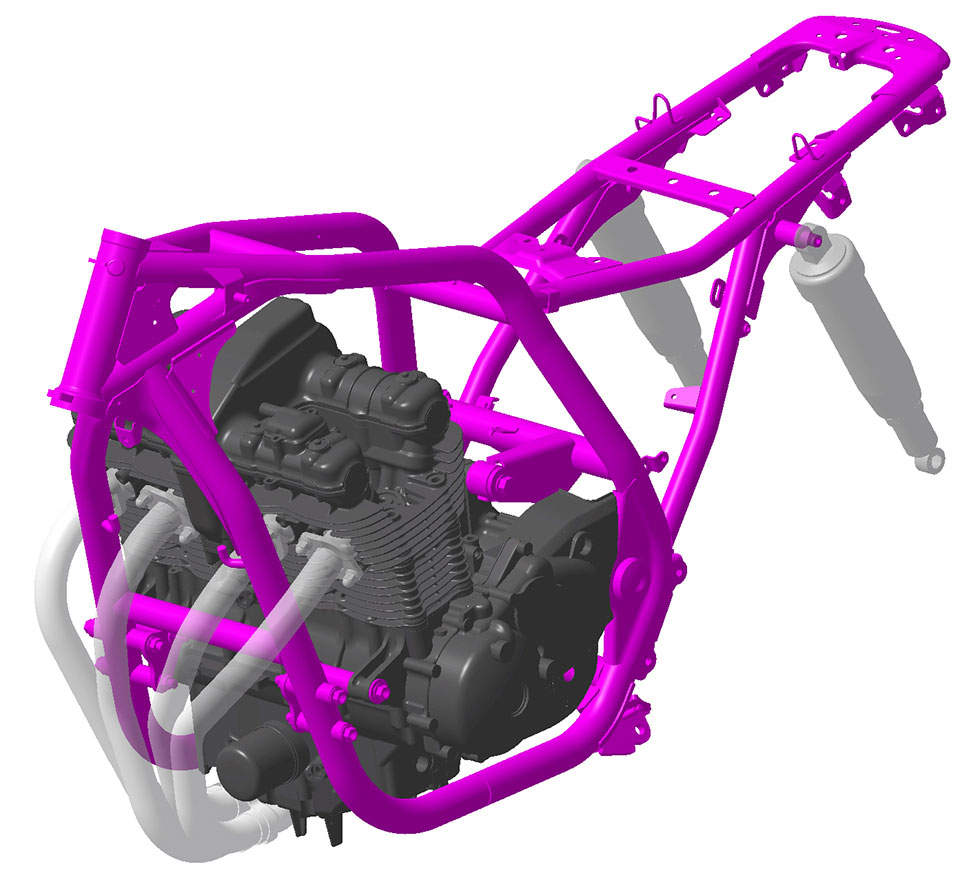
2010 CB1100 frame structure
Wheels
18-inch wheels were chosen for both the front and rear to provide stability and a calm steering feel, delivering smooth and composed handling characteristics.
Seat
With a seat height of 765 mm, the CB1100 offers excellent footing and easy handling, complemented by a relaxed riding position and a slim body profile.
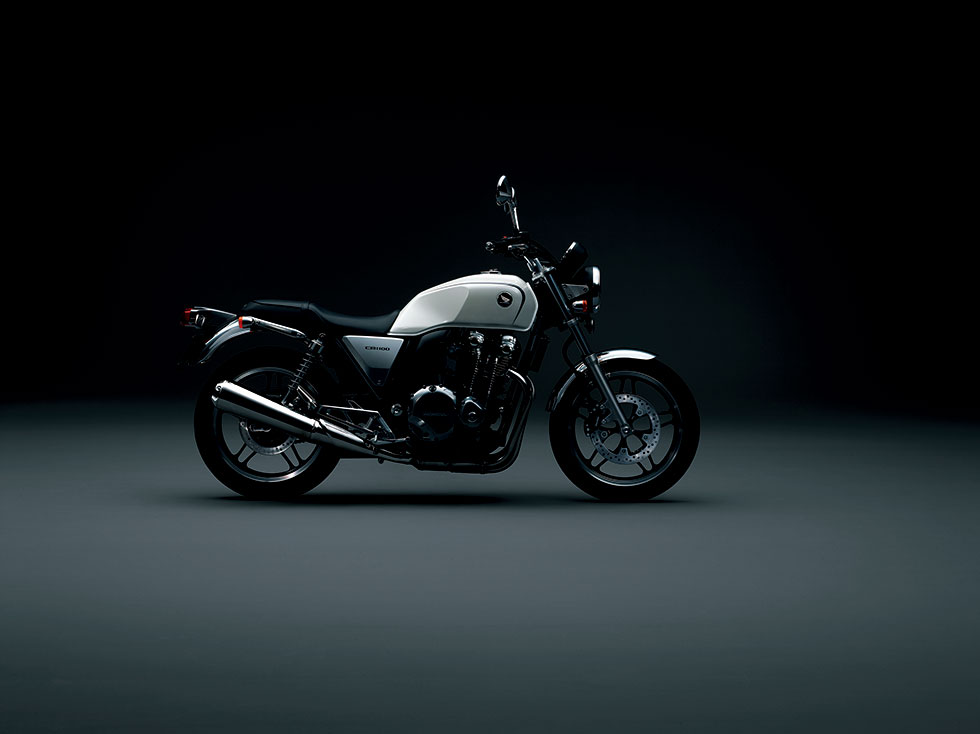
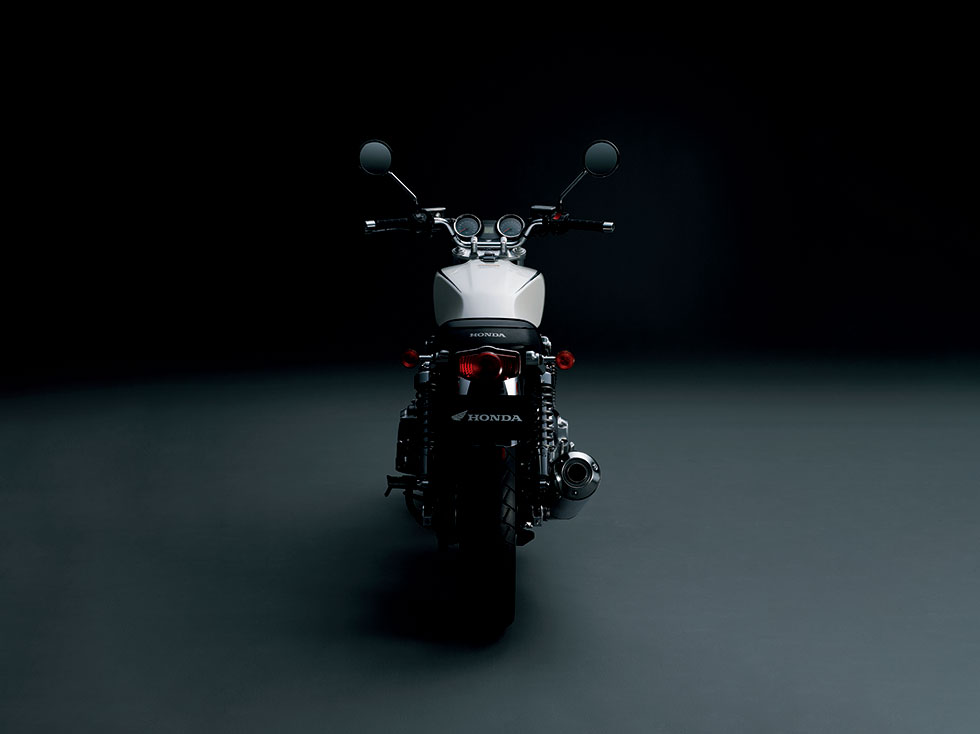
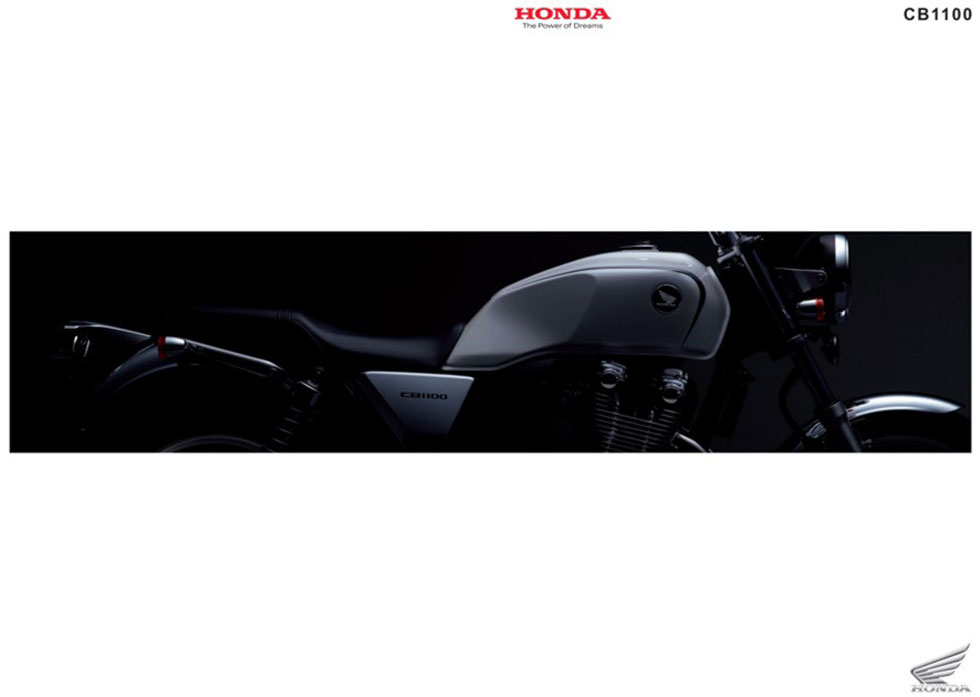

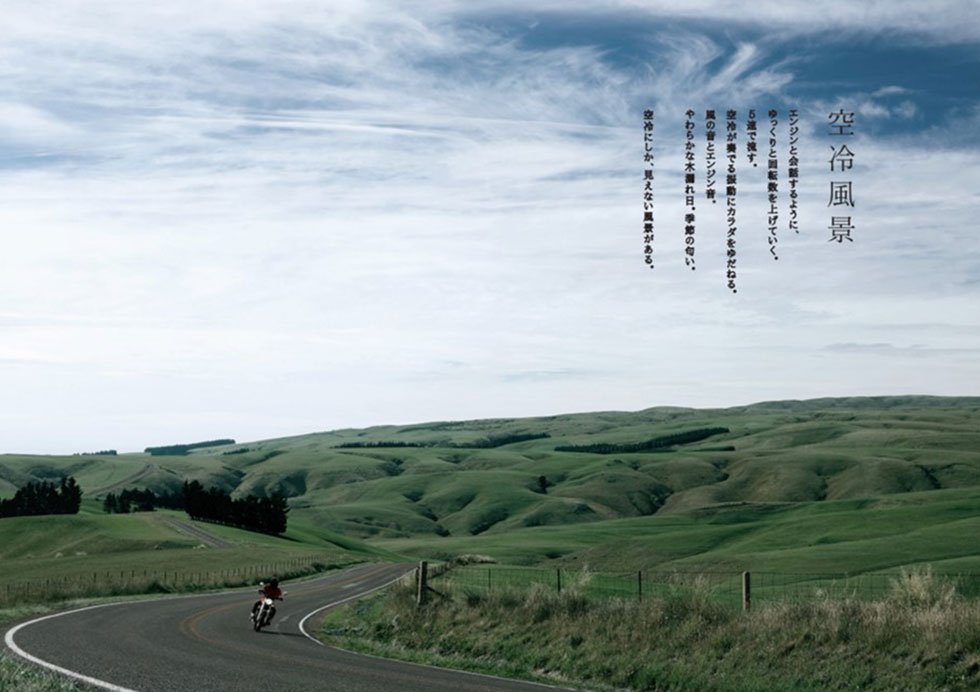
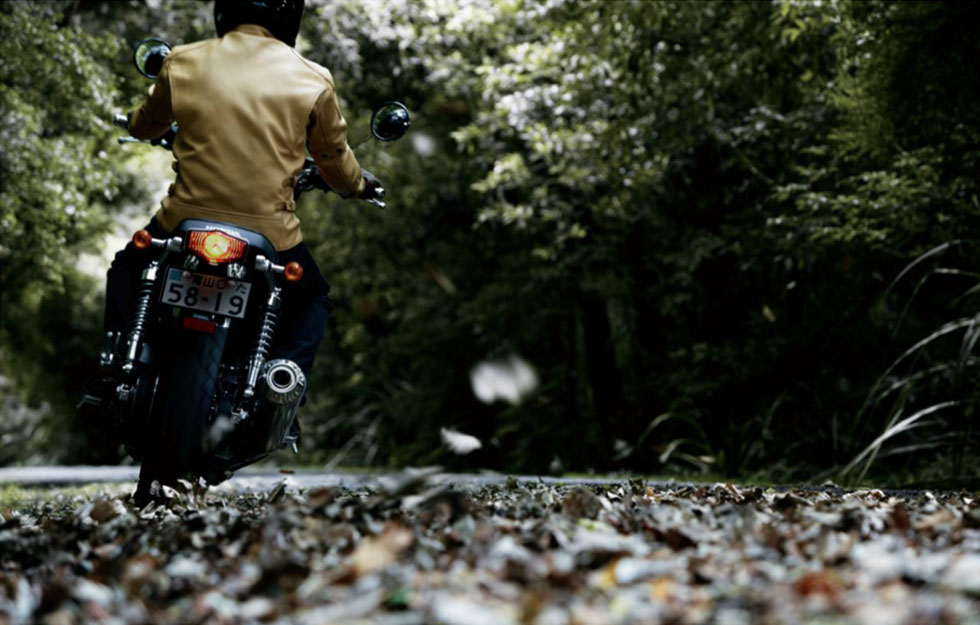
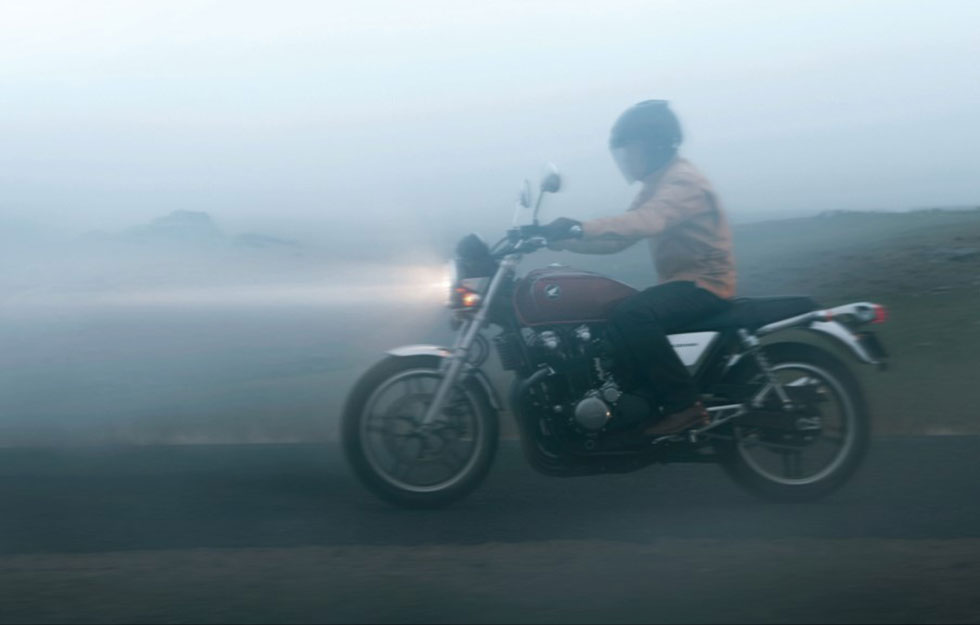
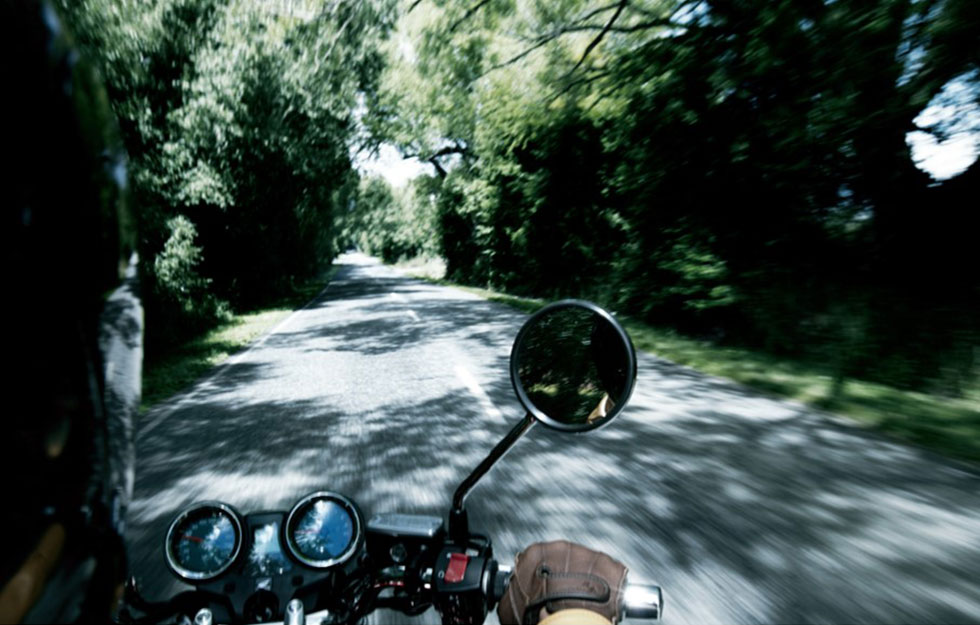
2010 CB1100 catalog depicted a serene and liberating lifestyle, where riders could enjoy the beauty of nature and the freedom of the open road.
Launch in Europe
At the EICMA show in Milan in 2012, Honda announced the European launch of the CB1100, which went on sale in 2013. As rider preferences diversified in Europe as well, demand grew for a traditional road sport like the CB1100.
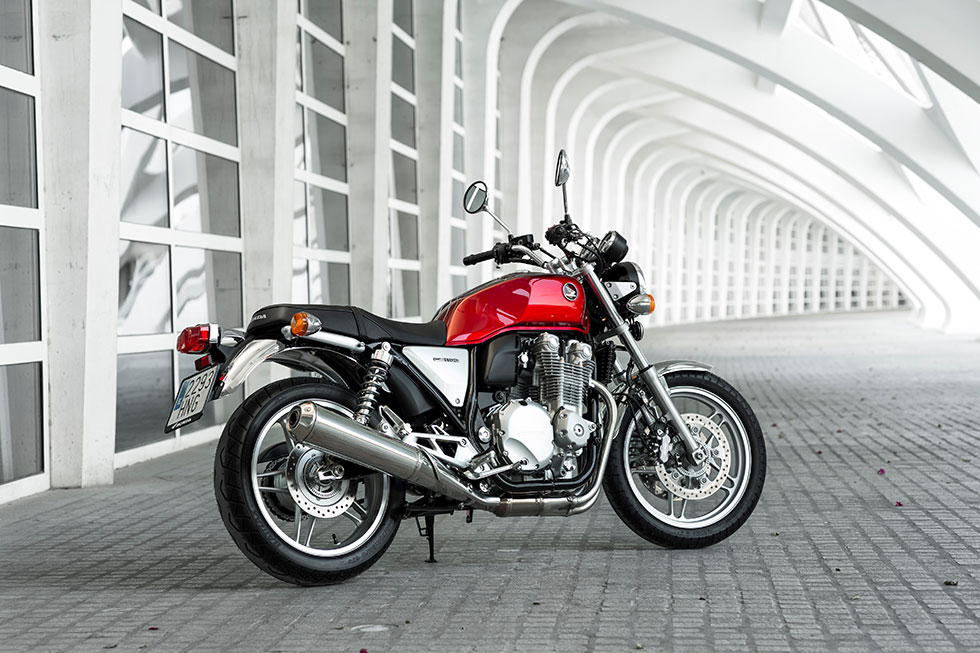
2013 CB1100 (European model)
Over the years, the CB1100 continued to evolve, expanding its lineup and deepening its appeal among fans.
After an 11-year production run, the CB1100 was discontinued in 2021, as compliance with newer emission standards became increasingly difficult—marking the end of Honda’s era of air-cooled inline-four motorcycles.