
Management
N-ONE e: Pioneers the Potential of Passenger Mini-EVs: Inheriting Tradition from the N360, Capturing Modern Needs
POINTWhat you can learn from this article
- N-ONE e: inherits the spirit of the N360, the origin of passenger mini-cars
- Achieving the N-ONE’s space value—a spacious cabin and large cargo capacity—required tremendous effort from the development team
In 2024, Honda launched the N-VAN e:, a commercial mini-EV (electric vehicle) based on the N-VAN, designed as an eco-friendly work vehicle. In September 2025, Honda will launch the N-ONE e: passenger mini-EV as its second mini-EV model. In this issue of Honda Stories, Hideaki Horita, the development manager for the N-ONE e:, discusses the differences from the base N-ONE model, what is common with the N360 – launched in 1967 and considered the origin of Honda’s passenger mini-cars – and the vision behind the grand concept e:Daily Partner.

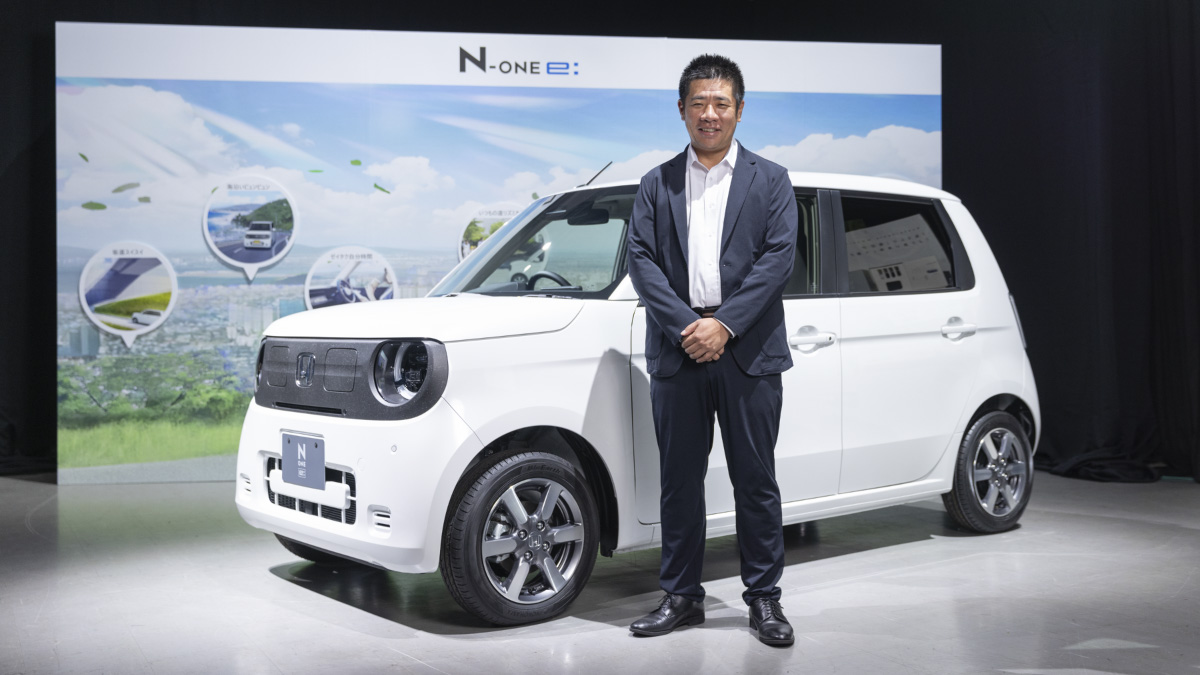
N-ONE e: Development Leader
Chief Engineer, LPL Office, Completed Vehicle Development Supervisory Unit, Automobile Development Division
View More
Close
Hideaki Horita
Read More
The goal was an affordable mini-EV. The N-ONE e: inherits the DNA of the N360
Honda's first mini-EV was the N-VAN e: commercial model. What led to the development of the second model, the N-ONE e: passenger-EV?
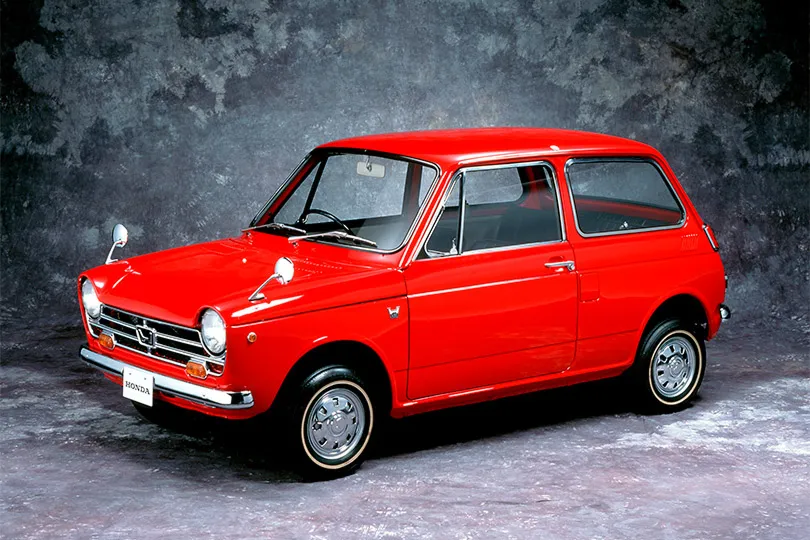 N360 mini-car launched in March 1967
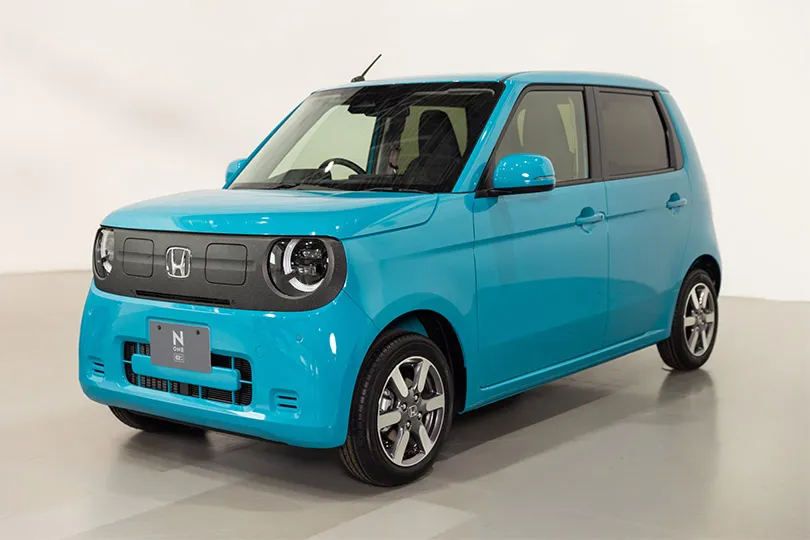 N-ONE e: passenger mini-EV to launch on September 12, 2025
Mini-cars account for about 40% of Japan‘s new car sales. What was your motivation for introducing a passenger mini-EV into this massive market?
Mini-cars are a uniquely Japanese category, packed with advanced technology within their limited size. Japan’s EV market has not entered a major growth phase yet, but our view that EVs are the optimal vehicle for achieving carbon neutrality remains unchanged. Furthermore, considering the sales ratio between passenger cars and mini-cars, we believe the electrification of mini-cars is crucial for widespread EV adoption.
While more and more people are recognizing the appeal of EVs’ advanced features and value, many still have concerns, particularly about range. We wanted to deliver a passenger mini-EV that would alleviate those concerns as much as possible, allowing customers to use it with confidence in their daily lives.
Furthermore, Honda has cultivated the N Series as its mini-car brand, starting with the original N360, followed by the N-BOX in 2011 and the N-ONE in 2012. We wanted the passenger mini-EV to embody the essence of the N Series, prioritizing functionality and design appeal, so it would be chosen by a wide range of customers.
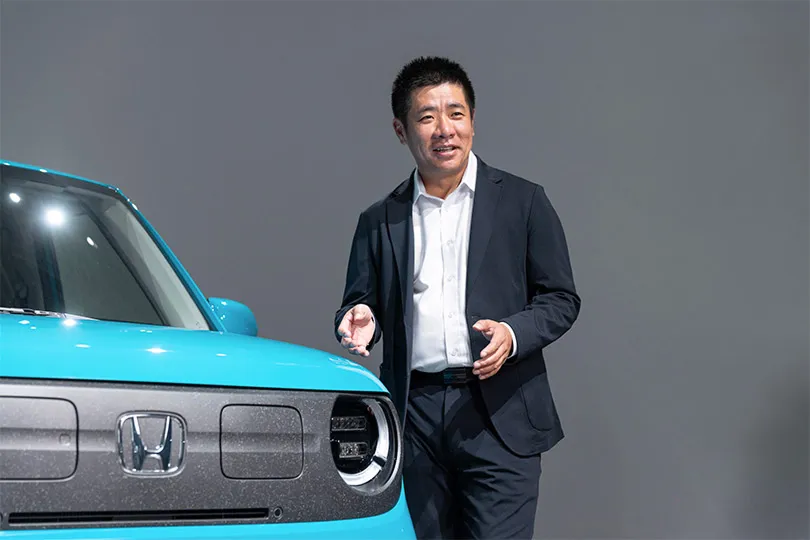 Hideaki Horita, N-ONE e: Development Leader
How was the N-ONE e:’s grand concept, e:Daily Partner, originated? What are the underlying thoughts and the values you aim to achieve?
The conventional N-ONE features a distinctive, cute design, and core values of agility and ease, making it popular with customers ranging from young people to seniors, particularly women. We developed the N-ONE e: targeting these same customers.
Research into the lifestyles and attitudes of our target users revealed a stronger emphasis on spending time for themselves compared to before the pandemic. We found that over half of women now place greater importance on time efficiency and cost performance.
This led us to the conclusion that the key priorities should be functionality delivering the agility and ease suited for short daily trips of around 20-30km within their local area, such as shopping or commuting, and a design that is easy to use, simple, and timeless. We wanted it to be a partner that helps make ordinary days vibrant and active. This vision gave birth to the grand concept e:Daily Partner.
Challenging the essence of the mini-car, protecting its space and philosophy
What challenges did you face when developing a passenger mini-EV based on the N-ONE?
The base N-ONE is a highly practical car that embodies Honda's M/M philosophy*1. When electrifying the N-ONE, our top priorities were preserving its space value and functionality while fully adhering to the M/M philosophy.
The biggest challenge during development was achieving the N-ONE’s core values—a spacious interior, high cargo capacity, and low overall height suitable for multi-level parking garages—in the N-ONE e:. Conventional EVs face significant challenges maintaining interior space because they require high-voltage, high-capacity batteries positioned under the floor. For the N-ONE e:, through trial and error, including making the battery pack thinner, downsizing the power unit, and centralizing placement, we succeeded in preserving the spacious interior and cargo area, along with a low overall height that fits into multi-level parking structures.
*1 M/M (man maximum, machine minimum) philosophy: Honda’s fundamental philosophy to maximize interior space for people by minimizing space required by the car’s mechanical components.
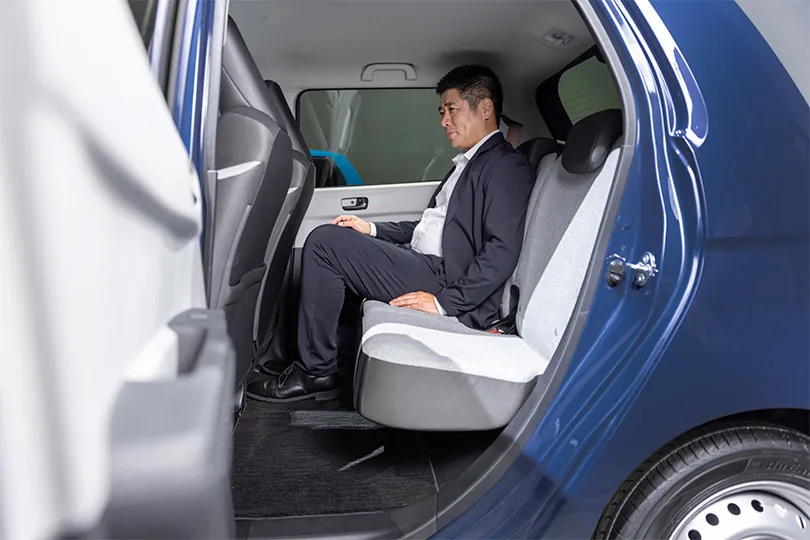 Rear seats offer ample headroom even for adult men
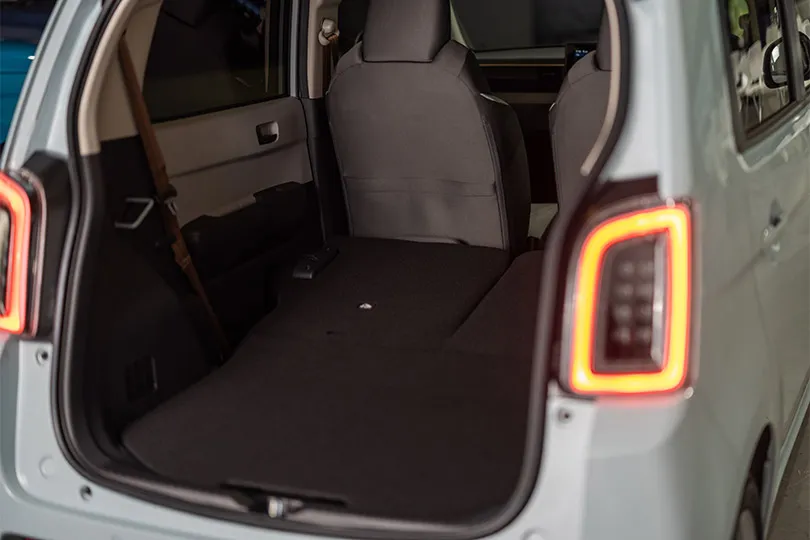 Foldable rear seats create a flat, spacious cargo area
What aspects did you focus on with the design?
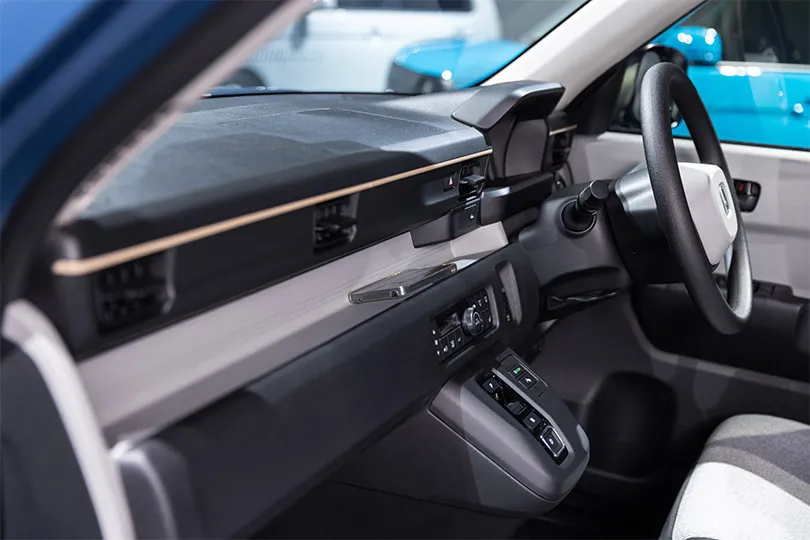
For the interior, beyond ensuring a comfortable space, we also focused on effortless usability that anyone can understand instantly and details that blend seamlessly into daily life. Naturally, we prioritized visibility for ease of driving and maneuvering for anyone. We also focused on convenient trays for casually storing bags and items, and ensuring they are easy to access.
Furthermore, through analyzing our target users’ opinions and daily behavior, and in our pursuit of simplicity, we questioned whether a navigation LCD screen was even necessary, and whether a car prioritizing an extremely clean design, without even a screen, is viable. This led us to boldly simplify the offering, resulting in the Bluetooth®-compatible audio model as one of the options.
For the exterior, we retained the N-ONE’s unique characteristics while adding a refined roundness. We aimed for a smooth, inviting texture you’d want to touch and an adorable fascia you’d want to spend every day with. We believe we have created a car that feels like a daily partner, one you’ll grow fond of.
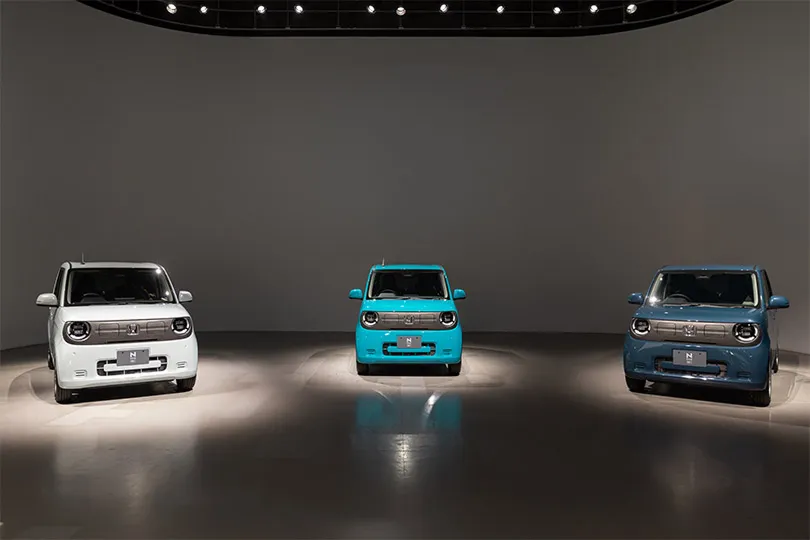
Designed for the City, Built for Peace of Mind: N-ONE e: Offers Class-Leading Range and Agile Performance
What efforts did you make to achieve both the ideal driving performance for urban areas, and top-level range performance and distance, in a reliable mini-EV?
We of course focused on driving performance as well.
Beyond the powerful acceleration unique to EVs, we have achieved linear, reassuring deceleration characteristics through coordinated control of the motor and electric servo brakes.
For handling, we positioned the low-profile, high-voltage battery near the chassis’ center of gravity. This enhances nimble, linear, and effortless operability, and we also revised the electric steering ratio to improve maneuverability in residential areas.
Furthermore, we focused on developing the Single Pedal Control system to enable smooth driving from acceleration to deceleration using only the accelerator pedal. We also tuned it to stop smoothly and quietly when coming to a halt, ensuring a pleasant driving experience in urban areas.
We also addressed the common EV concern of drive range. By using a high-capacity battery while maintaining a spacious interior, we achieved a top-tier range of 295km*2 for a mini-EV, ensuring peace of mind.
* 2 WLTC mode drive range per charge
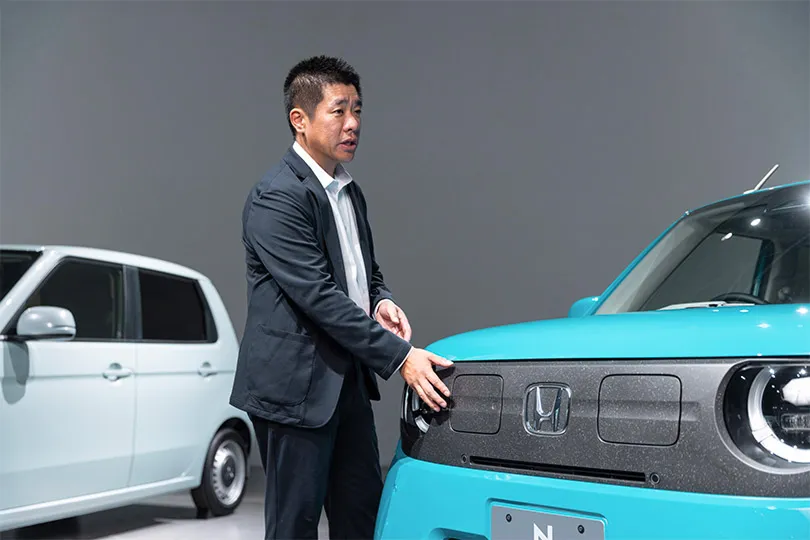
As you took on the challenge of developing a passenger mini-EV, a new frontier, how did you ensure unity within the team as the development leader?
The entire team embraced challenges without fear of failure. Specifically, we set ambitious goals and held numerous positive discussions. This approach accelerated consensus-building and communication within the team, enabling us to overcome various challenges.
Honda’s corporate culture, which has enabled us to take on challenging product developments, fosters many members with high aspirations. I believe that being able to freely discuss ideas with such members was a major factor in deciding on the e:Daily Partner concept, which everyone fully embraced.
In the future, what role do you envision the N-ONE e: playing in Japan’s EV market and the mini-EV segment?
While many people are attracted to the advanced nature and value of EVs, I believe many customers still have concerns, particularly about range. The N-ONE e: offers enough range for daily life. We believe it has become a passenger mini-EV that can soothe these concerns, even if just a bit, allowing customers to drive the N-ONE e: everyday with peace of mind.
Passenger mini-EVs offer many advantages. Even on hills and mountain roads, where mini-cars often struggle, EVs climb steadily and quietly without the roar of an engine, providing a stress-free experience. And, of course, there is no need to visit the gas station.
We hope the N-ONE e: becomes a car that lets people experience the best aspects of a mini-EV, while bringing them joy in their daily lives that they selected it. We would be delighted if people felt it is a car that can be their partner in everyday life.





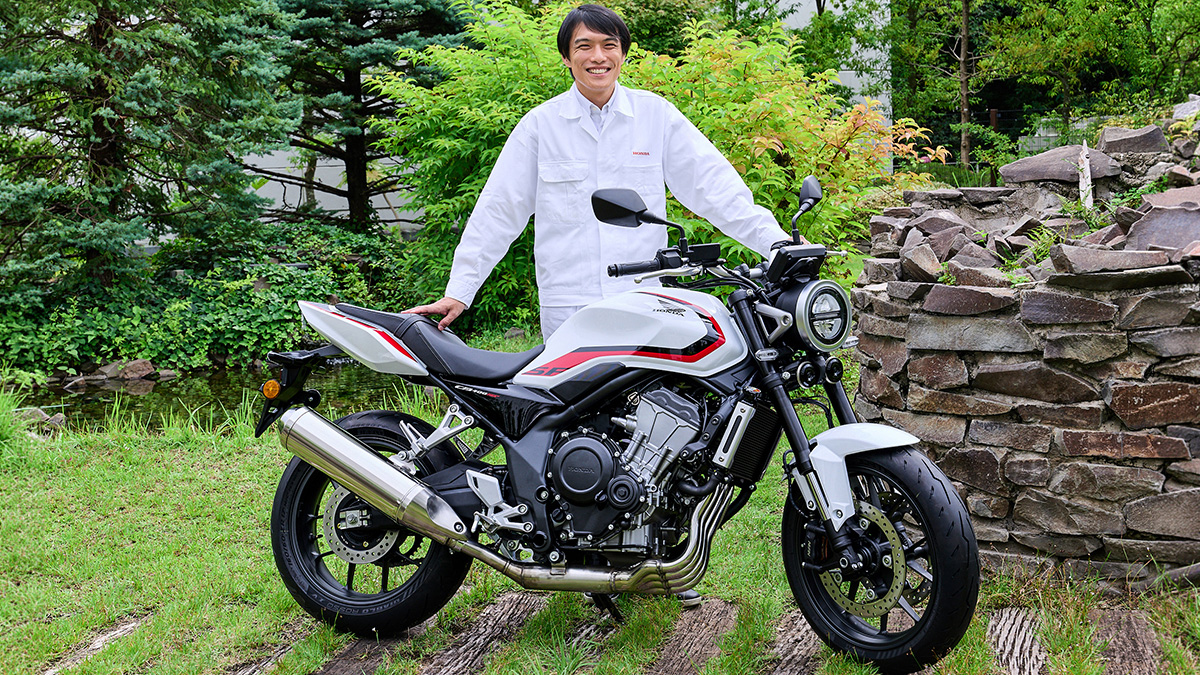
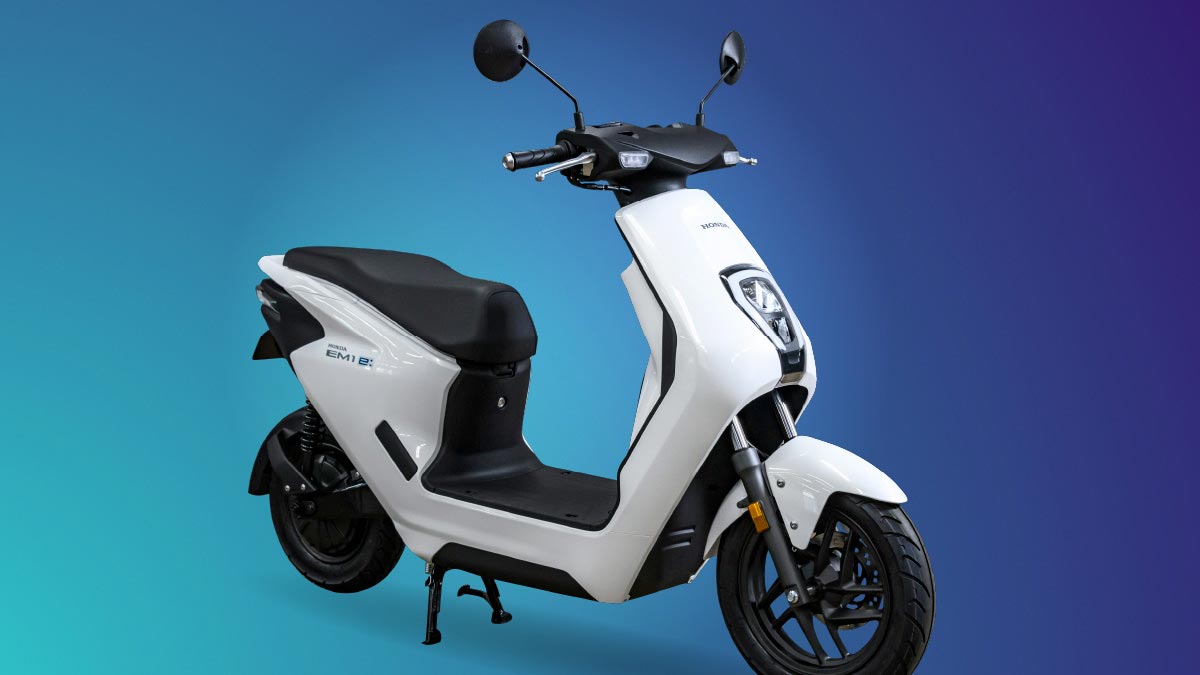
We developed the N-VAN e: as a model focused on carbon neutrality to meet the needs of corporate customers, such as SDGs, and ESG compliance, as well as individual business owners seeking to reduce running costs.
category, which accounts for 40% of new car sales in Japan, is inevitable.
During discussions on selecting Honda’s passenger mini-EV model, the idea emerged to base it on the N-ONE, a model that inherits the spirit of the N360, the origin of Honda’s passenger mini-cars.
The N-ONE strongly inherits the N360’s DNA. It has been well received by customers for its unique and charming design, spacious interior, excellent usability, and compatibility with multi-level parking structures.
We believed that by using the N-ONE as a base, combining its practicality for daily life with its unique design, and converting it to an EV, we could surely meet the needs of today’s customers.
As the responsibility of mobility makers becomes increasingly important in the pursuit of carbon neutrality, development of the N-ONE e: began with our desire to contribute to EV adoption by delivering an accessible passenger mini-EV for today’s customers.