Enhancing Athlete Performance Through Scientific Measurement of Pushing Power
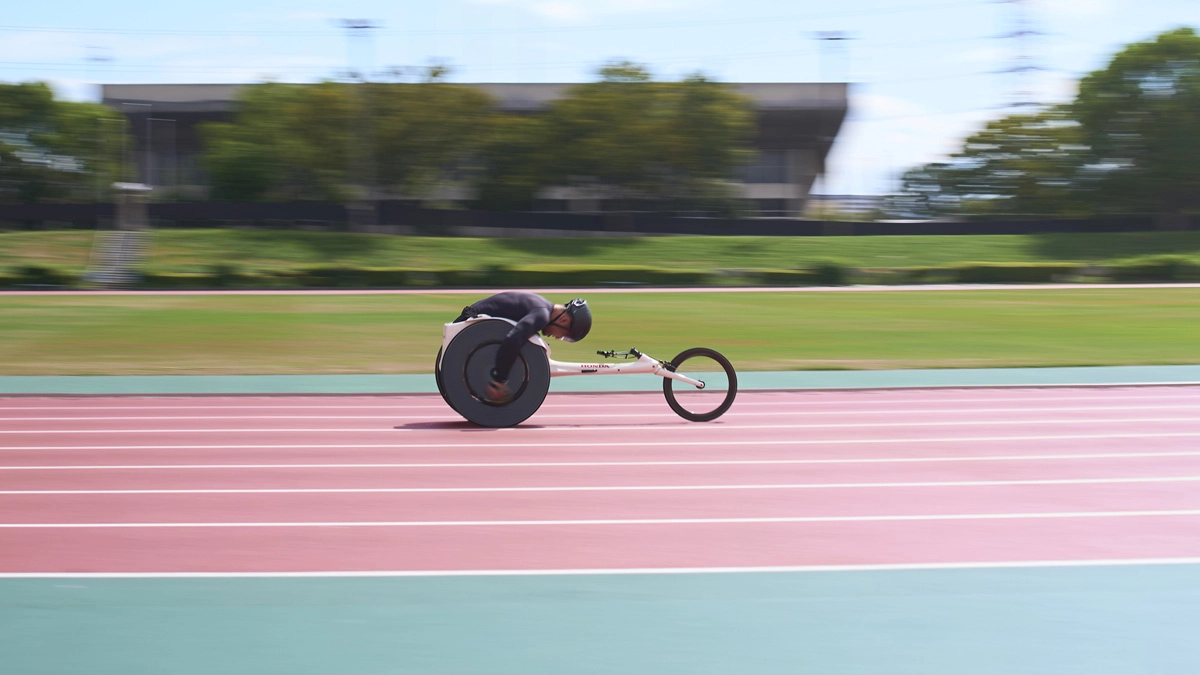
Each time a wheelchair athlete pushes the handrims of a wheelchair moving at high speed, their hands touch the rims for approximately 0.15 seconds. This makes it hard for the athlete to sense, and coaches to observe, exactly how well they are propelling the wheelchair.
Honda set out to develop a push power measurement system that would measure the force (pushing force) that athletes apply to handrims to propel a racing wheelchair. By scientifically visualizing the push power of athletes, Honda sought to both enhance athlete performance and contribute to the development of wheelchair athletics.

Push Power Measurement System—An Application of ASIMO’s 6-Axis Force Sensor
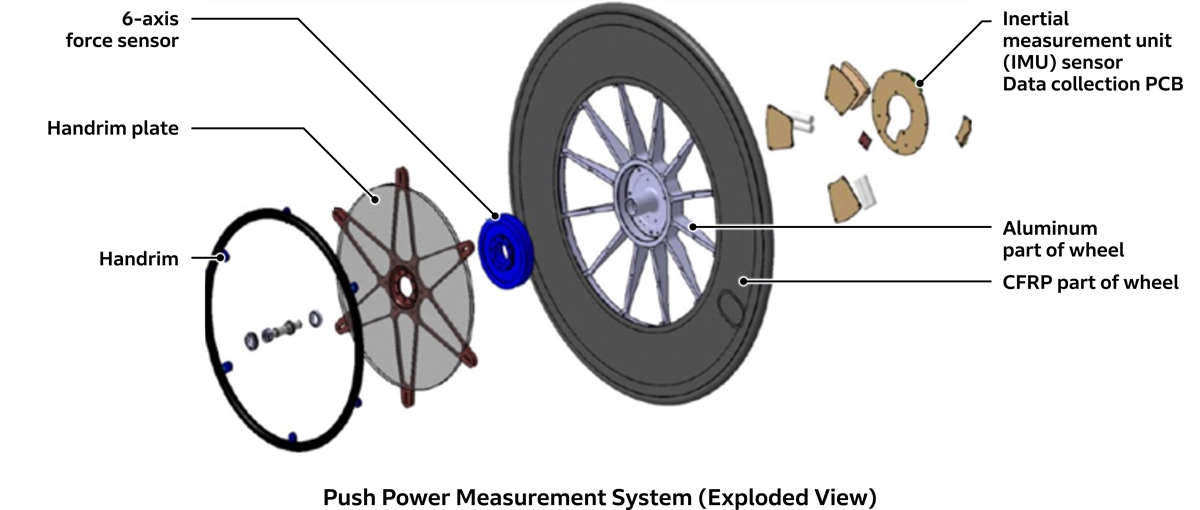
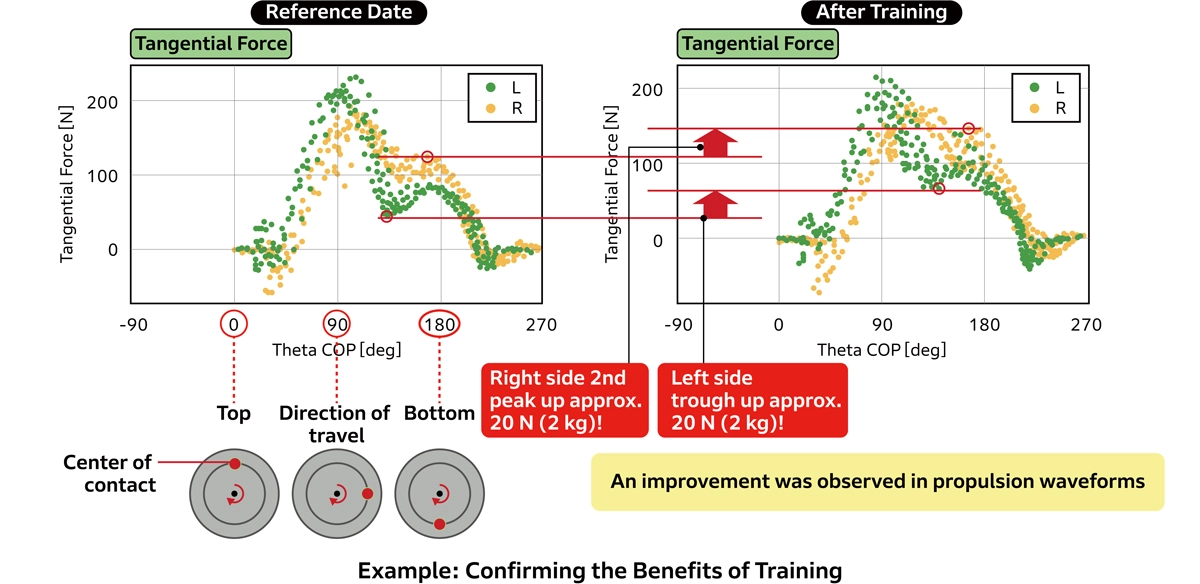
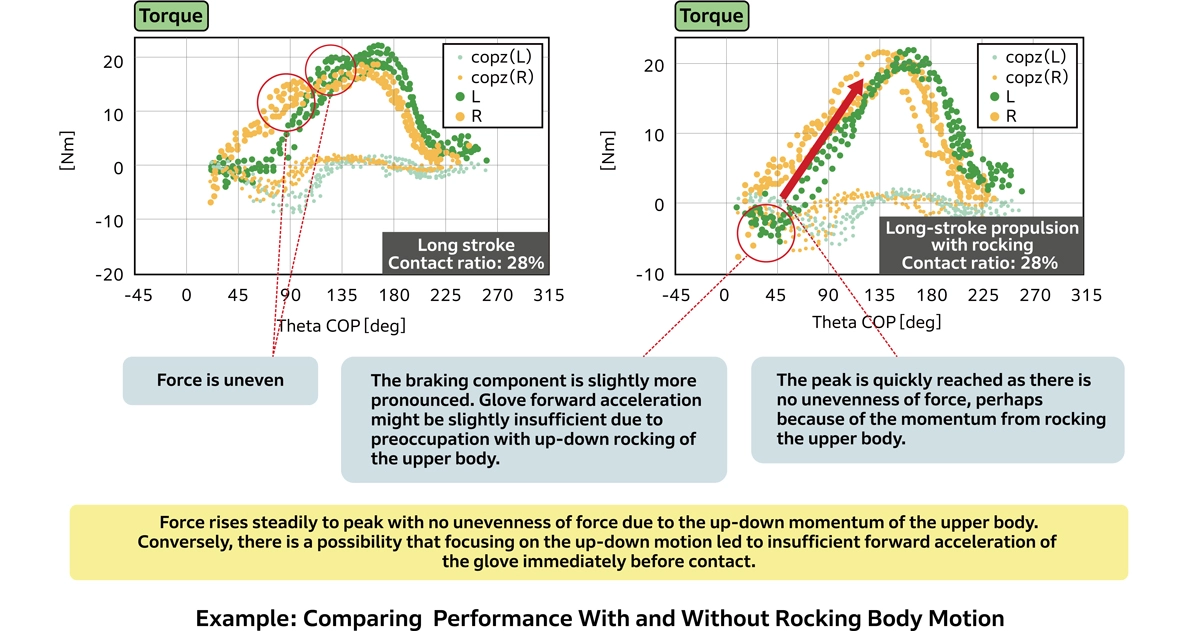
To measure an athlete’s pushing power, the push power measurement system makes use of force detection technology employing a 6-axis force sensor, technology that Honda amassed through many years of robotics research, including for the ASIMO humanoid robot and Walking Assist Device. A measurement system containing ASIMO’s 6-axis force sensor is located in the center of the wheel. It measures the magnitude and direction of the pushing force, as well as the load center position, every 0.0025 seconds. This makes it possible to quantitatively estimate the pushing force.
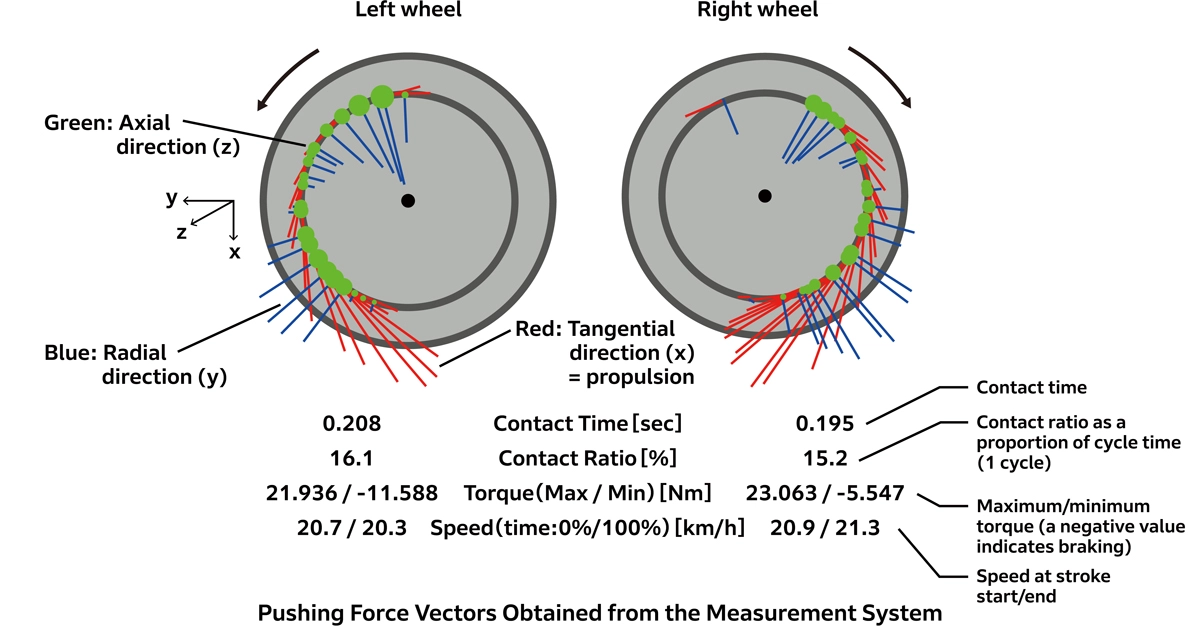
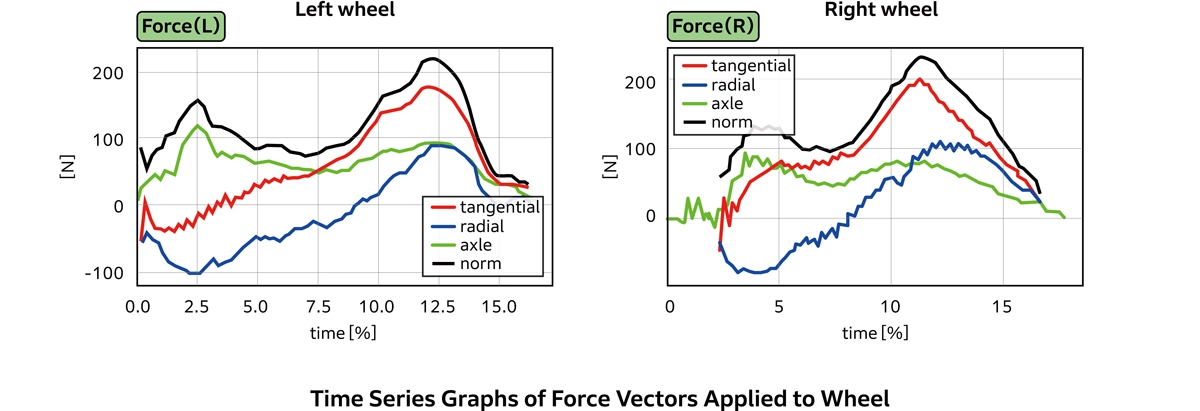
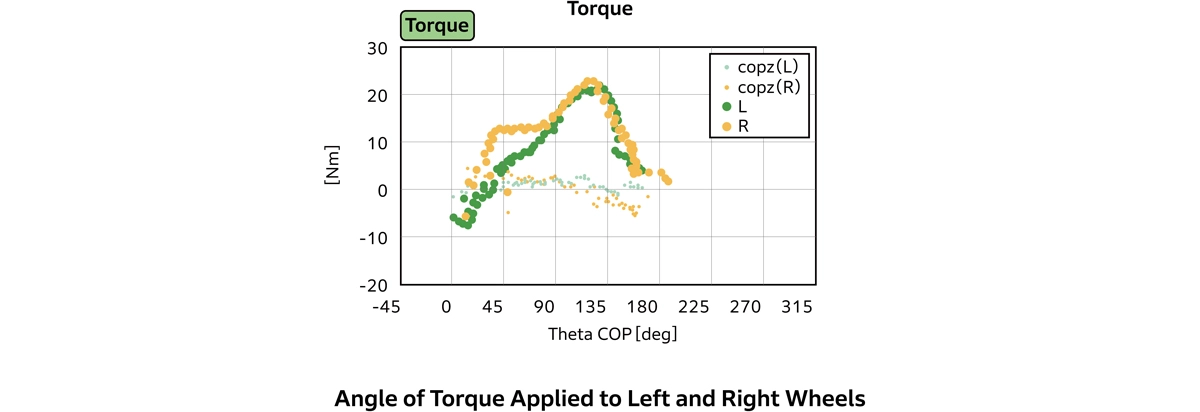
Analyzing Athlete Form in the Field Using the Push Power Measurement System
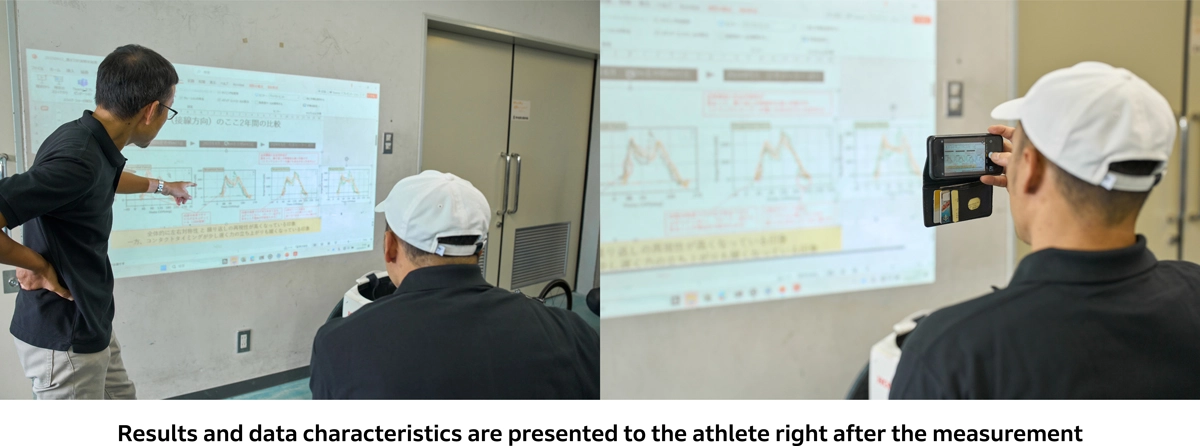
The push power measurement system can be fitted to an athlete’s racing wheelchair. It can be used during practice to estimate pushing force in a variety of situations. Honda believes that by considering this measurement data together with the athlete’s sensory feedback, athletes can gain an objective understanding of their own pushing power, and coaches can provide better instruction.
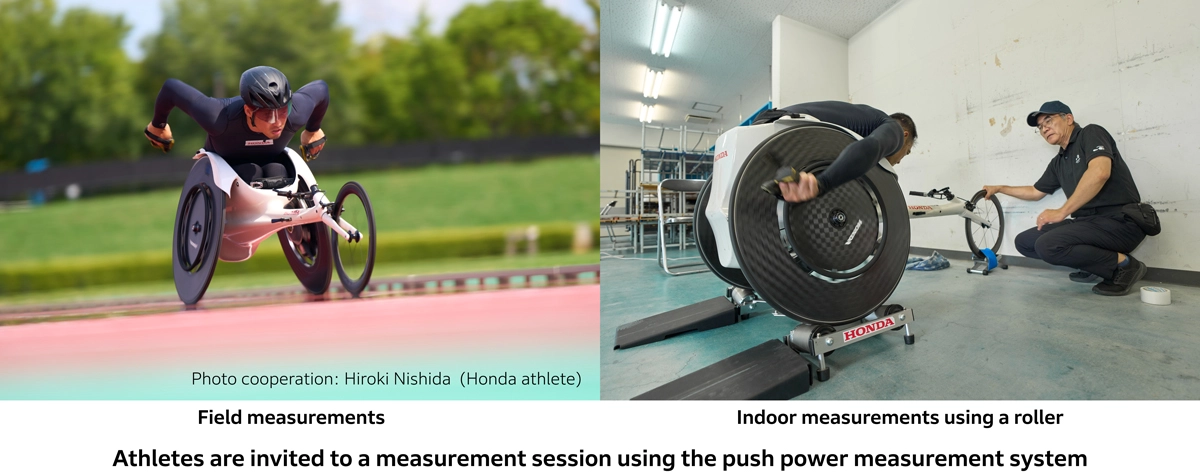
Designing Racing Wheelchairs Without Established Standards
Honda learned that athletes just getting started in wheelchair athletics often obtained pre-owned racing wheelchairs from other athletes. Using that as the base, they would settle on a racing position by customizing the wheelchair for their own use. But the only guide that athletes had to help them customize a wheelchair was the subjective perception and qualitative judgment. For example, sensing they should be seated a little higher, or tilting further forward. The adjustments they could make were limited, leading to an unsatisfactory configuration.
Development of a Test Bench for Determining an Athlete’s Most Effective Posture
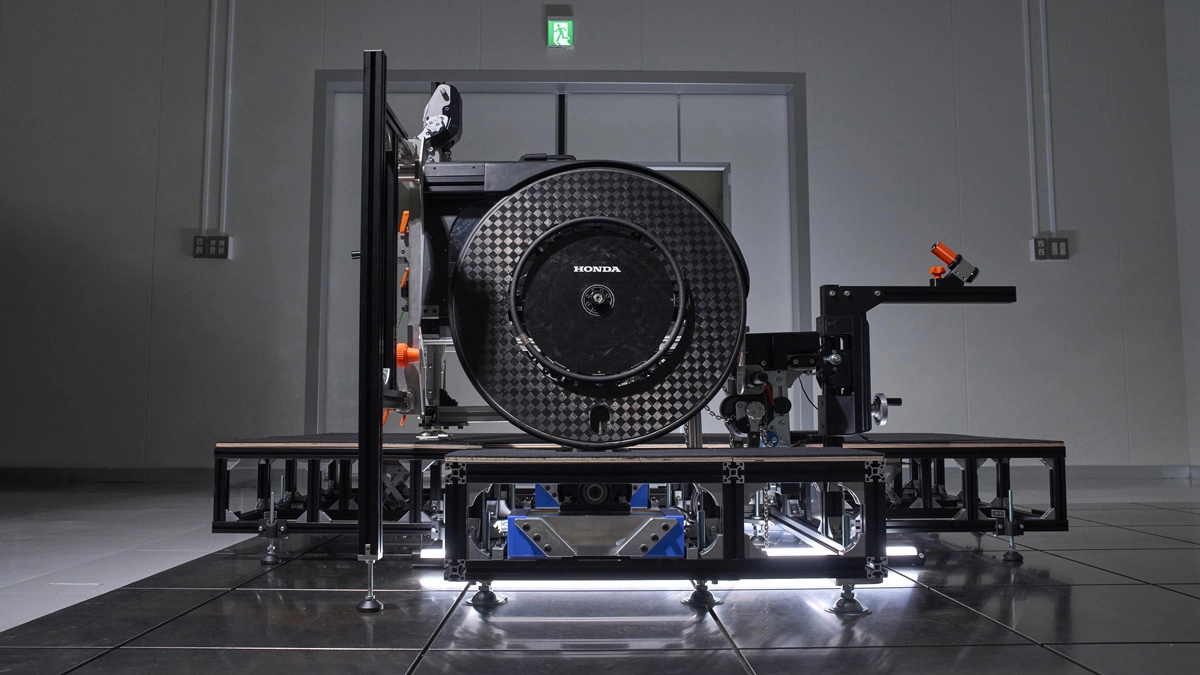
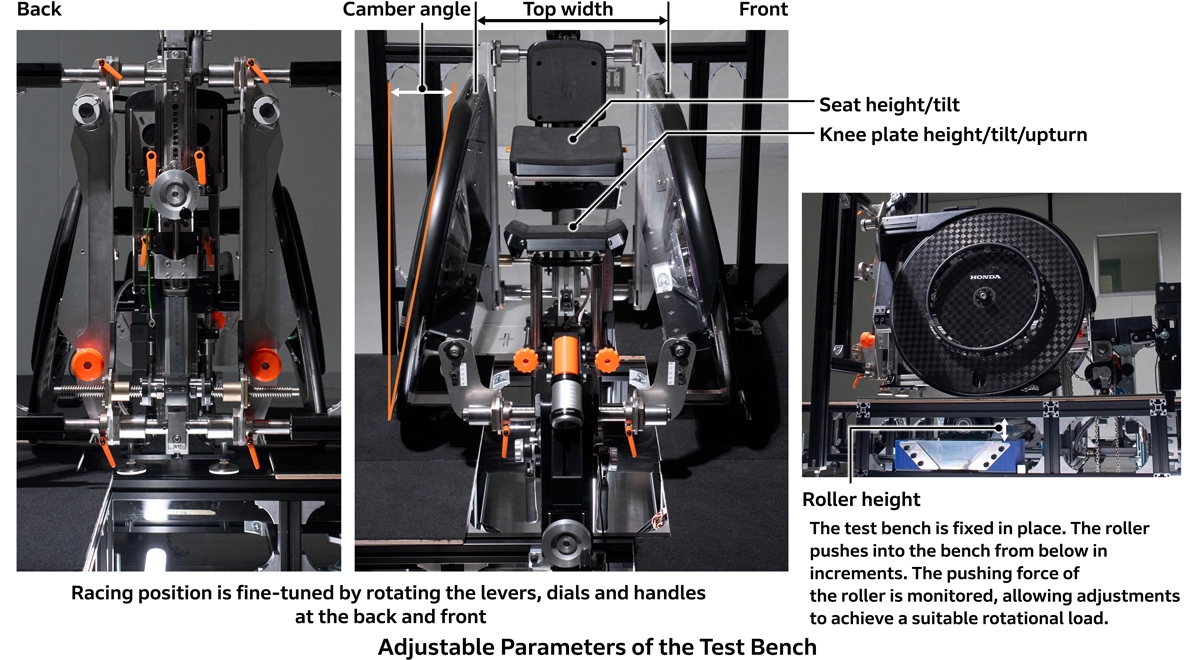
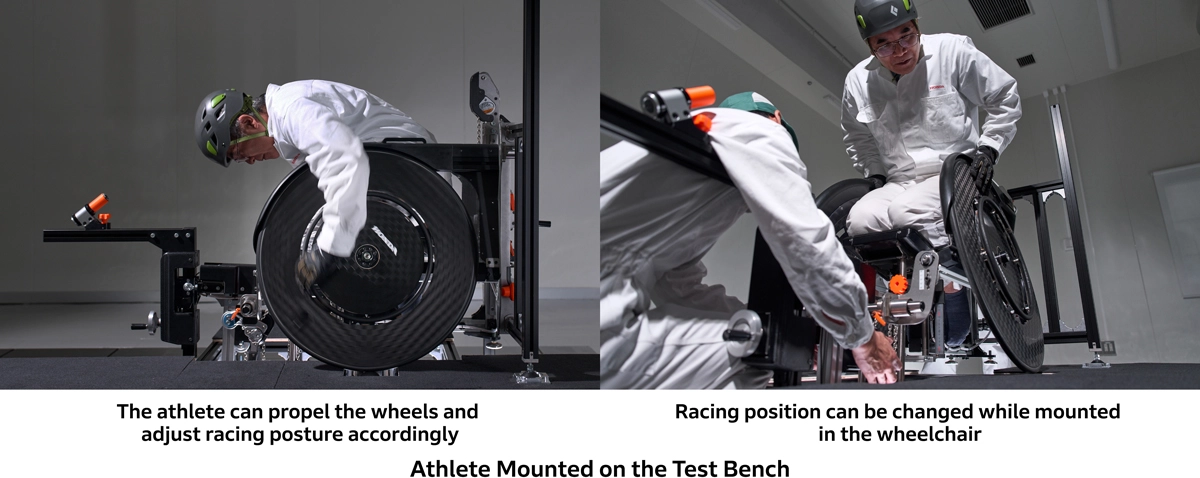
To aid the manufacture of racing wheelchairs that help athletes perform to the best of their abilities, Honda developed an original test bench enabling adjustments to the racing position.
The test bench allows flexible adjustment of the height and tilt of the seat and knee plate, as well as the distance between the wheels and the wheel camber angle. The test bench itself can be placed on a training roller, allowing athletes to both mount it and push it like an actual racer. Recreating the resistance of an actual road surface, the test bench lets athletes determine the racing position most suited to them as they propel the wheels. Because the test bench is heavier than a normal racing wheelchair, applying its own weight to the roller would create too much rotational load. The test bench is therefore fixed in place, with the roller designed to incrementally push up into the test bench from below. The pushing force of the roller is monitored to allow adjustments to achieve the suitable rotational load.
Enabling Racing Wheelchairs to Elicit an Athlete’s Best Performance
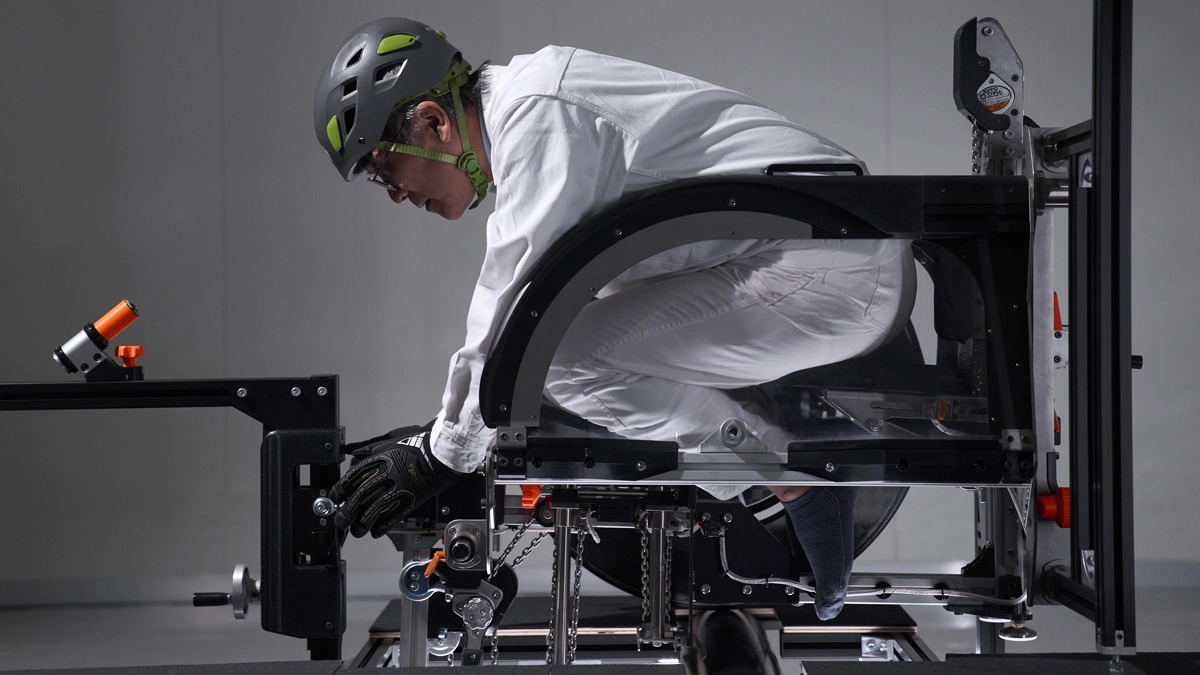
The side of the test bench can be replaced with a transparent polycarbonate material, allowing removal of the wheels, or use of wheels with rims, to enable observation of the racing posture from the side. The idea is for athletes to notice pressure points they would not have picked up on otherwise and to enable the design of racer frames shaped for a better leg fit. Removing the wheels also makes it easier to transfer into and out of the wheelchair.
Incorporating Racing Position into Design Data and Prototype Testing
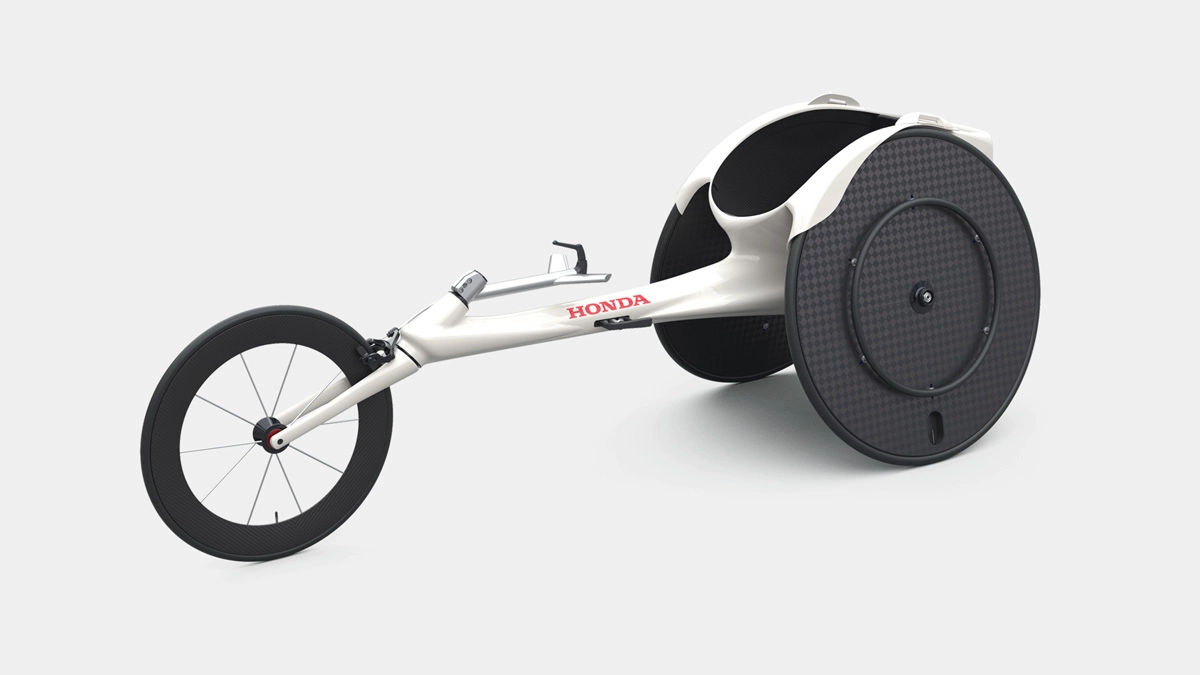
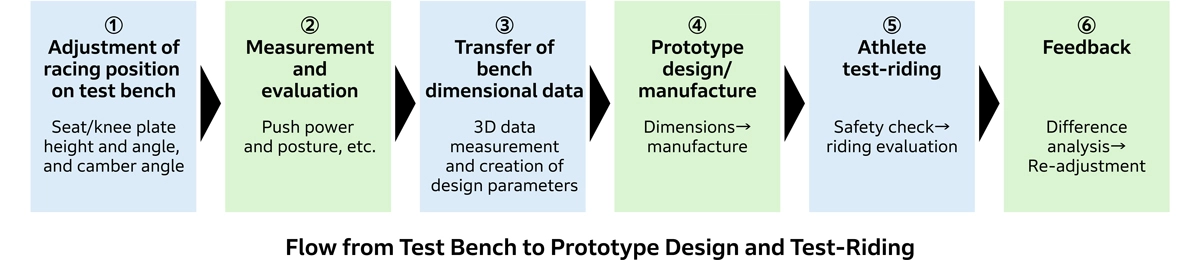
Although the process of utilizing a test bench for the manufacture of a racing wheelchair is still in the research phase, a process is suggested here. It begins with push power measurement and determination of optimal racing posture on the test bench, followed by translation of that data into parameters to create design data, and the manufacture of the wheelchair. The athlete then test-rides a prototype and provides feedback for fine-tuning of the design to achieve high-level optimization.
Manufacturing the carbon monocoque frame of a racing wheelchair only after undertaking these measurements is intended to heighten the athlete’s satisfaction on completion.
Push Power Measurement System Rental to Help More Athletes
Many wheelchair athletes evaluate their pushing power based on their own intuition and the times they record. Applying a scientific lens to this evaluation allows them to identify specific areas for improvement and make quantitative comparisons with past data.
Honda decided to manufacture a push power measurement system in the hope that popular adoption of this kind of scientific analysis by athletes would facilitate development of wheelchair athletics into a more appealing and mature sport. Push power measurement system rental is the first step. Through ongoing improvements to its racing wheelchairs and measurement system, Honda will continue to support this sporting discipline.