![The Accord: Evolution of the Global-Standard Sedan — Honda Accord — 50 Years of Innovation [Chapter 2]](images/main.webp)
INDEX
Fourth-Generation Accord (1989): Returning to the M/M Concept to Advance and Refine the Essence of the Sedan
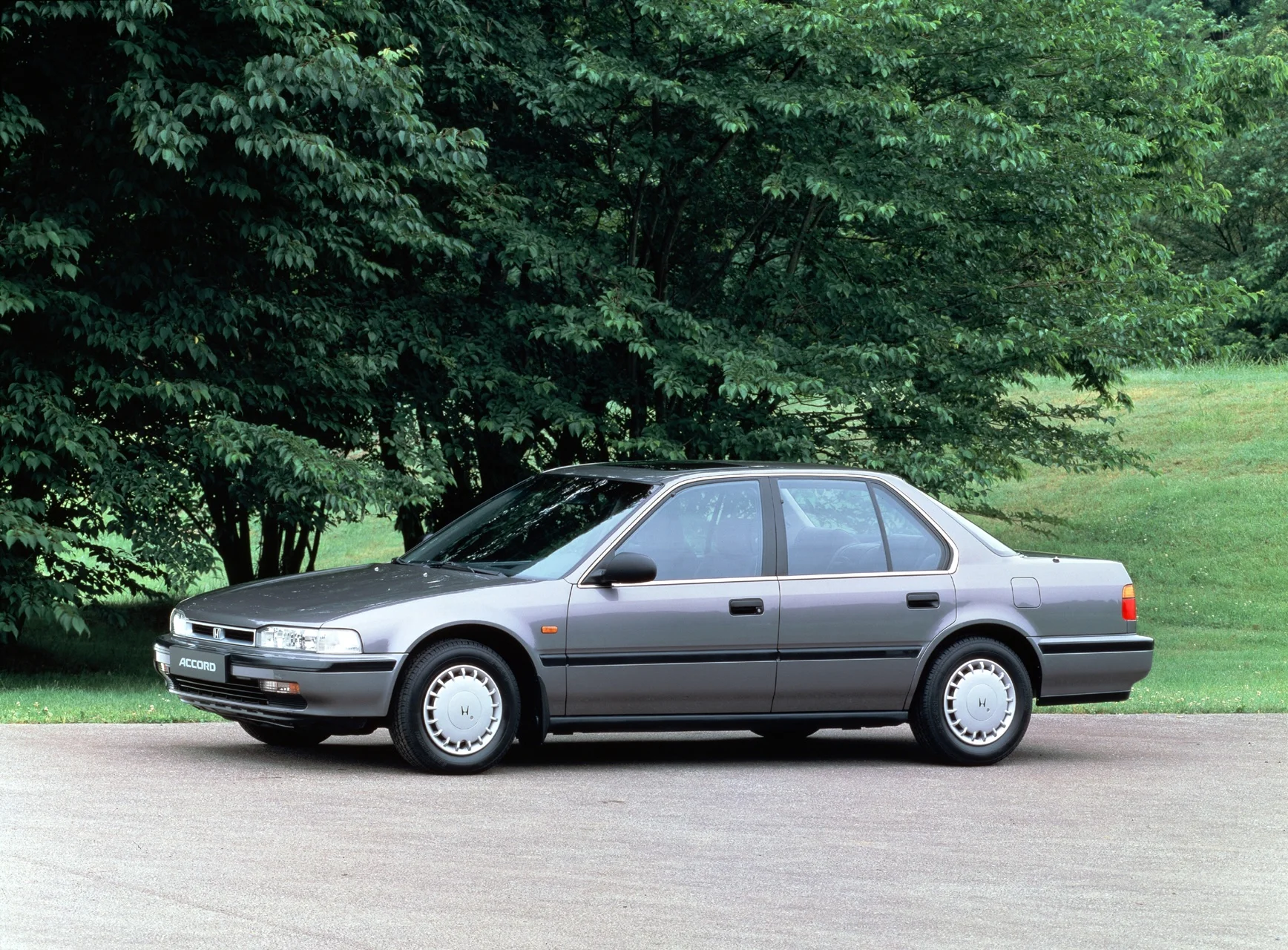
The fourth-generation Accord, which received a full model change in 1989
Since its debut in 1976, the Accord had sold a cumulative total of 5 million units across three generations, firmly establishing itself as one of Honda’s core models. In September 1989, it underwent a full model change to attain its fourth-generation form. Developed based on the concept of “the ultimate world-quality sedan,” it set out to enrich people’s lives through technology. A Honda press release at the time described it this way:
“The new Accord is born, bringing together the cumulative evolution of Honda’s front-wheel-drive technology: a relentlessly refined transverse 4-cylinder engine layout; a mature four-wheel double wishbone suspension; a chassis equipped with a sedan-tuned four-wheel steering (4WS) system; and the rich form and spacious cabin made possible by an advanced glassy forward-set cabin. We aimed for the highest level of refinement to come as close as possible to satisfying human desire and emotions.”
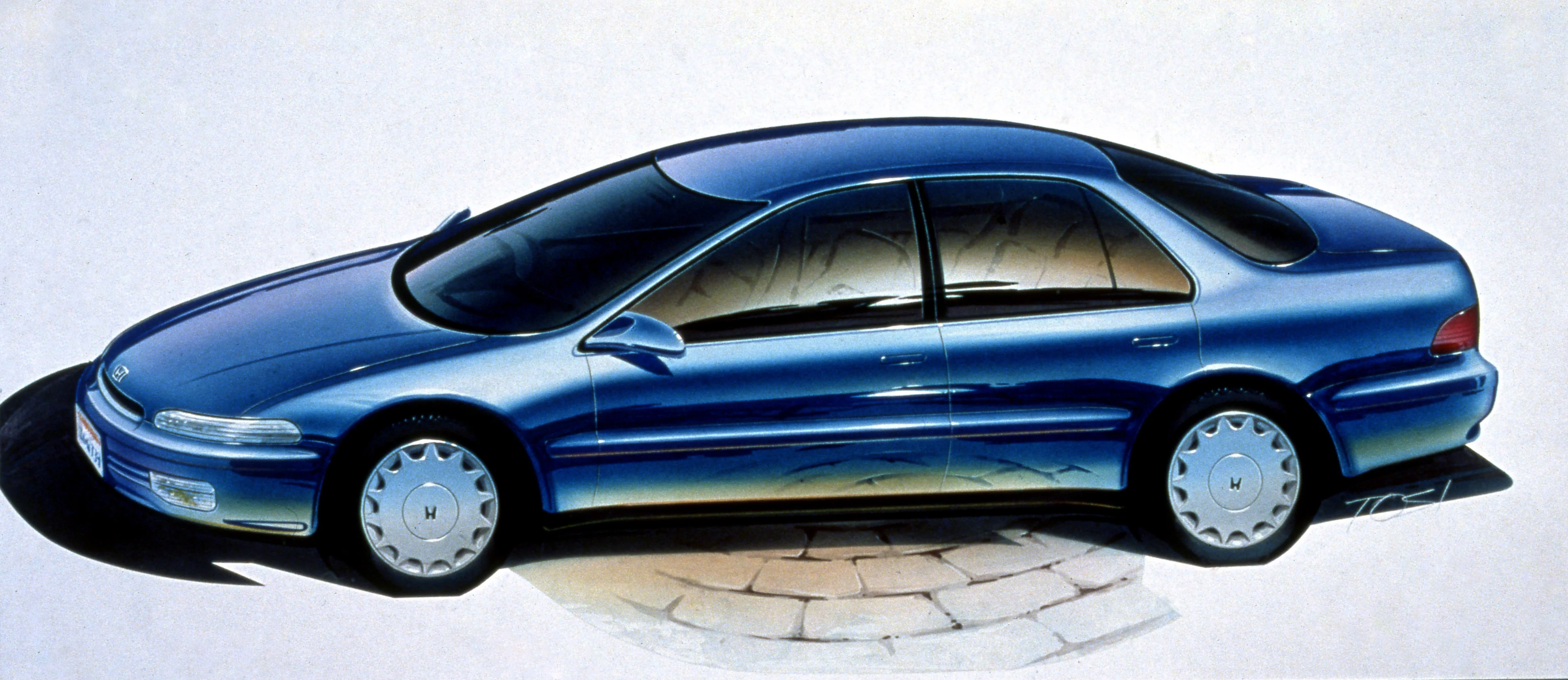
Sketches from the design development phase of the fourth-generation Accord
In developing the fourth-generation Accord, Honda focused on advancing and refining the essence of the sedan, believing that doing so would enrich people’s lives. The development team returned to the M/M concept*1, the same design philosophy that had guided the first-generation Accord, keeping the mechanical components compact while making the cabin large and positioning it as far forward as possible. This packaging approach is known as the “forward spacious big cabin” design.
*1 Honda’s fundamental car-making philosophy, arrived at by thinking outside the box and exhaustively asking what a car should be. M/M stands for Man Maximum, Machine Minimum: maximizing the space available for people while minimizing the space required for mechanical components.
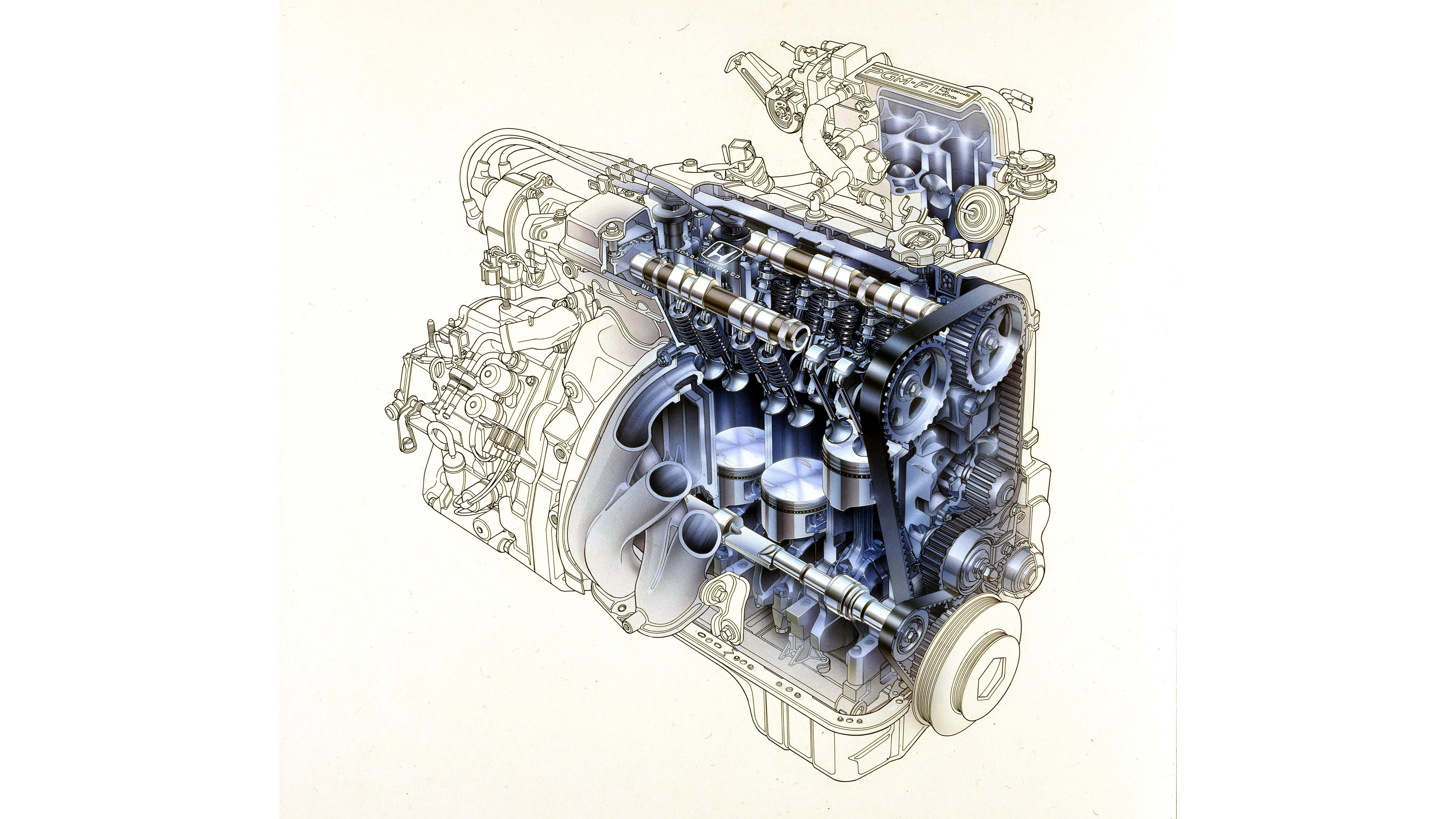
The F20A DOHC engine, the flagship among the four 4-cylinder engines developed for the fourth-generation Accord
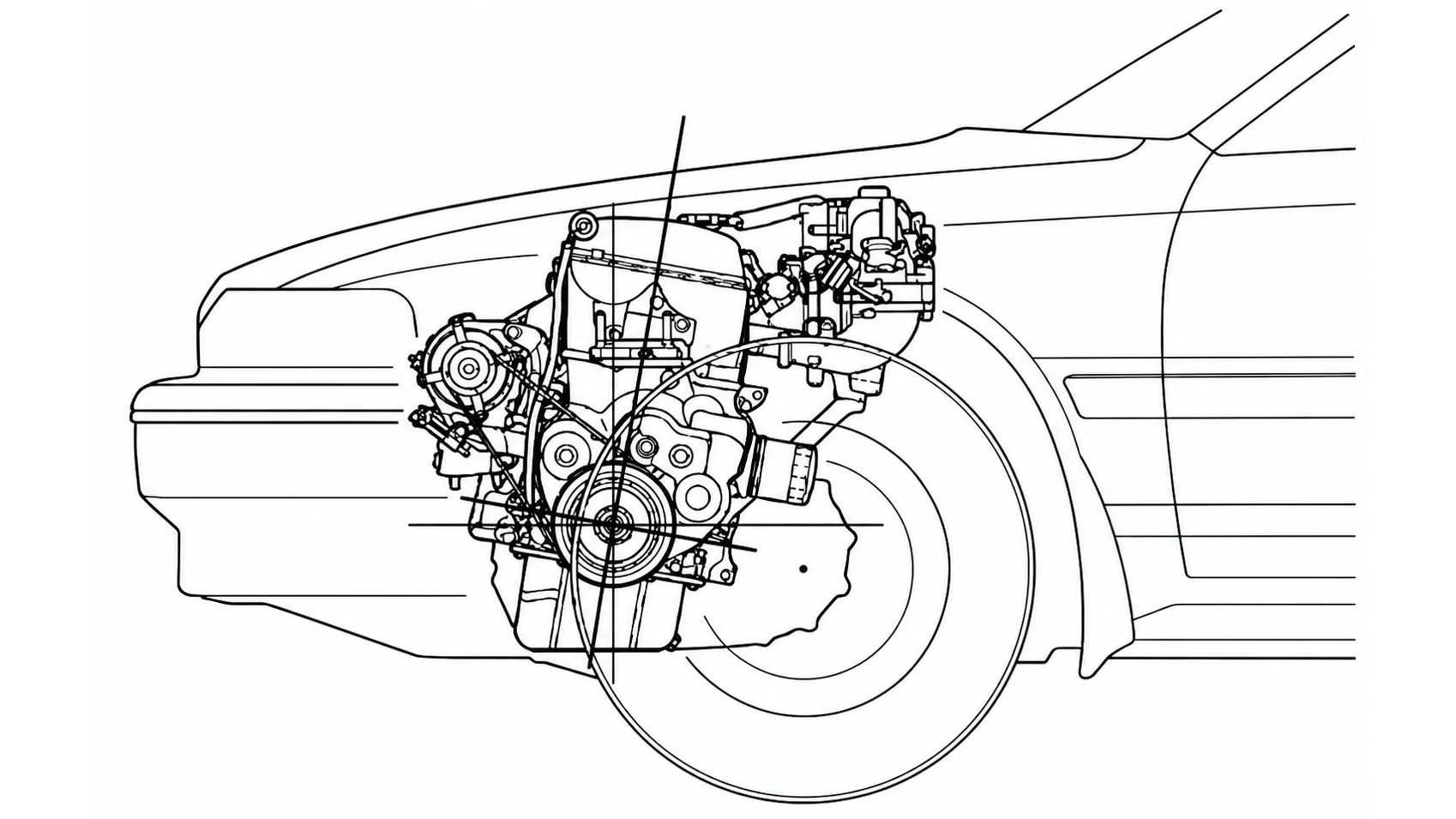
The engines were mounted with a 10-degree rearward tilt
Honda prepared four newly designed naturally aspirated 4-cylinder engines in 1.8-liter and 2.0-liter displacements. The DOHC engines were of course 16-valve, but the SOHC engines available in both 1.8-liter and 2.0-liter forms were also given 16 valves (two intake and two exhaust per cylinder), delivering intake and exhaust efficiency on par with the DOHC engines. All these engines were mounted with a 10-degree rearward tilt, which allowed for a straighter intake manifold layout that smoothed airflow and improved both response and performance. The rearward tilt also helped optimize front-rear weight distribution, contributing to better drivability.
The four-wheel double wishbone suspension, first adopted on the third-generation Accord, was given 25 mm more wheel movement at the front and 40 mm more at the rear, with the aim of a ride that combined supple comfort with a solid underlying firmness. To further refine the driving and handling, Honda also adopted the Steering Angle Sensing Honda Four-Wheel Steering System (Honda 4WS) first introduced on the third-generation Prelude. Tuned to suit a sedan, the system delivered easy, tight-turning maneuverability at low speeds and stable handling at high speeds.
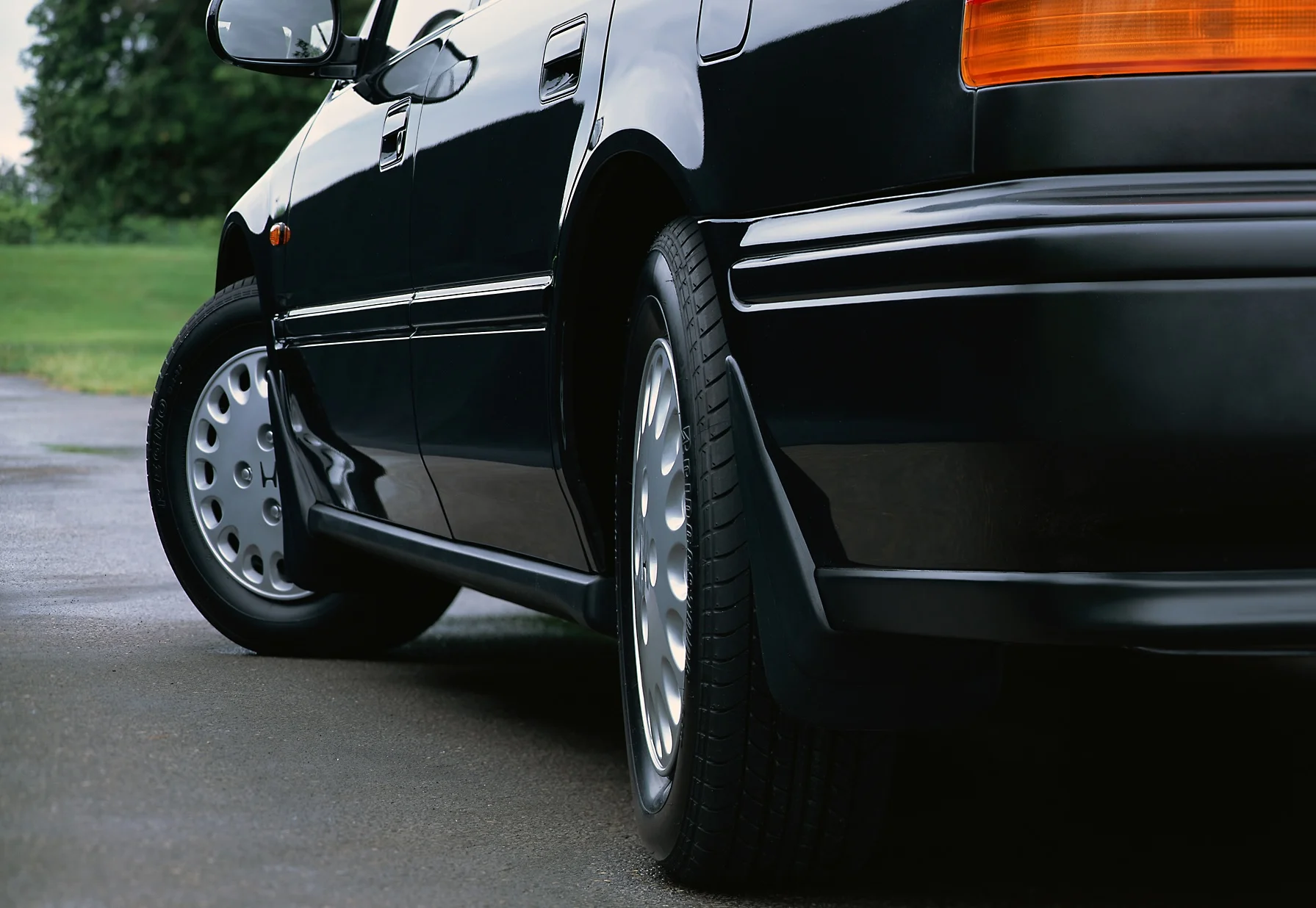
Honda 4WS used a steering angle sensing mechanism that required no complex systems such as electronic controls, hydraulics, or motors. The maximum same-phase rear-wheel steering angle was 1 degree, and the maximum opposite-phase angle was 6 degrees
Fifth-Generation Accord (1993): The VTEC Engine Behind the Exhilarating Drive of a Sporty Sedan
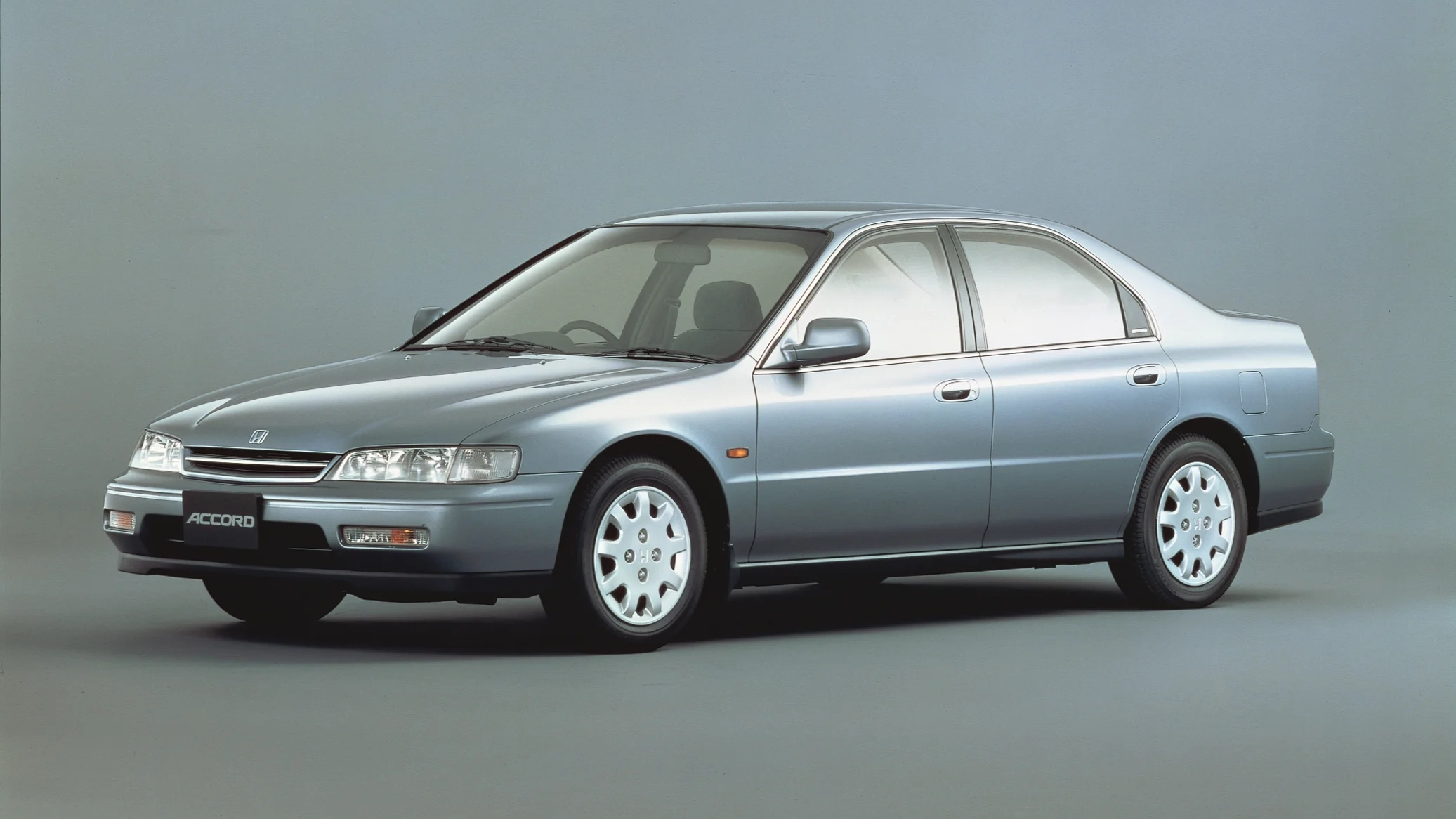
The fifth-generation Accord. The development tagline was: “Both spaciousness and accord evolve. Once again, the future of the sedan: the new Accord is born”
The fifth-generation Accord, launched in September 1993, also embraced the “harmony” conveyed by its name. As a sedan designed to be ahead of the curve in achieving harmony with society, it was developed around the themes of improved safety, environmental performance, and fuel economy.
One of Honda’s guiding principles is to produce where demand exists, thereby expanding local employment opportunities and contributing to the social and economic activity of local communities. In keeping with that principle, Accord production in the United States began in 1982. With the fifth-generation Accord, all variants were given a larger body to meet the U.S. Federal Motor Vehicle Safety Standards (FMVSS). It was from around this time that the Accord matured as a model embodying universal global values and further refined its qualities as a world-standard sedan.
The Honda press release at the time stated:
“At the start of development, we raised the various technical goals we had long been boldly pursuing to an even higher level. As a car that is ahead of the curve in achieving harmony with society, we aimed for top-level performance in areas of social importance—safety, environmental friendliness, and fuel economy—so that our customers could take pride in driving it.”
For safety, Honda combined a robust frame structure with a crushable body design that disperses and absorbs collision energy to protect the cabin and fuel tank, creating a high-strength, high-rigidity omni-directional safety body design. The fifth-generation Accord was among the first to comply with both the occupant protection standards for frontal collisions applied to domestically produced Japanese passenger cars from 1996, and the new U.S. federal side-impact regulations applied to passenger cars sold in the United States from 1997.
Out of consideration for the environment, Honda used recyclable materials in components such as the timing belt cover, air cleaner case, and resonator chamber. Resin parts collected from the market were reused in components such as splash guards, fuel pipe covers, and air outlets. Resin parts including the bumpers were also made easier to attach and detach, simplifying disassembly work.
The engine lineup included a 1.8-liter SOHC, a 2.0-liter SOHC (both 16-valve, with two intake and two exhaust valves per cylinder), and two versions of the 2.2-liter VTEC. VTEC, Honda’s proprietary variable valve timing and lift electronic control technology, combines ease of operation in the low- to mid-rpm range with high power output at high rpm. The 2.2-liter DOHC VTEC produced a maximum output of 190 PS, tuned to deliver the exhilarating drive of a sporty sedan.
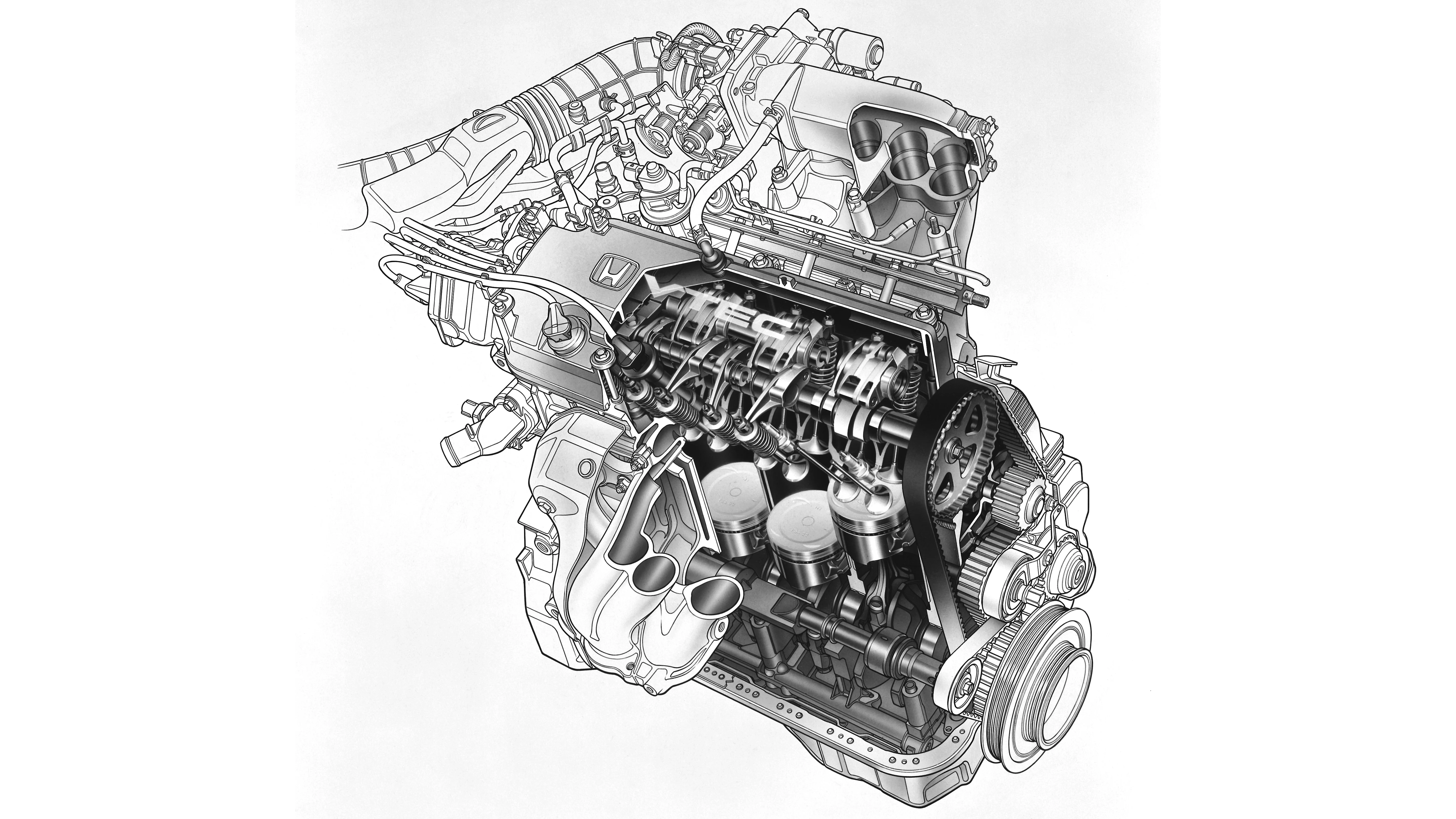
Powered by the new 2.2-liter VTEC engine, which combined high output, high torque, and excellent fuel economy at a high level
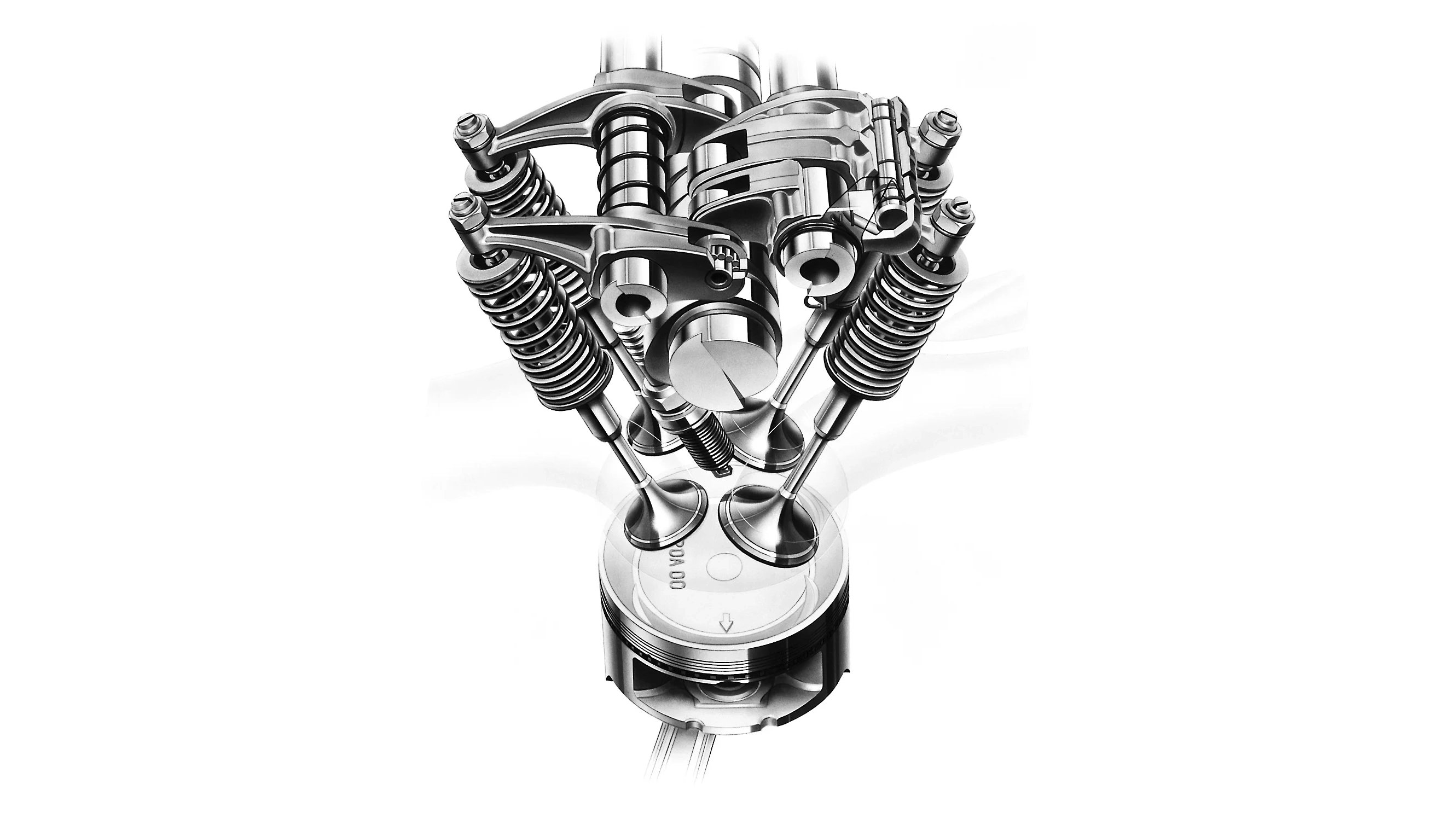
The 2.2-liter VTEC engine used roller followers on its cam-driven rocker arms, reducing engine friction and improving fuel economy
Building on this, for the fifth-generation Accord Honda developed and adopted a 2.2-liter VTEC engine designed to deliver “driving performance of one class above, fuel economy of one class below.” In the everyday low-rpm range, where piston speed is slow, the lift on one intake valve was kept to a minimum to increase the velocity of the air-fuel mixture flowing into the cylinder, and a mechanism was added to generate swirl (a lateral vortex) inside the combustion chamber. This enhanced the air-fuel mixture, while rapid combustion improved combustion efficiency. Combined with high-volume EGR (exhaust gas recirculation), thermal efficiency improved, resulting in superior fuel economy.
At high rpm, by contrast, both intake valves were activated and the cam profile was switched to the high-rpm setting, allowing the engine to deliver its full potential and produce a maximum output of 145 PS. Despite this generous power output, the engine achieved better fuel economy than the 1.8-liter SOHC engine.
Sixth-Generation Accord (1997): The VTEC LEV Engine That Cut Harmful Emissions to One-Tenth of Previous Levels
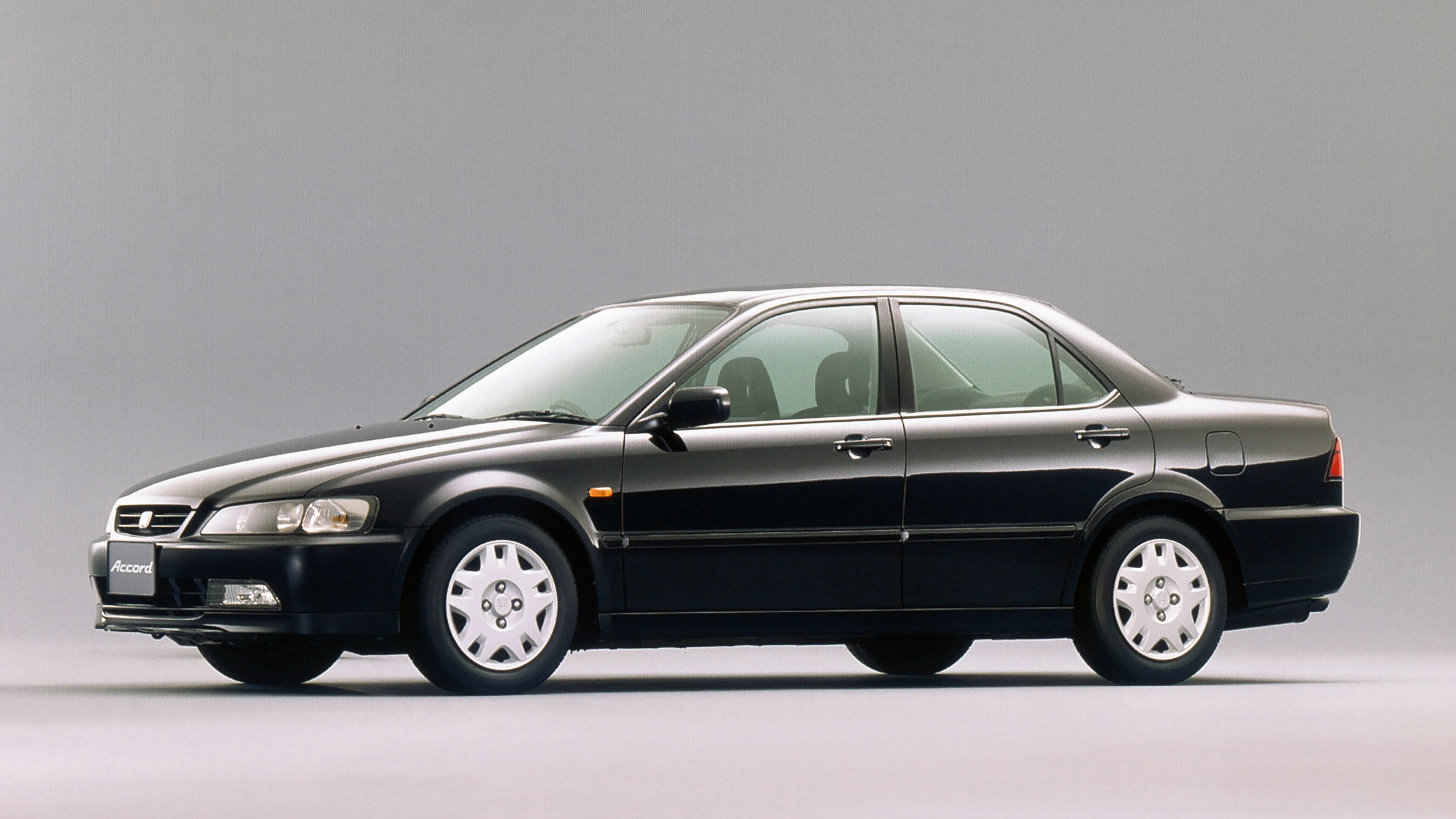
The theme of the sixth-generation Accord, which debuted in 1997, was “deepening the accord”
By June 1997, cumulative Accord production had surpassed 9.3 million units. Released that September, the sixth-generation Accord aimed to “deepen the accord” by using a range of advanced technologies to reconcile high-level environmental performance with the fun to drive that is the essential appeal of a car, both at a high level. The development concept was described in the Honda press release at the time:
“Actively advancing consideration for the environment is an essential challenge for the cars of the future. So too is pursuing the world’s highest level of safety performance. Building on these two foundations, the Accord needed to retain the kind of driving performance that makes the act of driving itself enjoyable, true to its character. Our goal was to harmonize all these elements at a high level using all of Honda’s technologies, embodying an advanced, high-performance sedan of the world’s highest standard, one that would lead both its era and its class.”
To improve environmental performance, Honda worked in parallel on two fronts: reducing the CO₂ emissions behind global warming through improved fuel economy, and reducing the harmful substances in exhaust emissions that cause air pollution.
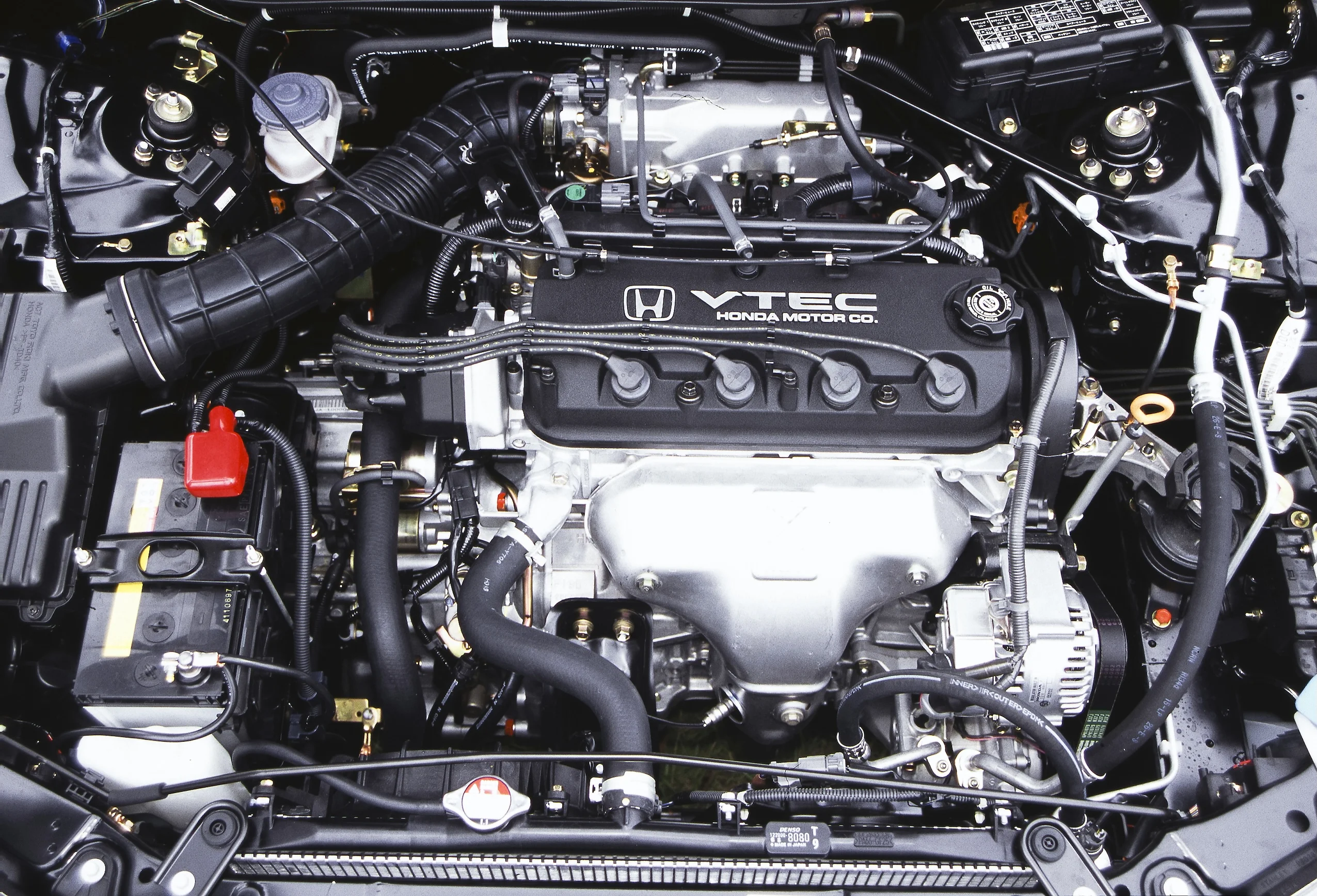
The F18B 1.8-liter inline 4-cylinder SOHC VTEC engine, which achieved top-level output and fuel economy among 1.8-liter naturally aspirated engines
Built around Honda’s proprietary VTEC mechanism, the 1.8-liter VTEC engine incorporated newly developed ultra-lean-burn and high-output technologies to deliver outstanding fuel economy and high power output. The key technology for extending the lean-burn limit was an air-assist mechanism in the injectors. By routing a portion of the intake air through a rotary air control valve and feeding it to the injector tip, the engine atomized injected fuel particles to roughly one-quarter of their previous size. This drew a more uniformly distributed lean mixture into each cylinder, contributing to stable combustion.
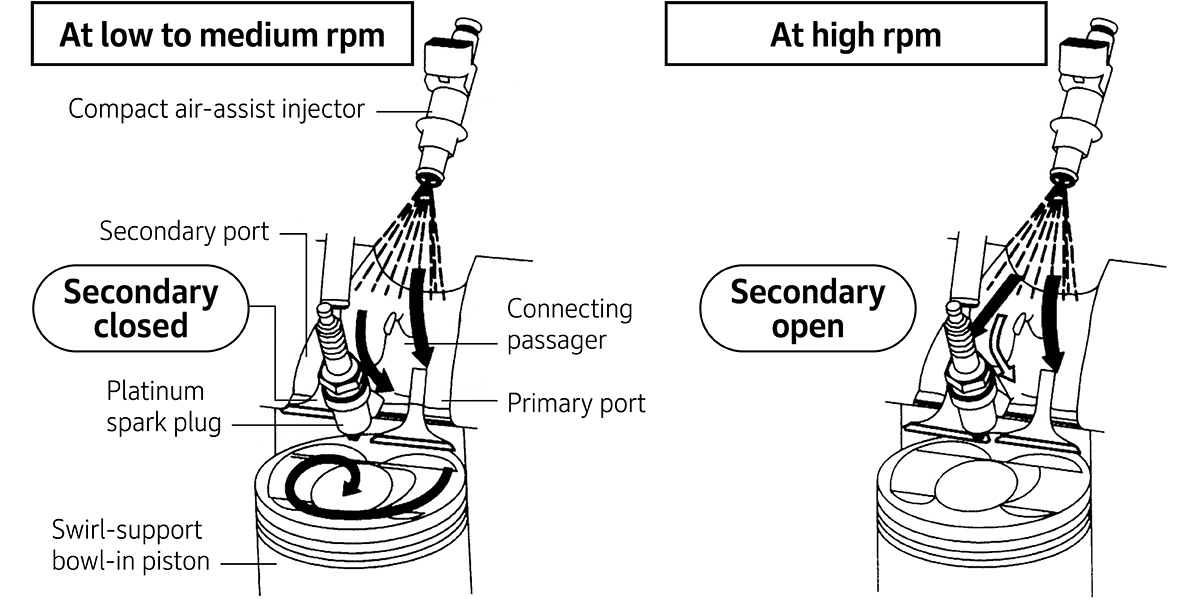
An air-assist control valve was added to the fuel injection system. A portion of the air entering upstream of the throttle valve was routed through a rotary valve to the injector tip, promoting atomization at the perimeter of the fuel injection port and extending the lean-burn limit
The VTEC mechanism also deactivated one of the two intake valves to create a single-valve intake, increasing intake velocity and generating swirl. A connecting passage was added through the wall separating the primary and secondary ports, allowing some mixture to flow into the side with the deactivated valve as well, producing higher-velocity, stronger swirl. This effectively charged the combustion chamber with a high-swirl-ratio mixture, which was then compressed by a swirl-support piston with a bowl-shaped crown, achieving highly efficient lean burn.
At high rpm, the VTEC mechanism switched to the high-rpm valve timing and lift settings, intake reverted to both valves, and the engine produced a maximum output of 140 PS at 6,100 rpm.
To reduce harmful substances, Honda worked thoroughly to clean up exhaust emissions and developed a new 2.0-liter VTEC LEV*2 engine that cut CO (carbon monoxide), HC (hydrocarbons), and NOx (nitrogen oxides) to one-tenth of previous levels, achieving outstanding low-emission performance.
*2 LEV = Low Emission Vehicle
Based on the fuel-efficient, high-output 2.0-liter VTEC engine, the 2.0-liter VTEC LEV engine added a highly efficient exhaust gas purification function to its exhaust system. The catalytic converter (three-way catalyst) that purifies exhaust gas works more effectively at high temperatures, so to bring purification performance to its full potential immediately after engine start, Honda developed a low-heat-mass pressed exhaust manifold that reduces the drop in exhaust gas temperature. To prevent the manifold from absorbing the heat needed to activate the catalyst, it was given a fully hollow dual-wall structure with a thinned inner wall. This delivered exhaust gas to the catalyst at high temperatures without reducing exhaust efficiency. A 600-cell catalyst was used. Catalyst purification performance becomes more effective as the surface area in contact with the exhaust gas grows; that is, as the number of cells per unit area in the lattice increases. By adopting a newly developed 600-cell type with a larger specific surface area, the 2.0-liter VTEC LEV engine increased contact area and achieved cleaner purification performance.
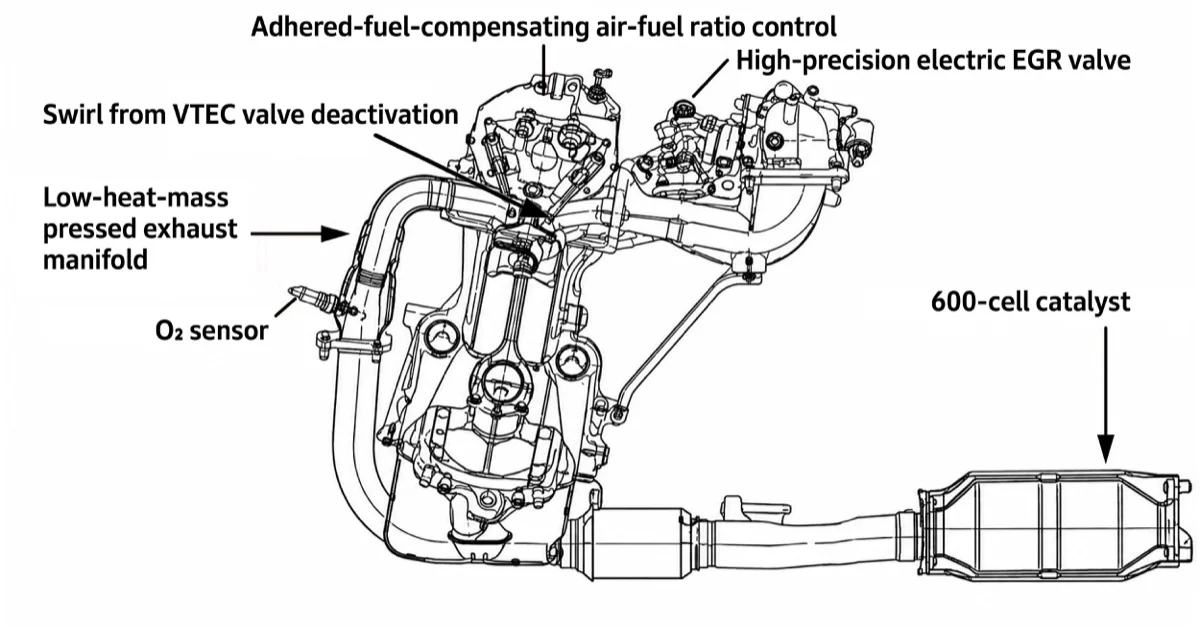
Intake and exhaust system structure diagram for the 2.0-liter VTEC LEV engine
The sixth-generation Accord also focused on enhancing dynamics performance to heighten the joy of driving and the fun of riding that are the essential appeal of a car. The rear suspension was newly developed as a multi-link 5-link double wishbone system, intended to elevate the fundamental performance of a front-wheel-drive car and further improve handling stability and ride comfort. Engineers applied analyses based on Honda’s proprietary vehicle dynamics theory, the “Beta Method”*3, to dramatically advance suspension performance while adopting the new mechanism.
*3 Beta Method (β-Method): Honda’s proprietary control theory for analyzing a vehicle’s dynamic performance when embodying individual technologies during chassis development.
The technical highlight on the safety performance front was the adoption of VSA (Vehicle Stability Assist), a vehicle behavior stabilization control system, a first for a Japanese front-wheel-drive car. A car’s behavior can be disturbed by changes in driving conditions, and improper operation in such moments tends to amplify the disturbance. Honda viewed reducing these sudden, hard-to-control changes in vehicle behavior as critically important, and as a major goal of active safety.
By the time the sixth-generation Accord was launched, Honda had been actively advancing active safety technologies, having developed Japan’s first ABS (four-wheel anti-lock braking system) and the world’s first TCS (traction control system) for a front-wheel-drive car. VSA added vehicle sideslip reduction to these ABS and TCS technologies, curbing sudden changes in vehicle behavior and giving the driver the composure needed to manage the next maneuver. When applying VSA to the sixth-generation Accord, the control logic was optimized with care to avoid spoiling the fun of riding.
Euro R: Deepening the Driving Experience of a Sedan
In 2000, the manual-only full-fledged sports sedan “Euro R” was added to the sixth-generation Accord lineup. Its H22A engine produced 220 PS. Building on the driving performance and cabin comfort expected of a sedan, it took sporting capability to a deeper level and gained popularity as a high-performance sports sedan.
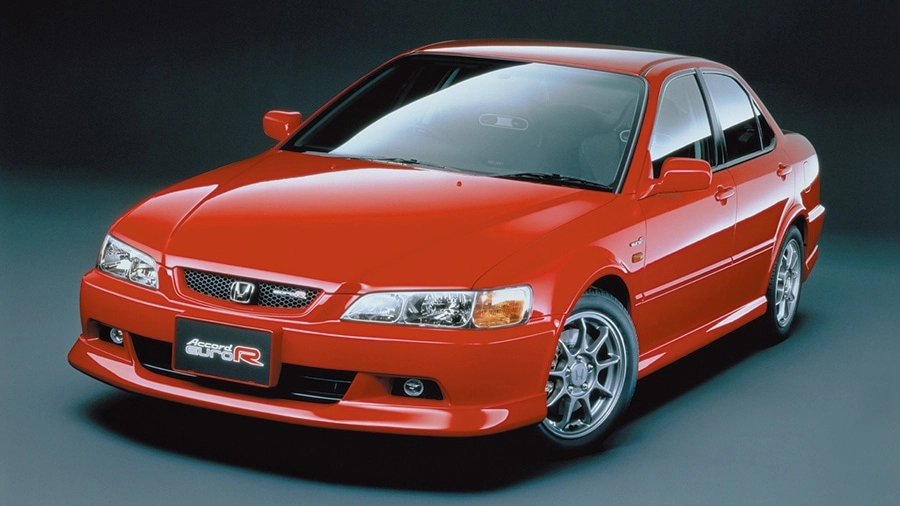
The Accord Euro R, which gained popularity as a high-performance sports sedan
Seventh-Generation Accord (2002): Internavi — Expanding the Possibilities of Car Navigation
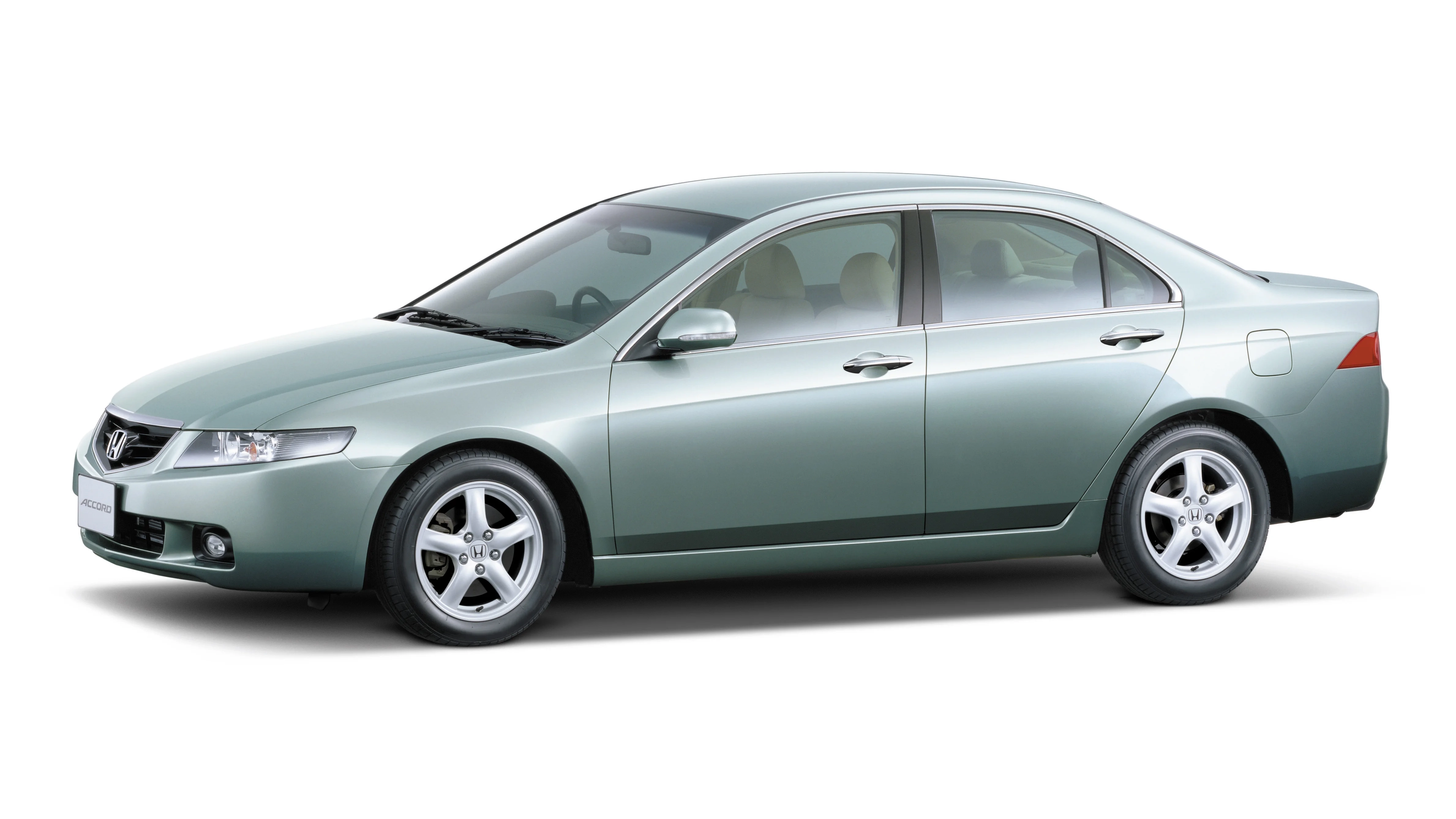
The seventh-generation Accord also focused on aerodynamic performance, achieving a world-class drag coefficient (Cd) of 0.26
The Accord’s development stance of incorporating the most advanced technologies of the era to seek harmony with people and society remained unchanged with the seventh generation, launched in October 2002. The chief engineer’s thoughts at the time were described in the Honda press release as follows:
“In developing the seventh-generation Accord, the very first question we set for ourselves was an extremely simple one: ‘What is the value of a sedan to our customers?’ We began by reexamining, from first principles, the value of the sedan, a body type with a long history as a fundamental form of the automobile. The conclusion we reached was simple: ‘Deliver every fundamental element of a car at the highest quality.’ Our goal became a car that polished all the fundamental elements to a high level of quality without sacrificing any one of them, a car that, as the finest partner for customers around the world, would deliver the greatest sense of confidence and pleasure across a variety of driving situations.”
One of Honda’s key development themes was improving aerodynamic performance, which delivers a range of benefits including high-speed stability, better fuel economy, and reduced wind noise. For the Accord, Honda made full use of aerodynamic simulation using CFD*4, one of the results of that research, enabling faster aerodynamic calculation processing. The result was an excellent drag coefficient (Cd) of 0.26 while achieving a stylish design.
*4 CFD = Computational Fluid Dynamics
HiDS (Honda Intelligent Driver Support System) was a technology Honda developed ahead of the rest of the world. Announced in 1997, it received ministerial certification from Japan’s Ministry of Transport (now the Ministry of Land, Infrastructure, Transport and Tourism) in March 2000, and was first introduced on the seventh-generation Accord. Long-distance highway driving leads to driver fatigue and reduced concentration, which can in turn cause errors in perception and judgment.
HiDS reduces driving workload through two technologies: IHCC (Intelligent Highway Cruise Control), which controls vehicle speed to keep an appropriate distance from the vehicle ahead, and LKAS (Lane Keeping Assist System), which assists in maintaining lane position. By preventing fatigue-related errors before they occur, HiDS contributes to accident prevention. At its core, HiDS is a technology that respects the human, designed to lighten the driver’s burden and prevent human error by providing the maximum support a car can offer. Developed based on the principle that “it is ultimately the driver who drives the car,” it was designed to assist without interfering with driving operations, and this philosophy lives on in the Honda SENSING technology being used today.
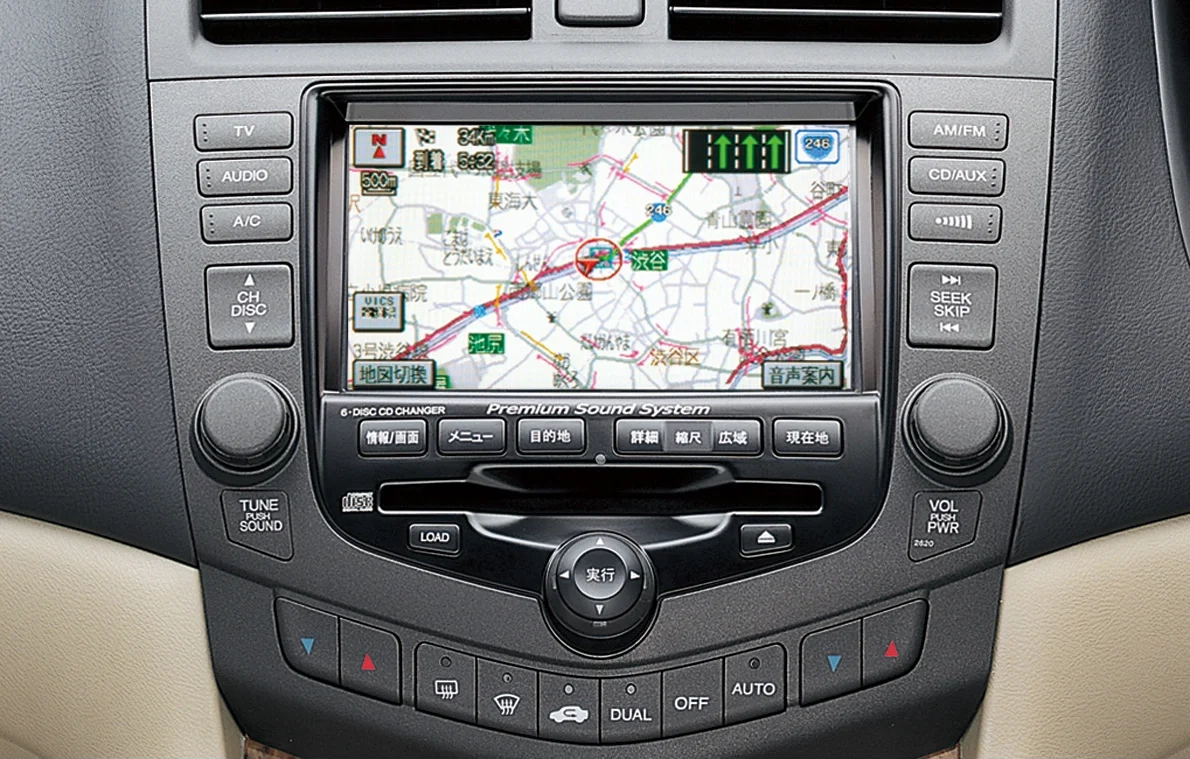
The seventh-generation Accord was the first to feature Internavi Premium Club, a pioneering integration of car navigation and IT
To further deepen harmony with society, Honda developed Internavi Premium Club, an information network service that further expanded the possibilities of car navigation. Honda began offering this new information service starting with the seventh-generation Accord. Aiming to deliver services of the greatest value to users, Internavi Premium Club consolidated five comprehensive services at the Internavi Information Center, including up-to-date nationwide traffic information and content useful for trip planning. By accessing the Information Center from their car navigation systems via a mobile phone, users could call up a wide range of information tailored to their individual requests.
Eighth-Generation Accord (2008): An Omni-Directional Crash-Compatibility Safety Body
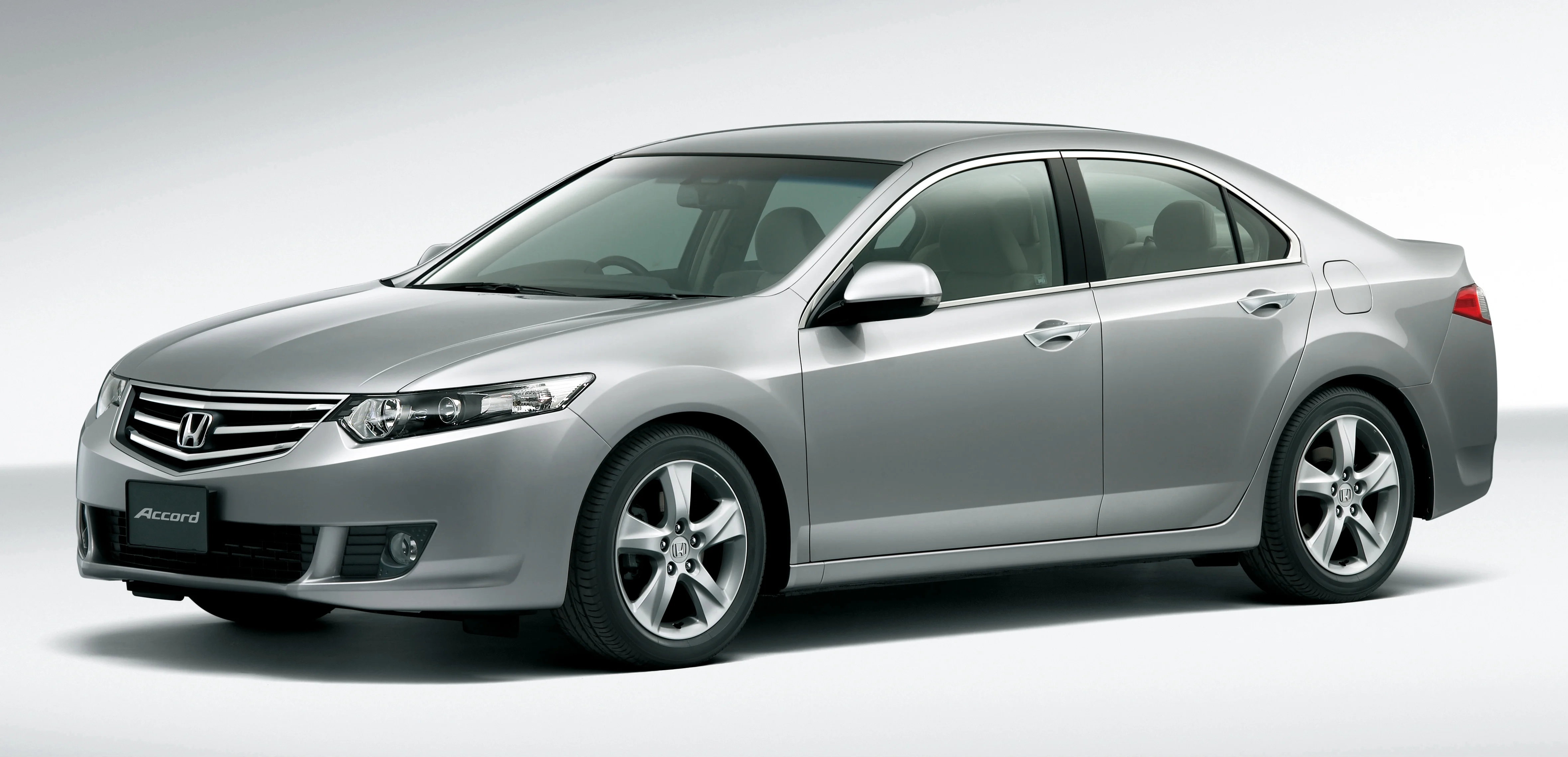
The eighth-generation Accord, launched in 2008
The Accord has consistently created new value as the times have changed, and the eighth generation, launched in December 2008, carried that tradition forward, rigorously pursuing and refining the essentials of a car: driving performance, safety performance, and environmental performance. In the Honda press release at the time, the chief engineer explained the direction of this evolution as follows:
“In developing the eighth-generation Accord, we did not change the spirit and thinking of the seventh generation. Taking market trends into account, we advanced the car to a higher level of positioning, presence, and quality, aiming for even greater heights. We polished every facet of Honda’s advanced character, sophistication, and sportiness to a high level of quality, creating a full-fledged quality sedan with a unique presence all its own.”
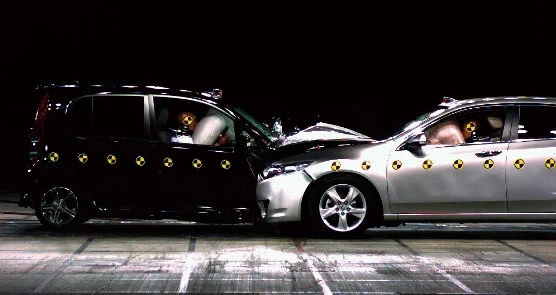
An omni-directional crash-compatibility safety body developed using Honda’s proprietary collision safety technology, “G-Control”
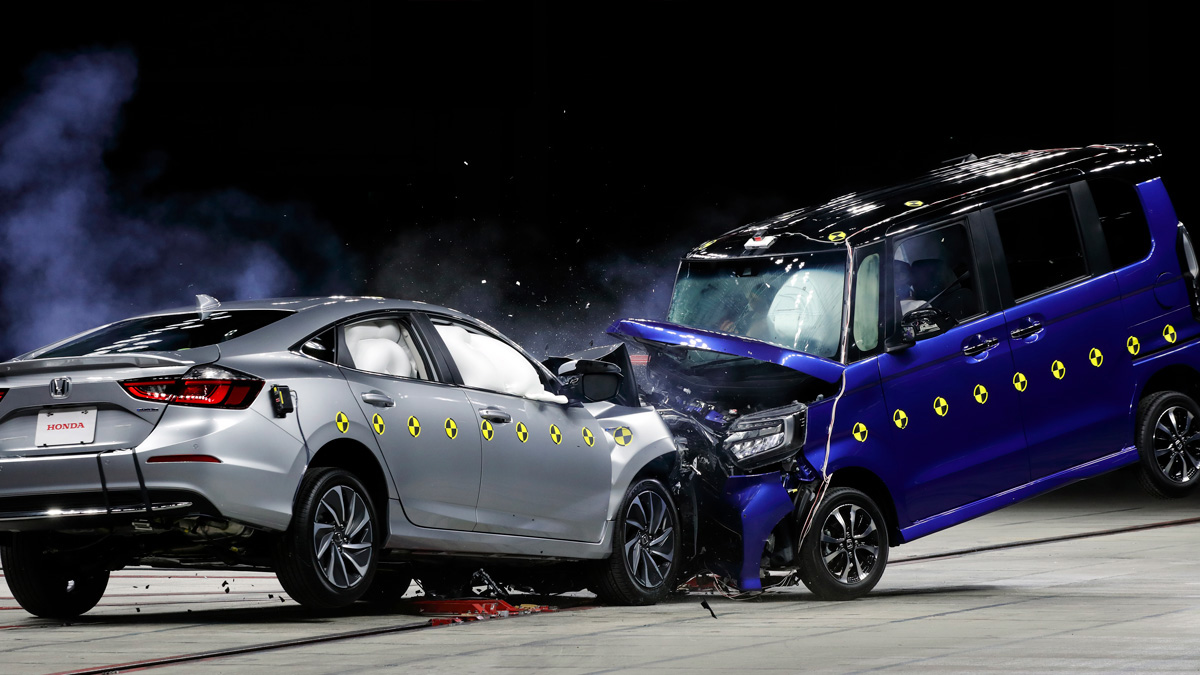
For collision safety, Honda set strict in-house standards based on its proprietary collision safety technology “G-Control,” aiming to clear at a high level both full-frontal collisions, where reducing injury values to occupants is the key challenge, and frontal offset collisions, where securing occupant survival space is the key challenge. The eighth-generation Accord strengthened the G-Control technology first introduced on the seventh-generation Accord, advancing it into a crash-compatibility body that balances improved self-protection performance with reduced aggressiveness toward the other vehicle. With pedestrian protection also in view, the model was further refined into a pedestrian injury mitigation body, raising collision safety performance even higher.
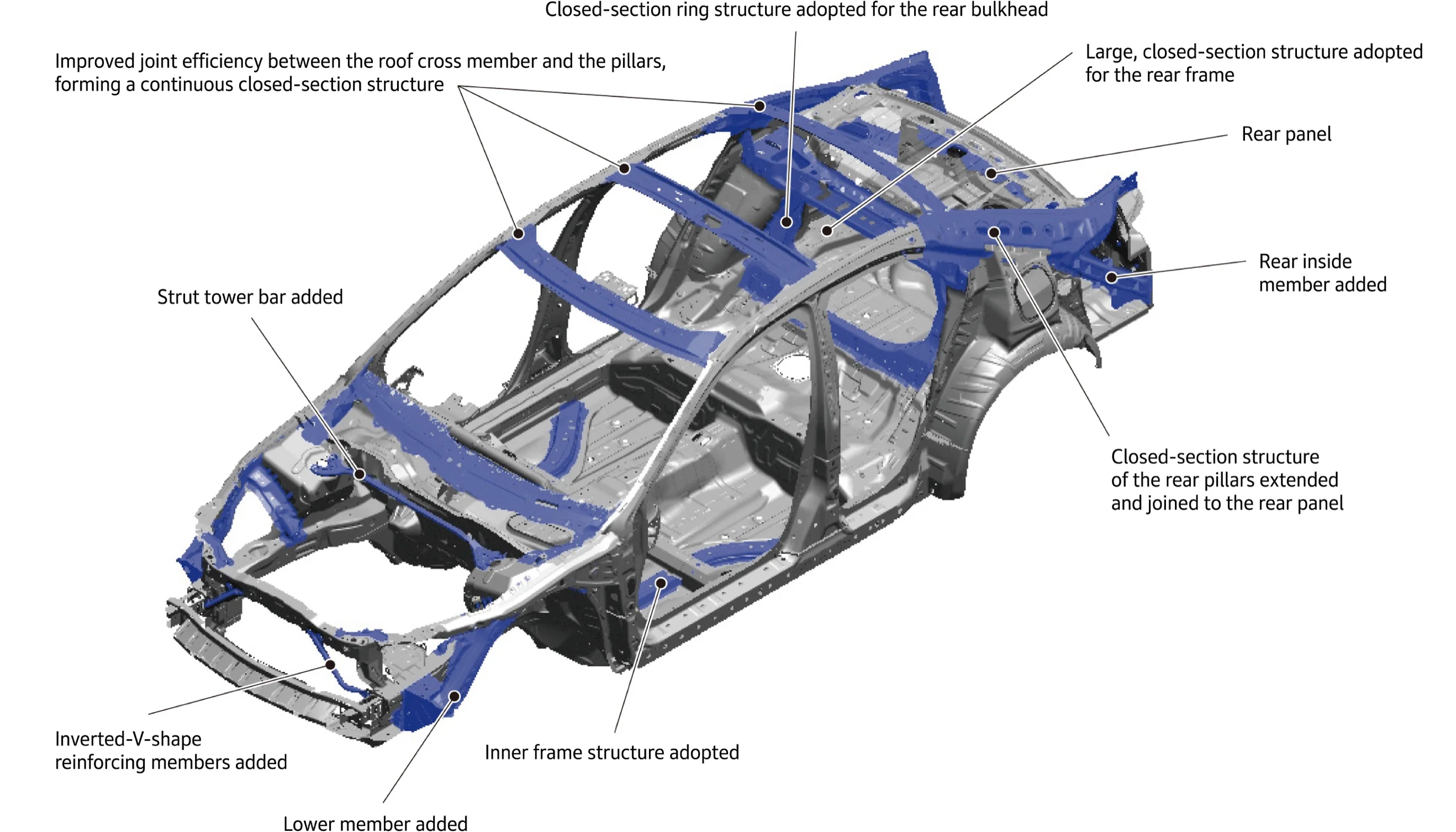
A lightweight, highly rigid body, the result of work to increase rigidity around the front, rear, and roof
For body rigidity, which contributes to the quality of the drive, Honda focused on increasing rigidity around the roof. To achieve the highly efficient body frame the Accord required, dedicated one-sided spot welding equipment and processes were newly introduced on the production line. Conventional spot welding requires pressing electrodes against both sides of the parts being joined, so welding closed-section members meant either drilling holes for the electrode to pass through the back of the part or flattening the joint. One-sided spot welding, by contrast, enables a continuous closed-section structure that fully exploits the rigidity of closed-section members, delivering extremely high joint rigidity. Applying this technology to the eighth-generation Accord was made possible by introducing the latest welding equipment, capable of precise control over current and pressure, along with improved press accuracy for each part being welded.
EPS (Electric Power Steering) evolved into Motion-Adaptive EPS by working in concert with VSA, which had been adopted on the sixth-generation Accord as a first for a Japanese front-wheel-drive car. In response to disturbances in vehicle behavior during cornering or on changing road surfaces, EPS provides steering-effort assist control to correct the vehicle’s behavior back toward stability. For example, when addressing understeer, EPS assists the steering effort so that the driver does not turn the wheel too far; when addressing oversteer, it assists in a direction that makes it easier to apply counter-steer.
Every engine variant was certified by the Ministry of Land, Infrastructure, Transport and Tourism at the “2005 Exhaust Emissions Standard 75% Reduction Level.” Honda also selected easily recyclable, environmentally friendly materials and promoted the marking of identification symbols on rubber and resin parts. With a recyclability rate of over 90%, the Accord achieved meaningful progress on environmental performance as well.
Beginning with its very first generation, the Accord was exported to the United States, and with each successive generation it expanded its presence into Asia and Europe, growing into a core global model for Honda. By 2007, just before the eighth generation arrived, it was sold in approximately 160 countries, with cumulative global production reaching 16 million units. Through its original technologies, the Accord continued to elevate harmony with people and society in pursuit of its ideal as a global-standard sedan.
Related Contents
Share this article



Was this article interesting?
- Yes
- Neutral
- No