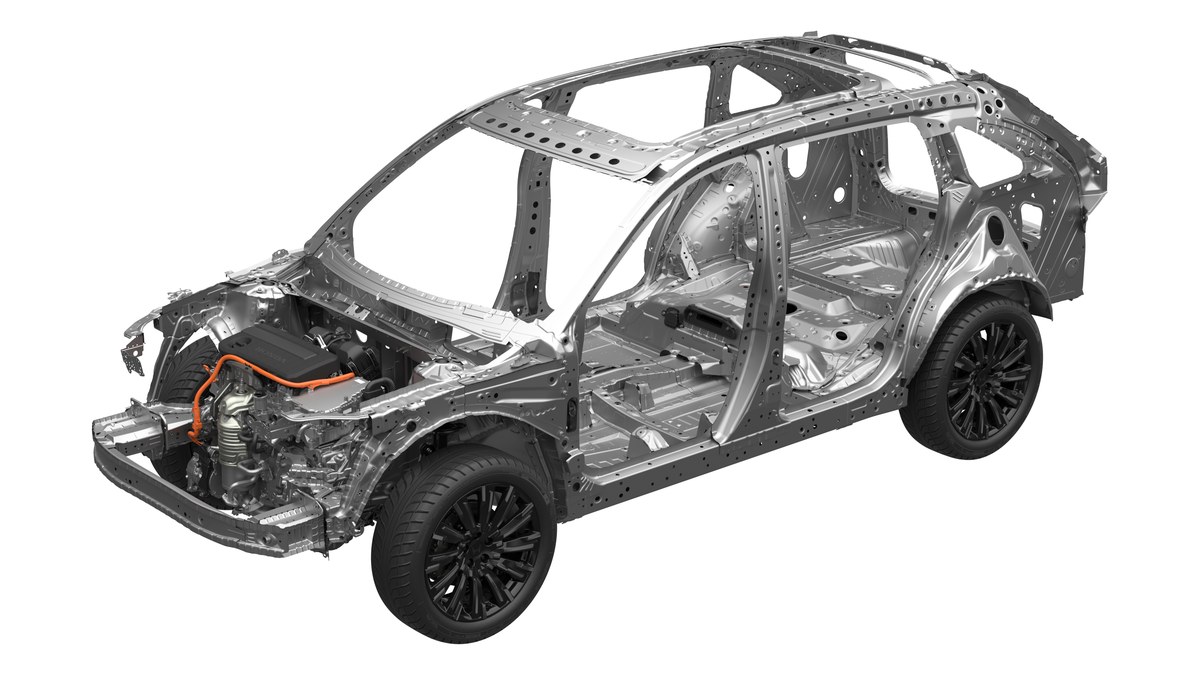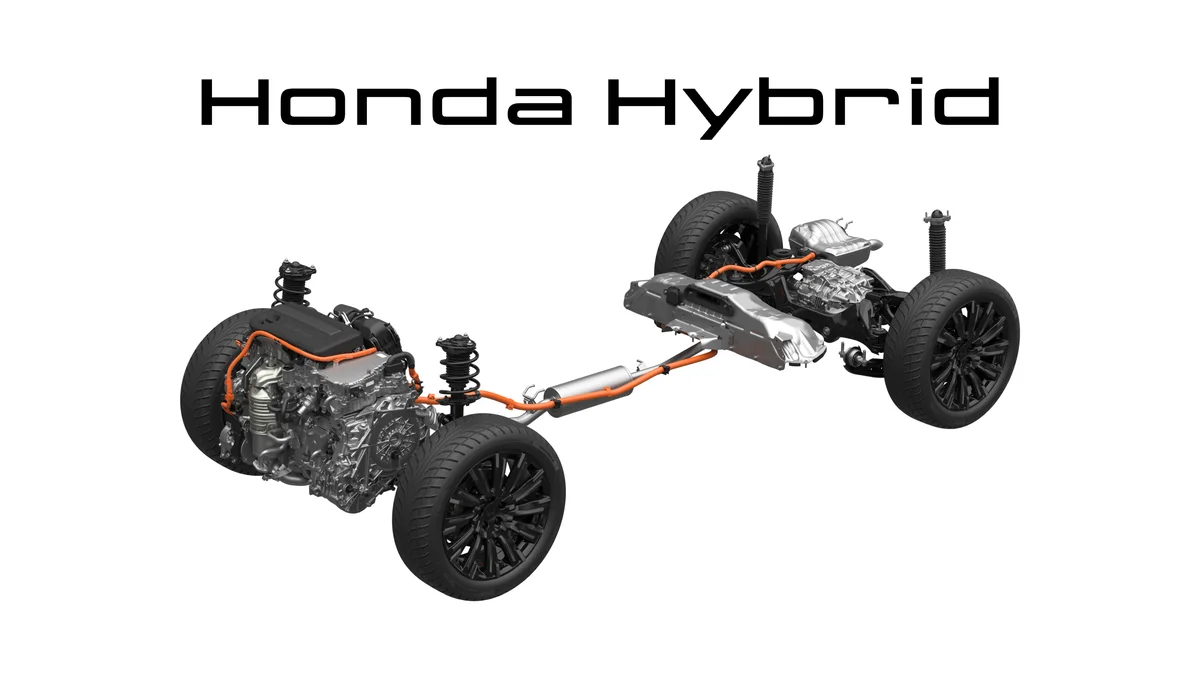
Realizing overwhelming environmental performance and high-quality, exhilarating driving experience
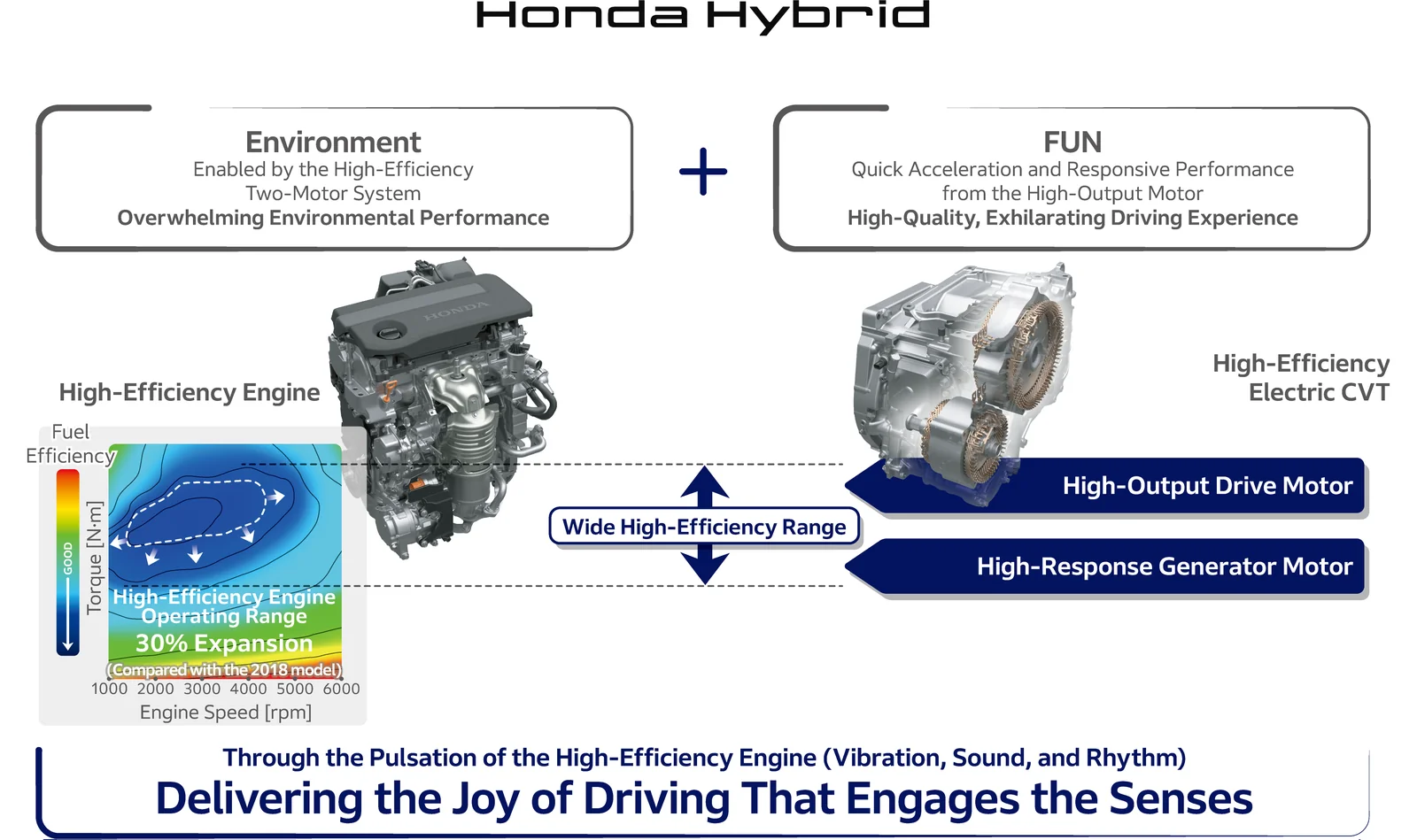
Honda’s proprietary two-motor hybrid system anticipates stricter global emissions regulations while realizing excellent environmental performance. The system combines a highly efficient engine with a wide combustion range and a newly developed high efficiency two-motor drive unit, delivering overwhelming environmental performance together with a high-quality, exhilarating driving experience. The vehicle is driven by the motor across the full speed range, from low speed to high speeds. The system, which drives the vehicle using the engine alone during high-speed cruising, not only realizes excellent fuel efficiency but also provides a distinctly Honda Hybrid driving experience of “the joy of driving that resonates with all five senses”, that could not be achieved by a conventional engine (internal combustion engine) system alone.
Engine Performance Evolution
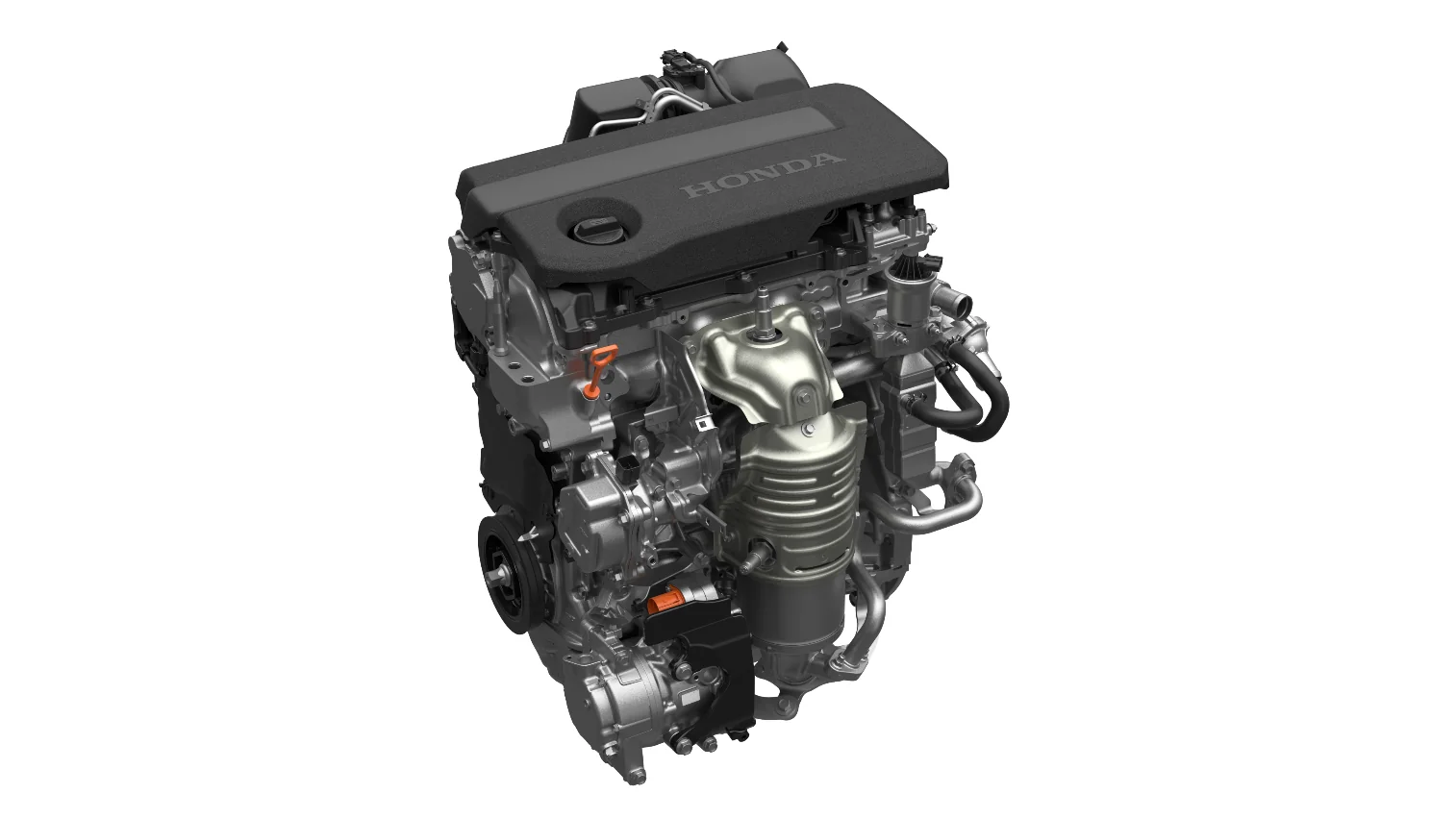
To pursue Honda’s signature joy of driving in hybrid vehicles, the engine’s high-efficiency range has been expanded to achieve stoichiometric combustion (excess air ratio λ=1) across the entire operating range. At the same time, the system achieves excellent environmental performance, anticipating stricter emissions regulations around the world.
Achieves ultra-fast combustion to complete fuel burn before knocking occurs
In a conventional engine, not all of the fuel injected into the cylinder is fully combusted. Some adheres to the cylinder inner walls, and uneven air-fuel mixture can leave portions of the fuel unburnt. Extra fuel is sometimes injected intentionally to cool inside the cylinder to prevent knocking, an abnormal combustion phenomenon. Under these conditions, it deviates from the theoretical air-fuel ratio (excess air ratio λ=1: stoichiometric ratio, hereinafter referred to as stoichiometric combustion), which is considered the ideal air-fuel ratio for engine operation, resulting in a combustion state that can lead to reduced fuel efficiency.
Changes in fuel efficiency based on engine speed and torque
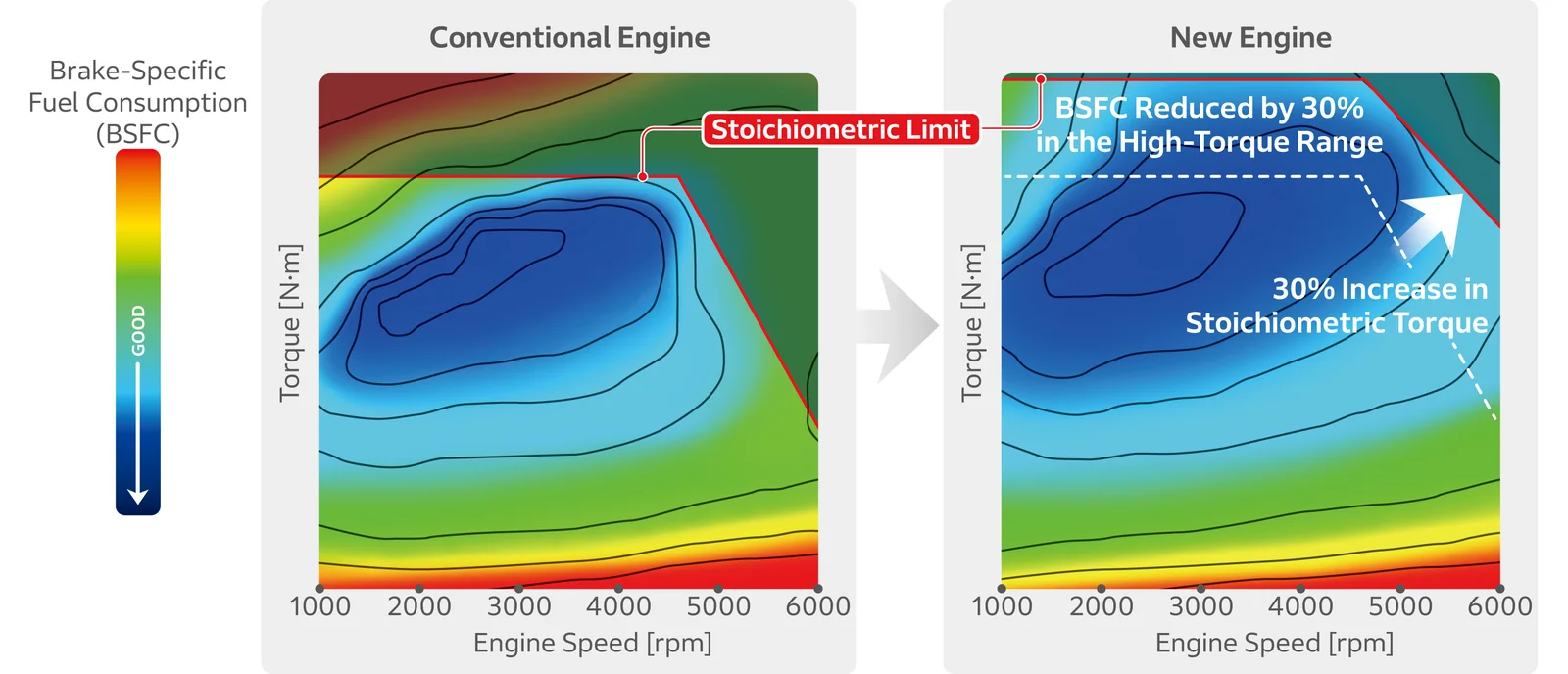
To achieve stoichiometric combustion, which delivers excellent fuel efficiency across the entire operating range, it is necessary to realize near-ideal combustion that can produce high output with less fuel across a wider range of engine speeds and torque ranges. However, the conventional approach to increasing engine output relied on drawing in a richer air-fuel mixture to generate a more powerful combustion and smooth exhaust and are in a trade-off relationship.
One way to increase output with a leaner mixture is to raise the compression ratio, however, higher compression ratios can also result in knocking.
To address this challenge, we set out to achieve an unprecedented ultra-fast combustion, that “completes fuel-burn before knocking can occur”. To enable this, we took the straightened intake port shape typically used for high output and narrowed it, and a ski-jump-like slope is introduced at the base. This increases airflow velocity to generate a powerful, vertical tumble flow. In addition, we incorporated an intricate two-piece water jacket that cools both sides of the exhaust port, where heat tends to concentrate, made possible by highly advanced casting technology. The combination of these technologies enabled ultra-fast combustion, achieving expansion of the stoichiometric combustion range.
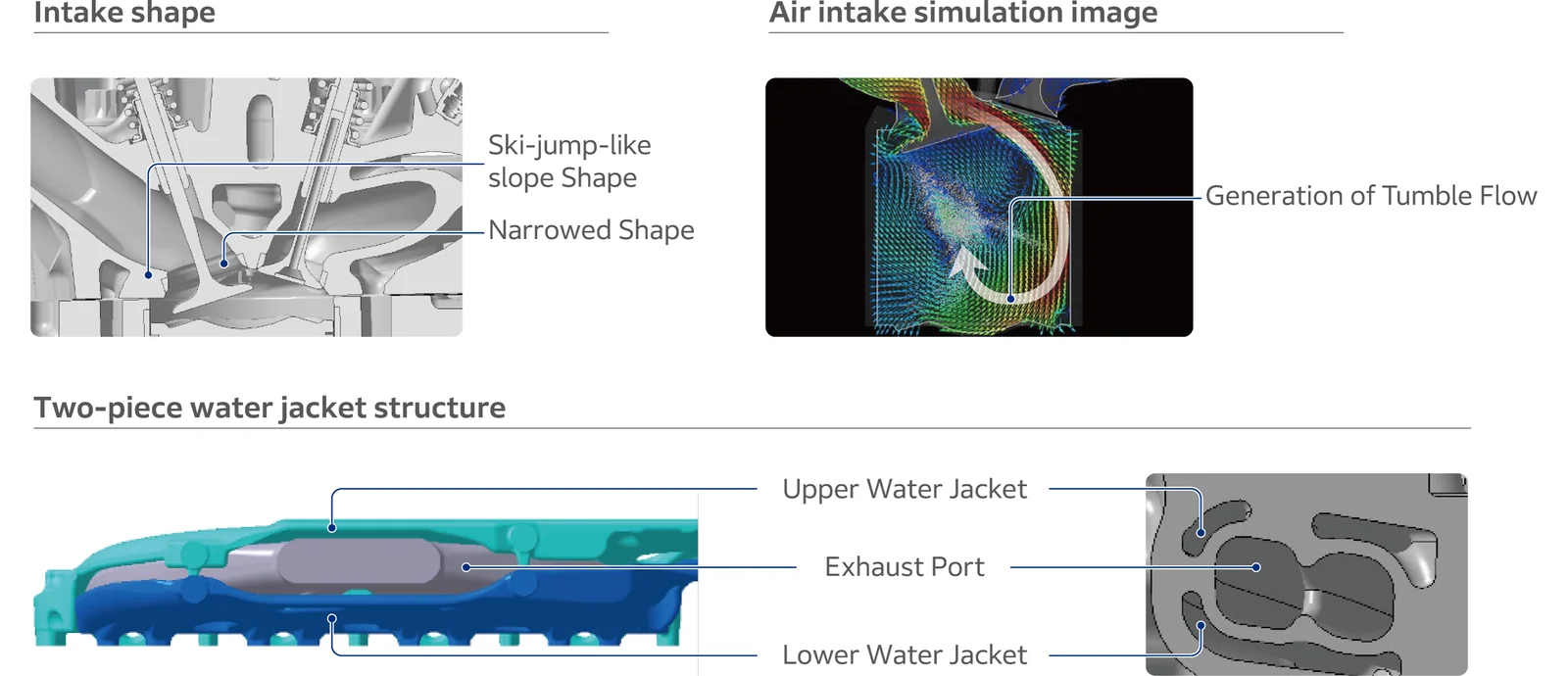
Refined as a next-generation hybrid engine through shape optimization
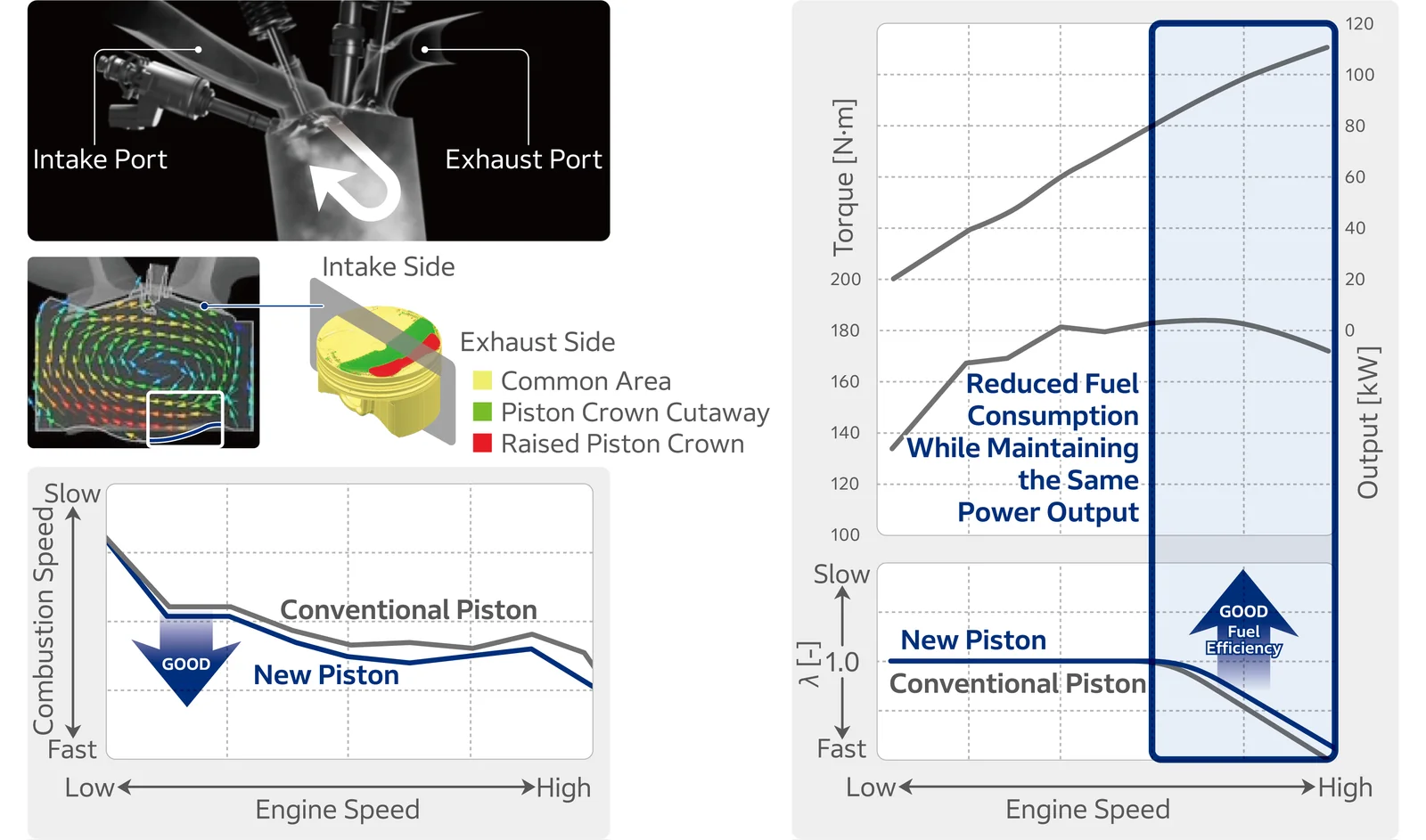
Fuel consumption reduction
By changing the piston crown shape, tumble flow retention has been enhanced, resulting in faster combustion speed. This reduces fuel consumption while maintaining output performance. Vehicle testing has also confirmed the CAE analysis targets, confirming that equivalent torque and output can be generated with less fuel. In addition, it accommodates different types of gasoline in each region while realizing excellent fuel efficiency.
Generates optimal turbulence (tumble flow) near top dead center to increase combustion speed
Engine weight reduction
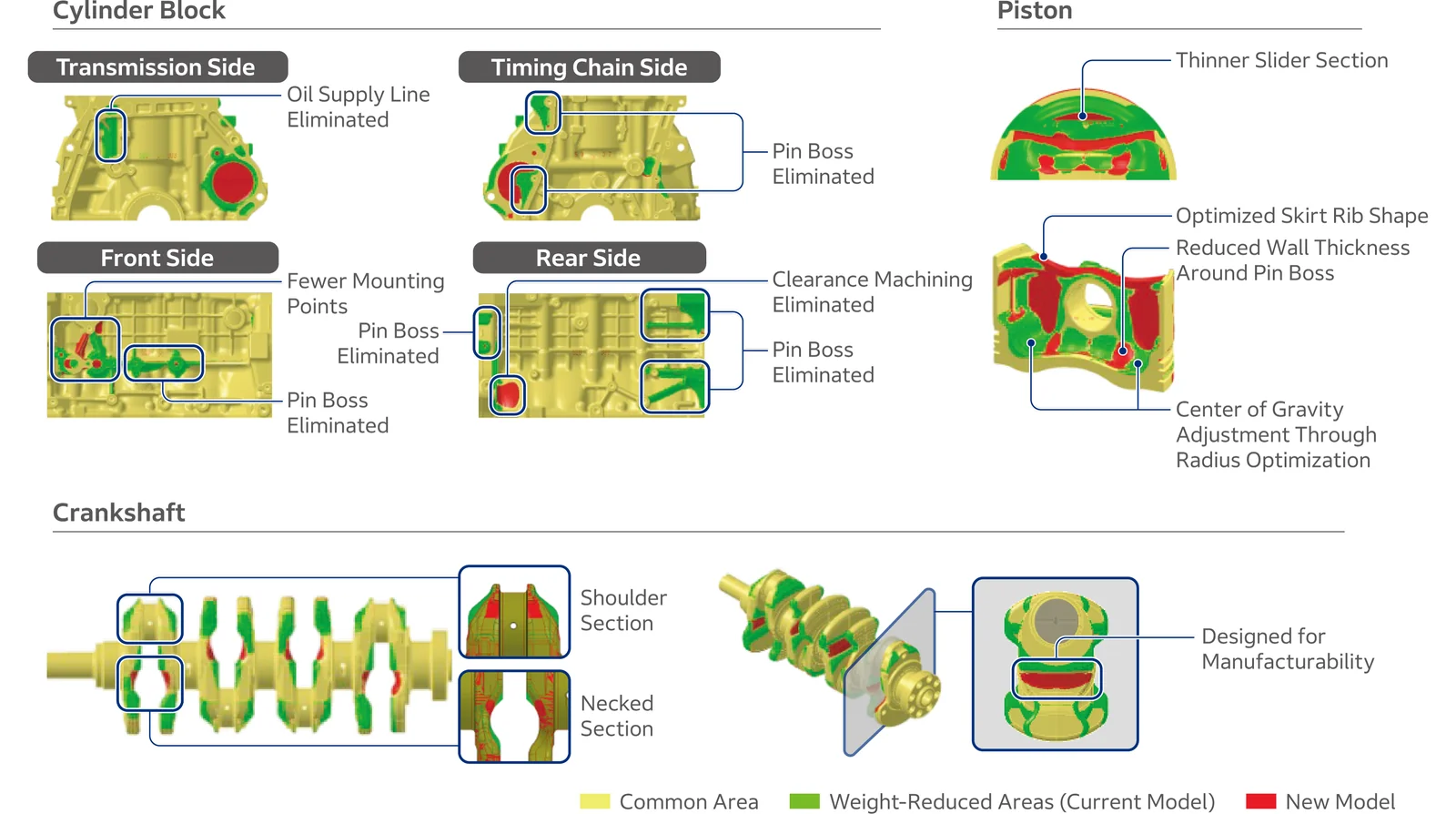
Lightweighting, which contributes to fuel efficiency and dynamic performance, has been actively pursued not only for the vehicle body but also for the dedicated hybrid engine. The cylinder block, which was previously designed to accommodate both gasoline and hybrid vehicles, has been optimized exclusively for hybrid use. By optimizing the design of each component, its weight has been reduced by approximately 900 grams. The crankshaft achieves approximately 500-gram weight reduction through reduction in bending moments, enabling material reduction in minute areas while maintaining NV performance. The pistons have been reduced in weight gram by gram through optimization of the skirt ribs, sliders, pin boss areas, and radius geometry.
Front Drive Unit Performance Evolution
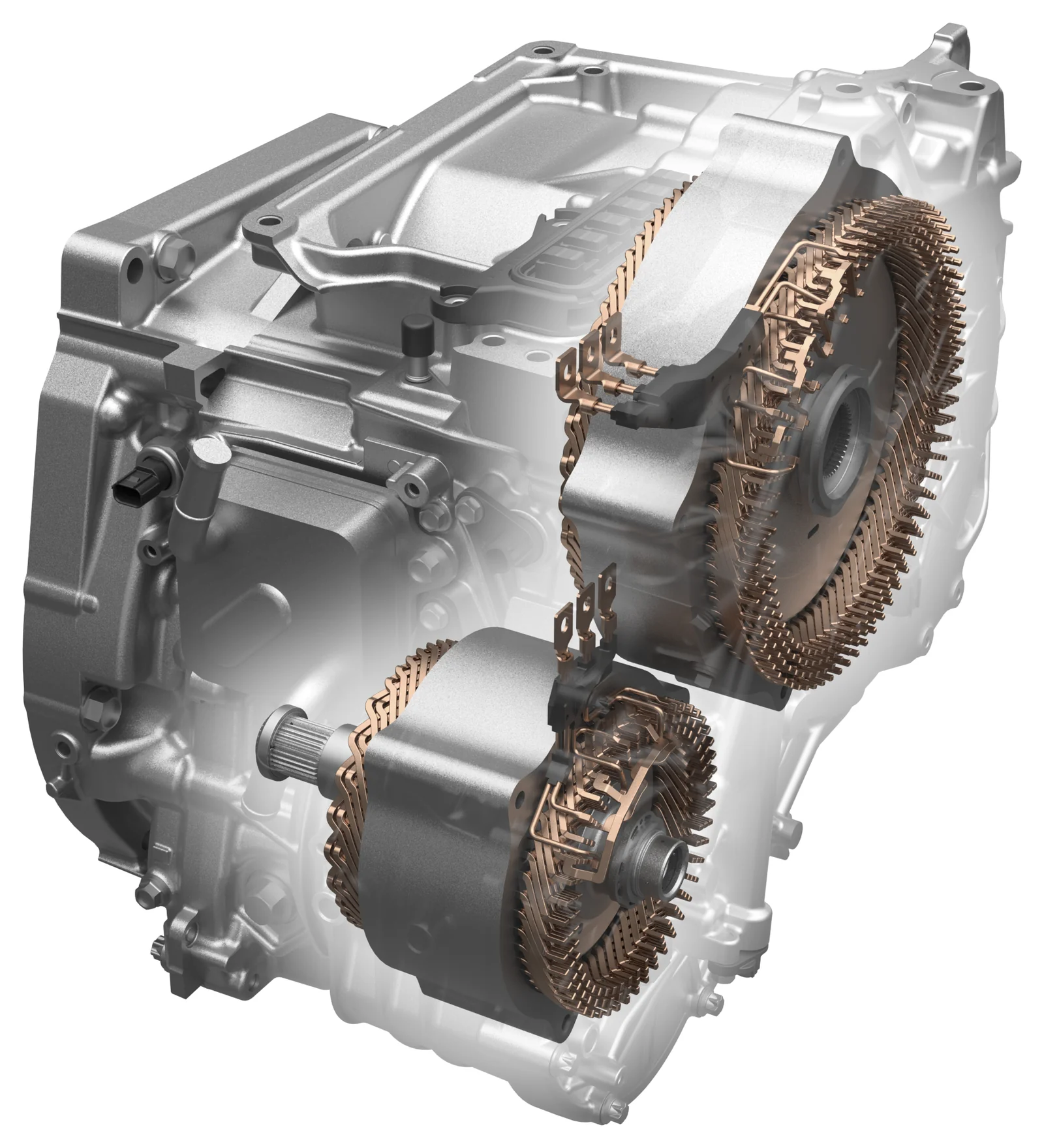
The front drive unit inherits the parallel-axis architecture for the generator and drive motors, introduced on the 2023 ACCORD and CR-V. While carrying on this architecture, significant weight reduction has been achieved. Friction has also been reduced through an oil temperature warm-up management system, optimized motor lubrication, and bearing enhancements, delivering a smooth driving performance. The engine direct-drive gear enables higher-speed cruising, enhancing top-speed performance while improving fuel efficiency and quietness.
The Power Control Unit has its front-to-rear length reduced by 51mm through shortened components, while also achieving a 3% weight reduction. By consolidating connectors and related components at the rear of the unit, it also contributes to more efficient engine room packaging. In addition, despite the increased number of control circuits for the electric AWD system, it integrates not only the front regenerative and voltage boosting chips but also a chip for rear-wheel drive. This enables functional additions while downsizing.
Power Control Unit
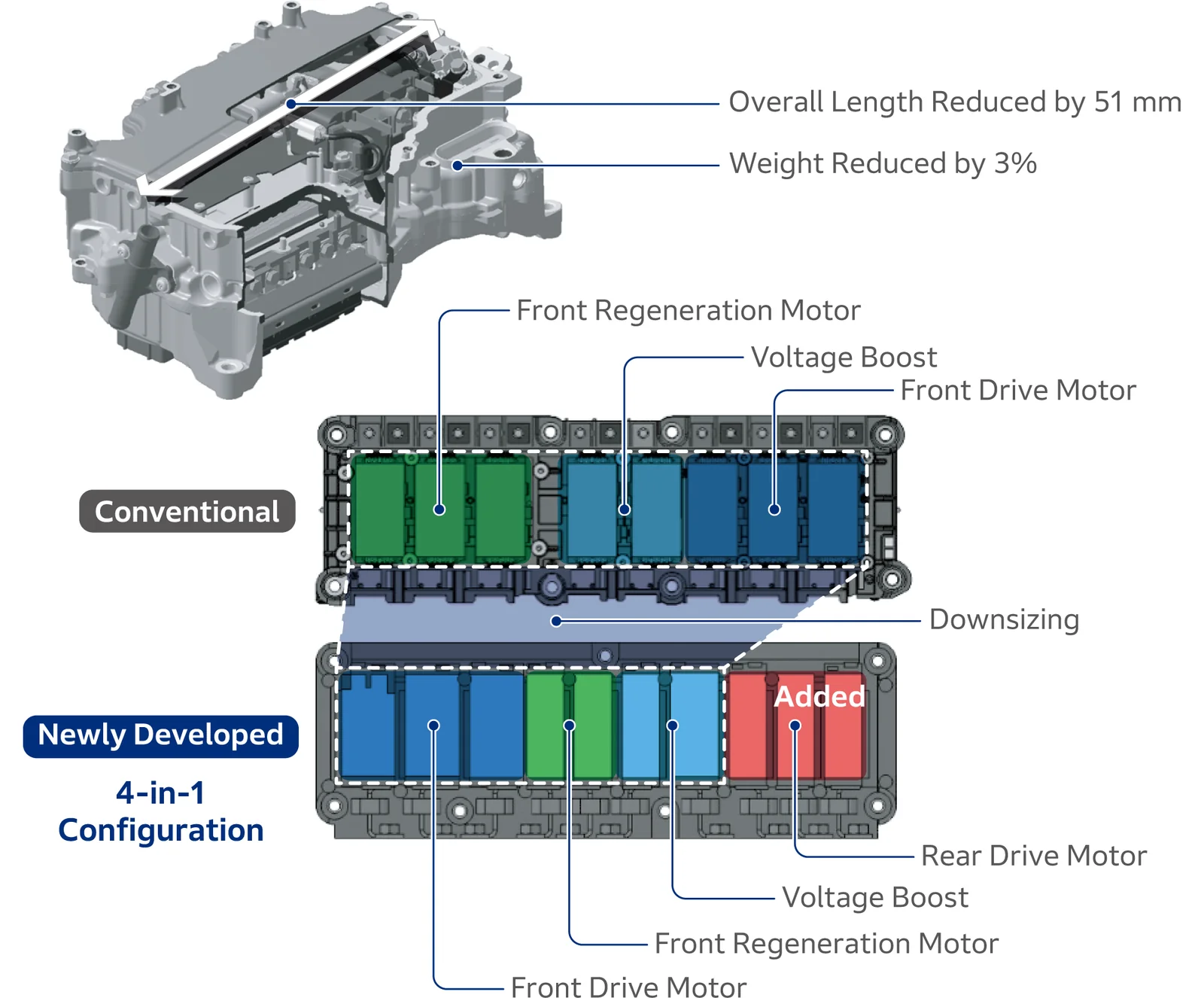
Compact and Lightweight Design with Integrated Rear Drive Unit Control Functions
Both the generator motor and drive motor adopt a new magnetic circuit design. For the generator, torque output ratio (torque density) has been improved relative to motor size. Magnet usage has also been reduced to lower costs. The drive motor also adopts a new magnetic circuit design with heavy rare-earth-free magnets. In addition, thinner electromagnetic steel sheets have been used to reduce losses.
Improved Motor Performance
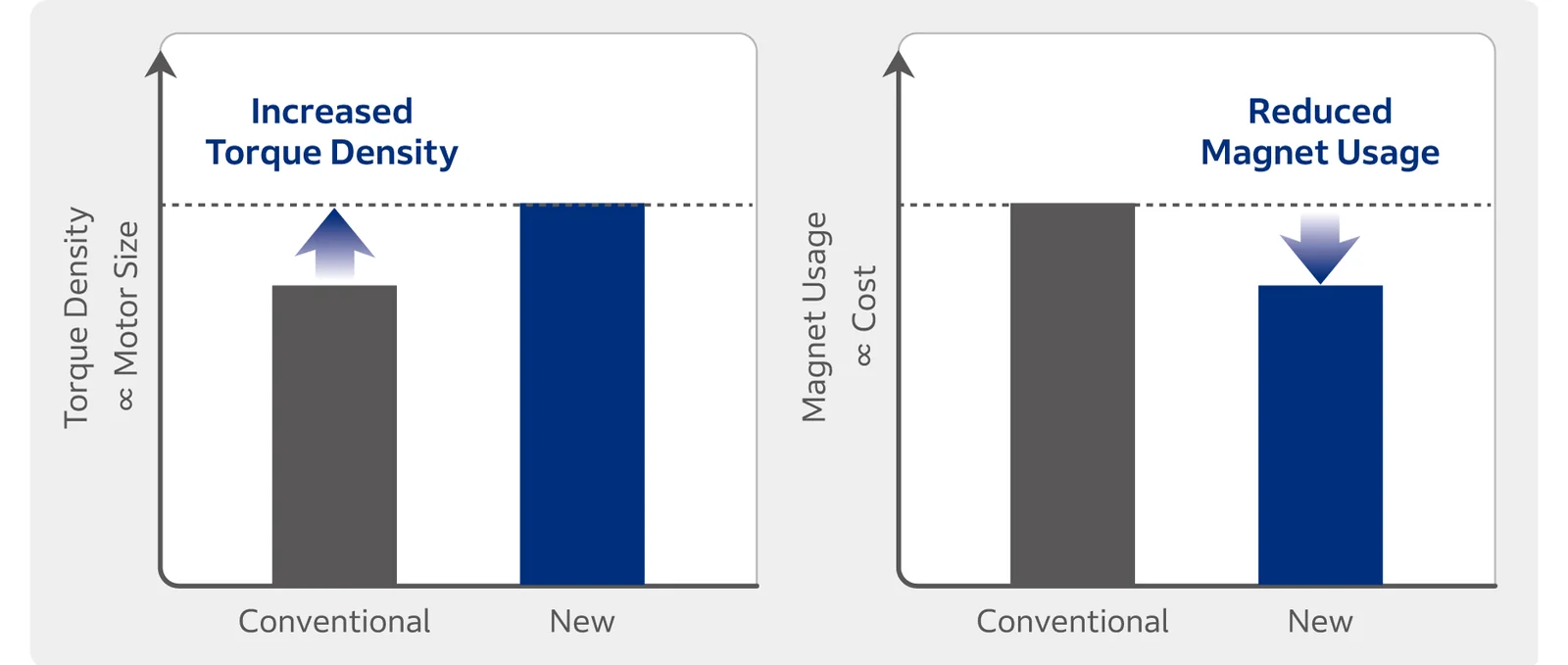
Improving torque density while reducing magnet usage
Thermal Management System
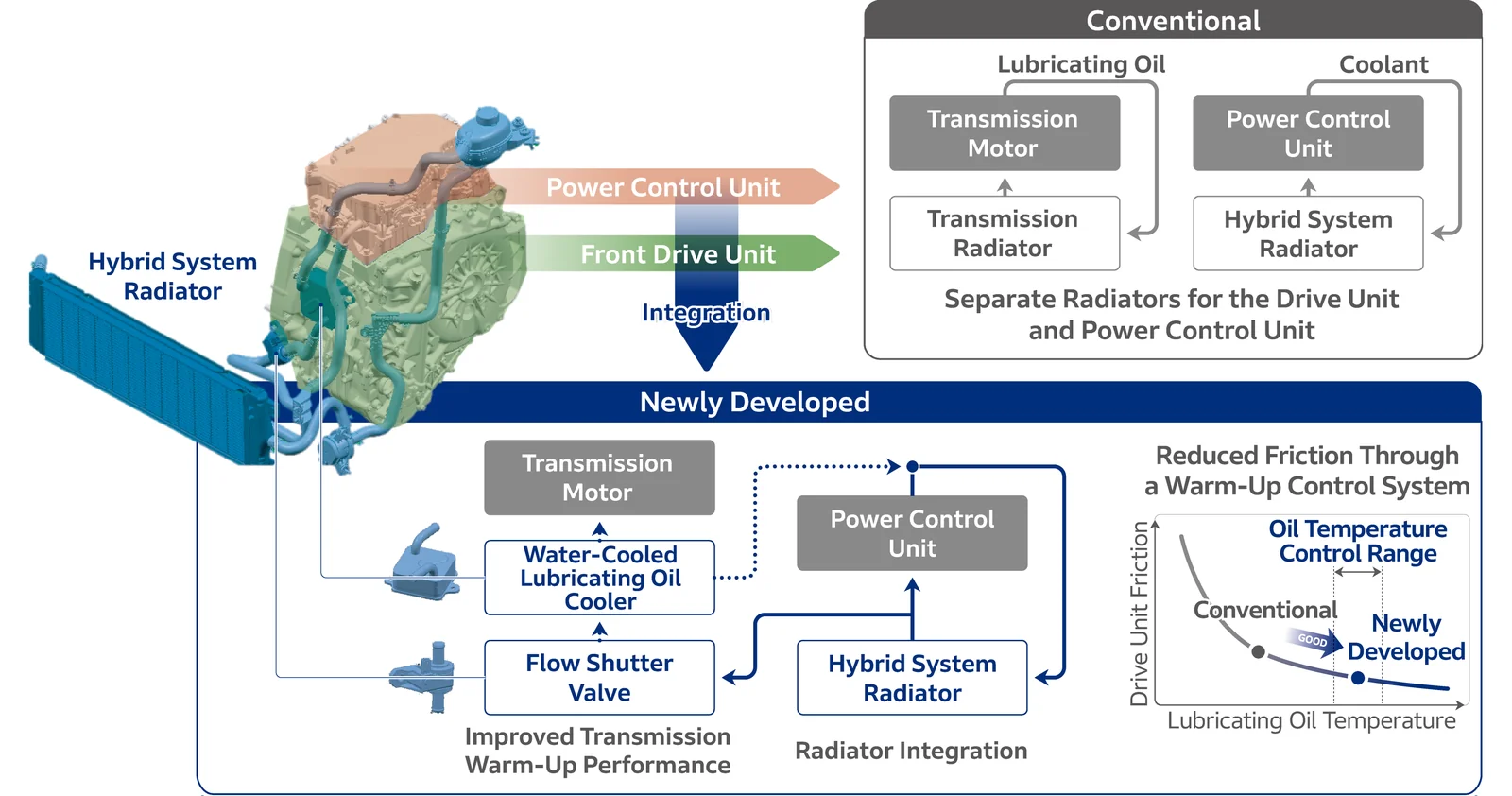
The cooling circuits for the front drive unit and power control unit, which are conventionally separated, have now been integrated. Coolant cooled by the hybrid system radiator at the front undergoes heat exchange between the coolant and lubricating oil through the water-cooled lubricating oil cooler. The cooled lubricating oil is then used to cool the drive unit motor. By using a flow shutter valve to temporarily suspend heat exchange, cooling can be interrupted, promoting warm-up of the drive unit during cold operations. This also helps to reduce friction efficiently. In addition, it also contributes to the integrated engine room layout.
Thermal Management System