With the newly developed mid-size platform, we anticipated its application across a wide range of future global models. To efficiently deploy a diverse product lineup while achieving a high level of balance between performance and lightweight, we established a new “Modular Architecture”. This highly feasible platform was developed to secure not only a high degree of commonality but also with consideration of the circumstances of each production country (factory).
Modular Architecture
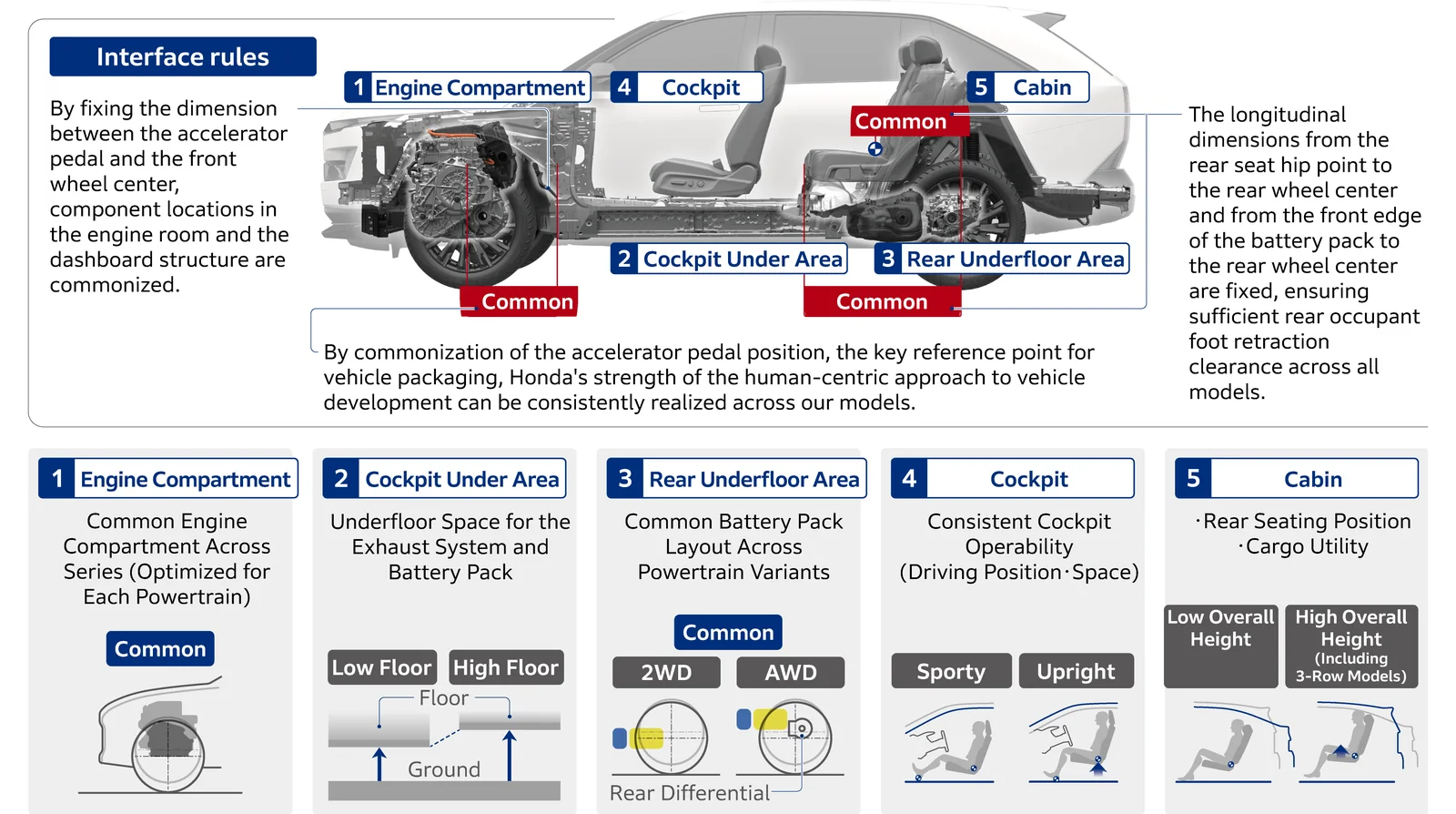
For the newly developed platform that serves as the foundation of our new hybrid models, we developed a highly efficient architecture that divides the vehicle into five modules connected by three fixed dimensions. This enables accommodating a wide range of models from the C-segment to the D-segment, and it also allows both SUVs and sedans, with their differing ground clearance and driving positions, to be perfected as highly competitive products.
Modular Architecture
Pursuit of “human”-centered driving position and harmony between vehicle and body movement
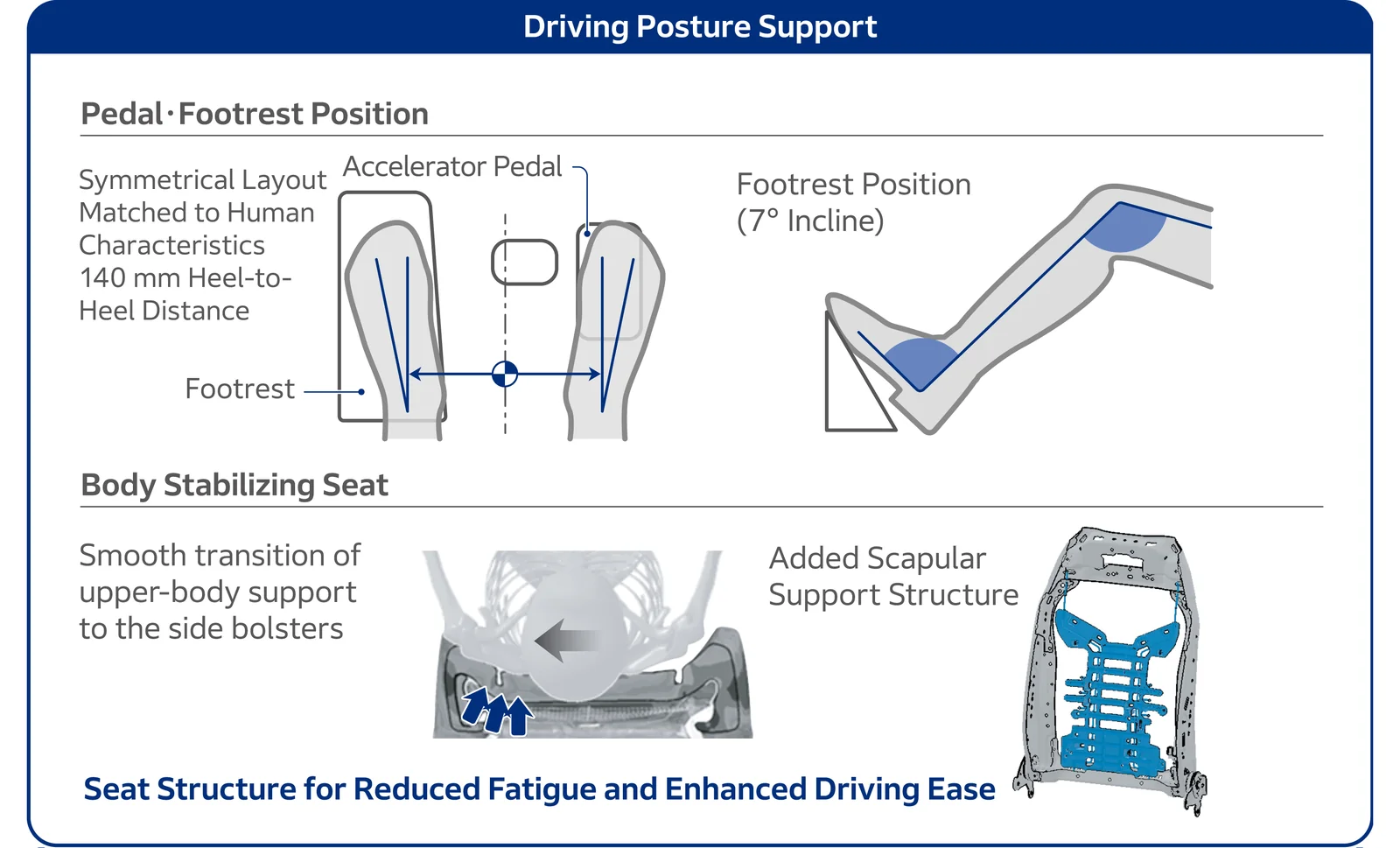
In addition to achieving the optimal driving position for human ergonomics, the pedal layout and seat structure were designed based on an established “skeletal standard.” This aims to ensure ease of driving and reduce fatigue, regardless of body size.
Pursuit of easy-to-drive posture and ease of operation
To make it easy to maintain driving posture, special attention was paid to both pedal layout and seat structure. First, the distance between the footrest and accelerator pedal was set at 140mm, a dimension based on the “heel-to-heel distance optimized for human skeletal structure” based on the skeletal standard. In addition, the angle of the footrest was made closer to that of the accelerator pedal, enabling a more balanced placement of the feet on the footrest and accelerator pedal. This helps drivers maintain an optimal driving posture. Two types of footrest angles have been adopted, one for sedan models and the other for SUV models.
Next, in the chassis domain, the suspension setting was tuned to synchronize the vehicle's roll motion with the movement of the front occupants' bodies. Furthermore, based on the conventional Body Stabilizing Seat, a support structure was added around the shoulder blade area to better control front occupants' upper-body movement. This is how we aimed to reduce the need for front occupants to resist vehicle motion, reduce unnecessary muscle activity and ensure driving ease and reduce fatigue.
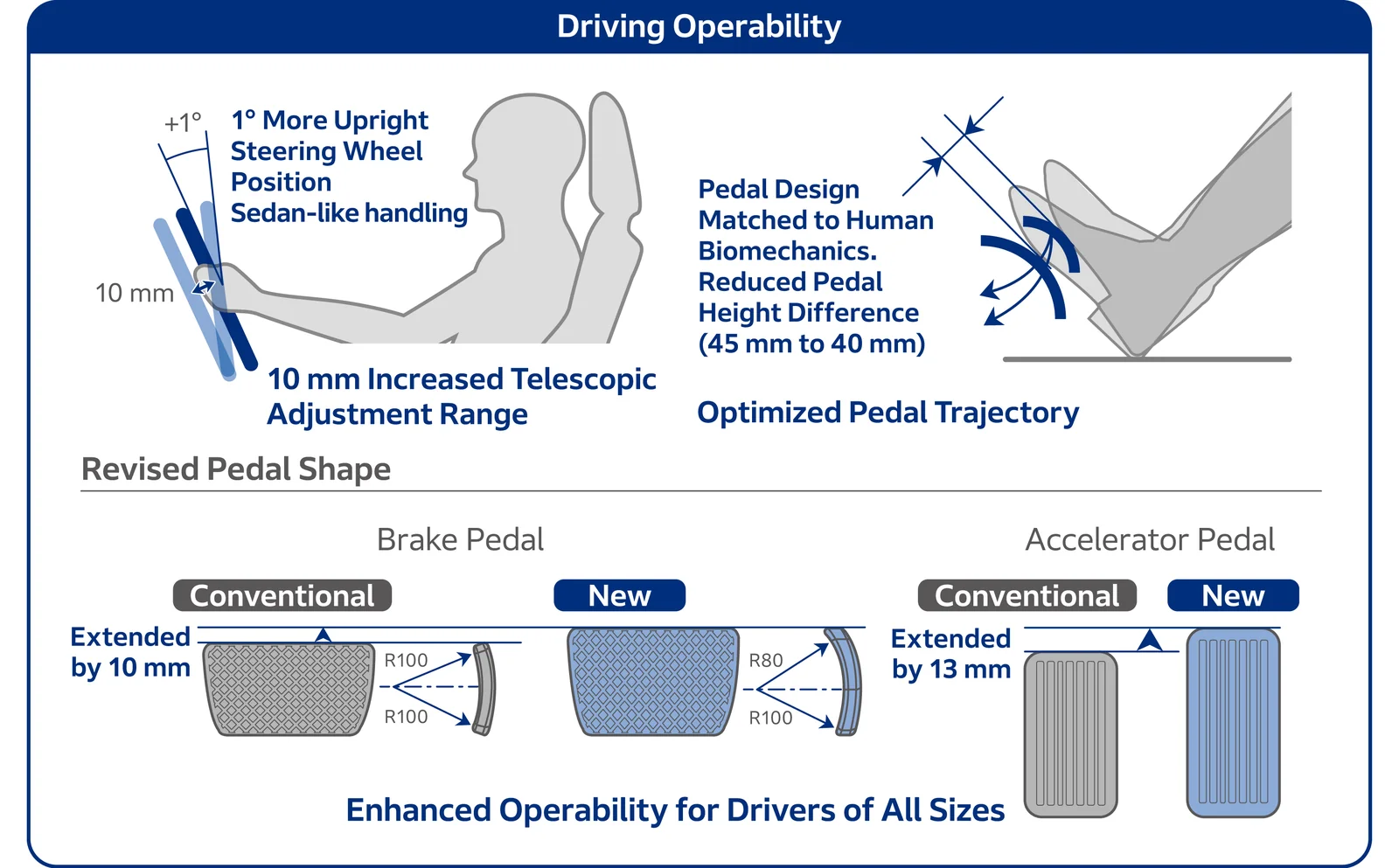
Also, by increasing the steering wheel angle by 1 degree and extending the telescopic adjustment range by 10mm, the driver's elbow bend is reduced, enabling a more comfortable driving posture. In addition, the height difference between the accelerator and brake pedals has been reduced for improved pedal transitions. The size and shape of the pedals have also been optimized to address insufficient upper-end pedal length for larger drivers while increasing the pedal contact surface for drivers of smaller than standard stature to pursue ease of driving and provide driving comfort for drivers of all sizes.
New Handling Stability Rigidity Management Body
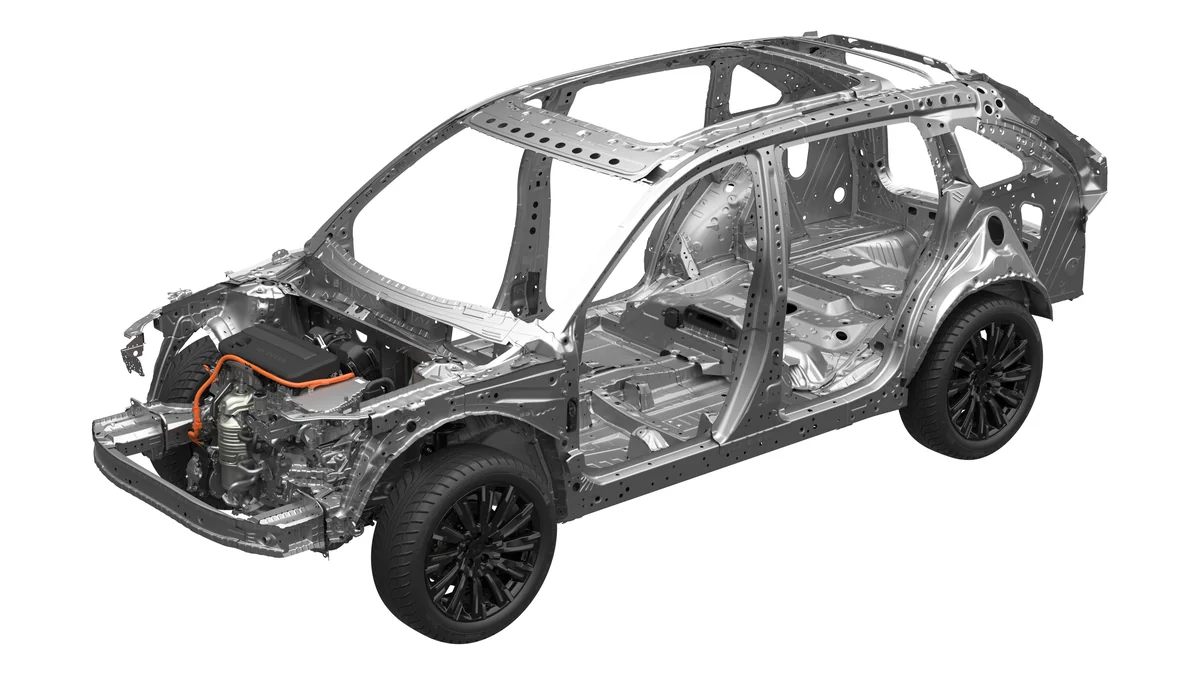
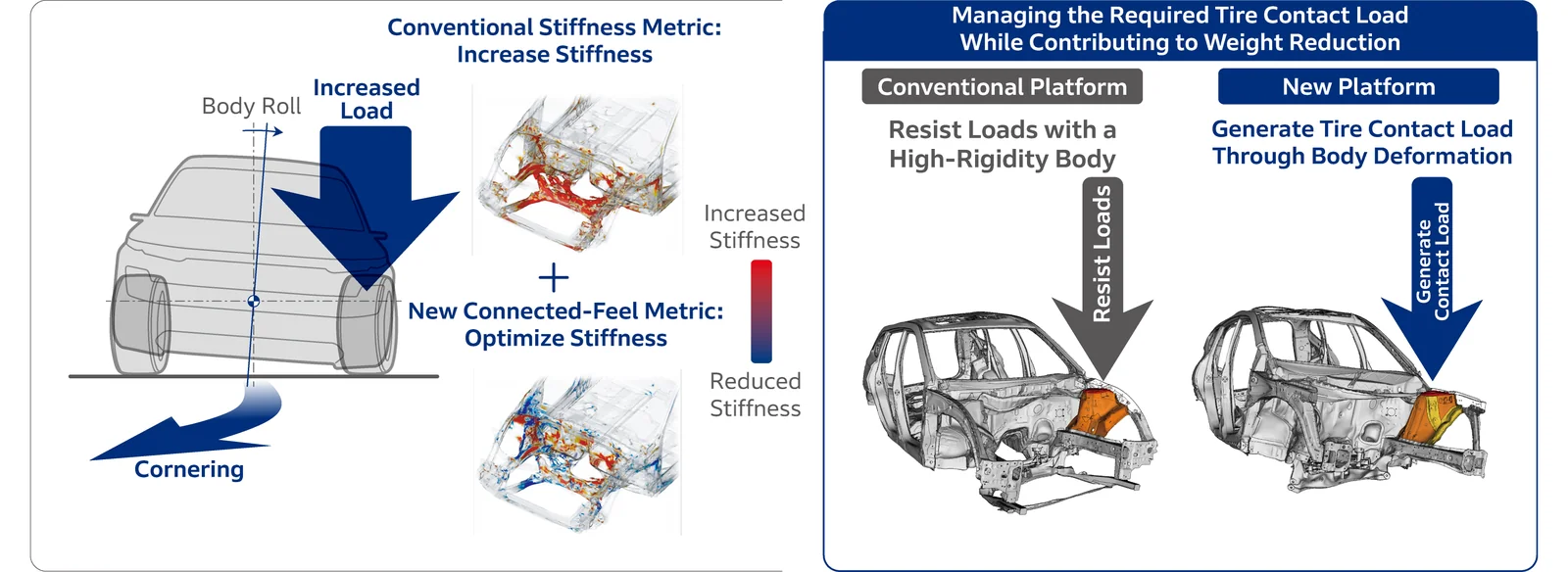
Increasing rigidity is essential in body design. While doing so, the new mid-size platform adopts a “New Handling Stability Rigidity Management” concept that improves tire contact performance by leveraging body flexure.
A new body rigidity management that realizes smooth load transfer by improving tire contact performance
Recent studies on body rigidity have shown that increasing rigidity excessively can reduce body deformation, resulting in reduced load on the tires and making it more difficult to bring out their performance. To address this, we took the approach to enhance tire ground contact performance while ensuring excellent sense of rigidity by identifying the optimal locations to either increase or suppress body rigidity. With this, we aimed to achieve smoother load transfer during cornering, allowing to bring out higher tire performance, which increases cornering limit values while delivering progressive driving feel through smoother load transfer. In addition, it suppresses the weight increase that tends to occur when increasing body rigidity through increasing body panel thickness or reinforcing joints.
High-Tensile Steel Application Rate in the White Body
to Achieve Both High Rigidity and Weight Reduction
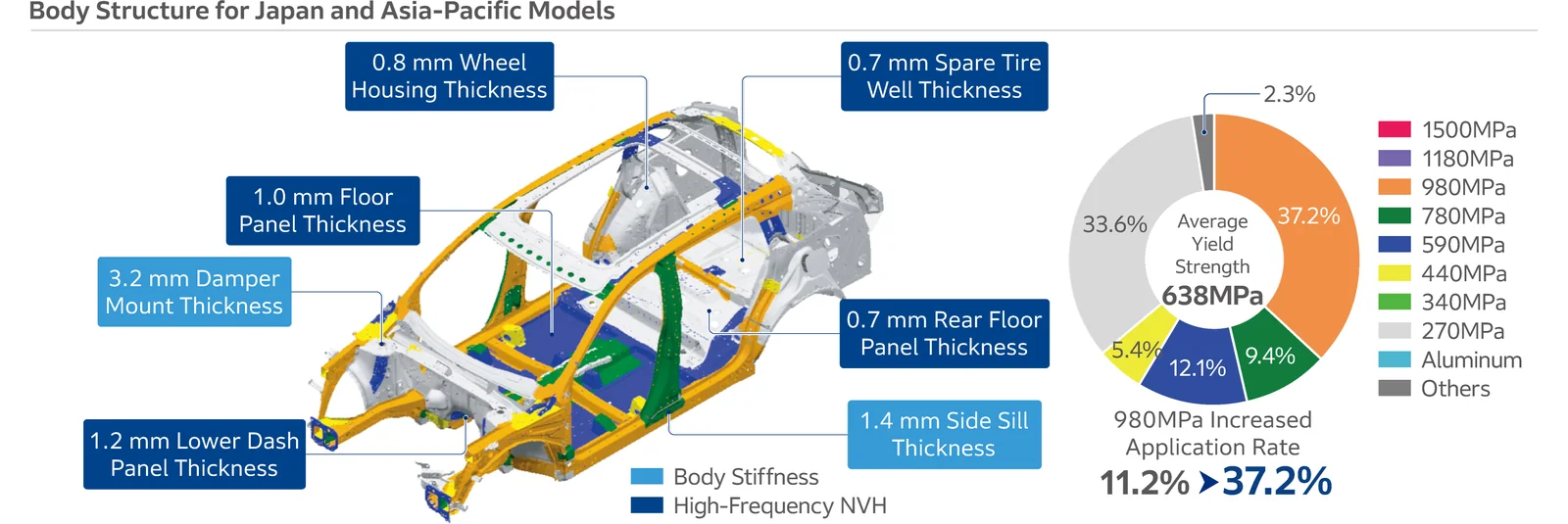
For each structural member that makes up the body frame, minimum sheet thickness requirements were defined in advance based on the required performance criteria, including stiffness and high-frequency NVH characteristics. Honda then increased the application of high-strength steel while considering manufacturability in each region and overall cost efficiency, pursuing further weight reduction.
The application rate of 980MPa high-tensile steel was significantly increased to approximately 40%. By increasing the application rate of high-tensile steel and selecting materials based on regional availability, cost levels were maintained. As a result, we have achieved higher body rigidity, excellent collision safety and NV performance, together with weight reduction.
Common Chassis for Midsize platform
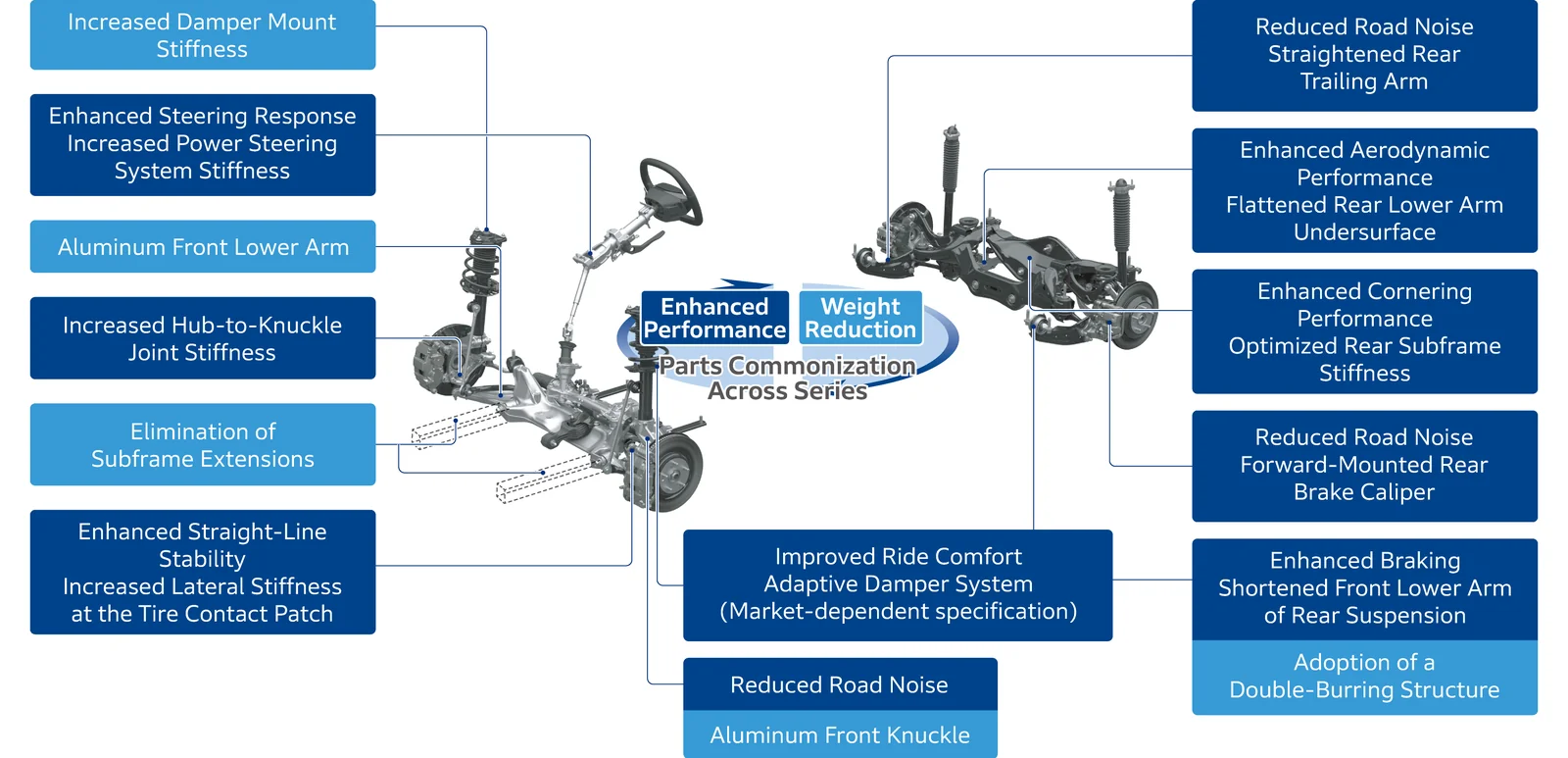
For the chassis, we achieved both improved fundamental vehicle performance in “driving, cornering, and braking”, and weight reduction. In addition, development was carried out with commonization across the platform series in mind.
Around the front
The steel subframe extension previously located in front of the subframe was eliminated while maintaining collision safety performance. Together with the adoption of an aluminum front lower arm, this contributes to weight reduction. In addition, an aluminum front knuckle was adopted to reduce both road noise and weight.
The front damper mount adopts a crimped structure that increases rigidity while reducing weight. The rigidity at the hub bearing and knuckle joints have also increased. Furthermore, the suspension geometry was set to increase lateral rigidity at the tire contact point, improving straight-line stability. To provide the driver with confidence, the torsional rigidity of the electric power steering torsion bar was increased, enhancing stability against external disturbances. In addition, an Adaptive Damper System is adopted according to regional requirements to control damping force to further improve ride comfort.
Around the rear
The curved trailing arm was redesigned with a straight configuration to reduce road noise, while the underside of the lower arm was given a flat shape for aerodynamic considerations. In addition, the rear brake caliper was relocated from the conventional rear of the axle towards the front. By positioning the heavy caliper closer to the vehicle's center of rotation, inertial inputs are reduced, contributing to reduced road noise.
The rear lower arm was redesigned from a single-plate structure to a double-plate, double-flanged structure※, reducing weight. At the same time, the arm length is shortened to improve braking stability.
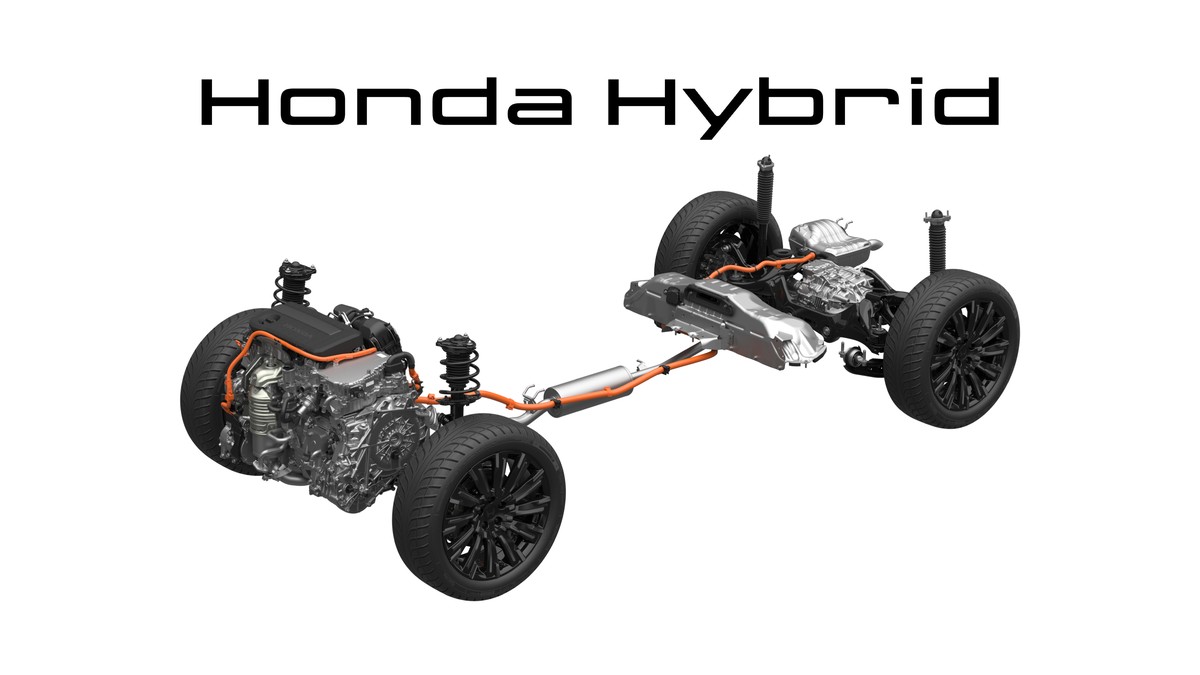
In addition, to accommodate the “DualPower eAWD” electric all-wheel-drive system at the rear, a new rear subframe was developed. In addition to being made more compact, its structural balance was changed to increase rear lateral force, contributing to enhanced cornering performance.
※Double burring: A process in which the edge of a hole is folded over twice to increase the rigidity of the surrounding area.
Engine Compartment Design Optimized for the Entire Series
The engine compartment designs of conventional models basically employ common structures, including a standardized engine mounting position.
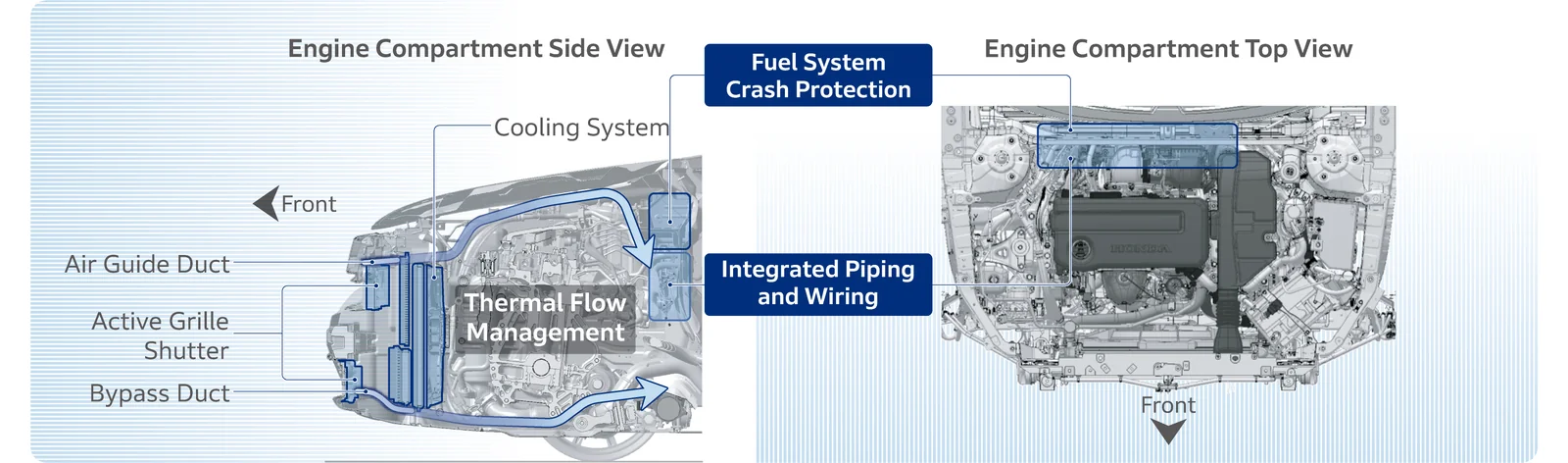
For the new mid-size platform, we studied the layout with the goal of optimizing the entire series rather than individual models, further expanding the use of common structures. In addition to addressing the characteristics of hybrid vehicles, which have a large number of components and complex layouts, we also took into account thermal flow management within the engine compartment and collision test modes specified in each country. After extensive studies, we adopted an optimal layout for models in the series, including SUVs and sedans, that prevents collision impact from reaching fuel system connections or piping and wiring connections.
By optimizing the engine compartment layout and enabling even piping and wiring, including brackets, to be shared across models, we achieved an approximately 90% commonization rate across the series (compared with approximately 60% for conventional mid-size hybrids), as well as a weight reduction of approximately 10 kg.
Series-Integrated Battery Pack Position
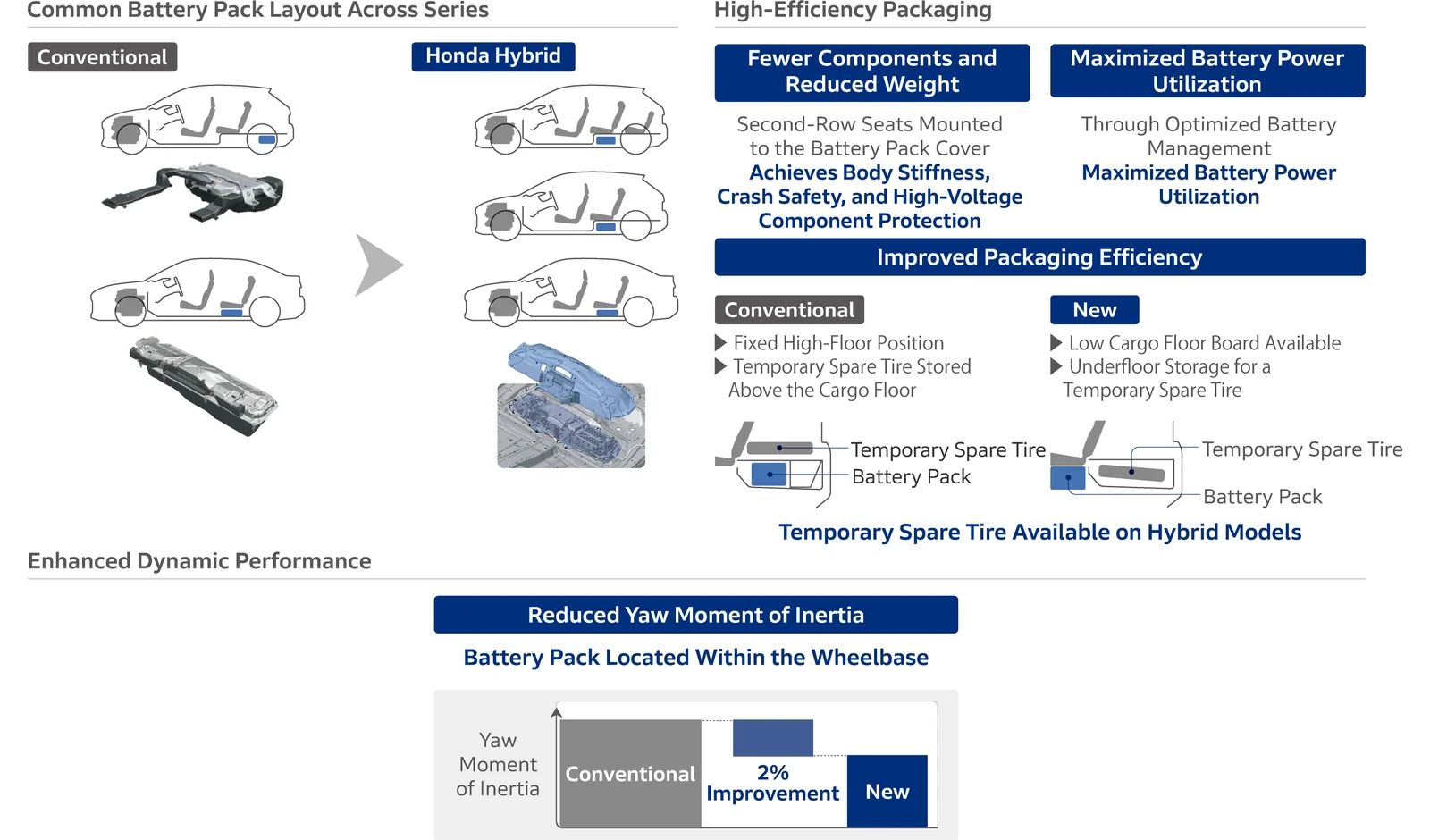
Battery pack positioning plays an important role not only in platform development but also in vehicle dynamics. Conventionally, the battery pack was located in the tire pan area in SUV models and beneath the second-row seats in sedan models. With the new mid-size platform, however, the battery pack location has been standardized beneath the second-row seats. This not only enables a common package across the series but also contributes to improved dynamic performance. The battery cover is secured to the second-row seat rails so that it functions as a structural component that enhances body rigidity, while the battery itself, a heavy component, is positioned close to the vehicle’s center of gravity. Furthermore, the two battery pack structures previously used for SUV and sedan models have been consolidated into a single structure in conjunction with the standardized battery location. This has reduced the total number of parts across SUV and sedan models by approximately 50% while also achieving a reduction in weight. Output has also been improved by optimizing battery management. In addition, the electrical components of the battery pack are separated from the other components, with the high-voltage components made independent. This design makes it possible to flexibly accommodate future advances in battery technology without changing the basic structure.