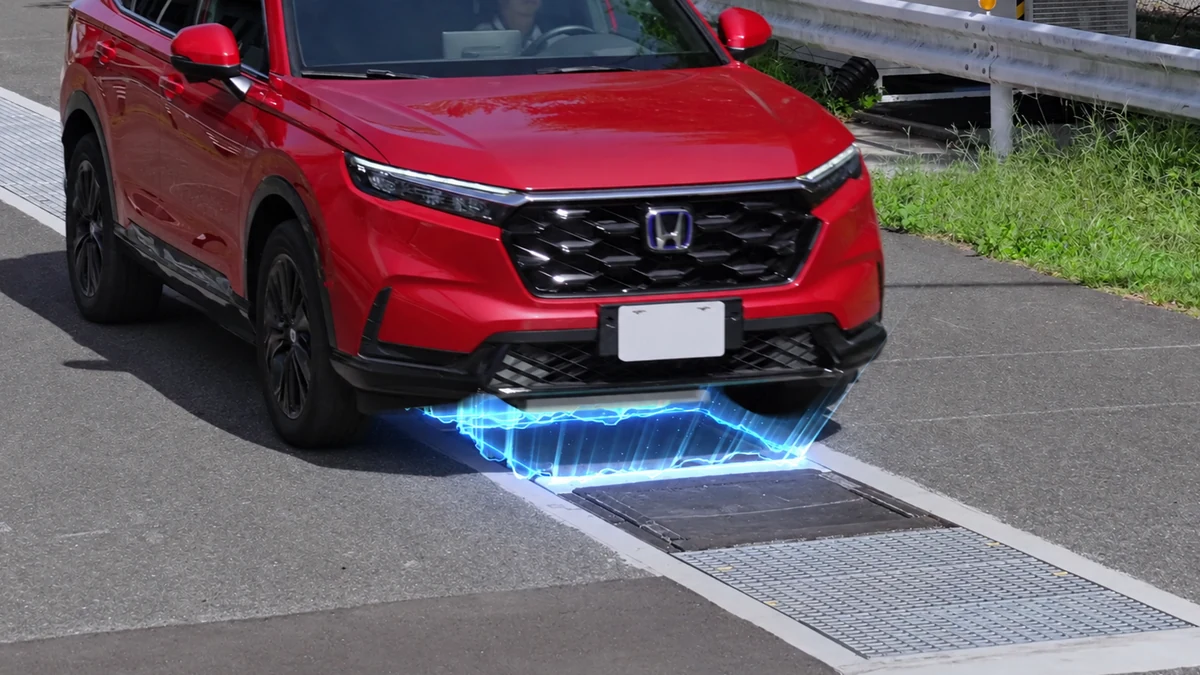
Reasons Behind Dynamic Wireless Power Transfer Research
Two things to keep in mind when using an electric vehicle (EV) are the charging time and remaining battery level. If the battery size is increased with the aim of boosting the driving range, the charging time of the battery also increases. While addressing these issues of charging time and driving range, Honda is conducting research on Dynamic Wireless Power Transfer (DWPT). The goal is to create a new form of mobility that allows people to move without having to worry about charging their EVs. In addition to DWPT, Honda is working to improve battery performance. Advances in infrastructure that allow in-motion charging of vehicles and development of in-vehicle batteries are some of the various solutions that Honda is working on to realize freedom of mobility.
DWPT refers to underlaying technology that transmits power from power transmitter units (Ground Assembly: GA) embedded in the road to a power receiver unit (Vehicle Assembly: VA) installed in a moving vehicle without physical contact. Instead of storing electricity in the vehicle's battery in advance, the vehicle uses electricity generated at a power plant, which is delivered to the vehicle via power transmitter units.
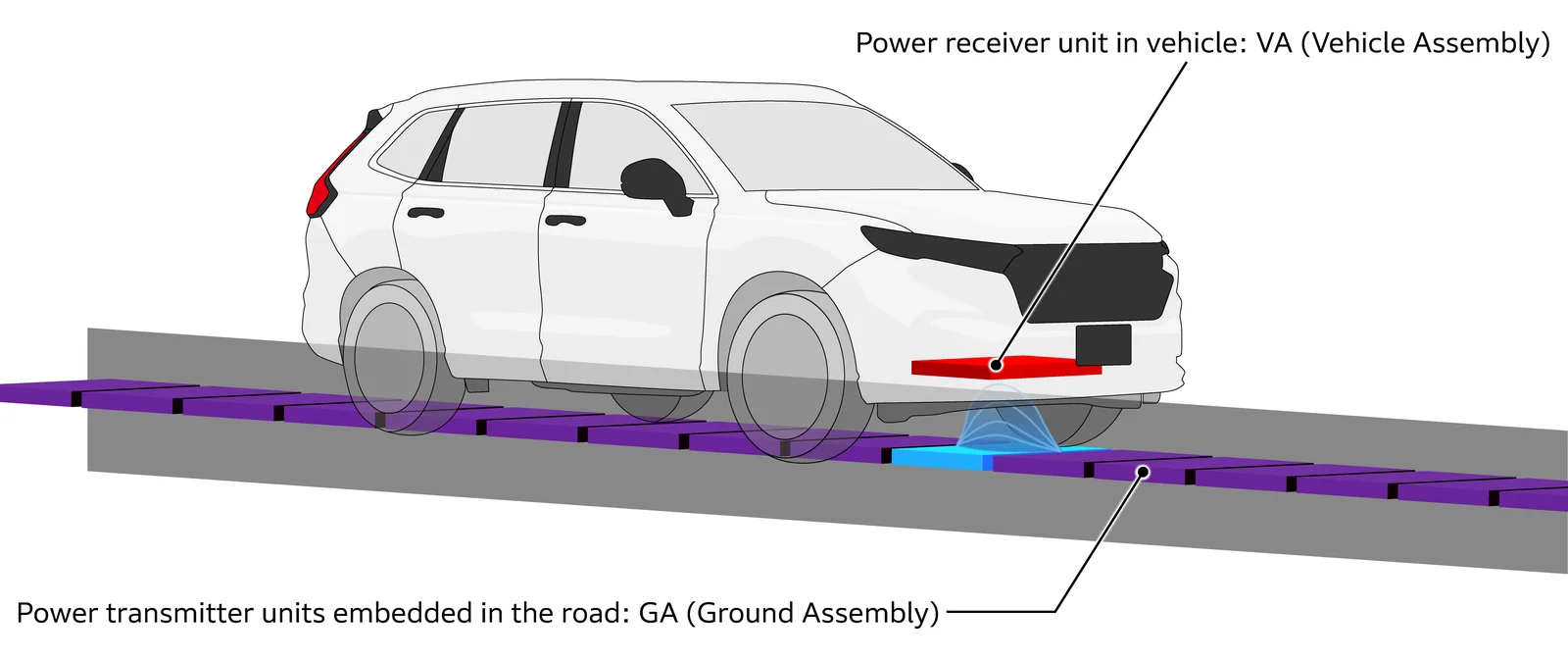
Power is transmitted to a moving vehicle from power transmitter units (GA) embedded in the road to a power receiver unit (VA) installed in the vehicle.
Honda is developing technology that enables power transmission of up to 150 kW (instantaneous peak output) per GA unit to achieve DWPT. Since the vehicle is in motion while power is supplied, reduced charging time is expected. Furthermore, if renewable energy sources such as solar and wind power can be utilized to power the GA system, this could lead to “local production for local consumption,” where renewable energy generated in a region is used within that same region. This is expected to contribute to Honda’s goal of achieving carbon neutrality. For Honda, which aims to create a society where everyone can enjoy the freedom of mobility, DWPT is one of the technologies that opens up new possibilities for mobility.
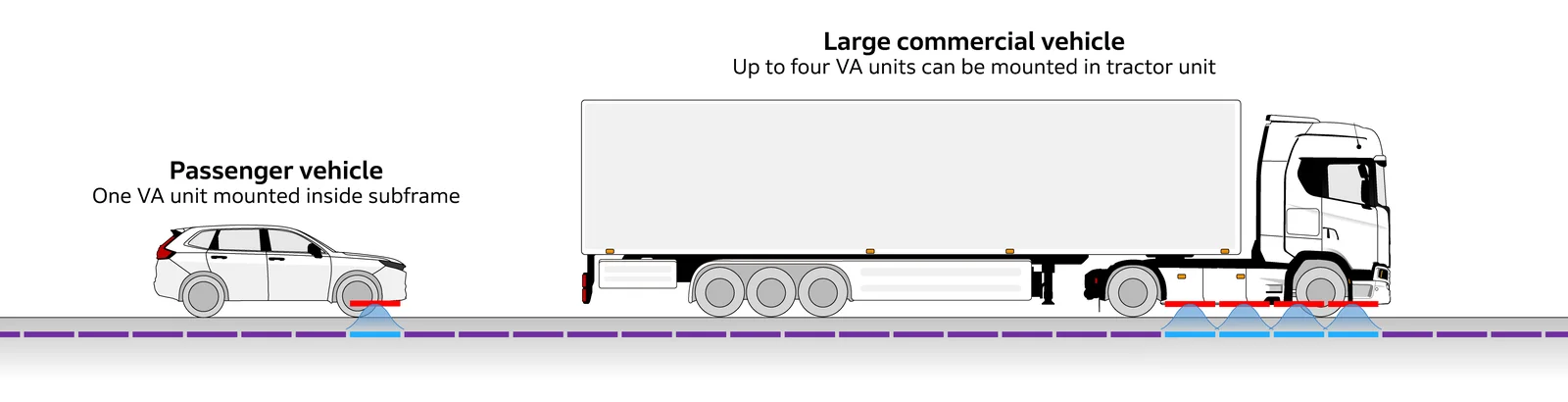
Compatibly designed power receiver unit (VA) makes the system suitable for vehicles ranging from passenger vehicles to large commercial vehicles.
Mechanism of Magnetic Coupling Method Transmitting Electricity Over Longer Distances
One familiar example of contactless power transmission technology is wireless charging, which allows you to charge your smartphone simply by placing it on a charging pad. DWPT is based on the same fundamental principle. It is an advancement of the “magnetic coupling method,” which transfers electricity via a magnetic field between coils embedded in the road and mounted on the vehicle, and is designed to handle high power and operate even while the vehicle is in motion.
When an electric current (alternating current) is passed through a power transmitter coil (GA) embedded in the road, a magnetic field (magnetic force) is generated, and the power receiver coil (VA) in vehicles passing over it picks up the magnetic field and converts it back into an electric current (induced current). By converting energy from an electric current to a magnetic field and back to an electric current, electricity is transmitted without actually flowing through connected wires.
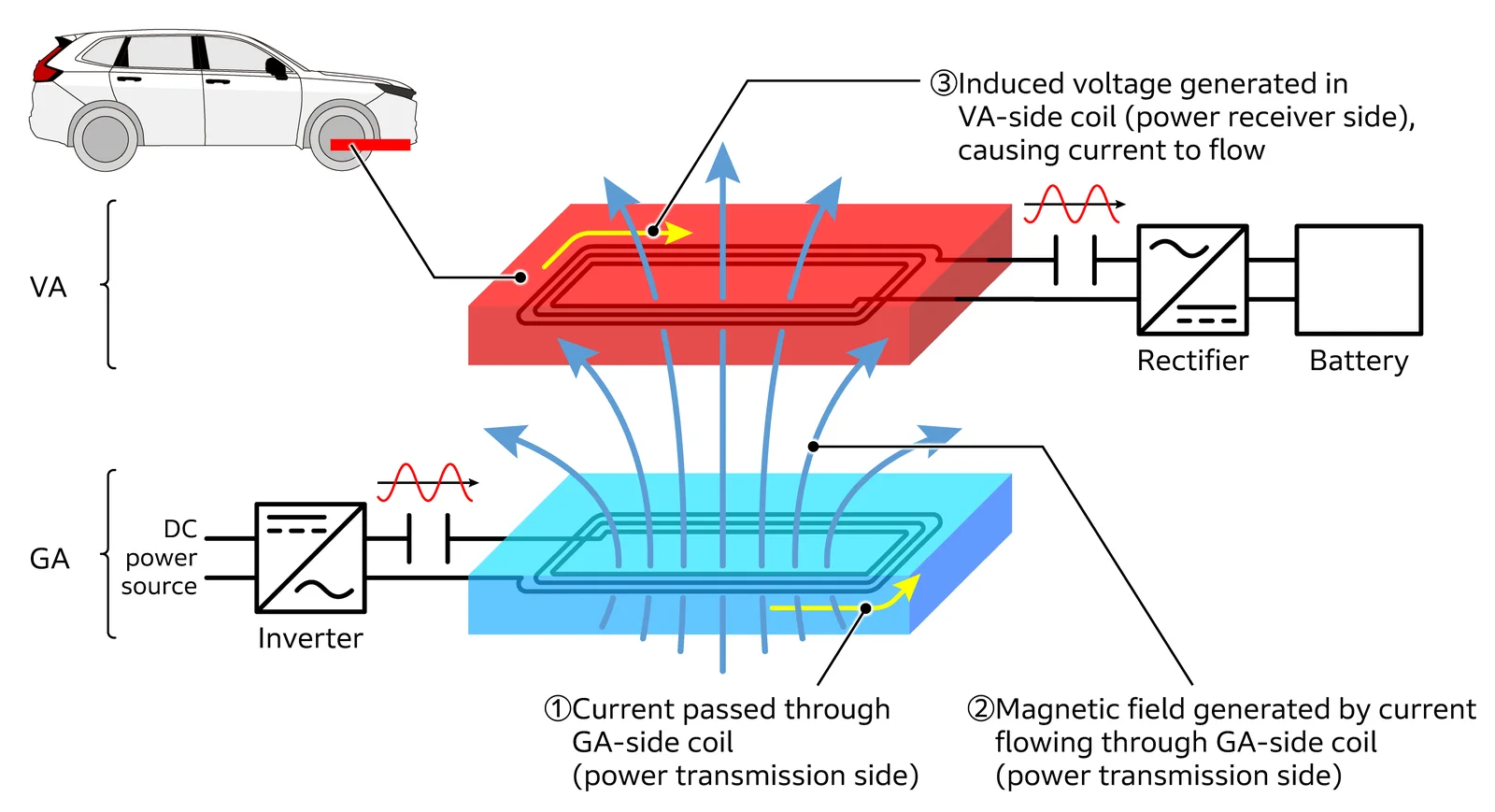
Contactless power transmission from a transmitter coil to a receiver coil via a magnetic field
The key component is the resonant capacitor built into the transmitter and receiver coils. The alternating current flowing through the coils has a frequency (wave cycle, kHz), and the magnetic field it generates fluctuates at the same frequency. If the coils on both sides are tuned to resonate perfectly at this frequency, a phenomenon known as “resonance”—similar to what happens when striking one tuning fork causes another tuning fork to vibrate—occurs in the electrical circuit. By utilizing this resonance, power can be transmitted efficiently even when there is a distance between the road surface and the vehicle body, or even when the vehicle’s position shifts during driving. From charging smartphones to dynamic wireless power transfer, magnetic coupling methods are extensions of these same principles, and “contactless charging” for charging parked vehicles also shares the same basic principles, although the usage conditions may differ.
Copper Strip That Combines High Output with Compact Size
One of the key components that determines the performance of DWPT is the “coil,” which handles both power transmission and reception. While there is generally a trade-off between high output and compact size when it comes to coils, Honda has managed to maintain a maximum output of 150 kW while reducing the size of the power receiver unit (VA) to fit within a passenger vehicle’s subframe. The key to achieving both high output and a compact design lies in the choice of materials.
When an alternating current is passed at high frequencies—around 85 kHz—as used in DWPT, the “skin effect” occurs, causing current density to decrease the closer it gets to the center of a conductor, such as a copper wire. The skin effect is a phenomenon in which an alternating current generates a magnetic field in a conductor, causing eddy currents to form inside it. These eddy currents interfere with the original alternating current, and because they cancel each other out at the center, current tends to flow only near the surface. The higher the frequency, the more pronounced the effect becomes. In the case of a high-frequency alternating current, a single thick copper wire has a large cross-sectional area in the center—where current flows with difficulty—and therefore cannot conduct current efficiently. Consequently, manufacturers have traditionally used Litz wire, which consists of many copper wires each as thin as a strand of hair, wrapped in an insulating coating to increase the surface area through which current can flow. Litz wire is an excellent wire material that can efficiently carry current even at high frequencies, and it is widely used for dynamic wireless power transfer.
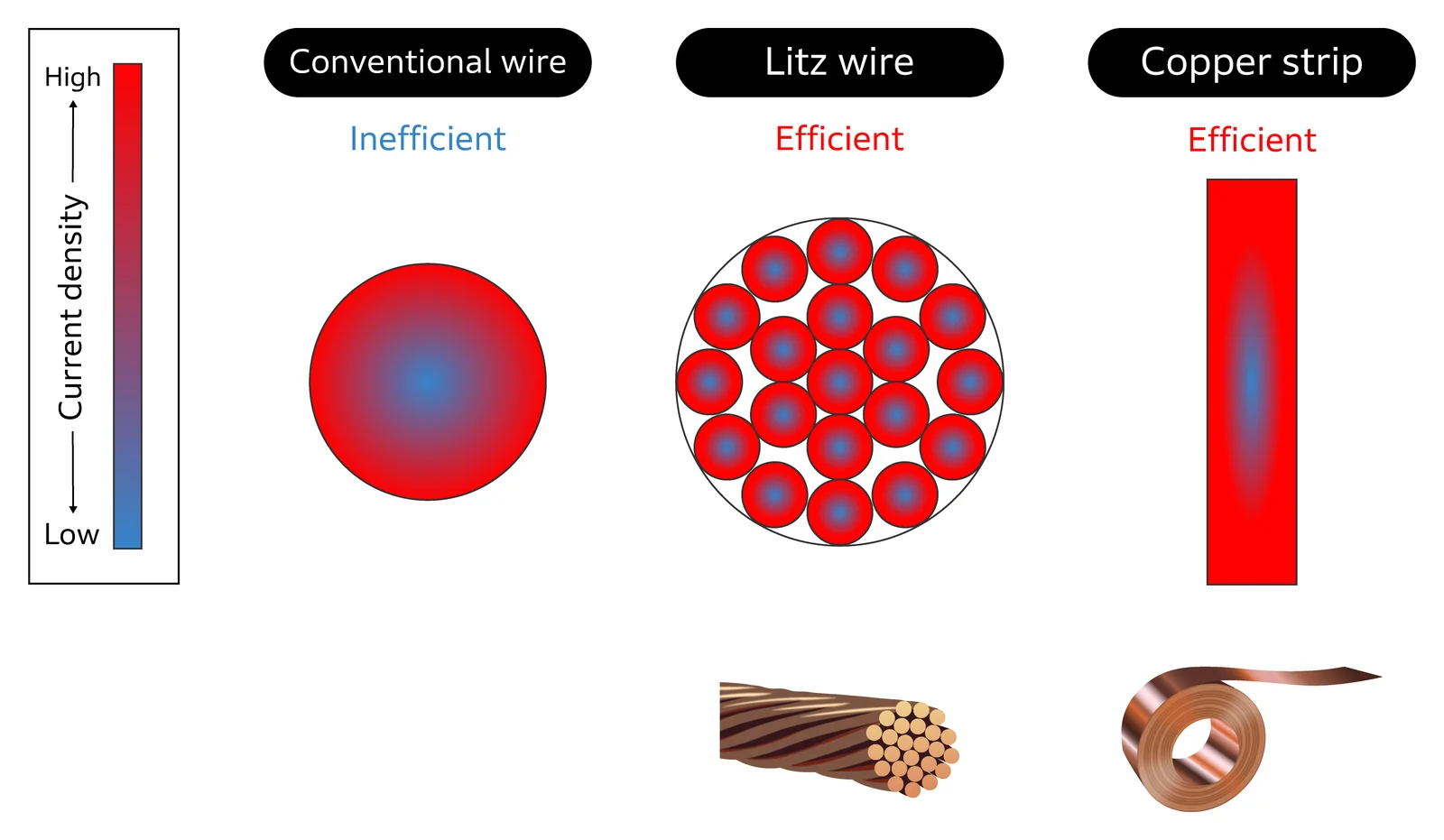
Band-like copper strip to ensure efficient current flow even at high frequencies
Honda has turned its attention to band-like copper strip, which is used in transformers and other applications, as a new type of wire material. Problems caused by the skin effect can be solved—as is the case with Litz wire—by increasing the total surface area of the conductor, where the current density is higher. Using current density analysis technology developed through the design of electric motors for electric mobility, Honda optimized the thickness of the copper strip and its configuration when wound into a coil. After measuring the resistance of Litz wire and copper strip with the same surface area, we found that copper strip with a width sufficient to ensure a large cross-sectional area—and a thickness of 1 mm or less—delivers comparable performance. Because copper strip has a simple structure, it is easy to handle in terms of mass production and stable supply, and was therefore selected as a wire material with an eye on future widespread adoption.
Significant Reduction of Coil Bulging and Costs
For the coil shape, Honda uses a “circular coil,” in which the wire is wound in a circular pattern. Since the copper strip is band-like and can be wound into a spiraled coil with spacing between the strips to prevent contact, we were able to reduce coil bulging (an increase in outer diameter caused by overlapping or swelling of the wire) by approximately 30 percent* compared to Litz wire, while also lowering unit manufacturing costs.
*Calculation by Honda
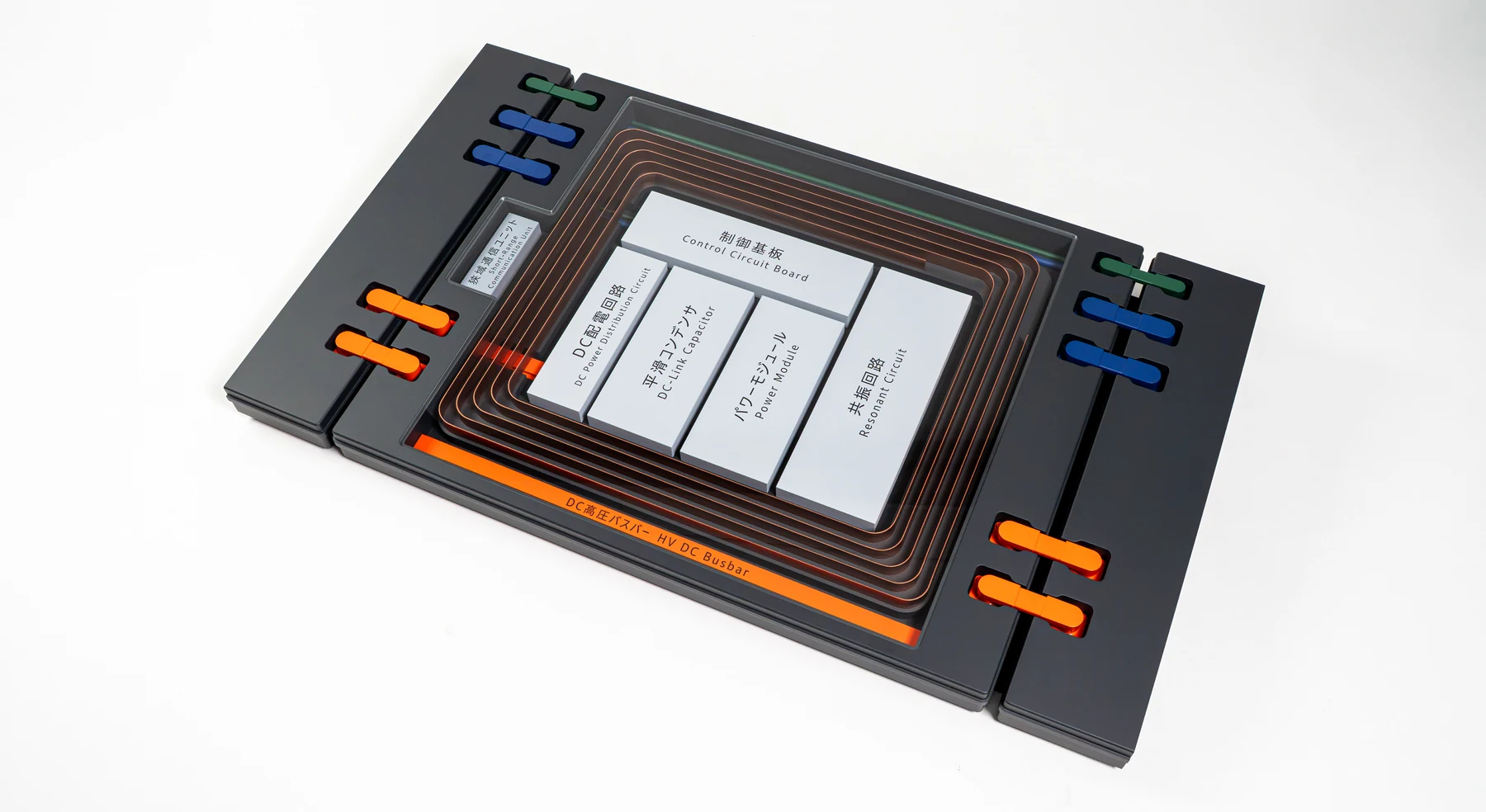
Mock-up of GA unit embedded in road
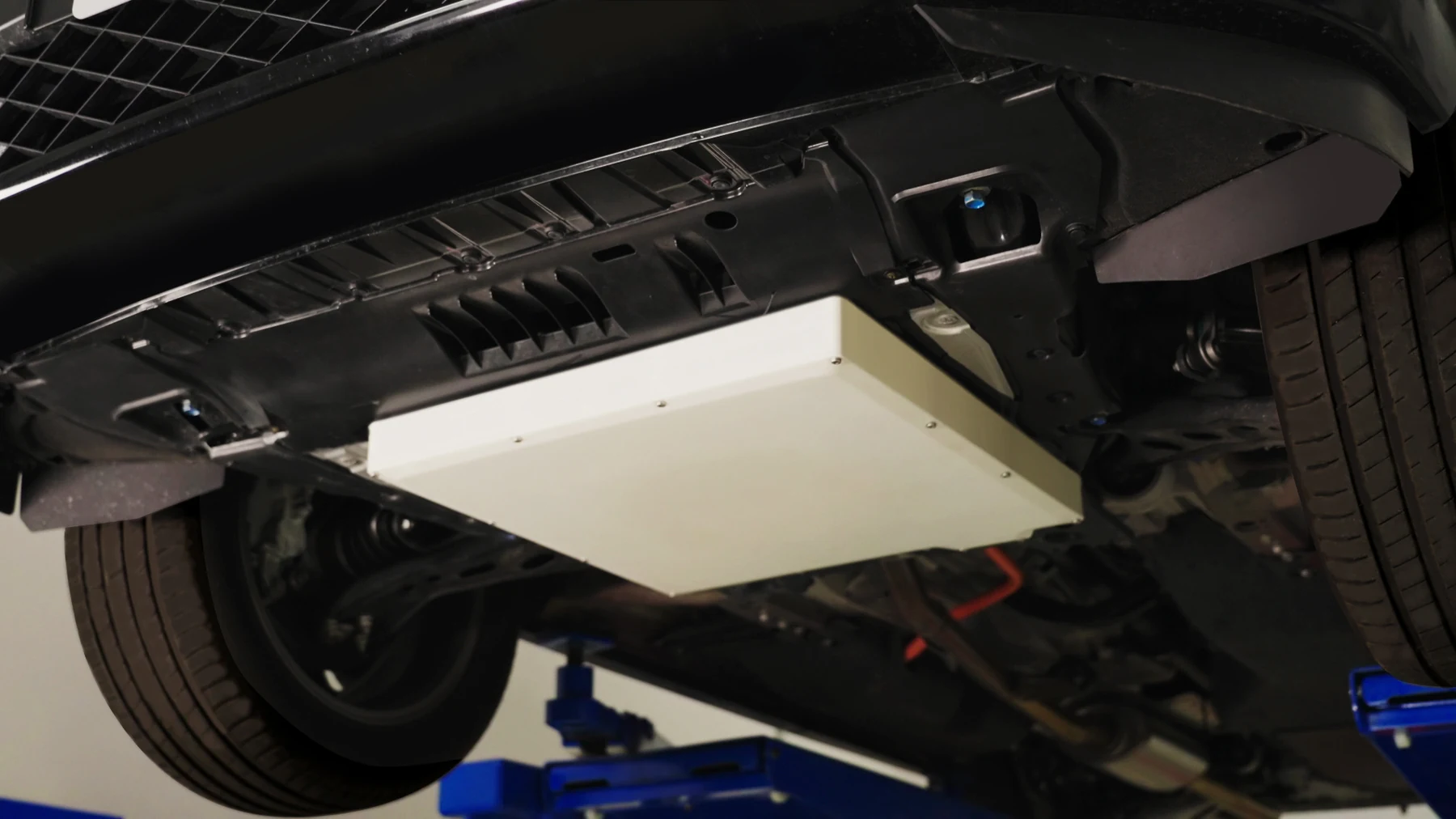
Moreover, the space created in the center can accommodate necessary components such as resonant capacitors and inverters. Since the VA is designed to be installed in passenger vehicles by utilizing the space in the subframe beneath the vehicle floor, it does not encroach on the passenger compartment.
The VA, which achieves both compact size and high-power output, has been downsized to a size and weight that can be carried by hand. Users can select one to four units depending on the required power supply and install them in parallel. By installing one unit in a passenger vehicle or up to four units in parallel in a large commercial vehicle, the system can accommodate vehicles weighing up to 40 metric tons. The VA system is designed to be compatible with all vehicle types. It is sized so that one unit can be mounted on the subframe of a passenger vehicle, while multiple units can be mounted on the tractor of a large commercial vehicle.
DC Distribution-based Ground Assembly (GA) System for Improved Installability
To supply power wirelessly to a moving vehicle, both the vehicle-mounted VA and the power transmitter units (GA) embedded in the road are essential. Since the GA is installed in the road, it must not only be durable in terms of load-bearing capacity, water resistance, and heat resistance but also be easy to install. In particular, the speed at which equipment can be embedded in the ground determines the cost of infrastructure development. In terms of repairs, depending on the wiring design, it may be necessary to excavate all related areas just to replace a single unit. Therefore, ease of installation and maintenance will be key factors that determine future adoption.
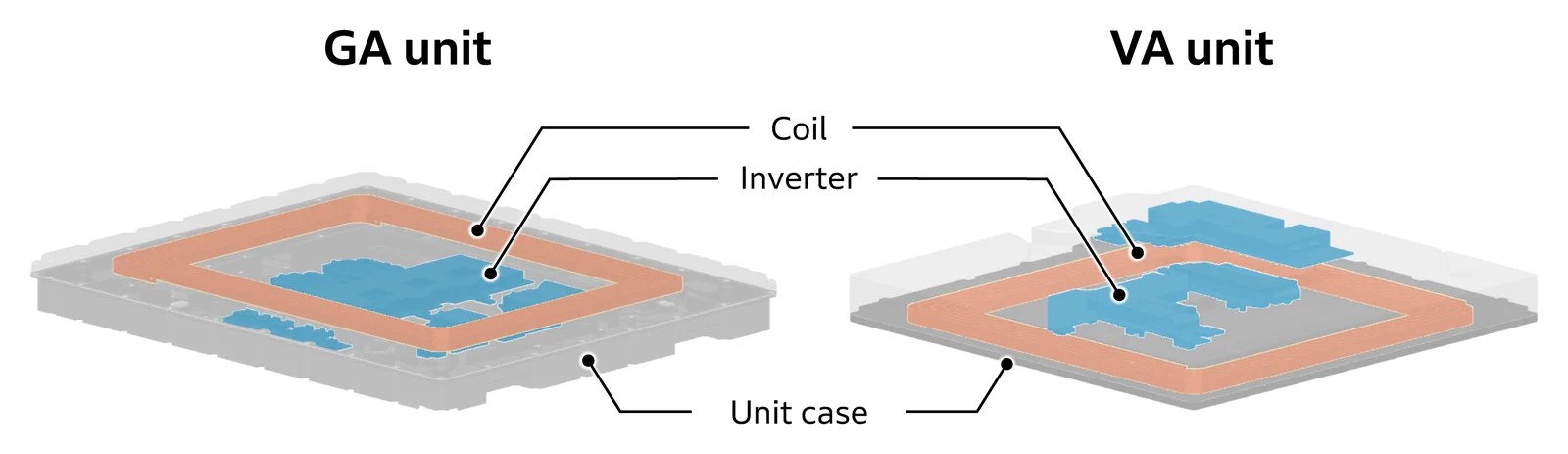
GA unit embedded in road and VA unit in vehicle with integrated coils and inverters
A key feature of Honda’s road-embedded system is that each GA is equipped with a built-in inverter that converts DC from the power source into AC and is embedded together with the coil. This inverter incorporates the advanced durability technologies developed through hybrid vehicle development. Although the environment in which it is embedded in the road differs from that of an in-vehicle system, there are common requirements regarding durability against temperature fluctuations, vibration, and moisture. Because the inverter was developed through experience with hybrid vehicles, it was possible to embed it underground as a single unit with the coil. In a typical configuration, an inverter unit installed above ground converts the power to AC, and from there, electricity is sent to each power supply unit via separate AC wiring. In this case, while only a single DC distribution line is needed from the power source to the inverter unit, the number of AC wiring connections required beyond the inverter unit corresponds to the number of power supply units. Hence, the amount of wiring that needs to be embedded tends to increase, and installation becomes more laborious. Although both follow the same flow, i.e., “DC power supply to DC to inverter to AC to coil,” Honda is currently developing “interconnected GA units” that each combine the inverter and coil into a single unit and are connected via a DC distribution line. Power is simply distributed to each unit as a direct current, and each unit converts it to an alternating current internally. This power distribution system is known as the “DC distribution-based ground assembly (GA) system.” Since there is no longer a need to run wiring from the power source to individual units, the process of digging deep trenches in the road to lay wiring is significantly reduced, leading to faster construction and enhanced maintenance.
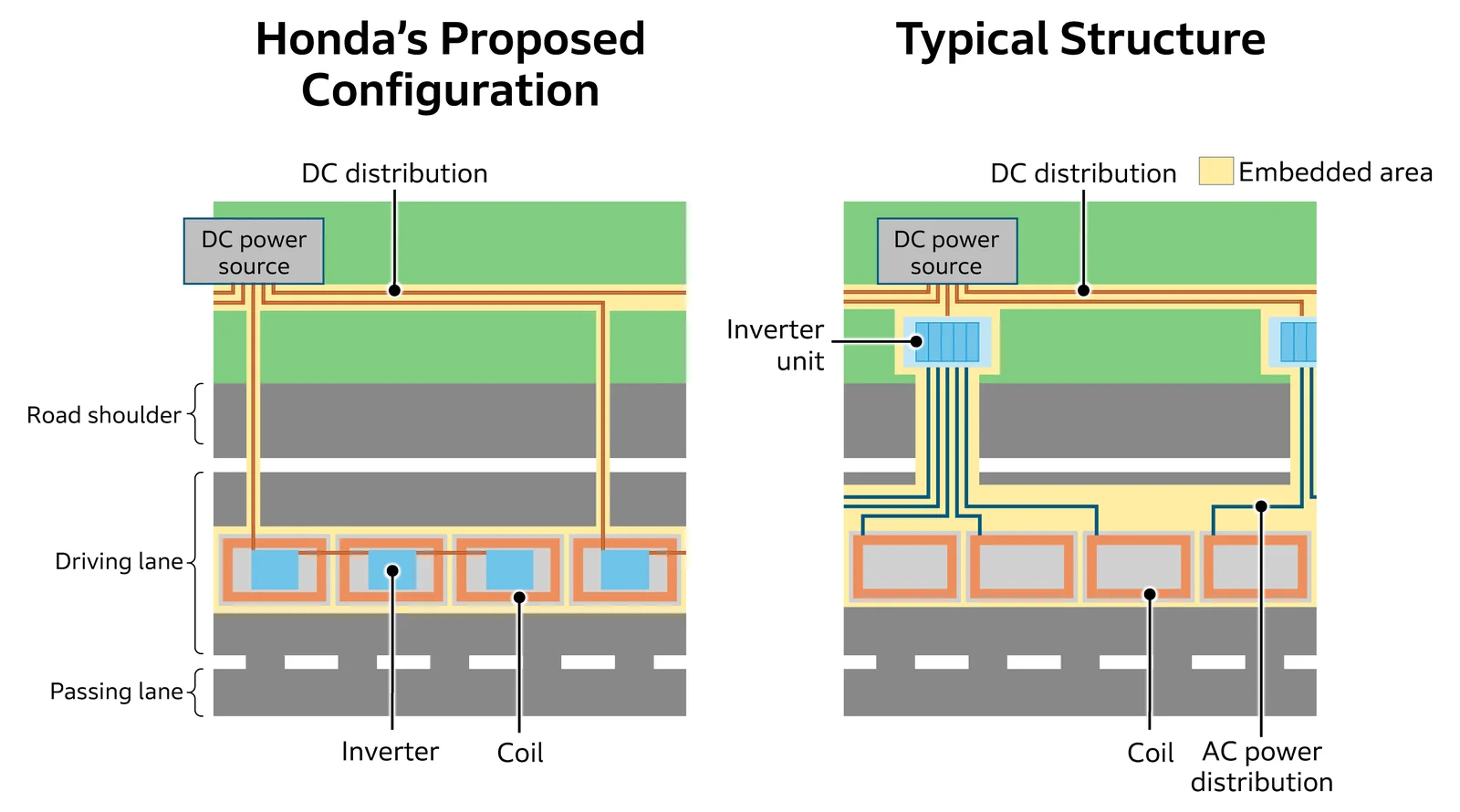
The Interconnected GA Units, which integrate the inverter and coil, aim to reduce wiring and lower costs.
Since this is a field that cannot be advanced by developing vehicle functions alone, Honda is conducting this research in collaboration with the Taisei Group (Taisei Corporation and Taisei Rotec Corporation). Honda is responsible for developing a DC distribution-based ground assembly (GA) system and a vehicle system equipped with a VA unit that receives power on the vehicle side. Taisei Corporation is responsible for developing the DC power supply system. Taisei Rotec Corporation is responsible for developing construction methods for wireless power-transmitting roads. By combining the expertise of the three companies, we are verifying the feasibility of this technology on public roads. By using this method, we aim to be able to install the equipment and material in the same amount of time and over the same distance as existing road repair work in the future.
Envisioning Adoption Scenarios Beyond the Demonstration Testing
DWPT is only possible when the GA on the road and the VA in the vehicle are in sync. The GA system, which forms part of the road infrastructure, is not exclusive to Honda vehicles. Honda participates alongside other companies in the international standardization of communication protocols and other standards. If these standards are followed, EVs from other manufacturers can receive power from the same road, and conversely, Honda’s VAs can receive power from other manufacturers’ GA systems. The companies involved in development are currently aiming to promote this technology as a form of social infrastructure that benefits all vehicles, not just those from specific manufacturers.
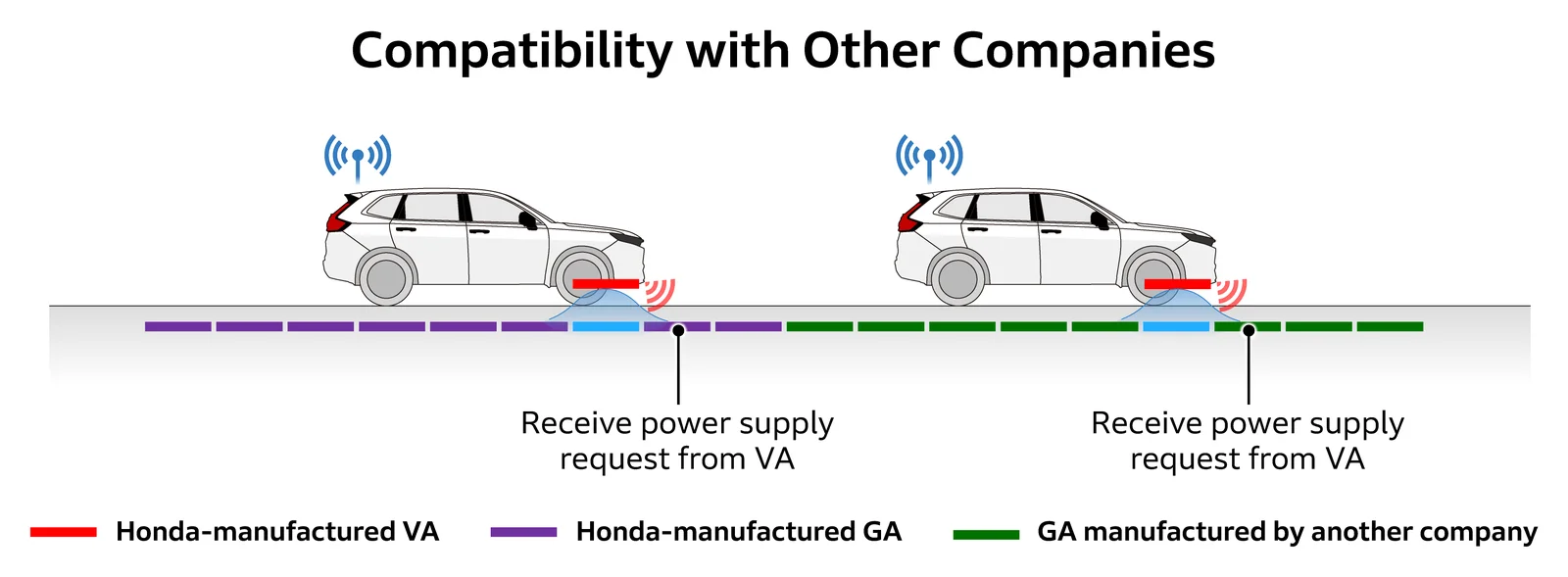
Honda aims to develop a system that is compatible with other companies' vehicles and GAs, in accordance with international standards.
DWPT, which can feel like something out of a science fiction story, will soon be tested on actual roads. As part of NEXCO East’s next-generation expressway initiative, public road demonstration tests are planned for the Tateyama Expressway in Chiba, Japan starting in fiscal year 2027, and Honda is set to participate.
While European countries are working to advance the decarbonization of highways, the transition to electric large commercial vehicles requires balancing the need for sufficient driving range with the need to maintain high vehicle utilization rates. DWPT offers an effective solution to these challenges. Honda aims to first commercialize this technology in the large commercial vehicle sector (trucks and logistics vehicles), where high utilization rates and long-distance travel are essential.
The goal of DWPT is not merely to reduce the burden of charging. By supplying energy while the vehicle is in motion, this technology has the potential to support the electrification of large commercial vehicles, which require high operational availability and long-distance travel. Furthermore, DWPT is one of the various technologies Honda is developing to achieve carbon neutrality by 2050. To reach this goal, Honda continues to explore a wide range of possibilities.
*All figures and comparisons in this article are based on Honda research (as of October 2026).
Engineers interviewed for this article

Taku Ueda
DWPT Development Team

Tetsu Sato
DWPT Development Team

Akinobu Terada
DWPT Development Team

Kazuki Sakurai
DWPT Development Team


