Evolution of the real-time drive force distribution by rear motor adoption
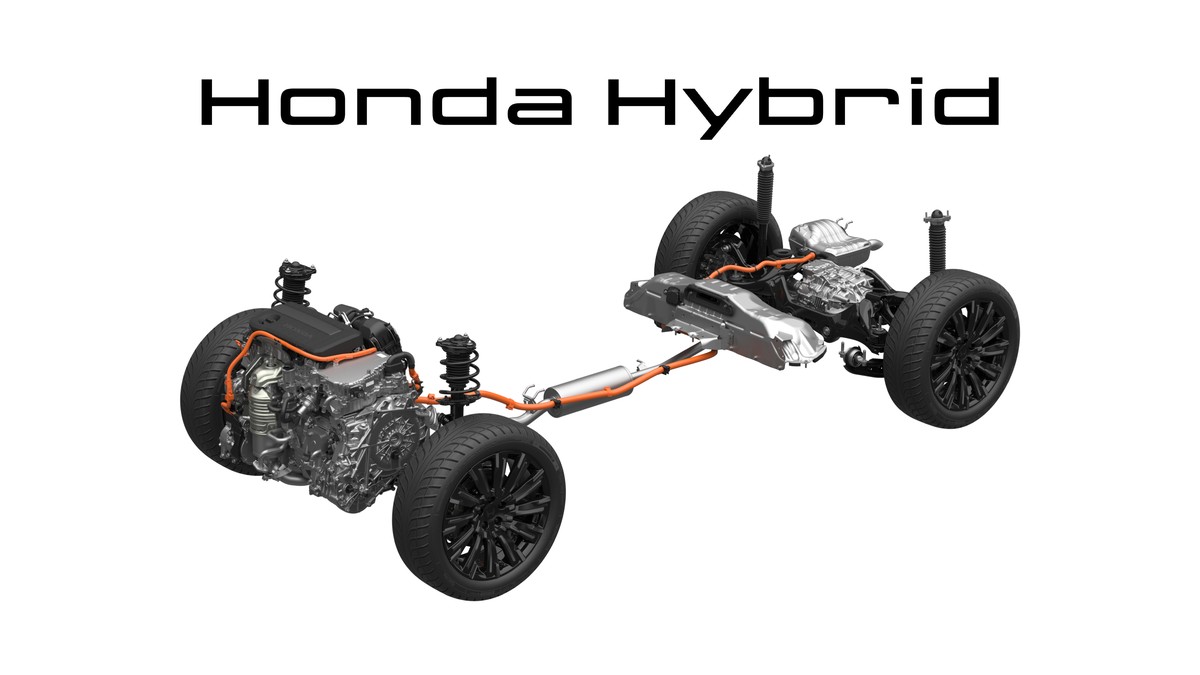
A sophisticated and exhilarating driving experience is achievable only when there is outstanding driving stability, the vehicle turning and accelerating as the driver intends. All-wheel drive (AWD) is one means of accomplishing this. In conventional mechanical AWD systems, output from the front drive unit is distributed to the rear wheels via a propeller shaft. The electric all-wheel-drive system, “DualPower eAWD,” uses motors at both the front and rear, increasing rear driving force while enabling direct, highly responsive, and precise control.
The newly developed rear drive unit is a 50-kW-class unit designed for use in models ranging from compact to mid-size vehicles. By fully leveraging the advantages of electrification, including high precision and responsiveness, Honda aims to deliver the sophisticated and exhilarating driving experience unique to Honda Hybrid.
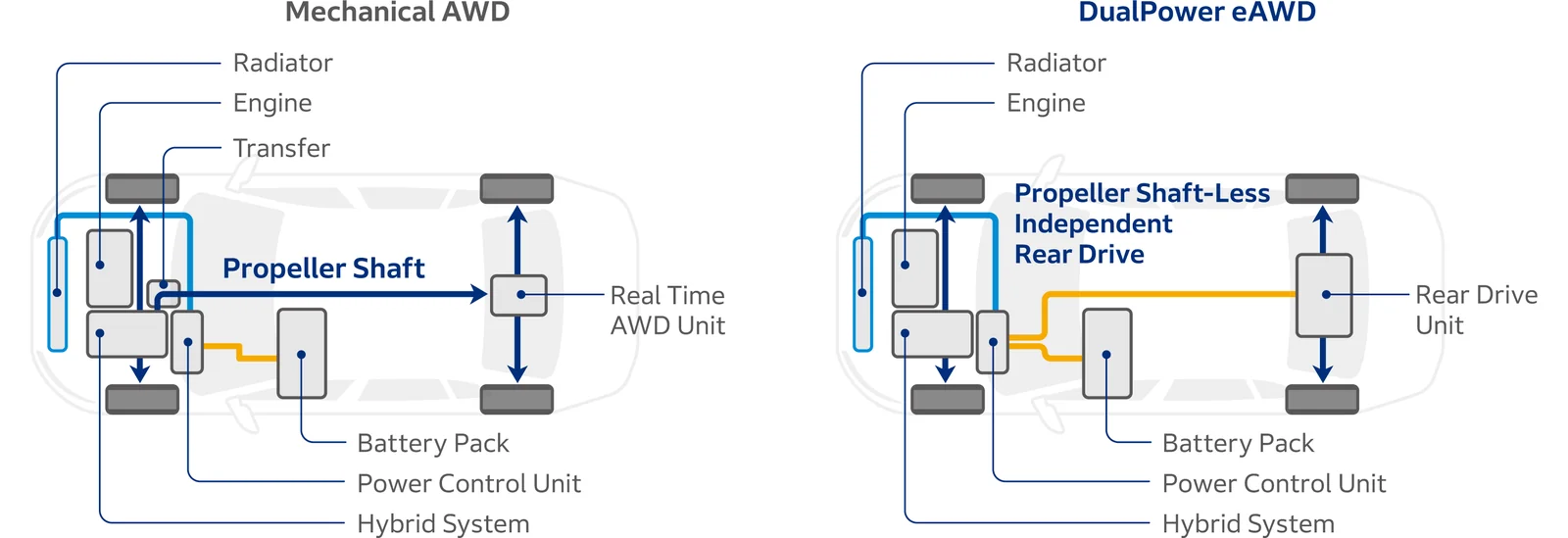
The front and rear drive units are controlled independently, enabling instantaneous optimization of drive force distribution according to driving conditions and providing excellent driving stability. By fully leveraging the advantages of electrification, the system delivers outstanding driving performance not only on slippery surfaces but across a wide range of road conditions.
Specifically, when starting from a standstill, the system increases rear drive force distribution in response to the increased load on the rear tires, enabling efficient and stable starts and acceleration. During deceleration, braking force is also applied to the rear tires to suppress vehicle pitching (the tendency of the vehicle to pitch forward) while maximizing regenerative braking. During cornering, the system quickly adjusts front-to-rear drive force distribution in response to changes in the contact load on the inner wheels, delivering stable and enjoyable cornering.
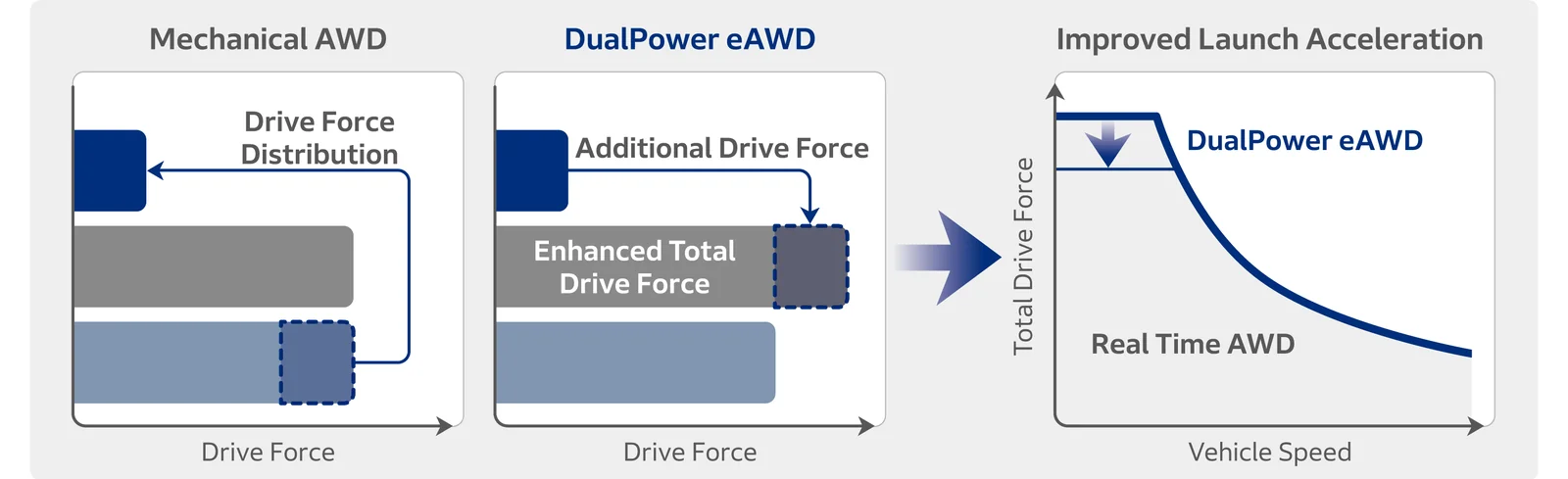
Our Focus on DualPower eAWD
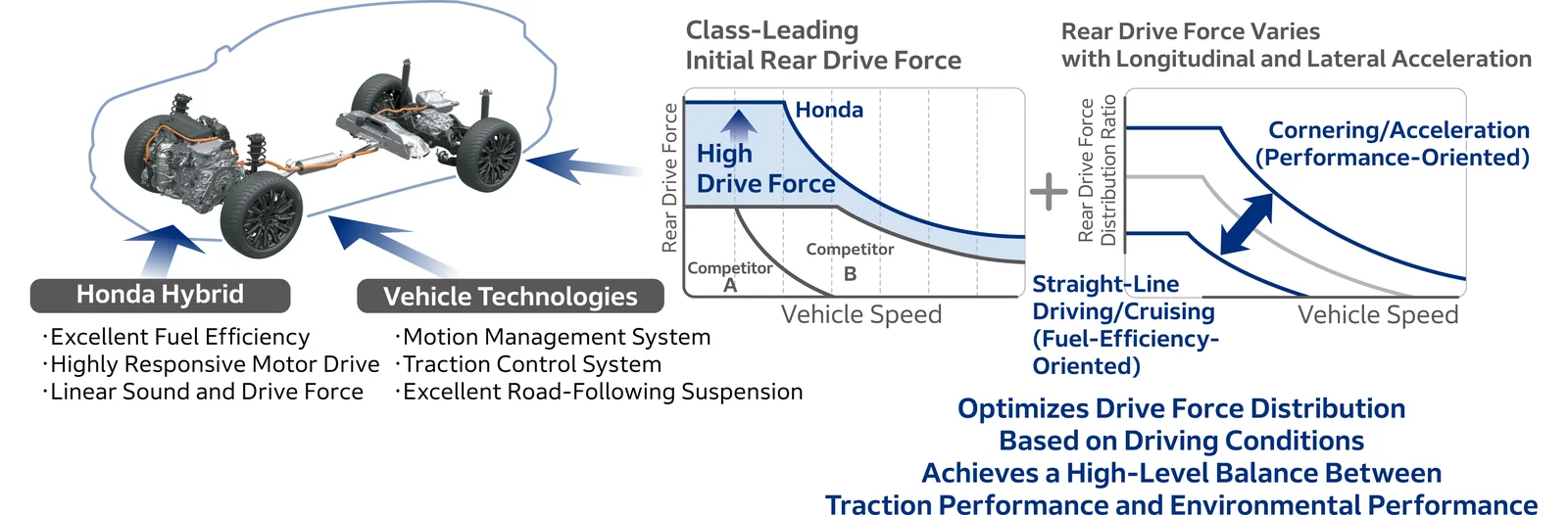
Drive Force Distribution Based on Driving Conditions
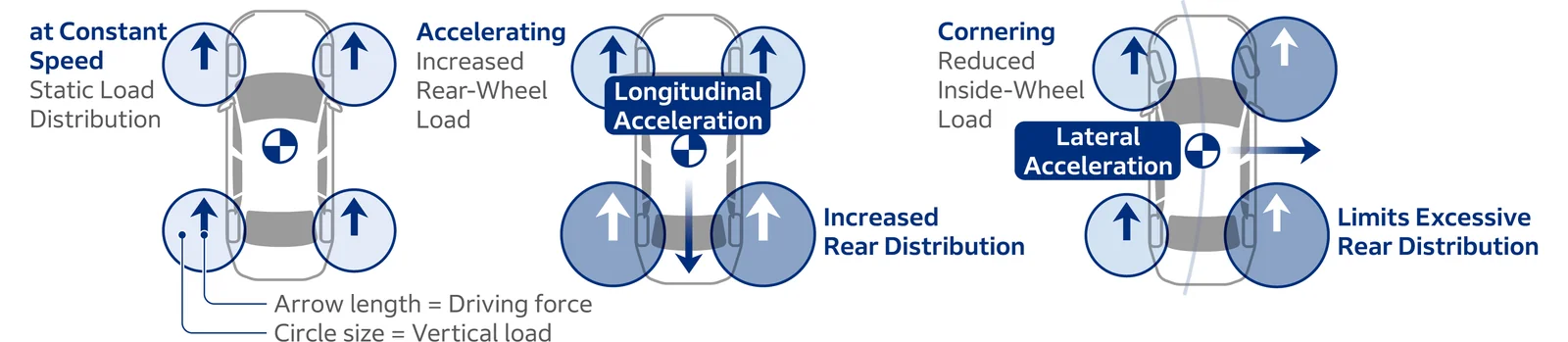
DualPower eAWD System Control
Information from vehicle sensors and the vehicle model within the ECU are used to calculate changes in tire contact load in real time while driving. Highly precise and flexible front-to-rear drive force distribution enhances stability in response to driver inputs, driving conditions, and road surface conditions, while providing predictable and easy-to-handle driving characteristics across a wider range of situations.
DualPower eAWD control characteristics
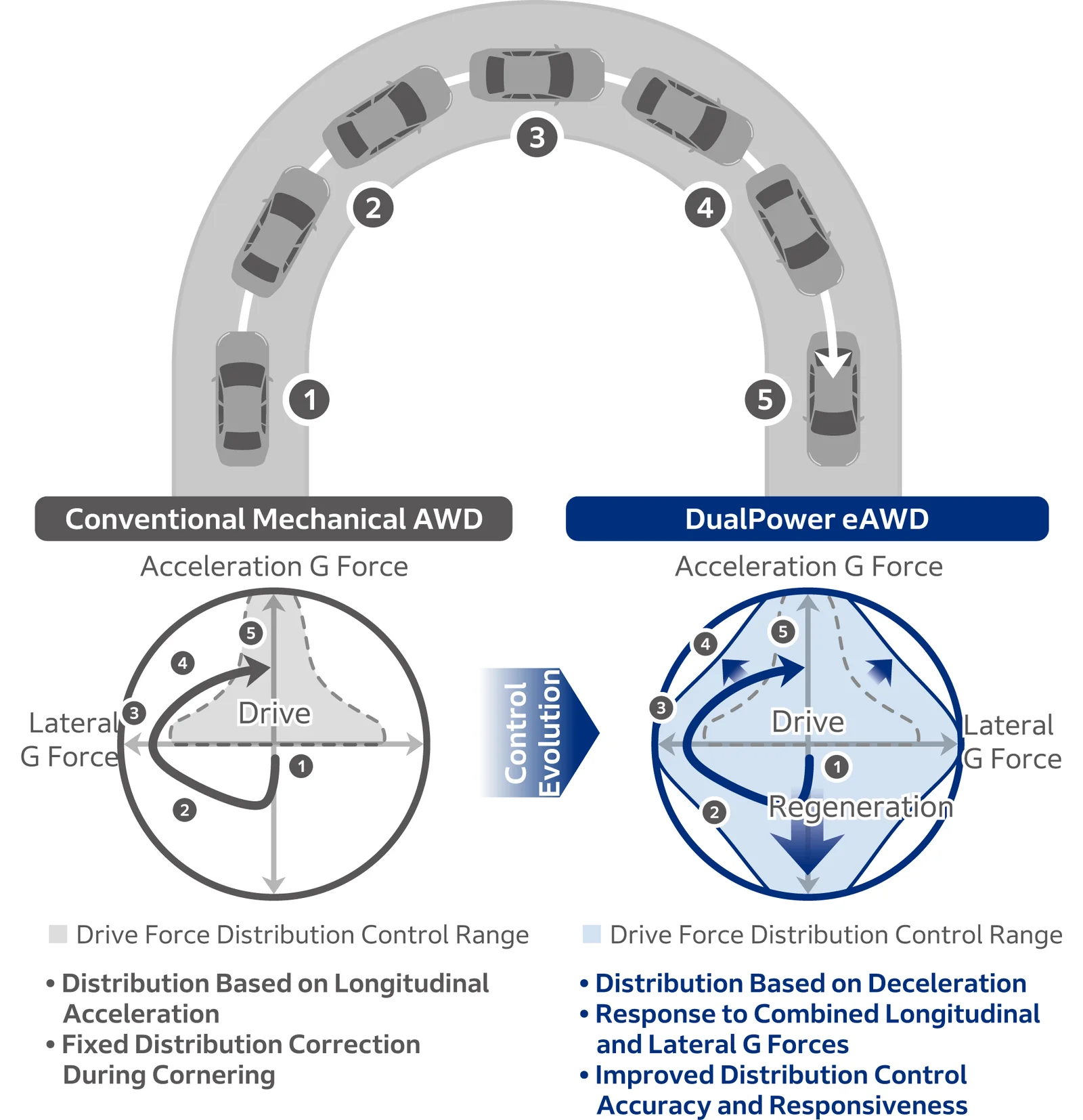
In contrast to conventional mechanical AWD, which adjusts drive force distribution based on acceleration G-force and lateral G-force during cornering, DualPower eAWD also adjusts the distribution in response to deceleration G-force. This enables more appropriate distribution control in a wide variety of situations involving combinations of acceleration, deceleration, and cornering. Furthermore, the excellent responsiveness of the electric motors enables highly precise and responsive control, improving both stability and ease of handling.
A high-level balance between turn-in response and stability
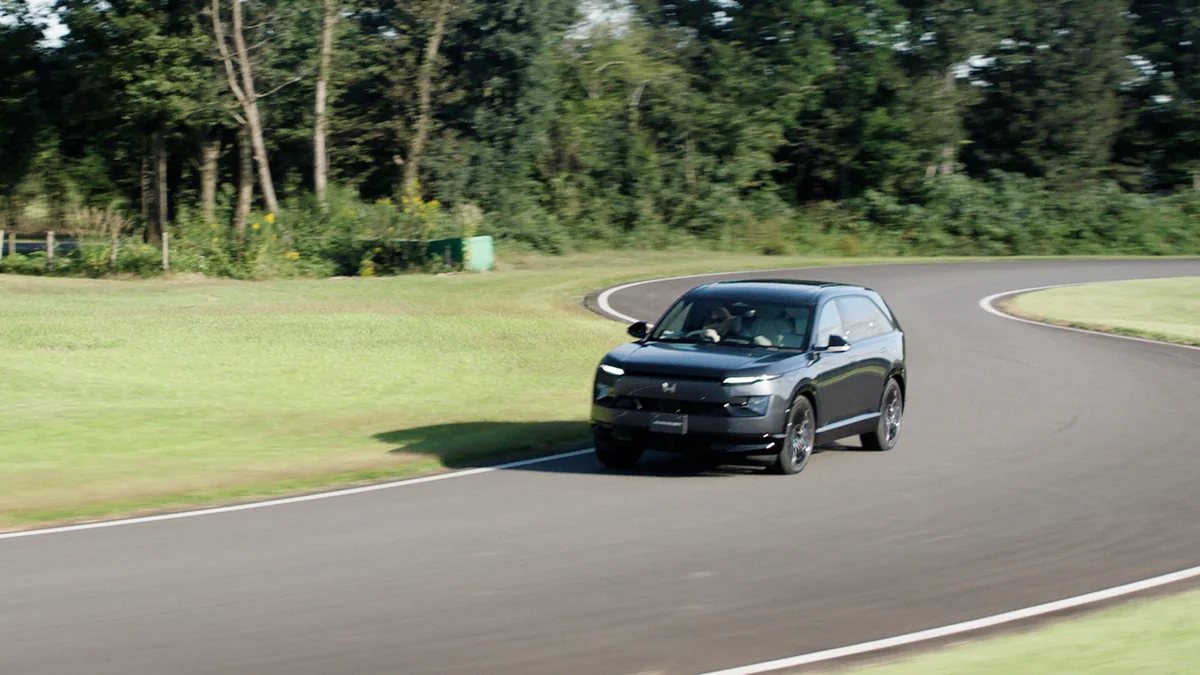
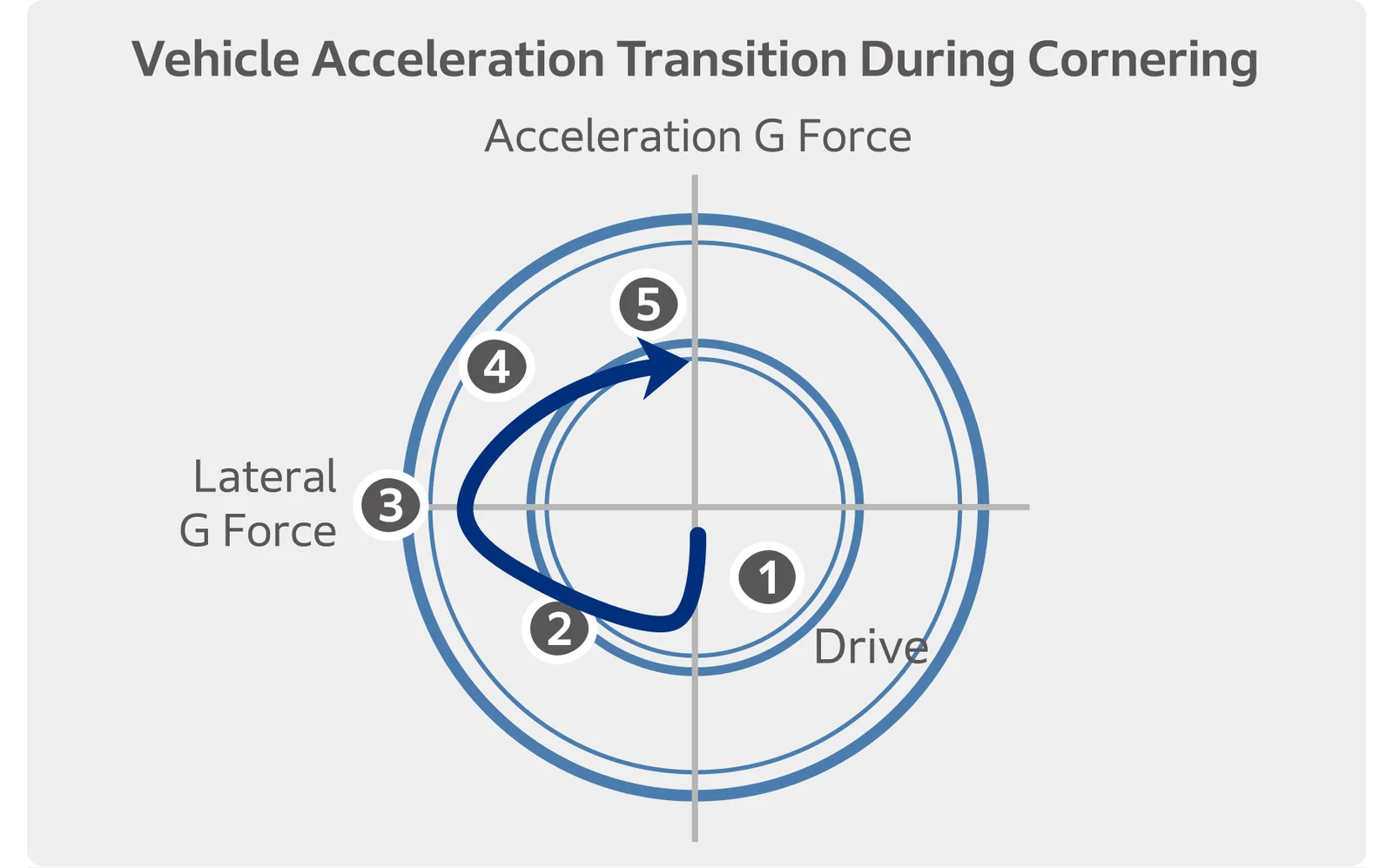
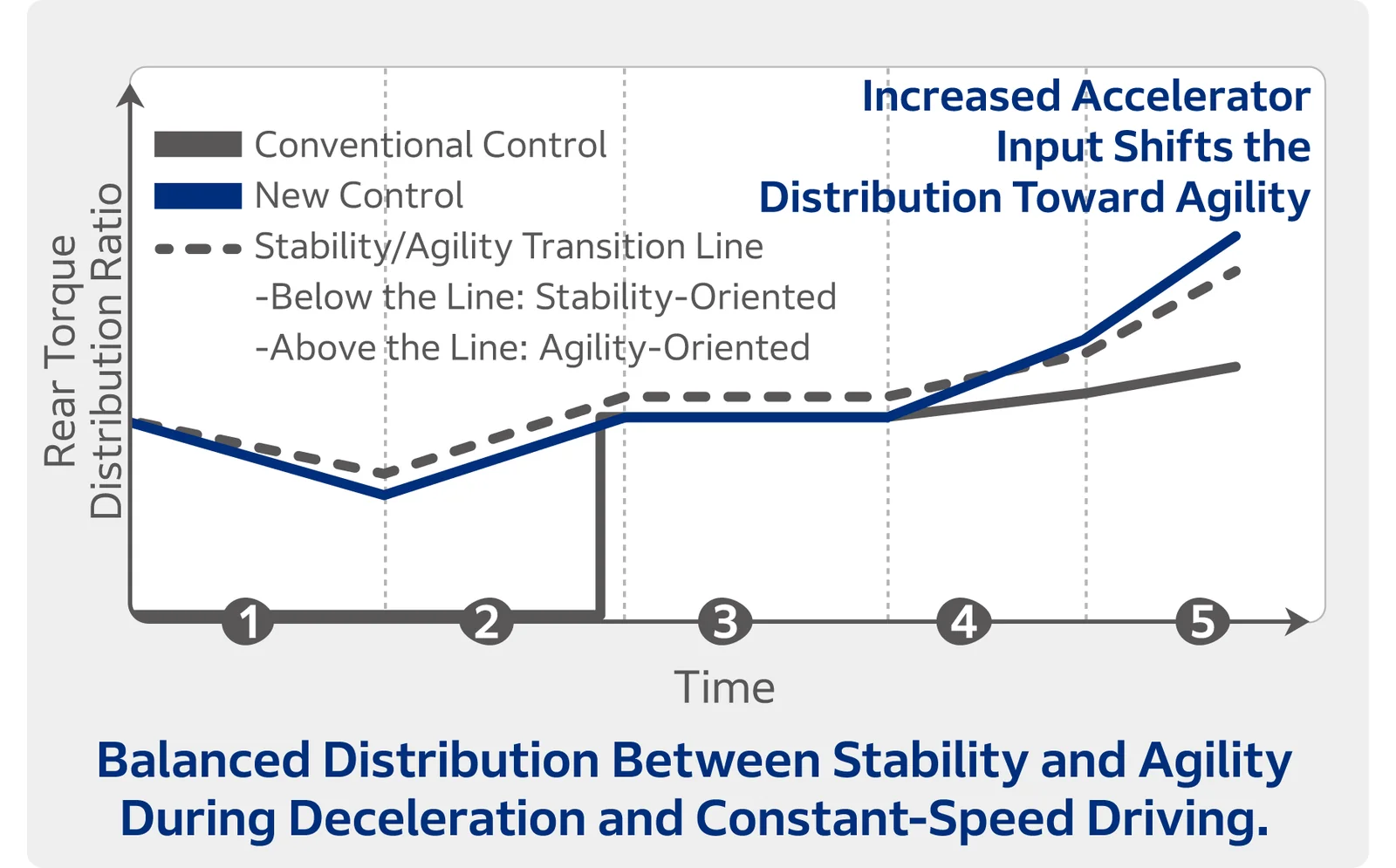
DualPower eAWD offers a wide range of drive force distribution control, enabling a higher proportion of drive force to be distributed to the rear wheels than with conventional control. This enables cornering that achieves a high level of both turn-in response and stability.
Improved cornering performance on snow
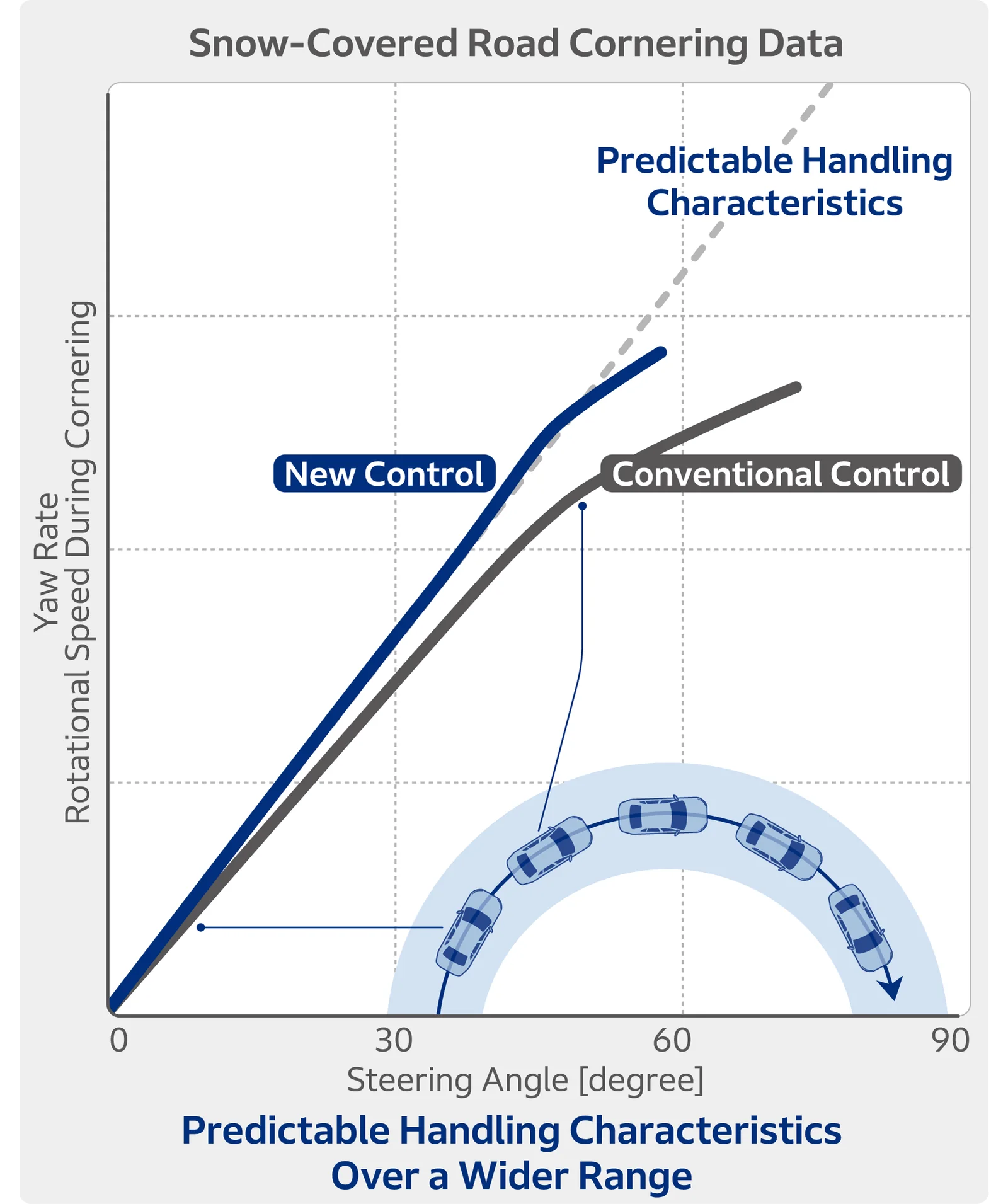
Even when cornering on snow, the wide range of drive force distribution control enables a linear yaw response to steering input, helping the vehicle follow the driver’s intended line.
Traction Control System for DualPower eAWD
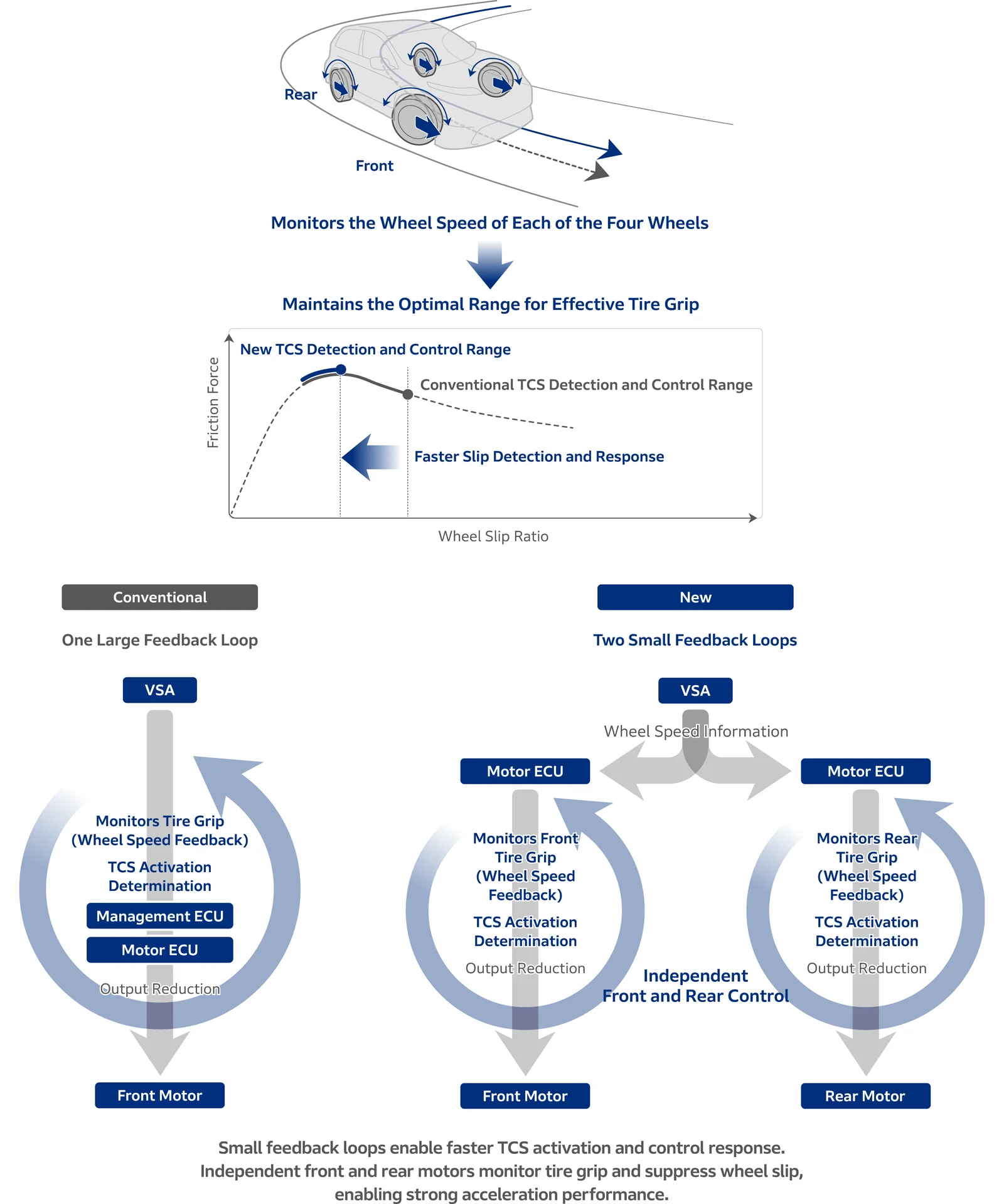
With the adoption of DualPower eAWD, the Traction Control System (TCS) achieves independent control of the front and rear wheels. Combined with the superior responsiveness of the electric motors, this enables more precise and highly responsive slip control of the front and rear wheels, contributing to improved vehicle dynamics.
Faster control through dual feedback loops
In conventional TCS, when wheel slip occurs, such as at the front wheels, a single feedback loop reduces the drive force of the entire power unit to suppress the slip. With the adoption of DualPower eAWD, the new TCS uses independent feedback loops for the front and rear wheels, allowing the force of the slipping wheels to be controlled individually. This improves the responsiveness of slip control and the precision of drive force control. At the same time, because the drive force of the non-slipping wheels is not reduced, excellent acceleration performance can be maintained. Furthermore, the system’s high responsiveness enables finely controlled suppression of tire slip, allowing smoother starts and acceleration.