Honda’s Exhilarating Acceleration Sound
Active Sound Control enhances the smooth, thrilling signature feel of a Honda vehicle as it engages the senses during acceleration. Sound is delivered through audio system speakers into the cabin, the quality and loudness adjusted according to the way the accelerator is applied, the state of the vehicle in motion, and whether the car is in Sport or another driving mode. This produces an acceleration experience closely aligned with the driver’s intentions and the movements of the vehicle.
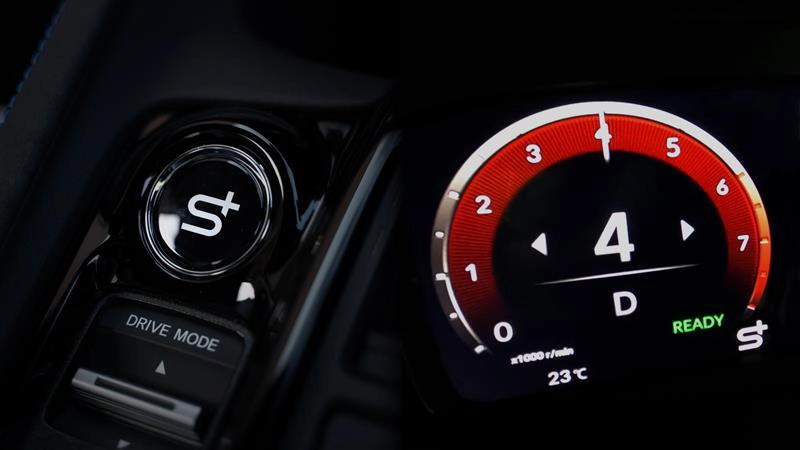
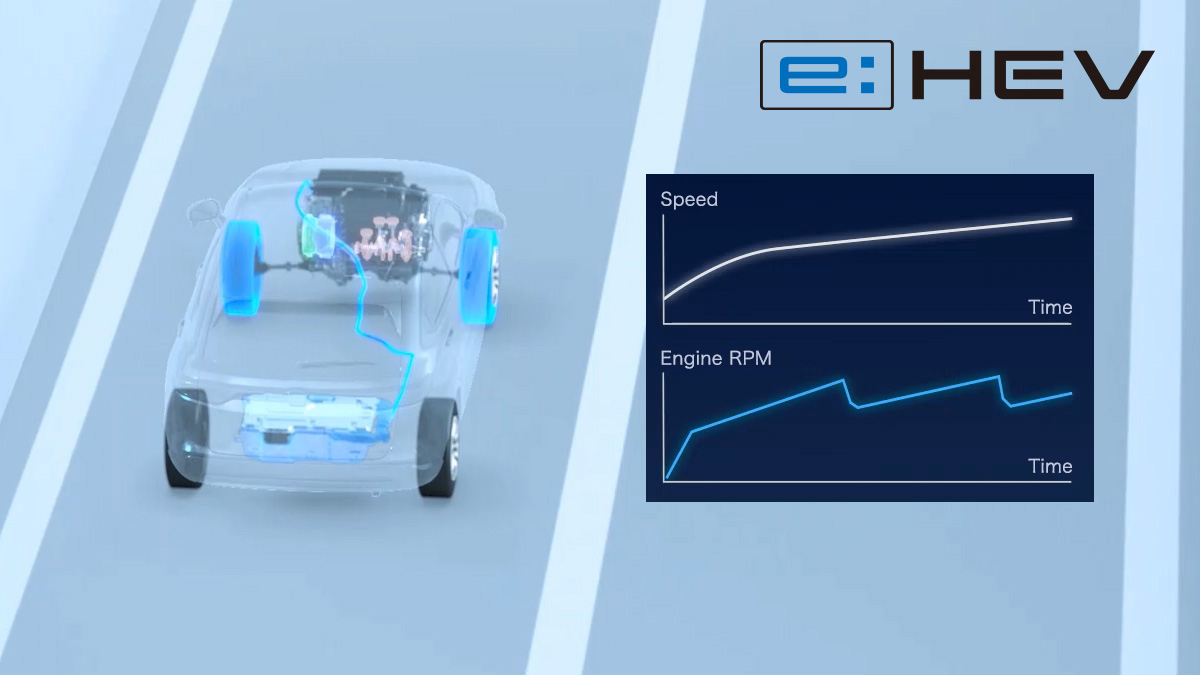
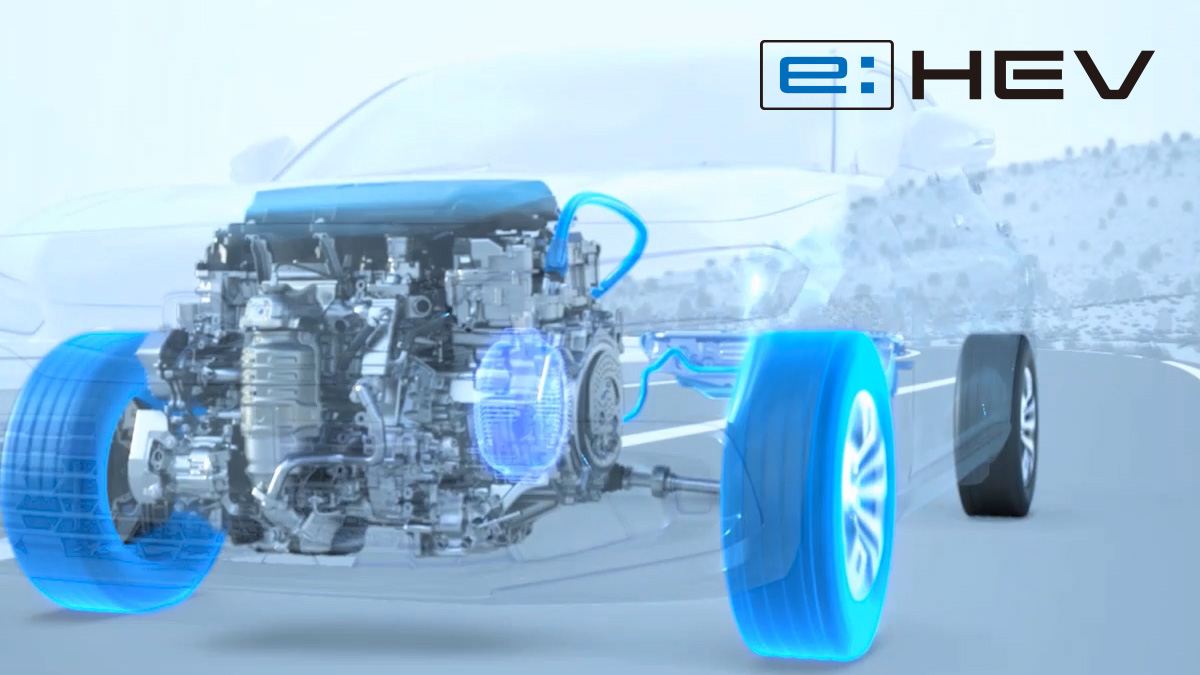
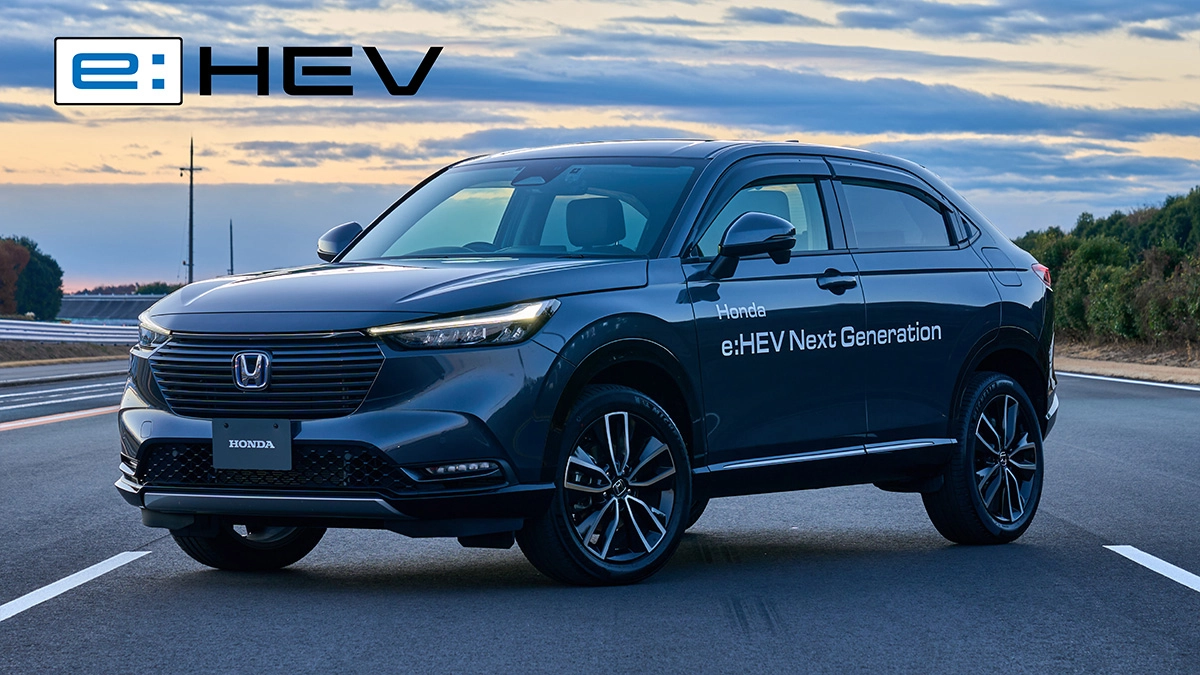
In vehicles powered by Honda’s innovative e:HEV hybrid system, too, Active Sound Control combines with Linear Shift Control—a feature realizing rhythmical engine speed control like with a stepped transmission—and Honda S+ Shift—technology that accentuates the unity between driver and car with sharp gear shifting—to produce the exhilarating sound of a vehicle with a high-performance engine.
Synchronization of Sound Control with Engine Speed
Active Sound Control delivers sound through audio speakers, adjusting the quality of the sound by adding harmonic tones synchronized with the engine speed. The volume of the sound is determined by the way the driver drives and the state of the vehicle in motion. The system achieves a high-quality sound by using the original engine sound, smoothing out the otherwise fluctuating sound pressure and supplementing the sound according to the individual characteristics of the car and the driving mode.
Active Sound Control System Configuration

*Quantities and locations of microphones and speakers vary according to the vehicle model and features.
Effects on Sound

Pursuing Realistic Sound to Enhance the Sense of Unity Between Driver and Car
Honda strives for its characteristic brisk and expansive engine sound that makes you want to rev it into the high rpm range. Working with the sound of the car’s actual engine, a realistic, satisfying sound is crafted to match the driving scenario.
Tone
Engine sound consists of a frequency synchronized with engine speed, as well as multiples of that frequency (harmonic tones). In the case of a 4-cylinder engine, the sound contains many even-order harmonics—a second-order frequency that is twice the frequency of the engine sound, or a fourth-order frequency that is four times the engine sound frequency. The balance determines the tone characteristics. Active Sound Control adjusts the harmonic tones according to the vehicle’s individual characteristics. Emphasis on low harmonic tones is used to produce a powerful exhaust sound. High harmonic tones are added to produce the high revving sound of a high-output naturally aspirated engine. The variety of tone expression is diverse.
Directivity
In a front-engine, front-wheel-drive (FF) vehicle, the engine is installed in the front of the vehicle. Occupants therefore hear the engine sound coming from the front and exhaust sound coming from the rear. Speakers, however, are usually located on either side of the occupants, for example in the doors. Engine sound delivered in the same way as music playback sounds unnatural. Honda adjusts the harmonic tones using the property of sound whereby directivity changes with the frequency, while also optimizing the output level for each speaker. Emphasis is placed on spatial positioning of sound to ensure that engine sound components and exhaust sound components come across as natural.
Synchronization with Vehicle Behavior
The sound produced by a vehicle is not only uplifting, but it also plays a vital role in providing information enabling accurate driving control. Every effort is therefore made to match the sound to the vehicle’s behavior using Active Sound Control. Emphasis is on delivering feedback from the driver’s driving, for example in the sound level, the tone, or the timing. Honda strives for an integrated sound in various driving scenarios, for example through synchronization with accelerator pedal position and the rpm rise rate, the onset of sound during throttle blipping, and smooth, sustained acceleration when switching to acceleration from deceleration.* Adjustments are made according to the development stage of the vehicle. Sound is crafted to match a driving experience that evolves and matures.
*Sound rendering varies according to the vehicle model and features.
Improved Actual Engine Sound
The base sound is the mechanical sound of the actual engine. If this sound is not ideal, the rendered sound will not have the full effect. Every effort was therefore made to reduce noise. This included strengthening the engine block and crankshaft, and tuning the transmission characteristics of the engine mount. Active Sound Control puts the finishing touch on the already superb sound of the engine to realize an immensely uplifting and satisfying sound.