
Turning “Feel” into Data
—Honda’s Technology-Driven Challenge to Create a New Kind of Training for Wheelchair Track & Field
At what angle did you apply force to the push rings?
How balanced was the push between left and right?
In the middle of a race—were you truly “pushing well”?
For many years, training in wheelchair track and field has relied largely on athletes’ own sensations and coaches’ experience.
Now, a new perspective is emerging through Honda’s Push Power Measurement Wheel System*.
This technology has only just begun reaching competitive venues through a rental program.
In this article, we share the background behind the system and the changes already taking place on the ground, based on on-site coverage of a push power measurement session held in November 2025, the day after the 44th Oita International Wheelchair Marathon, at J:LEASE Stadium (Oita City).
* The Push Power Measurement Wheel System is a tool that quantifies and visualizes the power generated by a racing wheelchair. It enables objective analysis of driving data such as left-right imbalances as well as acceleration and deceleration behavior. In doing so, it allows characteristics of technique and form—previously understood only through “feel”—to be grasped through data.
1. Launching the Rental Program for the Push Power Measurement Wheel System—Technology That Visualizes
the “Power” We Couldn’t See, Supporting the Growth of Wheelchair Track & Field
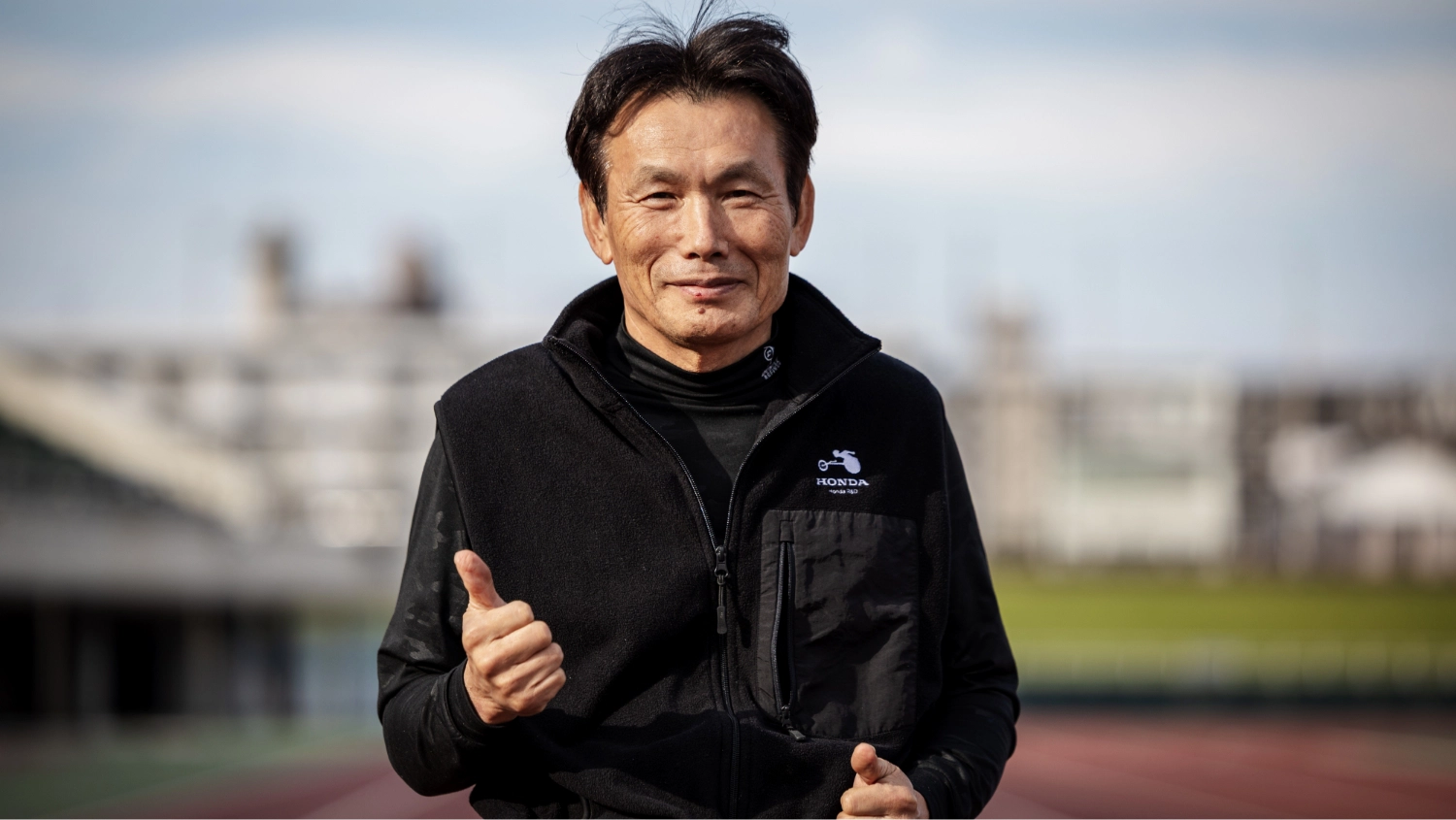
Yasushi Ikeuchi, an engineer at Honda R&D, has been leading this project while also developing racing wheelchairs. One of the themes he has consistently upheld is “advancing wheelchair track and field.”
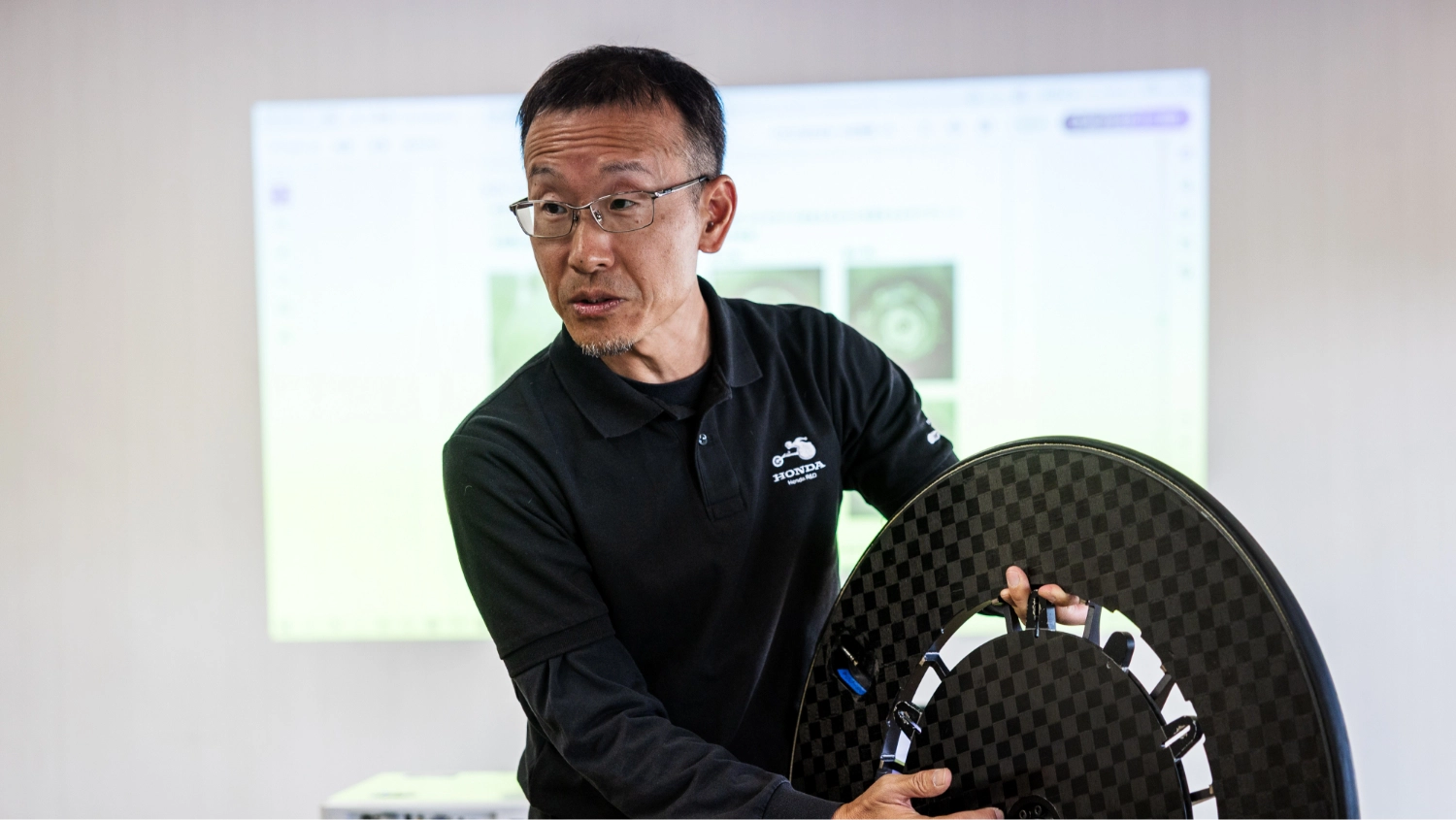
At the center of that effort is the visualization of push power.

By capturing the way force is applied—its magnitude and direction—as data, you begin to see each athlete’s unique tendencies and habits. I believe that’s where the hints to evolve training are found.
When needed, where needed
Athletes each have their own “moments they want to measure”—during training camps, around major competitions, and more. Rather than asking them to come to a research facility, Ikeuchi wanted to turn the training site itself into the measurement site.
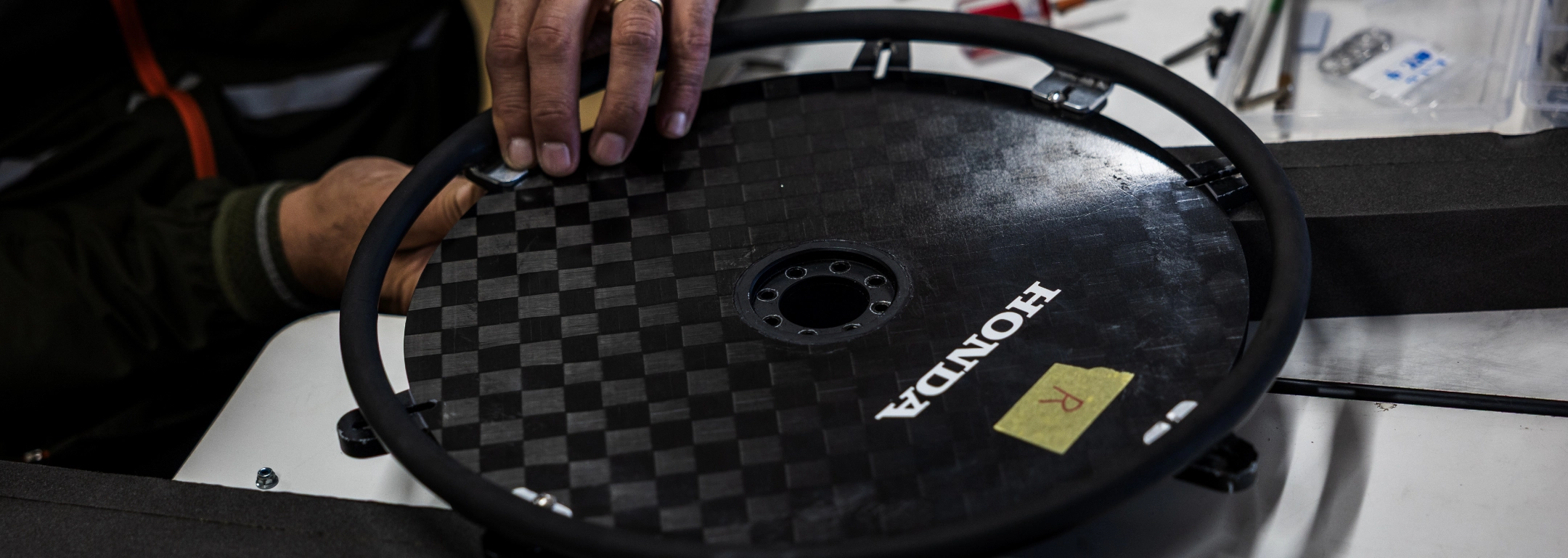
The Push Power Measurement Wheel System works by mounting sensor-equipped measurement wheels onto a racing wheelchair, allowing direct measurement of the force applied to the push ring (the ring attached to the outside of a wheelchair wheel that athletes push by hand) while in motion. By attaching their own push rings to these wheels and installing them on their wheelchairs, athletes can measure and proceed all the way to data analysis.
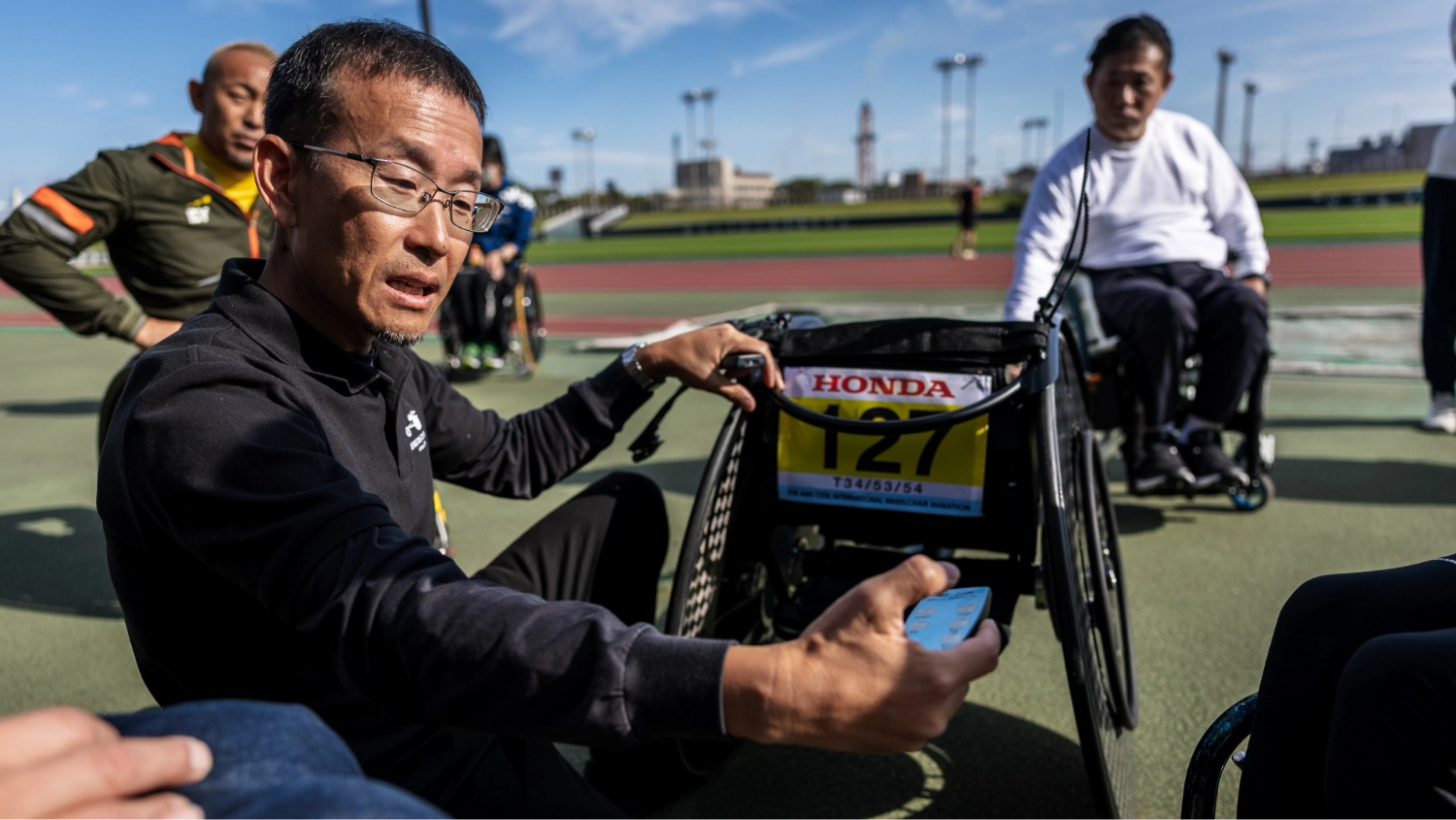
Without requiring large-scale setups such as multiple cameras or lab facilities, the system can capture precise movement using the wheel alone—an approach made possible by Honda’s engineering.
We’ve always prioritized making it easy to measure in an athlete’s usual training environment.
2. From the Measurement Session—When “Feel” Becomes Visible Through Data
Measure in Real Runs, Review on the Spot
At the session, athletes mounted the Push Power Measurement Wheels onto the wheelchairs they normally use, and also swapped to the push rings they use every day before running on the track.
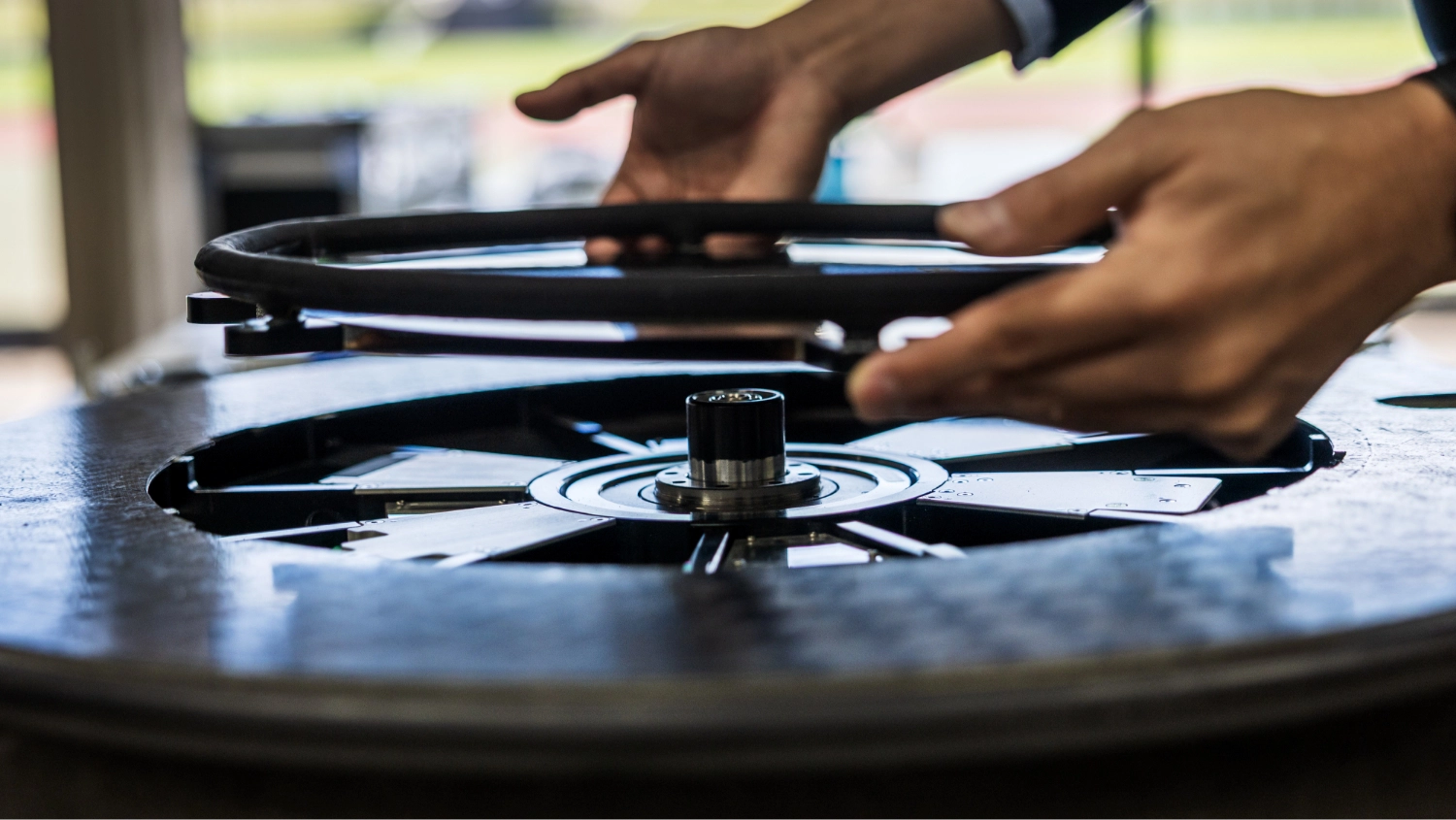
There is no need to switch to special measurement push rings. Being able to run in your usual setup with your usual feel is one of the key reasons the system can capture data that is so close to real-world performance.
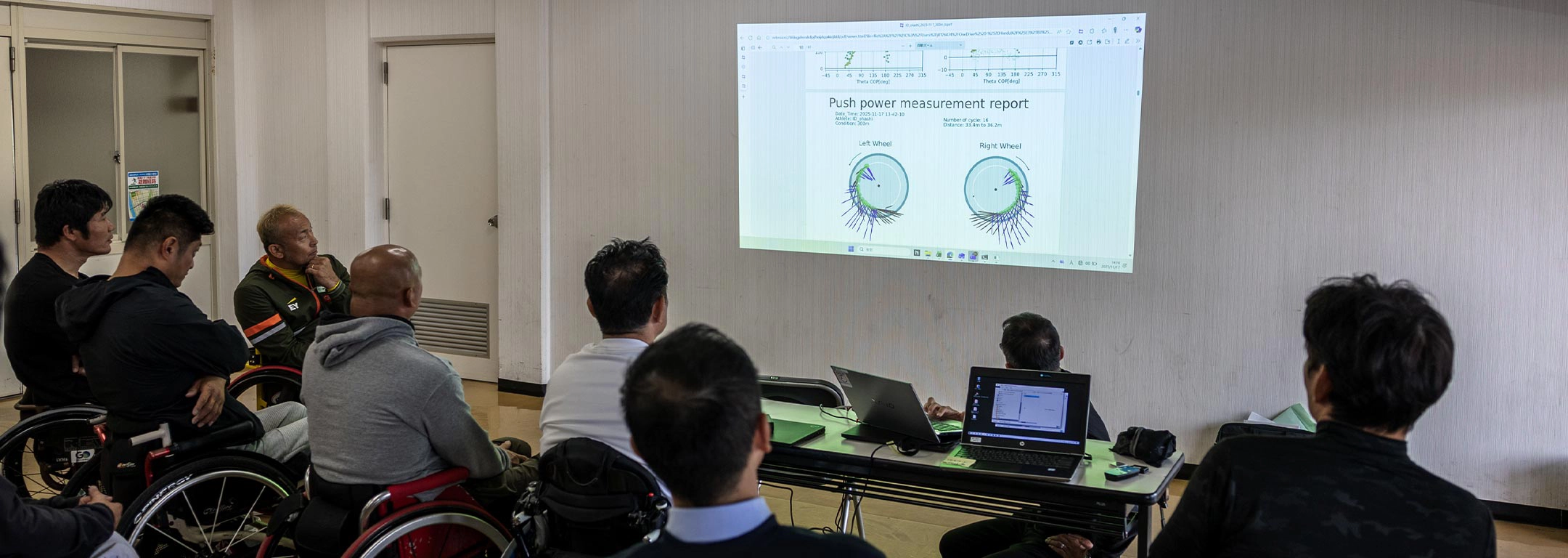
Immediately after a run, data from the wheels and waveforms are downloaded, and the numerical values are reviewed on a computer. Athletes, coaches, and other participants naturally gather around the screen—and conversation begins.
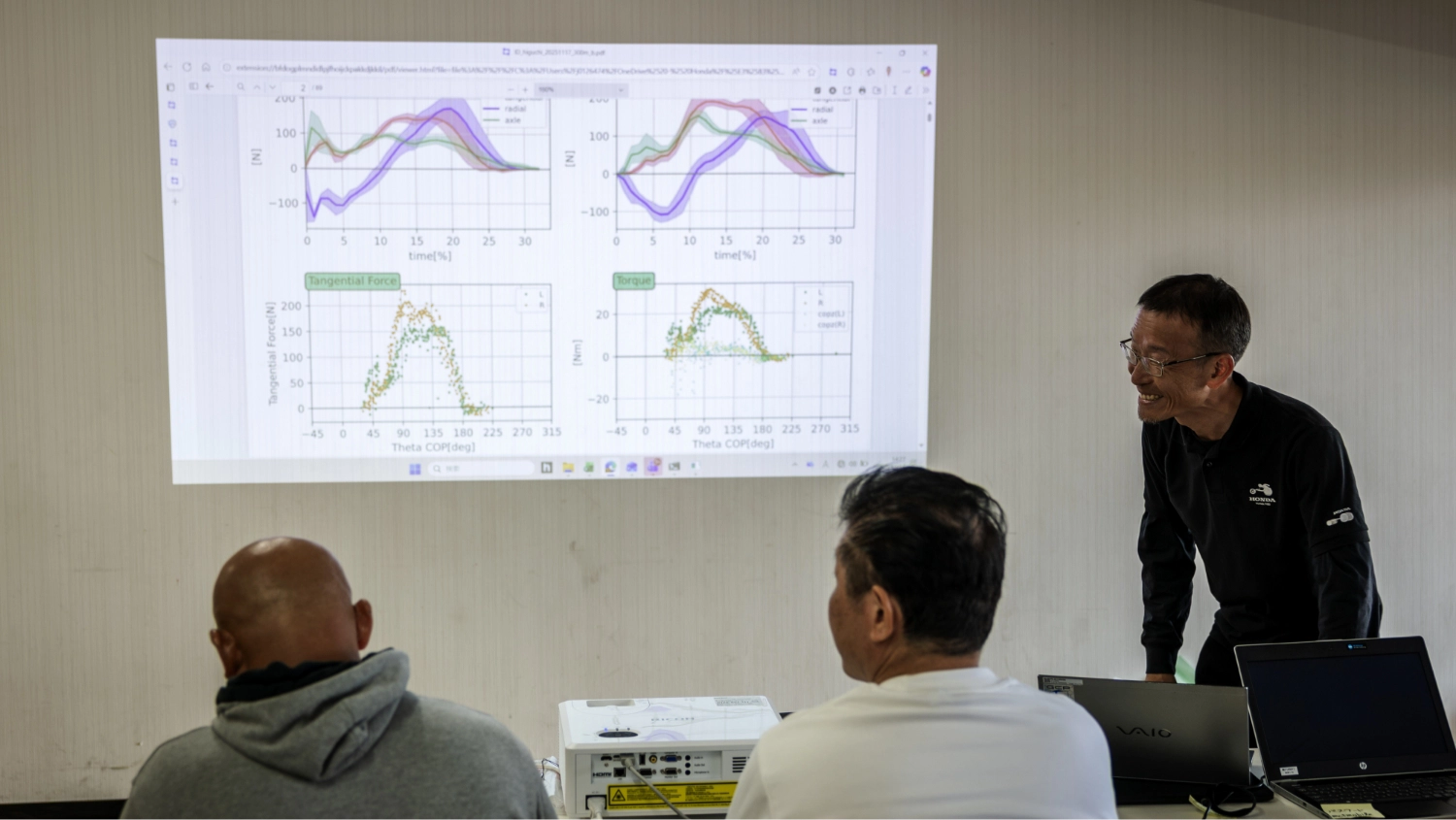
The Value of “Confirming” What an Athlete Feels
Masayuki Higuchi, an active athlete who also serves on the High Performance Committee of the Japan Para Athletics Federation, describes it this way:

What you see in someone’s form and what’s actually happening in terms of force on the push ring can be surprisingly different. But when you look at it in numbers, you can immediately tell, “Ah—this is where I’m losing power.” And because you can measure with your usual push rings, it’s easier to connect sensation with the data.
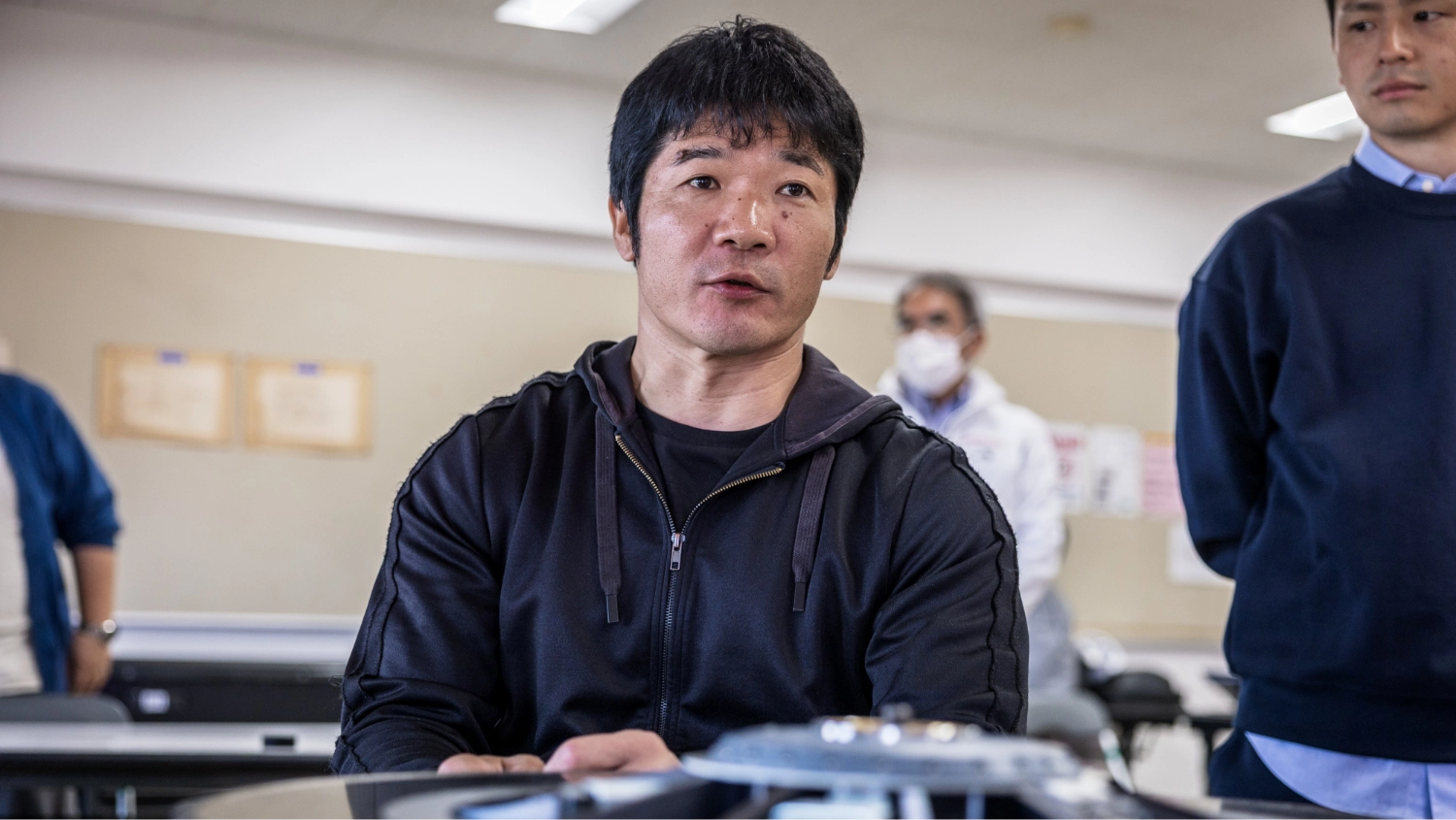
When I work on technical training, one baseline I use is how effectively I’m converting ground reaction force and wheel rebound into speed. It’s similar to how runners receive ground reaction force through their legs—but in wheelchair track, you have to receive it through a thin, rotating push ring at a very pinpoint moment. It’s a movement that lasts less than even 0.1 seconds. With the data, I was able to confirm that, in that instant, I was really using the ground reaction force properly and knowing that my sensations matched the actual data—that was huge.
Atsuro Kobata (Dentsu Digital), who also participated, recalls his first impression after looking at the data:
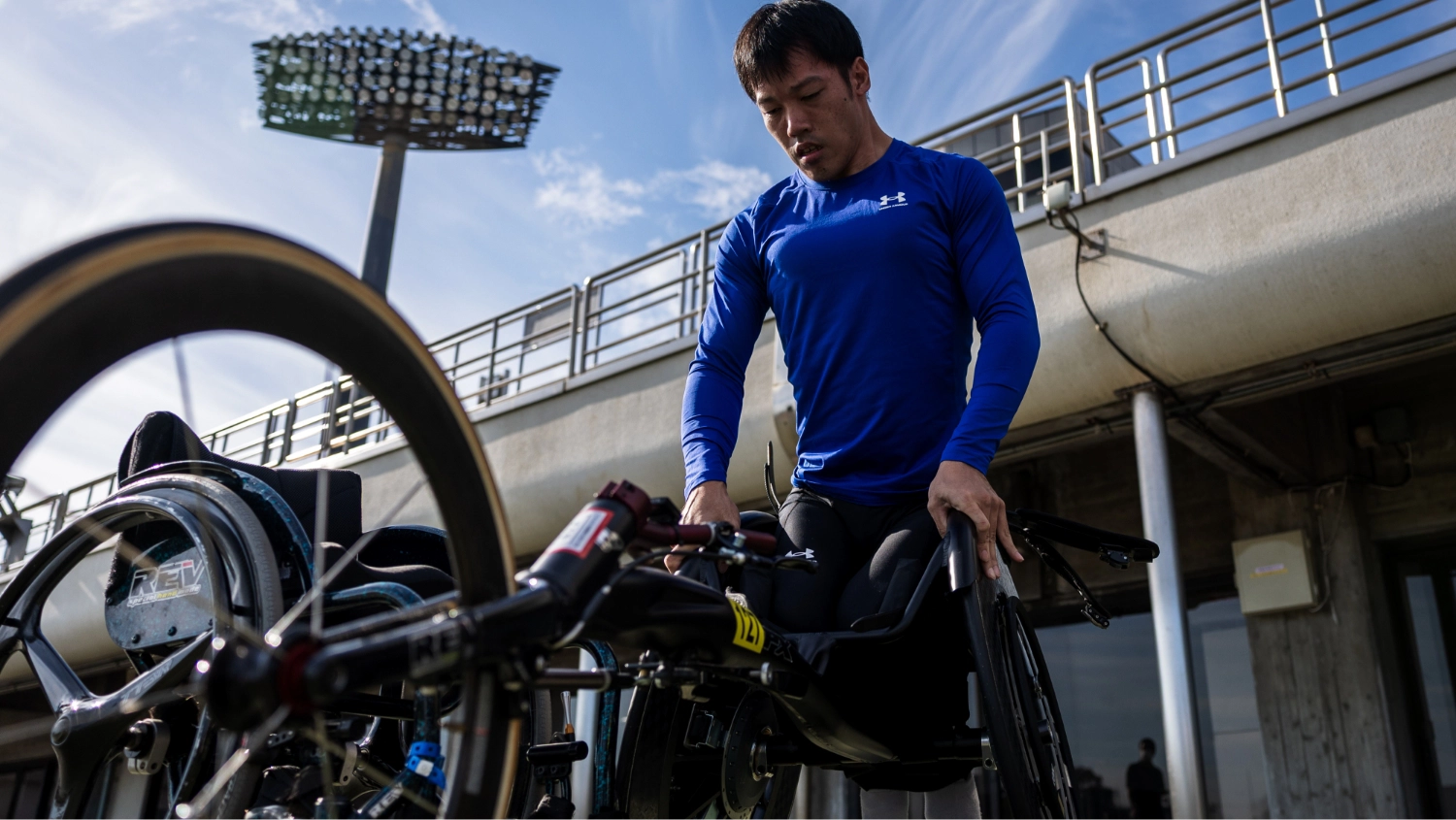

I’m right-handed, so I’ve always felt my left side is a bit harder to use. Because of that, I intentionally try to use my left more strongly so I can go straight. And the data clearly reflected that—so I could confirm, “Ah, I’m doing what I think I’m doing. ”On the other hand, I thought I was gripping the push ring and applying force until it reached the very bottom—but it was surprising to see that torque wasn’t really being applied during the latter half of my contact time. That made me realize I could release earlier, generate about the same power, and push more efficiently.
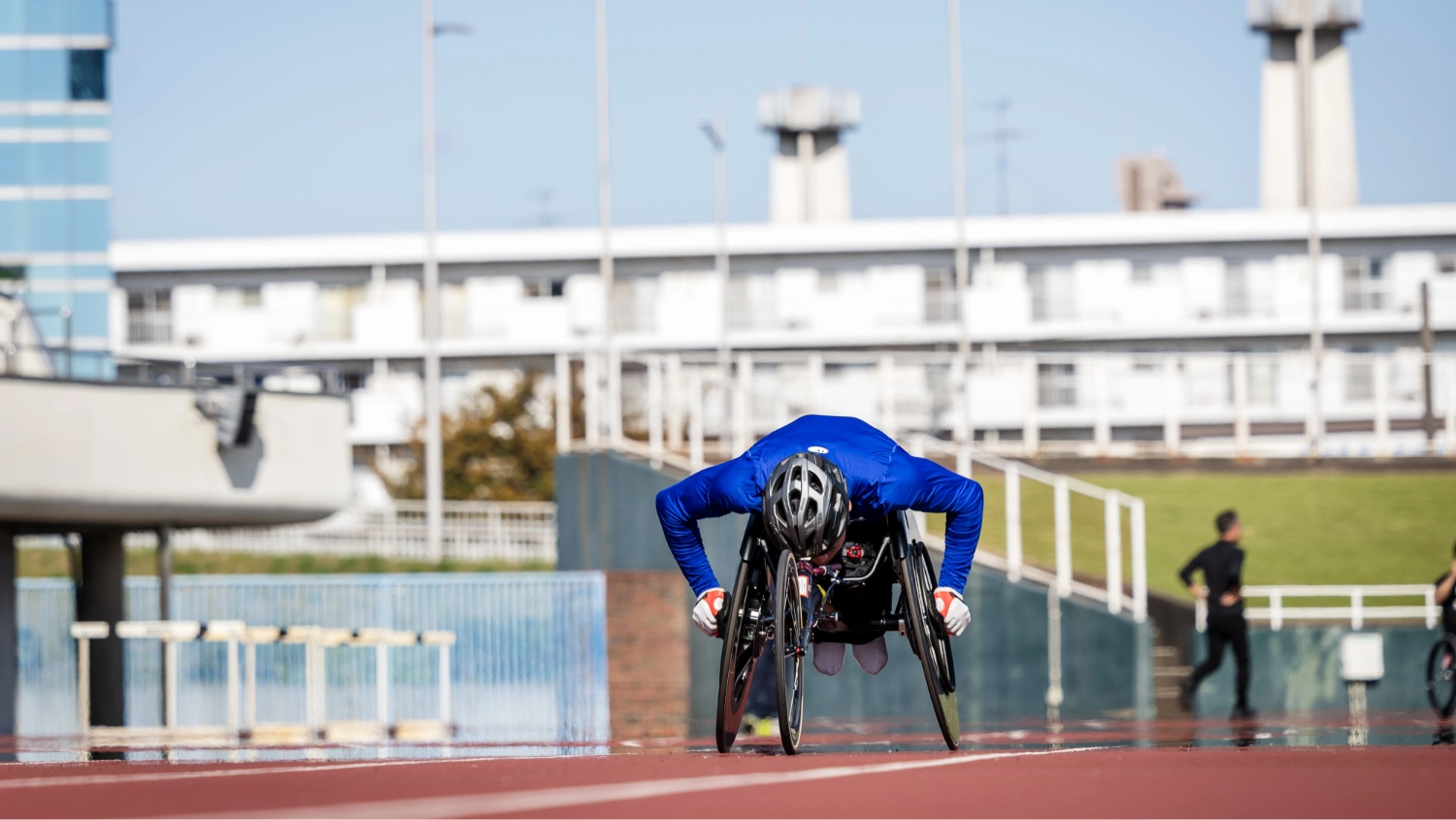
I’ve used measurement devices before—very heavy ones, or even systems that measured only on a disc surface without tires—and they felt somewhat different from real driving. With this system, you can mount it on your chair you normally use and measure under conditions very close to actual running. That’s what I think is really great.
“Finding Your Own Baseline”
Jun Hiromichi, a professional wheelchair athlete with many years in the sport, speaks candidly about how his impression of the technology has evolved:
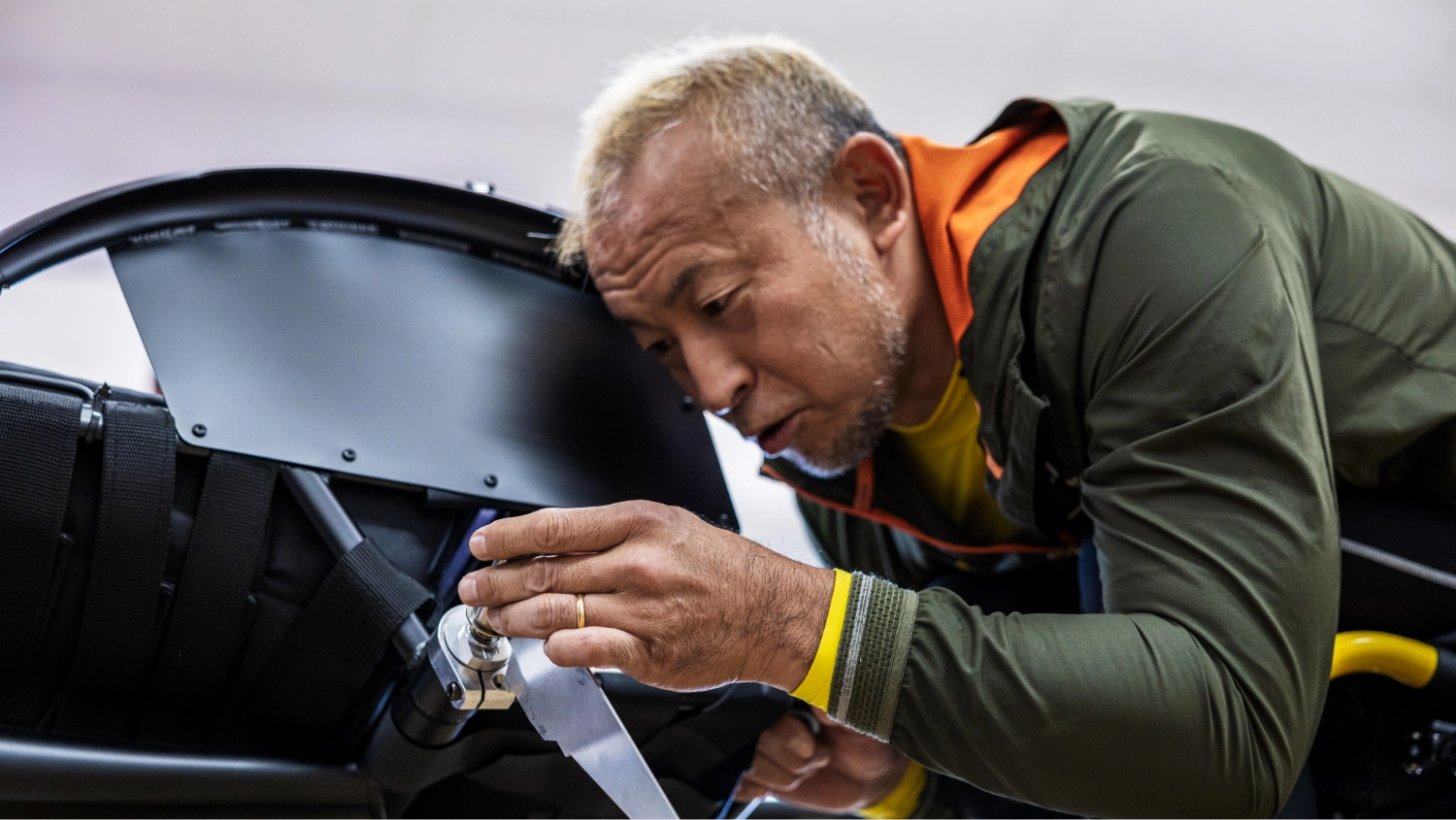
even when you compare athletes, everyone is different. Even among the fastest athletes, form and hand use vary widely. So it’s not about saying “this is correct.” It’s about finding what works for you—how you increase speed, how you sustain endurance—and using the data to discover that. Positioning, style, cadence—everything differs. It also changes drastically depending on an athlete’s type and degree of impairment. So the key is how you make it your own. Sometimes an athlete with “beautiful” form looks fast—but another athlete, with a very asymmetrical pattern, is even faster. In that environment, the ability to find your own baseline—your own standard—that’s what this measurement system enables.
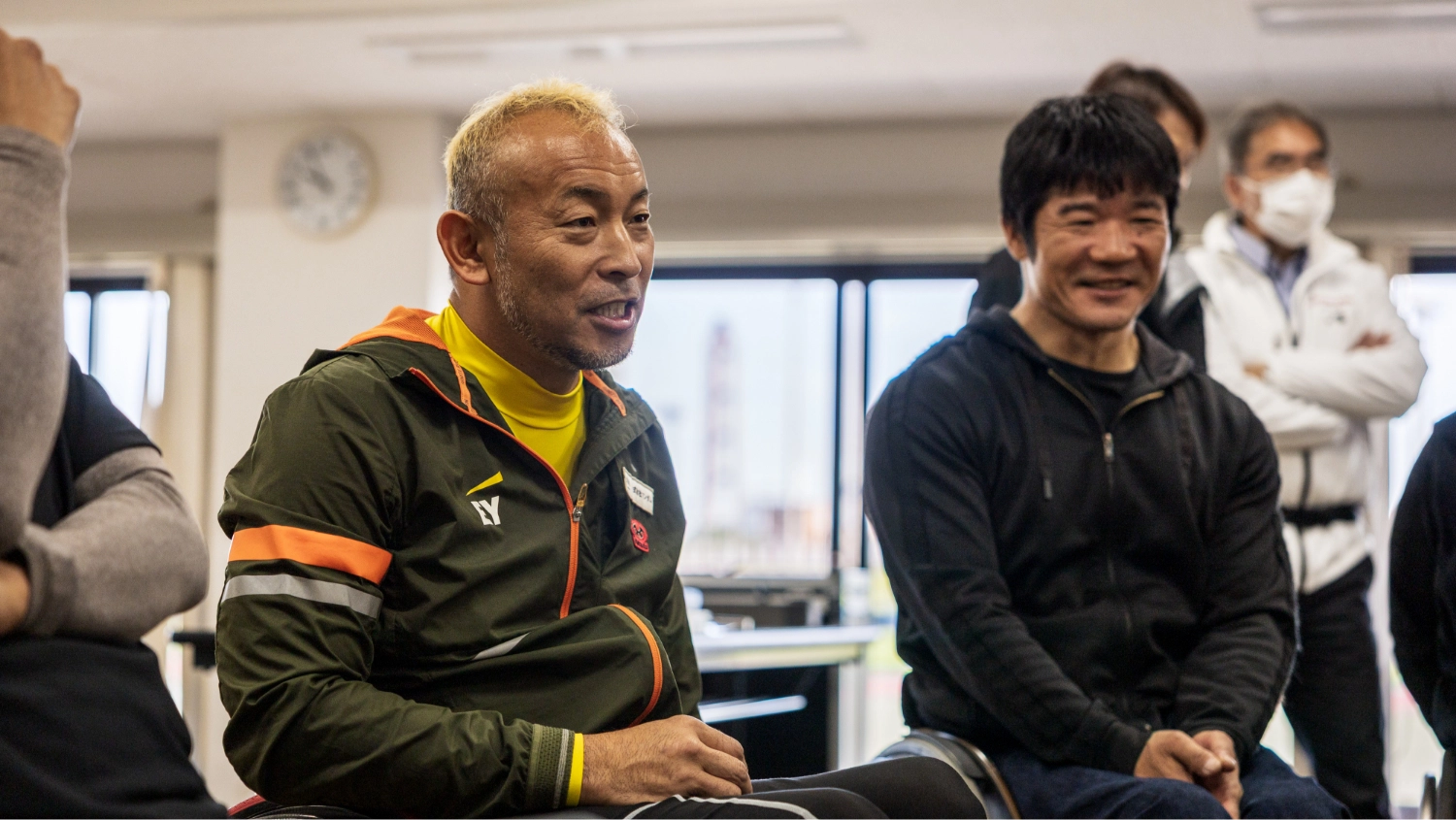
we’ve done motion analysis a few times before, but honestly, it often ended at “We gathered the data—so what do we do with it?” That’s been the reality of the wheelchair track in Japan. Ideally, we should properly capture data from the world’s top athletes and analyze what’s different—where the gaps are and what they mean in actual driving. If we can get to that level of analysis and it leads to a future where a Japanese athlete can surpass Marcel’s record (Marcel Hug of Switzerland), that would be incredible.
“The Insights Data Creates”
Mikito Hikosaka, a researcher at the Research Institute of the National Rehabilitation Center for Persons with Disabilities and a specialist in motion analysis of competitive wheelchairs, also joined the session.


There is significant value in measuring with the wheels alone and then checking the data immediately afterward, while the sensation is still fresh. But we can’t just look at waveforms and numbers and stop there—we need to translate them back into the sport. In other words, we have to turn them into something that can be used for performance and training.
This data doesn’t tell you “this is the correct answer.” Rather than simply looking at left-right differences as numbers, what matters is thinking about why those differences appear. How do we bridge athletes and coaches with engineers and researchers who can interpret the data? That’s a difficult area—but it’s also the most important one. I want to keep learning myself and move forward together with the field.
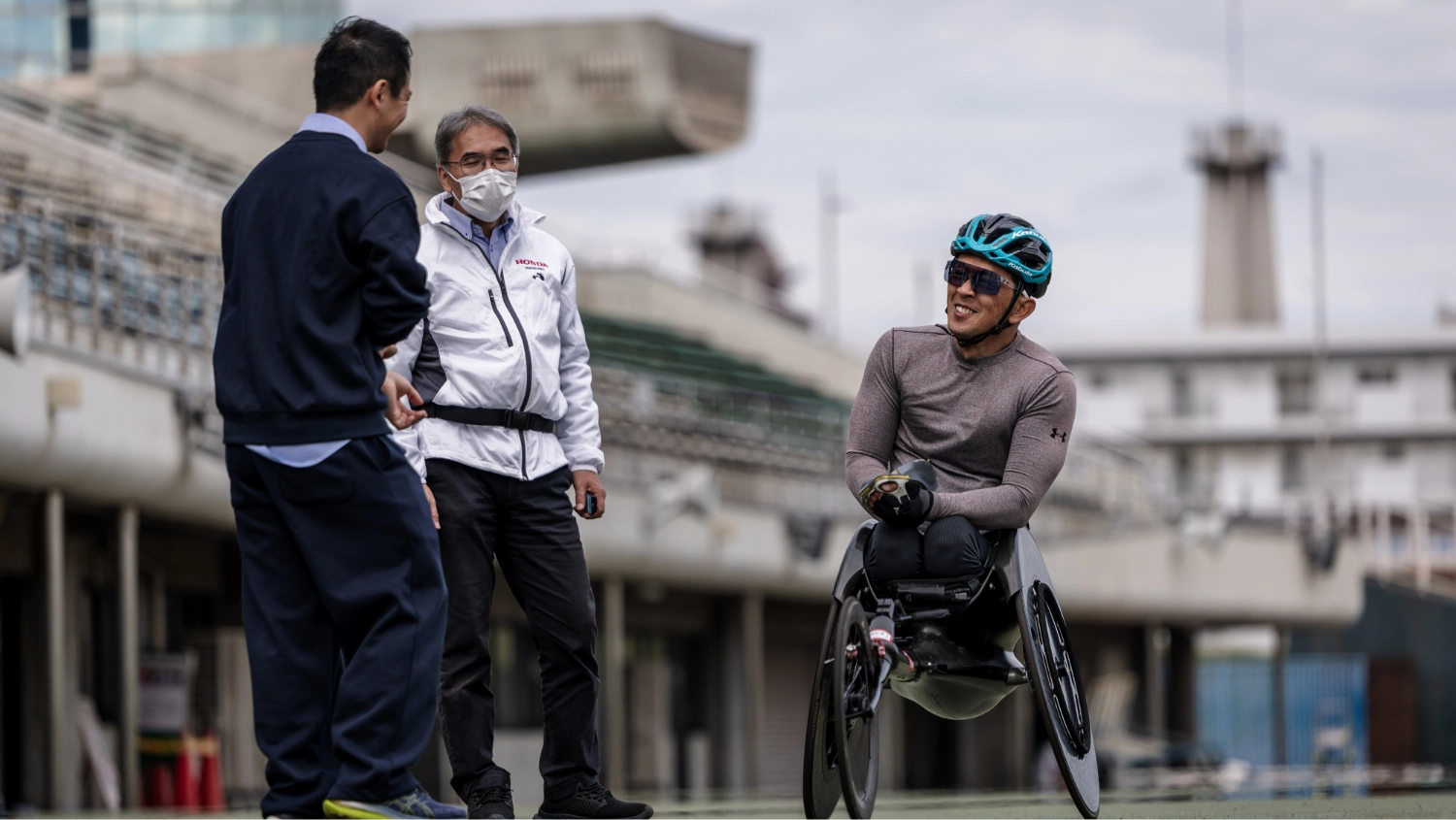
There are limits to what we can say unless we have a reference population—data from other athletes at the same competitive level, or data from athletes in different classes. That’s why, going forward, we need to think carefully about the design as well:- Under what conditions should we measure?- Which levels of athletes should we target as we gather data? If we build that with intention, it should lead directly to improved competitiveness in wheelchair track and field.
* Because measurement data constitutes personal information, Honda does not collect data obtained at rental sites.
Technology Only Has Meaning in Practice
Yukifumi Yamamoto, a pioneer of wheelchair track in Japan and an active athlete who collaborated with Honda R&D through joint research and provided extensive advice during development, reflects on the project:

What matters most is being able to measure practical elements in real running. That’s why I’ve been involved from the start. The ideal we’ve always imagined is having people gather, measure together, and discuss while looking at the data—so this is deeply moving. Getting here took countless rounds of trial and error.
Not letting the technology end as research—understanding how it will be used and understood within the competitive timeline of the sport. That perspective has been central throughout.
If coaches can understand “this is efficient” and “this is what it means,” and athletes can understand it too, only then will it lead to improvement and growth. I hope what people felt and noticed today will be shared with other athletes and coaches as well.
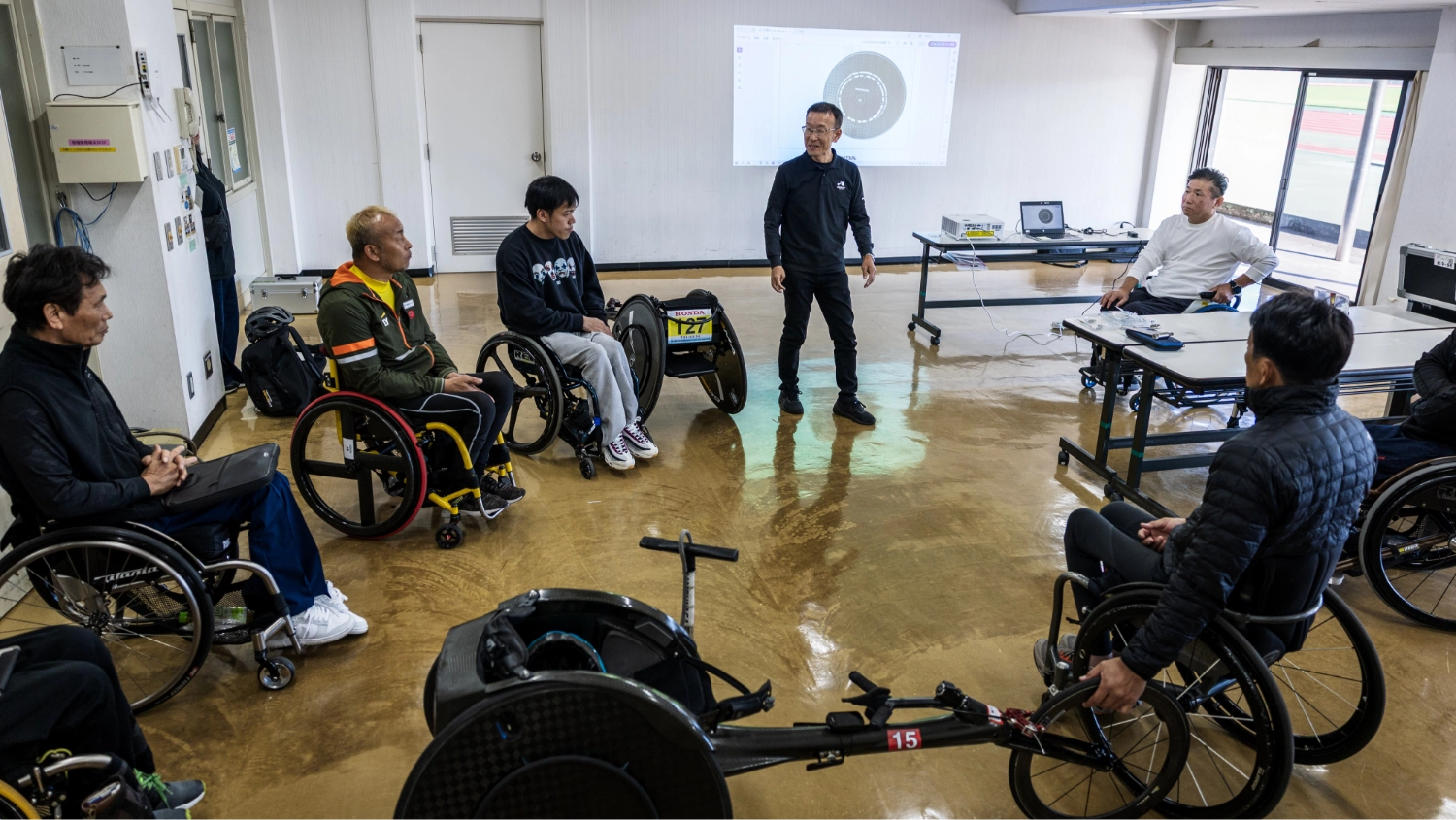
Technology Only Has Meaning in Practice. The team envisions a future where this initiative spreads, Japan’s records are updated, and the overall level of the sport rises with it.
I don’t think this is the finished form. This is the first step. From here, I hope we can keep listening to voices from the field and continue watching together how it will be used.
3. Toward the Future of Wheelchair Track & Field—Technology Exists Not to Produce “Answers,” but to Create “Insights.”
Each athlete has different physical conditions, levels and types of impairment, style, and cadence. That is precisely why the goal is not to trace someone else’s “correctness,” but to discover what fits you. Describing the starting point of this technology, Ikeuchi said:
By capturing it as data, you begin to see each athlete’s individuality and habits. That’s where the hints to evolve training are found. The Push Power Measurement Wheel System is not a technology designed to present “the correct answer.” It doesn’t deny sensation, and it doesn’t replace coaching. What it creates is insight.
Why is a loss occurring at this time? Why does left-right imbalance appear? Is that difference something that should be corrected—or is it individuality?
Athletes and coaches move back and forth between sensation and data, deepening their dialogue. That process itself guides training in a better direction. Between what the eye perceives and what is actually happening, there is always some degree of “gap” between the subjective and the objective. Data becomes a powerful tool for filling that gap.
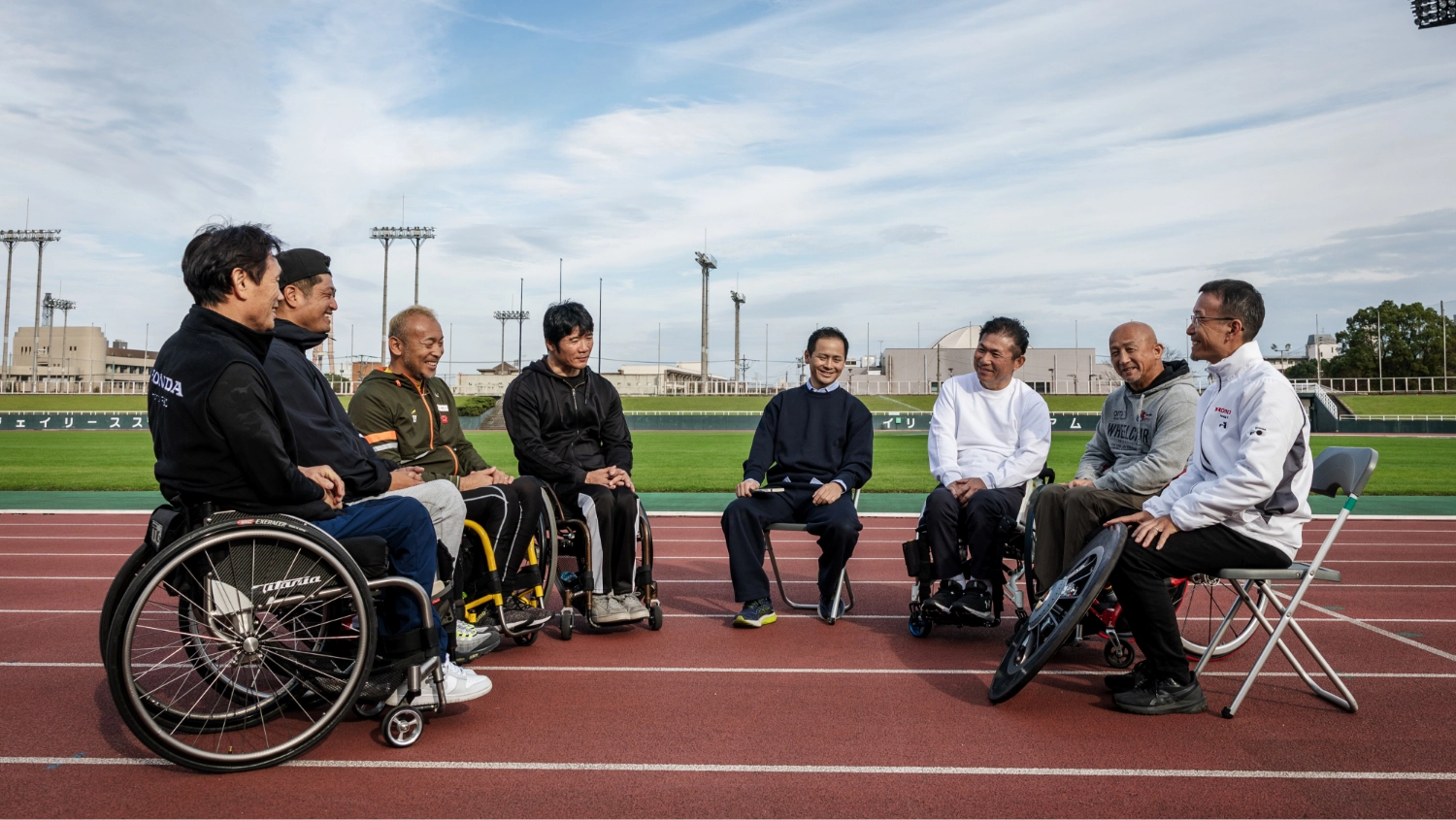
I think we’ve been able to create a baseline that can raise competitiveness further. From here, in addition to having more athletes learn about it, I feel it’s also important to increase the number of people who can “conduct measurements” and “interpret data.” Connecting sensation with the physical phenomena actually occurring—matching those two as closely as possible. That’s what this measurement helps support. Words tend to become subjective, but when we can explain things quantitatively, both the person teaching and the person learning can be convinced and move forward. In that sense, I believe it has great significance.
Technology—for people.
The Push Power Measurement Wheel System is now beginning to create new dialogue in wheelchair track and field, in a form open to many people. It is not technology imposed from above—it is technology that helps each person face their own driving. Honda will continue to support the creation of these “insights” in the field.
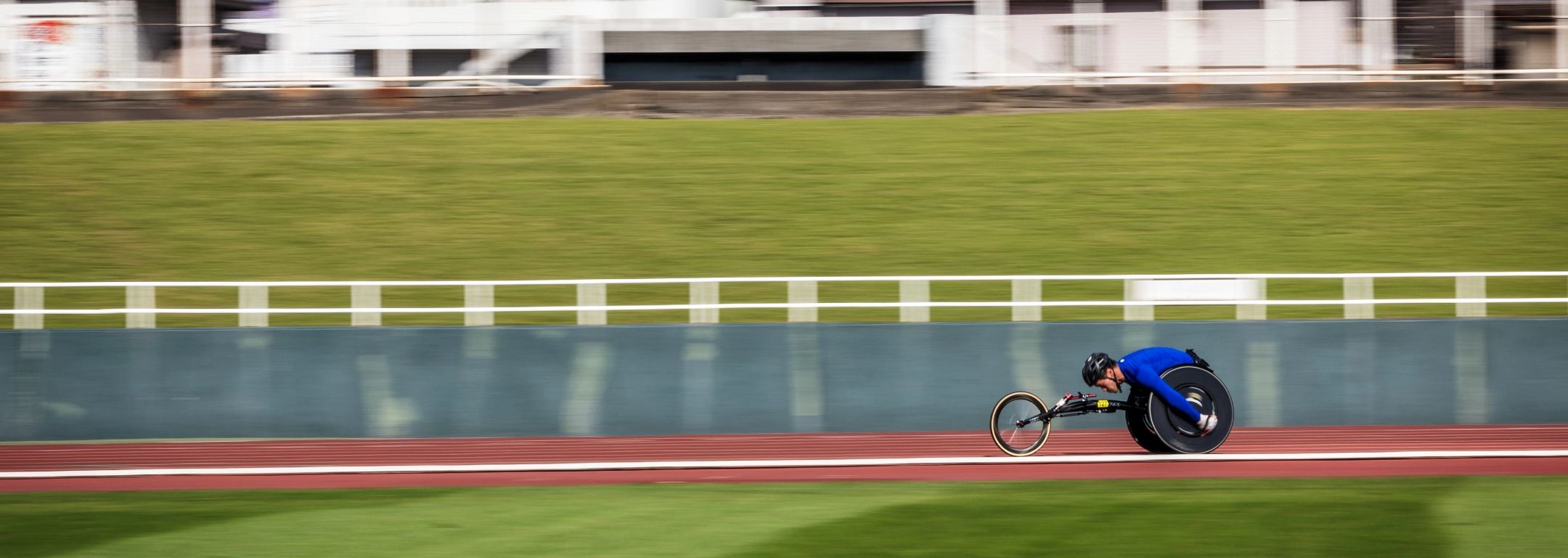
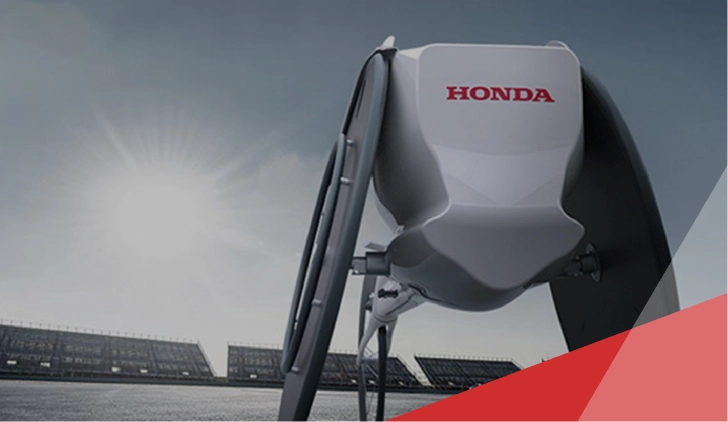

Beyond improving the wheelchair itself, Ikeuchi has long believed that building a scientific training environment is essential to the sport’s progress.