Japan
Children's Idea Contest
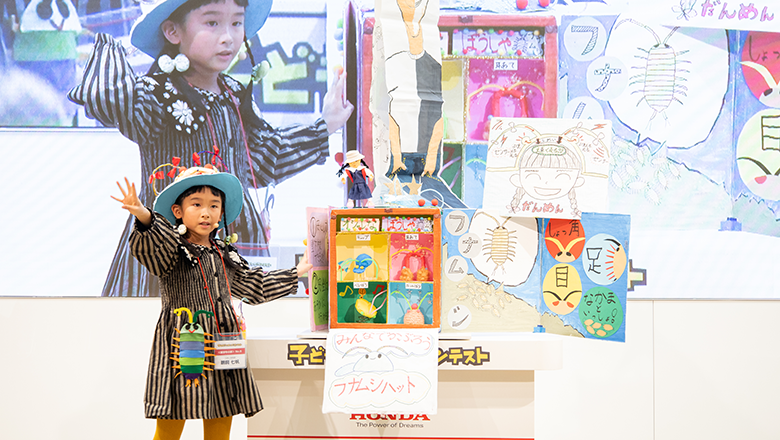
The Children's Idea Contest is Honda’s learning activity aimed at fostering the qualities and abilities that children will need to survive in the future world filled with uncertainty through the course of envisioning their dreams and experiencing the importance and joy of creativity.
The contest that marked its 20th year in 2022 received a total of 8,250 entries that year. Over the past 20 years, a cumulative total of 83,000 entries have been submitted. For the past few years, the final review process had been carried out online to comply with the safety measures to prevent the spread of COVID 19 infections.
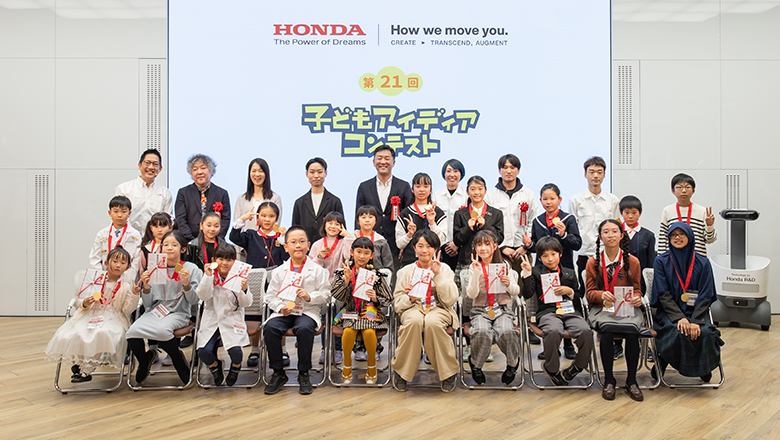
But in 2023, for the first time in three years, it was conducted in a face-to-face setting where all the children participating in the latest contest assembled with big smiles on their faces. To commemorate the 20th anniversary of this activity, Honda Motor Chairman Kuraishi also participated as one of the judges. The submitted ideas covered a wide range of themes from everyday challenges, contemporary trends like computers, robots and AI to social issues pertaining to nature and environment, as well as matters related to communication. The Children's Idea Contest also took place in Thailand and Vietnam, which led to drawing a grand total of over 9.8 million entries from both countries and Japan combined.
Honda believes that this contest provides a great opportunity to nurture the next generation of young people in each country where it is held.
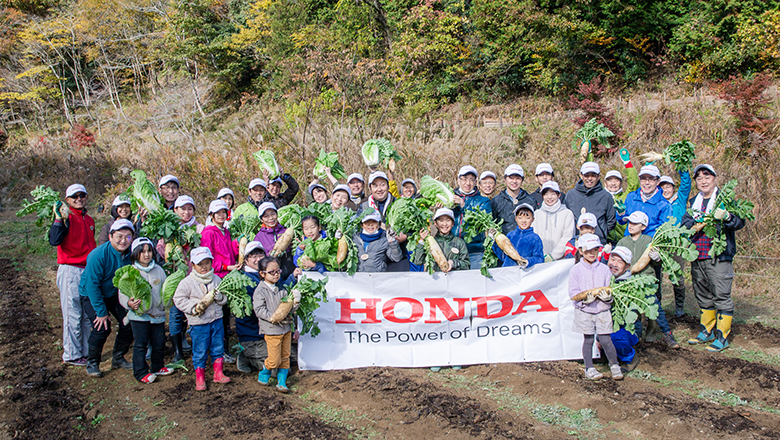
Activities to conserve Satoyama landscapes in the Kamikawa no Sato of Hachioji City, Tokyo
In addition to its ongoing forest conservation activities since 1999, Honda has concluded an activity agreement with Hachioji City, Tokyo since 2020 to conduct Satoyama landscape conservation activities in the Kamikawa no Sato Special Green Space Conservation District.
To preserve for the future this place with rich nature and rare plants and animals that can coexist with local communities, Honda is promoting efforts to contribute to the preservation of biodiversity. The efforts include rice cultivation, field cultivation, forest clearing, and tree planting by associates and their families, as well as environmental classes for children, who will be responsible for the next generation. In FY2024, a total of approximately 300 people participated in nine events during the year. The Company’s independent biodiversity survey conducted in this area identified three species of butterflies and six species of dragonflies listed in the Red Data Book of the Tokyo Metropolitan Government. The harvested rice and vegetables are donated to food banks in Hachioji City as part of efforts to help solve social problems.
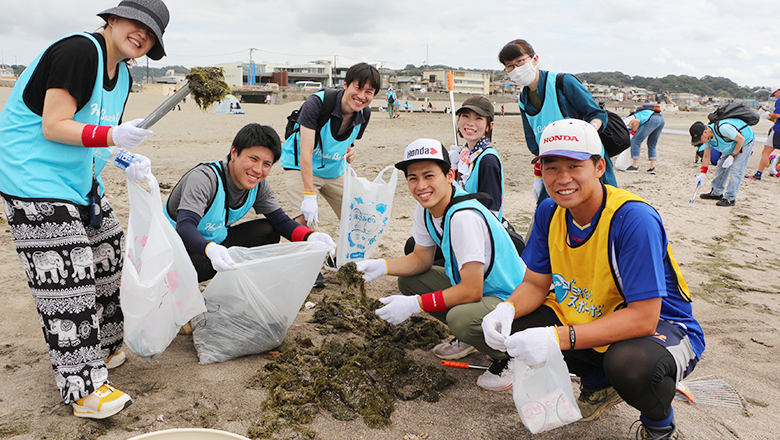
Honda Beach Cleanup Activity
In 2006, Honda launched the Honda Beach Cleanup Project, which was based on the desire to ensure that the next generation will be able to experience the joy of walking barefoot on sandy beaches. The project utilizes the Beach Cleaner, which Honda originally developed based on a desire to use its technologies to find a solution to clean the trash that ends up washed ashore.
In 2023, we marked the 17th year of this project. As 2023 also coincided with Honda's 75th anniversary, the company held its first Spo-GOMI event this year, which incorporated a sporting element into litter pick-up action, as a way of expressing its gratitude to the people of the local communities in which it has been operating. Along with the regular beach cleanup activities, this event was held for a total of 23 times in various locations throughout Japan.
Honda Beach Cleanup Activity, which started with Honda employees and alumni, has now grown into a major social contribution program with more than 7,000 participants per year as the circle of cooperation has expanded to include Honda Group companies and local communities nationwide. To date, a total of 429 activities have been held at beaches across Japan, and a total of 542 tons of litter has been collected.
Honda Develops "Digital Traffic Safety Karuta" for Children in Japan
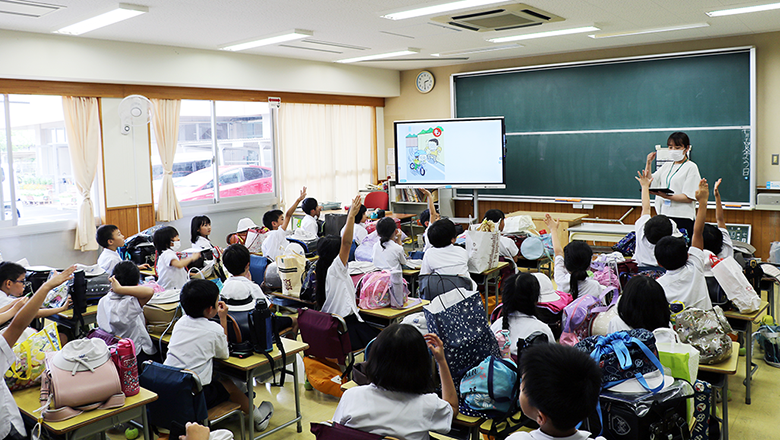
Honda conducted a study of the effectiveness of traffic safety education for elementary school students in Japan in changing children's behavior, and found that it was difficult to maintain the educational effects of limited opportunities for traffic safety classes alone. Based on this finding, Honda developed the “Digital Traffic Safety Karuta” using the contents of the earlier developed “Honda Traffic Safety Karuta”.
This educational material for elementary school students is designed to display karuta picture cards with an animation function on the screen and make children aware of the rules and manners that should be observed in various traffic situations represented by each card, and gain a correct understanding of safe traffic behaviors.
The study time per card is only about 2 minutes, making it easy for teachers to repeat the lesson in short periods of time, such as during morning or end-of-day meetings, and the number and combination of cards used can be freely adjusted according to the time allotted for each lesson.
Teachers who have actually used this teaching material have highly evaluated it, saying that in addition to the ease of using only a tablet to provide instruction, the daily use of this teaching material, even for a short period of time, has effectively led to increased awareness of traffic safety among children.
Support for Noto Peninsula Earthquake
Honda has contributed JPY 35 million in relief funds to the Noto Peninsula Earthquake that occurred in January 2024, in light of the current state of society-wide efforts to restore the affected areas.
Honda has also offered to provide JPY 15 million-worth of supplies, including generators and high-pressure cleaners.