2026.09.30
How to Make a Cherishable Companion. The Beauty of Creating a Product You Nurture, by Kojima Jeans and Honda.
2026.09.30
How to Make a Cherishable Companion. The Beauty of Creating a Product You Nurture, by Kojima Jeans and Honda.


Two industries that at first glance seem to never intersect. However, looking deeper, there was common point: carefully designed products that "adopt to and grow together with the lifestyle of the user." We visited Kojima in Kurashiki City, Okayama Prefecture—the birthplace of domestic denim—and pursued the passion and craftsmanship behind the unique collaboration between Honda and Kojima Jeans.
Monkey Pants And Monkey Bikes.
Even if the industries are different, there may be a deep connection in "craftsmanship."
Vehicles and clothes. How did the collaboration between Honda and Kojima Jeans, two companies from different industries, come about? We visited Kojima in Kurashiki City, Okayama Prefecture, which is famous throughout the country as the birthplace of domestic denim. "It really is a story that sounds like a joke," recalls Mr. Kume, Representative Director of Kojima Jeans.
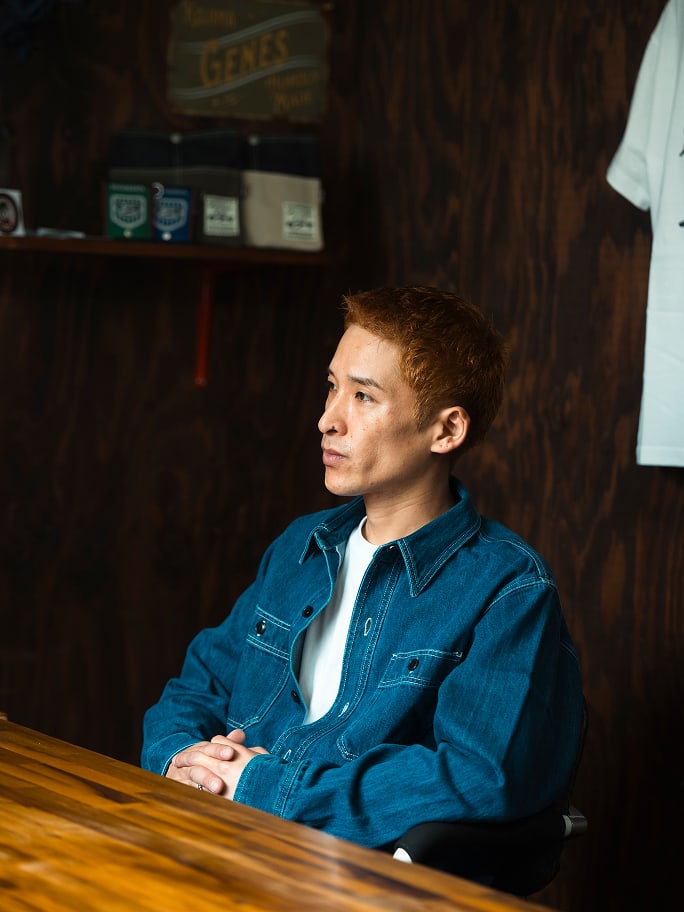
"We have always loved motorcycles, and it all started when we exhibited at a motorcycle show. One of our staple items is the Monkey Pants, a pair of two-tone fabric pants that are popular among bikers.
At the show, a representative of Honda came up to us and said, 'Honda also has a bike called Monkey. Wouldn't it be fun if these two collaborated?' and things moved quickly from there"
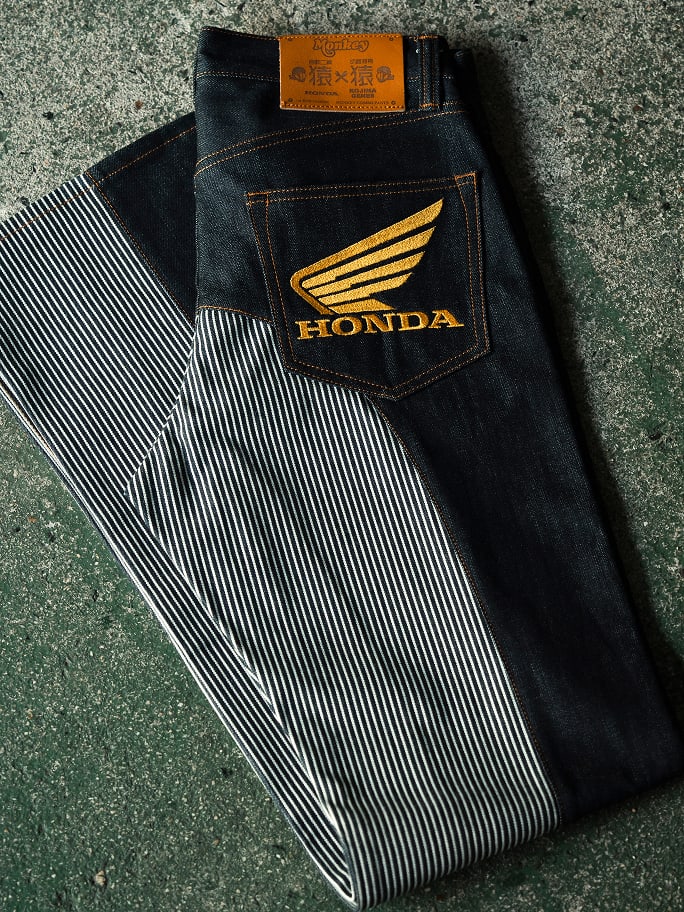
The common word "monkey" and the bottomless love for motorcycles that they both shared. What started as a coincidence quickly turned into a passionate collaboration.
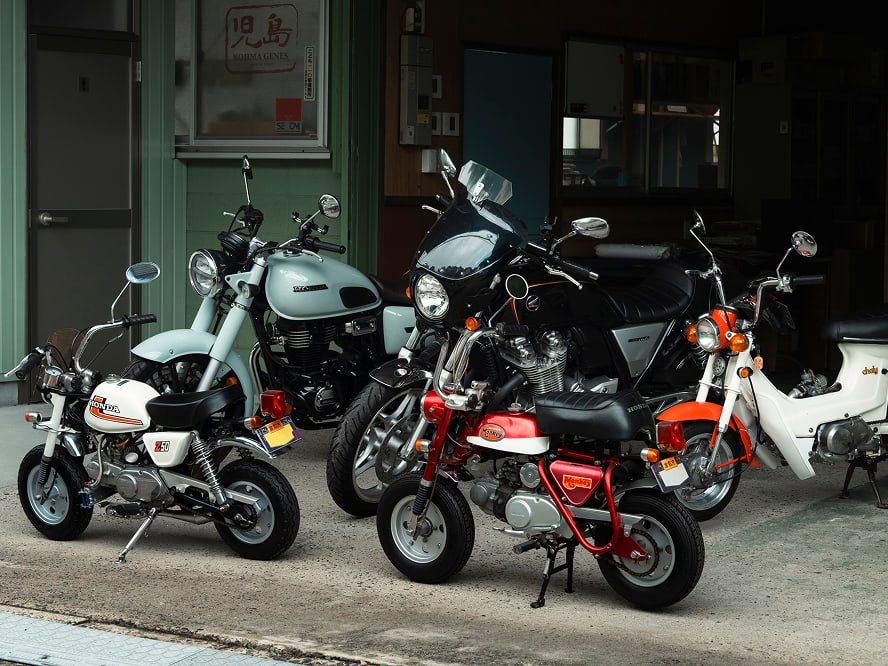
Both denim and motorcycles are "partners" that become engraved with your own unique character the more you wear them and ride them. We visited the creators of Kojima Jeans to go behind the scenes of the manufacturing process of these two fateful companies.
Dyeing the Thread: Rope Dyeing That Intentionally Leaves an "Incomplete" Appearance.
In Kojima, the town of denim, there is a division of labor in which a whole pair of jeans is made in collaboration with the surrounding areas. The first place we visited was the factory of Kuroki, a fabric manufacturer that creates denim fabric from thread. The fabric for Kojima Jeans is also produced here.
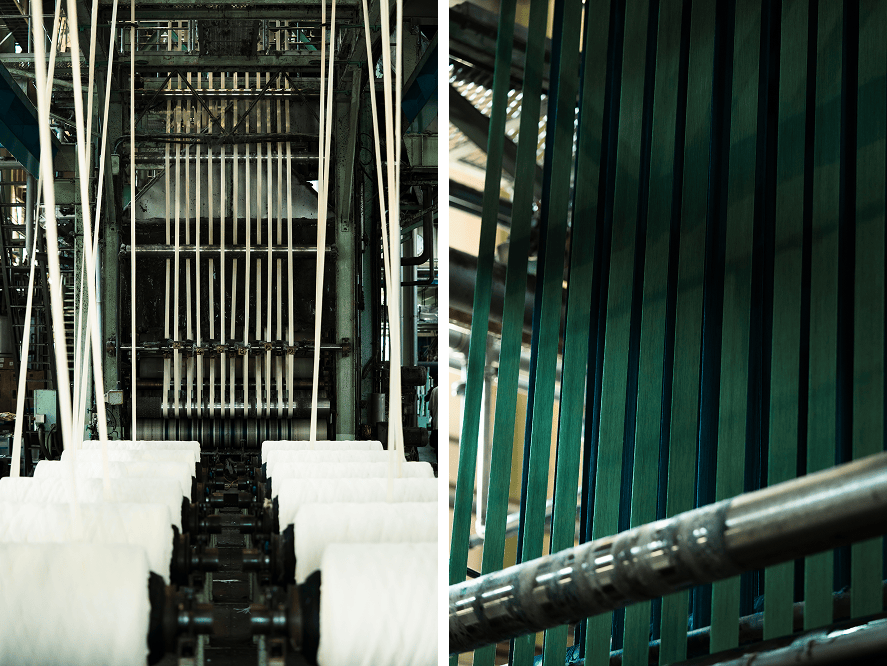
(Right) Threads being pulled up from the bottom to the top and being aired.
The warp threads used in denim are dyed through a process called "airing," in which bundled white threads are soaked in indigo dye many times and then pulled up to be exposed to air. At this time, how high should the thread be lifted and how long should it be in contact with the air? Controlling that time is the secret to determining color development and fixation. Kuroki's unique airing recipe, developed through years of research, produces a beautiful indigo color that even famous European high-end brands fall in love with.
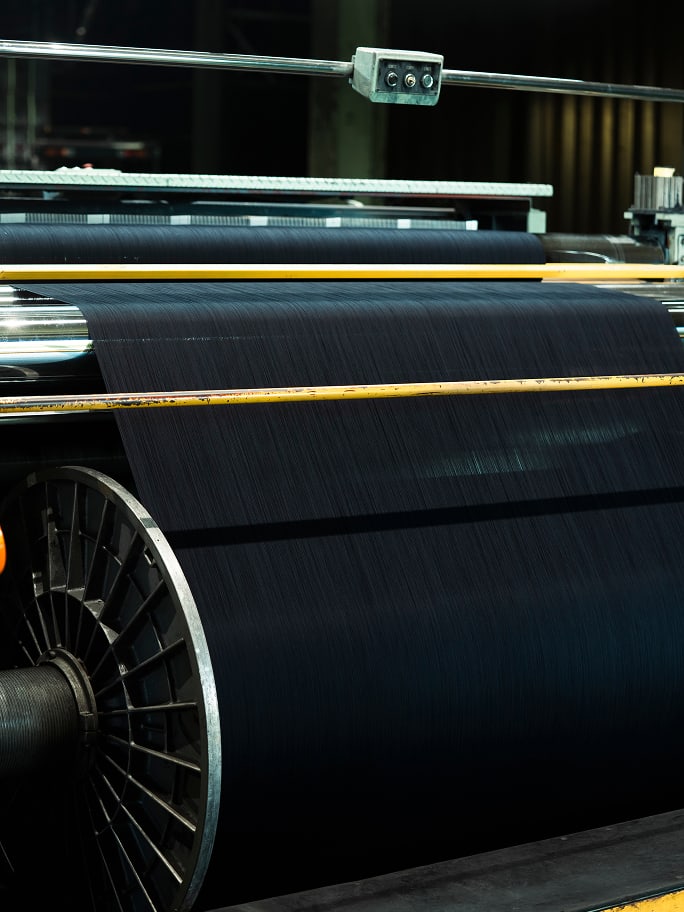
The most important thing is to create a state called "Chujiro," which does not dye the yarn all the way to the core, leaving a white center. When the blue surface wears off due to friction from wearing and washing, the white inside is exposed. This is the true nature of the three-dimensional aging called "atari" and "hige" that are unique to denim.
"Normally, beautiful clothes that don't fade are considered good quality. However, with denim, we deliberately focus on the inconvenience and uncontrollable color fading. It is precisely because of this 'aesthetic of the unfinished' that the drama of aging is born" (Mr. Kume)

Furthermore, in addition to using a unique indigo recipe, Kuroki carefully controls the water, which is the lifeblood of dyeing. The water used passes through several tanks, is decomposed by microorganisms, and is then neatly filtered and discharged into the river that reaches the Seto Inland Sea. In addition to the unique dyeing technology, Kuroki's commitment to minimizing environmental impact is one of the reasons why famous luxury brands around the world love them.
Weaving Fabric: A Craftsman in His 80s Listens to the Sound of the Breath of an "Old-Style Shuttle Loom."
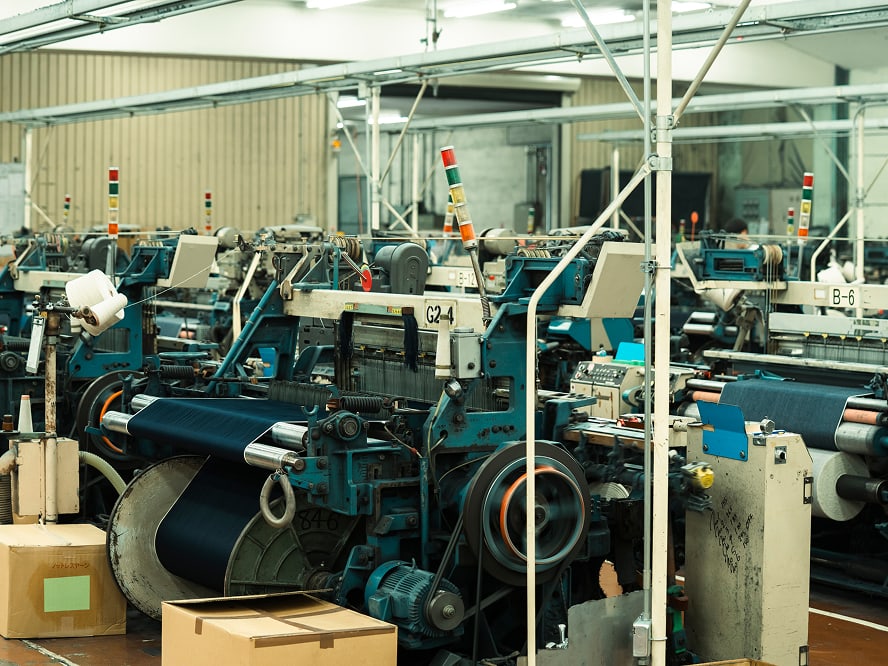
Next, we headed to the factory where the Kuroki fabric is woven. When you step into the factory, you are surrounded by the deafening sound of shuttles weaving warp and weft threads being launched.
Here you will find both modern and old-fashioned looms to suit different needs. By using the latest looms, the factory can efficiently weave large quantities of smooth, uniform fabric. However, the reason Kojima Jeans chooses to use old looms is to create a texture that is irresistible to denim lovers, with its unique rough texture and the "selvedge" that appears at the edges of the fabric.
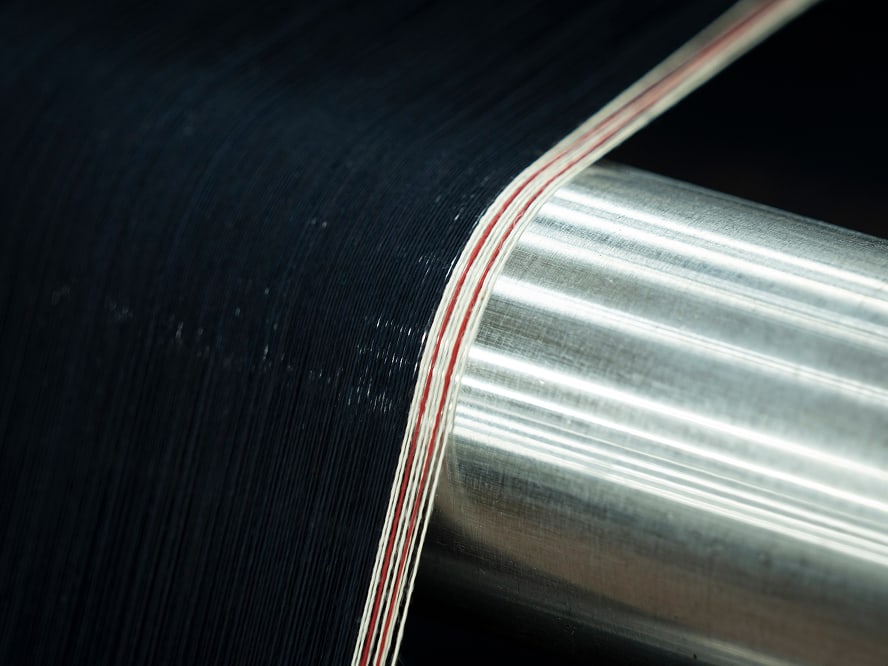
Vintage looms for which the manufacturer's repair warranty has long since passed. What supported these machines to work for a long time was the God-like senses of craftsmen.
"Since it's an old machine with no repair parts, we specifically have a legend who knows a lots about machines come for maintenance. The craftsman in his 80s is really amazing. I've heard that he can tell when something is wrong just by distinguishing between sounds, and say 'Ah, a screw is loose,' even in a loud environment where you would need earplugs" (Mr. Kume)
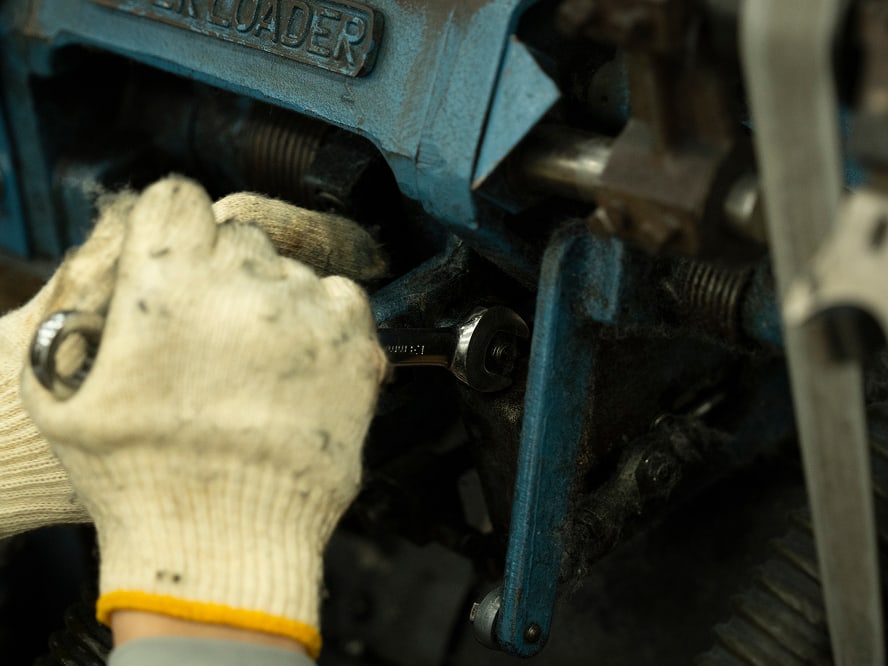
Created By Years Of Experiences And Handiwork.
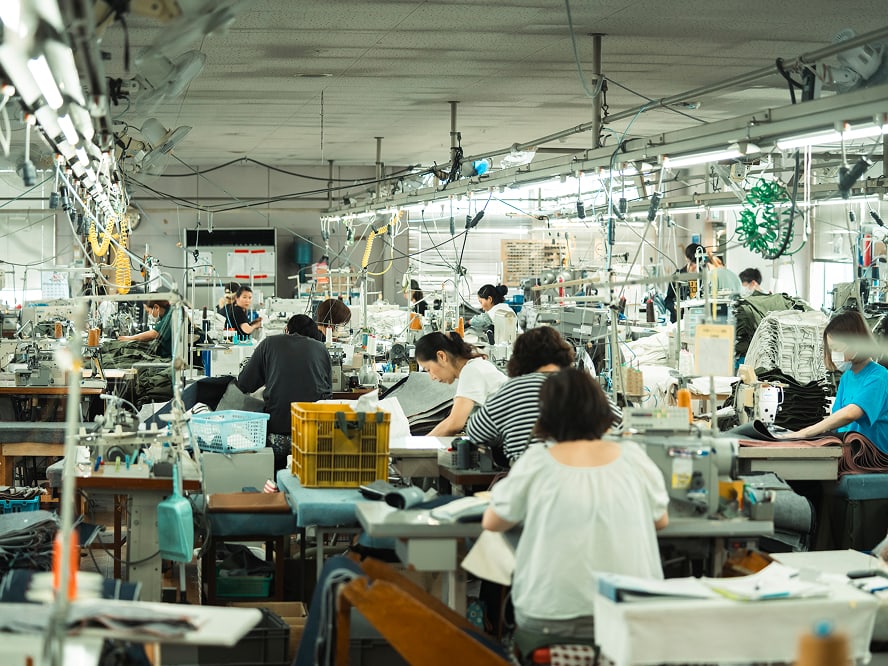
The last place we visited was the long-established Kakunan Clothing Minoshima Factory, which has been in business for over 100 years. Here, high-quality jeans are sewn entirely by hand.
If you like denim, you may be familiar with the unit "ounce" that expresses the weight of fabric. The weight directly reflects the thickness of the fabric, and the higher the number, the thicker and more durable the fabric will be. Jeans are usually 13 to 14 ounces in thickness, but Kojima Jeans offers 15, 17, and even extremely thick heavy ounce fabrics of 23 ounces. However, thick denim easily breaks sewing machine needles, so production is extremely tough. While it is said that the limit for normal factories is 15 to 16 ounces, this factory can easily sew fabrics over 20 ounces, through capital investment and technology development of powerful sewing machines.
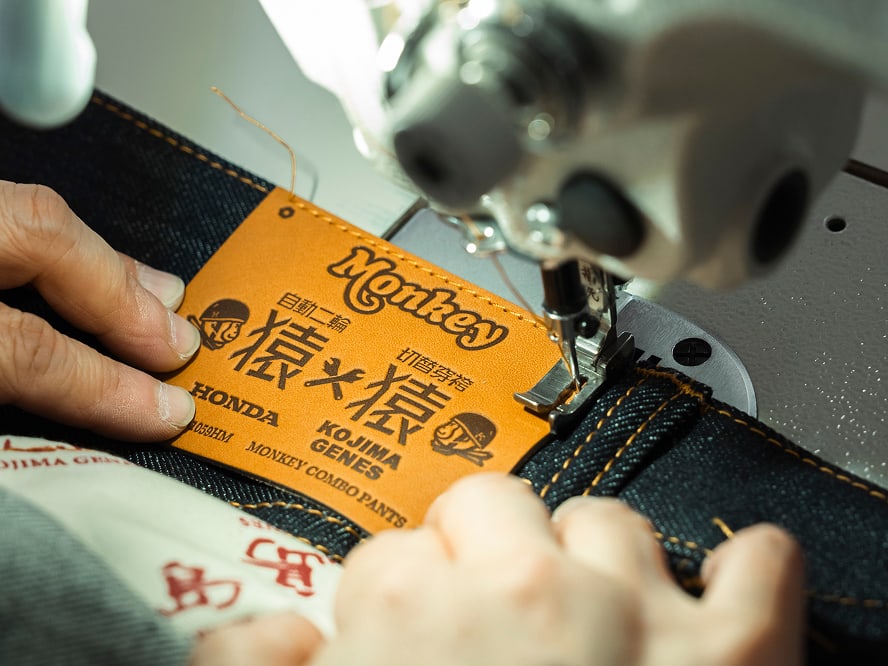
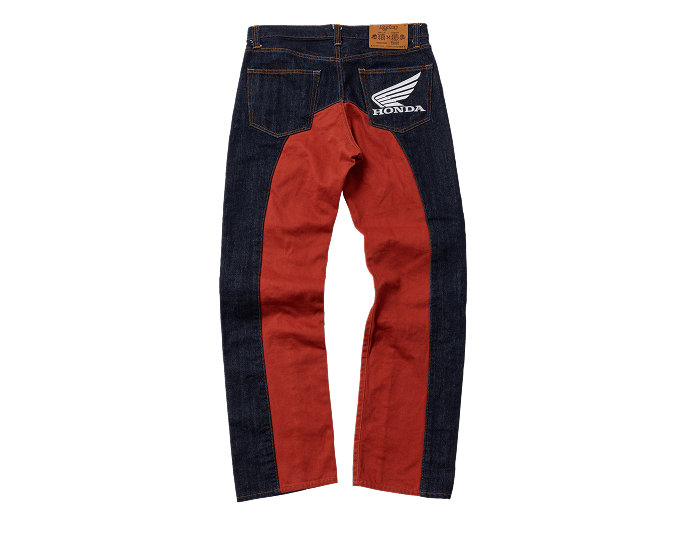
The craftsman's pride is also reflected in the sewing of the monkey pants, which is the symbol of this collaboration. Monkey pants made of different fabrics. In fact, this switch creates the attractive effect of visually making the legs look slimmer and emphasizing the wrinkle-like puckering to the seams, giving the garment a richer look. What's more, it also serves as an accent when riding a motorcycle, when viewed from behind. However, the difficulty of sewing also increases accordingly.
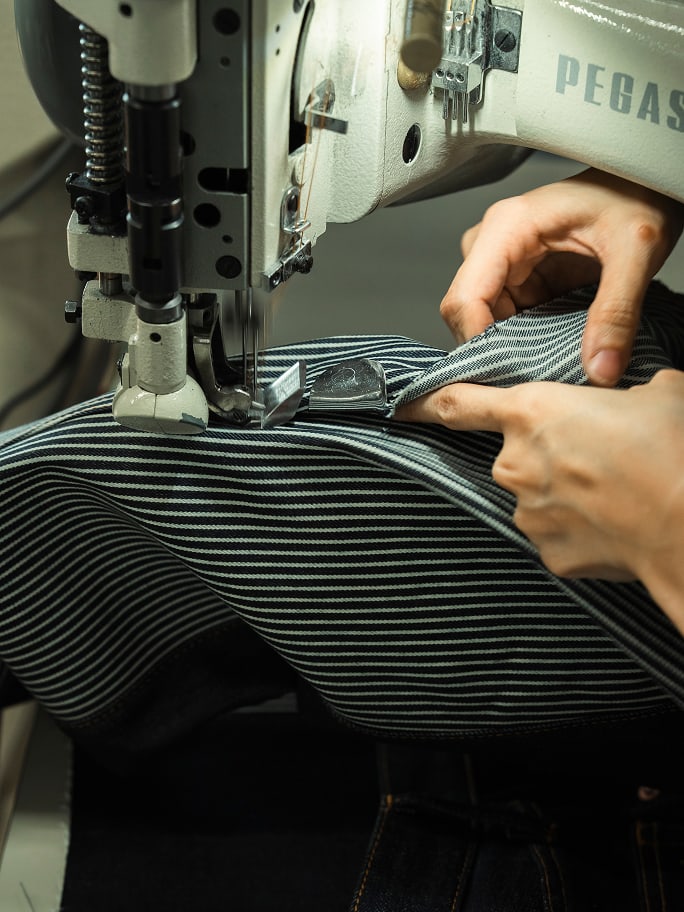
"When you sew fabrics with different thicknesses and shrinkage rates together, the item usually loses its shape. It takes a high level of skill to sew in a way that they don't misalign" (Mr. Kume)
Kojima is a town where everything from making fabric to sewing, attaching accessories, washing, and finishing is all done in one town. Mr. Kume of Kojima Jeans said, "We are a cutting-edge analog factory that will never be replaced by AI," which resonates deeply.
Motorcycles And Denim, Pursuing "Character Without A Correct Answer."
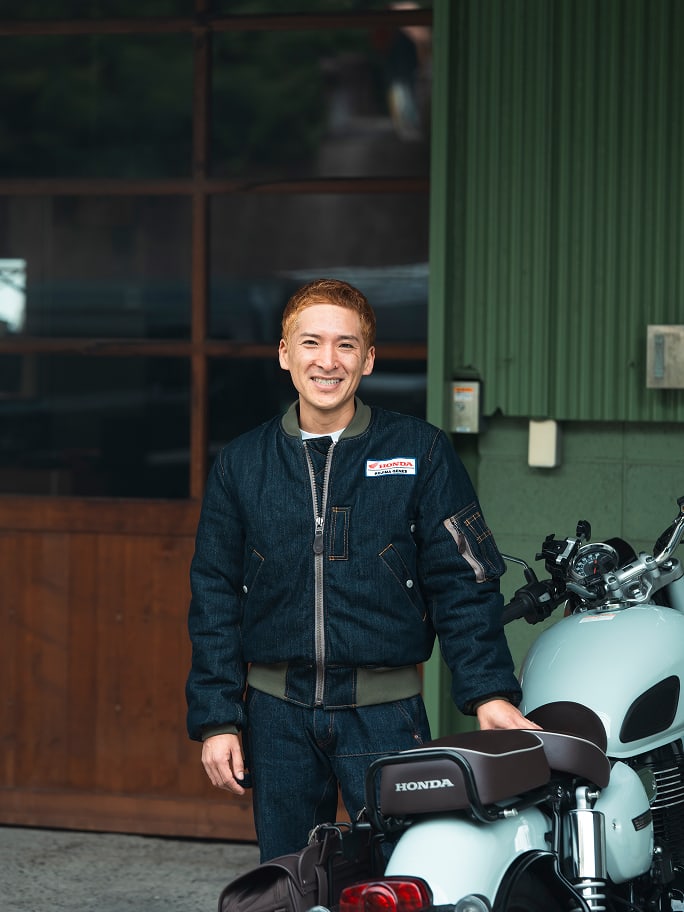
Motorcycles, which are industrial products, and the denim we wear. Although they seem to be worlds apart at first glance, the representative at Honda who accompanied us during the interview was also deeply impressed by Kojima Jeans' manufacturing.
In fact, Honda also has an episode in whilst also pursuing "character" to the utmost, not just efficiency and numbers. The CB1100—announced in 2010—which is equipped with a newly developed air-cooled four-cylinder engine, was designed to intentionally shift the valve timing between the cylinders while pursuing optimal engine solutions such as fuel efficiency, power, and environmental friendliness. This is to allow riders to feel not only smoothness but also a comfortable rhythm and pulse when riding.
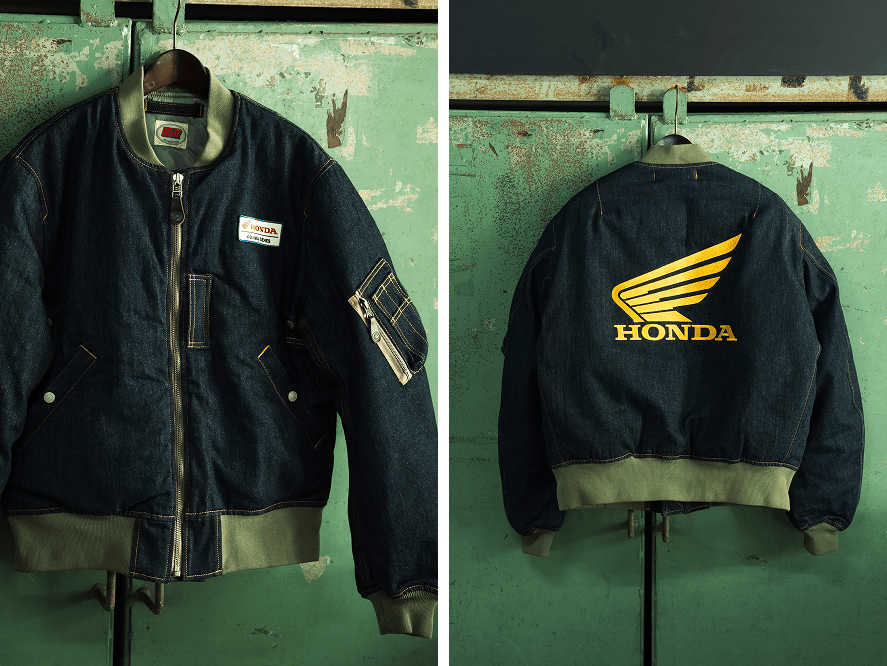
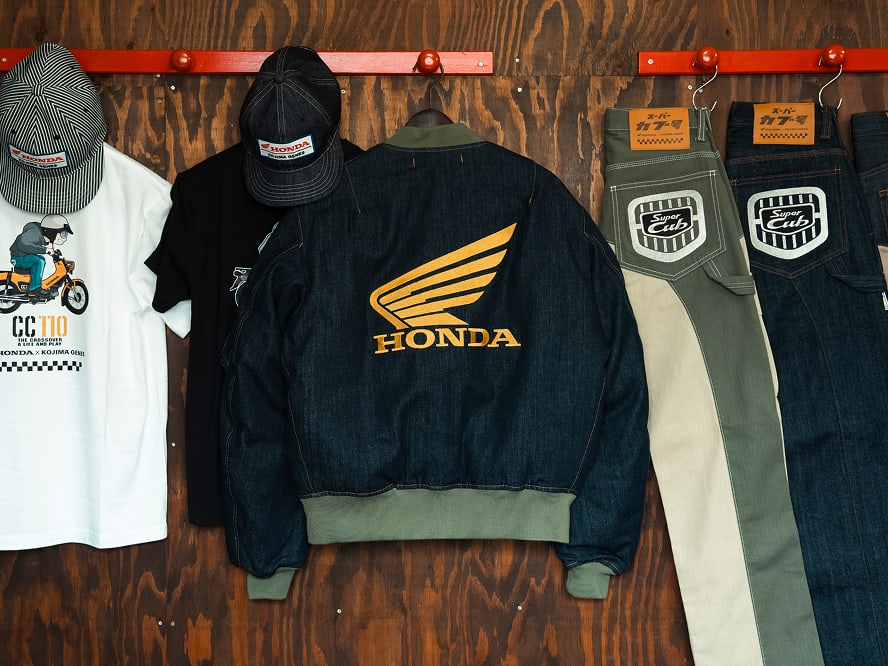
The US Air Force's classic flight jacket, MA-1 reinterpreted with Kojima denim and Honda's motor spirit. A piece that allows you to enjoy the functionality of a tough outerwear and the aging characteristic of denim that increases the more you wear it.
"The fact that we say 'We thoroughly research "character"' is irregular for a business, right? However, we at Kojima Jeans also create textured fabrics and amuse ourselves by saying, 'It looks like it will fade well.' We can deeply resonate with Honda in that we are seriously pursuing 'character' for which there is no right answer" (Mr. Kume)
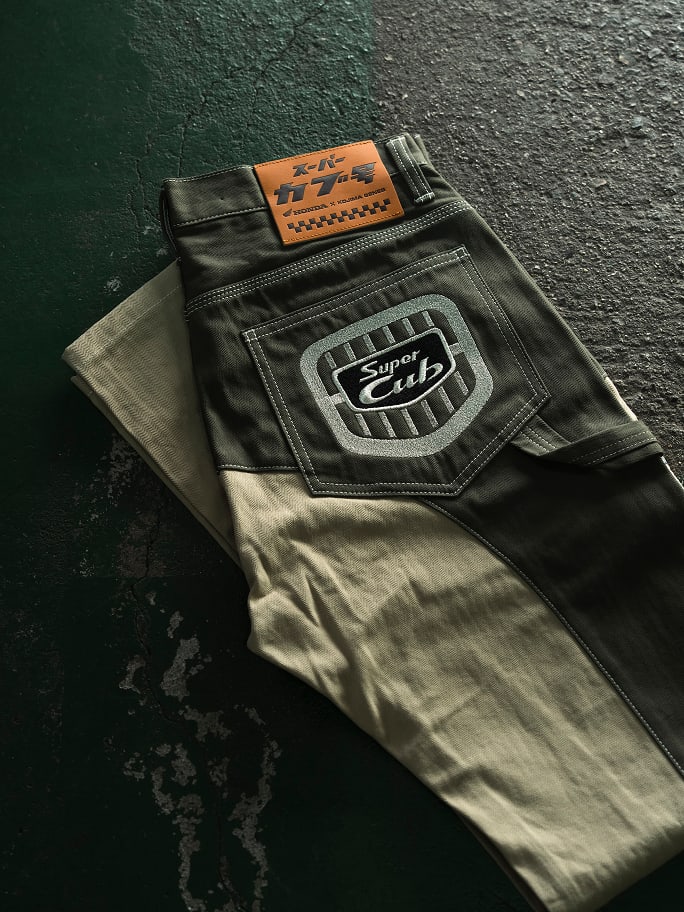
Combo pants in collaboration with the Super Cub. This piece incorporates military-style herringbone twill and different fabric panels, and workwear qualities so that it can withstand everything from riding to everyday use.
Similarities between denim and motorcycles can also be observed here. Jeans develop a unique color fading that matches the wearer's body shape and lifestyle. And as you ride a bike, the more it will fit to your body, and there will be times when it will get scratched. By repairing those scratches or intentionally leaving them as they are, the bike becomes your "one-and-only bike."
"The more time you spend together, the better the jeans with look, and the bike will mold comfortably to your body. It reflects the lifestyle of the rider/wearer, and becomes a one-of-a-kind existence in the world" (Mr. Kume)
Make Motorcycles More Casual.
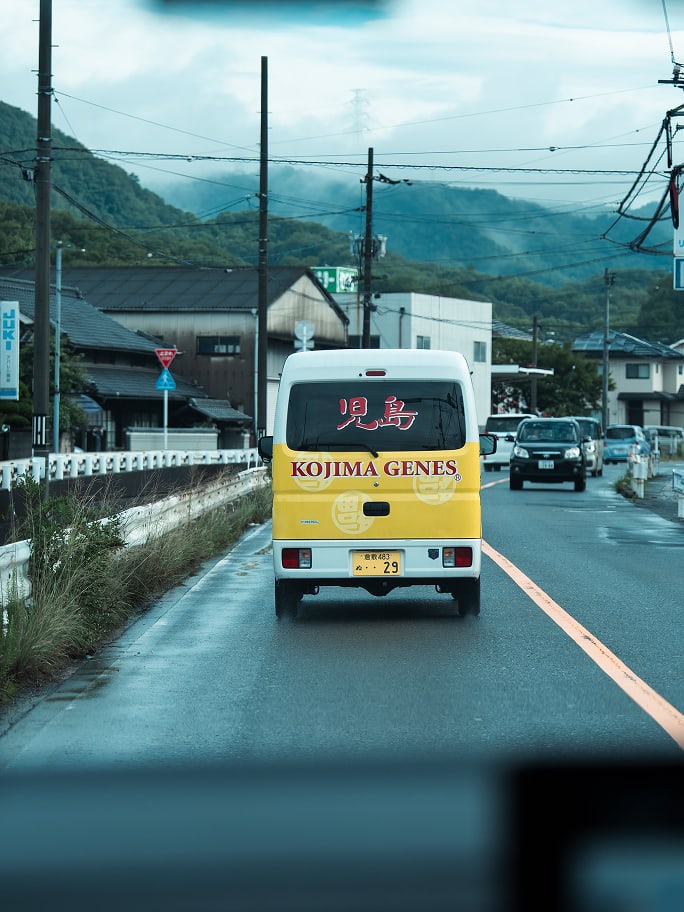
Our journey through collaboration is nearing its end. Finally, we asked Representative Kume about his future prospects.
"It'll be great if there were more styles to make motorcycles feel more familiar. There's the stylishness of riding in full-fledged riding gear, but the casual style of riding around town in jeans and a hoodie as an extension of daily life is also appealing. I think that there will be more ways to enjoy motorcycles if we can make bikes more casual through fashion and denim, depending on the mood or occasion"
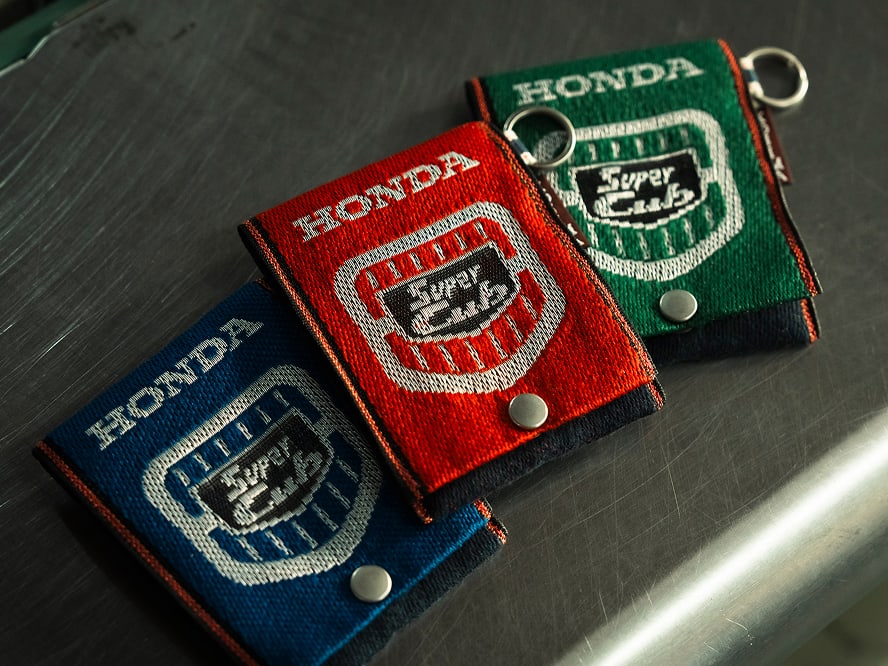
Traditional Japanese material "Tatami beri." Kojima, Kurashiki City, Okayama Prefecture is a major production area that accounts for the majority of the national market share, and this card case is designed with the motif of Honda's famous car Super Cub, making use of its highly dense and durable weaving technology. A collaboration accessory with a lightweight and highly durable Japanese texture that shines in a retro and pop mood.
For adults who can use tools to the fullest and even love the scratches left on them. The products created by Honda and Kojima Jeans are sure to become your best companions as you ride through your journey of daily life.
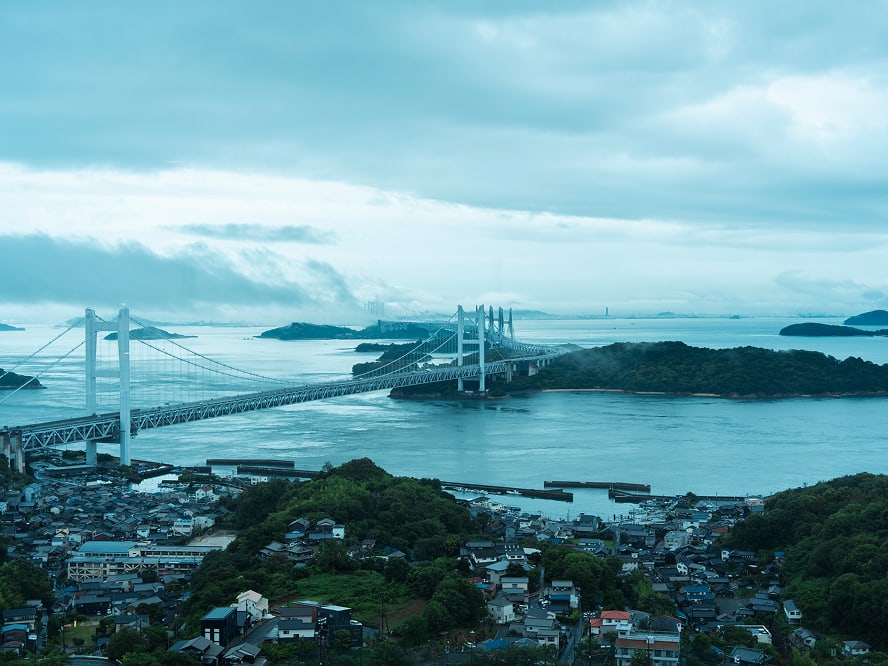
photo: Masayuki Nakaya text: Shinri Kobayashi
INFORMATION
KOJIMA GENES®︎
Honda Collab Monkey Combo Pants
¥22,000
Released January 2024
These combo jeans are a collaboration between Kojima Jeans, known for its high-quality denim, and Honda’s famous Monkey. Within the distinctive design which uses different fabric panels, there are motifs symbolizing Honda and Monkey. The durable and playful design is perfect for daily outfits and touring.
※Waist 86cm, cross width 32cm, hem width 21cm, Front rise 28cm, inseam 86cm (For 34 inches)