
PGM-FI is Electronic Control Supporting Optimal Performance.
"PGM-FI" is a term often found in Honda's motorcycle catalogs.
Its illustration styling can make it look quite high-tech, but do you know what it means?
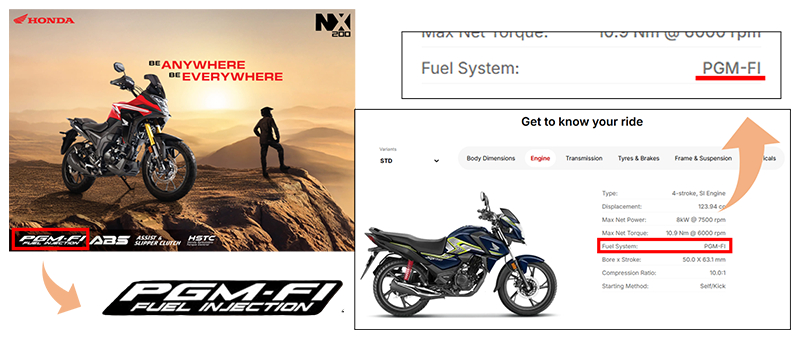
To put it simply, PGM-FI stands for “Programmed Fuel Injection” and means
an electronic control system that optimally manages fuel and ignition based on condition of the engine.
In this article, we’ll provide a clear explanation of Honda’s proprietary PGM-FI fuel injection system.
Index
1.How the Engine Works: A Simple Explanation
Air and fuel are essential components of an engine.
Before explaining PGM-FI, let’s first take a quick look at how the engine works.
The engine generates rotational power to move the vehicle by causing air and fuel to explode in chambers within the engine called cylinders.
There are 2 very important factors here:
(1) The amount of fuel (how much fuel is used during the explosion)
(2) The ignition timing (when the explosion occurs)
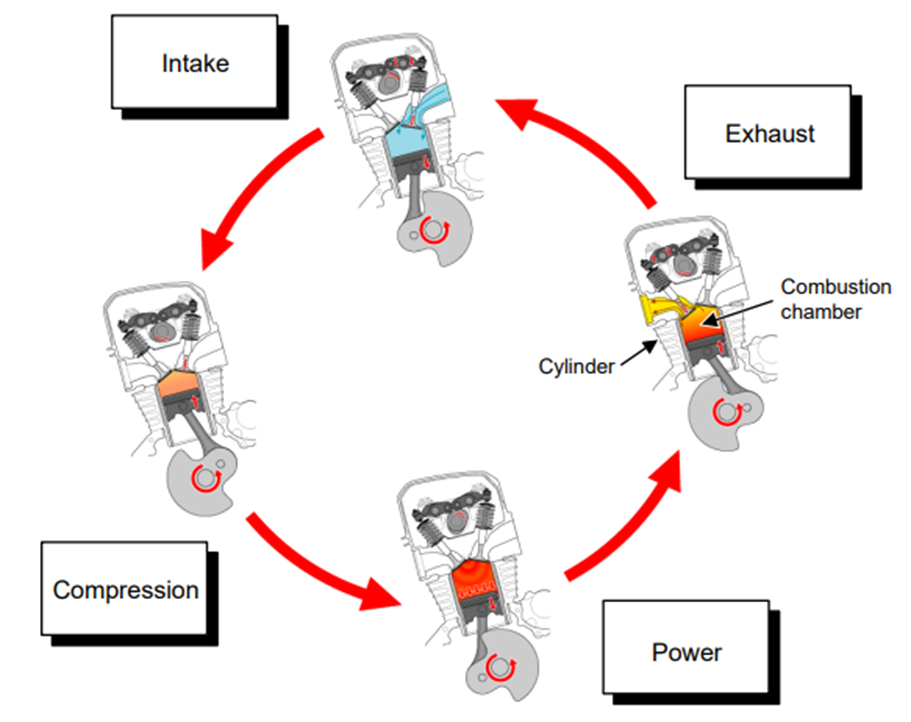
If these factors are not properly in place, engines can have poor acceleration, bad fuel consumption, and erratic engine speed, making it difficult to enjoy riding your motorcycle.
2.Role of PGM-FI
PGM-FI optimizes the 2 aforementioned key factors based on driving conditions.
In situations such as:
- When the engine is cold
- When aggressively accelerating
- When driving slowly in traffic

The amount of fuel and ignition timing required will vary.
PGM-FI automatically determines this and always maintains a balanced engine condition.
3.The PGM-FI Mechanism
PGM-FI optimizes the engine through 3 key elements.
(1) Sensors (detects status)
Monitors motorcycle’s condition in detail, such as:
Engine temperature
Intake air temperature
Engine RPM
Throttle opening (how far the throttle is open)
Intake air pressure
The many sensors installed throughout the motorcycle are used to monitor the current status in real time using numerical data.
(2) Engine control module (ECM; computer management)
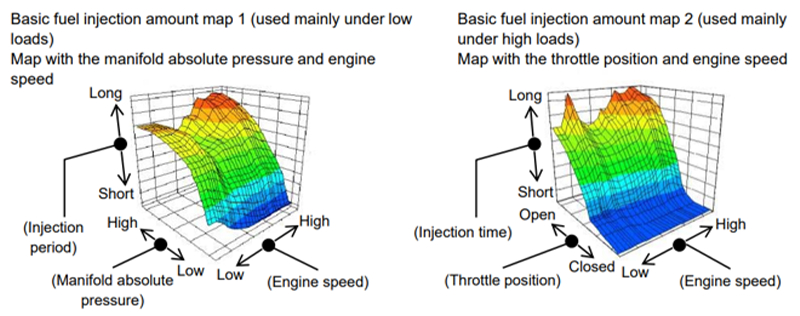
Based on data from the sensors, the ECM calculates the optimal fuel injection volume and ignition timing.
It uses pre-set data (fuel maps) and makes fine adjustments based on the situation.
(3) Moving components (execution)
The calculation results are transmitted to the relevant components and converted into actual motion.
Injector → Injects fuel
Ignition coil → Performs ignition
Fuel pump → Supplies fuel
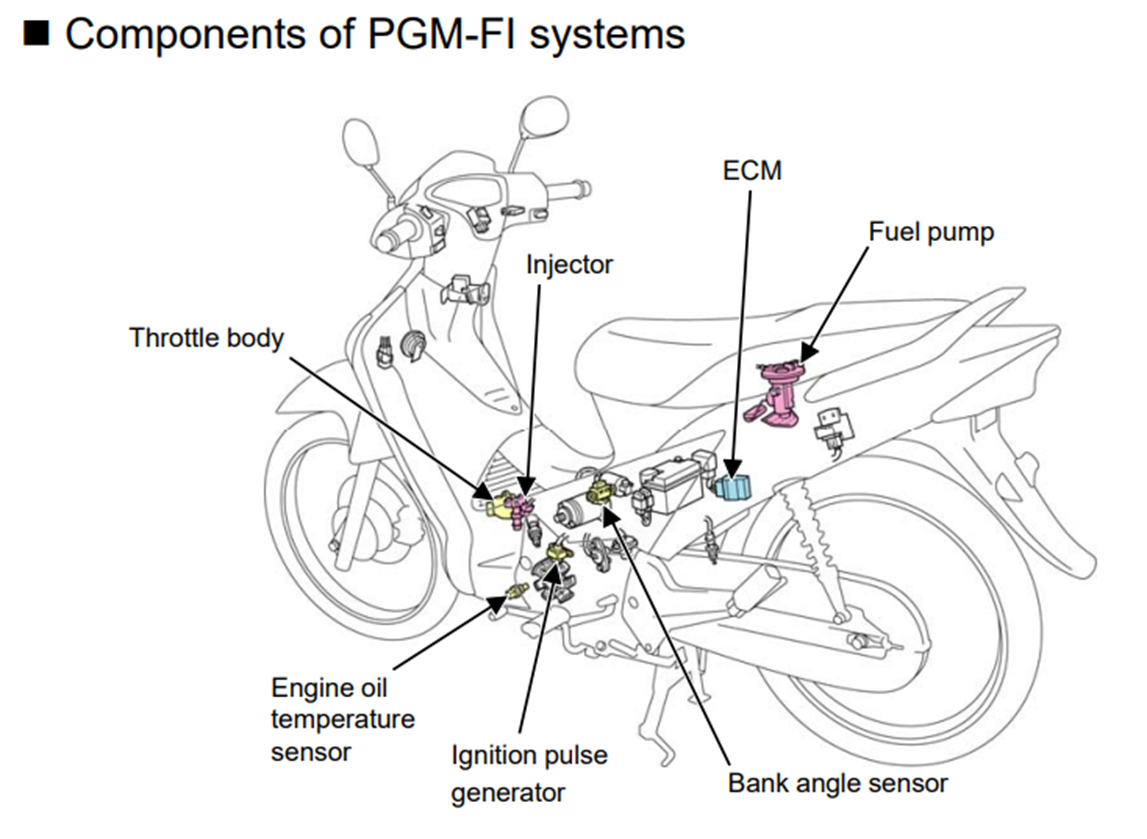
By controlling the entire process—from calculation to execution—using a predefined program, this mechanism enables optimal engine performance.
4.Difference from a Carburetor
The main difference from carburetors is precision.
Carburetor: A mechanical system that utilizes airflow
PGM-FI: An electronic control system using sensors and a computer
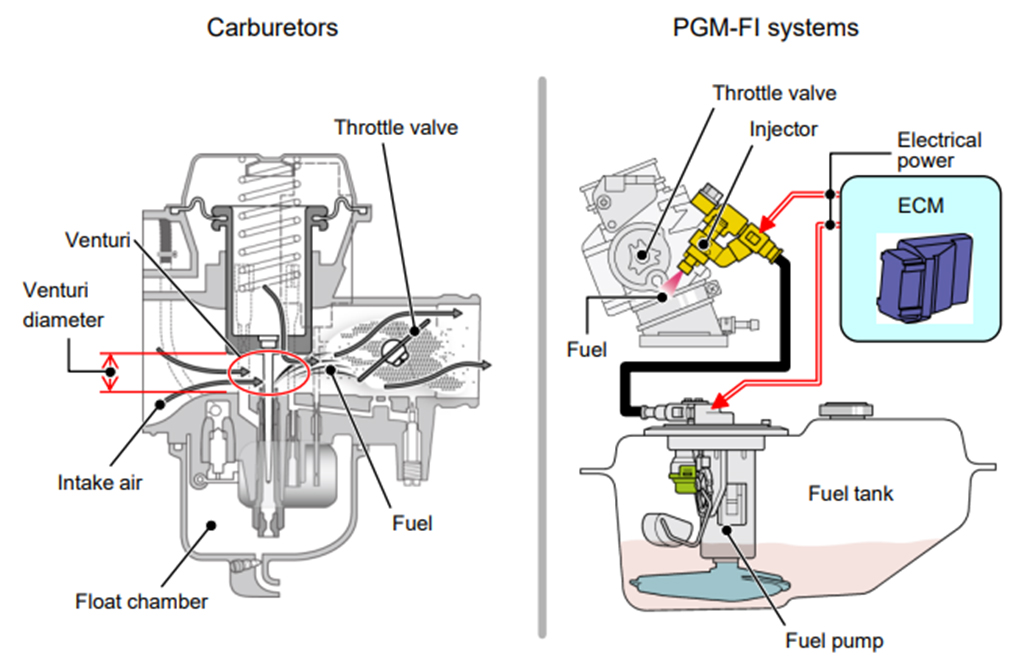
Although carburetors are simple, they are difficult to fine-tune in response to changes in the environment or operating conditions.
On the other hand, one of the major strengths of PGM-FI is its ability to provide precise control based on current operating conditions.
5.Advantages of PGM-FI
(1) Smooth riding
Optimizing fuel and ignition results in smoother starts and acceleration, making the vehicle easier to handle.
(2) Stable engine performance
PGM-FI automatically adjusts to changes in temperature and altitude, ensuring stable performance in any environment.
(3) Improved fuel efficiency and environmental performance
Avoiding unnecessary fuel consumption helps to improve fuel efficiency and reduce emissions.
6.Summary
PGM-FI is
a system that uses sensors to monitor the condition of the engine, calculates via a computer, and optimizes engine control.
It may sound a bit complicated, but the essence is simple:
PGM-FI is a technology for keeping the engine in top condition under any circumstances.
This system is why Honda motorcycles equipped with PGM-FI deliver smooth, stable performance anyone can control with confidence.