* The information in this article is current as of January 2025.
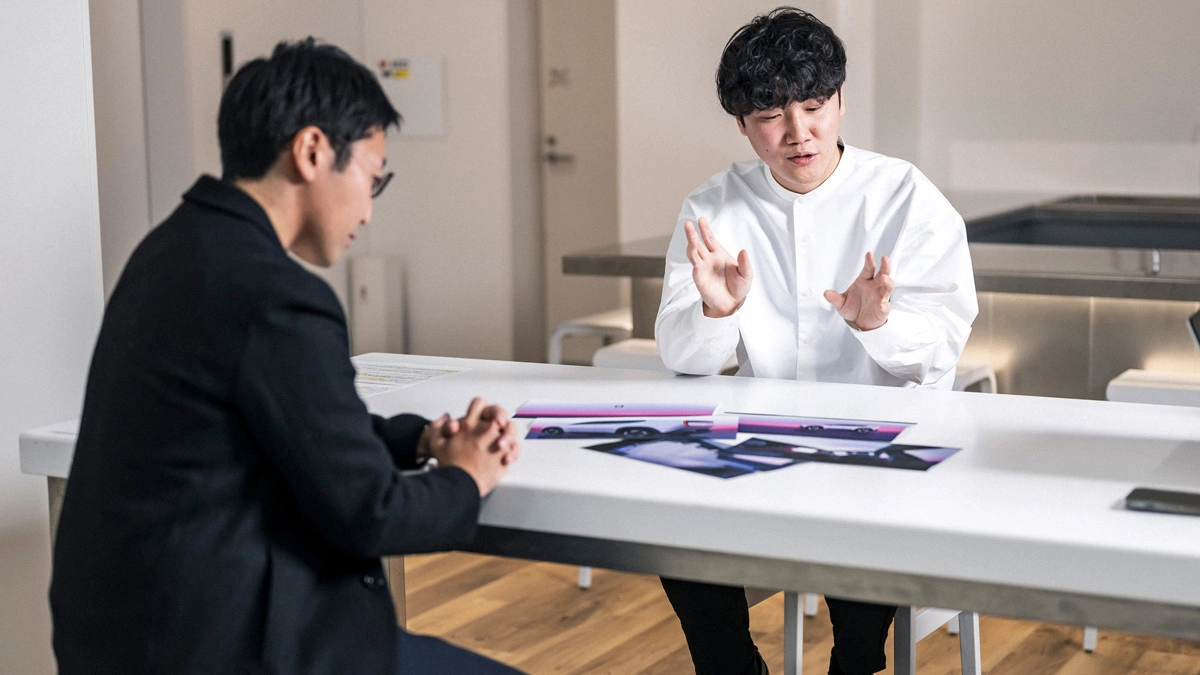
Thin, Light, and W ise—the embodiment of a development approach
──The Honda 0 SUV announcement came around one year after the unveiling of the Saloon and Space-Hub concept models for the Honda 0 Series. A common design concept for the entire Honda 0 Series is “The Art of Resonance.” How do you interpret this concept?
Sato
To me, “The Art of Resonance” is about bringing out the essence of the vehicle. In
bringing out the essence of this model, I wanted to create a design that resonated on an
intuitive level with everyone who saw and used it. Specifically, I tried to design the
exterior in a way that gave expression to the model’s interior space and flexibility so
that one glance would be enough to recognize those features. After much deliberation by
the whole team, we set out to design a vehicle that people needed only to look at to
imagine themselves having a novel experience.
Yamaguchi
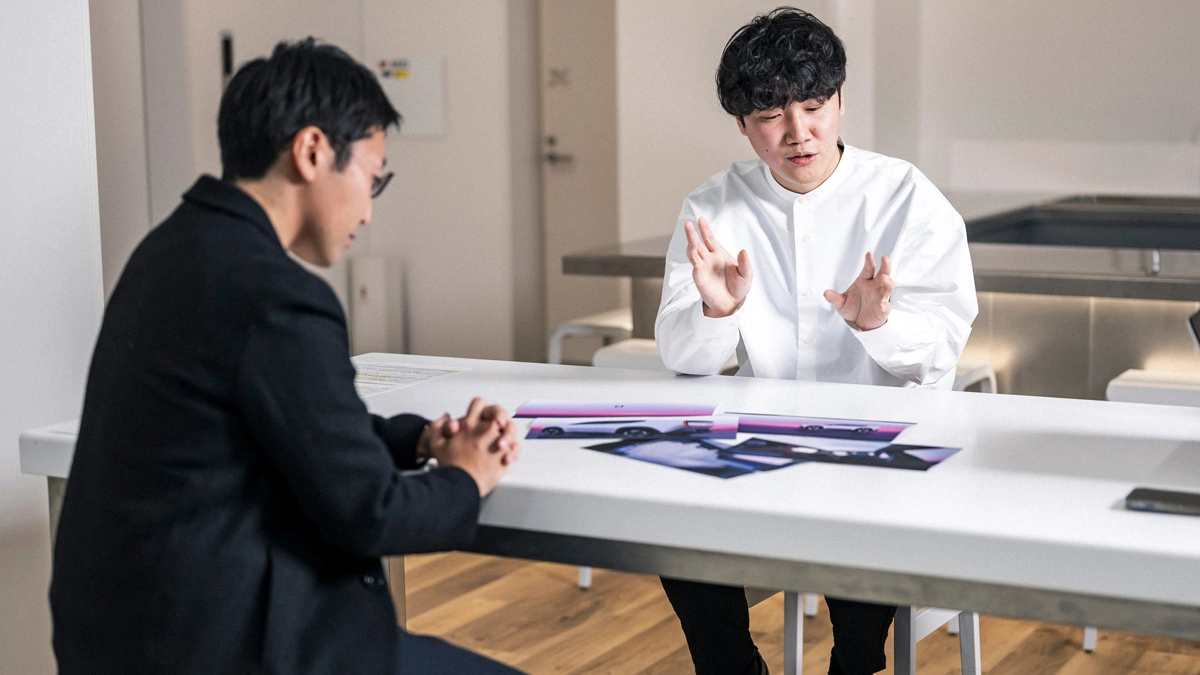
As for the UI and UX, we aimed for graphic interaction to give users a rich visual
experience, communicating functionality in a way that was easy to grasp. Honda itself
aims for a UI and UX enabling instant recognition and intuitive control and so we went
beyond numerical values and icons and pursued ways of expressing information that
resonated with the entire space.
When the Honda 0 Series was unveiled last year, “Thin, Light, and Wise” was put forward as a new EV development approach. How is this expressed in the Honda 0 SUV alongside “The Art of Resonance”?
Yamaguchi
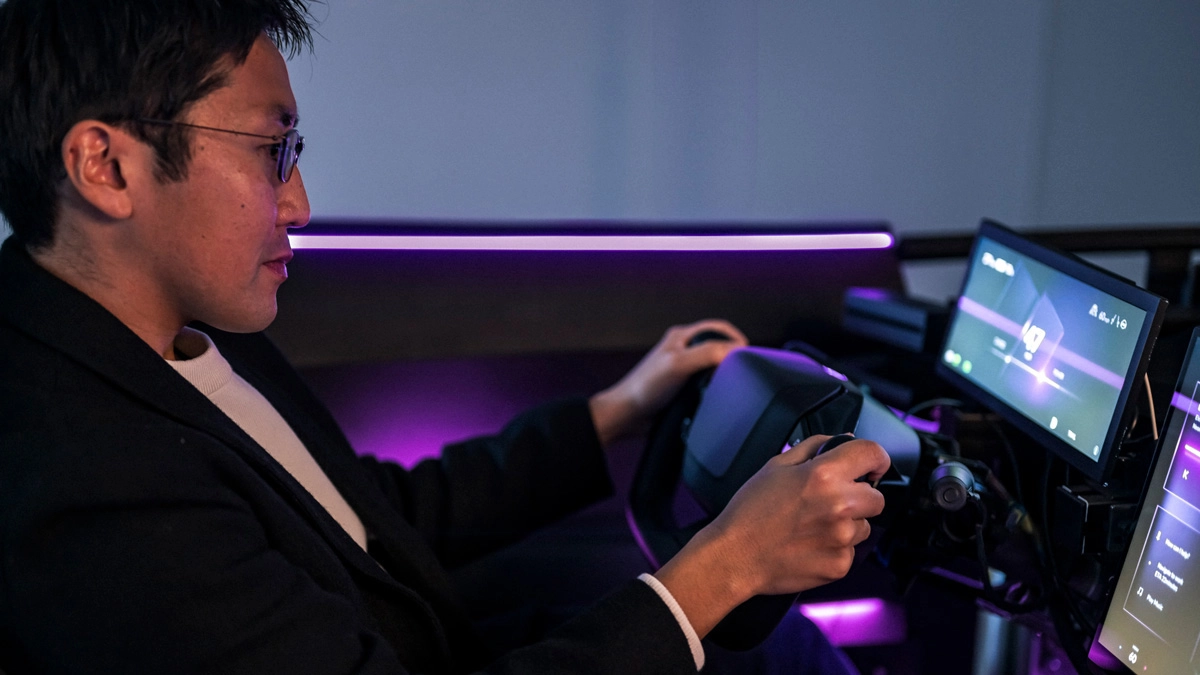
We thought simple and quick control systems and information displays would contribute to
the “Light” component. And to have the system appear not merely functional, but also
“Wise” in the user’s mind, we thought to incorporate animation, using graphics that
responded to users’ behavior in a pleasant way. As you know, the use of needles to
indicate speed and fuel levels has been the main approach to meter displays in
conventional vehicles. We believed there had to be a better way to express that
information for greater ease of understanding that was more integrated with accelerator
operation. In this design, the brightness of illuminating elements changes with the
amount of pressure on the accelerator. This is also reflected in the glass of the
instrument panel, making it possible to perceive the degree of accelerator application
from the entire screen. We thought this would allow us to provide a UI and UX enabling
the user to intuitively understand the vehicle’s behavior and operate it comfortably. To
achieve this, we built an environment for evaluating animations that synchronized with
accelerator application and touch controls and proceeded to refine graphics using
prototypes.
Sato
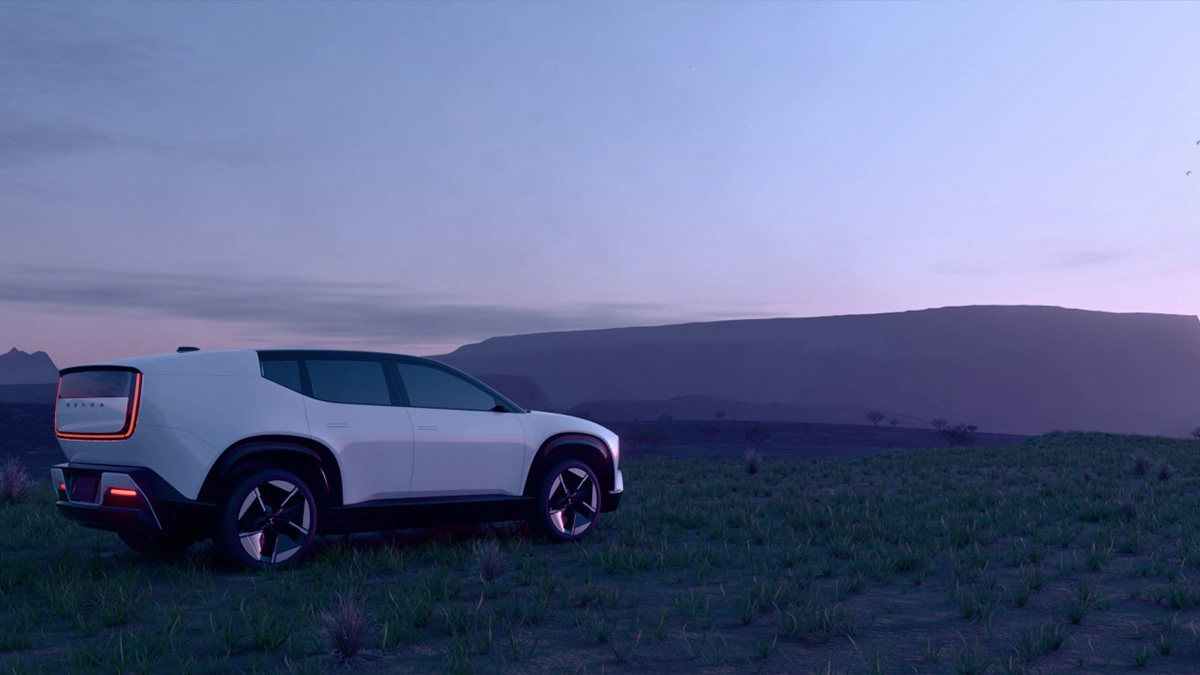
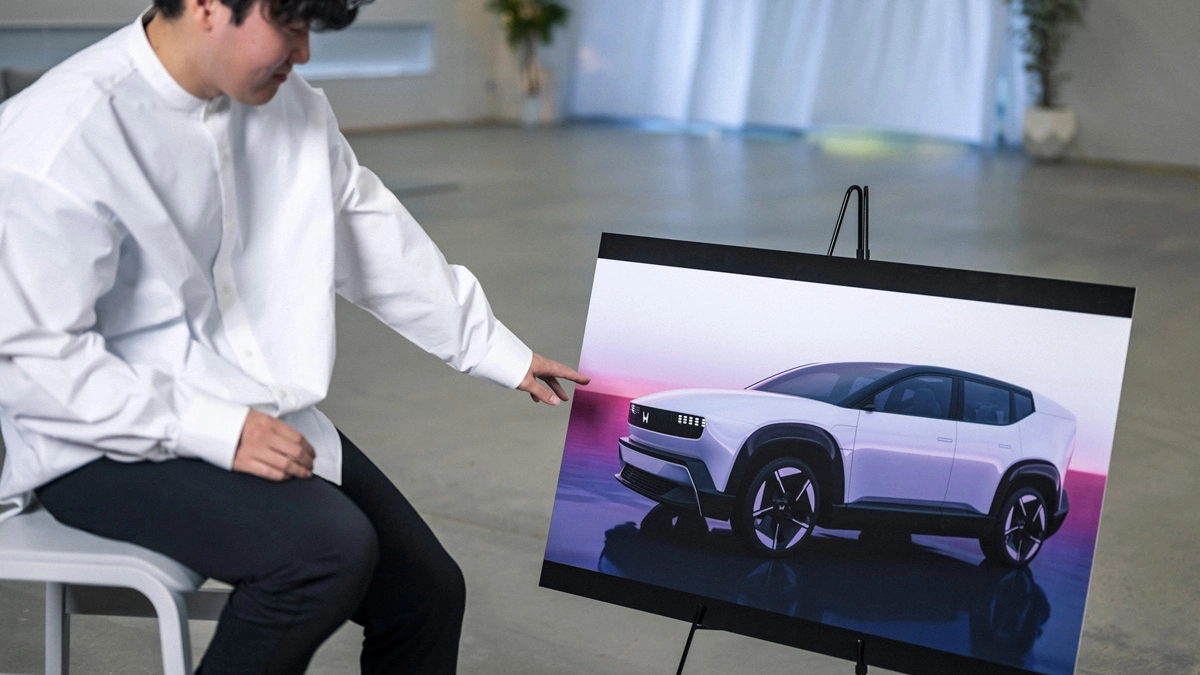
A distinctive expression of “Wise” on the exterior is the grille. The headlights,
comprising multiple segments, are in sync with the system. They not only light up but
also give the impression the vehicle itself is a living thing. In conventional vehicles,
the grille has a cooling function, but in EVs, their role has changed. With light
choreographed in a way that gives a sense of movement and depth, the grille is symbolic
of the “Wise” component.
Honda 0 SUV as an expression of gliding-like agility
The pains you have expended to incorporate the concepts into the design are clear. What kind of vehicle do you consider the Honda 0 SUV?
Sato
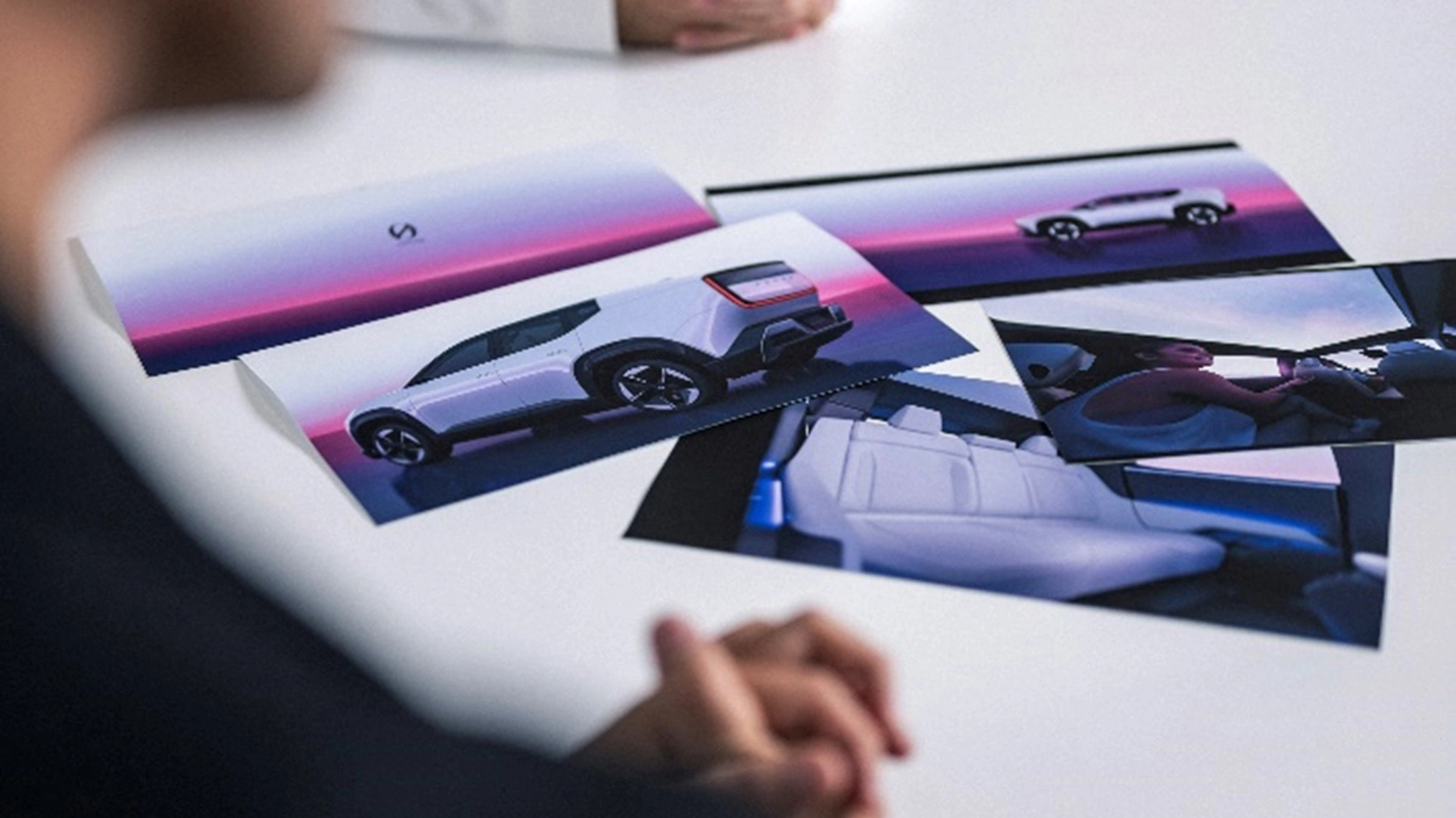
For this vehicle, we aimed to instill new types of value into the design. We placed
particular emphasis on intuitively conveying the flexibility and openness of the
interior space. It is a design in which onlookers will sense new possibilities.
Yamaguchi
My feeling is we managed to deliver an interface that enables drivers to determine
required courses of action without hesitation, at the same time allowing them to enjoy
being inside.
Specifically, how are those traits expressed?
Sato
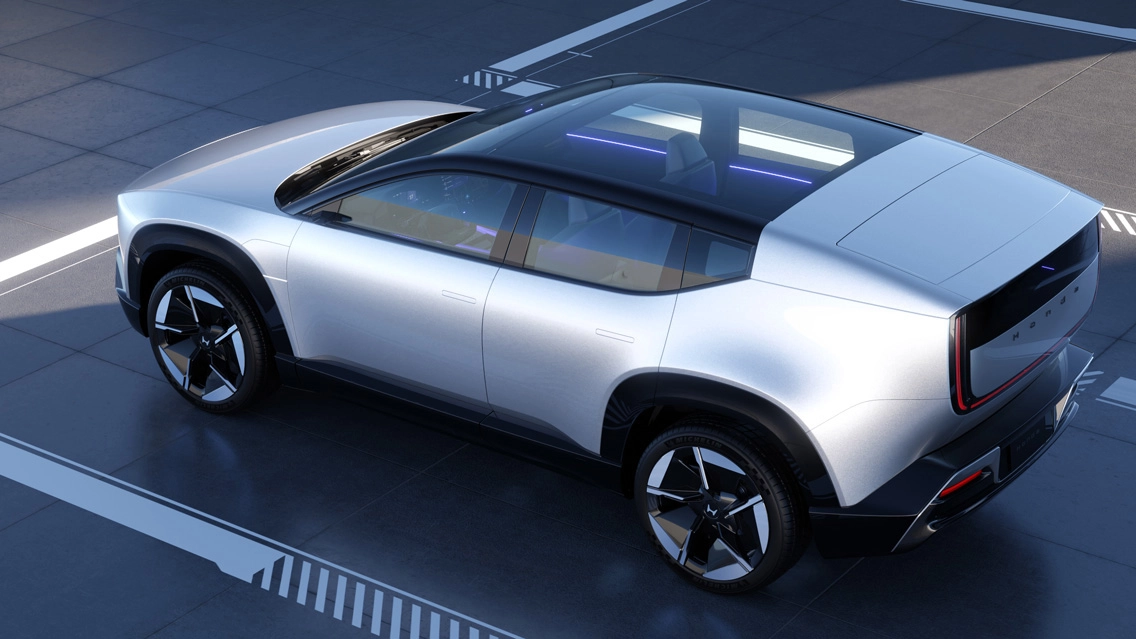
On the exterior, we used a lot of visual techniques to produce the appearance of
gliding. For the wheel design, we went with a lightweight feel that, along with side
panel profile and color scheme of the body, would give the impression that the vehicle
was gliding over the road surface. Agility is expressed in an elevated center of
gravity, achieved by placing a solid, flowing body atop a lower section that is black
all over. A line flowing from the headlights to the rear end underscores the impression
that a single core runs from front to back.
Viewing the entire vehicle chassis as a single layer, and visually raising that layer, gives the impression of elevated class. Using this technique, we put together a design that exudes an obviously different presence to other cars on the street.
We also paid attention to the finer details—in the wheels, for example. While the spokes are made to appear thin, the wheels are given a three-dimensional design that gives the impression of motion when they catch the light. Even when the vehicle is stationary, the technique creates a sense of dynamic movement, as if the vehicle is in motion.
A desire to generate new mobility value
What kind of value did you want the Honda 0 SUV to create?
Sato
Over and above its appeal as an automobile, I hope it will generate motivation for
people to go out more. Our aim was to present new value in the mobility experience and
bring positive change to users’ daily lives.
Users can use the vehicle as they please since the interior space is expansive and there is flexibility in the way the cabin and cargo space can be utilized. As I said when talking about the concepts, I think the design conveys, at a single glance, that it is a vehicle enabling freedom of mobility.
Yamaguchi
We built UI and UX to create a vehicle that was not merely a tool, but also a trusted
partner that could blend in with the user’s lifestyle. Take, for example, an interface
that changes flexibly according to day-to-day habits. For driving in the morning, the
system has a bright tone, with lighting inside the vehicle invigorating users so they
start the new day with a pleasant outlook. In the evening, it switches to soft-toned
lighting that helps users to relax. It is also an environment where users, after lengthy
periods of driving, can enjoy a moment of peace inside the vehicle. These are the kinds
of techniques we used.
One feature is non-stressful driver operability. This vehicle will change mobility by making it more enjoyable, more personal, and in doing so provide new experiential value to users.
When the vehicle is not being driven, when it is parked, lights and audio can be adjusted to create a space—a meditation or work space perhaps—inside the cabin where users can concentrate.
You will undoubtedly produce many more vehicles. How do you intend to apply your experience from this project?
Sato
When you try hard to keep things simple, there is a tendency to create static
ornament-like designs. But automobiles are a form of mobility. They move. I hope to
properly capture the innate dynamism and functionality of vehicles.
Yamaguchi
In the UI and UX sphere, real-time information and graphics generation technology is
evolving all the time. When you are driving a vehicle, all kinds of information come
into play. I want to design UI and UX that are in step with customers’ needs and can
convey information as required using the most appropriate visual and sensory
presentation.
Profiles

Shuntaro Sato
Automobile
Product Designer

Shota Yamaguchi
Automobile
UI/UX Designer