* The information in this article is current as of December 2024.
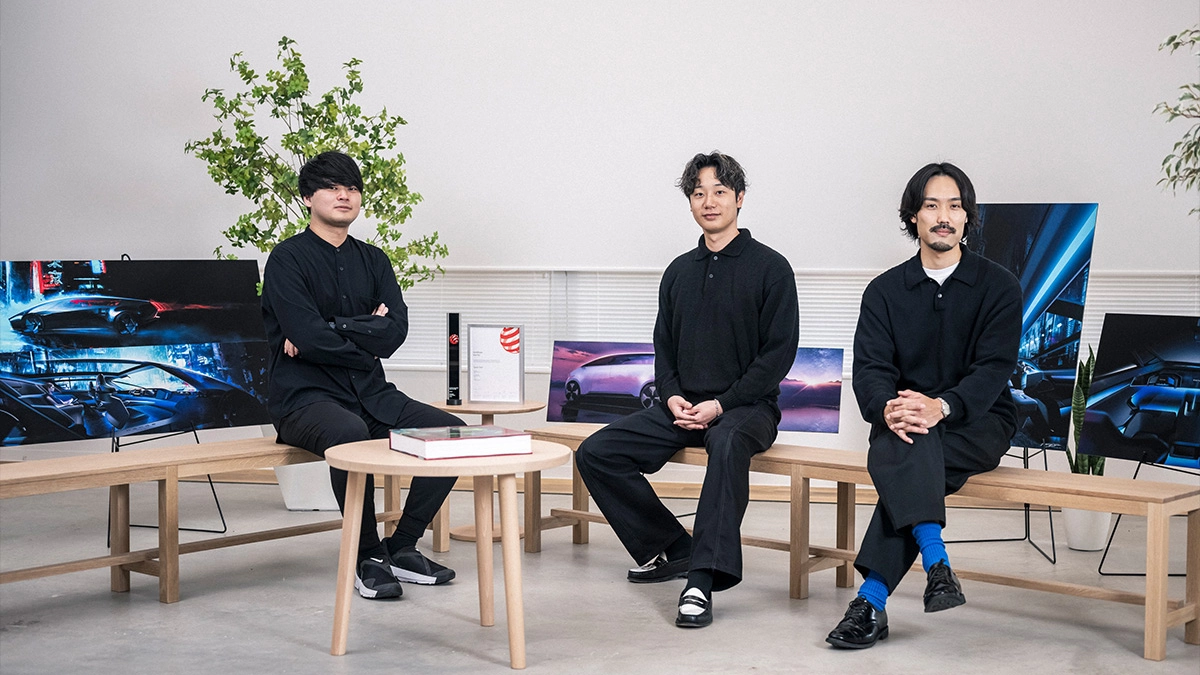
Honda 0 Series—Born through intuitive brainstorming
First, please tell us your honest feelings about these achievements at the Red Dot Design Award.
Sato
Traditionally, mass-production models are often recognized at design awards. This time,
a concept model received the honor of the top prize. I feel very happy that the new
brand of Honda 0 Series has spread widely across society together with the concept
model, gaining popularity and being extensively reported by the media and such.
Yano
Personally, given that the Saloon concept model is the first announced design that I
have worked on since joining Honda, there was joy in being able to turn my proposal into
an actual output. I am simply happy that it went on to win a prestigious award.
Ogawa
The Honda 0 Series was a major challenge, an attempt to change Honda’s design identity.
All members kept moving forward while feeling our way around, continuing to try while
feeling nervous about whether the concept and designs would be accepted by society.
Receiving the award turned our worries and concerns into confidence and belief, and I am
basking in the joy.
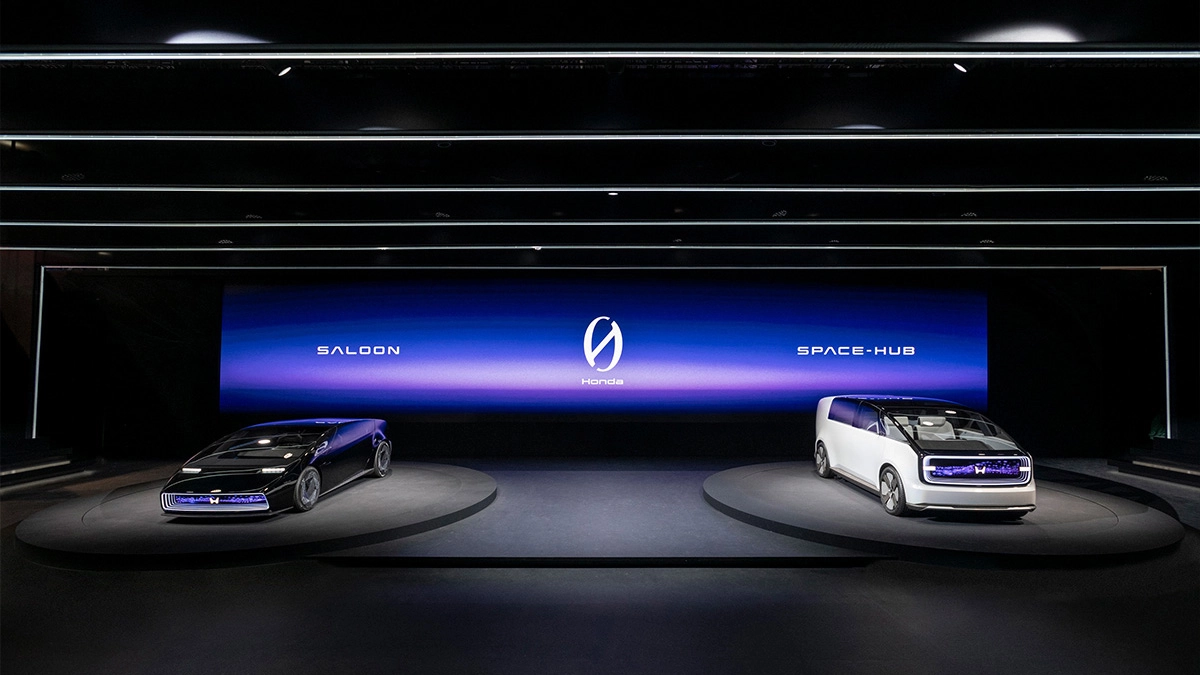
In the past, whenever Honda deployed automobiles globally, designs had been localized according to the car culture and needs of each country. Meanwhile, the plan is to roll out the Honda 0 Series as global models standardized across regions. What kind of design did you seek to achieve?
Sato
We did not have a rough concept of the Honda 0 Series from the start. Instead, everyone
just sketched out their ideas intuitively. Part of Honda’s corporate culture is the
construction of intersubjectivity, where we seriously brainstorm and discuss each
other’s intuitive ideas as they are to collectively build up an idea. This is the only
way to achieve innovation. We did not give any consideration to the market or needs;
everyone thought broadly about their own ideas for the ideal electric vehicle that Honda
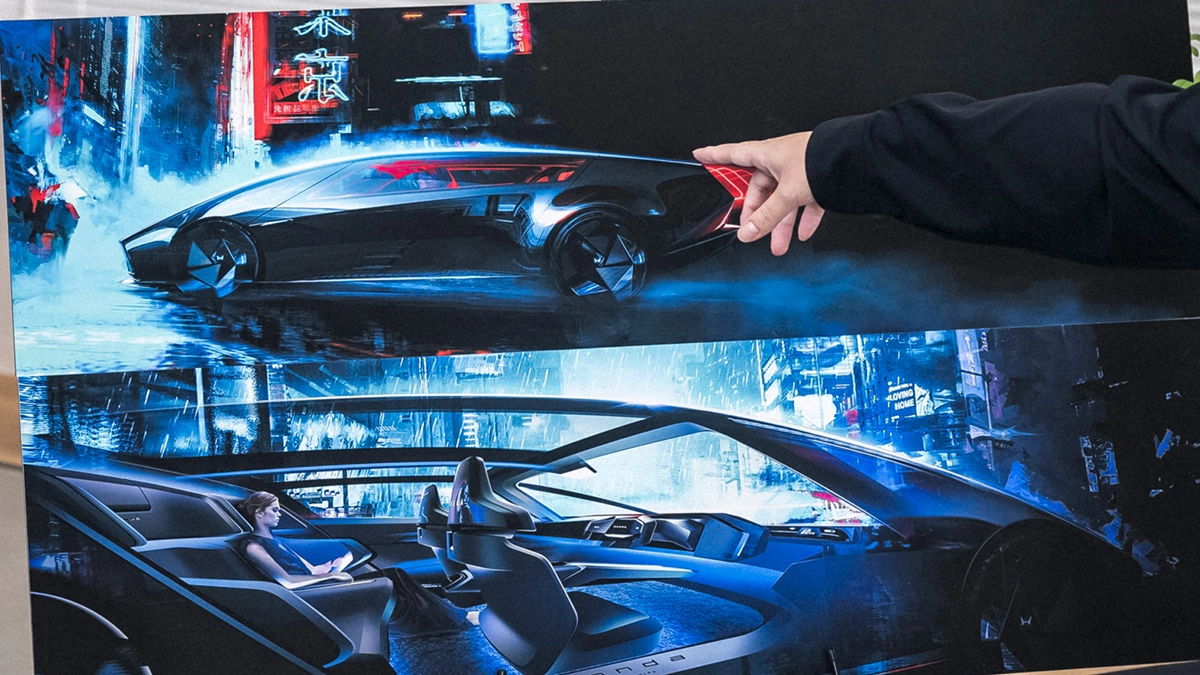
should make in the future. The sketch that Mr. Yano came up with in the process, which
eventually led to the concept we have now, became the starting point of the Saloon.
Yano
A compact cabin with a long nose—such a theory of an attractive car has already been
long established. I tried to put aside this existing mindset and think from scratch
about value as a mobility unit to broaden the concept of the sketch.
As electric vehicles do not have engines, there is high freedom in the internal layout and it is possible to properly secure space for people to sit. At the same time, I wanted to offer a sense of the car’s dynamic performance. I also wanted to reflect this concept as it is on the exterior. Based on this idea, I thought about the space using simple shapes that even children can draw to arrive at the initial sketch. I drew the car as cross-sectional slices*2 and developed ideas from there.
*2 Cross sections that are perpendicular to the car’s direction of movement
Ogawa
I think Honda cars have two types of appeal: cars with dynamic driving performance
(sportiness) as mentioned by Mr. Yano, and cars that support daily life.
The Saloon has excellent appeal in its attractiveness and driving performance. In contrast, I worked on the exterior design of the Space-Hub along the theme of a space that has expandability so as to broaden the lives of its passengers. For the core approach to the design, I reused the approach of the Saloon’s cross-sectional slices.
Origin of the designs for Honda 0 Series
When you were drawing the sketch of the Saloon, which became the starting point of the series, what kind of future world or technologies were you thinking about?
Yano
At that time, I was drawing intuitively and did not think about the logic in detail.
However, for my image of the future, I felt that cars and humans will grow closer to
each other instead of moving apart. For example, electric vehicles are quiet and clean
mobility units that do not give out emissions. They can thus approach animals without
causing fear, and I hoped we can have a future where mobility moves toward greater
affinity with living things and the earth.
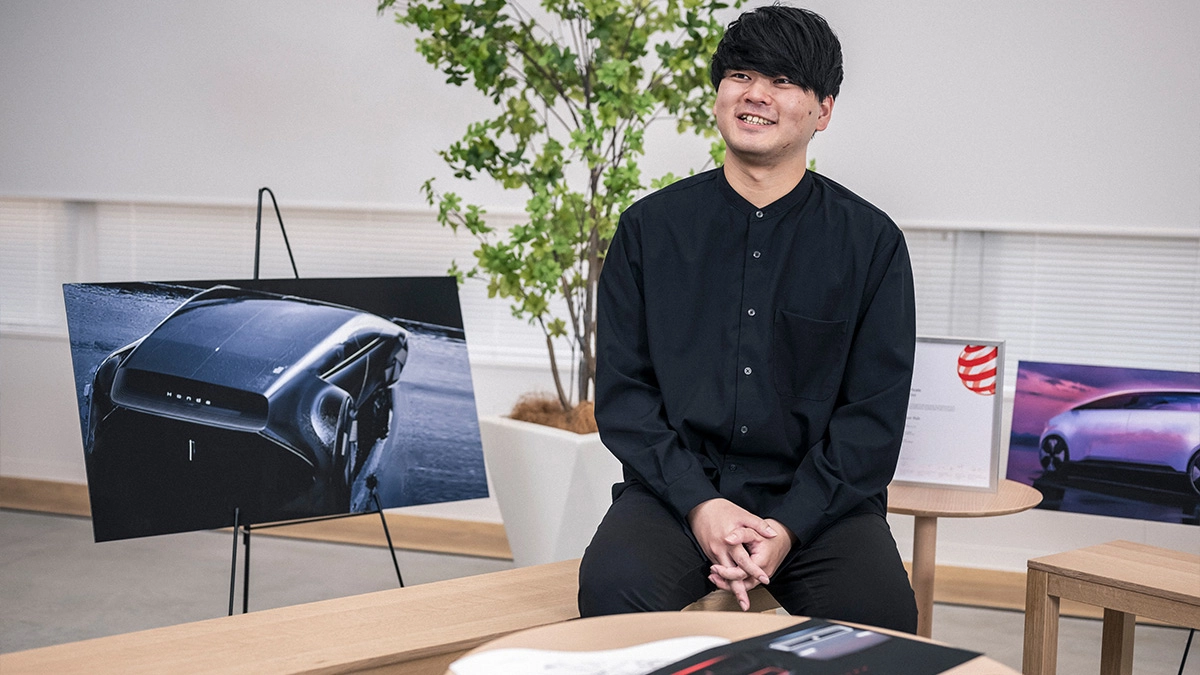
As you said, the general impression of electric vehicles is that they are bright and clean. However, the sketch, brand essence video , and such of the Saloon gives a sense of a dark world. The design, which mixes the retro sense of old cars with innovativeness that invokes thoughts of unrealized technologies, has been called cyberpunk outside Japan and there are also fans fervently awaiting its launch. When developing this design and world view, were you influenced by any movies or animated works?
Yano
As I am not well versed in the world of video works such as movies, I just polished the
image that came into my mind. When I was drawing the sketch, given that this is an
electric vehicle being made by a Japanese manufacturer, I wanted to propose something
with originality and had never been seen before. I developed it from an image of a rainy
day in a city.
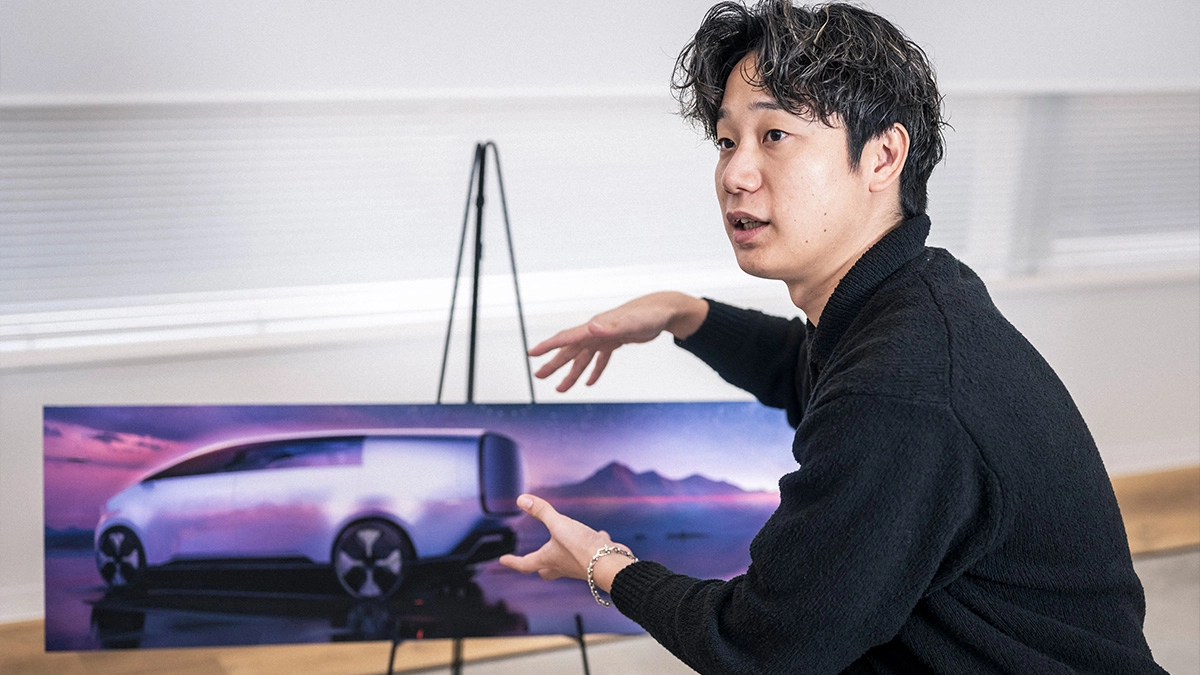
The rear of the Space-Hub, designed by Mr. Ogawa, is unique. What did you have in mind?
Ogawa
One unique value of the Space-Hub is that the rear passenger seats offer a space where
people can sit facing each other. I thought deeply about the ways of driving electric
vehicles and new ways of carrying passengers, and how to express them in a simple way.
The result was the current form.
Originally, the sketch of the interior space, which was drawn first, served as the starting point of my ideas. It was a sketch of the rear passenger seats. There was an expanding blue sky from within the enclosed space of a car, and people were in relaxed poses, something which you do not see in normal cars. How can I express such a world view through the exterior? I tried a new approach of “inside-out”—thinking about the outside based on the inside.
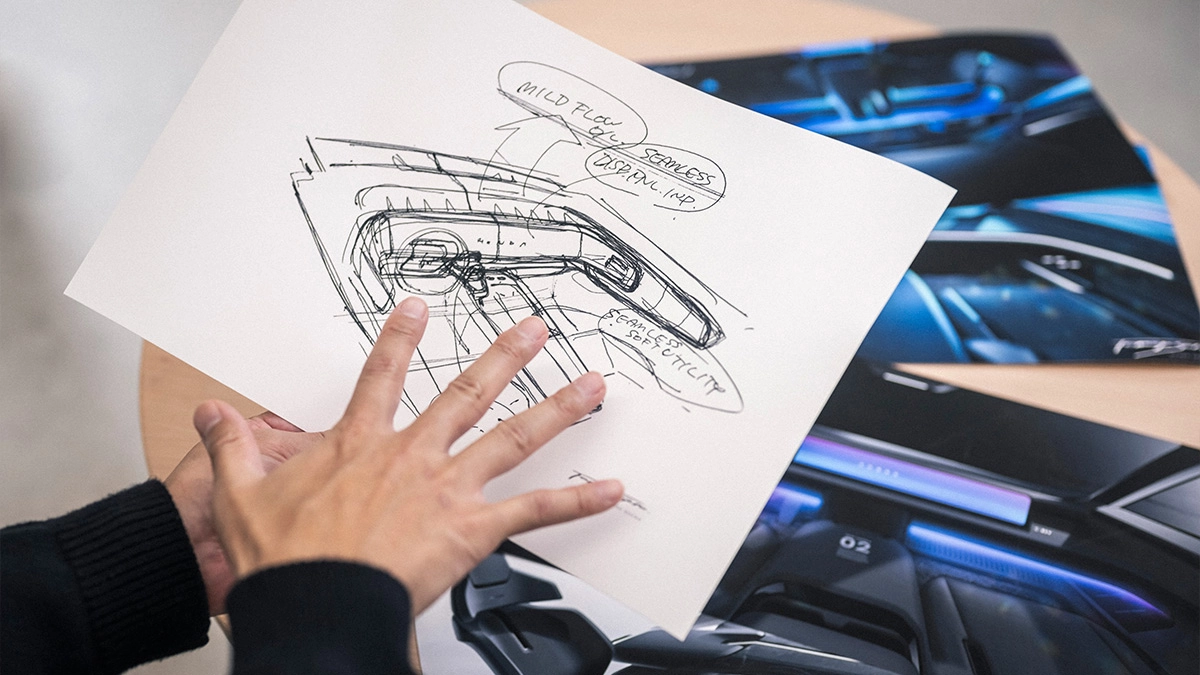
I see that it was intentional to create a space that gives birth to innovation. Meanwhile, how is the joy of driving reflected in the interior?
Sato
The word ‘exhilarating ’ is used in Honda’s interior design. I emphasize the comfort,
satisfaction, and a sense of zooming away when driving. Through styling based on the
image of soft things looking like they are thin, light, and floating, we achieved a
casual look that does not feel overbearing. This design approach is used for both the
Saloon and the Space-Hub.
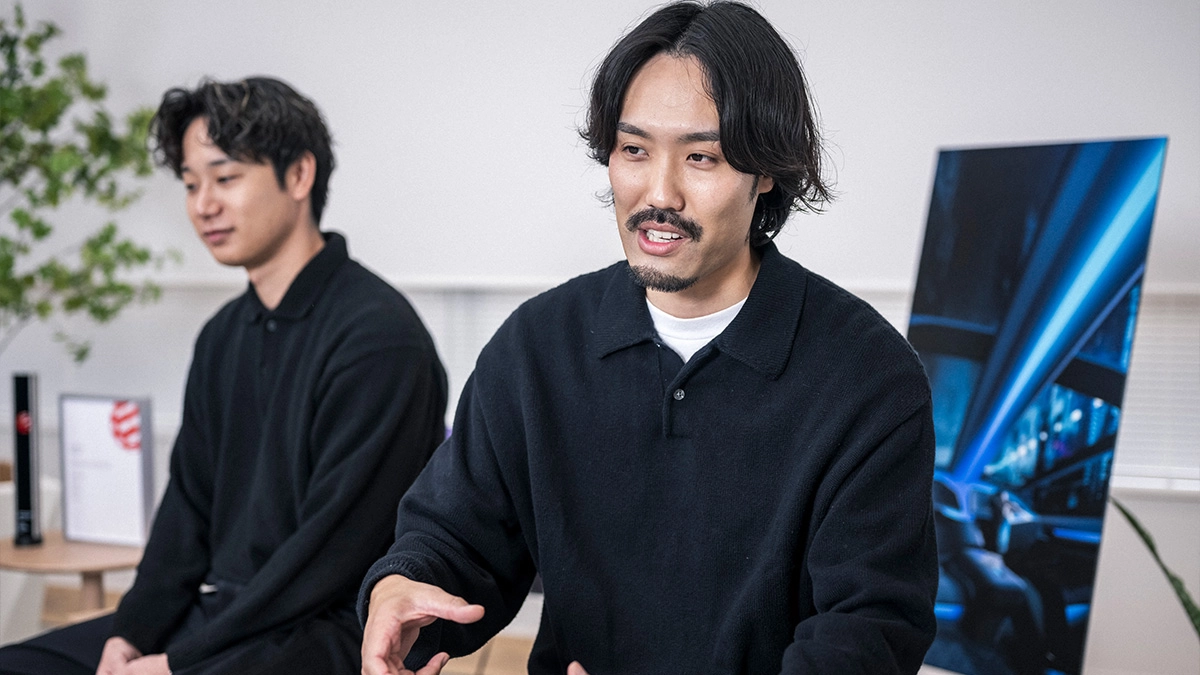
Were there times when the opinions of the interior and exterior designers came into conflict?
Sato
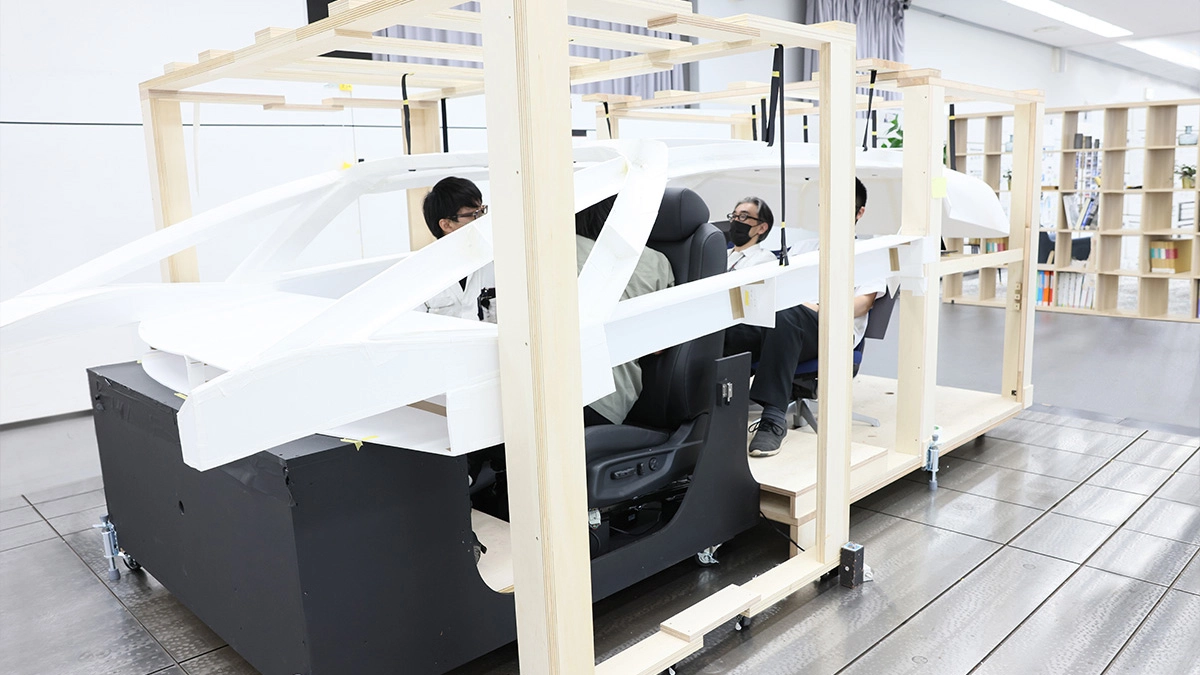
That was sometimes the case in the past, but this time, we created the baseline model by
cutting and pasting from Mr. Yano’s sketch, actually sat in a mockup, and consolidating
our opinions based on that. In other words, we applied the Three Reality Principle
(matching with the actual place, actual situation, and reality). Looking back, I did not
feel there was any area in which we could not make compromises. How about the Space-Hub?
Ogawa
There was no such area for the Space-Hub too. A major factor is that issues were shared
because, in the first place, development was undertaken by a compact team that worked
while always talking to each other.
The future of Honda as imagined by designers
It is said that the automotive industry is undergoing a “once-in-one-hundred-years transformation” right now. What kind of cars do you want to create as Honda and as an individual?
Sato
I hope to create cars that customers will ask for by name when they make purchases.
Instead of deciding by comparing specifications, prices, and such, we have to create
vehicles that make customers think “I want nothing else except this one.” Otherwise, in
a society with automated driving and driverless taxis, I feel a sense of crisis whereby
cars will no longer be chosen. The Honda 0 Series is unique even within Honda’s lineup,
and I hope to steadily pursue that overlapping part of the Venn diagram of being unique
yet liked by the masses, even though it is difficult.
Ogawa
The spread of remote work and seeing passengers in trains keep looking at their
smartphones make me feel that mobility has an aspect that is seen negatively today.
Personally, I want to support the pure feeling of excitement of going somewhere. For
example, the joy of renting a car with friends and going out for leisure during
university days, or the joy and thrill of driving one’s own car for the first time. I
hope to create vehicles that can offer such excitement.
Yano
In my case, personally, I see Honda’s presence as something different from other
manufacturers. Besides cars, motorcycles, and power products, we also have a history of
having developed ASIMO as well as selling HondaJet and developing mobility in the skies
in terms of the electric vertical take-off and landing aircraft eVTOL . Like what Mr.
Ogawa mentioned just now, we have continued to offer products, paying special attention
to the value of mobility experiences. I hope to continue to create things that would
make people feel joy, without being fixated on the category of cars, as Honda.
Profiles
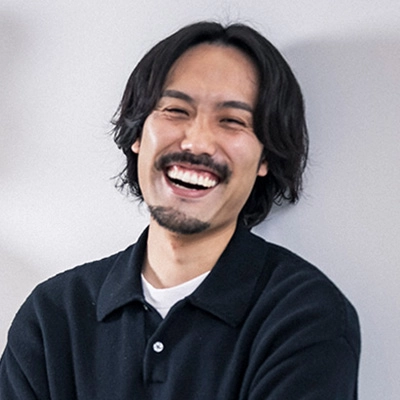
Tomoya Sato
Automobile
Product Designer
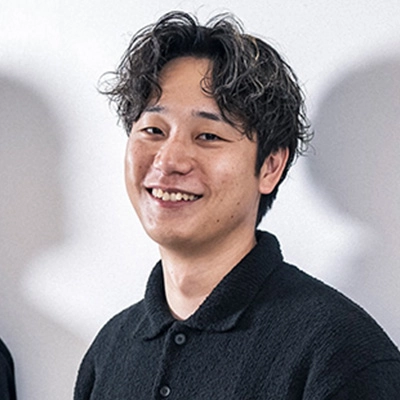
Taishi Ogawa
Automobile
Product Designer
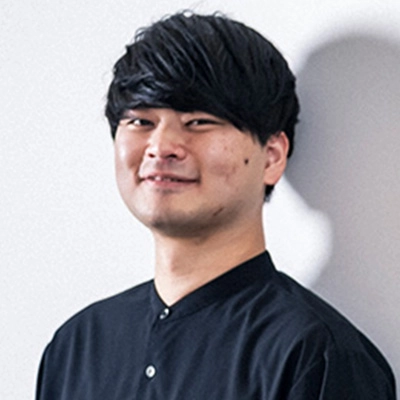
Daiya Yano
Automobile
Product Designer